
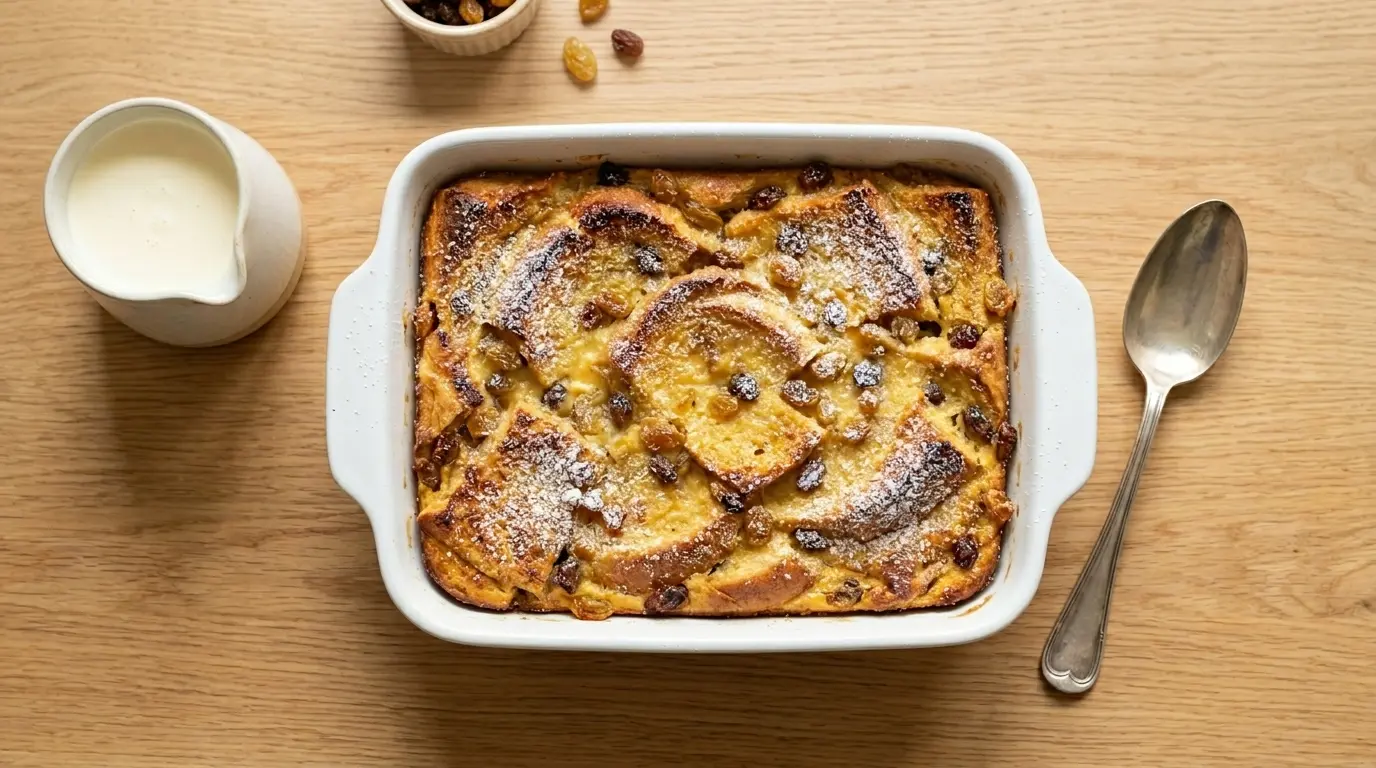
Few desserts hit quite as deep as a proper bread and butter pudding recipe made entirely from scratch. Layers of buttered bread soaked in a silky, vanilla-laced egg custard, baked until golden on top and creamy underneath — it is old-fashioned in the best possible way.
This is the version your British grandmother would recognise. No shortcuts, no complicated techniques.
The magic here comes down to two things: the quality of the custard and a little patience while the bread soaks it all up. Get those right and you end up with a pudding that puffs slightly in the oven, smells incredible, and lands on the table looking like a proper showstopper.
It uses pantry staples, comes together in under an hour of active time, and works equally well as a weeknight family dessert or a dinner-party finale that requires almost no effort.
For another comforting pudding to add to your rotation, this Chocolate Bread Pudding is a rich, fudgy spin that is just as easy to make.
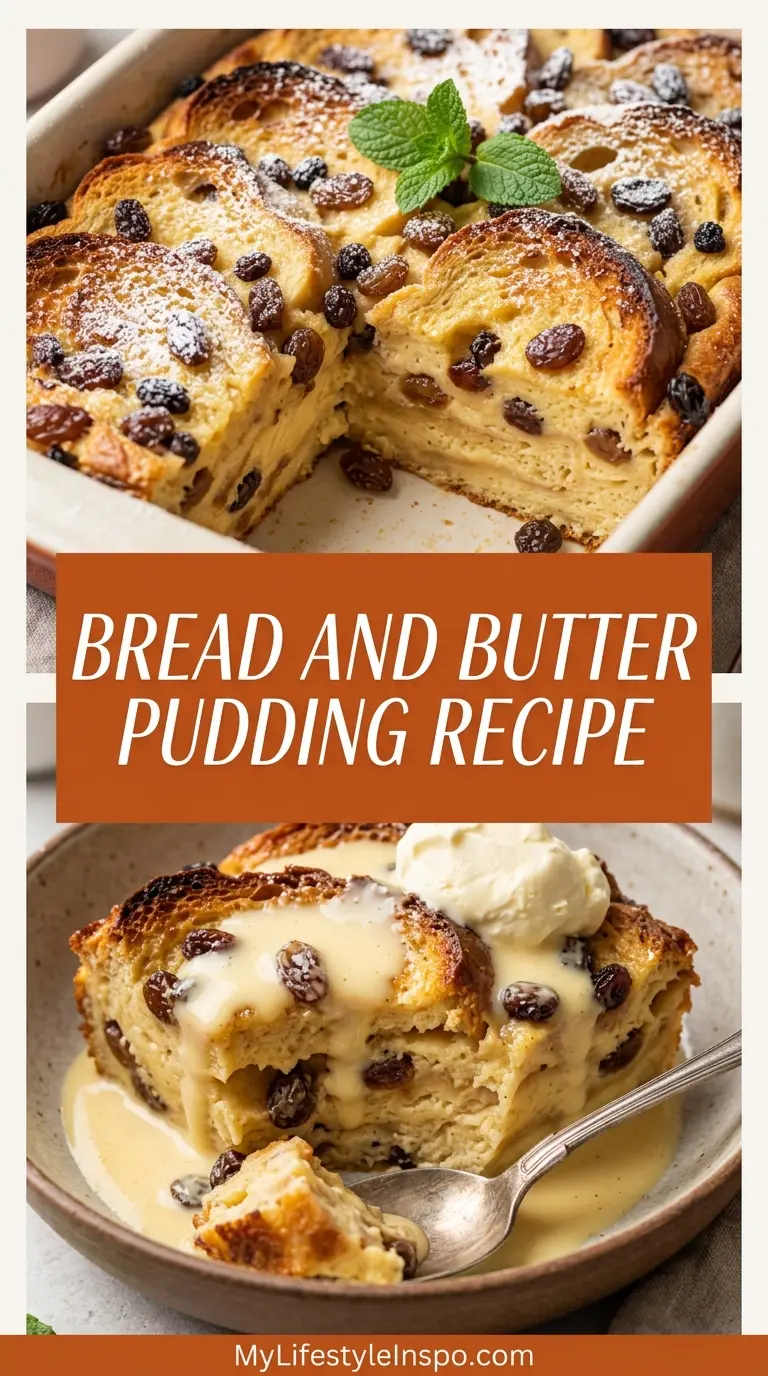
Why You’ll Love This Bread And Butter Pudding Recipe
This pudding earns a permanent spot in any home baker’s repertoire.
It transforms stale bread into something genuinely luxurious. The buttered layers absorb the custard completely, so every bite is soft, custardy, and meltingly tender.
The flavour is warm and gentle — vanilla, cream, a whisper of nutmeg, and just enough sweetness to feel indulgent without being heavy.
It is one of those recipes that actually improves with slightly older bread. Day-old or two-day-old white bread soaks up custard far better than a fresh loaf.
You only need one baking dish and a handful of pantry staples to pull it together.
Here is why readers love this recipe:
- Beginner-friendly. No special skills required. If you can whisk eggs and spread butter, you can make this.
- Incredibly versatile. Serve it warm with cream, cold the next day, or dress it up with jam or marmalade.
- Uses up stale bread. A genuinely brilliant way to avoid food waste.
- Scales easily. Halve it for two people or double it for a crowd.
- Pure comfort. Warm, creamy, and satisfying in a way that few modern desserts manage to be.
For another simple baked dessert that delivers big comfort with minimal effort, try this Peach Cobbler.
Ingredients
You need very little to make this pudding, but ingredient quality genuinely shows. Use full-fat milk and double or heavy cream for the richest custard, and real vanilla extract rather than essence.
Here is everything you will need:
- 8–10 slices of white bread (thick-cut, slightly stale), approximately 300g / 10.5 oz
- 60g / 4 tablespoons unsalted butter, softened, plus extra for greasing
- 4 large eggs
- 300ml / 1¼ cups whole milk
- 300ml / 1¼ cups double cream (heavy cream)
- 75g / ⅓ cup caster sugar (superfine sugar)
- 1½ teaspoons pure vanilla extract
- ¼ teaspoon ground nutmeg, plus extra for the top
- 30g / 3 tablespoons sultanas or raisins (optional but traditional)
- 1 tablespoon demerara sugar (raw cane sugar), for topping
- Pinch of fine salt
Read Also: Bread Pudding Recipe
Kitchen Equipment Needed
You do not need anything fancy for this recipe. A standard baking dish and a few mixing tools are all it takes.
Equipment you will need:
- Deep baking dish (approximately 20x28cm / 8×11 inches, or a similar 2-litre / 2-quart capacity dish)
- Large mixing bowl
- Whisk
- Saucepan (medium-sized, for warming the cream and milk mixture)
- Pastry brush or butter knife (for spreading butter on the bread)
- Sharp knife and cutting board
- Measuring cups and spoons
- Kitchen scale (recommended for accuracy)
- Fine mesh sieve (for straining the custard)
For a particularly beautiful result, a ceramic baking dish retains heat well and gives you those lovely golden edges.
You might also enjoy: Jamaican Bread Pudding
Recommended Products for This Recipe
These are products I recommend based on quality and real performance in the kitchen — they make a noticeable difference.
1. Deep Ceramic Baking Dish
A deep ceramic baking dish distributes heat evenly, which is exactly what this custard-soaked pudding needs to bake through gently without curdling the edges. The depth also allows the pudding to puff up beautifully. It goes from oven to table looking presentable, which is always a bonus.
2. Pure Vanilla Extract (Premium Quality)
The custard in this pudding is simple enough that every ingredient matters. A good-quality pure vanilla extract provides depth and warmth that vanilla essence simply cannot match. The flavour difference in a lightly-sweetened custard like this one is genuinely noticeable.
3. Fine Mesh Sieve
Straining the custard mixture through a fine mesh sieve before pouring it over the bread removes any chalazae (the egg’s stringy white threads) and ensures an ultra-smooth, velvety result. It takes ten seconds and makes a real difference to the final texture.
4. Kitchen Scale
A good kitchen scale removes guesswork from baking. Bread and butter pudding is forgiving, but getting the custard ratio right (enough liquid to saturate the bread without making it soggy and flat) is much easier with accurate measurements.
5. Demerara Sugar
Sprinkling demerara sugar over the top before baking creates that signature crunchy, caramelised surface — one of the defining textures of a well-made bread and butter pudding. Regular granulated sugar will not give you the same amber crunch.
Read Also: Sticky Toffee Pudding Recipe
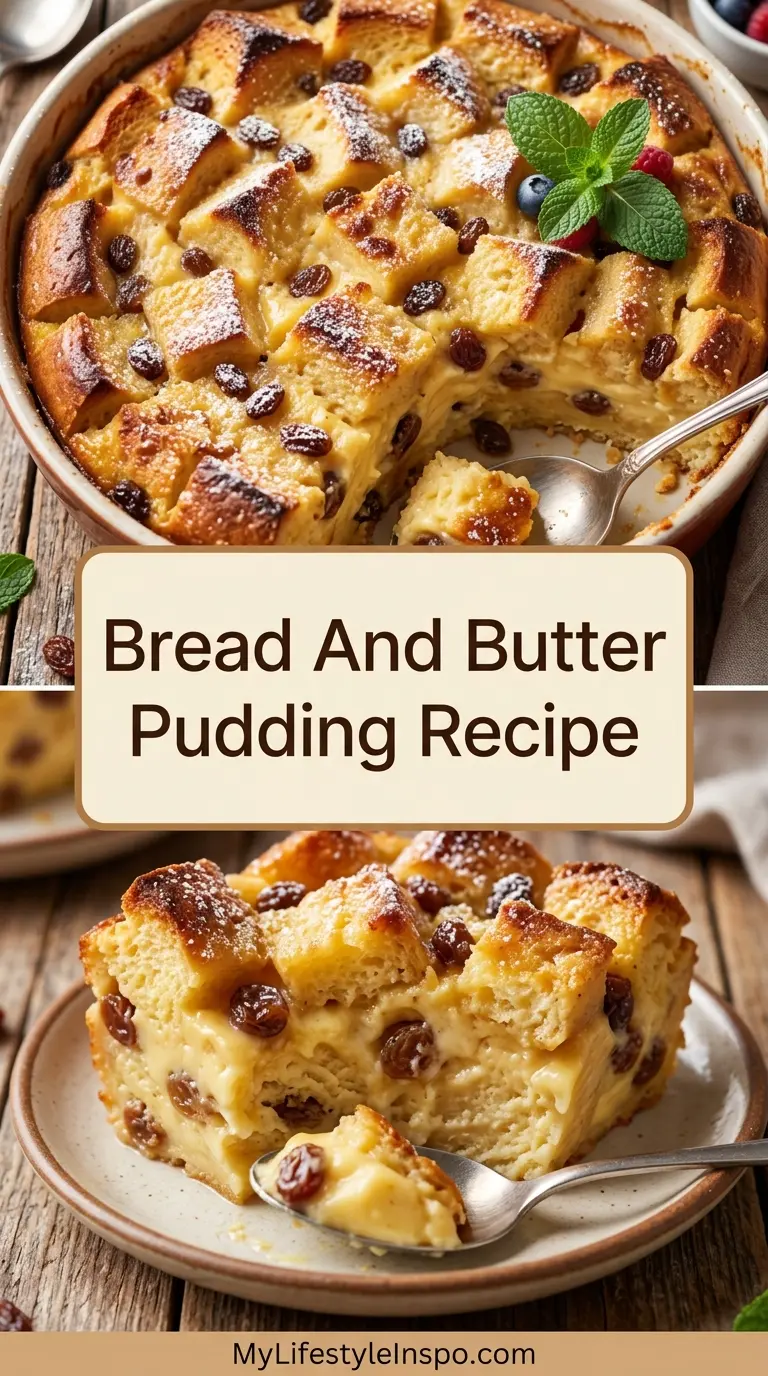
Step-by-Step Instructions
Step 1: Prepare Your Baking Dish and Butter the Bread
- Preheat your oven to 180°C / 350°F (160°C fan / 325°F for a fan-assisted oven). Place the oven rack in the centre position.
- Take your baking dish and generously grease the inside base and all four sides with softened butter. This prevents any bread from sticking to the edges.
- Lay all your bread slices out on a clean work surface. Using a knife or pastry brush, spread softened butter generously and evenly over one side of each slice. You want a proper coating — this is where a lot of the richness comes from, so do not be shy.
- Trim the crusts if you prefer a softer, more delicate result (traditional recipes sometimes leave them on for texture — both work). Cut each slice in half diagonally to form triangles, or into rectangles if you prefer.
Step 2: Arrange the Bread in the Dish
- Place the first layer of buttered bread slices into the greased baking dish, buttered-side facing up, slightly overlapping each piece like fallen dominoes. You want the slices to stand at a gentle angle so the tips poke above the custard later — this is what creates those gorgeous golden, crisp edges.
- If you are using sultanas or raisins, scatter half of them evenly over this first layer, tucking some in between slices.
- Add the second layer of bread on top, again buttered-side up and overlapping, at the same gentle angle. Scatter the remaining sultanas over the top layer.
- Set the dish aside while you prepare the custard.
Step 3: Make the Custard
- Pour the whole milk and double cream into a medium saucepan and place it over low-medium heat. You want to warm it slowly until it is steaming and just beginning to show tiny bubbles around the edges — this is called “scalding” and it helps the sugar and vanilla infuse the liquid. Do not let it boil.
- While the milk and cream heat, crack the 4 eggs into a large mixing bowl and add the caster sugar and a pinch of fine salt. Whisk vigorously until the mixture becomes pale and slightly thickened — this takes about 1 to 2 minutes. The sugar should be mostly dissolved.
- Add the vanilla extract and ground nutmeg to the egg mixture and whisk briefly to combine.
- Remove the saucepan from the heat. Very slowly — this step is important — pour the hot cream and milk mixture into the egg bowl in a thin, steady stream while whisking constantly with your other hand. Pouring slowly prevents the eggs from scrambling (called “tempering” the eggs). If you add all the hot liquid at once, you risk cooking the eggs and ruining the custard.
- Once all the liquid is incorporated, pour the custard through a fine mesh sieve to remove any egg threads or lumps, catching the smooth custard in a clean jug or bowl.
Step 4: Soak the Bread
- Slowly and evenly pour the strained custard over the arranged bread in the baking dish. Pour it over all sections gradually — do not dump it all in one spot, which can displace the bread slices you carefully arranged.
- Using the back of a large spoon or your clean hand, gently press the bread down into the custard so every slice begins to absorb the liquid. The bread tips will still poke above the surface, which is correct.
- Cover the dish loosely with cling film (plastic wrap) and leave it to soak for at least 20 to 30 minutes at room temperature. If you have time, 45 minutes gives the best result as the bread fully absorbs the custard. Do not skip this step — proper soaking is the difference between a custardy interior and a dry one.
Step 5: Add the Topping and Bake
- After the soaking time, remove the cling film and sprinkle the tablespoon of demerara sugar evenly over the entire surface. Add a little extra ground nutmeg on top if you like.
- Place the baking dish in a deep roasting pan. Pour enough just-boiled water into the roasting pan to come about 2 to 3 cm / 1 inch up the side of the baking dish. This water bath (bain-marie) creates a gentle, moist heat that prevents the custard from cracking or overcooking.
- Carefully place the whole setup in the preheated oven. Bake for 35 to 45 minutes, until the top is golden brown and puffed, and the custard has set with just a slight wobble in the very centre when you gently shake the dish. The bread tips should be visibly crisp and golden.
- If the top browns too quickly before the custard sets, loosely lay a piece of foil over the top for the final 10 minutes of baking.
Step 6: Rest and Serve
- Remove the baking dish from the water bath and let the pudding rest for 10 minutes before serving. This resting time allows the custard to fully set and makes it easier to portion.
- Serve warm, scooped into deep bowls or plates. Dust lightly with icing sugar (powdered sugar) if desired, and serve with pouring cream, vanilla ice cream, or warm custard sauce alongside.
This classic French Toast Casserole uses a very similar custard-soaked technique and is a great companion recipe to explore next.
Tips for Success
A few small details make a noticeable difference with this recipe.
Keep these in mind for the best possible result:
- Use day-old or slightly stale bread. Fresh bread can become too soggy and fall apart when soaked in custard. Bread that is one to two days old has lost enough moisture to absorb custard beautifully without disintegrating. White sandwich bread, brioche, or a soft white tin loaf all work wonderfully.
- Do not skip the soaking step. A minimum of 20 to 30 minutes of soaking time is essential. The bread needs time to absorb the custard evenly from top to bottom. If you are short on time, use a fork to gently press the bread down into the custard every few minutes.
- Temper your eggs properly. Adding the hot milk and cream mixture to the eggs slowly, while whisking constantly, is the key to a lump-free, silky custard. Rush this step and you risk scrambled-egg custard.
- Use the water bath. Baking the pudding inside a roasting tin of hot water prevents the outside edges from overcooking and ensures the whole pudding sets at an even, gentle temperature.
- Watch for the jiggle. The pudding is done when the edges are fully set but the centre has a gentle wobble — similar to a panna cotta. It will continue to set as it rests and cools.
- Serve within a few minutes of resting. The crisp, golden bread tips are at their best when freshly baked. As it sits longer, the top softens.
Read Also: Creme Brulee French Toast Recipe
Serving Suggestions
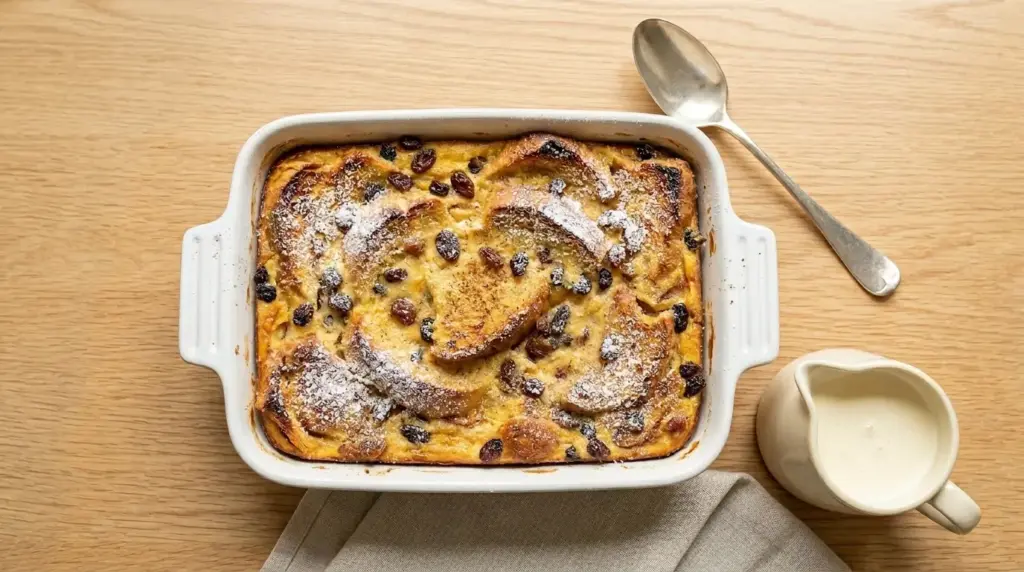
Bread and butter pudding is at its absolute best served warm, straight from the oven with a generous pour of something cold or creamy alongside it.
The contrast between the warm, soft pudding and cold cream is a key part of the experience, and it is worth setting up a little spread of accompaniments so everyone can choose their own combination.
Here are some great ways to serve it:
- Pouring cream. Cold, thick double cream (or single cream for something lighter) poured freely over a warm portion is the most classic and beloved accompaniment. The cream melts slightly into the pudding as you eat.
- Vanilla ice cream. A scoop placed alongside the warm pudding creates a wonderful contrast of hot and cold.
- Warm custard sauce. Homemade or shop-bought, a pouring custard on top doubles down on the pudding’s creamy nature. This is the version most commonly served in British cafes and pubs.
- Caramel Sauce. A drizzle of salted caramel sauce over a portion adds a grown-up, toffee-forward twist that pairs beautifully with the vanilla custard.
- Icing sugar dusting. For a simple, elegant presentation before serving, a light sift of icing sugar over the top is all you need.
- Marmalade. Spread a thin layer of orange marmalade on the bread slices before buttering for a bright citrus note that cuts through the richness beautifully.
Variations to Try
Once you have the classic recipe down, there are several wonderful directions you can take it.
Here are some popular variations worth trying:
- Chocolate Bread Pudding. Replace 30g of the caster sugar with 30g of cocoa powder and add 100g of chopped dark chocolate to the custard. Melt the chocolate into the warm milk and cream before adding it to the eggs for an intensely rich, brownie-like result.
- Brioche Bread and Butter Pudding. Swap white sandwich bread for sliced brioche for an even richer, more indulgent pudding. The buttery, pillowy texture of brioche creates an exceptionally silky result. You can reduce the added butter slightly since brioche already contains plenty.
- Marmalade Bread and Butter Pudding. Spread each bread slice with a thin layer of orange marmalade before buttering. The citrus cuts beautifully through the richness of the custard and adds a lovely bitter-sweet flavour throughout.
- Croissant Bread and Butter Pudding. Use day-old croissants, halved horizontally and buttered, in place of sliced bread. This is a particularly decadent version, popular in restaurants, with a flakier texture and deeper buttery flavour.
- Spiced Version. Add ½ teaspoon of cinnamon and ¼ teaspoon of mixed spice (pumpkin pie spice) to the custard alongside the nutmeg for a warmly-spiced autumn variation. A handful of dried cranberries instead of sultanas works beautifully here.
- Jamaican Bread Pudding. This Caribbean-inspired version often incorporates a splash of rum into the custard and uses coconut milk for part of the liquid, resulting in a subtly tropical, fragrant pudding.
You might also enjoy: Rice Pudding Recipe
Storage and Reheating
Bread and butter pudding stores well and reheats beautifully, making it an ideal make-ahead dessert.
Follow these simple storage and reheating guidelines:
- Refrigerator storage. Once fully cooled, cover the baking dish tightly with cling film or transfer leftovers to an airtight container. Refrigerate for up to 3 days. The pudding will firm up considerably as it chills, which is normal.
- Freezing. This pudding can be frozen after baking. Allow it to cool completely, then cut into individual portions and wrap each one tightly in cling film and a layer of foil. Freeze for up to 2 months. Thaw overnight in the refrigerator before reheating.
- Reheating in the oven (recommended). Place portions or the whole dish in a 160°C / 325°F oven for 15 to 20 minutes, covered loosely with foil, until warmed through. Remove the foil for the last 3 to 4 minutes to re-crisp the top slightly.
- Reheating in the microwave. Individual portions can be microwaved on medium power for 1 to 2 minutes. The top will not be crispy this way, but the pudding will be warm and satisfying.
- Eating cold. Many people love bread and butter pudding eaten cold or at room temperature the next day. The custard sets more firmly overnight and takes on a denser, almost cake-like texture.
This Banana Pudding Recipe is another crowd-pleasing make-ahead dessert well worth bookmarking.
Nutritional Facts
The following values are approximate per serving, based on 6 servings from this recipe, without any accompaniments such as cream or ice cream.
| Nutrient | Per Serving (approx.) |
|---|---|
| Calories | 410 kcal |
| Total Fat | 26g |
| Saturated Fat | 15g |
| Carbohydrates | 36g |
| Sugars | 18g |
| Protein | 10g |
| Fibre | 1g |
| Sodium | 260mg |
| Calcium | 140mg |
These values will vary depending on the exact bread used, the fat content of your cream, and any additional toppings added.
Another classic baked dessert worth trying for its warm, comforting flavour is this Malva Pudding Recipe.
Health Benefits of Key Ingredients
Bread and butter pudding is a comforting treat rather than a health food, but several of its core ingredients do contribute meaningful nutrients.
Here is a closer look at what some key ingredients offer:
- Eggs. Eggs are one of the most nutrient-dense foods available. They provide complete protein containing all essential amino acids, along with vitamins B12, D, and choline — a nutrient important for brain health that many people do not get enough of. The yolks also provide fat-soluble vitamins A, D, E, and K.
- Whole milk. Full-fat milk contributes calcium for bone density, along with phosphorus, potassium, and riboflavin (vitamin B2). The fat in whole milk also helps your body absorb the fat-soluble vitamins present in the other ingredients.
- Double cream (heavy cream). While high in calories and saturated fat, cream is a source of fat-soluble vitamins and provides sustained energy. Used in moderation as part of a balanced diet, it makes this kind of indulgent pudding deeply satisfying in a way that reduced-fat versions rarely achieve.
- Sultanas (golden raisins). These dried fruits provide a natural source of iron, potassium, and fibre. They also contain antioxidants called polyphenols that support overall health. Their natural sweetness means you can reduce added sugar slightly without losing flavour.
- Nutmeg. Small amounts of ground nutmeg contain manganese and have been used traditionally as a digestive aid. It adds a warming, aromatic depth to the custard that enhances the overall flavour profile.
For a lighter sweet treat with its own set of nutritional benefits, this Baked Oatmeal Recipe is a wonderful option to have in your repertoire.
Frequently Asked Questions
1. What is the best bread to use for bread and butter pudding?
The best bread is white sandwich bread that is one to two days old. Slightly stale bread absorbs custard far better than fresh bread because it has lost some of its moisture, acting like a sponge rather than falling apart.
Brioche and croissants are richer alternatives that produce an especially luxurious result. Whole wheat bread can be used for a slightly heartier, nuttier flavour, though the texture will be denser. Avoid very crusty artisan breads as they can be too firm and do not soak up custard as evenly.
2. Can I make bread and butter pudding the night before?
Yes, and it is a great make-ahead dessert. Assemble the pudding (through Step 4 of the instructions), cover the dish tightly with cling film, and refrigerate overnight without baking.
The next day, remove the dish from the refrigerator 20 to 30 minutes before baking to allow it to come closer to room temperature, then bake as directed. Overnight soaking actually produces an even more custardy, uniform result because the bread has extra time to fully absorb the custard.
3. Why did my custard curdle or turn lumpy?
Curdled or lumpy custard is almost always caused by adding the hot milk and cream too quickly to the eggs, which scrambles them rather than incorporating them smoothly.
Always pour the hot liquid into the eggs in a slow, thin, steady stream while whisking constantly. If the mixture does curdle slightly, pour it immediately through a fine mesh sieve before using — this removes the cooked egg pieces and saves the custard. Tempering (the slow-pour method) is the single most important technique in this recipe.
4. How do I know when bread and butter pudding is done baking?
The pudding is ready when the top is deep golden brown and slightly puffed, and when you gently shake the dish, the edges are fully set but the very centre has a slight jiggle — similar to a set jelly or panna cotta.
If the entire surface wobbles significantly, it needs more time. If it does not wobble at all, it may be slightly overdone but will still taste good. A digital instant-read thermometer inserted into the centre should read around 75 to 80°C / 167 to 176°F when the custard is properly set.
5. Can I use a different type of milk or make it dairy-free?
You can substitute full-fat oat milk or a thick coconut milk for the dairy milk and cream, though the texture and flavour will be different. Full-fat coconut milk works particularly well and gives a subtly tropical flavour that pairs beautifully with sultanas.
For a fully dairy-free version, also replace the butter with a vegan baking butter. The custard will be slightly less rich but still very satisfying. Avoid low-fat plant milks as they do not contain enough fat to create a properly creamy custard.
Read Also: Vanilla Pudding Recipe

Classic Bread and Butter Pudding

Equipment
- Deep baking dish - approximately 20x28cm / 8×11 inches or 2-litre / 2-quart capacity, ceramic works well
- Large mixing bowl
- Whisk
- Medium saucepan
- Pastry brush or butter knife - for spreading butter
- Sharp knife
- Cutting board
- Measuring cups and spoons
- Kitchen scale - recommended for accuracy
- Fine-mesh sieve - for straining custard
- Deep roasting pan - for water bath (bain-marie)
- Cling film (plastic wrap)
Ingredients
- 10 slices white bread - thick-cut, slightly stale, approximately 300g / 10.5 oz, day-old or two-day-old works best
- 60 g unsalted butter - 4 tablespoons, softened, plus extra for greasing the dish
- 4 large eggs
- 300 ml whole milk - 1¼ cups
- 300 ml double cream - 1¼ cups heavy cream
- 75 g caster sugar - ⅓ cup superfine sugar
- 1.5 tsp pure vanilla extract
- 0.25 tsp ground nutmeg - plus extra for the top
- 30 g sultanas - 3 tablespoons, golden raisins, optional but traditional
- 1 tbsp demerara sugar - raw cane sugar, for topping
- fine salt - pinch
- icing sugar - optional, for dusting before serving
- pouring cream - optional, for serving
- vanilla ice cream - optional, for serving
- warm custard sauce - optional, for serving
- salted caramel sauce - optional, for serving
- orange marmalade - optional, for spreading on bread before buttering
Instructions
- Preheat oven to 180°C / 350°F (160°C fan). Grease the baking dish generously with butter. Spread softened butter on one side of each bread slice. Cut slices diagonally into triangles or into rectangles.
- Arrange first layer of bread in the dish, buttered-side up, overlapping slightly. Scatter half the sultanas (if using) over this layer. Add second layer of bread, buttered-side up, and scatter remaining sultanas over the top.
- Warm milk and double cream in a saucepan over low-medium heat until steaming and just showing tiny bubbles around the edges. Do not boil.
- In a large bowl, whisk eggs, caster sugar, and salt until pale and slightly thickened, about 1-2 minutes. Add vanilla and nutmeg and whisk briefly.
- Slowly pour the hot cream mixture into the egg mixture in a thin, steady stream while whisking constantly to temper the eggs and prevent scrambling.
- Strain the custard through a fine mesh sieve into a clean jug or bowl to remove any egg threads.
- Slowly pour the strained custard evenly over the arranged bread. Press bread down gently with a spoon to help absorption. Cover loosely with cling film and soak for 20-30 minutes (up to 45 minutes for best results).
- Remove cling film and sprinkle demerara sugar and extra nutmeg evenly over the surface. Place baking dish in a deep roasting pan and add boiling water to come 2-3 cm / 1 inch up the side.
- Bake for 35-45 minutes until golden brown and puffed, with just a slight wobble in the centre. Cover loosely with foil if browning too quickly. Let rest for 10 minutes before serving.
Notes
- Use day-old or slightly stale bread – fresh bread can become too soggy and fall apart when soaked in custard.
- Do not skip the soaking step – a minimum of 20-30 minutes allows the bread to absorb custard evenly from top to bottom.
- Temper your eggs properly by adding the hot milk mixture slowly while whisking constantly to avoid scrambled-egg custard.
- Use a water bath (bain-marie) to prevent the outside edges from overcooking and ensure the pudding sets at an even, gentle temperature.
- The pudding is done when the edges are fully set but the centre has a gentle wobble – similar to a panna cotta.
- Serve warm with cold pouring cream, vanilla ice cream, or warm custard sauce for the best contrast of textures.
- To make ahead, assemble the pudding (through the soaking step) and refrigerate overnight; bring to room temperature before baking.
- Store leftovers in the refrigerator for up to 3 days. Reheat in a 160°C / 325°F oven for 15-20 minutes.
- For a chocolate version, replace 30g of caster sugar with cocoa powder and add 100g of chopped dark chocolate to the custard.
- For a brioche version, swap white bread for sliced brioche and reduce the added butter slightly as brioche already contains plenty.
Final Thoughts
Bread and butter pudding is the kind of recipe that never goes out of style. It turns the simplest ingredients into something genuinely impressive, and it manages to be both nostalgic and endlessly satisfying.
Once you try it from scratch, you will understand why it has been a beloved British classic for centuries.
Give this recipe a go this week, and do not be surprised if it becomes a regular on your dessert table. If you try it, I would love to hear how it turned out — drop a comment below and let me know if you added any of your own twists!
Recommended:
- Chocolate Bread Pudding Recipe
- Sticky Toffee Pudding Recipe
- Figgy Pudding Recipe
- Brownie Pudding Recipe
- Spotted Dick Recipe
- Corn Pudding Recipe
- Yorkshire Pudding Recipe
- Easy Creme Brulee Recipe
- Dirt Pudding Recipe
- Classic French Toast Recipe