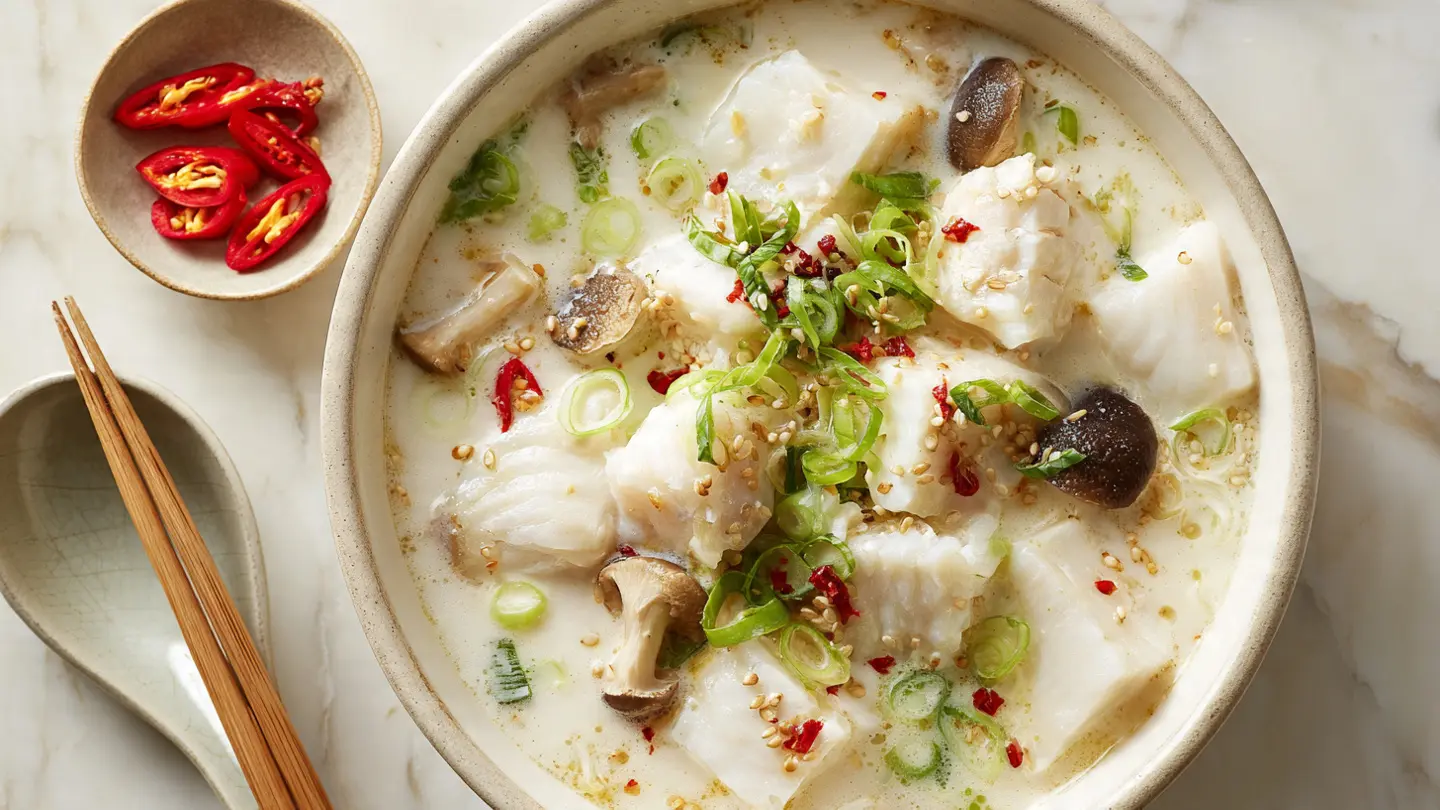
A bowl of Chinese fish soup recipe is one of those things that feels like a warm hug from the inside out. It’s clean, deeply savory, and incredibly nourishing, with a broth that’s surprisingly rich considering how quickly it comes together.
This is a home-style Cantonese-inspired version that most Chinese families make on weeknights: tender white fish fillets simmered in a ginger-spiked broth with silken tofu, mushrooms, and just the right amount of seasoning to make everything sing.
The secret to a good Chinese fish soup is in two simple techniques: pan-frying the fish briefly before adding liquid, and using boiling water (not cold) when building the broth. These two steps transform a basic pot of fish and water into something that tastes like it took hours.
If you’ve ever ordered fish soup at a Chinese restaurant and wondered how they get that creamy, milky-white color in the broth, this recipe will show you exactly how it’s done, right at home with no fancy equipment required.
You might also enjoy this Thai Fish Soup for another comforting Asian-inspired bowl with a different flavor profile.

Why You’ll Love This Chinese Fish Soup Recipe
This soup checks every box for a satisfying meal that doesn’t demand hours in the kitchen.
It comes together in about 30 minutes from start to finish, making it completely realistic on a busy weeknight.
The broth is naturally light but full of umami, and it pairs beautifully with steamed rice or noodles.
Fish is one of the most digestible proteins around, and this soup is gentle enough for everyone at the table, from kids to grandparents.
It’s also endlessly adaptable: swap in whatever white fish is freshest at your market, or add extra vegetables without throwing off the balance of the dish.
Here’s a quick list of what makes this recipe a keeper:
- Ready in under 35 minutes from prep to table
- Requires just one pot
- Uses simple, easy-to-find ingredients
- Naturally gluten-free with a quick swap
- A light, clean, restaurant-quality broth made at home
- Works with a variety of white fish fillets
- Incredibly nourishing and easy on digestion
Read Also: Mexican Fish Soup Recipe
Ingredients
The ingredient list here is short, but every item earns its place. The combination of ginger, sesame oil, and a splash of Shaoxing wine is what gives this soup its distinctly Chinese character, while the tofu adds body and a subtle creaminess.
- 1 lb (450 g) white fish fillets (tilapia, snapper, cod, or sea bass), cut into 2-inch pieces
- 1 tablespoon cornstarch
- 1 teaspoon Shaoxing rice wine (or dry sherry)
- 1 teaspoon light soy sauce, for marinating fish
- ½ teaspoon white pepper, divided
- 2 tablespoons neutral cooking oil, divided
- 6 thin slices fresh ginger
- 3 cloves garlic, minced
- 4 cups (950 ml) boiling water (or low-sodium chicken broth)
- 1 block (14 oz / 400 g) silken or soft tofu, cut into 1-inch cubes
- 4–5 dried shiitake mushrooms, soaked in warm water for 30 minutes, stems removed, sliced
- 2 medium tomatoes, cut into wedges (optional but adds brightness)
- 1 tablespoon light soy sauce, for the broth
- 1 teaspoon sesame oil
- Salt to taste
- 2 stalks green onion, thinly sliced, for garnish
- Fresh cilantro, for garnish (optional)
For a gluten-free version, use tamari instead of soy sauce and omit the Shaoxing wine or replace it with a splash of rice vinegar.
Read Also: Caribbean Fish Soup Recipe
Kitchen Equipment Needed
You don’t need anything special for this recipe, but having the right tools on hand makes the whole process smoother and faster.
- Large wok or heavy-bottomed soup pot (at least 4-quart capacity)
- Cutting board
- Sharp chef’s knife
- Shallow mixing bowl (for marinating fish)
- Wooden spoon or silicone spatula
- Ladle
- Soup bowls for serving
- Small bowl (for soaking mushrooms)
- Kettle or saucepan (for boiling water)
This Chinese fish soup is one of those recipes where a quality wok makes a real difference because of how evenly it distributes heat during the pan-fry step.
Recommended Products for This Recipe
These are handpicked products that will genuinely improve your results with this recipe, based on quality and how much they contribute to the final dish.
1. Carbon Steel Wok
A seasoned carbon steel wok heats evenly and holds heat beautifully, which is exactly what you need to get that golden sear on the fish without sticking. It’s also lightweight and versatile enough to use for all your Asian cooking. Once properly seasoned, it’s essentially non-stick and will last decades.
2. Premium Dried Shiitake Mushrooms
Dried shiitake mushrooms contribute a deep, earthy umami that fresh mushrooms simply can’t replicate in a short-cook soup like this. Look for thick-capped, dried whole shiitakes for the best flavor. The soaking liquid is also liquid gold: you can add it to your broth for an extra layer of depth.
3. Shaoxing Rice Wine
This pantry staple is what gives the fish marinade its authentic Chinese restaurant flavor. It reduces fishiness and adds a subtle sweetness that soy sauce alone can’t achieve. A bottle lasts a long time and is useful in countless other Chinese recipes.
4. Toasted Sesame Oil
A small drizzle of sesame oil stirred in right at the end of cooking is the finishing touch that makes this soup taste complete. Look for 100% pure toasted sesame oil for the most intense, nutty aroma. Avoid blended versions, which are far less fragrant.
For another warming Asian-inspired soup, check out this Udon Noodle Soup that comes together just as quickly.

Step-by-Step Instructions
Step 1: Soak the Mushrooms
- Place the dried shiitake mushrooms in a small bowl and pour warm water over them until fully submerged.
- Let them soak for at least 30 minutes, or until they are fully softened and plump.
- Once softened, remove the mushrooms and gently squeeze out the excess water over the bowl.
- Remove and discard the tough stems, then slice the mushroom caps into thin strips.
- Reserve the soaking liquid: pour it through a fine-mesh sieve or use the clear portion, and set it aside. This liquid adds great umami to the broth.
Step 2: Marinate the Fish
- Pat the fish fillets dry with paper towels. Removing surface moisture is important: it helps the fish brown better and prevents steaming when it hits the pan.
- Cut the fish into 2-inch (5 cm) pieces. Try to make the pieces roughly the same size so they cook evenly.
- Place the fish in a shallow bowl. Add 1 tablespoon of cornstarch, 1 teaspoon of Shaoxing rice wine, 1 teaspoon of light soy sauce, and ¼ teaspoon of white pepper.
- Toss gently to coat every piece evenly. The cornstarch creates a light barrier that helps the fish hold together during cooking and keeps it silky and tender.
- Let the fish marinate for 10–15 minutes while you prep the other ingredients.
Step 3: Prepare the Tofu and Vegetables
- Remove the tofu from its package and drain any excess water by gently pressing the block with a paper towel.
- Cut the tofu into 1-inch cubes. Silken or soft tofu is delicate, so use a gentle hand with the knife and avoid over-handling it.
- Slice the tomatoes into wedges if using. Tomatoes are optional in this recipe, but they add a gentle acidity that brightens the whole broth beautifully.
- Thinly slice the green onions. Set the white and green parts aside separately: the white parts go into the pot early, and the green parts are used as a fresh garnish.
- Peel and slice the ginger into thin rounds. No need to peel it perfectly: a rough peel is fine since the slices will be removed later.
- Mince the garlic cloves finely.
Step 4: Pan-Fry the Fish
- Heat 1 tablespoon of neutral cooking oil in your wok or heavy pot over medium-high heat until shimmering.
- Carefully place the marinated fish pieces in a single layer, making sure not to crowd the pan. Work in batches if needed: crowding causes steaming instead of browning.
- Let the fish cook undisturbed for about 1–2 minutes on one side until lightly golden. Resist the urge to move it around: letting it sit is what builds that golden crust.
- Carefully flip each piece and cook for another 1 minute on the other side. The fish should be about 70% cooked at this point.
- Remove the fish pieces and set them aside on a plate. They will finish cooking in the broth.
Step 5: Build the Broth
- In the same wok or pot, add the remaining 1 tablespoon of oil over medium heat.
- Add the ginger slices and the white parts of the green onion. Sauté for about 1 minute, pressing the ginger lightly against the pan to release its oils and aroma.
- Add the minced garlic and cook for another 30 seconds until fragrant. Be careful not to burn the garlic, as this can make the broth bitter.
- Add the sliced mushrooms and stir-fry for 1 minute.
- Pour in the boiling water (or warmed broth) carefully. Using boiling water is a key traditional technique that helps create a milky-white, opaque broth. Cold water will result in a clearer but less rich-tasting soup.
- Pour in the reserved mushroom soaking liquid if using.
- Bring the broth back to a full boil over high heat.
Step 6: Add Tofu and Simmer
- Once the broth is boiling, add the cubed tofu pieces gently by sliding them off the cutting board with a spatula. Avoid dropping them in from a height, as they will break apart.
- If using tomato wedges, add them now as well.
- Season the broth with 1 tablespoon of light soy sauce and the remaining ¼ teaspoon of white pepper.
- Reduce the heat to medium and let the soup simmer for about 5 minutes. This allows the tofu to absorb the flavors of the broth and the tomatoes to soften slightly.
- Taste the broth and adjust the seasoning with salt as needed.
Step 7: Add the Fish Back and Finish
- Gently slide the pan-fried fish pieces back into the simmering broth.
- Let the soup simmer for 3–4 more minutes, or until the fish is fully cooked through and flakes easily. Do not stir aggressively or the fish will break apart completely: a gentle swirl of the pot is all it needs.
- Remove the ginger slices if you prefer. Many people leave them in for aesthetics, but they can be quite strong if bitten into.
- Turn off the heat and drizzle 1 teaspoon of sesame oil over the soup. Stir gently to incorporate.
- Ladle the soup into bowls and garnish with the reserved green parts of the green onion and fresh cilantro if using.
The same pan-fry technique works brilliantly in a seafood chowder if you’re looking for another fish-forward bowl.
Tips for Success
A few key habits will take this soup from good to genuinely excellent every single time you make it.
- Use the freshest fish you can find. Chinese fish soup relies on a clean, sweet broth, and older fish can make it taste muddy or off. Ask your fishmonger what arrived that day.
- Always add boiling water, not cold. Cold water will prevent the broth from becoming milky and opaque. Heat your water in a kettle before you start.
- Don’t skip the cornstarch marinade. This thin coating is what keeps the fish silky and prevents it from drying out or falling apart in the broth.
- Taste as you go. Different soy sauces have varying levels of saltiness. Start with the amount listed and add more at the end.
- Add the fish back gently. Slide the pieces in rather than dropping them, and resist stirring. The goal is tender, whole pieces in your bowl, not broken flakes.
- Use the mushroom soaking liquid. After soaking, that liquid is packed with concentrated umami. Add it to the broth for a noticeable depth boost.
- Serve immediately. This soup is best eaten right away while the fish is just cooked and the tofu still holds its shape.
For another warming noodle-based dish, try this Miso Soup as a lighter weeknight companion.
Serving Suggestions
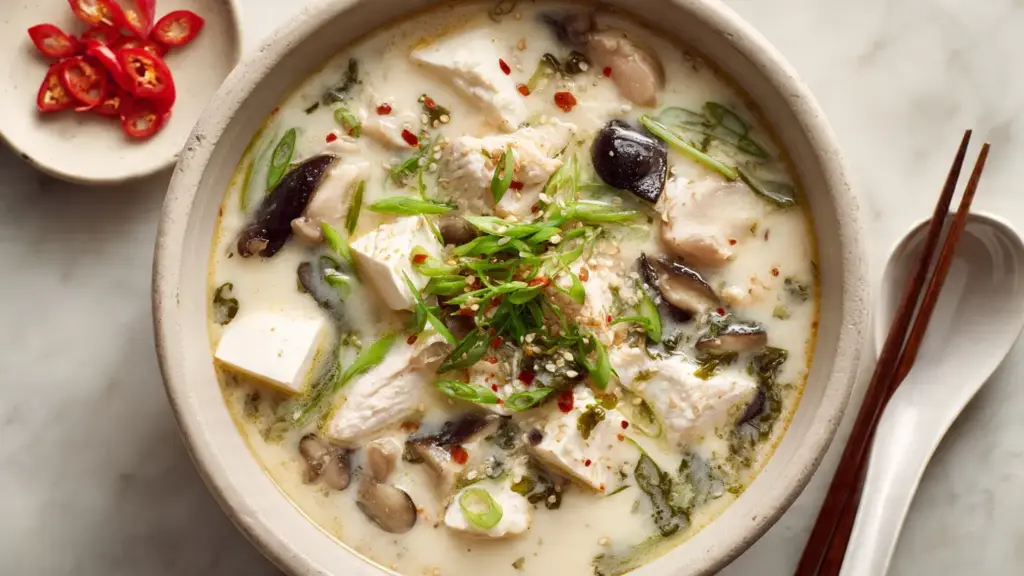
This Chinese fish soup is wonderfully complete on its own, but it really shines when served alongside a few complementary dishes.
Serve it over a bowl of steamed jasmine rice to soak up every drop of that savory broth, or ladle it directly over cooked rice vermicelli noodles for a heartier meal. It also pairs beautifully with a simple side of stir-fried greens like bok choy or gai lan.
Here are some great ways to serve this soup:
- With steamed jasmine rice for a classic home-style Chinese meal
- Poured over cooked rice vermicelli or glass noodles for a noodle soup version
- Alongside Bok Choy for a complete, nourishing dinner
- With crusty bread or steamed bao buns for something unexpected
- As a starter course before a larger Chinese spread
- Paired with Chicken Fried Rice for a full family-style dinner
Variations to Try
Once you’ve mastered the base recipe, it’s easy to spin it in new directions using what you have on hand.
- Spicy version: Add a tablespoon of chili bean paste (doubanjiang) or a sliced fresh chili to the broth when sautéing the aromatics.
- Tomato base: Double the tomatoes and simmer them longer for a slightly tangy, reddish broth with more body.
- Wonton addition: Drop in a few pre-made frozen wontons during the last 5 minutes of cooking for a more substantial meal.
- Pickled mustard greens: Add about ½ cup of rinsed, chopped pickled mustard greens for a tangy, punchy variation popular in Teo Chew-style fish soup.
- Enoki mushrooms: Replace or supplement the shiitake with fresh enoki mushrooms added in the last 2 minutes for a delicate texture.
- Fish head version: Substitute fish fillets with a cleaned, cut-up fish head for a more traditional, deeply flavored broth.
You might also enjoy making this Congee as another deeply comforting Chinese-style bowl that uses similar pantry staples.
Storage and Reheating
This soup stores reasonably well, though it tastes best fresh out of the pot. Here are a few practical tips for handling leftovers.
- Refrigerator: Store leftovers in an airtight container for up to 2 days. The tofu will absorb more liquid as it sits and the broth may become saltier.
- Freezer: Freezing is not recommended for this soup because the tofu texture changes dramatically once frozen and thawed, becoming spongy.
- Reheating: Reheat gently over low-medium heat on the stovetop, adding a splash of water or broth if the soup has thickened. Avoid boiling aggressively, as this will cause the fish and tofu to break down.
- Note on the fish: The fish will continue to cook slightly each time you reheat the soup. For the best texture, consider storing the broth and solids separately and reheating them together gently.
- Garnishes: Always add fresh green onion and sesame oil after reheating, not before, for the best aroma.
Read Also: Tom Yum Soup Recipe
Nutritional Facts
The values below are approximate for one serving based on a 4-serving yield. Actual values will vary depending on the specific fish variety, tofu type, and soy sauce brand used.
| Nutrient | Per Serving (approx.) |
|---|---|
| Calories | 210 kcal |
| Protein | 28 g |
| Carbohydrates | 7 g |
| Fat | 9 g |
| Saturated Fat | 1.5 g |
| Fiber | 1 g |
| Sodium | 620 mg |
| Cholesterol | 55 mg |
This soup is naturally low in calories and high in protein, making it one of the more nutritious one-pot meals you can put together on a weeknight.
For more light and nourishing bowls, check out this Vegetable Soup that comes together with a similar simplicity.
Health Benefits of Key Ingredients
Every ingredient in this soup does something good for you, which is part of why Chinese fish soup has been a staple of family cooking for centuries.
This is genuinely functional food: flavorful, satisfying, and built on a foundation of ingredients that support your health with every bowl.
Here’s a closer look at what the key ingredients bring to the table:
- White fish (tilapia, cod, snapper): An excellent lean protein source that’s rich in omega-3 fatty acids, B vitamins, and minerals like selenium. Fish protein is among the most easily digestible animal proteins, making this soup ideal for anyone recovering from illness or needing a light, restorative meal.
- Silken tofu: Packed with plant-based protein and calcium, tofu is also a good source of isoflavones, which are antioxidants associated with heart health. Silken tofu in particular is gentle on digestion.
- Fresh ginger: A well-documented anti-inflammatory ingredient that also aids digestion and can help soothe nausea. It’s what gives the broth its clean, warming heat without being spicy.
- Shiitake mushrooms: Rich in beta-glucans, which are compounds associated with immune support, as well as B vitamins and a good dose of umami-contributing glutamates.
- Garlic: Contains allicin, a sulfur compound with known antimicrobial and anti-inflammatory properties. It also contributes depth and savoriness to the broth.
- Sesame oil: Adds healthy monounsaturated and polyunsaturated fats, along with lignans and antioxidants. A little goes a long way in flavor and nutrition.
This Spinach Soup is another powerhouse bowl full of nourishing, easy-to-digest ingredients if you want to keep the health-forward momentum going.
Frequently Asked Questions
1. What type of fish works best for Chinese fish soup?
White, mild-flavored fish with firm flesh is what you want here. Tilapia, snapper, sea bass, cod, and grouper are all excellent choices. Avoid oily, strongly flavored fish like salmon or mackerel, as they can overpower the delicate broth. The freshness of the fish matters more than the specific variety, so buy whatever looks and smells the freshest at your market that day.
2. Why does my broth stay clear instead of turning milky white?
The milky color comes from two things: pan-frying the fish before adding liquid and using boiling water (not cold) when building the broth. If you skip either step, the broth will stay clear. It will still taste good, but you won’t get that characteristic opaque, creamy look. Adding boiling water is the more critical of the two factors.
3. Can I use chicken broth instead of water?
Yes, and many traditional Chinese recipes actually call for chicken broth as the base, especially in restaurant-style versions. It adds a richer, more savory backbone to the soup. Use low-sodium chicken broth so you can control the seasoning, and reduce the amount of soy sauce slightly since the broth will already be seasoned.
4. Can I make this soup ahead of time?
The broth can be made up to a day ahead and stored in the refrigerator, but it’s best to add the fish and tofu fresh when you’re ready to serve. If you cook everything ahead and reheat it, the fish will overcook and become dry, and the tofu will break down further. Storing the broth and solids separately and combining them gently when reheating gives the best results.
5. Is this soup suitable for kids?
This soup is excellent for kids because it’s mild, protein-rich, and easy to eat. Choose boneless fish fillets rather than whole fish or fish with bones, and cut the pieces into smaller chunks for younger children. The ginger and white pepper are present but not overwhelming: most children will find the broth mild and pleasant. You can leave out the sesame oil for a more neutral flavor if needed.
Read Also: Hot and Sour Soup Recipe

Chinese Fish Soup

Equipment
- Large wok or heavy-bottomed soup pot - At least 4-quart capacity
- Cutting board
- Sharp chef's knife
- Shallow mixing bowl - For marinating fish
- Wooden spoon or silicone spatula
- Ladle
- Soup bowls - For serving
- Small bowl - For soaking mushrooms
- Kettle or saucepan - For boiling water
Ingredients
- 1 lb white fish fillets - 450g, tilapia, snapper, cod, or sea bass, cut into 2-inch pieces
- 1 tablespoon cornstarch
- 1 teaspoon Shaoxing rice wine - or dry sherry
- 1 teaspoon light soy sauce - for marinating fish
- ½ teaspoon white pepper - divided
- 2 tablespoons neutral cooking oil - divided
- 6 slices fresh ginger - thin slices
- 3 cloves garlic - minced
- 4 cups boiling water - 950ml, or low-sodium chicken broth
- 1 block silken or soft tofu - 14 oz or 400g, cut into 1-inch cubes
- 4 dried shiitake mushrooms - soaked in warm water for 30 minutes, stems removed, sliced
- 2 medium tomatoes - cut into wedges, optional but adds brightness
- 1 tablespoon light soy sauce - for the broth
- 1 teaspoon sesame oil
- Salt - to taste
- 2 stalks green onion - thinly sliced, for garnish
- Fresh cilantro - for garnish, optional
For Gluten-Free Option
- Tamari - instead of soy sauce
- Rice vinegar - instead of Shaoxing wine (optional)
Instructions
- Soak dried shiitake mushrooms in warm water for 30 minutes until softened. Remove stems, slice caps, and reserve soaking liquid.
- Pat fish dry and cut into 2-inch pieces. Marinate with cornstarch, Shaoxing wine, soy sauce, and ¼ teaspoon white pepper for 10-15 minutes.
- Drain and cube tofu. Slice tomatoes into wedges if using. Thinly slice green onions and ginger, and mince garlic.
- Heat 1 tablespoon oil in wok over medium-high heat. Pan-fry fish in a single layer for 1-2 minutes per side until lightly golden. Remove and set aside.
- Add remaining oil to the wok. Sauté ginger and white parts of green onion for 1 minute, then add garlic for 30 seconds. Add mushrooms and stir-fry for 1 minute.
- Pour in boiling water and reserved mushroom soaking liquid. Bring to a full boil over high heat.
- Gently add tofu cubes and tomato wedges. Season with soy sauce and remaining white pepper. Simmer for 5 minutes.
- Gently slide fish back into the broth and simmer for 3-4 minutes until fish is cooked through. Remove ginger slices if desired.
- Turn off heat, drizzle with sesame oil, and stir gently. Ladle into bowls and garnish with green onions and cilantro.
Notes
- Fish selection: Use the freshest white, mild-flavored fish you can find. Tilapia, snapper, cod, sea bass, and grouper all work well. Avoid oily fish like salmon or mackerel.
- Milky broth secret: The two keys to a milky-white broth are pan-frying the fish first and using boiling water (not cold) when building the soup.
- Reserve mushroom liquid: The soaking liquid from dried shiitakes is packed with umami. Strain and add it to the broth for extra depth.
- Gentle handling: Silken tofu and cooked fish are delicate. Stir gently or just swirl the pot to avoid breaking them apart.
- Make-ahead: The broth can be made up to a day ahead. Add the fish and tofu fresh when reheating for the best texture.
- Storage: Store leftovers in an airtight container in the refrigerator for up to 2 days. Freezing is not recommended as tofu becomes spongy.
- Spicy variation: Add 1 tablespoon chili bean paste (doubanjiang) or sliced fresh chili when sautéing aromatics for heat.
- Gluten-free: Use tamari instead of soy sauce and omit Shaoxing wine or replace with rice vinegar.
- Extra vegetables: Bok choy, spinach, or napa cabbage can be added during the last few minutes of simmering.
- For a heartier meal: Serve over steamed jasmine rice, rice vermicelli, or add wontons in the last 5 minutes of cooking.
Final Thoughts
Chinese fish soup is one of those quietly perfect recipes that never gets old.
It’s fast, nourishing, deeply satisfying, and built on techniques that have been perfected across generations of home cooking. Once you make it a few times, the process becomes almost meditative: a few aromatics, a pan-fried fish, a pour of boiling water, and suddenly your kitchen smells like a restaurant.
Try this Chinese fish soup recipe this week and see for yourself how something this simple can taste this good.
If you give it a go, leave a comment below and let me know how it turned out! Share your photos, tag the blog, or tell us which variation you tried. Your feedback genuinely helps other readers.
Recommended:
- Mediterranean Fish Soup Recipe
- Chicken Rice Soup Recipe
- Corn Egg Drop Soup Recipe
- Easy Egg Drop Soup Recipe
- Chinese Egg Drop Soup Recipe
- Chicken Egg Drop Soup Recipe
- Chinese Dumplings Recipe
- Easy Orange Chicken Recipe
- Chinese Chicken Salad Recipe
- Lobster Bisque Recipe