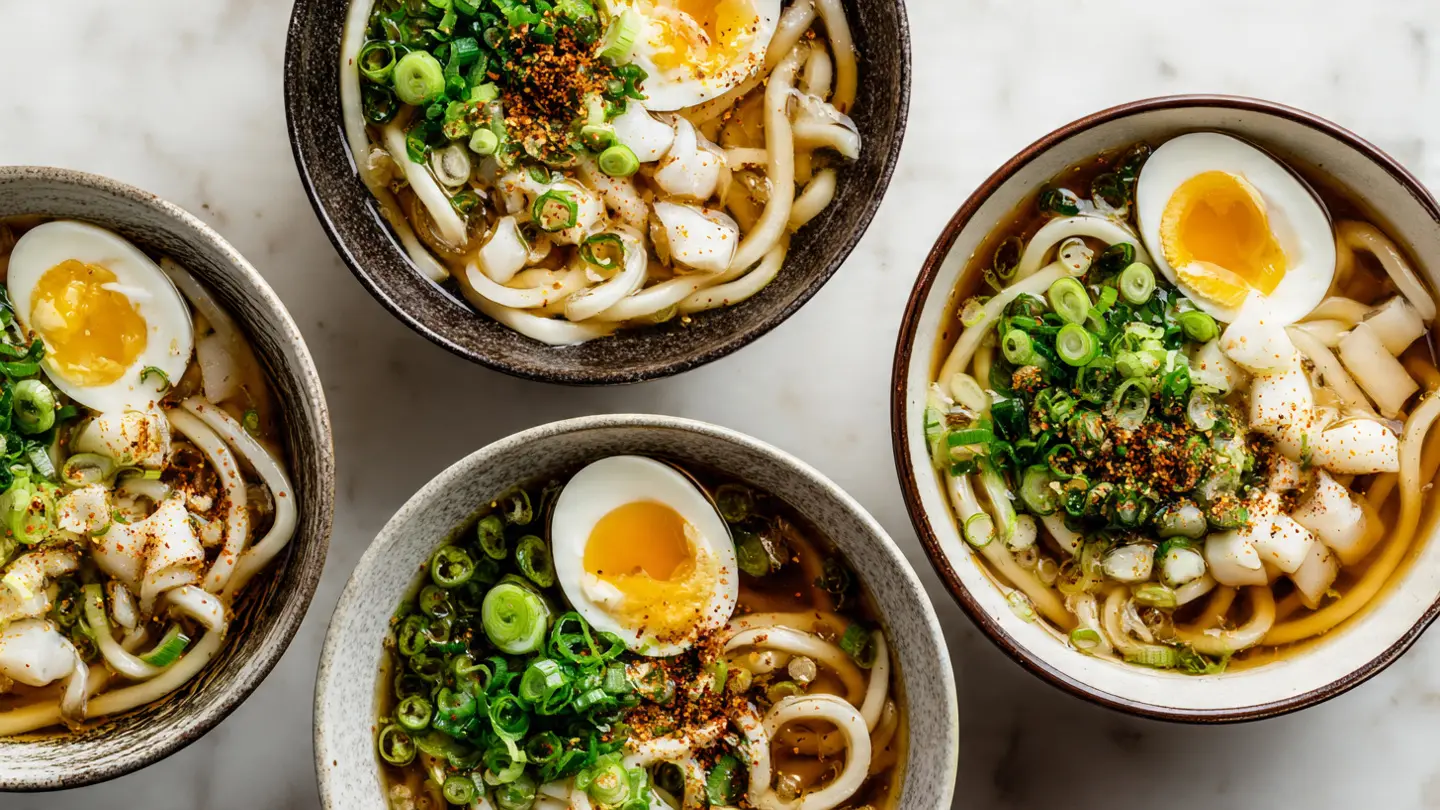
If you have never made udon noodle soup at home, you are in for one of the most satisfying cooking experiences of your life.
This dish is the kind of recipe that feels almost impossibly simple yet delivers a bowl of soup so warming and deeply savory that you will wonder why you ever ordered it at a restaurant.
A classic udon noodle soup centers on three things: thick, chewy wheat noodles, a delicate dashi-based broth, and a handful of finishing toppings that bring everything together.
The broth is what sets this apart from every other noodle soup. Dashi, the foundational Japanese soup stock made from kombu seaweed and dried bonito flakes, creates a clear, golden liquid with a quiet depth of umami that you simply cannot replicate with chicken broth or bouillon cubes.
When you season that dashi with soy sauce and mirin, the result is something called tsuyu, the classic udon broth that strikes the perfect balance between savory, slightly sweet, and subtly smoky.
The noodles themselves matter enormously here. Udon noodles are made from wheat flour, water, and salt, and their signature thick, round, and almost pillowy texture is what makes this dish so uniquely satisfying to eat.
Frozen udon noodles, particularly the Sanuki-style variety from Japanese grocery stores, deliver the best chew because they are pre-cooked and retain their texture far better than dried alternatives.
This recipe follows the kake udon (かけうどん) method, which is the most classic and widely recognized style of Japanese udon soup. Think of it as the foundation from which all other udon variations are built.
You might also love this warming Tom Yum Soup for another incredible Asian broth experience.

Why You’ll Love This Udon Noodle Soup Recipe
This soup punches so far above its weight in terms of flavor versus effort.
You are looking at four primary ingredients for the broth and about 20 minutes of total active cooking time, yet the result tastes like something that took hours.
The dashi broth is naturally low in fat and genuinely nourishing, making this one of those rare recipes that feels indulgent while actually being quite light.
It is also endlessly adaptable. Once you have the base recipe down, you can build any number of variations on top of it, from a spicy miso version to a hearty beef udon, simply by adjusting or adding to the broth and toppings.
- Incredibly quick: The broth comes together in under 10 minutes, and the noodles cook or reheat in just 1 to 2 minutes.
- Authentic Japanese flavor: Dashi, soy sauce, and mirin combine to create a genuinely traditional tsuyu broth.
- Budget-friendly: The ingredients are inexpensive, and a single batch serves four people generously.
- Beginner-friendly: There are only three main phases: make the broth, cook the noodles, and assemble.
- Highly customizable: Works beautifully with whatever protein, vegetables, or toppings you have on hand.
- Comforting in every season: Hot in winter, and surprisingly refreshing even served warm in summer.
Another Asian-inspired comfort dish worth trying is this Miso Soup Recipe for a lighter starter alongside your udon.
Ingredients
The key to this recipe is sourcing good-quality Japanese pantry staples. Most of these are available at Asian grocery stores and increasingly at larger supermarkets, and they are well worth having on hand for many other dishes.
- 4 servings frozen udon noodles (approximately 28 oz / 800g total), preferably Sanuki-style
- 4 cups (960ml) dashi stock (homemade or made from dashi powder)
- 3 tablespoons (45ml) Japanese soy sauce (koikuchi shoyu)
- 2 tablespoons (30ml) mirin (Japanese sweet cooking wine)
- 1 teaspoon (5ml) toasted sesame oil
- 1/2 teaspoon (2.5g) sugar (optional, to balance the broth)
- 1/2 teaspoon (2g) salt, or to taste
- 3 green onions (scallions), thinly sliced, for garnish
- 2 teaspoons shichimi togarashi (Japanese seven-spice blend), for garnish, optional
Optional toppings (choose your favorites):
- 4 slices kamaboko fish cake (Japanese steamed fish cake), sliced
- 4 pieces aburaage (fried tofu pouch), halved
- 2 soft-boiled eggs, halved
- 4 pieces wakame seaweed, rehydrated
- Shrimp tempura, for a heartier bowl
For the dashi (if making from scratch):
- 4 cups (960ml) cold water
- 1 piece kombu (dried kelp), approximately 4 inches (10cm) square
- 1/2 cup (15g) katsuobushi (dried bonito flakes)
For another warming noodle soup that shares similar comforting Asian flavors, check out this Pho Recipe.
Kitchen Equipment Needed
You do not need any specialized equipment for this recipe, which is part of what makes it so approachable. A few basic tools are all it takes.
- Large pot (for cooking the noodles)
- Medium saucepan (for the broth)
- Fine mesh strainer (for straining the dashi)
- Japanese ramen bowls or large deep soup bowls (for serving)
- Tongs or long cooking chopsticks (for handling the noodles)
- Ladle (for portioning the broth)
- Chef’s knife and cutting board (for toppings)
- Small bowls (for organizing toppings before serving)
Read Also: Instant Pot Pho Recipe
Recommended Products for This Recipe
These are products I genuinely recommend based on their quality and how much they improve the final result. Using the right pantry staples makes a significant difference in this particular dish.
1. Kayanoya Original Dashi Stock Powder
Kayanoya is widely considered the gold standard for instant dashi powder. It delivers a clean, deeply savory flavor that rivals homemade stock, making it the ideal shortcut for this recipe without sacrificing authenticity.
2. Frozen Sanuki Udon Noodles
Sanuki-style frozen udon noodles from Kagawa prefecture are famous for their exceptionally thick, chewy, and springy texture. They go from frozen to perfectly cooked in under 2 minutes, and their texture is far superior to dried udon.
3. Kikkoman Manjo Aji-Mirin
Not all mirin is created equal. Kikkoman’s Manjo Aji-Mirin is a true hon-mirin (real mirin) that adds genuine sweetness and a subtle floral depth to the broth, as opposed to cheaper mirin-style condiments that taste flat and syrupy.
4. Yamasa Soy Sauce
Yamasa is one of Japan’s oldest soy sauce producers, and their koikuchi shoyu (dark soy sauce) has a rounder, less salty flavor than many Western soy sauces. It blends into the broth beautifully without making it taste one-dimensional.
5. Japanese Donburi Ramen Bowls
Deep, wide Japanese-style bowls are not just aesthetic; they make it much easier to assemble the toppings neatly without the broth splashing over the sides. A good bowl also retains heat, keeping your soup warm while you eat.
You might also enjoy this Chicken Rice Soup Recipe for another comforting, nourishing bowl.

Step-by-Step Instructions
Step 1: Make the Dashi (If Using Homemade)
- Add 4 cups (960ml) of cold water and the piece of kombu to a medium saucepan.
- Let the kombu soak in the cold water for at least 20 minutes, or up to 30 minutes. This cold soak gently extracts the kombu’s glutamates (umami compounds) without releasing any bitter or slimy textures that can occur when kombu is boiled.
- Place the saucepan over medium heat and slowly bring the water to just below a simmer, around 140 to 160°F (60 to 70°C). You will see small bubbles beginning to form at the bottom of the pot.
- Remove the kombu just before the water reaches a full boil. Leaving kombu in boiling water causes it to release a slimy, bitter compound, so this step is important.
- Raise the heat to medium-high and bring the liquid to a boil, then turn off the heat.
- Immediately add all of the katsuobushi (bonito flakes) to the hot liquid. Do not stir; simply let them sink naturally. They will steep and release their smoky, savory flavor into the stock.
- Let the bonito flakes steep undisturbed for about 3 to 5 minutes. You will notice the liquid takes on a golden color.
- Pour the dashi through a fine mesh strainer into a clean bowl or pot, pressing gently on the bonito flakes to extract all the liquid. Discard the spent flakes.
- You now have fresh homemade dashi. If using dashi powder, dissolve 1 teaspoon of powder per 1 cup (240ml) of hot water, following the package instructions, and proceed to Step 2.
Step 2: Season the Broth
- Return the strained dashi to your medium saucepan and place it over medium heat.
- Add 3 tablespoons (45ml) of Japanese soy sauce to the dashi. Use a good-quality koikuchi shoyu here, as its deep, round flavor is what gives the broth its savory backbone.
- Add 2 tablespoons (30ml) of mirin to the pan. Mirin contributes a gentle sweetness and a subtle complexity that sugar alone cannot replicate.
- If using, add 1/2 teaspoon (2.5g) of sugar to further balance the savory notes of the soy sauce.
- Add 1/2 teaspoon (2g) of salt and stir the broth gently to combine all the seasonings.
- Bring the broth to a gentle simmer over medium heat, allowing it to bubble lightly for 1 to 2 minutes. This brief simmering time allows the alcohol in the mirin to cook off, leaving behind only its sweetness and aroma.
- Taste the broth and adjust the seasoning. If it tastes too salty, add a small splash of water. If it needs more depth, add a touch more soy sauce.
- Add 1 teaspoon (5ml) of toasted sesame oil to the broth and stir gently. The sesame oil adds a warm, nutty aroma that ties the broth together beautifully. Turn the heat to the lowest setting to keep the broth warm while you cook the noodles.
Step 3: Prepare Your Toppings
- While the broth is warming, prepare all your toppings so they are ready to go at assembly time. This ensures the soup stays hot from the moment the noodles hit the bowl.
- If using kamaboko fish cake, slice it into 1/4-inch (6mm) rounds and set aside.
- If using aburaage (fried tofu pouch), cut each piece in half. You can leave them at room temperature or briefly dip them in hot water to refresh them.
- If using a soft-boiled egg, slice it in half lengthwise just before serving. For a soft-boiled egg, cook a large egg in boiling water for exactly 6 to 7 minutes, then transfer immediately to an ice bath for 5 minutes before peeling.
- If using dried wakame seaweed, place it in a small bowl of cold water for 5 minutes to rehydrate. It will expand significantly. Drain and gently squeeze out excess water.
- Slice the green onions (scallions) thinly on a slight diagonal for a cleaner, more elegant look.
- Arrange all toppings in small separate bowls near the stove so you can garnish each bowl quickly and efficiently.
Step 4: Cook the Udon Noodles
- Bring a large pot of water to a rolling boil over high heat. You need a generous amount of water here, at least 8 cups (2 liters), so the noodles have room to move freely and cook evenly.
- Once the water is at a full boil, add the frozen udon noodles directly from the freezer. Do not thaw them first.
- Use long cooking chopsticks or tongs to gently stir and separate the noodles as they cook. Frozen Sanuki-style udon noodles typically reheat and cook through in just 1 to 2 minutes.
- Test a noodle by pressing it between your fingers; it should yield easily and feel uniformly soft and springy all the way through, with no hard or icy center.
- Once cooked, drain the noodles immediately in a colander. Give them a quick gentle shake to remove excess water but do not rinse them. Rinsing removes the starch coating that helps the broth cling to each noodle.
- Divide the drained noodles evenly between your four serving bowls. Use tongs to swirl and nest each portion into a rounded bundle for a nice presentation.
Step 5: Assemble and Serve
- Ladle the hot broth over the noodles in each bowl, using approximately 1 cup (240ml) of broth per serving. Pour gently and slowly to avoid splashing and to preserve the neat noodle bundle.
- Immediately begin adding your toppings while the broth is still steaming hot. Arrange the kamaboko slices, aburaage, soft-boiled egg halves, and rehydrated wakame on top of the noodles. Taking a few extra seconds to place toppings thoughtfully makes the finished bowl look far more appealing.
- Scatter the thinly sliced green onions generously over the top of each bowl.
- If using shichimi togarashi, add a small pinch to each bowl just before serving. This Japanese seven-spice blend adds a gentle warmth and a pop of color with its red chili and orange peel components.
- Serve the soup immediately. Udon noodles will continue to absorb the broth as they sit, so this dish is at its very best when eaten right away.
Read Also: Hot and Sour Soup Recipe
Tips for Success
Getting this recipe right comes down to a few key habits that most recipes do not mention. Paying attention to these details will take your bowl from good to genuinely great.
- Use frozen udon, not dried: Frozen Sanuki-style udon noodles have a far superior chew to dried udon. Dried noodles often turn out either gummy or too firm and rarely achieve that signature pillowy-springy texture.
- Do not boil the kombu: Remove kombu from the water just before it reaches a full boil. Boiling it releases a bitter, slimy compound that muddies the otherwise clean, delicate flavor of the dashi.
- Taste and adjust the broth before serving: Every brand of soy sauce and dashi powder varies in saltiness. Taste the broth after seasoning and trust your palate over the recipe measurements.
- Keep the broth hot: Make sure the broth is at a full simmer when you ladle it over the noodles. A lukewarm broth will make the whole bowl feel flat and disappointing.
- Do not rinse the noodles after draining: The starchy surface of the noodles helps the broth adhere to them, which is what gives you that well-coated, flavorful bite in every mouthful.
- Prep toppings before cooking noodles: Udon noodles cook in under 2 minutes, so there is no time to prepare toppings after the fact. Having everything ready in advance is the key to a seamless assembly.
- Use low-sodium soy sauce if needed: Standard Japanese soy sauce can make the broth quite salty. If you are sodium-sensitive, swap in a low-sodium or reduced-sodium version without compromising the flavor.
Another fantastic soup to add to your weekly rotation is this Chicken Soup Recipe.
Serving Suggestions
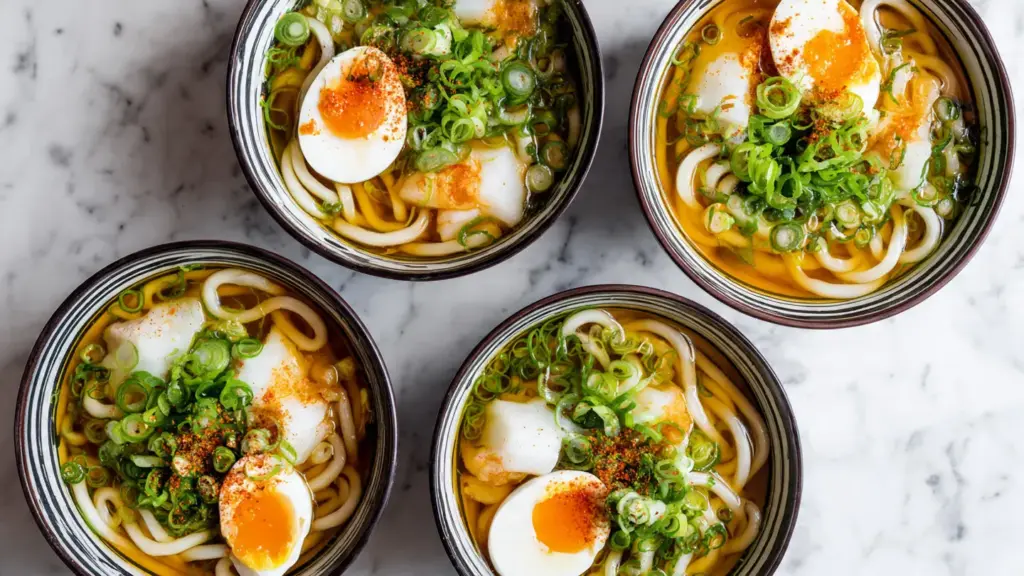
Udon noodle soup is a complete meal on its own, but it becomes even more of an experience when you round it out with a few complementary sides.
A small bowl of edamame, lightly salted and served warm, is the most traditional Japanese accompaniment and takes only minutes to prepare from frozen.
For a more substantial spread, gyoza dumplings served alongside are a natural pairing that mirrors the experience of eating at a Japanese noodle bar.
- Chinese Dumplings as a side for a complete Asian-inspired meal
- Bok Choy steamed or stir-fried as a light vegetable side
- Easy Fried Rice for a heartier meal alongside the soup
- Chicken Lettuce Wraps for a fresh, light starter before the soup
- A simple cucumber salad dressed with rice vinegar and sesame oil for a refreshing contrast
- Steamed white rice on the side for guests who want an extra serving of carbs
- A small dish of pickled ginger or daikon to cleanse the palate between bites
For another Asian-inspired dish that pairs beautifully alongside udon, try this Bibimbap Recipe.
Variations to Try
The kake udon base is incredibly versatile. Once you are comfortable with the classic version, these variations are all easy to achieve with minimal extra effort.
- Beef Udon (Niku Udon): Thinly slice 6 oz (170g) of ribeye or sirloin and cook it in a mixture of soy sauce, mirin, and a pinch of sugar in a small pan until just cooked through. Layer the seasoned beef on top of the assembled soup.
- Kitsune Udon: “Kitsune” means fox in Japanese, and this variation is named for the golden fried tofu pouches (aburaage) that top the bowl. Simmer aburaage pieces in a mixture of dashi, soy sauce, mirin, and sugar for 10 minutes until they are deeply flavored before adding to the soup.
- Spicy Miso Udon: Whisk 1 to 2 tablespoons of white miso paste and 1 teaspoon of gochugaru (Korean red pepper flakes) or sriracha into the broth for a warming, complex, and deeply savory variation.
- Curry Udon: Melt a small block of Japanese curry roux into the simmering broth and bring it back to a boil until fully dissolved. The result is a thick, rich, and warming broth with a completely different personality.
- Tempura Udon: Top each bowl with a piece of shrimp tempura or vegetable tempura for a restaurant-style experience at home.
- Chicken Udon: Add shredded poached or rotisserie chicken to the bowls before ladling the broth. It makes the dish significantly heartier and is a great way to use leftover chicken.
- Vegan Udon: Swap the dashi for kombu-only dashi (soak kombu in cold water overnight, then gently heat) and use tamari in place of regular soy sauce. Top with fried tofu, wakame, and mushrooms.
Read Also: Vegan Pho Recipe
Storage and Reheating
One important note about storing udon noodle soup is that the noodles and broth should always be kept separate. If you store them together, the noodles will absorb all the broth overnight and turn soft and bloated.
Transfer any leftover broth to an airtight container and refrigerate for up to 5 days, or freeze it in portioned containers for up to 1 month.
- Store leftover udon noodles in a separate airtight container in the refrigerator for up to 2 days.
- To reheat the broth, pour it into a saucepan over medium heat and bring to a gentle simmer.
- To refresh the noodles, briefly dip them in a pot of hot (not boiling) water for 30 to 60 seconds until they are warmed through. Drain them well before placing in the serving bowl.
- Do not microwave the noodles directly in the broth, as this causes them to absorb the liquid rapidly and turn gummy.
- Do not freeze assembled udon soup. Freeze the broth only, and cook fresh noodles when you are ready to serve again.
- Toppings like fish cake and soft-boiled eggs should be stored separately and added fresh when reheating.
This Chicken Sopas Recipe is another beloved noodle soup worth bookmarking for your next cozy dinner.
Nutritional Facts
The following nutritional estimates are based on one serving (approximately 1/4 of the total recipe) using the base recipe with no optional toppings. Values will vary depending on the specific brands and toppings used.
| Nutrient | Per Serving |
|---|---|
| Calories | ~315 kcal |
| Carbohydrates | ~64g |
| Protein | ~8g |
| Total Fat | ~2g |
| Saturated Fat | ~0.3g |
| Sodium | ~1,800mg |
| Fiber | ~4g |
| Sugar | ~5g |
| Calcium | ~40mg |
| Iron | ~2mg |
Note: Sodium content can vary significantly depending on the soy sauce brand and whether low-sodium options are used. Using a low-sodium soy sauce can reduce the sodium per serving by approximately 25 to 30%.
Adding protein toppings like a soft-boiled egg (approximately 70 kcal, 6g protein) or shrimp tempura will increase both calorie and protein values meaningfully.
For another light and nourishing soup to add variety to your meal plan, try this Zucchini Soup Recipe.
Health Benefits of Key Ingredients
This is not just a delicious bowl of soup; many of the core ingredients carry genuine nutritional and health benefits that make udon noodle soup a smart addition to your diet.
Beyond its comforting taste, this recipe is built on ingredients that have been valued in Japanese cuisine for centuries, both for their flavor and their wellness properties.
- Kombu (dried kelp): Kombu is an exceptional natural source of iodine, which supports thyroid function. It also contains fucoidan, a compound that has been studied for its potential anti-inflammatory properties. As a bonus, kombu contains glutamates that naturally enhance the umami depth of the broth without added MSG.
- Katsuobushi (bonito flakes): Dried bonito is rich in protein and provides a range of B vitamins, including B12, which is particularly valuable in a fish-forward soup. It is also a source of DHA, an omega-3 fatty acid that supports brain and heart health.
- Mirin: While mirin is a sweetener, it contributes antioxidants from the fermentation process and helps stimulate digestion when consumed as part of a warm broth.
- Soy sauce: Japanese soy sauce contains naturally occurring glutamates that enhance umami flavor, reducing the need for added salt. It also provides small amounts of antioxidants from the fermentation of soybeans.
- Udon noodles: As a wheat-based noodle, udon provides complex carbohydrates for sustained energy. Compared to refined white pasta, udon has a slightly lower glycemic impact due to its thickness and the cooking method used.
- Green onions (scallions): These are far more nutritious than their role as a garnish would suggest. Green onions are a good source of vitamins K and C, both of which support bone health and immune function respectively.
Read Also: Spinach Soup Recipe
Frequently Asked Questions
1. What is the difference between udon noodle soup and ramen?
Udon and ramen are both Japanese noodle soups, but they are quite distinct in character.
Udon noodles are thick, white, and made from wheat flour, water, and salt, giving them a neutral flavor and a uniquely chewy, almost pillowy texture. The broth in udon soup is typically clear and delicate, built on dashi stock and seasoned lightly with soy sauce and mirin.
Ramen noodles are thinner, more alkaline (made with lye water), and typically served in much richer broths such as pork-based tonkotsu, chicken-based shoyu, or fermented miso broth.
2. Can I use regular chicken broth instead of dashi?
You can use chicken broth as a substitute in a pinch, but the flavor will be noticeably different.
Dashi provides a clean, oceanic umami that is lighter and more delicate than chicken broth. Using chicken broth will result in a heavier, more Western-tasting soup that lacks the subtle smokiness and sweetness of a true tsuyu broth. If dashi powder is available at your local Asian market or online, it is well worth the small investment.
3. Where can I find frozen udon noodles?
Frozen udon noodles are widely available at Japanese and Korean grocery stores, and at many large Asian supermarket chains.
Brands to look for include Myojo, Sanuki, and various store-brand versions from markets like H-Mart or 99 Ranch. If you cannot find them locally, they are also available through online retailers. Refrigerated fresh udon noodles are another good option and are increasingly available in the Asian section of mainstream supermarkets.
4. How do I make the broth less salty?
The primary source of sodium in this recipe is the soy sauce.
Start by swapping regular soy sauce for a low-sodium or reduced-sodium Japanese soy sauce, which typically cuts the sodium by 30 to 40 percent without dramatically changing the flavor. You can also dilute the broth with additional water or a small amount of unsalted dashi and re-taste until the saltiness is where you want it. Adding a very small pinch of sugar can also help balance perceived saltiness.
5. Can I make this recipe ahead of time?
The broth can be made up to 5 days ahead of time and stored in the refrigerator, or frozen for up to 1 month.
The noodles, however, are best cooked fresh just before serving, as they will absorb the broth and turn soggy if stored together. If you want to meal prep this dish, keep the broth in one container and cook the noodles fresh each time. This approach means you can have a bowl of udon ready in under 5 minutes on any given night.
For a similarly quick and nourishing soup you can prep ahead, this Mulligatawny Soup Recipe is absolutely worth trying.

Udon Noodle Soup

Equipment
- Large pot - for cooking the noodles
- Medium saucepan - for the broth
- Fine-mesh strainer - for straining the dashi
- Japanese Ramen Bowls - or large deep soup bowls, for serving
- Tongs - or long cooking chopsticks, for handling the noodles
- Ladle - for portioning the broth
- Chef’s knife
- Cutting board
- Small bowls - for organizing toppings before serving
Ingredients
- 28 oz frozen udon noodles - 800g total, preferably Sanuki-style
- 4 cups dashi stock - 960ml, homemade or made from dashi powder
- 3 tablespoons Japanese soy sauce - 45ml, koikuchi shoyu
- 2 tablespoons mirin - 30ml, Japanese sweet cooking wine
- 1 teaspoon toasted sesame oil - 5ml
- 0.5 teaspoon sugar - 2.5g, optional, to balance the broth
- 0.5 teaspoon salt - 2g, or to taste
- 3 green onions - scallions, thinly sliced, for garnish
- 2 teaspoons shichimi togarashi - Japanese seven-spice blend, optional, for garnish
Optional Toppings
- 4 slices kamaboko fish cake - Japanese steamed fish cake
- 4 pieces aburaage - fried tofu pouch, halved
- 2 soft-boiled eggs - halved
- 4 pieces wakame seaweed - rehydrated
- shrimp tempura - for a heartier bowl
For the Dashi (if making from scratch)
- 4 cups cold water - 960ml
- 1 piece kombu - dried kelp, approximately 4 inches (10cm) square
- 0.5 cup katsuobushi - 15g, dried bonito flakes
Instructions
- Make the dashi: Soak kombu in cold water for 20-30 minutes in a medium saucepan. Heat to just below a simmer (140-160°F), remove kombu before boiling. Bring to a boil, remove from heat, add bonito flakes and steep 3-5 minutes. Strain through a fine mesh strainer.
- Season the broth: Return dashi to the saucepan and add soy sauce, mirin, sugar (if using), and salt. Bring to a gentle simmer for 1-2 minutes. Stir in sesame oil and keep warm over low heat.
- Prepare your toppings: Slice kamaboko, halve aburaage, prepare soft-boiled eggs, rehydrate wakame, and thinly slice green onions. Arrange in small bowls near the stove.
- Cook the udon noodles: Bring a large pot of water to a rolling boil. Add frozen udon noodles directly from the freezer and cook for 1-2 minutes, separating gently with tongs. Drain in a colander without rinsing.
- Assemble and serve: Divide drained noodles evenly among four bowls. Ladle hot broth over each. Arrange toppings on top, scatter with green onions and a pinch of shichimi togarashi if desired. Serve immediately.
Notes
- Frozen vs dried: Use frozen Sanuki-style udon for the best chewy texture. Dried udon noodles often turn out gummy or too firm.
- Don’t boil the kombu: Remove it from the water before it reaches a full boil to avoid releasing a bitter, slimy compound that muddies the dashi flavor.
- Taste and adjust: Soy sauce and dashi powder brands vary in saltiness. Always taste the broth after seasoning and adjust to your preference.
- Keep the broth hot: The broth should be at a full simmer when ladled over the noodles to ensure the soup is steaming hot.
- Do not rinse the noodles: The starchy surface helps the broth adhere to the noodles for better flavor in every bite.
- Prep toppings first: Udon noodles cook in under 2 minutes, so have all toppings ready before you start cooking the noodles.
- Storage: Store leftover broth and noodles separately. The broth can be refrigerated for up to 5 days or frozen for a month. Cook fresh noodles when reheating.
- Reheating: Reheat the broth gently on the stove, and refresh noodles by dipping them in hot (not boiling) water for 30-60 seconds.
Final Thoughts
Making udon noodle soup at home is one of those rare cooking experiences that delivers maximum satisfaction for minimal effort.
The combination of a deeply savory dashi broth, thick chewy noodles, and a few thoughtfully chosen toppings creates a bowl that feels genuinely restorative.
Once you try this recipe, I think you will find yourself returning to it again and again, both when you need something quick on a busy weeknight and when you want to impress guests with an effortless, authentic Japanese meal.
Give this udon noodle soup recipe a try, and let me know how it goes in the comments below! I love hearing which toppings you choose, what variations you experiment with, and whether it earns a permanent spot in your recipe rotation.
If you make this recipe, please share a photo and tag me on social media. Your feedback helps this community grow, and it makes my day every single time.
Recommended:
- Pho Recipe
- Chicken Pho Recipe
- Tom Yum Soup Recipe
- Miso Soup Recipe
- Hot and Sour Soup Recipe
- Chinese Fish Soup Recipe
- Congee Recipe
- Chicken Rice Soup Recipe
- Minestrone Soup Recipe
- Lemon Chicken Orzo Soup Recipe