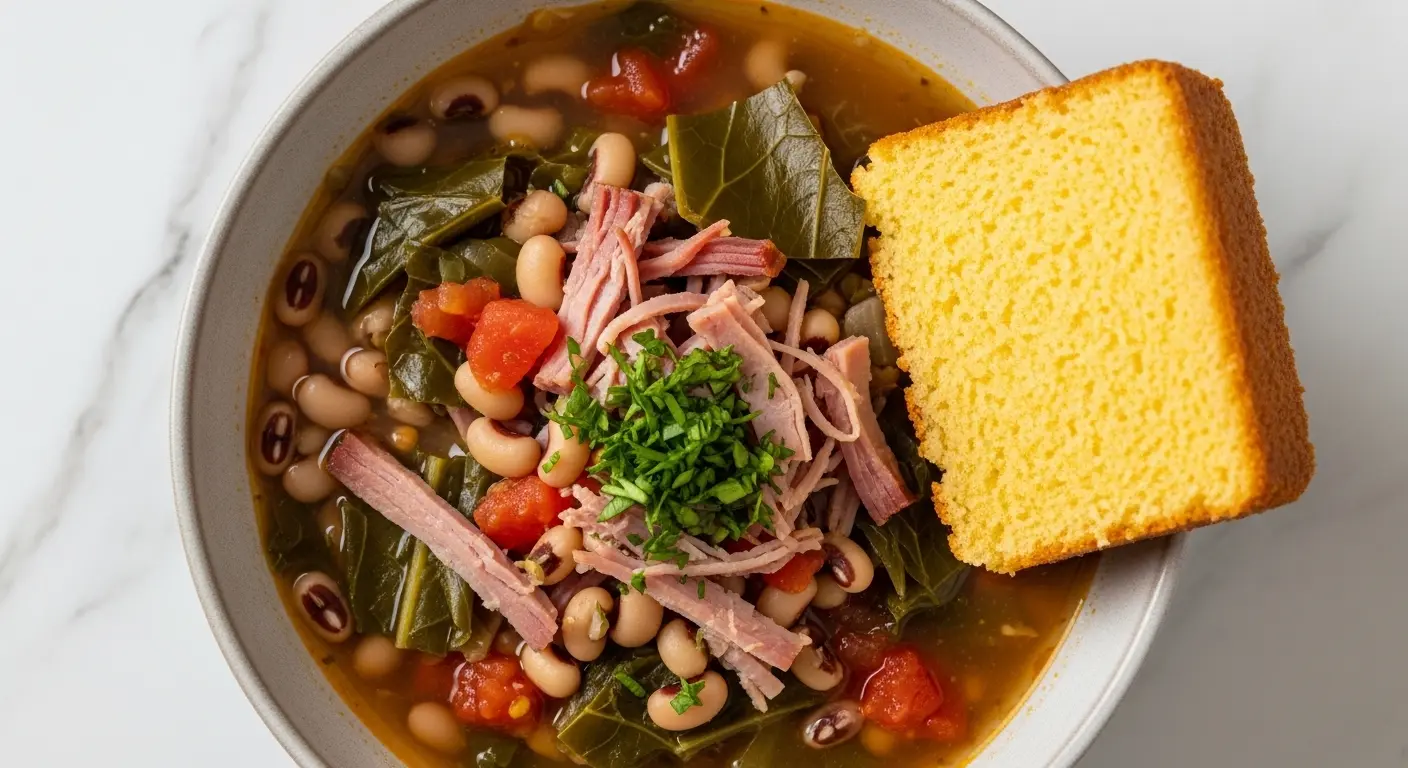
This black eyed pea soup recipe has been warming kitchens across the South for generations, and once you taste it, you’ll understand exactly why.
It’s the kind of soup that fills the house with the most incredible aroma as it simmers away on the stove. Rich, savory broth, tender black eyed peas, smoky ham, and a medley of vegetables all come together in one pot to create something that tastes deeply nourishing, like it took all day even if it didn’t.
Black eyed peas have a long tradition in Southern cooking, particularly on New Year’s Day, where eating them is believed to bring good luck and prosperity in the year ahead. But honestly? This soup is too good to save for just one day a year.
It’s budget-friendly, incredibly satisfying, and comes together without any complicated techniques. A pot of this soup with a side of warm cornbread is everything you need on a cold evening.
You might also enjoy: Split Pea Soup

Why You’ll Love This Black Eyed Pea Soup Recipe
This soup checks all the boxes for a genuinely great weeknight dinner or a cozy weekend meal.
It’s a one-pot recipe, which means less cleanup and more time at the table where it matters. Everything cooks in a single Dutch oven or large pot from start to finish.
The flavor is layered and rich without being heavy. Sauteing the aromatics first, then building the broth slowly, gives you depth that a lot of quick soups miss.
It’s also incredibly forgiving. You can use dried black eyed peas or canned, adjust the seasoning to your taste, or swap in different greens depending on what you have on hand.
- One pot, minimal cleanup
- Budget-friendly and pantry-friendly
- Hearty and filling without feeling heavy
- Naturally gluten-free and dairy-free
- Perfect for meal prep since it reheats beautifully
- A wonderful New Year’s Day tradition or comforting weeknight staple
- Easily adaptable to be vegetarian or vegan
Read Also: Vegetarian Split Pea Soup
Ingredients
To make this classic black eyed pea soup, you’ll need simple pantry staples and fresh vegetables that come together to create a deeply flavorful broth. The smoked ham hock or diced ham is the key to that rich, smoky backbone the soup is known for.
- 1 lb (450g) dried black eyed peas, sorted and rinsed (or 3 cans / 45 oz total of canned black eyed peas, drained and rinsed)
- 2 tablespoons olive oil
- 1 large yellow onion, diced
- 3 medium carrots, peeled and sliced into rounds
- 3 stalks celery, sliced
- 5 cloves garlic, minced
- 1 smoked ham hock (about 1 to 1.5 lbs / 450–680g), OR 2 cups (300g) diced smoked ham
- 1 can (14.5 oz / 411g) diced tomatoes, undrained
- 6 cups (1.4 liters) low-sodium chicken broth (or vegetable broth)
- 2 cups (475ml) water
- 1 teaspoon dried thyme
- 1 teaspoon smoked paprika
- 1/2 teaspoon dried oregano
- 1/4 teaspoon crushed red pepper flakes (optional, adjust to taste)
- 2 bay leaves
- 3 cups (90g) fresh collard greens or kale, stems removed and leaves roughly chopped
- Salt and black pepper, to taste
- 1 tablespoon apple cider vinegar (for brightness at the end)
This is a great recipe to make alongside Lentil Soup for a cozy soup night rotation.
Kitchen Equipment Needed
Having the right tools on hand makes this soup come together smoothly, especially when dealing with a large batch. A heavy-bottomed pot is particularly important here because it distributes heat evenly and prevents the soup from scorching at the bottom.
- Large Dutch oven or heavy-bottomed soup pot (at least 6-quart / 5.7-liter capacity)
- Cutting board
- Chef’s knife
- Wooden spoon or silicone spatula
- Ladle
- Colander or strainer (for rinsing peas)
- Measuring cups and spoons
- Large mixing bowl (for soaking dried peas if using)
- Tongs (for removing and handling the ham hock)
- Immersion blender (optional, if you’d like to partially blend for a thicker texture)
Read Also: Ham and Potato Soup
Recommended Products for This Recipe
These products are recommended based on quality, performance, and how much they genuinely improve your results with this recipe.
1. Lodge Enameled Cast Iron Dutch Oven
A quality Dutch oven distributes heat evenly throughout the cooking process, which is crucial for building flavor layer by layer in this soup. The enamel interior prevents sticking and makes cleanup easy even after long simmering times. It’s an investment that will last decades.
2. Camellia Brand Dried Black Eyed Peas
Camellia is one of the most trusted names in dried beans in the South and for good reason. These black eyed peas cook up consistently tender with a creamy texture that holds together without turning mushy. Starting with quality dried beans makes a noticeable difference in the final soup.
3. Smoked Ham Hock
The ham hock is what gives this soup its deep, smoky backbone. Look for a good-quality smoked ham hock from a butcher or specialty grocery store. It infuses the broth with incredible richness that no spice alone can replicate.
4. Better Than Bouillon Chicken Base
This concentrated chicken base takes your broth from ordinary to restaurant-quality. It dissolves easily, adds a depth of umami flavor to the soup base, and is far more flavorful than standard boxed broth. A little goes a long way.
5. KitchenAid Immersion Blender
If you want to thicken this soup without adding flour or starch, an immersion blender is the answer. Blending just a portion of the soup directly in the pot creates a naturally creamy, thick texture while leaving plenty of whole beans and vegetables intact.
For another hearty bean-based comfort meal, check out this Classic Red Beans and Rice.

Step-by-Step Instructions
Step 1: Soak and Prep the Dried Black Eyed Peas (Skip if Using Canned)
- Sort through the dried black eyed peas, removing any shriveled peas, small stones, or debris that may have slipped through the packaging process.
- Rinse the peas thoroughly under cold running water in a colander for 30 to 60 seconds.
- Transfer the rinsed peas to a large bowl and cover with at least 3 inches (7.5 cm) of cold water.
- Allow the peas to soak for a minimum of 4 hours, or ideally overnight (8 hours) at room temperature. Soaking reduces cooking time significantly and improves the texture of the finished peas.
- After soaking, drain the peas through the colander and rinse again with cold water. Set aside.
- If using canned black eyed peas, simply drain and rinse them under cold water and set aside. You will add them later in the process than the dried peas.
Step 2: Sauté the Aromatics
- Heat 2 tablespoons of olive oil in your large Dutch oven over medium heat. Allow the oil to shimmer before adding the vegetables, which signals it is hot enough to sauté properly.
- Add the diced onion, sliced carrots, and sliced celery to the pot all at once.
- Cook, stirring occasionally with a wooden spoon, for 7 to 8 minutes, until the onion becomes translucent and the edges of the vegetables just begin to soften. You are building a flavor base here, so don’t rush this step.
- Add the 5 minced garlic cloves to the pot. Stir well and cook for 1 to 2 minutes more, until the garlic is fragrant. Watch closely during this step as garlic can go from golden to burned quickly.
- Add the dried thyme, smoked paprika, dried oregano, and crushed red pepper flakes (if using). Stir everything together and cook the spices with the vegetables for 30 to 60 seconds. Toasting the spices briefly in the oil amplifies their flavor in the finished soup.
Step 3: Add the Broth, Peas, Ham, and Tomatoes
- Pour in the 6 cups (1.4 liters) of low-sodium chicken broth and 2 cups (475ml) of water.
- Add the drained and rinsed dried black eyed peas (or canned peas if using, though canned peas will be added in Step 5 instead).
- Add the can of diced tomatoes along with all of their juices. The acidity from the tomatoes brightens the overall broth beautifully.
- Add the smoked ham hock (or the 2 cups of diced smoked ham if not using a ham hock) to the pot.
- Drop in the 2 bay leaves. Stir everything together gently to combine.
- Increase the heat to medium-high and bring the soup to a full rolling boil. This should take about 8 to 10 minutes.
Step 4: Simmer the Soup Low and Slow
- Once the soup reaches a boil, reduce the heat to low and place the lid on the Dutch oven, leaving it just slightly ajar to allow some steam to escape.
- Allow the soup to simmer gently for 1 hour to 1 hour 30 minutes, until the dried black eyed peas are completely tender. They should be soft enough to crush easily between two fingers, with no chalky center remaining.
- Stir the soup every 20 to 30 minutes during this simmering period and check the liquid level. If the soup appears too thick or the liquid has reduced significantly, add an additional 1 cup (240ml) of water or broth as needed.
- If you are using a ham hock, use tongs to carefully remove it from the pot at around the 1-hour mark. Set it on a cutting board and allow it to cool for 5 to 10 minutes until it can be safely handled.
- Pull the meat away from the ham hock bone using two forks or your hands. Discard the skin, bone, and any large pieces of fat. Chop or shred the remaining meat into small bite-sized pieces and return the meat to the pot.
Step 5: Add the Greens (and Canned Peas if Using)
- If you are using canned black eyed peas, add the drained and rinsed peas to the pot now. Stir them in gently and allow them to heat through for about 5 minutes.
- Add the 3 cups of chopped collard greens or kale to the soup. Stir them in gently.
- If using collard greens, continue simmering uncovered for an additional 15 to 20 minutes, until the greens are completely tender. Collards are tougher than kale and need the extra time.
- If using kale, simmer for an additional 8 to 10 minutes, until the kale is wilted and tender but still a deep, vibrant green color.
- Remove and discard the 2 bay leaves.
Step 6: Season and Finish
- Taste the soup carefully and season with salt and black pepper as needed. Because smoked ham is naturally salty, start with a modest pinch of salt and build from there.
- Stir in 1 tablespoon of apple cider vinegar. This small addition makes a remarkable difference: it brightens the entire flavor of the soup and cuts through the richness of the ham without making the soup taste vinegary.
- If you’d like a thicker, creamier texture, use an immersion blender to carefully blend 2 to 3 cups of the soup directly in the pot, then stir everything back together. Alternatively, use a ladle to transfer 2 cups of soup to a regular blender, blend until smooth, and stir back into the pot.
- Allow the soup to rest for 5 minutes before ladling into bowls. This brief rest helps the flavors meld beautifully.
- Serve hot with a generous piece of cornbread on the side.
This is also a wonderful recipe to make if you enjoy Minestrone Soup — that same hearty, vegetable-forward spirit translates perfectly here.
Tips for Success
Getting this soup just right comes down to a few small techniques that make a big difference in flavor and texture. Take your time with the aromatics and don’t skip the finishing splash of vinegar.
- Don’t skip soaking the dried peas. Soaking dramatically reduces cooking time and ensures the peas cook evenly and don’t remain tough in spots.
- Toast the spices. Stirring the thyme, paprika, and oregano into the hot oil with the vegetables for 30 to 60 seconds before adding liquid releases their essential oils and deepens the flavor of the finished soup significantly.
- Use a ham hock if possible. Diced ham works well, but a bone-in smoked ham hock infuses the broth with a depth of smoky, savory flavor that diced ham simply cannot replicate. It is worth the extra effort.
- Don’t add salt too early. The smoked ham and chicken broth both carry significant salt. Taste and season at the very end, not the beginning.
- Add greens toward the end. Adding collard greens or kale in the final 10 to 20 minutes preserves their color, texture, and nutritional value. Adding them too early results in dull, mushy greens.
- The vinegar finish is not optional. A small splash of apple cider vinegar at the very end lifts every flavor in the pot and makes the soup taste more vibrant and complete.
- For extra creaminess without cream, partially blend the soup using an immersion blender or transfer a portion to a standard blender. This technique creates a naturally thick, silky texture.
For more comforting soup inspiration, Chicken Tortilla Soup is another weeknight winner made in one pot.
Serving Suggestions
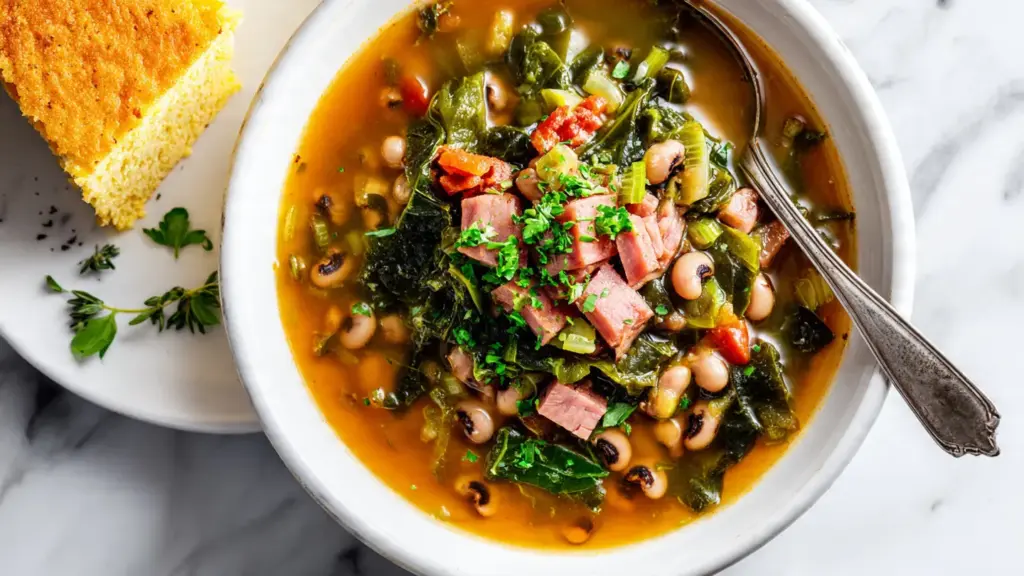
Black eyed pea soup is wonderfully hearty on its own, but a few simple accompaniments take it to the next level.
Warm cornbread is the classic pairing and for very good reason. The slightly sweet, crumbly bread is perfect for soaking up every drop of the smoky broth. Try it alongside Skillet Cornbread for the full Southern experience.
- Skillet or cast iron Sweet Cornbread or cornbread muffins
- Warm crusty bread or buttered biscuits
- A simple green salad with a light vinaigrette to balance the richness
- Classic Deviled Eggs as an appetizer before the soup
- A side of sauteed or steamed rice for a more filling meal
- Hot sauce or pickled jalapeños on the table for those who love heat
- A sprinkle of fresh chopped parsley or green onions as a garnish in each bowl
Variations to Try
This recipe is incredibly flexible and lends itself beautifully to different dietary preferences and flavors. The base technique stays the same no matter which direction you take it.
- Vegetarian Black Eyed Pea Soup: Skip the ham entirely and use vegetable broth instead of chicken broth. To replicate the smoky depth, add 1 teaspoon of smoked paprika and a few drops of liquid smoke. Swap in additional vegetables like diced bell pepper or zucchini for heartiness.
- Slow Cooker Version: Sauté the aromatics and spices in a skillet first for best flavor. Add everything to the slow cooker and cook on LOW for 7 to 8 hours or HIGH for 4 to 5 hours. Add the greens during the last 30 minutes of cooking.
- Spicy Southern Black Eyed Pea Soup: Double the crushed red pepper flakes, add 1 teaspoon of cayenne pepper, and stir in 1 diced jalapeño with the aromatics. A splash of your favorite hot sauce stirred in at the end adds another layer of heat.
- Instant Pot Version: Sauté aromatics on the sauté setting, add all remaining ingredients (using dried peas without soaking), and cook on HIGH pressure for 25 minutes followed by a natural release of 15 minutes. Add the greens, stir, and use the sauté setting to heat through for 5 more minutes.
- Smoked Sausage Version: Replace the ham hock with 1 lb (450g) of sliced smoked andouille or kielbasa sausage, browned in the pot before adding the aromatics. This gives the soup a bold, smoky sausage flavor that is absolutely delicious.
Read Also: Black Bean Soup
Storage and Reheating
This soup stores exceptionally well and often tastes even better the next day once all the flavors have had time to meld and deepen overnight. Make a big batch and enjoy it all week.
- Refrigerator: Allow the soup to cool completely to room temperature before transferring it to an airtight container. Store in the refrigerator for up to 5 days.
- Freezer: Ladle the cooled soup into freezer-safe containers or heavy-duty resealable bags. Leave 1 inch (2.5 cm) of space at the top for expansion. Freeze for up to 3 months. Label with the date.
- Reheating from the refrigerator: Transfer the soup to a pot on the stove over medium heat and warm, stirring occasionally, for about 8 to 10 minutes until heated through. Add a splash of broth or water if the soup has thickened during storage.
- Reheating from frozen: Thaw overnight in the refrigerator or use the microwave’s defrost setting. Reheat on the stovetop over medium heat, stirring frequently and adding liquid as needed to restore the original consistency.
- Microwave reheating: Transfer a single portion to a microwave-safe bowl, cover loosely, and heat in 90-second intervals, stirring between each interval, until steaming hot.
This Kale Soup is another great make-ahead option with similarly excellent storage qualities.
Nutritional Facts
The following nutrition information is an approximate estimate per serving (based on 6 servings using a smoked ham hock). Values may vary based on specific ingredients and portion sizes used.
| Nutrient | Per Serving (approx.) |
|---|---|
| Calories | ~320 kcal |
| Total Fat | 7g |
| Saturated Fat | 1.5g |
| Cholesterol | 35mg |
| Sodium | 820mg |
| Total Carbohydrates | 42g |
| Dietary Fiber | 9g |
| Sugars | 6g |
| Protein | 24g |
| Potassium | 950mg |
| Vitamin A | 80% DV |
| Vitamin C | 20% DV |
| Iron | 25% DV |
| Calcium | 12% DV |
Another nourishing, protein-rich soup to try is this Chicken Rice Soup — simple, filling, and perfect for any night of the week.
Health Benefits of Key Ingredients
This soup isn’t just delicious, it is genuinely good for you from the inside out. Every major ingredient contributes something meaningful to your overall health and wellbeing.
Black eyed peas are one of the most nutritionally impressive legumes you can cook with. They are loaded with plant-based protein, dietary fiber, folate, and essential minerals like potassium and iron — all of which support heart health, digestive wellness, and sustained energy throughout the day.
- Black Eyed Peas: Rich in folate, fiber, and plant-based protein; associated with improved blood sugar regulation, lower cholesterol, and better digestive health.
- Collard Greens or Kale: Packed with vitamins K, A, and C, along with powerful antioxidants and anti-inflammatory compounds that support bone strength and immune function.
- Carrots: An excellent source of beta-carotene, which the body converts into vitamin A to support healthy vision, skin, and immunity.
- Celery: Provides vitamin K and natural anti-inflammatory properties; helps support hydration due to its high water content.
- Garlic: Contains allicin, a bioactive compound with documented antimicrobial and cardiovascular benefits.
- Tomatoes: Rich in lycopene, vitamin C, and potassium; lycopene in particular has been associated with reduced risk of certain cancers and heart disease.
- Olive Oil: A heart-healthy fat rich in monounsaturated fatty acids and polyphenols that reduce inflammation and support healthy cholesterol levels.
You might also enjoy the incredible nutritional profile of Spinach Soup if you’re looking to incorporate more leafy greens into your meals.
Frequently Asked Questions
1. Do I have to soak the black eyed peas before making this soup?
Soaking dried black eyed peas is strongly recommended but not strictly required. Soaking for 4 to 8 hours reduces the cooking time by about 30 to 45 minutes, helps the peas cook more evenly, and can make them easier to digest. If you skip soaking, simply plan on adding up to 45 minutes of additional simmering time and check frequently for tenderness. Canned black eyed peas require no soaking at all and are a convenient shortcut.
2. Can I make this soup without ham to keep it vegetarian?
Absolutely. Omit the ham hock or diced ham entirely and replace the chicken broth with a good-quality vegetable broth. To replicate the smoky depth that the ham provides, add 1 to 1.5 teaspoons of smoked paprika, a small splash of liquid smoke (start with 1/4 teaspoon and adjust), or a few diced chipotle peppers in adobo sauce. The soup will still be hearty, delicious, and deeply flavorful.
3. How do I thicken black eyed pea soup if it’s too thin?
The easiest way is to use an immersion blender to partially blend 2 to 3 cups of the soup directly in the pot. This breaks down some of the peas and vegetables, releasing natural starches that thicken the broth without adding any extra ingredients. Alternatively, mash a cup of the cooked peas with a fork and stir the mash back into the soup. Simmering the soup uncovered for an additional 15 to 20 minutes will also reduce the liquid and concentrate the flavors.
4. What’s the difference between black eyed peas and black beans?
Black eyed peas and black beans are both legumes, but they are distinct varieties with different flavors, textures, and culinary traditions. Black eyed peas are small and cream-colored with a distinctive black or dark brown spot, and they have an earthy, mild flavor with a slightly dense texture. Black beans are smaller, darker, and have a creamier, slightly sweeter flavor. They are interchangeable in some recipes but will produce different results. In Southern cooking, black eyed peas carry specific cultural and traditional significance, particularly around the New Year.
5. Can I freeze black eyed pea soup, and how long will it keep?
Yes, this soup freezes very well. Allow it to cool completely before transferring to airtight, freezer-safe containers or resealable freezer bags. Properly stored, it will keep in the freezer for up to 3 months with excellent results. Note that the peas and vegetables may soften slightly after freezing and reheating, which is completely normal. The flavor actually deepens after freezing. Store in individual portions for the most convenient weeknight meal prep option.
For more hearty, freezer-friendly soups, Hamburger Soup is another excellent choice the whole family will love.

Black Eyed Pea Soup

Equipment
- Large Dutch Oven - 6-quart / 5.7-liter capacity or larger, heavy-bottomed
- Cutting board
- Chef’s knife
- Wooden spoon - or silicone spatula
- Ladle
- Colander - or strainer for rinsing peas
- Measuring cups and spoons
- Large mixing bowl - for soaking dried peas if using
- Tongs - for removing and handling the ham hock
- Immersion Blender - optional, for partially blending to thicken the soup
Ingredients
- 1 lb dried black eyed peas - 450g, sorted and rinsed OR 3 cans / 45 oz total of canned black eyed peas, drained and rinsed
- 2 tablespoons olive oil
- 1 large yellow onion - diced, about 2 cups or 240g
- 3 medium carrots - peeled and sliced into rounds, about 1.5 cups or 180g
- 3 stalks celery - sliced, about 1.5 cups or 150g
- 5 cloves garlic - minced
- 1 smoked ham hock - about 1 to 1.5 lbs / 450–680g OR 2 cups / 300g diced smoked ham
- 1 can diced tomatoes - 14.5 oz / 411g, undrained
- 6 cups low-sodium chicken broth - 1.4 liters, or vegetable broth
- 2 cups water - 475ml
- 1 teaspoon dried thyme
- 1 teaspoon smoked paprika
- 0.5 teaspoon dried oregano
- 0.25 teaspoon crushed red pepper flakes - optional, adjust to taste
- 2 bay leaves
- 3 cups fresh collard greens - 90g, stems removed and leaves roughly chopped, OR kale
- salt and black pepper - to taste
- 1 tablespoon apple cider vinegar - for brightness at the end
Instructions
- Sort and rinse dried black eyed peas, then soak in cold water for at least 4 hours or overnight. Drain and rinse before using. If using canned, simply drain and rinse, then set aside.
- Heat olive oil in a large Dutch oven over medium heat. Add onion, carrots, and celery and cook for 7-8 minutes until onion is translucent. Add garlic and cook for 1-2 minutes more until fragrant.
- Stir in dried thyme, smoked paprika, oregano, and crushed red pepper flakes and toast with the vegetables for 30-60 seconds until fragrant.
- Add chicken broth, water, drained soaked peas, diced tomatoes with their juices, ham hock, and bay leaves. Bring to a rolling boil over medium-high heat.
- Reduce heat to low, cover with lid slightly ajar, and simmer for 1 to 1 1/2 hours until peas are tender. Stir every 20-30 minutes and add extra liquid if needed.
- Remove ham hock, let cool, then shred the meat and return it to the pot. Discard skin, bone, and large fat pieces.
- If using canned peas, add them now and heat through. Stir in collard greens or kale and simmer for 15-20 minutes (collards) or 8-10 minutes (kale) until tender.
- Remove bay leaves. Season with salt and pepper to taste. Stir in apple cider vinegar. Optionally, use an immersion blender to blend 2-3 cups of soup for a thicker texture. Let rest 5 minutes before serving.
Notes
- Soak the peas: Soaking dried black eyed peas for 4-8 hours reduces cooking time by 30-45 minutes and improves texture. If using canned peas, no soaking is required.
- Toast the spices: Stirring thyme, paprika, and oregano into hot oil for 30-60 seconds before adding liquid releases their essential oils and deepens flavor significantly.
- Use a ham hock if possible: A bone-in smoked ham hock infuses the broth with a depth of smoky flavor that diced ham cannot replicate.
- Season at the end: Smoked ham and chicken broth carry significant salt. Always taste and season at the very end to avoid over-salting.
- Add greens toward the end: Adding collard greens or kale in the final 10-20 minutes preserves their color, texture, and nutritional value.
- Don’t skip the vinegar: A splash of apple cider vinegar at the end brightens the entire flavor and cuts through the richness of the ham.
- Vegetarian version: Omit ham, use vegetable broth, and add 1 teaspoon smoked paprika plus a few drops of liquid smoke for smoky depth.
- Storage: Store in the refrigerator for up to 5 days or freeze for up to 3 months. The soup often tastes even better the next day as flavors meld.
- Make it spicy: Double the crushed red pepper flakes, add 1 teaspoon cayenne pepper, and stir in a diced jalapeño with the aromatics for extra heat.
- Serve with cornbread: Warm cornbread is the classic pairing and perfect for soaking up every drop of the smoky broth.
Final Thoughts
This black eyed pea soup recipe is one of those dishes that reminds you why home cooking is so special.
It’s simple, it’s soulful, and it brings together humble ingredients in a way that produces something genuinely wonderful. The smoky ham, creamy peas, and tender greens in that rich, savory broth are a combination that never gets old.
Whether you make it to ring in the New Year with a bowl of good luck or just because you need something warm and satisfying on a weeknight, this soup delivers every single time.
Give it a try and let me know how it turns out in the comments below! I would love to hear if you made any variations or served it with your own family’s favorite side dish. And if you loved it, share it with someone who needs a little warmth in their bowl today.
Recommended:
- Turkey Soup
- Corn Soup
- Stuffed Pepper Soup
- Loaded Potato Soup
- Chicken Vegetable Soup
- Moroccan Lentil Soup
- Greek Lentil Soup
- Lasagna Soup
- Baked Potato Soup
- Corn Chowder