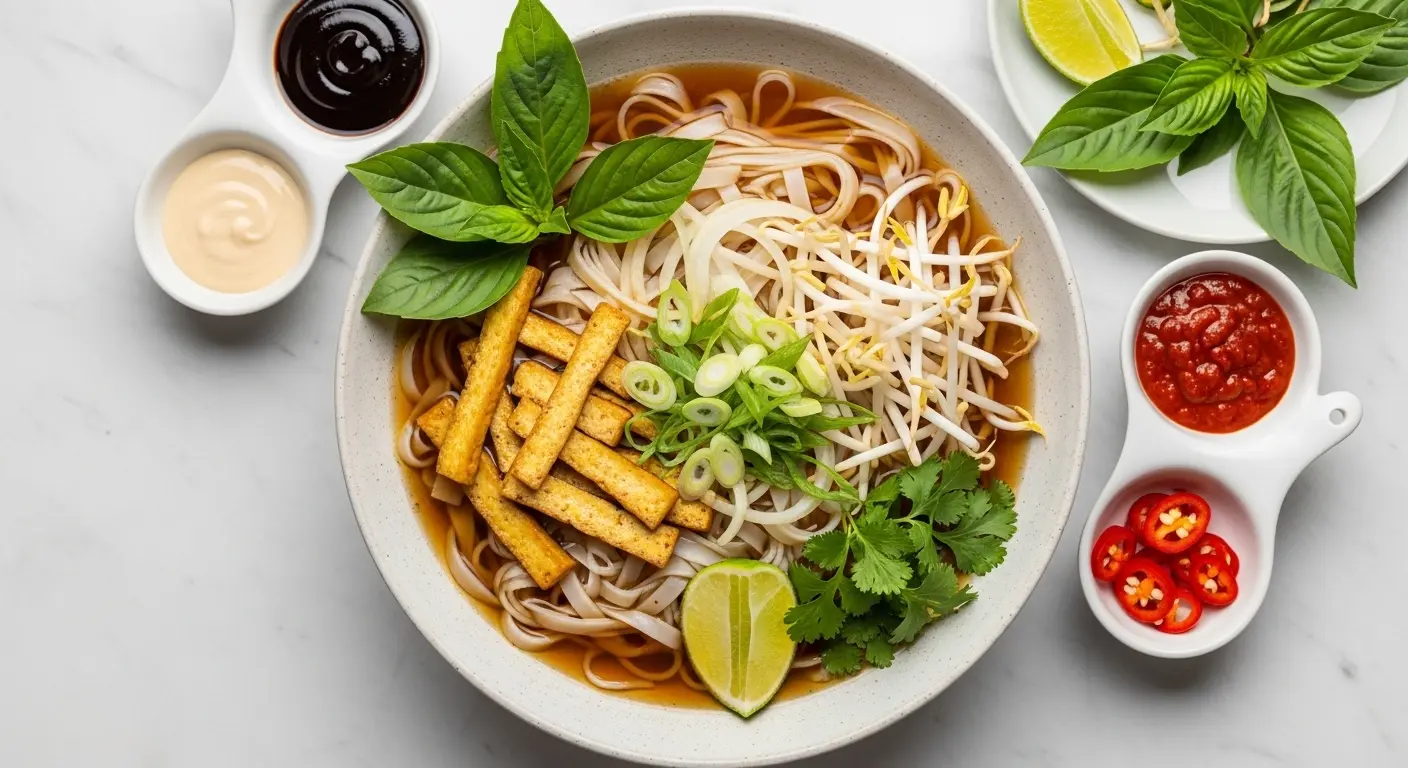
Few soups in the world manage to be as deeply comforting and impressively complex as a great bowl of pho. This vegan pho recipe captures everything you love about the traditional Vietnamese classic, but without a drop of animal product in sight.
The secret is all in the broth. By charring onion and ginger before simmering them with a fragrant lineup of whole spices, you build a broth that’s smoky, warming, and full of the signature aroma that makes pho so addictive.
Whether you’ve been making this soup for years or this is your very first attempt, you’ll be surprised by how achievable restaurant-quality results are at home.
Rice noodles, silky tofu, crisp fresh herbs, and a squeeze of lime bring the whole bowl together. It’s a meal that’s equal parts nourishing and exciting.
You might also love the Classic Pho Recipe if you want to explore the traditional beef-based version and compare techniques.
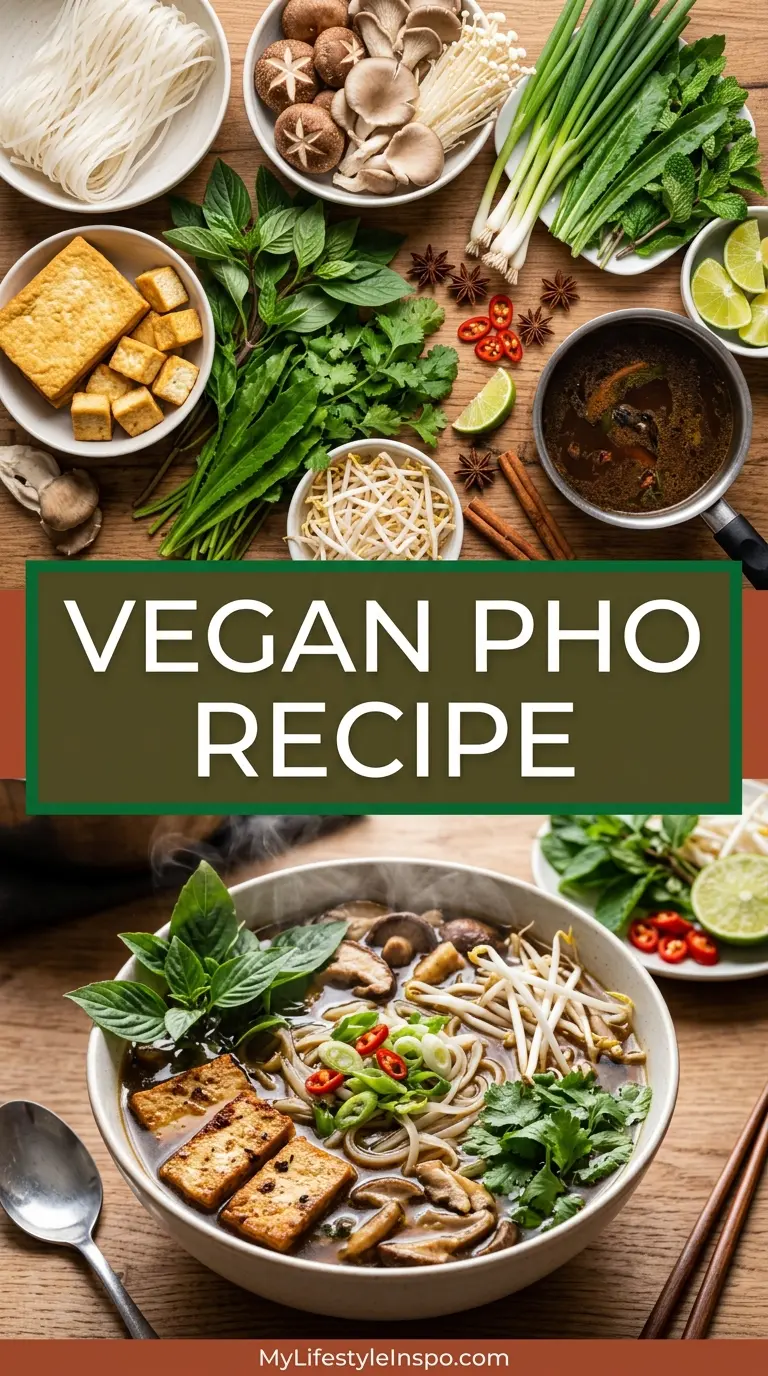
Why You’ll Love This Vegan Pho Recipe
This bowl truly delivers in every way that matters.
The broth is the star, and it’s built with charred aromatics and toasted spices that together create a deeply savory, layered flavor. You’d never guess there’s no meat involved.
It’s also surprisingly flexible. You can top your bowl with whatever vegetables, proteins, or herbs you like, making it endlessly customizable to your preferences and what’s in your fridge.
The recipe works beautifully as a weeknight dinner and is equally impressive for entertaining. A big pot on the stove will fill the whole kitchen with an incredible aroma that draws everyone in.
Here’s what makes this vegan pho recipe a keeper:
- Deeply flavorful broth built from charred onion, ginger, and six warming spices
- Naturally gluten-free when made with tamari and certified gluten-free noodles
- Customizable toppings so every person at the table can personalize their bowl
- Made in one pot, with simple prep steps that any level of cook can manage
- Ready in about 90 minutes, including broth simmering time
- Great for meal prep, since the broth stores well and the noodles can be cooked fresh each time
Another cozy Asian-inspired bowl to try next: Tom Yum Soup
Ingredients
A great vegan pho recipe starts with high-quality whole spices and fresh aromatics. Every ingredient below has a specific job in the broth or the bowl.
- For the Broth:
- 1 large white onion (about 300g / 10.5 oz), halved
- One 3-inch (7.5 cm) piece of fresh ginger, halved lengthwise
- 3 whole star anise
- 1 cinnamon stick (about 3 inches / 7.5 cm)
- 4 whole cloves
- 1 teaspoon coriander seeds
- 1 teaspoon fennel seeds
- 2 tablespoons tamari or soy sauce (plus more to taste)
- 1 tablespoon hoisin sauce, for the broth
- 1 oz (28g) dried shiitake mushrooms
- 8 cups (1.9 liters) vegetable broth
- 4 cups (950 ml) water
- 1 teaspoon sugar (or rock sugar)
- Salt to taste
- For the Noodles and Toppings:
- 8 oz (225g) dried flat rice noodles, medium width
- 14 oz (400g) firm tofu, pressed and sliced into strips or cubed
- 2 cups (about 100g) mung bean sprouts, rinsed
- 2 green onions, thinly sliced
- 1 cup (about 25g) fresh Thai basil leaves
- 1/2 cup (about 10g) fresh cilantro leaves
- 1/2 cup (about 10g) fresh mint leaves
- 2 limes, cut into wedges
- 2 red or green chili peppers, thinly sliced (optional)
- Hoisin sauce, for serving
- Sriracha, for serving
Read Also: Udon Noodle Soup Recipe
Kitchen Equipment Needed
You don’t need a lot of specialty gear for this recipe, but a few key tools make the process much easier and more enjoyable.
- Large stockpot (at least 6-quart / 5.7-liter capacity)
- Fine-mesh strainer, for straining the broth
- Baking sheet, for charring the onion and ginger under the broiler
- Spice bag or cheesecloth, to hold whole spices while simmering
- Large Dutch oven or heavy-bottomed pot
- Medium saucepan, for cooking noodles separately
- Colander, for draining noodles
- Tongs, for handling charred aromatics
- Large serving bowls (wide and deep, for assembly)
- Ladle, for serving broth
- Chef’s knife and cutting board
Read Also: Instant Pot Pho Recipe
Recommended Products for This Recipe
These are products I genuinely recommend based on quality and performance. They’ll help you get the best possible results from this vegan pho recipe.
1. Dried Shiitake Mushrooms (Premium Grade)
Good dried shiitake mushrooms are a true backbone of vegan pho broth. They add deep umami flavor that helps replace the richness typically found in meat-based broths, and premium-grade mushrooms have far more intensity than budget options. Look for whole caps rather than broken pieces for the best flavor extraction.
2. Premium Tamari (Gluten-Free Soy Sauce)
The quality of your tamari directly impacts the saltiness and depth of your broth. A good tamari is richer and less harsh than standard soy sauce, with a more rounded, savory profile that complements the spices beautifully. It also keeps the dish gluten-free, which is a big plus for many home cooks.
3. Whole Star Anise (Bulk)
Whole, freshly sourced star anise is dramatically more aromatic than pre-ground or stale pods from generic spice jars. Since it’s the defining spice in pho broth, quality matters enormously. Buying a larger quantity means you’ll always have it on hand for future batches.
4. Large Fine-Mesh Strainer (10-12 inch)
A large, sturdy fine-mesh strainer makes straining the finished broth quick, clean, and efficient. It catches every last spice and solid while letting the clear, beautiful broth pour through. A flimsy strainer is one of the most frustrating kitchen tools you can use for a recipe like this, so investing in a good one pays off immediately.
5. Flat Rice Noodles for Pho (Banh Pho Noodles)
Not all rice noodles are created equal. Noodles specifically labeled for pho have the right starch composition to give you that slightly chewy, silky texture that standard rice vermicelli can’t replicate. They absorb the broth beautifully without going mushy if you cook them correctly.
You might also enjoy: Miso Soup Recipe
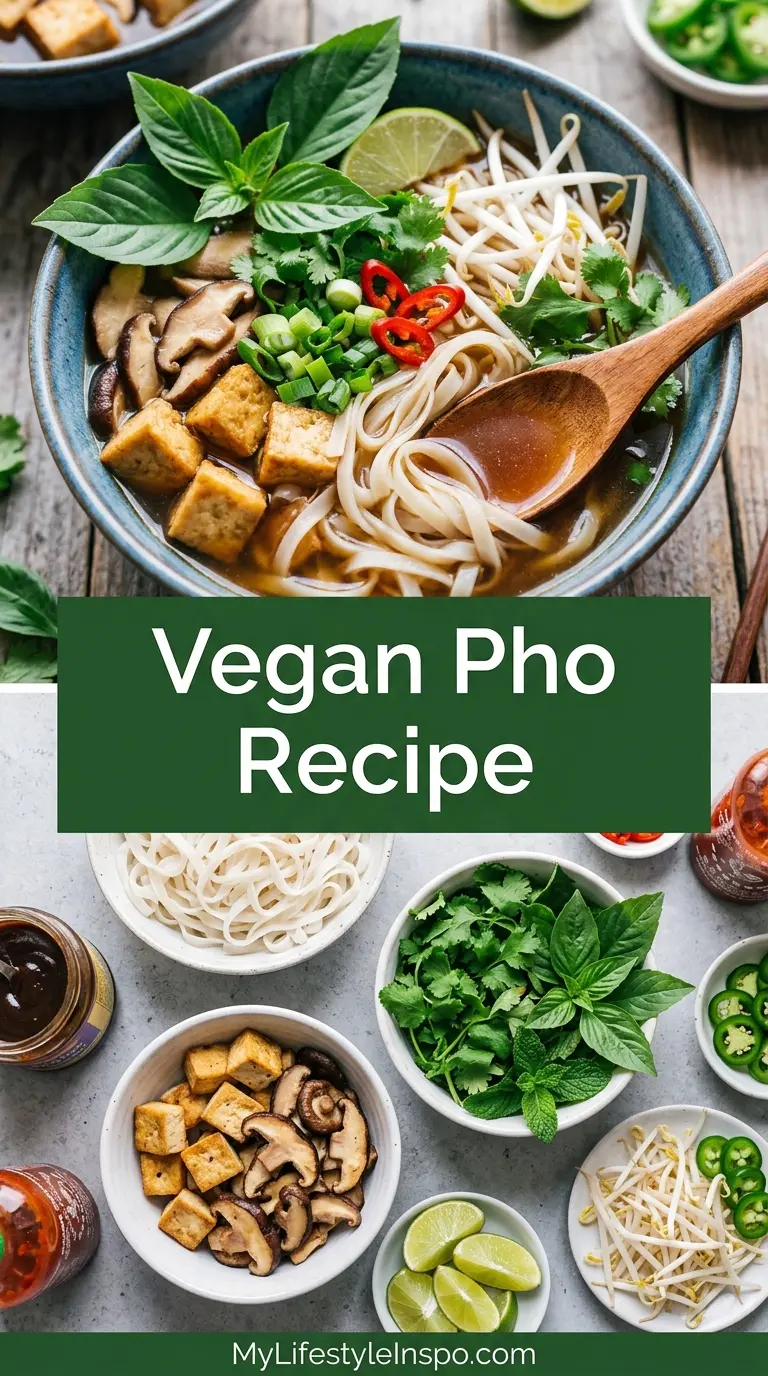
Step-by-Step Instructions
1. Char the Onion and Ginger
- Preheat your oven’s broiler to high (about 500°F / 260°C) and position the rack about 6 inches (15 cm) from the heat source.
- Line a baking sheet with foil for easy cleanup.
- Cut the white onion in half through the root end, leaving the papery skin on. Place both halves cut-side up on the prepared baking sheet.
- Halve the piece of ginger lengthwise (no need to peel it), and place it cut-side up alongside the onion on the same baking sheet.
- Slide the baking sheet under the broiler and broil for 10 to 15 minutes, watching carefully, until the cut surfaces of both the onion and ginger are deeply darkened, with some black char marks visible. This step is critical: the char is not burned food you need to avoid; it’s exactly what gives pho broth its characteristic smoky, complex aroma.
- Remove from the oven using oven mitts and set aside. The aromatics will be very hot.
2. Toast the Whole Spices
- While the onion and ginger are under the broiler, place your large stockpot or Dutch oven over medium heat and let it heat up for about 1 minute.
- Add the star anise, cinnamon stick, whole cloves, coriander seeds, and fennel seeds directly to the dry pot with no oil.
- Toast the spices, stirring frequently with a wooden spoon or heatproof spatula, for 2 to 3 minutes. You’ll know they’re ready when they begin to smell intensely fragrant and may start to smoke very lightly.
- Be careful not to burn them; burned spices turn bitter and will ruin the broth. If they start to look very dark before they smell fragrant, reduce your heat.
- Remove the pot from the heat and transfer the toasted spices into a spice bag or fold them into a double layer of cheesecloth and tie it closed with kitchen twine. Set aside. Using a bag makes it much easier to remove the spices cleanly when the broth is done.
3. Build and Simmer the Broth
- Return the large pot to medium-high heat.
- Add the vegetable broth and water to the pot.
- Place the charred onion halves and ginger pieces directly into the broth. You can peel off the outermost charred skin of the onion if you like, but it’s not strictly necessary; the charred layers add flavor and color.
- Add the spice bag of toasted whole spices to the pot.
- Add the dried shiitake mushrooms. These will rehydrate in the broth and release a rich, savory, umami-deep flavor into the liquid as it simmers.
- Stir in the tamari, hoisin sauce, and sugar.
- Increase the heat to high and bring the broth to a full boil.
- Once boiling, reduce the heat to low, partially cover the pot with a lid (leaving a small gap to let steam escape and prevent the broth from becoming cloudy), and let everything simmer gently for at least 45 minutes and ideally 60 minutes.
- Resist the urge to crank the heat to boil more aggressively; a gentle simmer keeps the broth clear and clean.
4. Prepare the Tofu
- While the broth simmers, prepare your tofu. Press the firm tofu by wrapping it in a clean kitchen towel or several layers of paper towel, placing it on a plate, and setting a heavy object on top (a cast iron pan or a few books work well). Press for at least 15 minutes to remove excess moisture. Pressing tofu helps it brown better and keeps it from falling apart.
- After pressing, cut the tofu into strips about 1 inch (2.5 cm) wide, or into cubes if you prefer.
- Heat a non-stick skillet or cast iron pan over medium-high heat and add 1 tablespoon of neutral oil (such as avocado or vegetable oil).
- Once the oil shimmers, add the tofu pieces in a single layer without crowding the pan. Let them cook undisturbed for 3 to 4 minutes until a golden crust forms on the bottom.
- Flip the tofu pieces with a spatula and cook for another 3 to 4 minutes on the other side until equally golden.
- Remove the tofu from the pan and set aside on a plate.
5. Soak and Cook the Rice Noodles
- About 15 minutes before the broth is done, place your dried flat rice noodles in a large bowl.
- Pour boiling water over the noodles and let them soak according to the package directions, usually about 8 to 10 minutes for flat pho noodles, until they are pliable and softened but still have a slight firmness at the center.
- Alternatively, you can bring a separate medium saucepan of water to a boil and cook the noodles for 3 to 4 minutes, following package directions, until just tender.
- Drain the noodles in a colander and rinse under cold running water immediately to stop the cooking process and prevent them from sticking together.
- Divide the noodles among large, wide serving bowls now or set them aside in the colander until you’re ready to assemble.
6. Strain and Season the Broth
- Once the broth has simmered for at least 45 to 60 minutes, it’s time to strain it.
- Place a large fine-mesh strainer over a clean pot or large heatproof bowl.
- Carefully pour or ladle the hot broth through the strainer to catch all the onion, ginger, spice bag, mushrooms, and any other solids. If you want to save the rehydrated shiitake mushrooms as a bowl topping, fish them out with tongs before straining and slice them thinly.
- Discard the remaining solids, or compost them.
- Pour the strained broth back into the pot and return it to the stove over medium heat.
- Taste the broth carefully and season with additional tamari, salt, or a pinch more sugar as needed. Great pho broth should taste savory, slightly sweet, aromatic, and balanced. It should be flavorful enough to stand on its own, because the noodles and toppings will dilute it slightly in the bowl.
7. Prepare the Garnish Tray
- While the strained broth comes back up to heat, prepare all your fresh garnishes.
- Rinse the bean sprouts under cold water and shake dry.
- Separate the Thai basil leaves from their stems.
- Rinse and roughly tear the cilantro and mint leaves.
- Slice the green onions thinly on a diagonal for a pretty presentation.
- Slice the chili peppers into thin rounds. Use gloves if you’re sensitive to heat.
- Cut the limes into wedges.
- Arrange all of the garnishes on a large cutting board or on small plates and bowls in the center of the table so everyone can help themselves.
8. Assemble the Bowls
- Make sure your broth is back to a full, rolling boil before you ladle it into the bowls. Piping hot broth is essential for pho; it helps everything in the bowl come alive.
- Divide the cooked, drained rice noodles evenly among large, deep serving bowls.
- Arrange the golden tofu pieces on top of the noodles.
- Ladle the sizzling hot broth over the noodles and tofu generously, filling each bowl close to the top.
- Top each bowl immediately with a handful of bean sprouts, a few Thai basil leaves, some cilantro and mint, and sliced green onions.
- Serve at once with lime wedges, sliced chili peppers, hoisin sauce, and sriracha on the side.
This recipe pairs beautifully with a simple side of Bok Choy sauteed in garlic and sesame oil.
Tips for Success
A few key tips will help you nail this vegan pho recipe on your very first try.
- Don’t rush the char. The darkening of the onion and ginger under the broiler is what gives the broth its signature smoky depth. Aim for genuine char, not just light browning.
- Toast the spices until aromatic. This step releases the essential oils in the star anise, cloves, and cinnamon that are the backbone of any pho broth. Under-toasted spices produce a flat, muted broth.
- Simmer low and slow. Boiling the broth aggressively makes it cloudy and can turn the flavor harsh. Keep the simmer gentle throughout.
- Season the broth generously. A pho broth needs to be boldly seasoned because the noodles and garnishes dilute the flavor in the bowl. Taste and re-season the broth after straining.
- Cook noodles separately. Never cook the rice noodles directly in the broth; they will absorb too much liquid and become mushy. Cook them separately and add to the bowl just before serving.
- Serve with boiling-hot broth. The broth should be at a rolling boil when it hits the noodles in the bowl. This is key to the pho experience and also lightly wilts the fresh herb garnishes in a beautiful way.
- Press your tofu well. Extra moisture in the tofu makes it steam rather than sear, so it won’t develop that satisfying golden crust. Don’t skip the pressing step.
Read Also: Hot And Sour Soup Recipe
Serving Suggestions
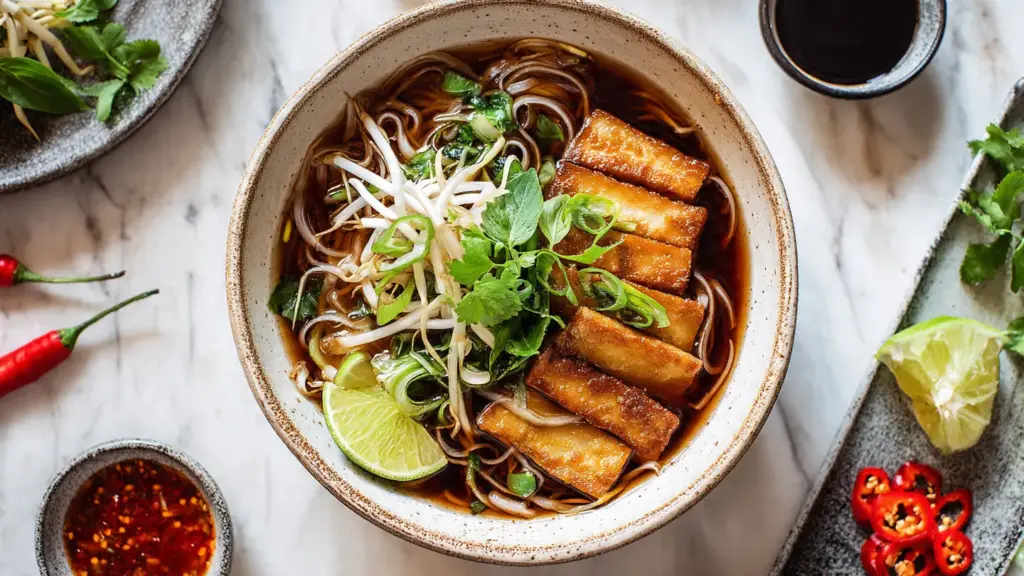
Pho is a complete meal on its own, but there are wonderful ways to build a larger spread around it.
Serve it as the centerpiece of an Asian-inspired dinner alongside a few small bites and sides.
- Chinese Dumplings make a wonderful starter; serve them steamed or pan-fried
- Easy Pad Thai alongside pho creates a satisfying noodle feast for a crowd
- A simple Vegetable Soup for a lighter accompaniment when you want contrast
- Bibimbap is another vibrant Korean rice bowl that works beautifully as a second course
- Fresh spring rolls with peanut dipping sauce are always a crowd-pleaser
- A side of steamed jasmine rice for anyone who wants something a bit more filling alongside the soup
Read Also: Vegan Pozole Recipe
Variations to Try
Once you’ve mastered the base recipe, there are all kinds of ways to riff on it.
- Instant Pot version. You can make the broth in a pressure cooker in about 20 to 25 minutes instead of simmering on the stove for an hour. Check out the Instant Pot Pho Recipe for the pressure cooker method.
- Mushroom-loaded version. Use a mix of shiitake, oyster, and enoki mushrooms both in the broth and as a topping for an even deeper umami character.
- Miso-enhanced broth. Stir in 1 tablespoon of white or yellow miso paste to the strained broth for an extra savory, fermented depth.
- Lemongrass broth. Add two stalks of lemongrass, bruised and cut into 2-inch pieces, to the simmering broth for a bright, citrusy undertone.
- Spicy version. Add a dried red chili or two to the broth during simmering, and increase the sriracha in the bowl.
- Ramen noodle swap. Swap flat rice noodles for ramen noodles if you want a chewier, more wheat-based texture.
- Extra protein options. Try marinated tempeh, edamame, or store-bought vegan “beef” strips in place of or alongside the tofu.
You might also enjoy: Chicken Pho Recipe
Storage and Reheating
This vegan pho stores beautifully, especially if you keep the components separate.
- Always store the broth, noodles, and toppings separately. Rice noodles absorb broth quickly and become soft and mushy if left sitting in the liquid.
- Broth: Cool the strained broth completely before transferring to an airtight container. It keeps in the refrigerator for up to 5 days and in the freezer for up to 3 months.
- Noodles: Store cooked, drained noodles in a sealed container or zip-lock bag in the fridge for up to 3 days. Toss them with a tiny drizzle of sesame oil to prevent sticking.
- Toppings: Keep the fresh herbs, bean sprouts, and lime wedges refrigerated in separate containers for up to 2 days. Bean sprouts are best used within 24 hours.
- To reheat: Bring the broth back to a full boil on the stovetop. Place your noodles in a colander and briefly run hot water over them to warm them through, then add to the bowl and ladle the boiling broth over the top.
This pairs wonderfully with a light Cabbage Soup on the side if you’re prepping meals for the week.
Nutritional Facts
The nutritional information below is an estimate per serving (based on 4 servings), including tofu and noodles but without optional sauces.
| Nutrient | Amount Per Serving |
|---|---|
| Calories | ~380 kcal |
| Total Carbohydrates | ~55 g |
| Protein | ~16 g |
| Total Fat | ~10 g |
| Saturated Fat | ~1.5 g |
| Sodium | ~950 mg |
| Fiber | ~3 g |
| Sugar | ~5 g |
| Vitamin C | ~12 mg |
| Iron | ~3 mg |
| Calcium | ~150 mg |
Nutritional values are approximate and will vary based on specific brands used, exact amounts, and toppings chosen.
You might also enjoy: Moroccan Lentil Soup Recipe
Health Benefits of Key Ingredients
This vegan pho recipe is about more than great flavor; every major ingredient contributes real nutritional value.
It’s a genuinely wholesome bowl that can fit beautifully into an anti-inflammatory, plant-based eating pattern.
- Ginger is one of the most studied anti-inflammatory foods in the world. It supports healthy digestion, may reduce nausea, and has antioxidant properties that help the body fight oxidative stress.
- Star anise contains anethole, a compound with antifungal and antibacterial properties, and has long been used in traditional medicine as a digestive aid.
- Shiitake mushrooms are rich in selenium, copper, and B vitamins. They also contain lentinan, a compound that has been studied for its immune-supporting properties.
- Firm tofu is an excellent plant-based source of complete protein, calcium, manganese, and iron. It’s also rich in isoflavones, which have been linked to a range of health benefits including bone health support.
- Bean sprouts are low in calories but high in vitamin C, folate, and enzymes that support gut health and digestion.
- Fresh herbs (Thai basil, cilantro, mint) deliver antioxidants, vitamin K, and anti-inflammatory compounds. They also aid digestion and add significant flavor with essentially zero calories.
- Cinnamon has been shown to help regulate blood sugar levels and contains powerful antioxidant compounds called polyphenols.
- Rice noodles are naturally gluten-free and easy to digest, making this soup accessible for people with gluten sensitivities.
Read Also: Spinach Soup Recipe
Frequently Asked Questions
1. What makes vegan pho taste like traditional pho without meat?
The real flavor of pho broth comes from the spices and the charring technique, not from the meat itself. Star anise, cinnamon, cloves, coriander, and fennel seeds are the defining flavors of pho, and they work just as well in a plant-based broth.
Charring the onion and ginger adds the characteristic smoky complexity, while dried shiitake mushrooms and tamari supply the savory umami depth that meat would otherwise provide. Most people who try a well-made vegan pho are genuinely surprised by how satisfying and complete it tastes.
2. Can I make the broth ahead of time?
Absolutely, and it’s actually a great idea. The broth freezes perfectly for up to 3 months, so you can make a large batch and freeze it in portions.
When you want pho, just thaw the broth, bring it to a boil, cook fresh noodles, and assemble the bowl. It makes weeknight pho totally practical.
3. What noodles should I use for vegan pho?
Traditional pho uses flat rice noodles, sometimes called banh pho noodles. They come in different widths; the most common are medium-width (around 3mm to 5mm), which give you that authentic chewy bite.
Look for them at any Asian grocery store or in the international aisle of larger supermarkets. If you can’t find them, wide rice vermicelli is a decent substitute.
4. Is this recipe gluten-free?
It can be completely gluten-free with a couple of easy swaps. Use tamari instead of soy sauce (most tamari is gluten-free, but always check the label), and choose a certified gluten-free hoisin sauce.
Standard rice noodles are naturally gluten-free, so the noodles themselves are not a concern. Always double-check that your vegetable broth is also gluten-free if you have a serious sensitivity.
5. How do I make vegan pho spicier?
There are several ways to dial up the heat. You can add one or two dried red chilies to the simmering broth and remove them when you strain it for a milder overall heat, or leave them in longer for more intensity.
At serving time, add fresh sliced chili to the bowl and a generous drizzle of sriracha. You can also mix sriracha into hoisin sauce and stir that into the broth in the bowl for a rich, spicy-sweet kick.
Read Also: Mushroom Soup Recipe
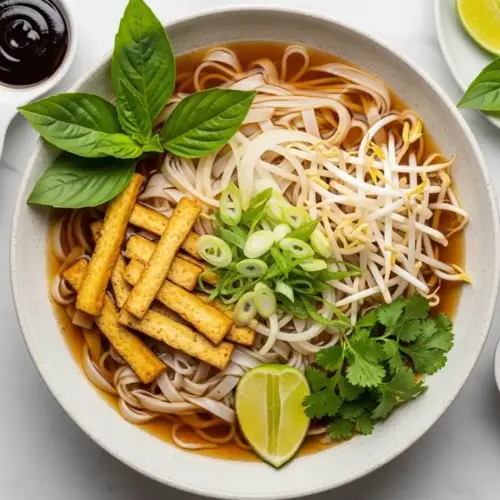
Vegan Pho Recipe

Equipment
- Large stockpot - at least 6-quart / 5.7-liter capacity
- Fine-mesh strainer - large, 10-12 inch
- Baking sheet
- Spice bag - or cheesecloth
- Large Dutch Oven - or heavy-bottomed pot
- Medium saucepan - for cooking noodles separately
- Colander
- Tongs
- Large serving bowls - wide and deep
- Ladle
- Chef’s knife
- Cutting board
- Non-stick skillet - or cast iron pan, for tofu
Ingredients
- 1 large white onion - about 300g / 10.5 oz, halved
- 3 inch fresh ginger - 7.5 cm piece, halved lengthwise
- 3 whole star anise
- 1 cinnamon stick - about 3 inches / 7.5 cm
- 4 whole cloves
- 1 teaspoon coriander seeds
- 1 teaspoon fennel seeds
- 2 tablespoons tamari - or soy sauce, plus more to taste
- 1 tablespoon hoisin sauce - for the broth
- 1 oz dried shiitake mushrooms - 28g, premium grade
- 8 cups vegetable broth - 1.9 liters
- 4 cups water - 950 ml
- 1 teaspoon sugar - or rock sugar
- salt - to taste
For the Noodles and Toppings
- 8 oz dried flat rice noodles - 225g, medium width, labeled for pho
- 14 oz firm tofu - 400g, pressed and sliced into strips or cubed
- 2 cups mung bean sprouts - about 100g, rinsed
- 2 green onions - thinly sliced
- 1 cup fresh Thai basil leaves - about 25g
- 1/2 cup fresh cilantro leaves - about 10g
- 1/2 cup fresh mint leaves - about 10g
- 2 limes - cut into wedges
- 2 red chili peppers - or green, thinly sliced, optional
- hoisin sauce - for serving
- sriracha - for serving
- 1 tablespoon neutral oil - such as avocado or vegetable oil, for frying tofu
Instructions
- Preheat broiler to high (500°F/260°C). Place onion halves and ginger cut-side up on a foil-lined baking sheet. Broil 10-15 minutes until deeply charred. Set aside.
- In a dry stockpot over medium heat, toast star anise, cinnamon, cloves, coriander, and fennel seeds for 2-3 minutes until fragrant. Transfer spices to a spice bag.
- Add vegetable broth, water, charred onion, ginger, spice bag, shiitake mushrooms, tamari, hoisin, and sugar to the pot. Bring to a boil, reduce heat, and simmer gently for 45-60 minutes.
- Press tofu for 15 minutes to remove moisture, then slice into strips or cubes. Heat oil in a skillet over medium-high heat and cook tofu until golden on all sides, about 3-4 minutes per side. Set aside.
- Soak rice noodles in boiling water for 8-10 minutes (or cook per package directions) until tender. Drain and rinse with cold water. Divide among serving bowls.
- Strain broth through a fine-mesh strainer, discarding solids. Return strained broth to pot and season with additional tamari, salt, or sugar to taste.
- Arrange bean sprouts, Thai basil, cilantro, mint, green onions, chili peppers, and lime wedges on a platter for serving.
- Bring broth back to a rolling boil. Ladle hot broth over noodles and tofu in bowls. Top with garnishes and serve immediately with hoisin sauce and sriracha on the side.
Notes
- Don’t rush the char: Deeply charring the onion and ginger under the broiler is essential for achieving the smoky depth that defines authentic pho broth.
- Toast spices until aromatic: Toasting releases essential oils from the star anise, cinnamon, and cloves. Under-toasted spices will result in a flat, muted broth.
- Season generously: Pho broth needs to be bold because the noodles and garnishes dilute the flavor. Always taste and re-season after straining.
- Cook noodles separately: Never cook rice noodles directly in the broth; they will become mushy and absorb too much liquid. Cook separately and add just before serving.
- Press tofu well: Removing excess moisture helps tofu develop a golden, crispy crust instead of steaming in the pan. Don’t skip this step.
- Serve with boiling-hot broth: The broth should be at a rolling boil when it hits the bowl. This lightly wilts the fresh herbs and is key to the pho experience.
- Storage: Store broth, noodles, and toppings separately. Broth keeps in the fridge for 5 days or freezer for 3 months. Noodles last up to 3 days in the fridge.
- Gluten-free option: Use tamari and certified gluten-free hoisin sauce with standard rice noodles to keep the dish completely gluten-free.
- Make it spicier: Add dried red chilies to the simmering broth, or increase fresh chili and sriracha at serving time for extra heat.
- Variations: Try adding lemongrass, miso paste, or a mix of mushrooms for different flavor profiles. See the post for more ideas.
Final Thoughts
This vegan pho recipe is living proof that a spectacular, soul-warming bowl of noodle soup doesn’t require hours of bone broth or any animal products at all.
The combination of charred aromatics, toasted whole spices, shiitake mushrooms, and a careful hand with seasoning creates a broth that is genuinely as satisfying as the real thing.
Once you’ve made this at home, you’ll understand exactly why pho has captured so many hearts and stomachs around the world.
Give it a try this week and see for yourself. Then come back and let us know how it went in the comments below! If you shared a photo, tag us so we can see your beautiful bowl.
Recommended:
- Pho Recipe
- Chicken Pho Recipe
- Congee Recipe
- Minestrone Soup Recipe
- Hoisin Sauce Recipe
- Peanut Sauce Recipe
- Teriyaki Sauce Recipe
- Avgolemono Soup Recipe
- Easy Ratatouille Recipe
- Matzo Ball Soup Recipe