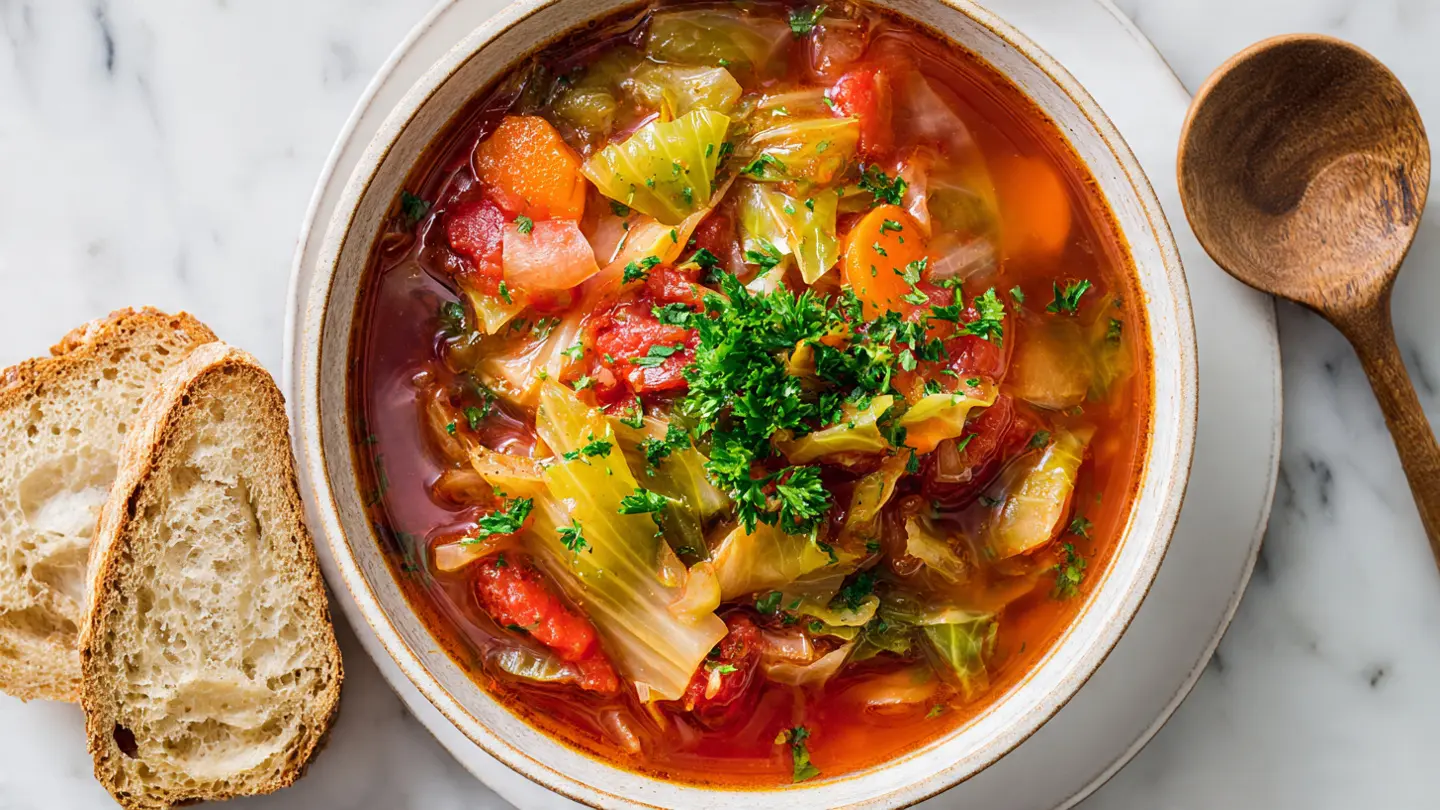
A good cabbage soup recipe is one of those back-pocket meals that never gets old. It’s humble in its ingredients, incredibly satisfying in a bowl, and comes together with very little effort. This version is built on a classic vegetable base: tender green cabbage, a mirepoix of onion, carrot, and celery, garlic, canned diced tomatoes, and a well-seasoned broth that ties everything together.
What makes this particular version stand out is the attention to technique. Sautéing the aromatics before adding liquid is what gives the broth its depth. Skipping that step and just dumping everything into the pot produces a noticeably flat result. A touch of smoked paprika adds warmth without turning this into a spicy dish, and a final squeeze of lemon juice at the very end brightens the whole bowl in a way that feels almost magical.
This is weeknight cooking at its very best. One pot, minimal prep, and a soup that tastes like it’s been simmering all afternoon. It reheats beautifully, freezes well, and costs very little to make. Once you try it, it’ll earn a permanent spot in your rotation.
You might also enjoy: Fried Cabbage as another easy way to use up that head of cabbage sitting in your fridge.
Why You’ll Love This Cabbage Soup Recipe
This cabbage soup recipe checks every box for a truly great weeknight meal.
It’s a one-pot dish from start to finish, which means less cleanup and more time doing things you actually enjoy.
The ingredient list is short and affordable. Cabbage is one of the cheapest vegetables at the grocery store, and most of the other components are pantry staples.
It’s naturally low in calories but genuinely filling. The combination of fibrous cabbage, tender vegetables, and a flavorful broth is incredibly satisfying without being heavy.
The flavor development is surprisingly deep. Sautéing the aromatics, seasoning in layers, and finishing with a touch of acidity creates a broth that tastes far more complex than its ingredient list suggests.
It’s endlessly adaptable. You can keep it vegetarian, add ground beef or kielbasa, throw in white beans or chickpeas for protein, or adjust the spice level to your liking.
- Ready in under one hour from start to finish
- Budget-friendly, with most ingredients costing just a few dollars
- Naturally vegan (with vegetable broth) and gluten-free
- Perfect for meal prep: tastes even better the next day
- Freezes well for up to three months
- Easy enough for beginner cooks, satisfying enough for experienced ones
Read Also: Sautéed Cabbage Recipe
Ingredients
For this cabbage soup recipe, you’ll want to use a medium-to-large head of green cabbage. It cooks down significantly, so don’t be alarmed by how much you’re starting with. Fresh vegetables will give you the best flavor, though frozen green beans work perfectly fine here as a convenient add-in.
- 2 tablespoons (30 ml) olive oil
- 1 large yellow onion, diced
- 3 medium carrots, peeled and sliced into rounds
- 3 stalks celery, sliced
- 1 green bell pepper, diced
- 4 cloves garlic, minced
- 1 small head green cabbage (about 2 lbs / 900g), core removed, chopped into 1-inch pieces
- 1 can (28 oz / 800g) diced tomatoes, with juices
- 1 can (8 oz / 225g) tomato sauce
- 6 cups (1.4 liters) vegetable broth (or chicken broth for non-vegan)
- 1½ cups (150g) frozen green beans
- ½ tablespoon smoked paprika
- 1 teaspoon dried thyme
- 1 teaspoon dried oregano
- ½ teaspoon black pepper
- Salt, to taste (start with ½ teaspoon)
- 2 tablespoons fresh lemon juice (about half a lemon)
- ¼ cup (15g) fresh parsley, chopped, plus more for garnish
- 1 bay leaf
This pairs perfectly with a bowl of Minestrone Soup if you’re making soup for a crowd and want to offer variety.
Kitchen Equipment Needed
You don’t need anything fancy for this recipe. A large pot is the only true requirement, and the rest is standard kitchen gear that most home cooks already have. If you’re making a double batch, make sure your pot is large enough to hold everything comfortably.
- Large soup pot or Dutch oven (at least 6-quart capacity)
- Cutting board
- Chef’s knife
- Wooden spoon or silicone spatula
- Ladle
- Measuring cups and spoons
- Vegetable peeler
- Can opener
Read Also: Hamburger Soup Recipe
Recommended Products for This Recipe
These are products that have been selected based on quality and performance. Each one makes this recipe easier to execute or noticeably better in terms of flavor.
1. Le Creuset Enameled Cast Iron Dutch Oven
A high-quality Dutch oven distributes heat evenly across the entire base, which means your vegetables sauté properly instead of steaming in their own moisture. This leads to a richer, more developed broth flavor that’s hard to achieve in a thin-bottomed pot. It’s a lifetime kitchen investment that pays for itself in better meals.
2. Fire Roasted Diced Tomatoes
Fire-roasted canned tomatoes have a deeper, slightly smoky sweetness compared to regular diced tomatoes, and they make a noticeable difference in the final flavor of the broth. Many experienced home cooks consider this a simple swap that dramatically improves any tomato-based soup. Look for a brand with no added sugar or artificial ingredients.
3. High-Quality Smoked Paprika
Generic smoked paprika from the spice aisle can be weak and flat, while a quality Spanish smoked paprika (pimentón de la Vera) adds a rich, warm depth to the soup. A small amount goes a long way, and the difference in flavor between a quality version and a bargain brand is genuinely significant. This is one spice worth spending a little more on.
4. Immersion Blender (Optional)
If you want a partially creamy cabbage soup, an immersion blender lets you blend a portion of the soup directly in the pot without any messy transfers to a countertop blender. It’s a handy tool for any soup recipe and also works beautifully for broccoli soup, tomato soup, and more. You don’t need it for this recipe, but it’s a great option to have.
You might also love this comforting Chicken Vegetable Soup if you’re building out a collection of wholesome one-pot meals.
Step-by-Step Instructions
1. Prep All Your Vegetables
Before you turn on the stove, get all your chopping done. This is called mise en place, and it makes the cooking process smooth and stress-free.
- Dice the yellow onion into roughly ½-inch pieces.
- Peel the carrots and slice them into ¼-inch rounds.
- Slice the celery stalks crosswise into ¼-inch pieces.
- Dice the green bell pepper into ½-inch pieces, discarding the seeds and stem.
- Mince the four garlic cloves finely, or press them through a garlic press.
- Remove the outer leaves from the cabbage. Cut it in half, then cut out the tough triangular core from each half. Slice the cabbage into roughly 1-inch pieces. Don’t stress about making every piece identical — a little variation in size is totally fine.
- Measure out your broth, smoked paprika, thyme, oregano, black pepper, and set the lemon and parsley nearby. Having everything ready before you start cooking means nothing gets forgotten.
2. Sauté the Aromatics
This step is where the flavor foundation gets built. Don’t rush it.
- Heat 2 tablespoons (30 ml) of olive oil in your large pot or Dutch oven over medium heat.
- Once the oil is shimmering and hot, add the diced onion, sliced carrots, sliced celery, and diced bell pepper to the pot.
- Stir everything together to coat the vegetables in the oil.
- Cook the vegetables, stirring occasionally, for 6 to 8 minutes. You’re looking for the onions to become soft and translucent, and the carrots to begin softening slightly. The vegetables should NOT be browned — just softened and fragrant.
- Add the minced garlic to the pot. Stir it in and cook for 1 more minute, until the garlic becomes very fragrant. Watch it closely at this stage, as garlic can burn quickly and turn bitter.
3. Add the Spices
Blooming your dried spices in the oil and vegetables before adding liquid intensifies their flavor. It’s a small step that makes a big difference.
- Add the ½ tablespoon smoked paprika, 1 teaspoon dried thyme, and 1 teaspoon dried oregano directly to the pot with the sautéed vegetables.
- Stir everything together and cook for 1 minute, until the spices become very fragrant. The pot will smell incredible at this point.
- Add ¼ teaspoon black pepper and stir again.
4. Add the Tomatoes and Tomato Sauce
The canned tomatoes and tomato sauce create the base of the broth and give it that rich, slightly acidic backbone that balances the sweetness of the cabbage.
- Pour the entire 28-ounce can of diced tomatoes, including all the juices, into the pot.
- Add the 8-ounce can of tomato sauce on top.
- Stir everything together and let the tomato mixture cook with the vegetables for about 2 minutes, stirring occasionally. This brief cook time helps the tomato flavor meld with the aromatics before the broth goes in.
5. Add the Cabbage, Green Beans, and Broth
Now the pot starts to look like soup.
- Add all of the chopped cabbage to the pot. It will look like an enormous amount — this is completely normal. Cabbage shrinks dramatically as it cooks.
- Add the 1½ cups (150g) of frozen green beans on top of the cabbage.
- Pour in the 6 cups (1.4 liters) of vegetable broth.
- Drop in the bay leaf.
- Stir everything together as best you can, though the pot will be very full at this stage.
6. Bring to a Boil, Then Simmer
Patience is key here. The cabbage needs time to become properly tender and sweet.
- Place the lid on the pot and turn the heat up to medium-high.
- Bring the soup to a full boil. This will take about 8 to 10 minutes.
- Once boiling, reduce the heat to medium-low to maintain a gentle simmer.
- Remove the lid partially, tilting it to allow a little steam to escape. This helps concentrate the flavors slightly.
- Simmer for 30 to 40 minutes, stirring occasionally, until the cabbage is completely tender and has wilted down into the broth. The soup will have reduced in volume and deepened in color.
7. Season and Finish
The final seasoning step is what takes this soup from good to genuinely great.
- Remove and discard the bay leaf.
- Add the chopped fresh parsley (¼ cup / 15g) and stir it through the soup.
- Add the 2 tablespoons of fresh lemon juice and stir. The lemon juice brightens everything up and keeps the flavors from tasting heavy or flat. Don’t skip this step.
- Taste the soup and season with salt, starting with ½ teaspoon and adding more if needed. The amount of salt you’ll need depends on how salty your broth was.
- Give the soup a final taste. If it seems like it needs a little more brightness, add another squeeze of lemon. If it needs more warmth, add another pinch of smoked paprika.
8. Serve
- Ladle the hot soup into bowls.
- Garnish each bowl with a small handful of fresh parsley.
- Serve immediately with crusty bread, garlic bread, or a simple side salad.
Read Also: Vegetable Soup Recipe
Tips for Success
A few smart techniques make all the difference between a flat, watery cabbage soup and one that’s deeply flavorful and satisfying. These tips are drawn from the most common places people go wrong with this recipe.
- Don’t skip the sauté step. Adding your vegetables directly to cold broth without sautéing them first produces a noticeably less flavorful soup. The brief time in hot oil develops sweetness and complexity in the aromatics.
- Use good broth. Since the broth is such a major component of the final flavor, the quality of what you use matters. A low-sodium broth lets you control the salt yourself.
- Taste and adjust at the end. Every can of tomatoes, every batch of broth is slightly different in sodium and acidity. Always taste the soup before serving and adjust salt, lemon, and spices accordingly.
- Don’t overcook the cabbage. It should be fully tender but not mushy. Check it at the 30-minute mark by pressing a piece against the side of the pot with a spoon.
- Add the lemon juice at the end, not the beginning. Acids can prevent vegetables from fully softening if added too early. The lemon also loses its brightness if it simmers for too long.
- Let it rest before serving. Like most soups, this one gets even better if you let it sit off the heat for 5 to 10 minutes before ladling it out.
For another deeply satisfying and easy weeknight soup, try this Lentil Soup that uses a similar flavor-layering approach.
Serving Suggestions
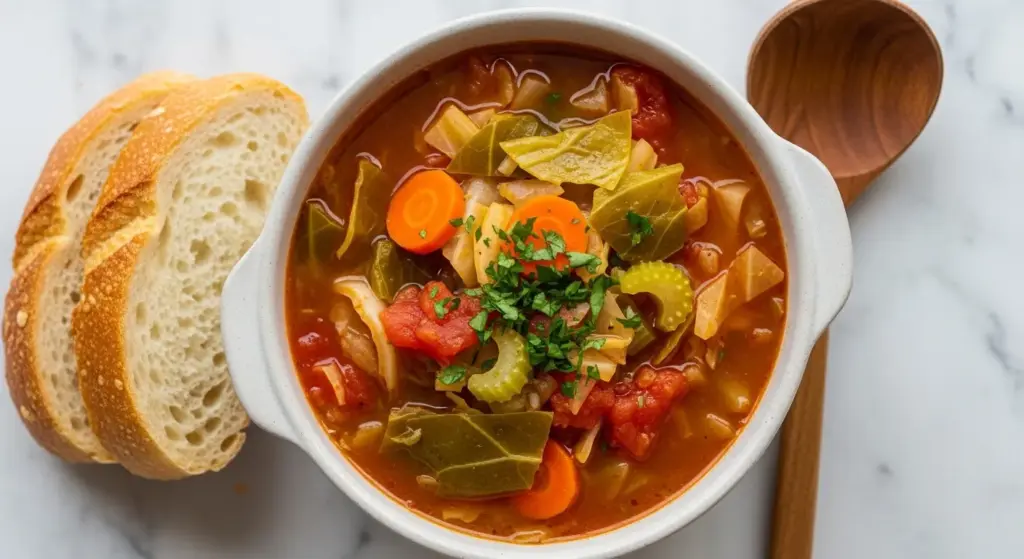
This cabbage soup is a complete and satisfying meal on its own, but a few well-chosen accompaniments can round it out beautifully. The broth is rich enough to support a hearty bread for dipping, and light enough that a simple side salad won’t feel redundant.
It pairs wonderfully with crusty sourdough, buttery dinner rolls, or a thick slice of cheesy garlic bread for dunking straight into the bowl.
- Cheesy Garlic Bread for dipping into the broth
- Creamy Coleslaw as a cool, crunchy contrast
- Vinegar Coleslaw for a tangy, lighter side
- Collard Greens for a Southern-style pairing
- A simple green salad with lemon vinaigrette
- Cornbread or buttermilk biscuits on the side
- A dollop of plain Greek yogurt or a sprinkle of shredded cheddar stirred in for creaminess
Variations to Try
The classic version of this soup is exactly what most people want most of the time, but the recipe is genuinely flexible. These variations are easy to execute and each produces a distinctly different bowl.
- Add ground beef or turkey: Brown ½ pound of ground meat in the pot before adding the vegetables. Drain any excess fat, then proceed with the recipe as written. This turns the soup into a much heartier, meaty meal.
- Add kielbasa or smoked sausage: Slice a 12-ounce ring of kielbasa into ¼-inch rounds and brown it in the oil before adding the vegetables. The smoky, salty sausage gives the broth incredible depth.
- Add white beans or chickpeas: A drained and rinsed can of cannellini beans or chickpeas adds plant-based protein and makes the soup more filling. Add them along with the cabbage.
- Make it spicy: Add ½ teaspoon of red pepper flakes along with the other dried spices, or stir in a teaspoon of your favorite hot sauce at the end.
- Slow cooker version: Sauté the aromatics as directed, then transfer everything to a slow cooker. Cook on low for 6 to 8 hours or high for 3 to 4 hours.
For an Eastern European take on this kind of soup, check out this Borscht Recipe which uses a similar cabbage base with beets for a rich, vibrant result.
Storage and Reheating
This cabbage soup stores extremely well, which makes it an ideal recipe for batch cooking and meal prep. The flavors continue to develop overnight, and most people agree the soup tastes even better on day two.
- Refrigerator: Store leftover soup in an airtight container in the refrigerator for up to 5 days.
- Freezer: Allow the soup to cool completely to room temperature before transferring to freezer-safe containers or heavy-duty zip-lock bags. Freeze for up to 3 months. Leave a little headspace in the container, as the liquid expands when frozen.
- Thawing: Transfer frozen soup to the refrigerator the night before you plan to eat it and let it thaw overnight.
- Reheating on the stovetop: Pour the soup into a pot over medium heat and warm, stirring occasionally, until heated through. Add a splash of broth or water if the soup has thickened too much.
- Reheating in the microwave: Transfer a serving to a microwave-safe bowl, cover loosely, and heat in 90-second intervals, stirring between each, until hot.
Another soup that reheats beautifully and is great for meal prep is this Stuffed Pepper Soup.
Nutritional Facts
The nutritional values below are estimates based on one serving of soup (approximately 2 cups), calculated with vegetable broth and without any added protein or toppings. Values may vary depending on your specific ingredients and brands used.
| Nutrient | Per Serving |
|---|---|
| Calories | ~130 kcal |
| Total Carbohydrates | 22g |
| Dietary Fiber | 6g |
| Sugars | 9g |
| Protein | 4g |
| Total Fat | 4g |
| Saturated Fat | 0.5g |
| Sodium | ~600mg |
| Potassium | ~520mg |
| Vitamin A | ~70% DV |
| Vitamin C | ~80% DV |
| Calcium | ~8% DV |
| Iron | ~10% DV |
This recipe makes approximately 6 servings. If you’re tracking macros closely, use a nutrition calculator app with your specific brands for the most accurate results.
For another low-calorie, nutrient-dense soup option, try this Kale Soup that checks many of the same boxes.
Health Benefits of Key Ingredients
This cabbage soup recipe isn’t just tasty — it’s legitimately packed with nutrients that support overall health. Understanding what each ingredient brings to the table makes it even easier to feel good about eating a big bowl.
The ingredients in this soup work together to create a genuinely nourishing meal that supports immunity, digestion, and overall well-being.
- Cabbage: One of the most nutrient-dense vegetables by cost. It’s high in vitamin C, vitamin K, and glucosinolates, which are compounds associated with reduced inflammation. It’s also a good source of fiber, which supports digestive health.
- Carrots: Rich in beta-carotene, which the body converts to vitamin A. Vitamin A is essential for eye health, immune function, and skin health.
- Celery: Contains antioxidants and compounds called phthalides, which some research suggests may support healthy blood pressure.
- Tomatoes: A significant source of lycopene, a powerful antioxidant, as well as vitamin C and potassium. The lycopene content in cooked tomatoes is actually higher than in raw tomatoes.
- Garlic: Contains allicin, a compound with well-documented antimicrobial and immune-supporting properties. Garlic has been used medicinally for centuries and has a strong base of modern research supporting its health effects.
- Olive oil: A source of heart-healthy monounsaturated fats and polyphenol antioxidants, particularly when using extra virgin olive oil.
- Lemon juice: Provides a hit of vitamin C and organic acids that support iron absorption from plant-based foods.
Read Also: Chicken Soup Recipe
Frequently Asked Questions
1. Can I make this cabbage soup in a slow cooker?
Yes, you can adapt this recipe for the slow cooker with great results. Sauté the onion, carrot, celery, bell pepper, and garlic in a skillet first (this step is worth doing even for slow cooker recipes because it adds so much flavor). Transfer the sautéed vegetables to your slow cooker along with all remaining ingredients. Cook on low for 6 to 8 hours or on high for 3 to 4 hours, until the cabbage is completely tender. Add the lemon juice and fresh parsley just before serving.
2. What kind of cabbage should I use for this soup?
Green cabbage is the standard and most widely recommended choice for this recipe. It becomes sweet and tender when cooked, and its flavor is mild enough to let the broth shine. Napa cabbage can be used as a substitute, though it will wilt more aggressively and may become very soft. Savoy cabbage is another excellent option with a slightly more delicate flavor. Red cabbage is generally not recommended for this particular soup because it releases a purple-red color into the broth and has a more pronounced peppery flavor.
3. Can I freeze this cabbage soup?
Yes, this soup freezes very well for up to 3 months. Let the soup cool completely before transferring to freezer-safe containers or bags. Leave a bit of headspace because the liquid expands as it freezes. To reheat, thaw overnight in the refrigerator and warm on the stovetop over medium heat. You may need to add a splash of water or broth if the soup thickened during freezing and reheating.
4. Is this cabbage soup recipe the same as the “cabbage soup diet” soup?
This is a regular, wholesome, well-seasoned soup designed to be a satisfying and nutritious meal. The “cabbage soup diet” soup is a specific, often bland version associated with a fad diet from the 1980s. While there’s some overlap in ingredients, this recipe has significantly more flavor, depth, and nutritional balance. It’s meant to be enjoyed as part of a normal diet, not as a restrictive cleanse.
5. Can I add potatoes to this soup?
Absolutely. Diced Yukon Gold or red potatoes are a popular and delicious addition to cabbage soup. Cut them into ¾-inch cubes and add them along with the cabbage and broth in step 5. They’ll take about 25 to 30 minutes to become tender, which lines up well with the total simmering time. Adding potatoes makes the soup noticeably heartier and more filling.
For another warming, hearty soup recipe, try this Zuppa Toscana which has a similar comforting, cozy vibe.
Final Thoughts
If you’ve been looking for a simple, nourishing soup that actually tastes incredible without requiring hours in the kitchen, this cabbage soup recipe is exactly what you need.
It’s the kind of meal that earns a spot in your regular rotation not because it’s trendy, but because it’s genuinely good — warm, satisfying, and loaded with vegetables that make you feel like you’re actually taking care of yourself.
Give it a try this week. A big pot of this soup goes a long way, and it only gets better with each passing day.
If you make this recipe, leave a comment below and let me know how it turned out! Feel free to share your favorite add-ins or variations — I love hearing how readers make these recipes their own.
Recommended:
- Cabbage Roll Skillet Recipe
- Sauerkraut Soup Recipe
- Chicken Tortilla Soup Recipe
- Tomato Soup Recipe
- Baked Potato Soup Recipe
- Split Pea Soup Recipe
- Pumpkin Soup Recipe
- Pasta Fagioli Recipe
- Black Bean Soup Recipe
- Italian Wedding Soup Recipe