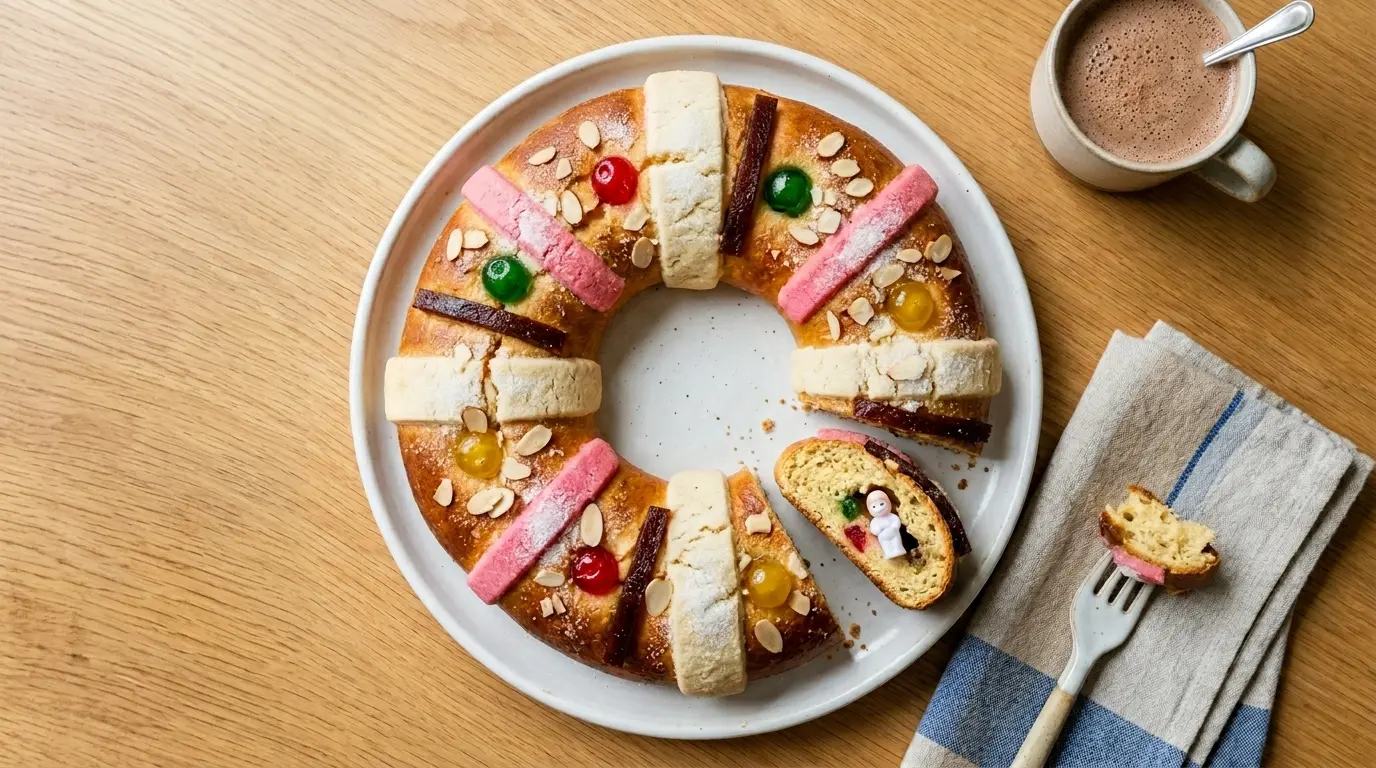
This Rosca de Reyes recipe brings the warm orange and cinnamon scent of a Mexican panadería right into your own kitchen. It’s the soft, ring-shaped sweet bread families gather around every January 6th to celebrate Three Kings Day, and once you’ve made it from scratch, you’ll understand why it’s such a beloved tradition.
Baking this bread is part science and part celebration. The dough is enriched with butter, eggs, and orange zest, then dressed up with strips of sweet paste and jewel-toned candied fruit that mimic the crowns of the Three Wise Men.
If you’ve never tackled a yeasted holiday bread before, don’t worry. This recipe walks you through every stage, from blooming the yeast to shaping the final ring, so even a first-time baker can pull off a showstopping centerpiece.
This soft, orange scented bread pairs perfectly with other festive yeasted treats like Pan Dulce Recipe if you want to round out a full Mexican breakfast spread.
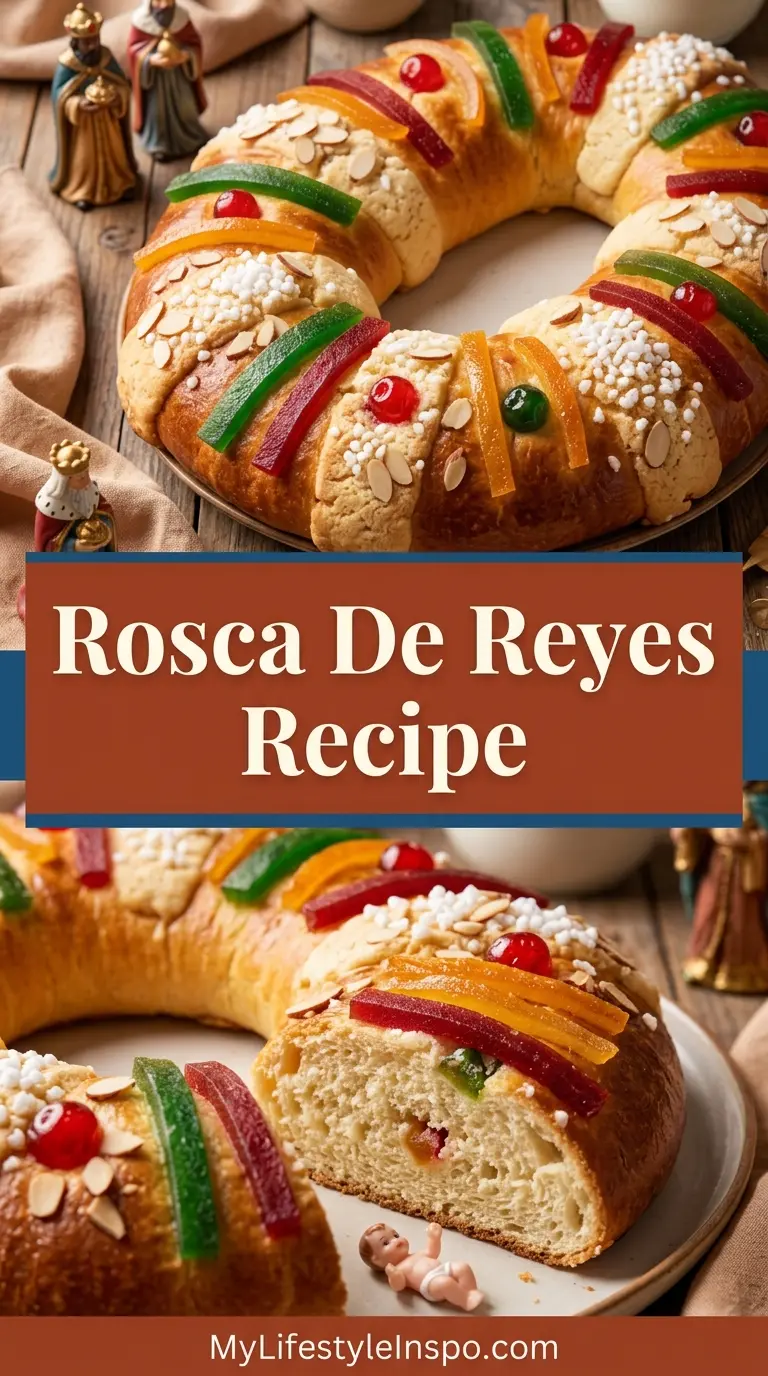
Why You’ll Love This Rosca de Reyes Recipe
This bread checks every box for a festive baking project. It’s rich without being heavy, sweet without being cloying, and the orange zest gives every slice a bright, fresh aroma that fills the whole house while it bakes.
Decorating the rosca is genuinely fun, especially if you get kids or family involved in placing the candied fruit and hiding the little baby figurines inside. It also makes a fantastic make-ahead treat, since the dough can rise overnight in the fridge if your schedule is tight.
- Soft, pillowy texture thanks to the combination of bread flour and enriched dough
- Bright citrus flavor from fresh orange zest and orange extract
- A beautiful centerpiece that doubles as dessert and conversation starter
- A fun family tradition built right into the recipe with the hidden baby figurines
- Pairs perfectly with hot chocolate or coffee for an Epiphany breakfast
If you love working with enriched holiday doughs, you’ll also want to try this Concha Recipe for another beloved Mexican sweet bread.
Ingredients
Gather everything before you start so the process flows smoothly once the yeast is active. The dough, topping, and decorations are made separately, then brought together at the shaping stage.
For the Dough:
- 4 cups (500g) bread flour
- 1 packet or 2¼ tsp (7g) active dry yeast
- ½ cup (100g) granulated sugar
- 1 cup (240ml) whole milk, warmed to about 110°F (43°C)
- ½ cup (113g) unsalted butter, softened
- 3 large eggs, room temperature
- Zest of 2 oranges
- 1 tsp orange extract
- 1 tsp salt
For the Sugar Paste Topping:
- ½ cup (65g) all-purpose flour
- ⅓ cup (40g) powdered sugar
- ¼ cup (57g) unsalted butter, softened
- 1 large egg yolk
For Decorating:
- 1 egg plus 1 tbsp water, for egg wash
- ½ cup candied cherries, halved
- ⅓ cup guava paste, sliced into thin strips
- ¼ cup sliced almonds
- 1 to 3 mini baby figurines
Every ingredient above gets used somewhere in the steps that follow, so don’t skip the prep work on the sugar paste or decorations, since you’ll need them ready when the dough finishes its first rise.
Pairing this bread with a warm drink is half the fun. This Champurrado Recipe is a classic match for Three Kings Day.
Kitchen Equipment Needed
Most of what you need is probably already in your kitchen, but a few specific tools make this enriched dough much easier to handle and shape.
- Stand mixer with dough hook attachment
- Large mixing bowl
- Light colored baking sheet
- Pastry brush
- Kitchen scale
- Instant read thermometer
- Plastic wrap or a clean kitchen towel
- Small piping bag or zip top bag for the sugar paste
A light colored baking sheet matters more than you might think here. Darker pans absorb more heat and can cause the bottom of the bread to brown too fast before the inside finishes baking.
For another enriched dough that benefits from the same equipment list, take a look at this Brioche Recipe.
Recommended Products for This Recipe
These are a few specific products that genuinely make this recipe easier and more authentic, based on quality and performance rather than just convenience.
1. USA Pan Aluminized Steel Sheet Pan
This pan conducts heat evenly and is light in color, which helps prevent the bottom of your rosca from over browning before the center is fully baked. It’s sturdy enough to handle years of holiday baking without warping.
2. KitchenAid Stand Mixer
Enriched doughs like this one are sticky and require a long knead time to develop proper gluten structure. A stand mixer with a dough hook saves your arms and produces a more consistently smooth, elastic dough.
3. Ate de Membrillo Quince Paste
This traditional Mexican quince paste is the classic decoration for an authentic rosca and gives the bread that signature jewel-toned look. It also adds a subtle floral sweetness that pairs beautifully with the orange dough.
4. Mini Plastic Baby Charms Set
These small figurines are essential for keeping the tradition alive, since hiding a baby Jesus charm inside the bread is the whole point of a rosca. This set comes with extras so you always have enough for a crowd.
If you love collecting festive bread traditions, this Challah Recipe is another braided beauty worth adding to your repertoire.
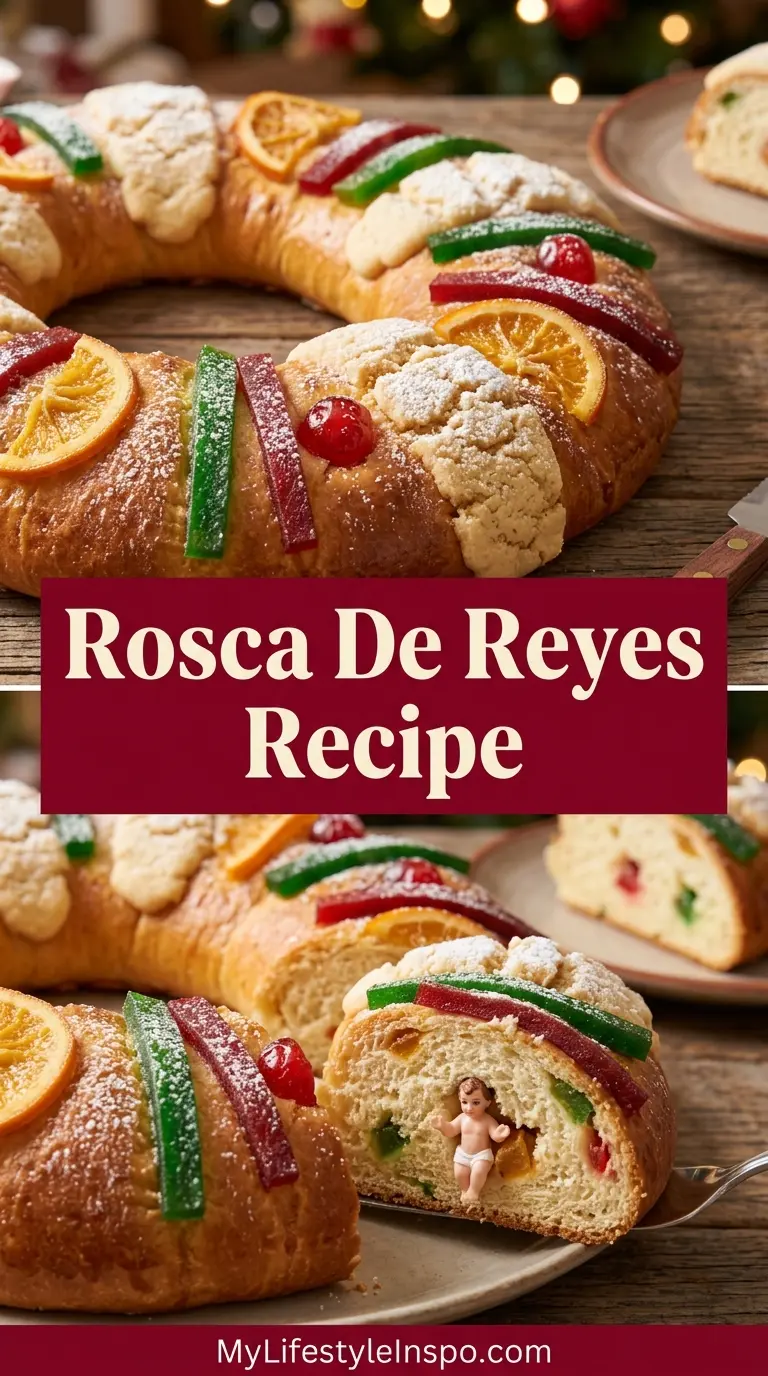
Step-by-Step Instructions
1. Activate the Yeast
- Warm the milk to about 110°F (43°C). It should feel warm to the touch but not hot, since overly hot liquid can kill the yeast.
- Pour the warm milk into a small bowl and stir in 1 tablespoon of the sugar along with the active dry yeast.
- Let the mixture sit undisturbed for 8 to 10 minutes, until it turns foamy on top. This foam confirms your yeast is alive and ready to work.
- If nothing happens after 10 minutes, your yeast may be expired, so start over with a fresh packet before continuing.
2. Mix the Dough
- In the bowl of a stand mixer fitted with the dough hook, combine the bread flour, remaining sugar, and salt.
- Add the orange zest and orange extract, then mix briefly on low speed to distribute them evenly through the flour.
- Pour in the activated yeast mixture, the softened butter, and the eggs.
- Mix on low speed until a shaggy dough forms, then increase to medium speed and knead for 8 to 10 minutes, until the dough is smooth, elastic, and slightly tacky but not sticky to the touch.
3. Let the Dough Rise
- Shape the dough into a ball and place it in a large, lightly greased bowl.
- Cover the bowl with plastic wrap or a damp kitchen towel.
- Place the bowl in a warm, draft free spot, such as an oven with just the light on, and let it rise for 1.5 to 2 hours, or until it has doubled in size.
- Test readiness by gently pressing two fingers into the dough. If the indentation slowly springs back, it’s ready to shape.
4. Make the Sugar Paste Topping
- While the dough rises, combine the all-purpose flour, powdered sugar, softened butter, and egg yolk in a small bowl.
- Mix with a fork or your hands until the mixture comes together into a smooth, pliable paste.
- Wrap the paste in plastic and refrigerate it until you’re ready to decorate, since chilling makes it easier to roll into strips later.
5. Shape the Rosca
- Once doubled, punch down the dough gently to release the air.
- Turn it out onto a lightly floured surface and roll it into a long rope, roughly 24 to 28 inches in length.
- Transfer the rope to your prepared baking sheet and shape it into an oval or ring, overlapping the two ends and pinching the seam tightly to seal.
- If you’re including them, press 1 to 3 baby figurines into the underside of the dough now, making sure each one is fully tucked in and the dough is sealed back over the opening.
6. Second Rise and Decorate
- Cover the shaped dough loosely with plastic wrap and let it rise again for 30 to 45 minutes, until noticeably puffy.
- Whisk together the egg and water to make the egg wash, then brush it gently over the entire surface of the risen dough.
- Roll the chilled sugar paste into thin ropes and arrange them in a crisscross or zigzag pattern across the top of the ring.
- Press the candied cherries, strips of guava paste, and sliced almonds into the gaps between the sugar paste strips so the bread looks like a jeweled crown.
7. Bake the Rosca
- Preheat your oven to 350°F (175°C) while the dough finishes its second rise.
- Bake the rosca for 25 to 30 minutes, checking at the 15 minute mark and tenting loosely with foil if the top is browning too quickly.
- The bread is done when it’s deep golden brown and the internal temperature reads about 190°F (88°C) on an instant read thermometer.
- Remove the rosca from the oven and let it cool completely on the baking sheet or a wire rack before slicing, since cutting into warm yeast bread can cause it to collapse.
For more orange scented baking inspiration, check out this Cranberry Orange Bread Recipe.
Tips for Success
A few small adjustments make a big difference between a good rosca and a great one. Pay close attention to temperature and timing, since this is a yeasted dough that rewards patience.
- Use a thermometer to confirm your milk is between 100°F and 110°F (38°C to 43°C) before adding the yeast
- Knead until the dough passes the windowpane test, meaning you can stretch a small piece thin enough to see light through it without tearing
- Let the dough rise in a consistently warm spot, since cold kitchens can slow fermentation significantly
- Chill the sugar paste before rolling it into strips so it holds its shape on top of the dough
- Tent the bread with foil partway through baking if the top is browning faster than the inside is cooking
For another bread that benefits from the windowpane test, try this Cinnamon Babka Recipe next.
Serving Suggestions
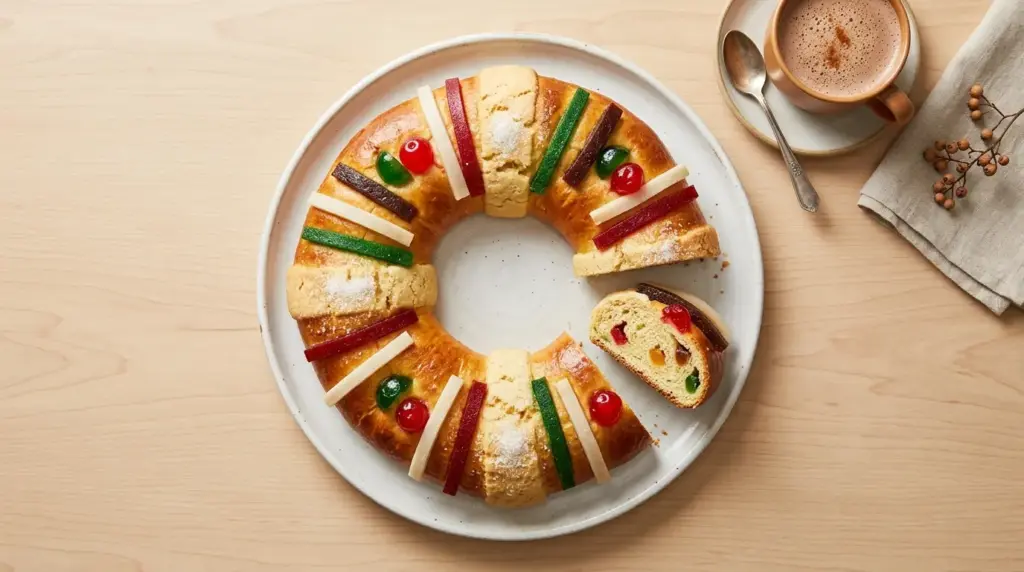
Rosca de Reyes is traditionally served as the centerpiece of an Epiphany gathering, sliced and shared among family and friends. The classic pairing is a steaming cup of Mexican hot chocolate, which balances the bread’s sweetness with rich, spiced cocoa flavor.
A warm mug of coffee or atole works just as well if you want something a little less sweet alongside your slice. Set the rosca out on a large platter so everyone can gather around and choose their piece together, which is half the fun of the tradition.
- Serve alongside a frothy cup of Hot Chocolate
- Pair with coffee or atole for a milder contrast
- Slice and serve at room temperature for the best texture
- Offer butter or jam on the side for guests who want extra richness
- Set out small plates so everyone can check their slice for the hidden figurine
Variations to Try
Once you’ve mastered the classic version, there’s plenty of room to make this rosca your own. Bakers across Mexico and Spain have been putting their own spin on this bread for generations.
- Cream filled rosca: Split the cooled bread horizontally and fill it with sweetened whipped cream or pastry cream before serving
- Chocolate rosca: Add a swirl of chocolate ganache or chocolate chips into the dough before shaping
- Mini roscas: Divide the dough into smaller individual rings for single servings at a party
- Nut free version: Skip the almonds and decorate with extra candied fruit and sugar paste instead
- Vegan rosca: Swap the butter for plant based margarine and use a flax egg in place of regular eggs
If a filled version sounds appealing, this Chocolate Babka Recipe uses a similar swirling technique that’s worth exploring.
Storage and Reheating
Rosca de Reyes stays fresh for a few days at room temperature if stored properly, and it also freezes well for longer term storage. Keep the decorations in mind, since fruit toppings can soften slightly once wrapped.
- Store leftover bread in an airtight container or wrapped tightly in plastic wrap at room temperature for up to 3 days
- Refrigerate for up to a week if your kitchen runs warm, though the texture is best enjoyed at room temperature
- Freeze whole or in slices, wrapped tightly in plastic and then foil, for up to 2 months
- Thaw frozen bread overnight at room temperature before serving
- Refresh slightly stale bread by warming individual slices in a 300°F (150°C) oven for 5 minutes
This bread shares a lot in common with other holiday loaves, like this Panettone Recipe, which stores and freezes in a similar way.
Nutritional Facts
These values are approximate and will vary depending on exact brands and portion sizes used.
- Calories: approximately 320 to 350 per slice
- Carbohydrates: approximately 48g per slice
- Protein: approximately 7g per slice
- Fat: approximately 12g per slice
- Sugar: approximately 16g per slice
- Sodium: approximately 180mg per slice
If you’re tracking holiday treats, this Fruitcake Recipe offers another nutritional comparison for festive baked goods.
Health Benefits of Key Ingredients
While this is undeniably a treat, several of the ingredients bring more to the table than just sweetness. Understanding what’s in your bread can help you enjoy it with a clearer picture of what you’re eating.
Eggs contribute high quality protein and important nutrients like choline and vitamin B12, which support brain and muscle function. Orange zest, while used in a small amount, contains beneficial plant compounds and a small dose of vitamin C that doesn’t get lost in baking the way juice does.
- Eggs: Provide protein, choline, and several B vitamins
- Orange zest: Contains flavonoids and a touch of vitamin C
- Almonds: Offer healthy fats, fiber, and a bit of plant protein
- Milk: Adds calcium and vitamin D to the overall dough
- Butter: Provides fat soluble vitamins like A and D in moderate amounts
For another bread recipe built around nutrient dense add ins, this Date Nut Bread Recipe is worth a look.
Frequently Asked Questions
1. What is the significance of the baby figurine inside the Rosca de Reyes?
The figurine represents Baby Jesus being hidden from King Herod after the visit of the Three Wise Men. Whoever finds the figurine in their slice traditionally hosts a gathering and prepares tamales for Día de la Candelaria on February 2nd.
2. Can I make the dough ahead of time?
Yes, you can prepare the dough through the first rise, then refrigerate it overnight before shaping. Let the dough sit at room temperature for about 30 minutes before shaping so it’s easier to work with.
3. Why didn’t my rosca rise properly?
The most common cause is yeast that wasn’t activated correctly, often due to milk that was too hot or too cold. Double check your milk temperature with a thermometer and make sure your yeast is still within its expiration date.
4. Can I substitute the guava paste or candied cherries?
Absolutely, dried cranberries, candied orange peel, or other dried fruits all work as decorative substitutes. The decorations are mostly visual and flavor accents, so feel free to use what you have on hand or what your family prefers.
5. How do I know when the bread is fully baked?
The most reliable method is checking the internal temperature with an instant read thermometer, which should read about 190°F (88°C). The crust should also be a deep golden brown all around, including the underside.
This Mexican rice makes a great savory addition if you’re building out a full Three Kings Day spread alongside your rosca.
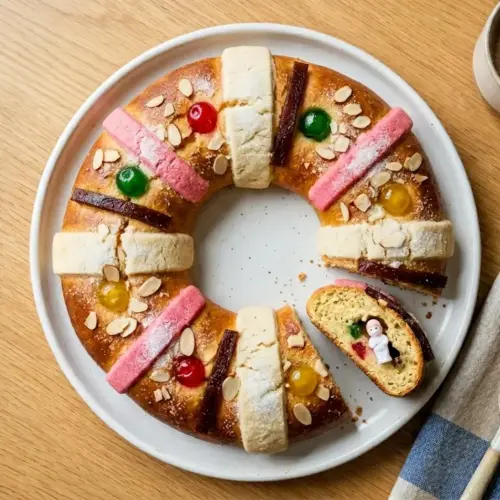
Rosca de Reyes

Equipment
- Stand mixer with dough hook
- Large mixing bowl
- Light colored baking sheet - Prevents over-browning of the bottom
- Pastry brush
- Kitchen scale - For accurate ingredient measurements
- Instant-read thermometer - For checking milk temperature and bread doneness
- Plastic wrap
- Clean kitchen towel
- Small piping bag or zip top bag - For the sugar paste
Ingredients
- 4 cups bread flour - 500g
- 1 packet active dry yeast - 2¼ tsp or 7g
- ½ cup granulated sugar - 100g, divided (1 tbsp for yeast activation)
- 1 cup whole milk - 240ml, warmed to 110°F (43°C)
- ½ cup unsalted butter - 113g, softened
- 3 large eggs - room temperature
- orange zest - zest of 2 oranges
- 1 tsp orange extract
- 1 tsp salt
Sugar Paste Topping
- ½ cup all-purpose flour - 65g
- ⅓ cup powdered sugar - 40g
- ¼ cup unsalted butter - 57g, softened
- 1 large egg yolk
For Decorating
- 1 egg - for egg wash
- 1 tbsp water - for egg wash
- ½ cup candied cherries - halved
- ⅓ cup guava paste - sliced into thin strips
- ¼ cup sliced almonds
- 1 to 3 mini baby figurines - optional, to hide inside the bread
Instructions
- Warm the milk to 110°F (43°C). Stir in 1 tablespoon of sugar and the yeast, then let sit for 8-10 minutes until foamy.
- In your stand mixer bowl, combine the bread flour, remaining sugar, salt, orange zest, and orange extract. Add the yeast mixture, softened butter, and eggs. Mix on low until a shaggy dough forms, then knead on medium for 8-10 minutes until smooth and elastic.
- Shape the dough into a ball and place in a greased bowl. Cover and let rise in a warm place for 1.5-2 hours until doubled in size.
- Mix the all-purpose flour, powdered sugar, butter, and egg yolk until smooth. Wrap and refrigerate until ready to use.
- Punch down the dough, roll into a 24-28 inch rope, and shape into an oval or ring on the baking sheet. Press the baby figurines into the underside of the dough.
- Cover loosely and let rise for 30-45 minutes until puffy. Brush with egg wash, roll the sugar paste into thin ropes and arrange in a crisscross pattern on top. Press candied cherries, guava paste strips, and almonds into the gaps.
- Preheat oven to 350°F (175°C). Bake for 25-30 minutes, tenting with foil if the top browns too quickly, until internal temperature reaches 190°F (88°C). Cool completely on a wire rack before slicing.
Notes
- Temperature check: Use a thermometer to confirm your milk is between 100°F and 110°F (38°C to 43°C) before adding the yeast.
- Windowpane test: Knead until the dough passes the windowpane test—stretch a small piece thin enough to see light through it without tearing.
- Chill the paste: Chilling the sugar paste before rolling it into strips helps it hold its shape on top of the dough.
- Make ahead: You can prepare the dough through the first rise, then refrigerate it overnight before shaping. Let the dough sit at room temperature for about 30 minutes before shaping.
- Substitutions: Dried cranberries, candied orange peel, or other dried fruits all work as decorative substitutes for the guava paste and candied cherries.
- Doneness test: The most reliable method is checking the internal temperature with an instant read thermometer, which should read about 190°F (88°C).
- Storage: Store leftover bread in an airtight container at room temperature for up to 3 days, or refrigerate for up to a week. Freeze whole or in slices for up to 2 months.
- Refreshing: Revive slightly stale bread by warming individual slices in a 300°F (150°C) oven for 5 minutes.
- Tradition: The baby figurine represents Baby Jesus. Whoever finds it in their slice traditionally hosts a gathering and prepares tamales for Día de la Candelaria on February 2nd.
- Pairing: Rosca de Reyes is traditionally served with a steaming cup of Mexican hot chocolate, which balances the bread’s sweetness with rich, spiced cocoa flavor.
Final Thoughts
Making your own Rosca de Reyes is more than just baking a loaf of bread. It’s a way to bring a centuries old tradition into your home and share something genuinely special with the people you love.
Don’t be intimidated by the shaping and decorating steps, since they get easier with each attempt. Give this recipe a try this Three Kings Day, and let me know in the comments how your rosca turned out or if you tried any fun variations of your own.
Recommended:
- Authentic German Stollen Recipe
- Easter Bread Recipe
- Greek Easter Bread Recipe
- Tsoureki Recipe
- Pandesal Recipe
- Cinnamon Swirl Bread Recipe
- Brioche French Toast Recipe
- Hot Chocolate Bombs Recipe
- Churro Cheesecake Recipe