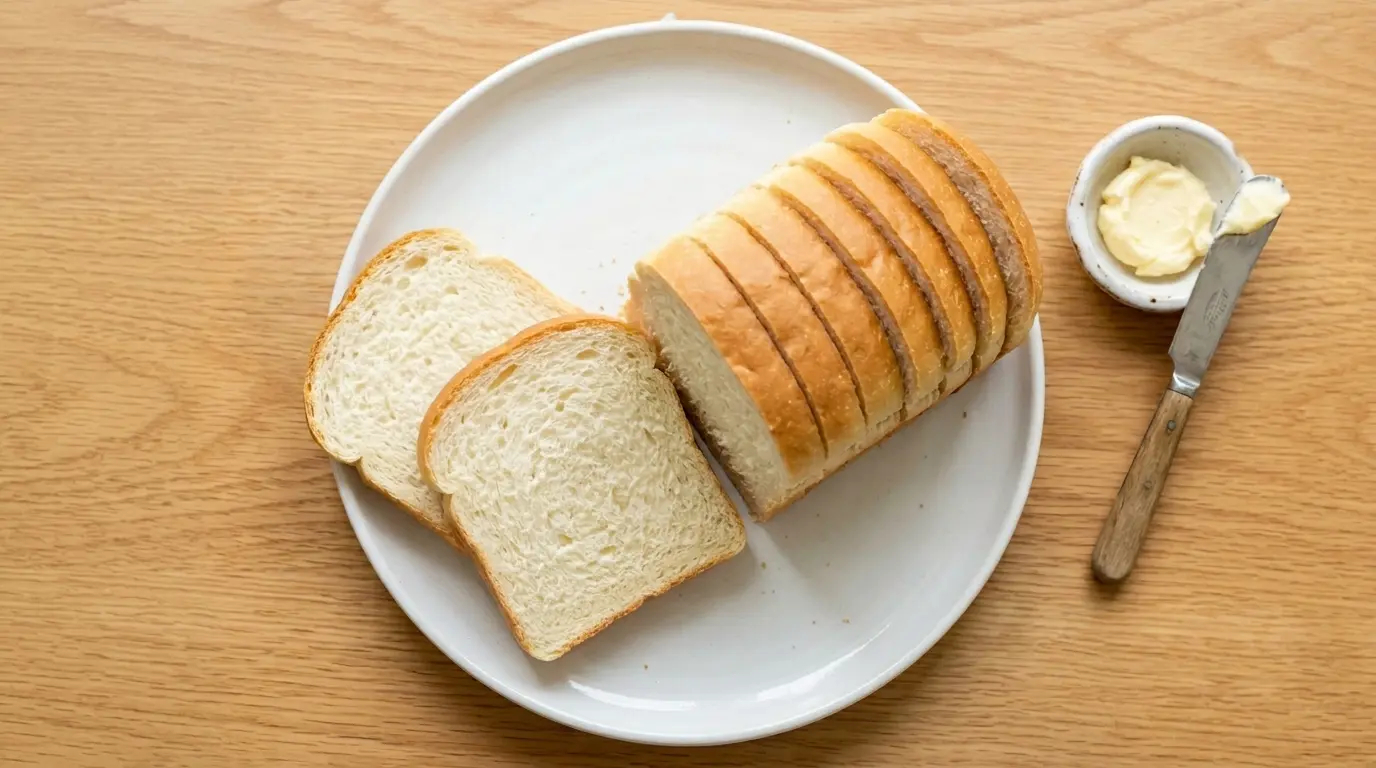
This Hokkaido Milk Bread recipe is the kind of bake that turns regular toast time into something worth getting excited about.
It’s a Japanese style loaf made soft and stretchy with a cooked flour paste called tangzhong, and the texture is genuinely unlike any other homemade bread you’ve tried.
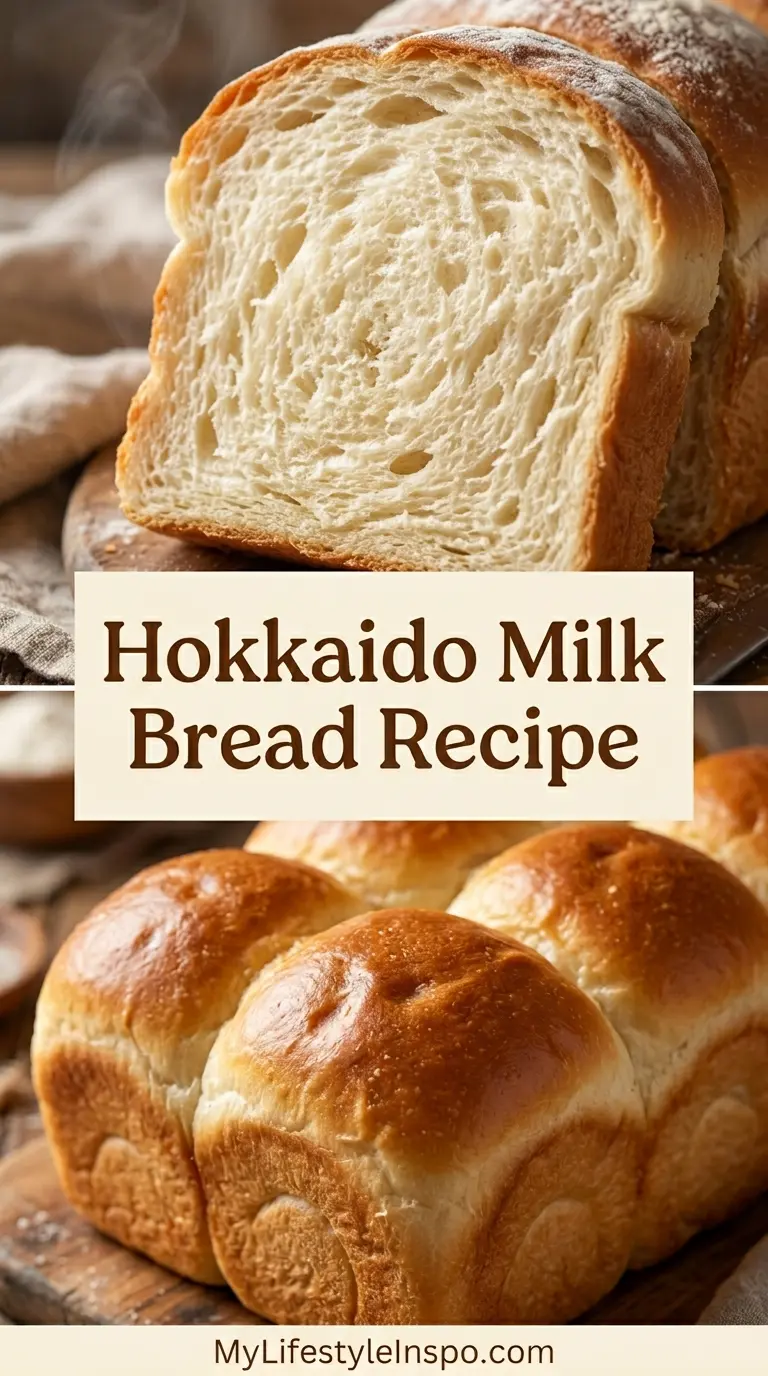
Pull a slice apart and you’ll see what bakers mean when they call this bread “cottony.” It’s light, slightly sweet, and stays soft for days instead of going stale by tomorrow afternoon.
The tangzhong method sounds technical, but it just means cooking a small amount of flour with milk and water into a thick paste before mixing it into the dough. That little extra step pre gelatinizes the starch in the flour, which lets it hold onto far more moisture than a regular bread dough can.
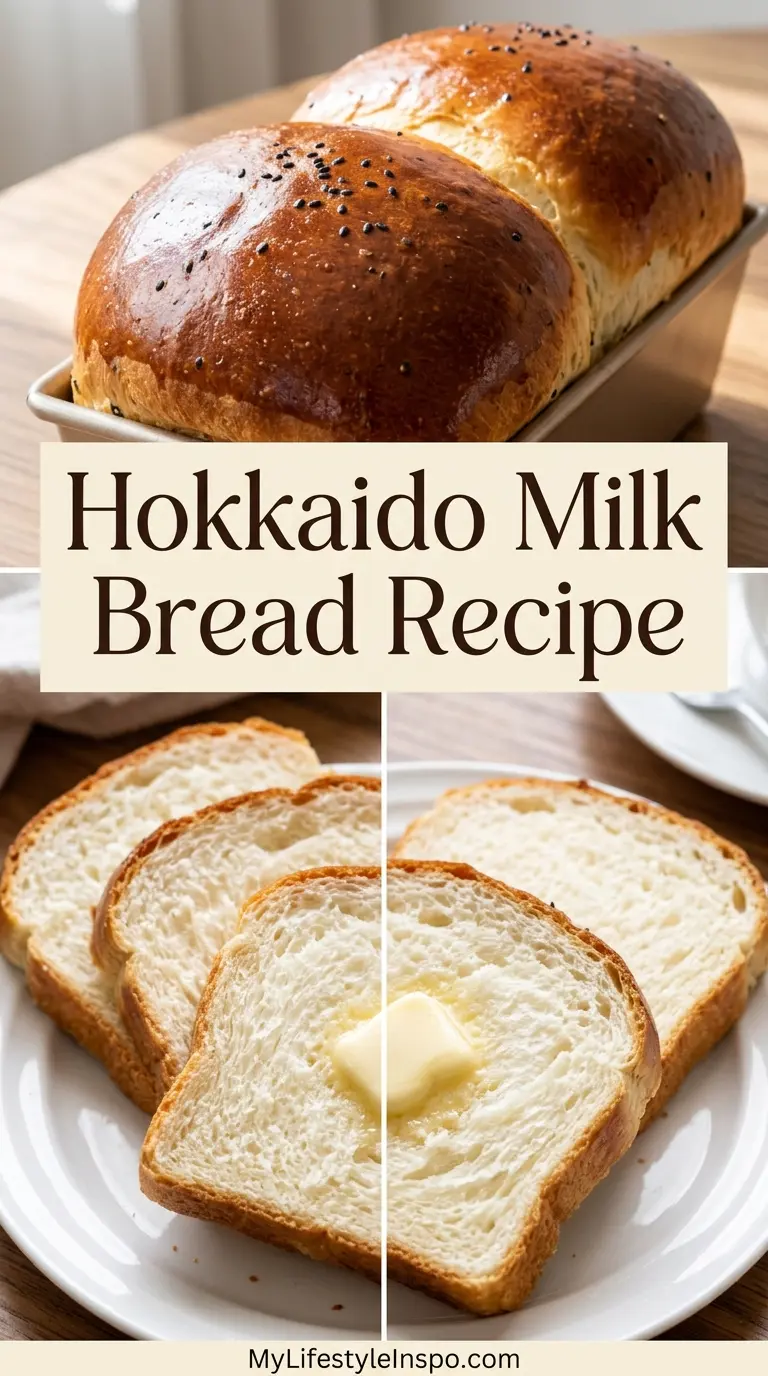
The result is a loaf with a tender, almost dairy like crumb and a golden, lightly glossy crust. If you’ve had the milk bread sold at Asian bakeries and wondered how they get it so soft, this is the technique behind it.
You might also enjoy: Classic Baguette Recipe
Why You’ll Love This Hokkaido Milk Bread
Once you bake this loaf, regular sandwich bread is going to feel a little boring by comparison.
It has that bakery quality softness that usually feels impossible to recreate, but the tangzhong method makes it genuinely doable at home.
- Incredibly soft texture: the tangzhong keeps the crumb pillowy soft for days, not just on baking day
- Beginner friendly steps: despite the fancy sounding technique, the method is straightforward and forgiving
- Stays fresh longer: the added moisture from the roux means this bread doesn’t dry out and go stale as quickly as standard loaves
- Versatile: works beautifully for sandwiches, toast, French toast, or simply slathered with butter
- Slightly sweet flavor: a gentle sweetness makes it just as good with jam as it is with savory fillings
If you love the idea of a soft, enriched loaf, you’ll also want to try this Japanese Milk Bread, which uses a similar tangzhong base with a few tweaks to the shaping method.
Ingredients
Most of these ingredients are pantry basics, but a couple of small upgrades make a real difference in how soft and flavorful your loaf turns out.
Bread flour is worth seeking out here. Its higher protein content builds stronger gluten strands, which gives the dough the structure it needs to trap all that extra moisture from the tangzhong without collapsing.
For the Tangzhong (Roux):
- 1/3 cup (43g) bread flour
- 1/2 cup (120ml) whole milk
- 1/4 cup (60ml) water
For the Dough:
- 3 1/4 cups (420g) bread flour
- 1/4 cup (50g) granulated sugar
- 1 1/2 teaspoons fine sea salt
- 2 1/4 teaspoons (1 packet) active dry yeast
- 1/3 cup (80ml) whole milk, warmed slightly
- 1 large egg, room temperature
- 1/4 cup (57g) unsalted butter, softened
- 1 tablespoon milk, for brushing before baking
These ingredients come together to make one classic 9×5 inch loaf, soft enough to pull apart by hand straight out of the oven.
For another enriched dough that uses a similar egg and butter rich base, check out this Brioche Recipe for comparison.
Kitchen Equipment Needed
You don’t need anything exotic to make this bread, but a few specific tools genuinely make the process smoother and your results more consistent.
A stand mixer in particular is worth the investment if you bake bread often, since this dough starts out quite sticky and benefits from extended machine kneading.
- Stand mixer with dough hook attachment
- 9×5 inch loaf pan
- Small saucepan
- Digital kitchen scale
- Mixing bowls
- Whisk
- Instant read digital thermometer
- Plastic wrap or a clean kitchen towel
- Wire cooling rack
- Pastry brush
If you bake bread regularly, this is also a good moment to look at building out a small collection of go to tools, similar to what you’d use for this Sandwich Bread Recipe.
Recommended Products for This Recipe
These are a few specific products that consistently make a noticeable difference in how this bread turns out, based on what actually solves the common sticking points in this recipe.
1. KitchenAid Stand Mixer with Dough Hook
This dough is sticky and dense, which makes hand kneading a real workout. A stand mixer with a dough hook attachment does the heavy lifting for you and develops gluten more evenly, which directly affects how soft and stretchy your final loaf turns out.
2. USA Pan 9×5 Loaf Pan
A quality loaf pan with even heat distribution helps the bread bake uniformly so you avoid that frustrating situation where one side is golden brown and the other stays pale. The nonstick coating also makes turning out a sticky, enriched dough like this one much less stressful.
3. ThermoPro Instant Read Digital Thermometer
Bread doneness is one of those things that’s hard to judge by sight alone, especially with a loaf this pale and soft. Checking for an internal temperature of 190°F takes the guesswork out completely and prevents both underbaked centers and dry, overbaked crusts.
4. OXO Digital Kitchen Scale
Bread baking is one of the few kitchen tasks where precision really matters, and volume measurements for flour can vary by as much as 20 percent depending on how it’s scooped. A digital scale removes that variability so your tangzhong ratio and dough hydration stay consistent every time.
For more ideas on building out a beginner bread baking setup, this guide on No Knead Bread covers a slightly different approach that’s worth comparing.
Step-by-Step Instructions
1. Make the Tangzhong
- In a small saucepan, whisk together the bread flour, milk, and water until there are no lumps remaining
- Place the saucepan over medium low heat and whisk constantly, this prevents the mixture from scorching on the bottom
- Continue whisking and cooking for 3 to 5 minutes, until the mixture thickens into a smooth, glossy paste similar in texture to mashed potatoes
- You’ll know it’s ready when the whisk leaves visible trail marks in the paste and it no longer looks runny
- Remove the saucepan from the heat immediately, since overcooking can make the tangzhong gummy
- Scrape the tangzhong into a small bowl and cover it with plastic wrap pressed directly onto the surface, this prevents a skin from forming as it cools
- Let it cool to room temperature, about 20 to 30 minutes, before using it in the dough
2. Activate the Yeast
- Warm the 1/3 cup of milk gently until it feels just slightly warm to the touch, around 100 to 110°F, you don’t want it hot enough to kill the yeast
- Pour the warmed milk into the bowl of your stand mixer
- Sprinkle the active dry yeast evenly over the surface of the milk
- Let it sit undisturbed for 5 to 10 minutes, until the surface looks foamy and slightly bubbly
- If the yeast doesn’t foam at all after 10 minutes, it’s likely inactive, and you’ll want to start over with a fresh packet before continuing
3. Mix the Dough
- Add the cooled tangzhong, bread flour, sugar, salt, and egg to the bowl with the activated yeast mixture
- Fit your stand mixer with the dough hook attachment and mix on low speed for 2 to 3 minutes, just until the ingredients come together into a rough, shaggy dough
- Scrape down the sides of the bowl as needed to make sure all the flour gets incorporated
- Increase the speed to medium and knead for 5 minutes, the dough will look very sticky at this stage, which is completely normal, resist the urge to add extra flour
4. Incorporate the Butter
- With the mixer still running on medium speed, add the softened butter in two or three small additions rather than all at once
- The dough will look like it’s falling apart and refusing to come together when the butter first goes in, that’s expected
- Continue kneading for 8 to 10 minutes, the dough will gradually smooth out and pull away cleanly from the sides of the bowl
- You’ll know the dough is ready when you can stretch a small piece between your fingers and it forms a thin, translucent membrane without tearing immediately, this is called the windowpane test
- The finished dough should be soft, smooth, and slightly tacky but no longer overly sticky
5. First Rise
- Lightly grease a large mixing bowl with a small amount of neutral oil or softened butter
- Shape the dough into a smooth ball and place it in the greased bowl
- Cover the bowl tightly with plastic wrap or a damp kitchen towel
- Let the dough rise in a warm spot, away from drafts, for 60 to 90 minutes, until it has roughly doubled in size
- A good test is to press a finger gently into the dough, if the indent springs back slowly and partially, it’s ready
6. Shape the Loaf
- Gently punch down the risen dough to release the air, then turn it out onto a lightly floured work surface
- Divide the dough into three equal portions using a kitchen scale for accuracy, each piece should weigh roughly the same
- Take one portion and flatten it into an oval shape with a rolling pin
- Fold the long edges of the oval into the center, then roll the dough up tightly from one short end to the other, like rolling a cinnamon roll
- Repeat this process with the remaining two portions of dough
- Place all three rolled pieces seam side down into a greased 9×5 inch loaf pan, arranged side by side
7. Second Rise
- Cover the loaf pan loosely with plastic wrap or a clean kitchen towel
- Let the shaped dough rise in a warm place for 45 to 60 minutes, until it has puffed up and risen about an inch above the rim of the pan
- The dough should look noticeably airy and jiggle slightly when the pan is nudged
8. Bake the Bread
- While the dough finishes its second rise, preheat your oven to 350°F
- Once risen, gently brush the top of the loaf with the tablespoon of milk reserved for brushing, this helps the crust turn a deep golden color
- Place the loaf pan in the center of the preheated oven and bake for 30 to 35 minutes
- The bread is done when the top is a rich golden brown and a digital thermometer inserted into the center reads at least 190°F
- If the top starts browning too quickly before the inside finishes baking, loosely tent the loaf with a sheet of foil for the remaining bake time
9. Cool the Loaf
- Remove the loaf pan from the oven and let it rest in the pan for 10 minutes
- Carefully turn the bread out onto a wire cooling rack
- Allow the loaf to cool completely, at least 1 hour, before slicing, cutting into warm bread can compress the soft crumb and make it look denser than it actually is
Read Also: Easy Sourdough Bread Recipe
Tips for Success
A few small details make a noticeably bigger difference with this recipe than with most other breads, mainly because the dough is so soft and forgiving to handle.
Getting the tangzhong consistency right is probably the single most important factor in how your final loaf turns out, so it’s worth paying close attention to that step.
- Don’t rush cooling the tangzhong: adding it to the dough while still warm can kill the yeast or make the dough too loose to handle
- Resist adding extra flour: the dough is supposed to be sticky, adding more flour to “fix” this will result in a denser, less fluffy loaf
- Use room temperature ingredients: cold eggs or butter can slow down gluten development and make kneading take longer
- Do the windowpane test: stretching a small piece of dough to check for a thin, stretchy membrane is the most reliable way to know kneading is finished
- Watch your rise times, not just the clock: room temperature affects rising speed significantly, so check the dough’s appearance and texture rather than relying purely on minutes
Once you’ve nailed this base technique, it translates well to other enriched doughs like this Soft Dinner Rolls Recipe, which uses a similar approach to building a tender crumb.
Serving Suggestions
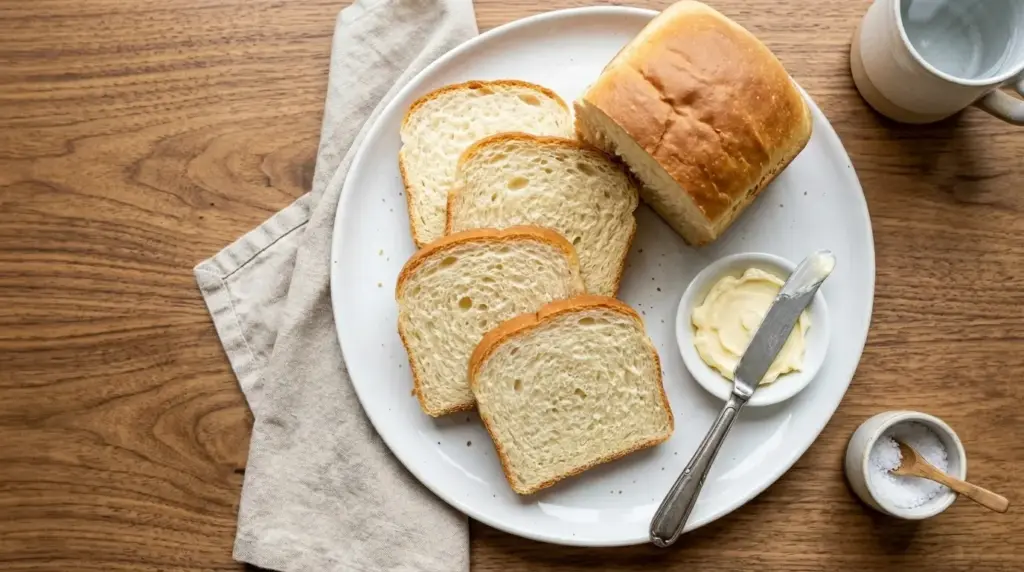
This bread is soft and slightly sweet enough to work well in just about any setting, from breakfast to an afternoon snack.
It’s especially good torn into thick slices and eaten still slightly warm, with nothing more than a pat of butter melting into it.
- Toasted and topped simply, similar to this Avocado Toast
- Sliced thick for a custardy version of French toast
- Used as a base for grilled cheese or ham sandwiches
- Served alongside soup for dipping, since the soft crumb soaks up broth beautifully
- Sliced and lightly toasted, then spread with jam or honey for a simple breakfast
- Cubed and used in place of regular bread for a French toast casserole bake
Another favorite to try: Easy French Toast
Variations to Try
Once you’re comfortable with the base recipe, this dough is a great canvas for a few easy customizations depending on what you’re in the mood for.
Each of these swaps changes the flavor profile without affecting the overall technique, so they’re a low risk way to experiment.
- Milk bread rolls: divide the dough into 8 to 10 even pieces, shape into balls, and bake in a 9×13 inch pan for individual dinner rolls instead of a loaf
- Cinnamon swirl version: roll out each portion of dough, spread with cinnamon sugar before rolling it up, for a subtly spiced twist
- Egg wash finish: brush the top with a beaten egg instead of milk before baking for a shinier, deeper golden crust
- Whole milk powder boost: add 2 tablespoons of dry milk powder to the dough for an even richer, more pronounced milky flavor
- Braided loaf: instead of three rolled logs, braid the dough portions together before placing them in the pan for a more decorative top
If you enjoy experimenting with enriched dough, this Challah Recipe is another great braided bread worth trying next.
Storage and Reheating
One of the genuine advantages of the tangzhong method is how much longer this bread stays soft compared to a standard loaf, so storing it properly really pays off.
Because of the added moisture, this bread is also more prone to mold in humid conditions, so keeping it well sealed matters more than usual.
- Room temperature: store in an airtight bag or container for up to 4 days, away from direct sunlight or heat
- Refrigeration: not recommended, as refrigeration tends to dry out enriched breads faster than room temperature storage
- Freezing: wrap sliced or whole loaf tightly in plastic wrap, then place in a freezer bag for up to 3 months
- Reheating frozen slices: toast directly from frozen, or let thaw at room temperature for 20 to 30 minutes
- Refreshing day old bread: wrap the loaf in foil and warm in a 300°F oven for 10 minutes to restore some of the original softness
If you find yourself baking a lot of enriched breads, the storage approach for this loaf works well for Sourdough Sandwich Bread too.
Nutritional Facts
These values are approximate and will vary slightly depending on exact brands and measuring methods used.
Per slice, based on a loaf cut into 12 slices: 165 calories, 4g protein, 27g carbohydrates, 4.5g fat, 2.5g saturated fat, 1g fiber, 4g sugar, 210mg sodium, 20mg cholesterol.
Read Also: Easy Naan Bread Recipe
Health Benefits of Key Ingredients
While this is very much a treat bread rather than a health food, a few of the ingredients do bring some genuine nutritional value to the table.
Understanding what each ingredient contributes can help you feel a little better about that second slice.
- Milk: provides calcium, vitamin D, and protein, all of which support bone health and muscle function
- Eggs: a complete protein source that also contains choline, which supports brain and liver function
- Bread flour: higher in protein than all purpose flour, which contributes more to satiety per slice
- Butter: in moderation, provides fat soluble vitamins A, D, E, and K
- Yeast: a natural leavening agent that also contains B vitamins, including B1, B2, and B6
If you’re interested in similarly enriched but slightly different bakes, this Brioche French Toast Recipe uses many of the same core ingredients.
Frequently Asked Questions
1. Why is my milk bread dense instead of fluffy?
Dense milk bread usually means the dough wasn’t kneaded long enough to develop sufficient gluten, or the yeast wasn’t fully active before mixing.
It can also happen if too much extra flour was added during kneading, since this dough should remain quite soft and slightly sticky throughout the process.
2. Can I make this bread without a stand mixer?
Yes, though it will take more effort and time, since this dough is notably sticky to knead by hand.
Plan on kneading for at least 15 to 20 minutes by hand, and resist adding extra flour even when the dough feels difficult to manage.
3. What’s the difference between tangzhong and yudane?
Tangzhong cooks flour and liquid together directly on the stovetop, while yudane involves pouring boiling liquid over flour and letting it sit to cook through residual heat.
Both methods achieve a similar pre-gelatinized starch effect, though tangzhong is generally considered slightly easier to control consistently.
4. Can I substitute all purpose flour for bread flour?
You can, but the texture will be slightly less chewy and the structure a bit weaker, since bread flour’s higher protein content specifically helps trap the extra moisture from the tangzhong.
If bread flour isn’t available, all purpose flour will still produce a soft loaf, just with marginally less structure.
5. Why does my dough look like it’s separating when I add the butter?
This is completely normal and happens because butter is fat based while the dough is hydration based, so they initially resist combining smoothly.
Continued kneading for several more minutes will bring everything back together into a smooth, cohesive dough, so don’t panic and add more flour at this stage.
For more troubleshooting on enriched dough handling, this Homemade Bagel Recipe covers some overlapping technique notes worth a look.

Hokkaido Milk Bread

Equipment
- Stand mixer with dough hook attachment - Makes kneading sticky dough significantly easier
- 9×5-inch loaf pan - Standard size for this recipe
- Small saucepan - For making the tangzhong
- Digital kitchen scale - For accurate flour and dough portion measurements
- Mixing bowls - For rising and prep
- Whisk - For tangzhong preparation
- Instant read digital thermometer - For checking dough temperature and bread doneness
- Plastic wrap or clean kitchen towel - For covering dough during rises
- Wire cooling rack - For cooling bread completely
- Pastry brush - For applying milk wash before baking
- Rolling Pin - For flattening dough portions during shaping
Ingredients
- 43 g bread flour - 1/3 cup
- 120 ml whole milk - 1/2 cup
- 60 ml water - 1/4 cup
For the Dough
- 420 g bread flour - 3 1/4 cups
- 50 g granulated sugar - 1/4 cup
- 1.5 teaspoons fine sea salt
- 2.25 teaspoons active dry yeast - 1 packet
- 80 ml whole milk - 1/3 cup, warmed to 100-110°F
- 1 large egg - room temperature
- 57 g unsalted butter - 1/4 cup, softened
- 1 tablespoon milk - for brushing before baking
Instructions
- Whisk bread flour, milk, and water in a small saucepan until smooth. Cook over medium-low heat while whisking constantly for 3-5 minutes until thickened to a smooth paste. Cover with plastic wrap pressed onto the surface and cool to room temperature.
- Warm 1/3 cup milk to 100-110°F and pour into stand mixer bowl. Sprinkle yeast over the surface and let sit undisturbed for 5-10 minutes until foamy.
- Add cooled tangzhong, bread flour, sugar, salt, and egg to the yeast mixture. Mix with dough hook on low speed for 2-3 minutes until a shaggy dough forms, then knead on medium for 5 minutes.
- With mixer running, add softened butter in 2-3 additions. Knead for 8-10 minutes until dough is smooth and passes the windowpane test. The dough should be soft and slightly tacky.
- Shape dough into a ball and place in a greased bowl. Cover and let rise in a warm spot for 60-90 minutes until doubled in size.
- Punch down dough and divide into 3 equal portions. Roll each into an oval, fold long edges toward center, then roll up tightly from one short end. Place seam-side down in a greased 9×5 loaf pan.
- Cover and let rise for 45-60 minutes until dough puffs about 1 inch above the rim of the pan.
- Preheat oven to 350°F. Brush top of risen loaf with milk and bake for 30-35 minutes until internal temperature reaches 190°F and top is golden brown.
- Remove from oven and rest in pan for 10 minutes. Turn out onto wire rack and cool completely for at least 1 hour before slicing.
Notes
- Don’t rush cooling the tangzhong—adding it warm can kill the yeast or make the dough too loose to handle.
- Resist adding extra flour during kneading; the dough is supposed to be sticky and adding more will result in a denser loaf.
- Use room temperature eggs and butter for optimal gluten development and kneading.
- Always check for the windowpane test to confirm proper gluten development before moving to the rise.
- Rise times are approximate; focus on the dough’s appearance (doubled in size) rather than clock time.
- Store at room temperature in an airtight container for up to 4 days—refrigeration can dry out enriched breads.
- Freeze sliced or whole loaf wrapped tightly in plastic wrap and a freezer bag for up to 3 months.
- To refresh day-old bread, wrap in foil and warm in a 300°F oven for 10 minutes.
- For cinnamon swirl variation, roll out each portion and spread with cinnamon sugar before rolling up.
- Use bread flour for best results; all-purpose flour will work but will yield slightly less structure.
Final Thoughts
This Hokkaido Milk Bread recipe is genuinely one of those bakes that feels a little bit magical the first time you pull it apart and see how soft the inside is.
It takes patience, mostly in the form of waiting for the dough to rise, but the actual hands on work is simple enough for a first time bread baker to manage.
Give yourself a free afternoon, let the tangzhong do its thing, and you’ll end up with a loaf that’s genuinely hard to go back from once you’ve tried it.
If you make this bread, I’d love to hear how it turned out. Drop a comment below or share a photo, and let me know if you tried any of the variations.
Recommended:
- Dinner Rolls Recipe
- Sweet Dinner Rolls Recipe
- New York Style Bagel Recipe
- Classic French Toast Recipe
- Cinnamon Rolls Frosting Recipe Without Cream Cheese
- Sourdough Focaccia Recipe
- Garlic Naan Bread Recipe
- Rosemary Focaccia Recipe
- Pull Apart Garlic Bread Recipe
- Creme Brulee French Toast Casserole Recipe