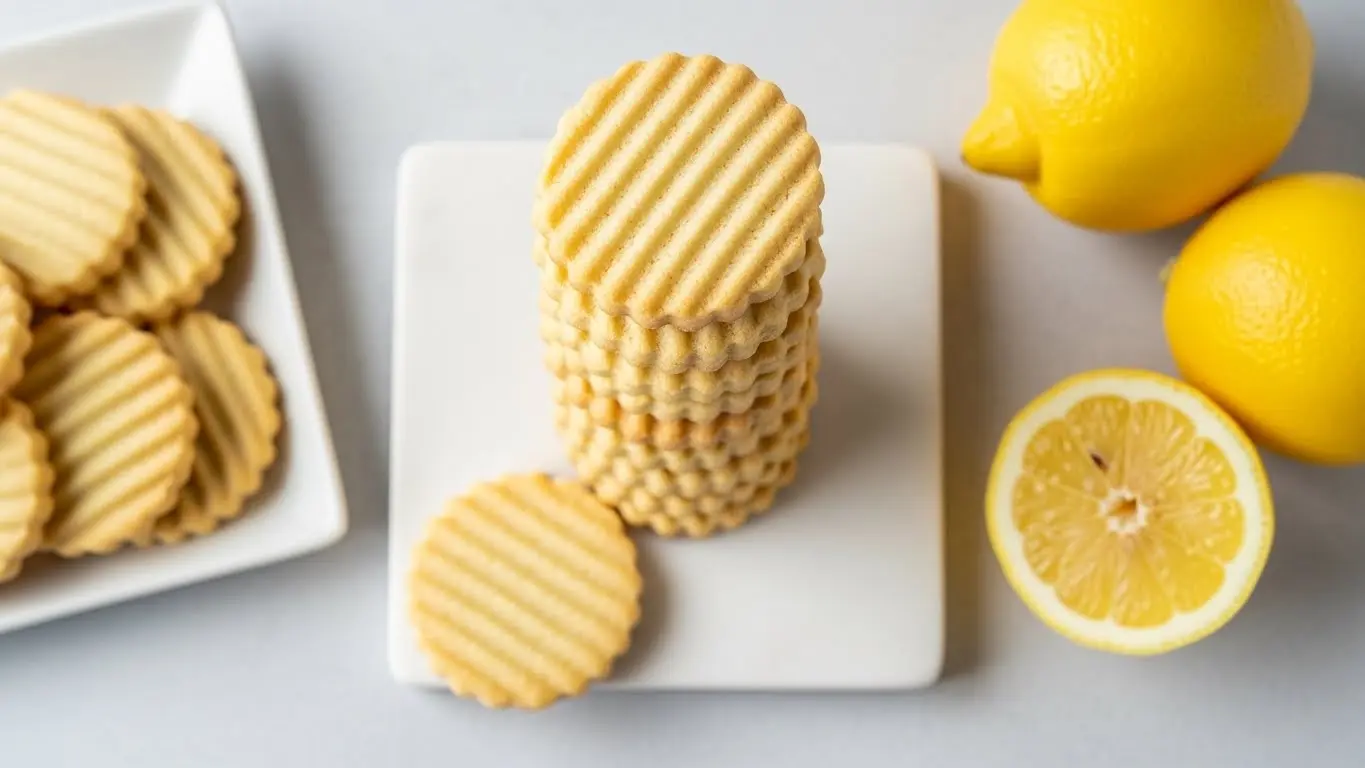
The smell of fresh lemon shortbread cookies baking in the oven takes me straight back to my grandmother’s kitchen. She’d make these buttery, citrus-kissed treats every spring, and the whole house would fill with that incredible aroma of butter and lemon.
I’ve been making this lemon shortbread cookies recipe for years now, tweaking it until it’s absolutely perfect. The buttery texture melts in your mouth, while the bright lemon flavor keeps things from getting too heavy.
These cookies are surprisingly simple to make. You don’t need any fancy equipment or hard-to-find ingredients—just butter, sugar, flour, and fresh lemons.
The dough comes together in minutes, and you can shape it however you like. I usually go for classic rectangles, but rounds or wedges work beautifully too.
What I love most is how these cookies strike that perfect balance between sweet and tangy. They’re rich without being overwhelming, and that hint of lemon zest makes each bite feel refreshing.
You might also enjoy: Shortbread Cookie Recipe
Why You’ll Love This Lemon Shortbread Cookies Recipe
This recipe gives you bakery-quality cookies with minimal effort. The ingredient list is short, the method is straightforward, and the results are consistently amazing.
Here’s what makes these cookies so special:
- Simple ingredients: Just butter, sugar, flour, and lemons—no exotic additions needed
- Make-ahead friendly: The dough refrigerates beautifully, so you can bake fresh cookies whenever you want
- Versatile flavor: These work as afternoon tea cookies, dessert, or even breakfast treats with coffee
- Perfect texture: Crisp edges with a tender, buttery center that practically melts on your tongue
- Great for gifting: They look elegant and travel well, making them ideal for cookie swaps or gift boxes
- Customizable: Add more or less lemon depending on your preference, or try the variations I’ve included below
Ingredients
These cookies rely on quality ingredients to shine, so use the best butter you can find and fresh lemons for maximum flavor.
- 1 cup (227g) unsalted butter, softened to room temperature
- ½ cup (100g) granulated sugar
- 2 tablespoons fresh lemon zest (from about 2-3 large lemons)
- 2 tablespoons fresh lemon juice
- 2 cups (240g) all-purpose flour
- ¼ teaspoon salt
- 1 teaspoon vanilla extract
- Optional: 2 tablespoons powdered sugar for dusting
Kitchen Equipment Needed
Having the right tools makes the baking process smoother and more enjoyable, though you can definitely work with what you have.
- Large mixing bowl
- Electric mixer (handheld or stand mixer)
- Microplane or fine grater for zesting lemons
- Measuring cups and spoons
- Parchment paper or silicone baking mat
- Baking sheets
- Rolling pin (if shaping by rolling)
- Sharp knife or cookie cutters
- Wire cooling rack
Another favorite: Sugar Cookies Recipe
Recommended Products for This Recipe
After making these cookies countless times, I’ve found a few products that genuinely make the process easier and improve the final result.
1. European-Style Butter
The quality of your butter makes a huge difference in shortbread. European-style butter has a higher fat content (around 82% compared to 80% in standard butter), which creates a richer, more tender cookie. The flavor is noticeably better too—more complex and slightly tangy.
2. Microplane Premium Zester
Getting fine, fluffy lemon zest is crucial for distributing that citrus flavor evenly throughout the dough. A quality microplane makes zesting effortless and ensures you’re getting just the flavorful yellow part of the peel, not the bitter white pith underneath.
3. Nordic Ware Natural Aluminum Baking Sheets
These baking sheets conduct heat evenly, so your cookies bake uniformly without burnt bottoms or undercooked centers. The light color prevents over-browning, which is especially important for delicate shortbread that should stay pale golden.
4. Silpat Silicone Baking Mat
These reusable mats eliminate the need for parchment paper and provide a perfectly non-stick surface every time. Your cookies will release easily and bake more evenly than they would on a bare pan.
Step-by-Step Instructions
1. Prepare Your Butter and Lemons
- Remove your butter from the refrigerator about 30-45 minutes before you plan to start baking
- The butter should be soft enough to leave an indent when pressed but not greasy or melted
- Wash your lemons thoroughly under warm water and pat them dry
- Zest the lemons using a microplane, making sure to only remove the bright yellow outer layer
- Roll each lemon firmly on the counter before juicing to release more juice
- Strain the lemon juice to remove any seeds or pulp
2. Cream the Butter and Sugar
- Add the softened butter to your large mixing bowl
- Pour in the granulated sugar
- Beat on medium speed for 3-4 minutes until the mixture is light, fluffy, and pale in color
- Stop occasionally to scrape down the sides of the bowl with a spatula
- The mixture should look almost white and have increased in volume
3. Add the Lemon and Vanilla
- Add the lemon zest, lemon juice, and vanilla extract to the butter mixture
- Beat on low speed for about 30 seconds, just until everything is well combined
- Don’t overmix at this stage—you just want the lemon flavor distributed evenly
- The mixture might look slightly curdled from the lemon juice, but that’s perfectly normal
Read Also: Peanut Butter Blossom Cookies Recipe
4. Mix in the Dry Ingredients
- In a separate bowl, whisk together the flour and salt
- Add the flour mixture to the butter mixture in three parts
- Mix on low speed after each addition, stopping as soon as the flour disappears
- Overmixing at this stage will create tough cookies, so mix just until combined
- The dough should come together and pull away from the sides of the bowl
- If it seems too soft to handle, that’s fine—it will firm up during chilling
5. Shape the Dough
- Turn the dough out onto a sheet of parchment paper or plastic wrap
- Form it into a log shape about 2 inches in diameter, or shape it into a disk if you plan to roll it out
- For a log: Roll the dough tightly in parchment paper, twisting the ends like a candy wrapper
- For rolled cookies: Flatten the dough into a disk about 1 inch thick and wrap it tightly
- Press out any air pockets as you wrap
- The shape you choose now will determine your final cookie shape
6. Chill the Dough
- Place the wrapped dough in the refrigerator for at least 2 hours (or up to 3 days)
- Chilling is not optional—it’s essential for the cookies to hold their shape during baking
- The cold dough is also much easier to slice or roll cleanly
- If you’re in a hurry, you can freeze the dough for 45 minutes instead
- The dough should feel firm all the way through before you proceed to baking
This pairs beautifully with my Snickerdoodle Cookie Recipe for a cookie platter.
7. Preheat and Prepare
- About 15 minutes before your dough is done chilling, preheat your oven to 325°F (165°C)
- Line two baking sheets with parchment paper or silicone baking mats
- If you’re using regular baking sheets without liners, lightly grease them with butter
- Position your oven racks in the upper and lower third of the oven for even baking
- Have your cooling racks ready and within reach
8. Slice or Cut the Cookies
- Remove the dough from the refrigerator
- If you made a log: Use a sharp knife to slice the log into rounds about ¼ to ⅜ inch thick
- Wipe your knife clean between slices for neat edges
- If you rolled the dough: Unwrap it and roll it out on a lightly floured surface to ¼ inch thickness, then cut with cookie cutters
- Arrange cookies on the prepared baking sheets about 1 inch apart
- They don’t spread much, so you can fit quite a few on each sheet
- Gather any scraps, press them together gently, and chill again before re-rolling
9. Bake the Cookies
- Place the baking sheets in the preheated oven
- Bake for 12-15 minutes, rotating the sheets halfway through
- The cookies are done when the edges are just barely golden and the centers look set but still pale
- They should not brown significantly—shortbread should remain light in color
- If one sheet is browning faster than the other, swap their positions in the oven
- The cookies will still feel soft when you take them out, but they’ll firm up as they cool
10. Cool and Finish
- Let the cookies rest on the baking sheets for 5 minutes before moving them
- This resting time allows them to firm up enough to transfer without breaking
- Use a thin spatula to carefully transfer each cookie to a wire cooling rack
- Let them cool completely, about 20-30 minutes
- If you want to dust them with powdered sugar, wait until they’re completely cool
- Place powdered sugar in a fine-mesh sieve and gently tap it over the cookies for a light, even coating
Tips for Success
These small details will help you achieve perfect lemon shortbread cookies every single time.
- Use room temperature butter: Cold butter won’t cream properly, and melted butter will make your dough greasy. Aim for butter that’s soft but still holds its shape.
- Don’t skip the chilling: Warm dough spreads too much in the oven and produces flat, greasy cookies. Cold dough holds its shape beautifully.
- Measure flour correctly: Spoon flour into your measuring cup and level it off with a knife. Scooping directly from the bag packs in too much flour, making dry cookies.
- Fresh lemon zest is key: The zest contains all the aromatic oils that give these cookies their wonderful flavor. Bottled lemon zest doesn’t compare.
- Watch them carefully near the end: Shortbread can go from perfectly baked to overdone in a minute or two. Set a timer and check them at 12 minutes.
- Let them cool completely: Shortbread firms up significantly as it cools. Warm cookies will be too fragile to handle and won’t have that classic crisp texture yet.
I learned this technique while perfecting my Gingerbread Cookie Recipe.
Serving Suggestions

These versatile cookies work in so many different contexts, from casual afternoons to elegant occasions.
Lemon shortbread pairs wonderfully with hot tea or coffee in the afternoon. The buttery richness balances nicely with a strong cup of Earl Grey or a bold espresso.
For a simple dessert, serve these cookies alongside fresh berries and whipped cream. The tartness of the lemon complements strawberries, raspberries, or blueberries perfectly. You could also layer them with Vanilla Pudding and fruit for an easy trifle.
Try them with ice cream or sorbet for a more substantial treat. They’re sturdy enough to use as sandwich cookies—spread a thin layer of lemon curd or buttercream between two cookies for an impressive presentation.
These cookies also make excellent accompaniments to other desserts. Crumble them over Lemon Meringue Pie for added texture, or serve them alongside a slice of cheesecake.
For a breakfast treat, enjoy them with yogurt and fresh fruit. The buttery sweetness works surprisingly well in the morning with a strong cup of coffee.
Variations to Try
Once you’ve mastered the basic recipe, these variations will keep things interesting.
- Lime shortbread: Swap the lemon zest and juice for lime. The flavor is slightly more intense and tropical.
- Lemon lavender: Add 1 tablespoon of dried culinary lavender to the dough along with the lemon zest for an elegant, floral note.
- Glazed lemon shortbread: Mix together 1 cup powdered sugar with 2-3 tablespoons lemon juice until smooth, then drizzle over cooled cookies.
- Lemon poppy seed: Stir 2 tablespoons of poppy seeds into the dough for added crunch and visual appeal.
- Lemon almond: Replace ½ cup of the all-purpose flour with almond flour and add ½ teaspoon of almond extract.
- Chocolate-dipped: Once cookies are completely cool, dip half of each cookie in melted dark or white chocolate.
- Lemon thyme: Add 1 tablespoon of fresh thyme leaves to the dough for an herbal twist that’s sophisticated and unexpected.
Storage and Reheating
Proper storage keeps these cookies fresh and delicious for weeks.
- Room temperature: Store completely cooled cookies in an airtight container at room temperature for up to 1 week. Place parchment paper between layers to prevent sticking.
- Refrigerator: These cookies don’t need refrigeration, but they’ll keep for up to 2 weeks in the fridge if your kitchen is very warm or humid.
- Freezer: Freeze baked cookies in a freezer-safe container or bag for up to 3 months. Separate layers with parchment paper. Thaw at room temperature for about 30 minutes before serving.
- Freezing unbaked dough: Wrap the dough log tightly in plastic wrap, then again in aluminum foil. Freeze for up to 3 months. Slice frozen dough (no need to thaw) and add 2-3 minutes to the baking time.
- Refreshing cookies: If your cookies have softened, crisp them up by placing them on a baking sheet in a 300°F oven for 3-5 minutes.
Read Also: Pizzelle Recipe
Nutritional Facts
Per cookie (recipe makes approximately 24 cookies):
- Calories: 110
- Total Fat: 7g
- Saturated Fat: 4.5g
- Cholesterol: 20mg
- Sodium: 25mg
- Total Carbohydrates: 11g
- Dietary Fiber: 0g
- Sugars: 4g
- Protein: 1g
Note: Nutritional information is approximate and will vary based on specific ingredients used and cookie size.
Health Benefits of Key Ingredients
While these are definitely a treat, the ingredients do offer some nutritional benefits worth noting.
Lemons provide a good dose of vitamin C and antioxidants that support immune function. The citrus oils in lemon zest contain compounds that may help reduce inflammation.
Butter, when used in moderation, supplies vitamins A, D, and E, along with healthy fats that help your body absorb fat-soluble vitamins. It also contains conjugated linoleic acid (CLA), which has been linked to various health benefits.
All-purpose flour provides energy in the form of carbohydrates and contains some B vitamins and iron, especially if you’re using enriched flour.
The vanilla extract contains small amounts of antioxidants and has been used traditionally to calm nerves and reduce stress.
That said, these are cookies—meant to be enjoyed in moderation as part of a balanced diet. The joy and satisfaction they bring is a benefit in itself.
Frequently Asked Questions
1. Can I use salted butter instead of unsalted?
Yes, you can use salted butter, but reduce or omit the added salt in the recipe. Salted butter contains about ¼ teaspoon of salt per stick, so if you’re using it, skip the salt called for in the recipe or reduce it to just a pinch. The flavor will be slightly different, but the cookies will still turn out well.
2. Why are my cookies spreading too much during baking?
Cookie spreading usually happens when the dough is too warm going into the oven. Make sure you’ve chilled the dough for the full 2 hours and that your butter wasn’t too soft when you started. Your oven temperature might also be too low—use an oven thermometer to verify it’s actually at 325°F.
3. Can I make these cookies without a mixer?
Absolutely! You can cream the butter and sugar together using a wooden spoon and some elbow grease. It’ll take about 5-7 minutes of vigorous stirring, but it’s totally doable. Make sure your butter is properly softened to make the job easier.
4. How do I prevent the cookies from getting too brown on the bottom?
Use light-colored baking sheets rather than dark ones, which absorb more heat. You can also double-stack two baking sheets or place a piece of parchment paper on the bottom sheet. Another option is to move your oven rack up one position so the cookies are farther from the bottom heating element.
5. Can I add more lemon flavor to make them extra lemony?
Yes, but be careful not to add too much liquid, which will affect the texture. You can safely increase the lemon zest to 3 tablespoons for a stronger flavor. If you want even more lemon punch, brush the warm cookies with a simple glaze made from powdered sugar and lemon juice.
The same cheese blend works wonderfully in Oatmeal Cookie Recipe too.
Final Thoughts
These lemon shortbread cookies have become one of my absolute favorite things to bake. They’re elegant enough for special occasions but simple enough for a regular Tuesday afternoon.
The combination of rich butter and bright lemon creates something that feels both indulgent and refreshing. Every bite delivers that perfect shortbread texture—crisp on the edges, tender in the middle, and utterly buttery throughout.
I hope this recipe brings as much joy to your kitchen as it has to mine. Give these cookies a try and see how quickly they become a household favorite.
Drop a comment below and let me know how your lemon shortbread turns out! I’d love to hear if you tried any of the variations or if you have your own twist to share.
Recommended:
- Rugelach Recipe
- No Bake Cookie Recipe
- Oatmeal Raisin Cookie Recipe
- Peanut Butter Cookie Recipe
- Eggnog Cookies Recipe
- Fudge Stripe Cookies Recipe
- Buckeyes Recipe
- Bourbon Balls Recipe
- Cake Pop Recipe
- Muddy Buddy Recipe