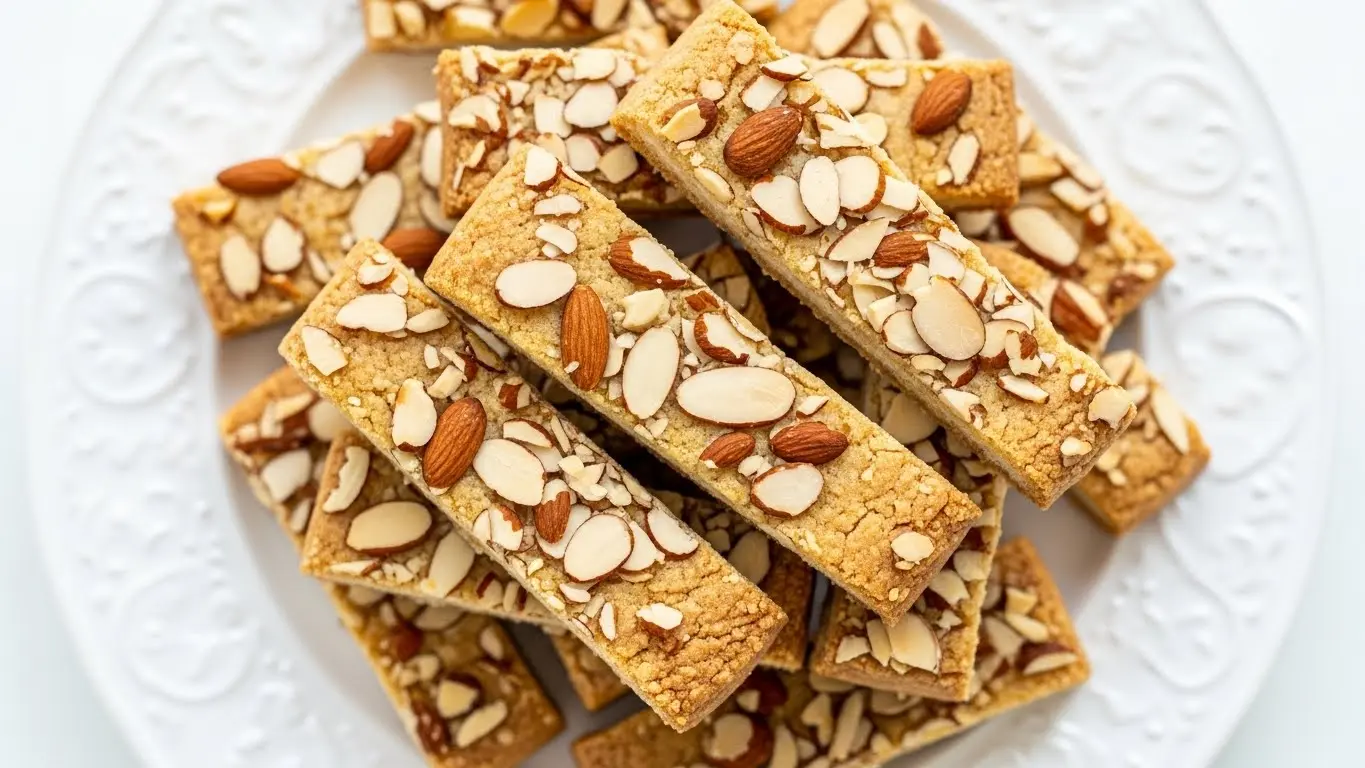
I’ve been making these almond shortbread cookies for years, and they never fail to impress. The nutty richness of almonds combined with buttery shortbread creates something truly special that’s become my go-to for holiday cookie swaps and afternoon tea gatherings.
These cookies are incredibly tender with a delicate crumb that melts on your tongue. The toasted almond flavor shines through without being overpowering, and that signature shortbread texture stays perfectly crisp for days.
What I love most about this almond shortbread cookies recipe is how it takes a classic treat and elevates it with just one simple ingredient. You don’t need fancy techniques or hard-to-find items—just quality butter, almond flour, and a bit of patience.
The aroma alone is worth making these. When they’re baking, your kitchen fills with this warm, toasty scent that has everyone asking what smells so good.
Why You’ll Love This Almond Shortbread Cookies Recipe
These cookies hit that perfect balance between elegant and easy. They look impressive enough for special occasions but come together quickly enough for a weeknight treat.
The almond flavor adds depth and sophistication to traditional shortbread without complicating the recipe. You get all the classic buttery richness plus a subtle nuttiness that makes each bite more interesting.
Here’s what makes these cookies stand out:
- Simple ingredient list: Just six basic ingredients you probably already have
- Make-ahead friendly: The dough can be refrigerated for up to 3 days or frozen for months
- Versatile: Perfect for holidays, gift-giving, or everyday snacking
- Foolproof texture: The combination of almond flour and all-purpose flour creates reliably tender results
- Customizable: Easy to add your own twist with different extracts or toppings
- Long shelf life: Stay fresh and crisp in an airtight container for over a week
Another favorite of mine is Scottish Shortbread Cookie Recipe, which uses a traditional technique that creates an incredibly buttery result.
Ingredients
These cookies rely on quality ingredients to shine. Since there are so few components, each one plays a crucial role in the final flavor and texture.
The almond flour provides moisture and that distinctive nutty taste, while the all-purpose flour gives structure. Using European-style butter with higher fat content makes a noticeable difference in richness.
- 1 cup (2 sticks) unsalted butter, softened to room temperature
- 2/3 cup granulated sugar
- 1 teaspoon pure vanilla extract
- 1/2 teaspoon almond extract
- 2 cups all-purpose flour, spooned and leveled
- 1 cup almond flour or finely ground almonds
- 1/4 teaspoon sea salt
- Optional: sliced almonds for topping
Kitchen Equipment Needed
You don’t need specialized equipment for these cookies, but having the right tools makes the process smoother. A stand mixer isn’t essential, but it does make creaming the butter easier.
Sharp cookie cutters help maintain clean edges, and a quality baking sheet ensures even browning. Parchment paper prevents sticking without adding extra fat.
- Large mixing bowl
- Electric mixer (hand or stand)
- Measuring cups and spoons
- Rolling pin
- Cookie cutters or a sharp knife
- Baking sheets
- Parchment paper or silicone baking mats
- Wire cooling rack
Recommended Products for This Recipe
After years of making these cookies, I’ve found a few products that genuinely make a difference. These aren’t just nice-to-haves—they actually improve your results.
1. Bob’s Red Mill Super-Fine Almond Flour
This almond flour is ground incredibly fine, which means it blends seamlessly into the dough without creating a grainy texture. The consistency is so much better than coarser versions, and your cookies will have that melt-in-your-mouth quality that makes shortbread special.
2. Nordic Ware Natural Aluminum Baking Sheets
These baking sheets distribute heat so evenly that you’ll never have burnt bottoms again. They’re sturdy enough that they won’t warp in the oven, and the natural aluminum finish means your cookies brown beautifully without any hot spots.
3. Plugra European-Style Butter
The higher fat content in European butter translates directly to richer, more flavorful cookies. It’s worth seeking out for shortbread especially, where butter is the star ingredient and you can really taste the difference between standard and premium options.
4. Nielsen-Massey Pure Vanilla Extract
Good vanilla extract has depth and complexity that imitation versions simply can’t match. Since these cookies have such a simple flavor profile, using quality vanilla really lets that warmth and aroma come through in every bite.
Step-by-Step Instructions
Making these cookies is straightforward, but paying attention to a few key steps ensures perfect results every time. The dough should be soft but not sticky, and properly chilling it makes rolling and cutting much easier.
1. Prepare Your Butter and Dry Ingredients
- Take your butter out of the refrigerator about 45 minutes before you start baking so it softens to room temperature (it should give slightly when pressed but still hold its shape)
- Line your baking sheets with parchment paper and set them aside
- In a medium bowl, whisk together the all-purpose flour, almond flour, and salt until thoroughly combined
- Make sure there are no lumps in your almond flour—if you notice any, press them through a fine-mesh sieve
2. Cream the Butter and Sugar
- Place the softened butter in your mixing bowl and beat it on medium speed for about 1 minute until it’s smooth and creamy
- Add the granulated sugar and continue beating for 3-4 minutes until the mixture becomes light, fluffy, and pale in color
- Stop the mixer occasionally to scrape down the sides and bottom of the bowl so everything incorporates evenly
- The mixture should look almost doubled in volume and have a whipped texture
3. Add the Extracts
- Pour in the vanilla extract and almond extract
- Beat on medium speed for another 30 seconds until the extracts are fully incorporated
- The almond extract is potent, so don’t be tempted to add more than the recipe calls for—a little goes a long way
- Take a moment to smell the mixture—it should have that beautiful almond aroma already developing
4. Incorporate the Flour Mixture
- With your mixer on low speed, gradually add the flour mixture in three separate additions
- Mix after each addition just until the flour is barely incorporated—you should still see a few streaks
- After the final addition, stop mixing as soon as you no longer see any dry flour (overmixing at this stage will make your cookies tough)
- The dough should come together and look slightly crumbly but hold together when pressed
5. Chill the Dough
- Turn the dough out onto a clean work surface and gently knead it 2-3 times with your hands until it comes together smoothly
- Divide the dough in half and shape each portion into a flat disc about 1 inch thick
- Wrap each disc tightly in plastic wrap, pressing the wrap directly against the surface to prevent drying
- Refrigerate for at least 1 hour (or up to 3 days)—this firms up the butter so the cookies hold their shape during baking
6. Roll and Cut the Dough
- Preheat your oven to 325°F (163°C) about 15 minutes before you’re ready to bake
- Remove one disc of dough from the refrigerator and let it sit at room temperature for 5 minutes to soften slightly (this prevents cracking)
- On a lightly floured surface, roll the dough to about 1/4-inch thickness, turning it occasionally and adding a light dusting of flour if it starts to stick
- Use your cookie cutters to cut out shapes, pressing straight down without twisting (twisting seals the edges and prevents the cookies from rising properly)
- Gather the scraps, gently press them together, re-roll once, and cut more cookies (don’t re-roll more than once or the dough will become tough)
7. Arrange and Decorate
- Transfer the cut cookies to your prepared baking sheets, spacing them about 1 inch apart (they don’t spread much)
- If you’re adding sliced almonds on top, press them gently into the surface of each cookie
- For a professional touch, use a fork to prick a few decorative holes in the center of each cookie (this also helps them bake evenly)
- If the dough has become too soft during rolling and cutting, pop the entire baking sheet in the refrigerator for 10 minutes before baking
8. Bake the Cookies
- Place the baking sheet in the preheated oven and bake for 16-20 minutes, rotating the pan halfway through
- The cookies are done when the edges are just barely starting to turn golden and the centers look set but still pale
- They should not brown much—you’re looking for a light golden color around the edges only
- Remove from the oven and let the cookies rest on the baking sheet for 5 minutes (they’ll firm up as they cool)
9. Cool Completely
- After 5 minutes, use a thin spatula to carefully transfer the cookies to a wire cooling rack
- Allow them to cool completely—this takes about 30 minutes and is when they develop their signature crisp texture
- Resist the urge to stack them while they’re still warm, as they can stick together
- Once fully cooled, they’re ready to enjoy or store
You might also enjoy Pecan Shortbread Cookies Recipe for a different nutty variation.
Tips for Success
Small details make a big difference with shortbread. These tips come from plenty of trial and error in my own kitchen.
Temperature control is crucial—both for your ingredients and your oven. Taking shortcuts here usually means cookies that spread too much or turn out tough.
- Use room temperature butter: Cold butter won’t cream properly, and melted butter will make the cookies spread. Room temperature butter should be about 65-67°F.
- Measure flour correctly: Spoon it into your measuring cup and level it off with a knife. Scooping directly from the bag packs in too much flour, making dry, crumbly cookies.
- Don’t skip the chilling: Cold dough is easier to work with and holds its shape better. If your kitchen is warm, you might even chill the dough twice—once before rolling and again after cutting.
- Keep your work surface lightly floured: Too much flour on your rolling surface will dry out the dough, but too little will cause sticking. Add just a light dusting and flour as needed.
- Watch the oven temperature: Shortbread bakes at a lower temperature than most cookies. An oven thermometer ensures accuracy since many ovens run hot or cold.
- Rotate your pans: Even the best ovens have hot spots. Rotating the baking sheet halfway through ensures even browning.
- Cool on the pan first: These cookies are delicate when hot. Letting them set up for 5 minutes prevents breaking.
Serving Suggestions
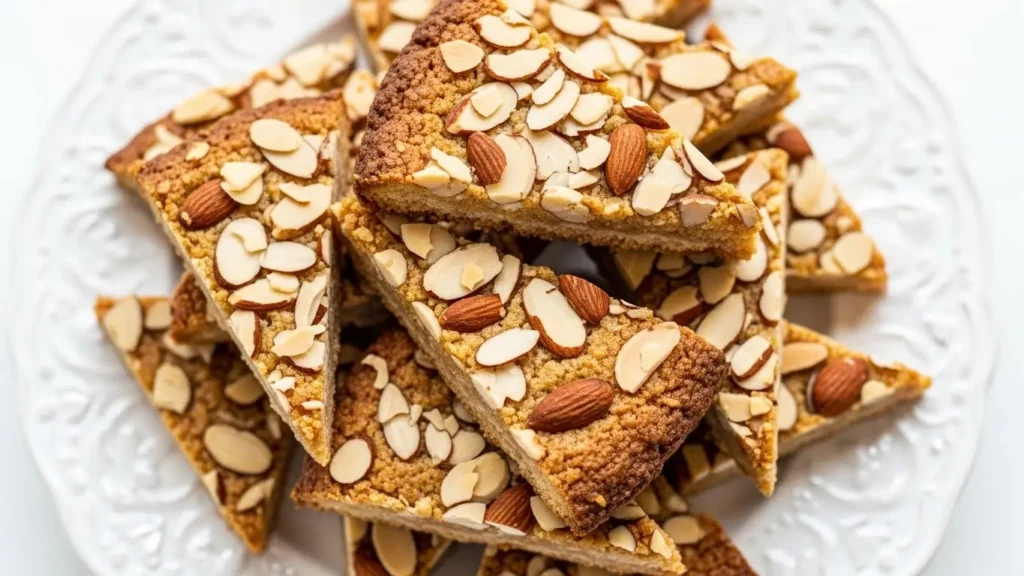
These almond shortbread cookies are elegant enough to serve at fancy gatherings but casual enough for everyday enjoyment. I’ve served them at everything from afternoon tea parties to holiday cookie exchanges.
They pair beautifully with hot beverages—the buttery richness complements both coffee and tea perfectly. For something more indulgent, try them alongside a scoop of vanilla ice cream or fresh berries with whipped cream.
Here are my favorite ways to serve them:
- With a cup of hot tea or coffee for an afternoon pick-me-up
- Alongside Hot Chocolate on cold winter evenings
- As part of a dessert board with fresh fruit and chocolate pudding
- Crumbled over vanilla pudding for added texture
- Packaged in decorative tins as homemade holiday gifts
- Served with a cheese plate featuring mild cheeses like brie or camembert
- Dipped halfway in melted dark chocolate for an elegant presentation
Read Also: Christmas Shortbread Cookies Recipe
Variations to Try
Once you’ve mastered the basic recipe, it’s fun to experiment with different flavors and presentations. The base is so versatile that it welcomes all kinds of additions.
I’ve tried dozens of variations over the years, and these are the ones that consistently get the best reactions.
- Lemon Almond: Add 1 tablespoon of lemon zest and replace the almond extract with lemon extract
- Chocolate Dipped: Dip cooled cookies halfway in melted dark or white chocolate, then let them set on parchment paper
- Toasted Almond: Use toasted almond flour for a deeper, nuttier flavor (toast it in a dry skillet for 3-4 minutes)
- Rosemary Almond: Add 1 tablespoon of finely minced fresh rosemary to the dough for a savory-sweet twist
- Orange Almond: Add 1 tablespoon of orange zest and use orange extract instead of vanilla
- Spiced: Mix in 1/2 teaspoon of cinnamon and 1/4 teaspoon of cardamom
- Brown Butter: Brown your butter first, let it cool to room temperature, then proceed with the recipe (adds incredible nutty depth)
Storage and Reheating
Proper storage keeps these cookies fresh and crisp for quite a while. The low moisture content of shortbread means they naturally have a long shelf life.
I always make extra batches because they store so well, and it’s nice to have homemade cookies on hand for unexpected guests.
- Room temperature: Store in an airtight container with parchment paper between layers for up to 2 weeks. They’ll stay perfectly crisp if sealed properly.
- Refrigerator: Not recommended, as the humidity can make them soft and affect their texture.
- Freezer: Place baked and cooled cookies in a freezer-safe container with parchment between layers. Freeze for up to 3 months. Thaw at room temperature for about 30 minutes before serving.
- Freezing the dough: Wrap unbaked dough discs tightly in plastic wrap, then place in a freezer bag. Freeze for up to 3 months. Thaw overnight in the refrigerator before rolling and baking.
- Shipping: These cookies ship well due to their sturdy texture. Wrap them individually in plastic wrap, then pack tightly in a sturdy box with padding to prevent movement.
Another great option for your cookie tray is Lemon Shortbread Cookies Recipe.
Nutritional Facts
Per cookie (based on 24 cookies):
- Calories: 145
- Total Fat: 9g
- Saturated Fat: 5g
- Cholesterol: 20mg
- Sodium: 25mg
- Total Carbohydrates: 14g
- Dietary Fiber: 1g
- Sugars: 6g
- Protein: 2g
Note: Nutritional information is approximate and will vary based on specific ingredients used and cookie size.
Health Benefits of Key Ingredients
While these are definitely treats meant to be enjoyed in moderation, some of the ingredients do offer nutritional benefits. Understanding what goes into your baking makes you feel a bit better about indulging.
Almonds bring more to the table than just flavor—they’re packed with nutrients that contribute to overall health.
Here’s what makes these ingredients valuable:
- Almonds: Rich in vitamin E, magnesium, and healthy monounsaturated fats that support heart health. They also provide protein and fiber, making these cookies slightly more satisfying than traditional shortbread.
- Butter: Contains fat-soluble vitamins A, D, E, and K. While high in saturated fat, butter from grass-fed cows offers conjugated linoleic acid (CLA), which has been studied for various health benefits.
- Almond flour: A good source of protein and fiber compared to all-purpose flour alone. It’s also naturally gluten-free (though this recipe isn’t fully gluten-free due to the all-purpose flour).
- Vanilla extract: Contains small amounts of antioxidants and has been traditionally used to promote mental clarity and reduce stress.
You might also enjoy: Shortbread Cookie Recipe
Frequently Asked Questions
1. Can I substitute the almond flour with regular all-purpose flour?
You can, but the cookies won’t have the same tender texture or nutty flavor. If you need to make the substitution, use an equal amount of all-purpose flour and add an extra 1/4 teaspoon of almond extract to maintain some almond flavor. The texture will be slightly drier and less delicate than the original recipe.
2. Why are my cookies spreading too much in the oven?
Cookie spreading usually happens when the dough is too warm or the butter was too soft when you mixed it. Make sure you’re chilling the dough for the full hour and that your butter was at proper room temperature (soft but still cool). Also, check your oven temperature with a thermometer—if it’s running too hot, the butter melts too quickly before the cookies can set.
3. Can I make these cookies gluten-free?
Yes, you can substitute the all-purpose flour with a 1:1 gluten-free flour blend designed for baking. Make sure it contains xanthan gum or add 1/4 teaspoon yourself to help bind the dough. The texture might be slightly different but should still be delicious.
4. How do I prevent the dough from cracking when I roll it?
Cracking usually means the dough is too cold or you’ve added too much flour. Let the dough sit at room temperature for 5-10 minutes after removing it from the fridge. If it’s still cracking, knead it gently with your hands for a few seconds to warm it slightly and make it more pliable.
5. Can I use salted butter instead of unsalted?
You can use salted butter if that’s what you have on hand, but reduce or omit the additional salt in the recipe. Salted butter can vary significantly in sodium content between brands, so your cookies might taste saltier than intended. For the most consistent results, unsalted butter is always best for baking.
For another delicious pudding option, try my Chia Seed Pudding Recipe.
Final Thoughts
These almond shortbread cookies have earned their place as one of my most-loved recipes. They’re proof that simple ingredients, when treated with care, can create something really special.
What I appreciate most is how forgiving this recipe is for beginners while still delivering bakery-quality results. The gentle almond flavor feels sophisticated without being complicated, and that classic shortbread texture never gets old.
Give these a try for your next batch of cookies—I think they’ll become a regular in your baking rotation too. Let me know in the comments how yours turn out, and feel free to share any creative variations you come up with!
Recommended:
- Peanut Butter Blossom Cookies Recipe
- Pizzelle Recipe
- Sugar Cookies Recipe
- Gingerbread Cookie Recipe
- Snickerdoodle Cookie Recipe
- Oatmeal Cookie Recipe
- Peanut Butter Cookie Recipe
- No Bake Cookie Recipe
- Oatmeal Raisin Cookie Recipe
- Eggnog Cookies Recipe