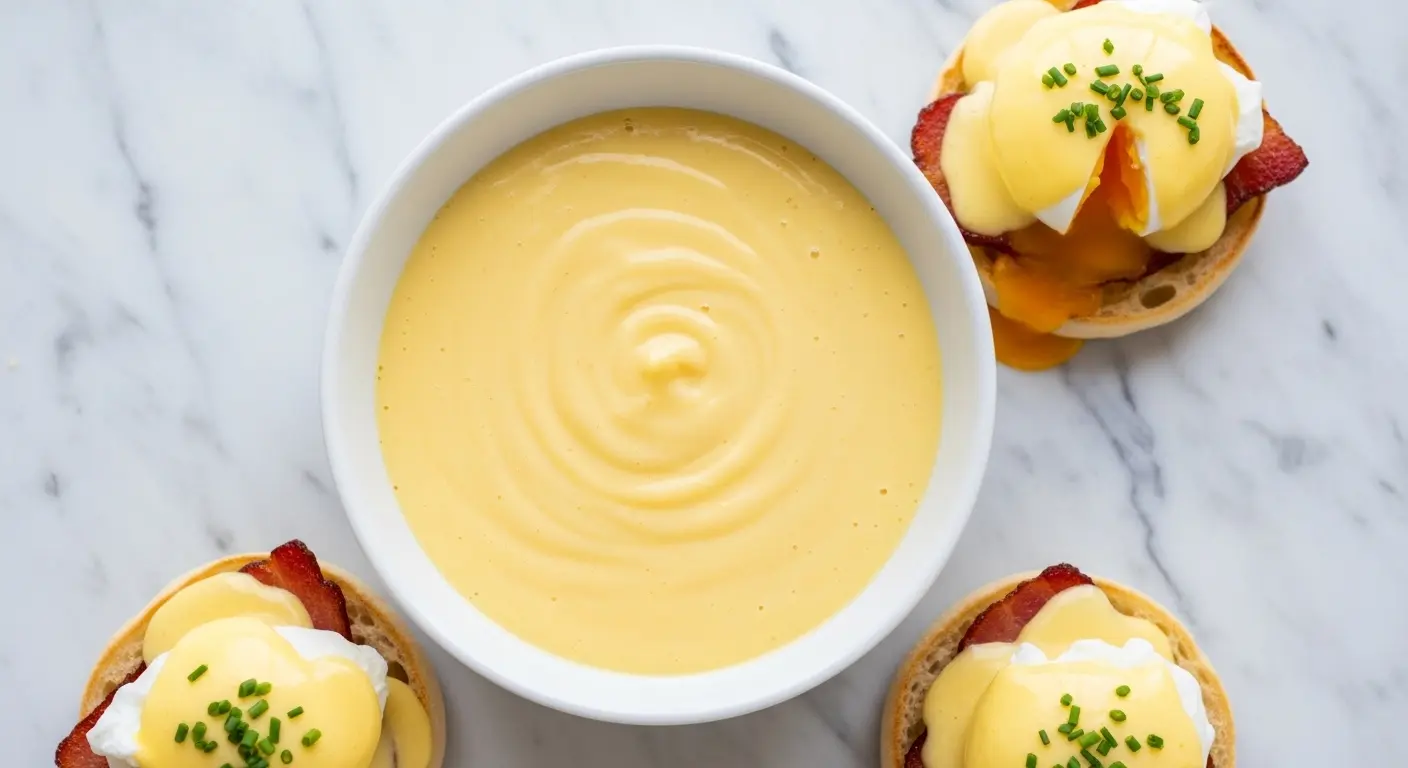
If you’ve ever ordered Eggs Benedict at a brunch spot and found yourself scraping every last drop of that luscious yellow sauce from the plate, you already know the magic of a good hollandaise sauce recipe. It’s buttery, tangy, and just rich enough to feel indulgent without being over the top.
A lot of home cooks assume hollandaise is fussy or even intimidating. The truth is, once you understand a few key techniques, it comes together in under 15 minutes on the stovetop.
This recipe uses the classic double-boiler method, which gives you steady, controlled heat and a perfectly emulsified sauce every single time. Whether you’re making a lazy weekend brunch or impressing guests at a dinner party, this is the version you’ll want in your back pocket.
If you love classic egg-forward brunch recipes, you’ll also enjoy this Scrambled Eggs Recipe as a simple companion dish.
Why You’ll Love This Hollandaise Sauce Recipe
This sauce delivers the kind of rich, glossy texture you’d expect from a restaurant kitchen, but you can make it entirely at home with basic ingredients.
It uses only five core ingredients: egg yolks, clarified butter, lemon juice, a pinch of cayenne, and salt. That’s it.
The double-boiler method gives you much more control than a direct-heat approach, reducing the risk of scrambled eggs or a broken sauce.
Once you nail the emulsification, you’ll understand exactly what to look for and be able to recreate it confidently every time.
- It’s ready in under 15 minutes from start to finish
- You only need a handful of pantry staples
- It elevates everything from poached eggs to steamed vegetables
- The technique, once learned, is genuinely repeatable
- It’s richer and far more flavorful than any store-bought version
You might also enjoy: Quiche Lorraine Recipe
Ingredients
Classic hollandaise uses just a few simple ingredients, but quality matters here. Since butter is such a dominant flavor, using a good-quality unsalted butter makes a noticeable difference. The egg yolks provide both richness and structure for the emulsion, while lemon juice adds brightness and helps balance the fat.
- 3 large egg yolks
- 1 tablespoon (15 ml) cold water
- 1 tablespoon (15 ml) fresh lemon juice (plus more to taste)
- 1/2 cup (113 g / 1 stick) unsalted butter, clarified or melted
- 1/4 teaspoon (1.25 ml) salt, or to taste
- Pinch of cayenne pepper
- Pinch of white pepper (optional)
Another favorite: Bechamel Sauce Recipe
Kitchen Equipment Needed
You don’t need any special equipment for hollandaise, just a few kitchen basics. The most important tool is a heatproof bowl that fits over a saucepan without touching the water inside, creating that gentle double-boiler effect. A silicone spatula helps you keep the sauce moving and prevents any sticking at the edges of the bowl.
- Medium saucepan (for the double boiler)
- Heatproof mixing bowl (glass or stainless steel) that fits over the saucepan
- Balloon whisk
- Silicone spatula
- Small saucepan (for melting butter)
- Instant-read thermometer (recommended for beginners)
- Ladle or small measuring cup (for drizzling butter)
- Kitchen towel or oven mitt
Read Also: Egg Bites Recipe
Recommended Products for This Recipe
These are products that genuinely make hollandaise easier and more reliable, based on quality and performance.
1. OXO Good Grips 11-Inch Balloon Whisk
A balloon whisk with a wide, open wire cage incorporates air more efficiently than a narrow whisk, helping your egg yolks build volume faster and the emulsion hold more firmly. The OXO version has a comfortable soft-grip handle that makes continuous whisking far less tiring. If you make sauces regularly, this is a tool you’ll use constantly.
2. Thermoworks Thermapen Instant-Read Thermometer
The biggest risk with hollandaise is overheating the egg yolks. An instant-read thermometer lets you keep the sauce between 140°F and 160°F (60°C to 71°C), the ideal range where the yolks thicken without scrambling. The Thermapen reads in under a second and is accurate enough for fine sauce work. It’s an investment that removes all the guesswork.
3. Ghee or Clarified Butter (Pre-Made)
Making your own clarified butter is straightforward, but using a pre-made ghee or clarified butter saves time and produces a consistently clean result. Clarified butter has a higher smoke point and no milk solids, which means your hollandaise will be smoother, more stable, and less prone to breaking. Look for a grass-fed variety for the richest flavor.
4. Stainless Steel Double Boiler Insert
A purpose-made double boiler insert fits standard saucepans and gives you a stable, secure setup compared to a wobbly mixing bowl perched on top of a pot. The controlled steam heat prevents hot spots and makes the whole process more predictable, especially if you’re making hollandaise for the first time.
Read Also: Cloud Eggs Recipe
Step-by-Step Instructions
1. Prepare Your Double Boiler
- Fill a medium saucepan with about 1 to 2 inches (2.5 to 5 cm) of water and place it over medium heat.
- Bring the water to a gentle simmer, not a rolling boil. You want steam, not aggressive heat.
- Set a heatproof bowl (glass or stainless steel) over the top of the saucepan. The bottom of the bowl should NOT touch the water. If it does, remove some water. The steam alone should heat the bowl.
- Have a folded kitchen towel nearby to stabilize the bowl while you whisk.
2. Clarify or Melt the Butter
- In a small saucepan over low heat, melt the 1/2 cup (113 g) unsalted butter slowly.
- If clarifying: continue to heat gently until the white milk solids separate and sink to the bottom. Skim the foam off the top, then carefully pour the clear golden liquid (the clarified butter) into a separate container, leaving the milk solids behind.
- If using pre-made ghee or clarified butter, simply melt it until liquid and set aside.
- The butter should be warm but not sizzling hot when you add it to the sauce. Aim for around 130°F to 150°F (55°C to 65°C).
3. Whisk the Egg Yolks and Water
- Add the 3 egg yolks and 1 tablespoon (15 ml) cold water to the heatproof bowl.
- Before placing the bowl over the simmering water, whisk the yolks and water vigorously for about 30 seconds until slightly pale and combined.
- Place the bowl over the simmering water and continue whisking constantly and energetically.
- The goal is to cook the yolks gently while incorporating air. Whisk in a circular motion, making sure the whisk reaches the sides and bottom of the bowl.
- After 2 to 4 minutes, the mixture should thicken noticeably, lighten in color, and roughly double in volume. When you lift the whisk, the mixture should fall in a slow, thick ribbon. This is called the “ribbon stage” and it tells you the yolks are ready for butter.
- If the bowl feels too hot to hold your hand near (above 160°F / 71°C), remove it from the heat briefly and keep whisking off heat.
4. Add the Butter Gradually
- Remove the bowl from the heat and set it on a stable surface (wrap a damp towel around the base to prevent sliding).
- Begin adding the warm clarified butter in a very thin, steady stream, whisking constantly as you pour.
- Start with just a few drops at a time. This initial slow addition is critical: it allows the emulsion to form. If you add butter too quickly at the start, the sauce will break and turn greasy.
- After you’ve added about a quarter of the butter and the sauce looks glossy and thickened, you can increase the stream slightly to a thin drizzle.
- Continue whisking and drizzling until all the butter is incorporated.
- The sauce will become thick, creamy, and pale yellow with a glossy sheen.
5. Season the Sauce
- Add 1 tablespoon (15 ml) fresh lemon juice to the sauce and whisk to combine.
- Add the pinch of cayenne pepper and a pinch of salt.
- Taste and adjust: add more lemon juice for brightness, more salt if needed, or a touch more cayenne for warmth.
- Add the optional white pepper now if using.
- The finished sauce should be pourable but thick enough to coat the back of a spoon generously.
6. Serve Immediately
- Hollandaise is best served right away while warm and silky.
- If your sauce has thickened too much, whisk in a few drops of warm water to loosen it.
- Pour or spoon directly over poached eggs, steamed asparagus, fish, or any dish you’re serving.
- If holding briefly before serving, keep the bowl over warm (not simmering) water with a lid or plastic wrap lightly placed on top to prevent a skin from forming.
You might also enjoy: Egg Bake Recipe
Tips for Success
Getting hollandaise right comes down to three things: heat control, slow butter addition, and keeping the yolks moving. The most common mistake is rushing, whether that’s turning the heat up too high or pouring the butter in too fast. Take your time with each step and the sauce will reward you.
- Keep the water at a gentle simmer throughout. If it starts bubbling aggressively, reduce the heat immediately.
- If the sauce starts to look grainy or greasy (a sign it’s breaking), remove it from the heat immediately and whisk in a teaspoon of cold water or ice to cool it down.
- Use room-temperature egg yolks for a smoother emulsification process.
- Clarified butter is more stable than whole melted butter in the emulsion because the milk solids and water have been removed.
- Whisk energetically and continuously. Stopping even briefly can cause the sauce to break or the eggs to scramble on the bottom.
- If your sauce is too thick, thin it with a few drops of warm water, not cold water, which can shock the emulsion.
- Fresh lemon juice (not bottled) gives the cleanest flavor and best acidity.
Read Also: Shakshuka Recipe
Serving Suggestions
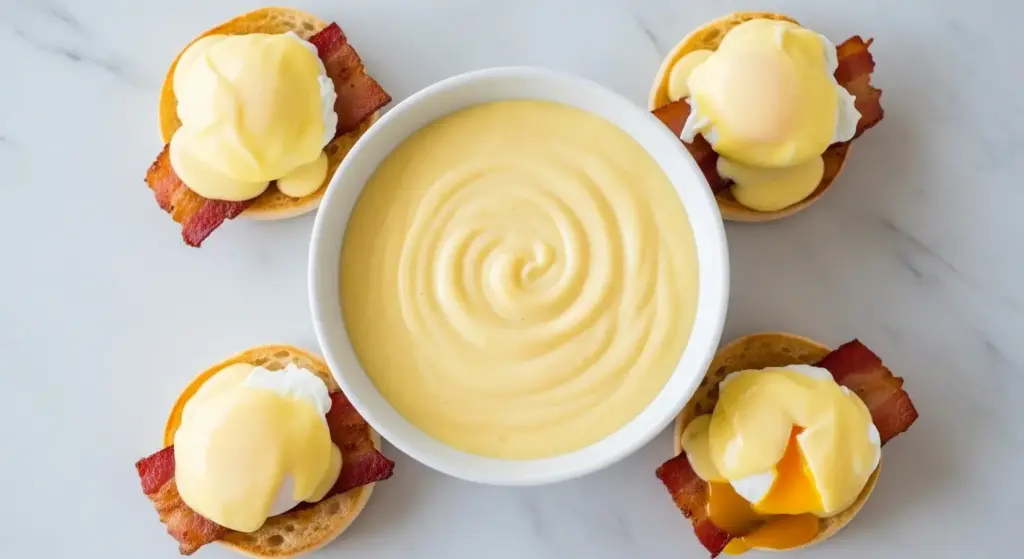
Hollandaise is most famous as the crown jewel of Eggs Benedict, but it belongs on so many more dishes. Its buttery richness and gentle lemon tang make it a natural partner for anything that benefits from a luxurious, savory sauce.
It’s especially wonderful spooned over Baked Salmon for an elegant dinner, and it transforms simple steamed vegetables into something truly special.
- Spooned over classic poached eggs on toasted English muffins with Canadian bacon
- Drizzled over steamed or roasted asparagus as a side dish
- Served alongside Baked Salmon for a restaurant-quality dinner at home
- Paired with Crab Cakes for a luxurious brunch or appetizer
- Over steamed broccoli or cauliflower as a rich vegetable side
- Served with a Filet Mignon for a classic surf and turf presentation
- Drizzled over Shrimp and Grits for a Southern-inspired twist
For a lighter option, try: Avocado Toast Recipe
Variations to Try
Once you’ve mastered the base recipe, hollandaise becomes a springboard for flavors. The classic French mother sauce has several well-known derivative sauces, each built on the same emulsified egg and butter base. These are all worth exploring once you feel comfortable with the original technique.
- Béarnaise Sauce: Replace lemon juice with a tarragon and shallot reduction. This is the classic companion to steak.
- Maltaise Sauce: Substitute blood orange juice for lemon juice and add a touch of orange zest. Beautiful over asparagus.
- Foyot (Valois) Sauce: Béarnaise with the addition of a rich meat glaze stirred in. A great match for grilled meats.
- Mousseline Sauce: Fold 2 to 3 tablespoons of softly whipped heavy cream into the finished hollandaise just before serving for a lighter, airier texture.
- Spicy Hollandaise: Increase the cayenne significantly and add a few dashes of hot sauce for a bolder, more assertive version.
- Herb Hollandaise: Stir in finely chopped fresh chives, tarragon, or parsley after finishing the sauce for a fresher, more vibrant flavor.
Read Also: Creole Sauce Recipe
Storage and Reheating
Hollandaise is best made fresh and served immediately, but if you have leftovers, you can store and reheat it carefully. The key is low heat and gentle agitation: too much heat will scramble the yolks and break the emulsion.
- Store leftover hollandaise in an airtight container in the refrigerator for up to 2 days.
- Do not freeze hollandaise, as the emulsion will break completely upon thawing.
- To reheat, place the sauce in a heatproof bowl over gently simmering water (the same double-boiler setup you used to make it).
- Whisk constantly over low heat until just warmed through, adding a few drops of warm water if needed to loosen the consistency.
- Never microwave hollandaise. The uneven heat will cause the eggs to scramble and the sauce to separate.
- If the reheated sauce looks broken or grainy, try whisking in a teaspoon of cold water vigorously and removing it from the heat simultaneously.
Another favorite: Cheese Sauce Recipe
Nutritional Facts
The following is an approximate nutritional breakdown per 2-tablespoon (30 ml) serving, based on this recipe yielding approximately 6 servings.
| Nutrient | Amount Per Serving |
|---|---|
| Calories | 145 kcal |
| Total Fat | 15 g |
| Saturated Fat | 9 g |
| Cholesterol | 95 mg |
| Sodium | 100 mg |
| Total Carbohydrates | 0.5 g |
| Protein | 1.5 g |
| Vitamin A | 12% DV |
| Vitamin C | 2% DV |
Nutritional values are approximate and will vary based on specific ingredients used.
Read Also: Caramel Sauce Recipe
Health Benefits of Key Ingredients
Hollandaise isn’t a low-calorie sauce, but it does contain some genuinely nourishing ingredients. The egg yolks and butter that form its base are nutrient-dense in ways that are easy to overlook when all you’re thinking about is flavor.
The egg yolks are one of the most complete sources of fat-soluble vitamins available in the kitchen, and the lemon juice contributes more than just brightness.
- Egg Yolks: Rich in vitamins A, D, E, and K, as well as choline, which supports brain and liver health. They also contain lutein and zeaxanthin, antioxidants that support eye health.
- Butter: A good source of vitamin K2, which plays a role in calcium metabolism and bone health. Grass-fed butter contains higher levels of omega-3 fatty acids and conjugated linoleic acid (CLA).
- Lemon Juice: A natural source of vitamin C and citric acid. The citric acid helps balance the richness of the butter and aids in digestion.
- Cayenne Pepper: Contains capsaicin, which has been studied for its potential role in supporting metabolism and reducing inflammation.
- Egg Yolk Lecithin: The lecithin naturally present in egg yolks acts as the emulsifier that holds the sauce together, and it also plays a role in supporting healthy cell membranes.
This pairs beautifully with Roasted Asparagus for a nutrient-rich side dish combination.
Frequently Asked Questions
1. Why did my hollandaise sauce break?
A broken hollandaise usually happens for one of two reasons: the heat was too high, or the butter was added too quickly.
If the sauce breaks, don’t throw it out. Try whisking a new egg yolk in a clean bowl over gentle heat, then very slowly whisk the broken sauce into the fresh yolk a drop at a time to re-emulsify it.
2. Can I make hollandaise sauce ahead of time?
You can make it up to 1 to 2 hours ahead and keep it warm by placing the bowl over a saucepan of warm (not hot) water, whisking occasionally.
For longer storage, refrigerate and reheat gently using the double-boiler method described in the Storage section. Freshly made always tastes best.
3. What is the difference between hollandaise and béarnaise sauce?
Both are emulsified butter sauces built on egg yolks, but the key difference is the acid component.
Hollandaise uses lemon juice, while béarnaise uses a reduction of white wine vinegar, shallots, and tarragon. Béarnaise has a more savory, herbaceous flavor and is the classic sauce for steak.
4. Can I make hollandaise without a double boiler?
Yes, you can make hollandaise in a blender. Blend the egg yolks with lemon juice briefly, then slowly stream in hot melted butter while blending.
The blender method is faster and less hands-on, but the double-boiler method gives you more control over texture and produces a slightly more refined result.
5. Is it safe to eat hollandaise sauce?
Hollandaise is made with egg yolks that are cooked but not fully set, which places it in the “partially cooked” category.
The double-boiler method brings the yolks above 140°F (60°C), which is the USDA’s recommended minimum for egg safety. If you’re cooking for immunocompromised individuals, pregnant guests, or young children, consider using pasteurized eggs for extra peace of mind.
Read Also: Egg Souffle Recipe
Final Thoughts
Making hollandaise sauce at home is one of those skills that feels impressive but is genuinely approachable once you understand what you’re working toward. The double-boiler method, the ribbon stage, the slow drizzle of butter: each step has a purpose, and once you see it come together that first time, you’ll want to make it again and again.
Give this hollandaise sauce recipe a try this weekend over poached eggs, alongside grilled fish, or drizzled over roasted vegetables. It’s the kind of sauce that makes an ordinary meal feel like something worth celebrating.
If you make it, leave a comment below and tell me how it turned out! Tag your photos and share the love.
Recommended:
- Worcestershire Sauce Recipe
- Vodka Sauce Recipe
- Comeback Sauce Recipe
- Sunshine Sauce Recipe
- Yum Yum Sauce Recipe
- Bang Bang Sauce Recipe
- Tzatziki Sauce Recipe
- Peanut Sauce Recipe
- Teriyaki Sauce Recipe
- Alabama White Sauce Recipe