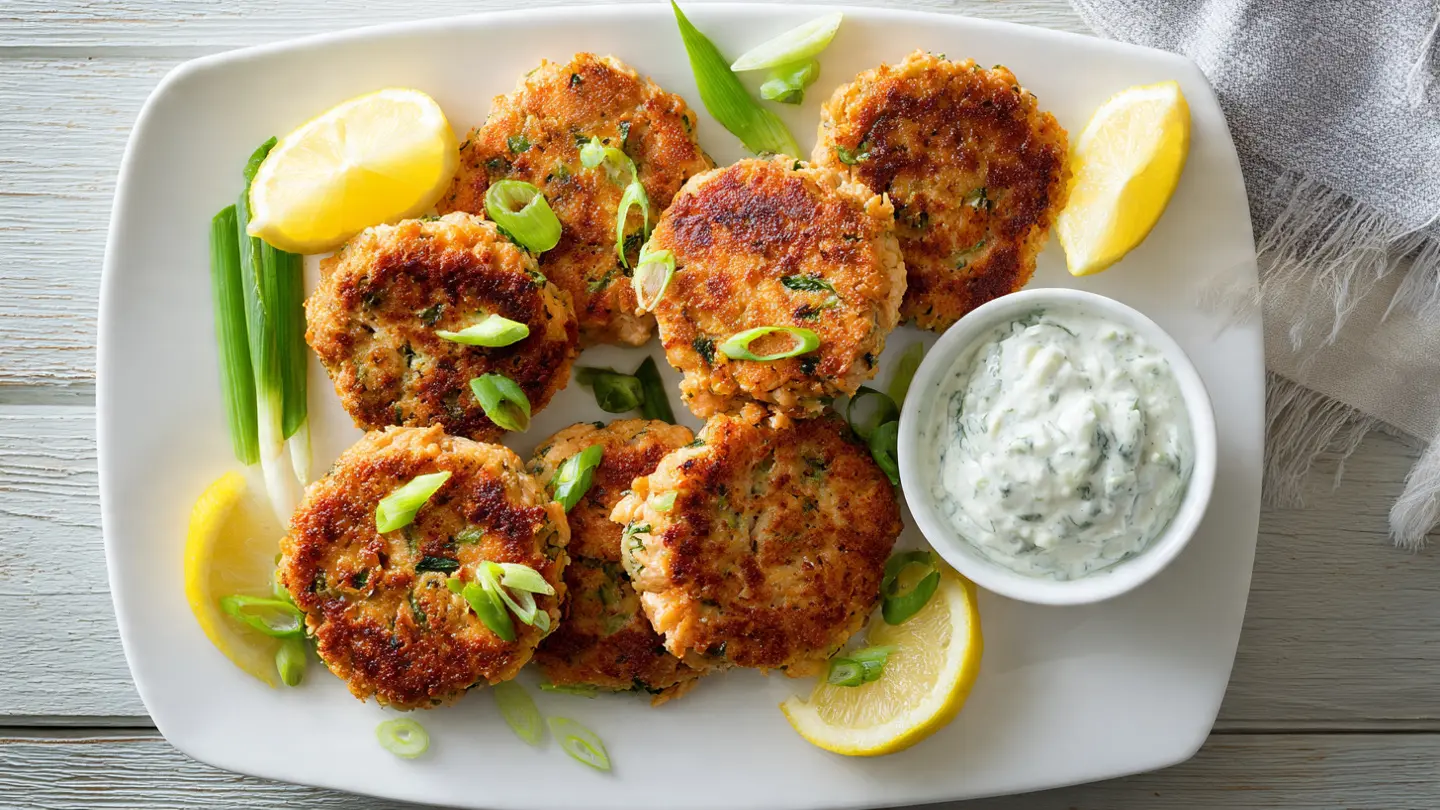
If you grew up in a Southern kitchen, chances are you know the comforting smell of old fashioned salmon patties sizzling in a cast iron skillet. This is the kind of meal that shows up on weeknight dinner tables across generations, made from a humble can of salmon, a handful of pantry staples, and a lot of heart.
These patties are crispy on the outside, tender and flaky on the inside, and come together in under 30 minutes. That makes them one of the most practical and satisfying meals you can put on the table any night of the week.
What makes this version special is the technique. Using crushed crackers instead of breadcrumbs adds a buttery, salty crunch that store-bought breadcrumbs just can’t match. A little Worcestershire sauce and lemon juice in the mix bring a brightness that keeps the flavor from feeling heavy.
This is old-school home cooking at its best, and once you make it, you’ll understand why this recipe has stood the test of time. These patties are also wonderfully versatile, whether served as a main course or tucked into a bun for a salmon burger. You might also enjoy our Air Fryer Salmon Patties for a lighter, hands-off version of this classic.

Why You’ll Love This Old Fashioned Salmon Patties Recipe
This recipe checks every box for a dependable, crowd-pleasing dinner.
It uses ingredients you likely already have in your pantry, especially canned salmon, crackers, eggs, and a few seasonings.
- Budget-friendly: Canned salmon is affordable and widely available, making this one of the most economical protein-packed dinners out there.
- Quick and easy: From mixing to plating, you’re looking at about 25 to 30 minutes total, start to finish.
- Kid-approved: The mild, savory flavor and crispy exterior make these a hit with picky eaters of all ages.
- Pantry staples only: No specialty ingredients required, just everyday items you probably already stock.
- Customizable: Easy to dress up with different herbs, spices, or sauces depending on your mood.
- Perfect for leftovers: These reheat beautifully, making them great for meal prep or next-day lunches.
Our Salmon Croquettes Soul Food Recipe is another beloved classic you won’t want to miss if you love this style of cooking.
Ingredients
You only need a short list of pantry staples to make these old fashioned salmon patties come together perfectly. The key is using crushed buttery crackers, like Ritz, which give a richer flavor and crispier exterior than plain breadcrumbs. Fresh green onions add a mild bite, and the egg acts as the binder that holds everything together.
- 2 cans (14.75 oz / 418g each) canned pink salmon, drained and bones removed
- 1/2 cup (55g) crushed buttery round crackers (such as Ritz), about 12 crackers
- 2 large eggs, beaten
- 1/4 cup (60ml) mayonnaise
- 2 tablespoons finely diced yellow onion
- 2 tablespoons finely diced green onions (scallions), plus more for garnish
- 1 tablespoon lemon juice (freshly squeezed)
- 1 teaspoon Worcestershire sauce
- 1 teaspoon garlic powder
- 1/2 teaspoon onion powder
- 1/2 teaspoon smoked paprika
- 1/4 teaspoon black pepper
- 1/4 teaspoon salt
- 3 tablespoons vegetable oil or refined coconut oil, for frying
You might also like our Baked Salmon for a simple oven-cooked alternative using fresh fillets.
Kitchen Equipment Needed
Having the right tools on hand makes the process smooth and stress-free. A wide skillet is essential here, giving you enough surface area to cook multiple patties at once without crowding, which is the key to getting that golden crust.
- Large mixing bowl
- Cast iron skillet or heavy-bottomed nonstick skillet (at least 10 inches / 25cm wide)
- Spatula (preferably a wide, thin fish spatula for easy flipping)
- Fork or potato masher (for breaking up the salmon)
- Measuring cups and spoons
- Small bowl (for beating eggs)
- Paper towels (for draining the patties)
- Instant-read thermometer (optional, but helpful for checking doneness)
Read Also: Air Fryer Salmon Bites Recipe
Recommended Products for This Recipe
These are products I genuinely recommend based on quality and performance. They’ll help you get the best results when making these salmon patties.
1. Lodge Cast Iron Skillet
A good cast iron skillet is the secret weapon behind the perfect golden crust on these patties. It retains heat evenly and creates that signature crispy sear without burning. This is one of the most reliable tools in any kitchen, and it doubles for hundreds of other recipes.
2. Wild Planet Wild Pink Salmon
The quality of your canned salmon makes a huge difference in flavor and texture. Wild-caught pink salmon tends to have a richer taste and a firmer texture that holds together better in patties. This brand is a top pick for salmon patties specifically.
3. Fish Spatula
Thin, flexible, and wide, a good fish spatula is the tool that makes flipping delicate salmon patties easy without them breaking apart. It slides under the patty cleanly and gives you full control during the flip.
4. OXO Good Grips Stainless Steel Mixing Bowls
A sturdy, large mixing bowl makes combining all your ingredients much easier. The non-slip base and comfortable grip of OXO mixing bowls keep things steady while you work.
Another favorite for quick weeknight dinners: Salmon Skillet

Step-by-Step Instructions
1. Prepare the Salmon
- Open both cans of salmon and drain them thoroughly in a fine-mesh strainer or press the lid down to squeeze out as much liquid as possible. Excess moisture will prevent the patties from binding and crisping up properly.
- Transfer the drained salmon to a large mixing bowl.
- Use a fork to flake the salmon apart into small, even pieces. As you flake, feel through the salmon with your fingers and remove any visible bones or pieces of dark skin. While the bones in canned salmon are soft enough to eat, removing them is traditional in the old fashioned preparation and gives a smoother texture.
- Set aside the flaked salmon.
2. Mix the Binder Ingredients
- In a small bowl, beat the 2 large eggs lightly with a fork until the yolks and whites are fully combined.
- Add the beaten eggs to the bowl with the salmon.
- Add the 1/4 cup (60ml) of mayonnaise. The mayo adds moisture and acts as a secondary binder, keeping the patties tender inside even after frying.
- Add the 1 tablespoon of freshly squeezed lemon juice and the 1 teaspoon of Worcestershire sauce. These two ingredients brighten the flavor and add a subtle umami depth that keeps the patties from tasting flat.
3. Add the Aromatics and Seasoning
- Add the 2 tablespoons of finely diced yellow onion and the 2 tablespoons of diced green onions to the bowl. Dice the onion as finely as possible so it blends into the mixture rather than sitting in chunks.
- Add the 1 teaspoon garlic powder, 1/2 teaspoon onion powder, 1/2 teaspoon smoked paprika, 1/4 teaspoon black pepper, and 1/4 teaspoon salt.
- Stir everything together gently until the seasonings and onions are evenly distributed throughout the salmon mixture.
4. Add the Crackers and Combine
- Add the 1/2 cup (55g) of crushed buttery crackers to the salmon mixture. The cracker crumbs absorb moisture and add structure, while also contributing that classic buttery, slightly salty flavor that sets old fashioned salmon patties apart from versions made with plain breadcrumbs.
- Fold everything together using a spatula or your hands until the mixture is fully combined and holds together when pressed.
- The mixture should feel moist but not wet, and firm enough to hold a patty shape. If it feels too wet, add one more tablespoon of crushed crackers. If it’s too dry and crumbly, add a tiny splash of lemon juice or a teaspoon of mayo.
5. Shape the Patties
- Divide the mixture into 6 equal portions. Each portion should be roughly 1/2 cup (about 120g) of mixture.
- Use your hands to shape each portion into a round, flat patty about 3 inches (7.5cm) in diameter and 3/4 inch (2cm) thick. Uniform thickness ensures even cooking.
- Press the edges firmly to compact each patty so they hold together during frying.
- Place the shaped patties on a plate lined with parchment paper. For best results, refrigerate the patties for 15 to 20 minutes before frying. Chilling helps them firm up and reduces the risk of them falling apart in the pan.
6. Heat the Skillet
- Place your cast iron or heavy-bottomed skillet over medium heat.
- Add the 3 tablespoons of vegetable oil and allow it to heat until it shimmers. This typically takes about 2 to 3 minutes.
- To test if the oil is hot enough, drop a small pinch of cracker crumbs into the pan. If it sizzles immediately, you’re ready. If the oil is not hot enough, the patties will absorb it and become greasy rather than crispy.
7. Fry the First Side
- Carefully place the salmon patties into the hot skillet, leaving at least 1 inch (2.5cm) of space between them. Do not overcrowd the pan, as this drops the temperature of the oil and leads to steaming instead of searing. Cook in batches if necessary.
- Let the patties fry undisturbed for 3 to 4 minutes on the first side. Resist the urge to move or press them down during this time. They need full, uninterrupted contact with the hot surface to develop that golden crust.
- After 3 to 4 minutes, peek at the bottom edge of the patty. It should be a deep golden brown. If it’s still pale, give it another minute before flipping.
8. Flip and Fry the Second Side
- Using a wide fish spatula, carefully slide it completely underneath the patty and flip it in one smooth, confident motion. Hesitating during the flip is the most common cause of patties breaking apart.
- Fry the second side for another 3 to 4 minutes, until it matches the color of the first side.
- The internal temperature of a fully cooked salmon patty should reach 145°F (63°C) if you’re using an instant-read thermometer.
9. Drain and Rest
- Transfer the cooked patties to a plate lined with paper towels to absorb any excess oil.
- Allow them to rest for 2 to 3 minutes before serving. Resting lets the interior firm up slightly, making them easier to handle and improving the overall texture.
- Garnish with extra sliced green onions and a wedge of lemon if desired.
Read Also: Air Fryer Frozen Salmon Recipe
Tips for Success
Even a simple recipe like this benefits from a few technique-driven tips. These are the details that separate a good salmon patty from a great one.
- Chill your patties before frying. Even 15 minutes in the refrigerator helps the patties bind better and hold their shape in the hot oil.
- Don’t skip draining the salmon thoroughly. Moisture is the enemy of a crispy patty. Press the salmon firmly against the strainer to remove every bit of liquid.
- Use a wide spatula. A thin, wide fish spatula gives you full support under the patty during the flip, reducing the chance of breakage.
- Don’t move the patties too soon. The crust forms only after the patty has had uninterrupted contact with the hot surface. Moving them early breaks the seal and causes sticking.
- Taste the mixture before shaping. Because canned salmon varies in saltiness, taste the mixture and adjust the seasoning before you commit to cooking all six patties.
- Cook in batches if needed. Overcrowding drops the pan temperature significantly, leading to soggy rather than crispy patties.
- Let the oil fully preheat. A properly hot pan is the foundation of a great sear. Take the extra minute to make sure the oil is shimmering before adding the patties.
You might also enjoy the techniques in this Crab Cake Recipe, which uses a very similar method.
Serving Suggestions

Old fashioned salmon patties are incredibly versatile and pair well with a wide range of sides and sauces. They can be the star of a full dinner plate or tucked into a bun for a satisfying sandwich.
A drizzle of Homemade Tartar Sauce is the most classic accompaniment, creamy and tangy against the crispy exterior.
- Creamy Coleslaw: The cool creaminess of coleslaw is a natural contrast to the warm, salty patties.
- Garlic Mashed Potatoes: A comforting, Southern-style pairing that turns this into a full dinner.
- Comeback Sauce: This tangy, slightly spicy sauce is a Southern staple that works beautifully as a dipping sauce for salmon patties.
- Roasted Broccoli: Simple and healthy, roasted broccoli rounds out the meal without competing with the flavors.
- Broccoli Salad: A cold, crunchy salad that contrasts nicely with the hot patties.
- On a bun: Turn these into salmon burgers with lettuce, tomato, pickles, and tartar sauce on a toasted brioche bun.
- Over rice: Serve over steamed white or brown rice with a squeeze of lemon for a simple, complete meal.
Variations to Try
Once you’ve nailed the classic version, there are plenty of ways to put your own spin on this recipe. Each variation keeps the spirit of the original while adding a new dimension of flavor.
- Spicy version: Add 1/4 teaspoon of cayenne pepper and a dash of hot sauce to the mix for a kick of heat.
- Herb-forward: Fold in 2 tablespoons of fresh dill or parsley for a brighter, more herbaceous flavor that pairs especially well with lemon aioli.
- Cheesy salmon patties: Add 1/4 cup (25g) of sharp cheddar or parmesan to the mixture for a richer, savory depth.
- Air fryer method: Skip the oil entirely and cook the patties in an air fryer at 400°F (200°C) for 8 to 10 minutes, flipping halfway through. See our full Air Fryer Salmon Patties guide for the complete walkthrough.
- Gluten-free version: Substitute the buttery crackers with gluten-free crackers or almond flour for an equally crispy result.
- Fresh salmon version: Use 1 lb (450g) of cooked, flaked fresh or leftover salmon in place of canned for a more premium flavor.
- Mini party patties: Shape the mixture into 12 smaller patties, about 1.5 inches (4cm) wide, for a fun appetizer or party snack served with toothpicks and dipping sauce.
Read Also: Vinegar Coleslaw Recipe
Storage and Reheating
These salmon patties store and reheat better than you might expect, making them a great candidate for meal prep or planned leftovers.
- Refrigerator: Store cooled patties in an airtight container in the refrigerator for up to 3 days. Place a piece of parchment paper between them to prevent sticking.
- Freezer: For longer storage, place the cooked patties on a baking sheet and freeze until solid (about 1 to 2 hours), then transfer to a zip-top freezer bag. They’ll keep for up to 2 months.
- Reheating in a skillet: This is the best method for preserving crispiness. Heat a small amount of oil in a skillet over medium heat and warm the patties for 2 to 3 minutes per side.
- Reheating in the oven: Place patties on a baking sheet and bake at 350°F (175°C) for 10 to 12 minutes until heated through. This method works well for multiple patties at once.
- Avoid the microwave: While convenient, the microwave will make the exterior soft and a bit rubbery. Stick to the skillet or oven for the best texture.
- Uncooked patties: Shaped but uncooked patties can be refrigerated for up to 24 hours before frying, making them ideal for prepping ahead.
Another great make-ahead seafood option is this Salmon Chowder Recipe.
Nutritional Facts
The following is an approximate nutritional breakdown per serving (1 patty), based on the recipe as written. Actual values will vary depending on specific brands used.
| Nutrient | Per Patty |
|---|---|
| Calories | ~215 kcal |
| Protein | ~22g |
| Total Fat | ~11g |
| Saturated Fat | ~2g |
| Carbohydrates | ~7g |
| Fiber | ~0.5g |
| Sugars | ~1g |
| Sodium | ~420mg |
| Cholesterol | ~95mg |
| Omega-3 Fatty Acids | ~1.2g |
Note: Values are estimates only. Use a nutrition calculator with your specific ingredients for precise data.
You might also enjoy our Baked Cod Recipe for another light, high-protein seafood dinner.
Health Benefits of Key Ingredients
This old fashioned recipe is more nutritious than it might seem at first glance. Each core ingredient brings something meaningful to the table.
Canned salmon is one of the most nutrient-dense, affordable proteins available. It’s loaded with omega-3 fatty acids, which support heart and brain health, along with significant amounts of vitamin D, B12, and selenium.
- Salmon (omega-3 fatty acids): Regular consumption of omega-3s has been linked to reduced inflammation, improved cardiovascular health, and better cognitive function.
- Eggs: A complete protein source that provides all nine essential amino acids, along with choline, which supports liver and brain health.
- Lemon juice: Rich in vitamin C and antioxidants, lemon juice also aids in the absorption of iron from the salmon.
- Garlic powder: Contains allicin, a compound with anti-inflammatory and immune-supporting properties.
- Smoked paprika: Provides capsaicin and carotenoids, which act as antioxidants in the body.
- Green onions: A low-calorie source of vitamins K and C, along with quercetin, a plant-based anti-inflammatory compound.
This Tuna Casserole Recipe is another pantry-friendly, nutrient-rich seafood dish worth bookmarking.
Frequently Asked Questions
1. Can I use fresh salmon instead of canned?
Yes, you can absolutely use fresh cooked salmon. Bake or pan-sear about 1 pound (450g) of fresh salmon, let it cool, and flake it into the mixing bowl just as you would canned salmon. Fresh salmon has a richer flavor, though the texture may be slightly less firm in the patty. Canned salmon is the traditional choice for this old fashioned recipe and is what gives it that classic flavor profile most people recognize.
2. Why do my salmon patties fall apart?
The most common reasons salmon patties fall apart are too much moisture in the salmon, not enough binder, or flipping them too soon. Make sure you drain the canned salmon very thoroughly, and don’t skip the chilling step before frying. Also be patient during frying. The patty will naturally release from the pan when the crust has fully formed, usually around the 3 to 4 minute mark.
3. Can I bake these instead of frying?
Yes. Place the shaped patties on a greased baking sheet and bake at 400°F (200°C) for 18 to 20 minutes, flipping once halfway through. Brush the tops lightly with oil before baking to encourage browning. The patties will be cooked through and slightly golden, though the crust won’t be as deeply crispy as the pan-fried version.
4. What kind of canned salmon should I use?
Pink salmon is the most common and most affordable choice, and it works beautifully in this recipe. Sockeye salmon has a deeper, more robust flavor and a firmer texture, which some people prefer. Either works well. Look for wild-caught salmon when possible, as it tends to have a better flavor and nutritional profile than farmed options.
5. How do I know when the salmon patties are done?
The patties are done when both sides are a deep golden brown and the internal temperature reads 145°F (63°C) on an instant-read thermometer. If you don’t have a thermometer, the visual cue is the crust. A properly cooked patty will have a dark golden, almost caramelized crust on both sides, and it should feel firm (not soft or squishy) when you press lightly on the center.
Read Also: Easy Tartar Sauce Recipe

Old Fashioned Salmon Patties

Equipment
- Can opener
- Fine-mesh strainer - For draining salmon thoroughly
- Large mixing bowl
- Fork - For flaking salmon
- Small bowl - For beating eggs
- Cast iron skillet - 10 inches / 25cm wide or larger. Heavy-bottomed nonstick also works.
- Wide fish spatula - Thin, flexible, and wide for easy flipping
- Measuring cups and spoons
- Paper towels - For draining patties
- Instant-read thermometer - Optional, for checking doneness
Ingredients
- 2 cans canned pink salmon - 14.75 oz / 418g each, drained and bones removed
- 1/2 cup buttery round crackers - 55g, crushed (such as Ritz, about 12 crackers)
- 2 large eggs - beaten
- 1/4 cup mayonnaise - 60ml
- 2 tablespoons yellow onion - finely diced
- 2 tablespoons green onions - scallions, finely diced, plus more for garnish
- 1 tablespoon lemon juice - freshly squeezed
- 1 teaspoon Worcestershire sauce
- 1 teaspoon garlic powder
- 1/2 teaspoon onion powder
- 1/2 teaspoon smoked paprika
- 1/4 teaspoon black pepper
- 1/4 teaspoon salt
- 3 tablespoons vegetable oil - or refined coconut oil, for frying
For Serving (Optional)
- Lemon wedges - for garnish
- Tartar sauce - homemade or store-bought
- Brioche buns - for salmon burgers
- Coleslaw - creamy or vinegar-based
- Mashed potatoes - for a comforting side
- Comeback sauce - for dipping
Instructions
- Drain canned salmon thoroughly in a fine-mesh strainer, pressing out excess liquid. Transfer to a large bowl and flake with a fork, removing any visible bones or dark skin.
- In a small bowl, beat the eggs. Add to the salmon along with mayonnaise, lemon juice, and Worcestershire sauce.
- Add yellow onion, green onions, garlic powder, onion powder, smoked paprika, black pepper, and salt. Stir gently until evenly distributed.
- Add crushed buttery crackers and fold everything together until the mixture is fully combined and holds together when pressed. Adjust texture with extra crackers or a splash of lemon juice if needed.
- Divide mixture into 6 equal portions and shape into round patties about 3 inches (7.5cm) wide and 3/4 inch (2cm) thick. Refrigerate for 15-20 minutes to firm up.
- Heat vegetable oil in a cast iron or heavy-bottomed skillet over medium heat until shimmering. Carefully place patties in the skillet, leaving space between them.
- Fry undisturbed for 3-4 minutes until deep golden brown. Using a wide fish spatula, flip carefully and fry the second side for another 3-4 minutes until browned.
- Transfer patties to a plate lined with paper towels to drain. Let rest for 2-3 minutes before serving. Garnish with extra green onions and lemon wedges if desired.
Notes
- Don’t skip draining the salmon: Excess moisture prevents the patties from binding and crisping up properly. Press firmly against the strainer to remove every bit of liquid.
- Chill before frying: Even 15 minutes in the refrigerator helps the patties hold their shape in the hot oil and prevents breaking apart.
- Use a wide spatula: A thin, flexible fish spatula gives full support under the patty during flipping, reducing breakage.
- Don’t overcrowd the pan: Leaving space between patties ensures they sear instead of steam. Cook in batches if necessary.
- Test the oil temperature: Drop a pinch of cracker crumbs into the pan. If it sizzles immediately, the oil is ready for frying.
- Storage: Refrigerate cooked patties in an airtight container for up to 3 days. Freeze for up to 2 months.
- Reheating: Reheat in a skillet with a little oil for the crispiest results, or in a 350°F oven for 10-12 minutes. Avoid the microwave for best texture.
- Gluten-free option: Substitute the buttery crackers with gluten-free crackers or almond flour for a gluten-free version.
- Make them spicy: Add 1/4 teaspoon cayenne pepper and a dash of hot sauce to the mixture for a spicy kick.
- Fresh salmon version: Use 1 lb (450g) of cooked, flaked fresh salmon in place of canned for a more premium flavor.
Final Thoughts
Old fashioned salmon patties are proof that the best food doesn’t need to be complicated or expensive. They’re humble, satisfying, and deeply nostalgic for anyone who grew up eating them around a family table.
This recipe nails the classic version that generations of home cooks have relied on: crispy crackers, flaky salmon, a bright hit of lemon, and just enough seasoning to let the natural flavor shine through.
Give this recipe a try for your next weeknight dinner and see why it’s stood the test of time. We’d love to hear how yours turned out, so drop a comment below, share your photos, or tag us if you make them!
Recommended:
- Air Fryer Salmon Recipe
- Collard Greens Recipe
- Tuna Salad Recipe with Egg
- Shrimp and Grits Recipe
- Classic Tuna Salad Recipe
- Cocktail Sauce Recipe
- Meatloaf Recipe Without Breadcrumbs
- Seafood Chowder Recipe
- Creamy Mashed Potatoes Recipe
- Potato Salad Recipe