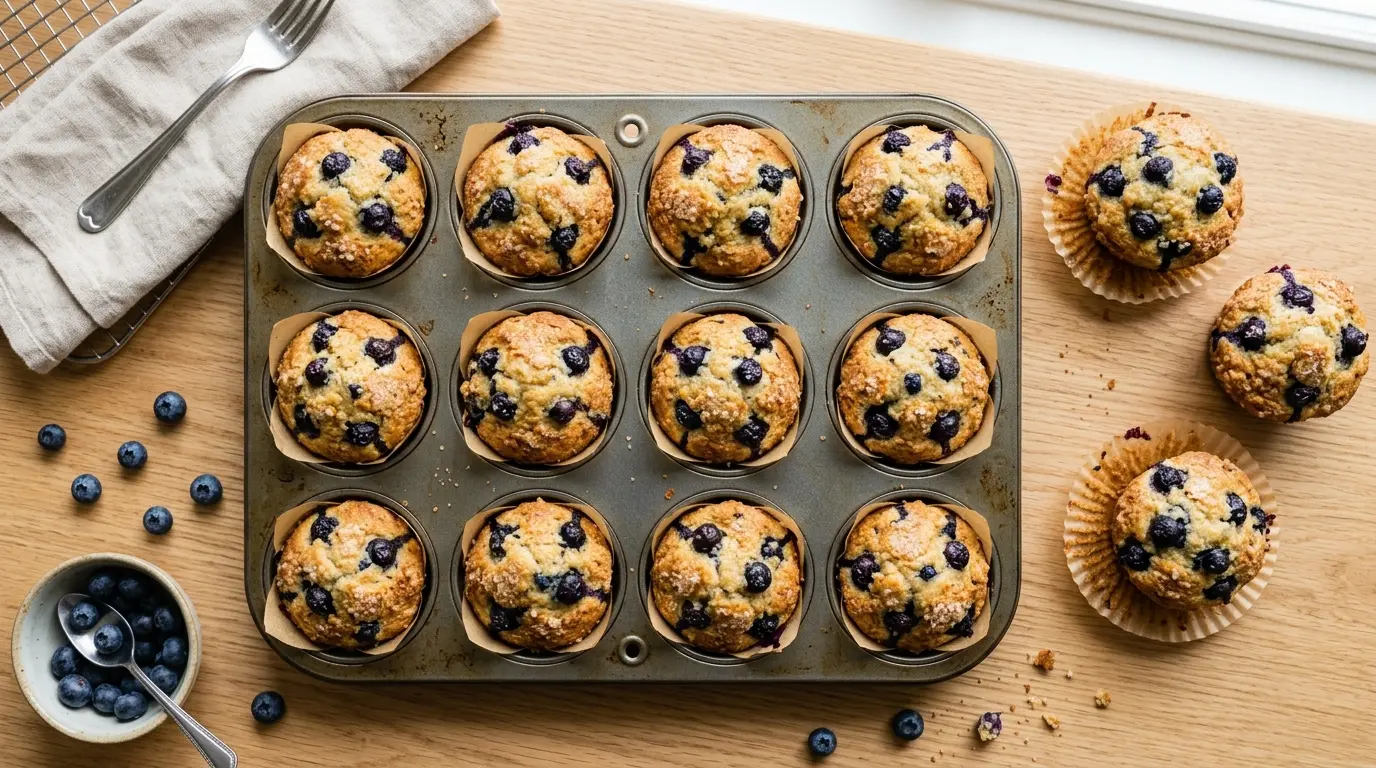
If you’ve been maintaining a sourdough starter, you already know the weekly struggle: what do you do with all that discard? This sourdough discard muffins recipe is one of the best answers to that question.
These muffins are soft, fluffy, and just the right amount of tangy, with a moist crumb that actually improves the longer the batter rests. The sourdough discard isn’t just a way to reduce waste here, it genuinely makes the muffins better by adding depth of flavor and helping keep them tender for days.
The base recipe is endlessly customizable. You can fold in blueberries, chocolate chips, diced apple, or a handful of cinnamon sugar and end up with a completely different muffin every time.
The technique is also beginner-friendly. You mix the wet and dry ingredients separately, combine them gently, fold in your add-ins, and bake. No stand mixer, no chilling time, no complicated steps.
This version uses a classic base: all-purpose flour, butter, sugar, eggs, and milk, along with a generous amount of sourdough discard. It’s the kind of recipe that becomes a weekly staple once you try it.
For your mix-in, blueberries are used here as the default since they’re the most widely popular pairing with sourdough muffins, but the “Variations” section covers plenty of other options.
You might also enjoy this Sourdough Discard Blueberry Muffins Recipe for a more blueberry-forward, bakery-style version.

Why You’ll Love This Sourdough Discard Muffins Recipe
These muffins come together in under 30 minutes from start to finish, making them one of the fastest baked goods you can add to your sourdough discard rotation.
The sourdough discard adds a gentle tang that you don’t get from standard muffins. It balances the sweetness perfectly without being sour.
You don’t need to use active, bubbly starter here. In fact, discard that’s been sitting in the fridge for a few days works just fine and even enhances the flavor slightly.
The texture is genuinely bakery-quality. These muffins have a slightly domed top, a moist interior, and a lightly golden crust that holds up well after cooling.
They freeze beautifully too, which means you can bake a batch now and have ready-to-go breakfasts for the next few weeks.
- No stand mixer or special equipment required
- Uses up a significant amount of sourdough discard (1 cup / 240g per batch)
- Ready in under 30 minutes
- Stays moist for up to 4 days at room temperature
- Completely customizable with any mix-in you like
- Freezer-friendly for easy meal prep
Read Also: Sourdough Discard Coffee Cake Recipe
Ingredients
This recipe makes 12 standard muffins. The amounts listed below produce a tender, well-balanced muffin that isn’t too sweet or too dense.
- 1 ½ cups (180g) all-purpose flour
- ⅔ cup (130g) granulated sugar
- 1 tablespoon (10g) baking powder
- ½ teaspoon fine salt
- ½ teaspoon ground cinnamon (optional, but recommended)
- 1 cup (240g) sourdough discard, stirred down (not active starter)
- 2 large eggs, room temperature
- ½ cup (113g) unsalted melted butter or neutral oil
- ⅓ cup (76g) whole milk
- 1 teaspoon pure vanilla extract
- 1 ½ cups (220g) fresh or frozen blueberries (or preferred mix-in)
- 1 tablespoon all-purpose flour (for tossing with blueberries)
- Optional: 1 tablespoon coarse sugar for topping
For this Sourdough Discard Banana Bread Recipe, use the same discard and swap the add-ins for mashed banana and walnuts.
Kitchen Equipment Needed
You don’t need anything fancy for these muffins, but having the right tools makes the process smoother and cleaner.
- Standard 12-cup muffin tin
- Muffin liners or paper cups, or nonstick cooking spray
- 2 mixing bowls (one large, one medium)
- Whisk
- Rubber spatula
- Kitchen scale (recommended for accuracy)
- Muffin scoop or large cookie scoop
- Wire cooling rack
Another favorite: Sourdough Discard Pancakes Recipe
Recommended Products for This Recipe
These are products that genuinely make a difference when baking sourdough discard muffins, chosen for quality and consistency.
1. OXO Good Grips Non-Stick 12-Cup Muffin Pan
A high-quality muffin pan distributes heat evenly so your muffins bake through without browning too fast on the edges. The nonstick coating also means you can skip the liners if you prefer. It’s one of those tools that makes the whole baking process less stressful.
2. King Arthur Baking Unbleached All-Purpose Flour
The quality of your flour matters more than most people think, especially in a simple recipe like this where there’s nowhere for flaws to hide. King Arthur’s all-purpose flour has a consistent protein content that produces a reliably tender crumb every time.
3. OXO Good Grips Large Cookie Scoop
Portioning muffin batter evenly is the key to uniform baking. A large cookie scoop fills each muffin cup in exactly one motion, which also means less mess on your pan and more consistent rise. It’s one of those small investments that pays off every single time you bake.
4. Nielsen-Massey Pure Vanilla Extract
Vanilla is in almost every muffin recipe for a reason, and the quality of your extract has a noticeable impact on the final flavor. Nielsen-Massey uses a cold process extraction that preserves more of the vanilla’s natural complexity. The difference is subtle but real, especially in a mildly flavored batter like this.
5. OXO Digital Kitchen Scale
Baking with weight measurements is genuinely more accurate than using cups, especially for flour. A small swing in flour quantity can be the difference between a fluffy muffin and a dense one. This scale is reliable, easy to read, and switches between grams and ounces with one button.
You might also enjoy: Sourdough Discard Cinnamon Rolls Recipe

Step-by-Step Instructions
1. Preheat the Oven and Prepare the Muffin Tin
- Preheat your oven to 425°F (220°C). Starting at a high temperature creates a burst of steam inside the muffin that produces a domed top, just like bakery muffins.
- Line a standard 12-cup muffin tin with paper liners, or spray each cavity generously with nonstick cooking spray. If using paper liners, also lightly spray the inside of the liners so the muffins release cleanly.
- Set the prepared pan aside while you mix the batter.
2. Mix the Dry Ingredients
- Add the 1 ½ cups (180g) all-purpose flour, ⅔ cup (130g) granulated sugar, 1 tablespoon (10g) baking powder, ½ teaspoon salt, and ½ teaspoon cinnamon (if using) to a large mixing bowl.
- Whisk everything together thoroughly until there are no clumps of baking powder or pockets of salt. This step is important because uneven distribution of leavening can cause some muffins to rise unevenly.
- Set the dry bowl aside.
3. Mix the Wet Ingredients
- In a separate medium bowl, add the 1 cup (240g) sourdough discard. Stir it well first to knock out any large air bubbles and ensure it’s at a uniform consistency. Room temperature discard blends more smoothly than cold discard straight from the fridge.
- Add the 2 large eggs, ½ cup (113g) melted and cooled butter (or neutral oil), ⅓ cup (76g) whole milk, and 1 teaspoon pure vanilla extract.
- Whisk everything together until fully combined and smooth. The mixture should look uniform with no streaks of discard visible.
4. Toss the Blueberries in Flour
- Place the 1 ½ cups (220g) fresh or frozen blueberries in a small bowl.
- Sprinkle 1 tablespoon of all-purpose flour over the berries and toss to coat them lightly. This step prevents the berries from sinking to the bottom of the muffins during baking, a small trick that makes a real difference in the final presentation and texture.
- If using frozen blueberries, do not thaw them first. Adding them frozen minimizes streaking in the batter and helps them hold their shape better.
5. Combine the Wet and Dry Ingredients
- Pour the wet ingredient mixture into the large bowl with the dry ingredients.
- Use a rubber spatula to fold the two together. Stir just until the flour is incorporated and no large dry streaks remain. This should take about 10-15 folds.
- Do not overmix. Overmixing develops the gluten in the flour, which results in tough, dense muffins with a rubbery texture. Some small lumps in the batter are completely fine and actually preferred.
6. Fold in the Blueberries
- Add the flour-coated blueberries to the batter.
- Use the rubber spatula to gently fold them in with 4-5 slow, wide strokes. You want the berries distributed throughout but not crushed into the batter.
- If using fresh blueberries, be especially gentle at this stage since they burst easily.
7. Fill the Muffin Cups
- Use a large cookie scoop or a spoon to fill each muffin cup. Fill each cup all the way to the top of the liner, or about ¾ of the way if not using liners.
- Filling the cups generously is what produces a full, domed muffin top. Under-filling results in flat-topped muffins that look more like mini cakes.
- If desired, sprinkle a pinch of coarse sugar over the top of each muffin for a lightly crunchy finish.
8. Bake the Muffins
- Place the muffin tin in the center rack of the preheated 425°F (220°C) oven.
- Bake for 5 minutes at this high temperature without opening the oven door. This initial blast of heat is what creates the signature dome on top.
- After 5 minutes, reduce the oven temperature to 375°F (190°C) without removing the pan. Continue baking for another 14-16 minutes.
- The muffins are done when the tops are golden brown, the edges pull slightly away from the liner, and a toothpick inserted into the center of a muffin comes out clean or with just a few moist crumbs attached.
9. Cool and Serve
- Remove the muffin tin from the oven and let it sit for 5 minutes. This brief rest allows the muffins to firm up slightly, making them easier to remove without falling apart.
- Transfer the muffins to a wire cooling rack. Cooling on the rack prevents the bottoms from getting soggy from trapped steam.
- The muffins can be eaten warm, but they’re at their best after about 15-20 minutes when the crumb has set.
Read Also: Sourdough Discard Waffles Recipe
Tips for Success
Even a simple muffin recipe has a few places where things can go wrong. These tips address the most common issues.
- Don’t overmix the batter. This is the number one reason muffins turn out dense and tough. Stop stirring as soon as the flour disappears.
- Use room temperature eggs and discard. Cold ingredients don’t blend as smoothly and can cause the melted butter to seize up into small solid bits.
- Stir your discard before measuring. Discard separates in the fridge with liquid settling on top. Stirring it ensures the consistency is uniform throughout the batter.
- Measure flour correctly. Spoon the flour into the measuring cup and level it off rather than scooping directly from the bag. Scooping packs in more flour and can make the muffins dry.
- Don’t skip the flour toss for the blueberries. It takes 30 extra seconds and genuinely prevents the berries from sinking.
- Fill the cups to the top. It feels like a lot, but it’s what produces a full dome rather than a flat cap.
- Start at 425°F then reduce heat. This two-temperature method is the bakery trick for getting a tall, domed top without over-baking the interior.
Another favorite: Sourdough Discard Chocolate Chip Cookies Recipe
Serving Suggestions
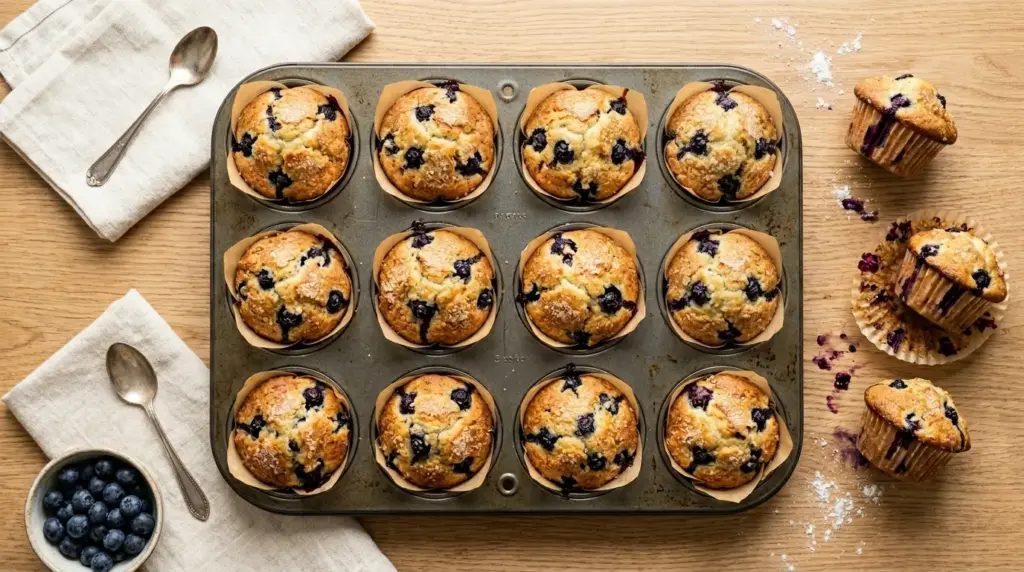
These muffins are satisfying on their own, but a few simple pairings take the experience up a notch.
Serve them warm with a generous pat of cinnamon butter melting into the top. The warmth of the spice complements the tangy sourdough base really well.
They also pair nicely alongside a bowl of fresh fruit or a simple fruit salad for a light weekend breakfast spread.
For a more substantial breakfast, serve them alongside scrambled eggs or an egg bake for some protein balance.
- Warm with salted butter and a drizzle of honey
- With a cup of black coffee or a latte for a simple morning
- Alongside a smoothie bowl as part of a bigger breakfast spread
- Sliced and lightly toasted the next day for an extra layer of texture
- Packed into lunchboxes as a snack for kids or adults
Read Also: Sourdough Discard Crepes Recipe
Variations to Try
The base batter for these muffins is designed to be a blank canvas. Here are some of the most popular ways to change things up.
- Chocolate chip: Replace the blueberries with 1 cup (170g) of semi-sweet chocolate chips. Add a pinch of espresso powder to the dry ingredients to deepen the chocolate flavor.
- Lemon poppy seed: Omit the blueberries and cinnamon, add the zest of 2 lemons and 1 ½ tablespoons poppy seeds to the batter. Top with a simple lemon glaze after baking.
- Banana walnut: Mash 2 medium ripe bananas and add to the wet ingredients, reduce the milk to 2 tablespoons, and fold in ½ cup (60g) of chopped walnuts.
- Apple cinnamon: Fold in 1 cup (150g) of finely diced apple and increase the cinnamon to 1 teaspoon. A brown sugar crumble topping works beautifully here.
- Pumpkin spice: Replace half the butter with canned pumpkin puree and use a blend of cinnamon, nutmeg, ginger, and cloves in place of the single cinnamon called for.
- Cranberry orange: Use 1 cup (120g) fresh or frozen cranberries and add the zest of one large orange to the wet ingredients.
For a heartier baked good using the same discard, the Sourdough Discard Zucchini Bread Recipe follows a very similar method.
Storage and Reheating
These muffins keep well at room temperature, which makes them ideal for baking ahead.
- Room temperature: Store cooled muffins in an airtight container at room temperature for up to 4 days. Line the container with a paper towel to absorb any excess moisture.
- Refrigerator: They’ll last up to 6 days in the fridge, though refrigerating muffins can dry them out slightly. Warm them briefly before eating.
- Freezer: Place fully cooled muffins in a single layer on a sheet pan and freeze until solid (about 1-2 hours), then transfer to a zip-lock bag or airtight freezer container. They keep well for up to 3 months.
- Reheating from frozen: Microwave individual muffins for 30-45 seconds at full power, or thaw at room temperature for about an hour. You can also rewarm them in a 325°F (160°C) oven for 8-10 minutes.
- Reheating from room temperature: A quick 15-20 seconds in the microwave brings them back to fresh-from-the-oven warmth.
For another freezer-friendly sourdough bake, the Sourdough Discard Pumpkin Bread freezes just as well and pairs nicely with these muffins as part of a fall batch-bake day.
Nutritional Facts
The values below are estimates based on the standard blueberry version of this recipe using butter. Actual numbers will vary depending on your specific ingredients and add-ins.
Per muffin (1 of 12):
| Nutrient | Amount |
|---|---|
| Calories | 215 kcal |
| Total Fat | 9g |
| Saturated Fat | 5g |
| Cholesterol | 52mg |
| Sodium | 145mg |
| Total Carbohydrates | 30g |
| Dietary Fiber | 1g |
| Total Sugars | 14g |
| Protein | 4g |
Note: Swapping butter for a neutral oil like avocado or light olive oil reduces the saturated fat without affecting the texture significantly. Using less sugar or a sugar substitute will lower the calorie count.
You might also enjoy: Sourdough Discard Donuts Recipe
Health Benefits of Key Ingredients
Beyond being a delicious way to reduce food waste, these muffins contain a few ingredients worth noting from a nutritional standpoint.
Sourdough discard, even unfed, still contains beneficial organic acids like lactic and acetic acid that develop during fermentation. These acids slow the glycemic response compared to conventional quick-bread batters, meaning blood sugar rises more gradually after eating.
Blueberries are one of the most antioxidant-dense fruits available. They’re rich in anthocyanins, which are the pigments responsible for their deep blue color and have been linked to cardiovascular and cognitive health support.
Eggs contribute high-quality complete protein along with fat-soluble vitamins like A, D, and B12. In baking, they also improve the structural integrity of the muffin crumb and contribute to the golden color of the tops.
- Sourdough discard: Contains fermentation byproducts that may improve digestibility and moderate blood sugar response
- Blueberries: Rich in vitamin C, vitamin K, and antioxidant compounds (anthocyanins)
- Eggs: High-quality protein, choline for brain health, and fat-soluble vitamins
- Butter: Contains fat-soluble vitamins A, D, E, and K2, and short-chain fatty acids when sourced from grass-fed cows
- All-purpose flour: Provides energy-sustaining carbohydrates and modest amounts of iron and B vitamins
This pairs nicely with the Sourdough Discard Granola Recipe for a more fiber-rich breakfast combination.
Frequently Asked Questions
1. Can I use active sourdough starter instead of discard?
Yes, active starter works in this recipe. The muffins will rise slightly more and may have a slightly airier texture due to the yeast activity still present in fed starter. The flavor will be a bit milder and less tangy than discard since freshly fed starter hasn’t had time to develop acidity. Either version tastes great.
2. My sourdough discard has been in the fridge for 2 weeks. Is it still okay to use?
Generally, yes. Older discard tends to be more acidic and will produce a tangier muffin, which many bakers actually prefer. As long as your discard smells sour but not rotten, musty, or like acetone, it’s safe to use. If you see any pink or orange streaks, or if it smells genuinely off rather than pleasantly sour, discard it.
3. Can I make these muffins dairy-free?
Absolutely. Swap the butter for the same amount of melted coconut oil or a neutral plant-based oil like avocado oil. Replace the whole milk with any non-dairy milk such as oat, almond, or soy. The texture will be very slightly different but still delicious. Oat milk tends to produce the most similar crumb to whole milk.
4. Why did my muffins come out flat instead of domed?
A few things can cause flat muffin tops. The most common culprits are: overmixing the batter (which deflates the air and weakens gluten structure), under-filling the muffin cups, using expired baking powder, or opening the oven door during the first 5 minutes of baking before the dome has set. The 425°F start temperature is also key for dome formation, so make sure your oven is fully preheated before the pan goes in.
5. Can I make the batter the night before?
You can mix the batter and refrigerate it overnight in an airtight container or covered bowl. Cold batter may take 2-3 extra minutes to bake through, so keep an eye on it. Some bakers find that overnight batter produces a slightly more complex flavor due to the extended fermentation from the discard. If using fresh blueberries, fold them in just before scooping and baking rather than storing them in the batter overnight.
Read Also: Sourdough Discard French Toast Recipe

Sourdough Discard Muffins (Blueberry)

Equipment
- Standard 12-cup muffin tin
- Muffin liners or paper cups - or nonstick cooking spray
- Large mixing bowl
- Medium mixing bowl
- Whisk
- Rubber spatula
- Kitchen scale - recommended for accuracy
- Muffin scoop or large cookie scoop - recommended for even portioning
- Wire cooling rack
Ingredients
- 1.5 cups all-purpose flour - 180g, spooned and leveled
- 0.67 cup granulated sugar - 130g
- 1 tablespoon baking powder - 10g
- 0.5 teaspoon fine salt
- 0.5 teaspoon ground cinnamon - optional, but recommended
- 1 cup sourdough discard - 240g, stirred down, room temperature (not active starter)
- 2 large eggs - room temperature
- 0.5 cup unsalted melted butter - 113g, or neutral oil (cooled to room temperature)
- 0.33 cup whole milk - 76g
- 1 teaspoon pure vanilla extract
- 1.5 cups fresh or frozen blueberries - 220g
- 1 tablespoon all-purpose flour - for tossing with blueberries
- 1 tablespoon coarse sugar - optional, for topping
Instructions
- Preheat oven to 425°F (220°C). Line a 12-cup muffin tin with paper liners or spray with nonstick cooking spray. If using liners, lightly spray the inside of them as well.
- In a large bowl, whisk together flour, sugar, baking powder, salt, and cinnamon until evenly combined.
- In a separate medium bowl, whisk the sourdough discard, eggs, melted butter, milk, and vanilla until smooth and uniform.
- Toss blueberries with 1 tablespoon of flour in a small bowl to coat. This prevents them from sinking to the bottom of the muffins.
- Pour the wet mixture into the dry ingredients and fold with a rubber spatula until just combined and no large streaks of flour remain. Do not overmix.
- Gently fold the flour-coated blueberries into the batter with 4-5 slow strokes, being careful not to crush the berries.
- Fill each muffin cup to the very top with batter using a cookie scoop or spoon. Sprinkle with coarse sugar if desired.
- Bake at 425°F for 5 minutes. Without opening the oven, reduce heat to 375°F and bake for 14-16 minutes more, until tops are golden and a toothpick comes out clean.
- Let muffins rest in the pan for 5 minutes, then transfer to a wire cooling rack. Serve warm or at room temperature.
Notes
- Don’t overmix: Overmixing develops gluten and results in tough, dense muffins. Stir just until the flour disappears.
- Room temperature ingredients: Use room temperature discard and eggs for a smoother batter and better rise.
- Measure flour correctly: Spoon flour into the measuring cup and level it off, or use a kitchen scale for the most accurate results.
- High-heat start: Starting at 425°F creates a burst of steam that produces a beautiful domed top, just like bakery muffins.
- Fill cups to the top: Generously filled muffin cups produce full, domed tops. Under-filling results in flat muffins.
- Frozen blueberries: Do not thaw frozen blueberries before using. Adding them frozen prevents streaking and helps them hold their shape.
- Make it dairy-free: Swap butter for melted coconut oil or neutral oil and use oat, almond, or soy milk instead of whole milk.
- Flavor variations: Replace blueberries with chocolate chips, diced apple, lemon zest and poppy seeds, or any other mix-in you prefer.
- Storage: Store in an airtight container at room temperature for up to 4 days. For longer storage, freeze for up to 3 months.
- Reheating: Microwave individual muffins for 15-20 seconds, or rewarm in a 325°F oven for 8-10 minutes for a freshly baked texture.
Final Thoughts
Sourdough discard muffins are one of those recipes that earn a permanent spot in your baking routine. They’re fast, flexible, forgiving for beginners, and consistently delicious in a way that feels a little more special than your average muffin.
Once you make them once, the template becomes second nature. You’ll start looking at your discard jar every week as an ingredient to look forward to, not a problem to solve.
Give this recipe a try, and let me know in the comments what mix-in you used. Sharing which variation you landed on might just inspire the next person’s batch.
Recommended:
- Sourdough Discard Carrot Cake Recipe
- Sourdough Discard Brownies Recipe
- Sourdough Discard Lemon Loaf Recipe
- Sourdough Discard Pizza Dough Recipe
- Sourdough Discard Chocolate Cake Recipe
- Sourdough Discard English Muffins Recipe
- Sourdough Discard Breadsticks Recipe
- Sourdough Discard Tortillas Recipe
- Pumpkin Muffin Recipe
- Sourdough Starter Recipe