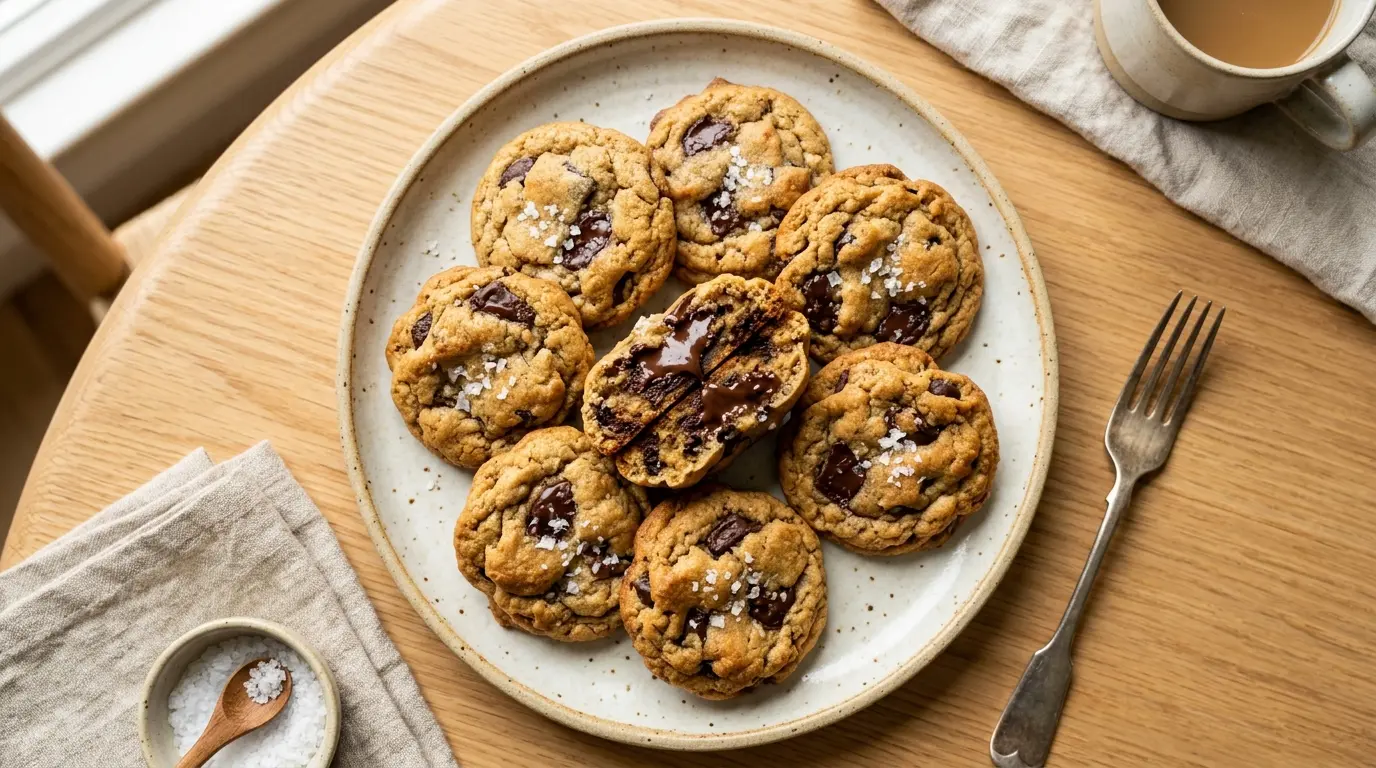
If you have a jar of sourdough discard sitting in your fridge and a chocolate chip craving you can’t ignore, this Sourdough Discard Chocolate Chip Cookies Recipe is exactly what you need.
These cookies are soft and chewy in the center, slightly crispy on the edges, and loaded with melty pockets of chocolate. The sourdough discard doesn’t make them taste sour at all. Instead, it adds a subtle complexity and depth of flavor that makes these cookies genuinely unforgettable.
Brown butter is the other secret here. That nutty, toasty, almost caramel-like flavor from browned butter takes a standard chocolate chip cookie and turns it into something that tastes like it came from a bakery.
This recipe uses pantry staples you likely already have. It’s the kind of bake that makes your kitchen smell incredible and produces cookies that disappear fast.
If you’re looking for other ways to use up your sourdough starter, you’ll love Sourdough Discard Crackers as another easy and satisfying option.

Why You’ll Love This Sourdough Discard Chocolate Chip Cookies Recipe
These cookies check every single box for what makes a great chocolate chip cookie.
The brown butter adds a rich, nutty flavor that regular melted or creamed butter just can’t match. Combined with the sourdough discard, the result is a cookie with layered, complex flavor that goes way beyond the standard version.
The texture is spot-on too. Crispy edges give way to a soft, chewy center in every single bite.
You’re also getting a great use for something that would otherwise go down the drain. Instead of tossing your discard, you’re turning it into cookies people will ask you to make again and again.
Here’s a quick summary of why this recipe works so well:
- Uses up sourdough discard without any wasted effort
- Brown butter creates a deep, toasty, butterscotch-like flavor
- Sourdough adds mild tang that balances the sweetness perfectly
- Crispy edges with a soft, gooey center in every bite
- No stand mixer required, just a saucepan, bowls, and a whisk
- Dough can be made ahead and chilled for even better flavor
- Freezer-friendly, so you can bake fresh cookies on demand
- Customizable with different chocolate types or mix-ins
Read Also: Best Chocolate Chip Cookies Recipe
Ingredients
You need a combination of pantry staples plus that all-important sourdough discard. Using dark brown sugar rather than light adds extra moisture and a deeper molasses flavor that pairs beautifully with the tangy discard and browned butter.
- 1 cup (226g) unsalted butter
- 1 cup (200g) dark brown sugar, packed
- 1/2 cup (100g) granulated white sugar
- 2 large eggs, at room temperature
- 1 tablespoon pure vanilla extract
- 1/2 cup (120g) sourdough discard (unfed, at room temperature)
- 2 1/4 cups (280g) all-purpose flour
- 1 teaspoon baking soda
- 1/2 teaspoon baking powder
- 1 teaspoon fine sea salt
- 2 cups (340g) semi-sweet chocolate chips or chopped chocolate bar
- Flaky sea salt for finishing (optional but highly recommended)
You might also enjoy: Sourdough Discard Pizza Dough Recipe
Kitchen Equipment Needed
You don’t need anything fancy to make these cookies. The most important piece of equipment is a light-colored saucepan for browning the butter, because a dark pan makes it nearly impossible to see when the butter has reached that perfect golden-brown color.
- Light-colored medium saucepan (for browning butter)
- Large mixing bowls
- Whisk
- Rubber spatula
- Cookie scoop (2-tablespoon size)
- Rimmed baking sheets
- Parchment paper
- Wire cooling rack
- Plastic wrap or airtight container for chilling
Read Also: Sourdough Pancake Recipe
Recommended Products for This Recipe
These are products selected based on quality and performance that genuinely make a difference when baking these cookies.
1. Semi-Sweet Chocolate Baking Bar
Chopping a high-quality chocolate bar instead of using chips creates irregular pieces that melt into gooey puddles throughout the cookie. Chips are formulated to hold their shape during baking, but a chopped bar gives you those irresistible, uneven pockets of chocolate in every bite. Brands like Ghirardelli or Callebaut work beautifully here.
2. Maldon Flaky Sea Salt
A small pinch of flaky sea salt sprinkled on top of each cookie right before baking makes a dramatic difference. It intensifies the chocolate flavor and creates that addictive sweet-salty contrast that makes these feel truly bakery-worthy. A little box of Maldon goes a long way.
3. OXO Good Grips 2-Tablespoon Cookie Scoop
A consistent cookie scoop means all your cookies are the same size and will bake evenly at the same rate. The OXO trigger-release design makes portioning fast, clean, and effortless, and it’s especially helpful when working with chilled, firmer dough.
4. USA Pan Half Sheet Baking Pan
Heavy-duty aluminum baking sheets distribute heat evenly and prevent the bottoms of your cookies from over-browning before the centers are done. Thin, flimsy pans are one of the most common causes of unevenly baked cookies, and this pan solves that problem completely.
Another great sourdough bake to try after this one: Sourdough Focaccia Recipe

Step-by-Step Instructions
Step 1: Brown the Butter
- Place the unsalted butter (1 cup / 226g) in a light-colored medium saucepan over medium heat.
- Stir the butter continuously with a spatula or whisk as it melts to prevent any spots from burning on the bottom.
- Continue cooking and stirring as the butter foams up, then subsides. Watch carefully at this stage because the color change happens quickly.
- After 4 to 6 minutes, the butter will turn a golden amber color and you’ll see small brown bits forming at the bottom of the pan. It should smell deeply nutty and toasty, almost like roasted hazelnuts.
- Immediately pour the browned butter into a large heat-safe mixing bowl, scraping every last bit of those browned solids from the pan. Those bits contain the most flavor and must not be left behind.
- Set the bowl aside and allow the butter to cool for 15 to 20 minutes until it is warm but not hot to the touch. If the butter is still too hot when you add the eggs, it can cook them before you intend to.
Step 2: Mix the Wet Ingredients
- Add the packed dark brown sugar (1 cup / 200g) and granulated white sugar (1/2 cup / 100g) to the bowl of warm browned butter.
- Whisk vigorously for about 1 minute until the mixture is smooth, slightly thickened, and the sugars are well dissolved into the butter.
- Add both eggs and the tablespoon of vanilla extract to the bowl. Whisk again for about 30 seconds until fully combined and the mixture looks glossy and slightly pale.
- Add the sourdough discard (1/2 cup / 120g) to the bowl. Whisk until fully incorporated and no streaks remain. The discard should blend in smoothly without much resistance.
Step 3: Combine the Dry Ingredients
- In a separate medium mixing bowl, add the all-purpose flour (2 1/4 cups / 280g), baking soda (1 teaspoon), baking powder (1/2 teaspoon), and fine sea salt (1 teaspoon).
- Whisk the dry ingredients together until evenly combined. Whisking separately before adding to the wet ingredients ensures the baking soda and baking powder are distributed evenly throughout the dough, so every single cookie bakes consistently.
Step 4: Bring the Dough Together
- Pour the dry ingredient mixture into the bowl with the wet ingredients.
- Using a rubber spatula, fold the dry ingredients into the wet ingredients with gentle, sweeping motions. Stop folding as soon as no visible dry flour streaks remain.
- Be careful not to overmix. Overworking the dough develops the gluten in the sourdough discard and can make your finished cookies tough and dense instead of tender and chewy.
- Add the chocolate chips or chopped chocolate (2 cups / 340g) to the dough.
- Fold them in gently with the spatula until they are evenly distributed throughout the dough.
Step 5: Chill the Dough
- Cover the bowl tightly with plastic wrap or transfer the dough to an airtight container.
- Refrigerate the dough for at least 1 hour. Overnight chilling (8 to 24 hours) produces the best flavor, as the rest allows the butter to firm back up and the sugars to absorb more moisture from the dough.
- Chilled dough spreads less during baking, giving you thicker, chewier cookies with better-defined edges.
- If you are short on time, you can portion the dough into balls immediately and freeze them on a sheet tray for 20 to 30 minutes as a quick alternative to a full refrigerator chill.
Step 6: Preheat the Oven and Prepare Baking Sheets
- When you are ready to bake, preheat your oven to 375°F (190°C). Allow the oven to fully preheat for at least 15 minutes before putting any cookies in.
- Line two rimmed baking sheets with parchment paper. Do not grease the pans, as added fat on the surface can cause the cookies to spread too thin at the edges.
- Position one oven rack in the upper third of the oven and one in the lower third for even heat circulation when baking two trays at once.
Step 7: Portion the Cookie Dough
- Remove the chilled dough from the refrigerator. If it has been chilled overnight and is very firm, let it sit at room temperature for 5 minutes to make scooping easier.
- Use a 2-tablespoon cookie scoop or two spoons to portion the dough into uniform balls. Each ball should be roughly the size of a golf ball, about 50g / 1.75oz each.
- Place the dough balls at least 2 inches (5cm) apart on the prepared baking sheets to allow room for spreading during baking.
- If desired, press a few extra chocolate chips onto the tops of each dough ball for a more dramatic, bakery-style appearance.
- Sprinkle a very small pinch of flaky sea salt over the top of each dough ball right before putting the trays into the oven.
Step 8: Bake the Cookies
- Place the baking sheets in the preheated oven. Bake for 10 to 12 minutes, until the edges are set and lightly golden but the centers still look slightly underdone and shiny.
- This intentionally underdone center is the key to a soft, gooey cookie. The residual heat from the hot pan will continue cooking the centers for several minutes after you remove the tray from the oven.
- If baking two sheets at once, rotate them (top to bottom, front to back) at the 6-minute mark to ensure even browning on all the cookies.
Step 9: Cool and Serve
- Remove the baking sheets from the oven and let the cookies rest on the pan for 5 full minutes before touching them. They are very fragile and soft right out of the oven and will fall apart if moved too soon.
- After 5 minutes, transfer the cookies carefully to a wire cooling rack using a thin spatula. Allow them to cool for at least 10 more minutes before eating for the best texture.
- Enjoy them warm for maximum gooeyness, or wait until they are fully set at room temperature for a firmer, chewier bite.
This browning technique also works beautifully in a classic Chewy Chocolate Chip Cookies Recipe if you want a version without the sourdough discard.
Tips for Success
Getting the most out of this recipe comes down to a few key practices. Browning the butter is the single most impactful step in the entire recipe, so don’t skip it or try to substitute softened butter.
- Use discard that is no more than 7 to 10 days old. Older discard becomes increasingly sour and acidic, which can overpower the sweet flavor of the cookies. For any sweet baking, fresher discard is always the better choice.
- Don’t rush the cooling of the browned butter. If the butter is still very hot when you add the eggs, you’ll end up with scrambled eggs in your cookie dough. Aim for warm to the touch, not hot.
- Measure flour correctly. Spoon the flour into your measuring cup and level it off with a straight edge, or better yet, use a kitchen scale. Scooping directly from the bag packs the flour in and leads to dry, cakey cookies.
- Chill the dough. One hour is the minimum, but overnight produces visibly better flavor and texture through the process of cold fermentation in the sourdough.
- Pull the cookies from the oven early. They should look underdone and slightly glossy in the center. Trust the process, and let the residual heat from the pan finish the job.
- Use a cookie scoop for uniform size. Cookies that are all the same size bake at the same rate, so you won’t end up with some overcooked and some underdone on the same tray.
- Add flaky salt on top. This one small step makes a significant difference. The contrast between sweet, rich chocolate and crunchy salt is what makes these feel truly special.
Another cookie worth bookmarking for your next bake: Old Fashioned Chocolate Chip Cookie Recipe
Serving Suggestions
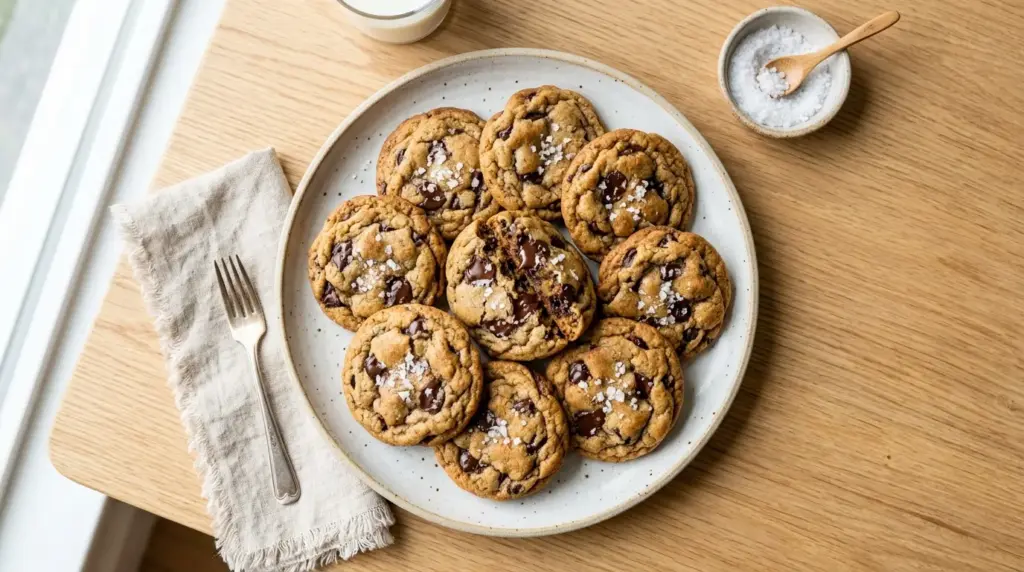
These cookies are wonderful on their own, but a few simple pairings take the whole experience up a level.
A cold glass of whole milk is the most classic companion. The richness of the milk cuts through the sweetness and makes each bite feel even more satisfying and indulgent.
- Serve warm from the oven with a tall glass of ice-cold milk
- Sandwich two cookies around a scoop of Vanilla Bean Ice Cream for an easy, stunning dessert
- Crumble a cookie over a bowl of chocolate or vanilla ice cream for a quick and crowd-pleasing sundae
- Pair with a mug of hot coffee or espresso for an afternoon pick-me-up
- Stack them on a dessert board alongside a small bowl of Caramel Sauce for dipping
- Pack them into lunchboxes, treat bags, or gift tins, as they travel and hold up beautifully at room temperature
You might also enjoy: Chocolate Ganache Recipe
Variations to Try
Once you have the base recipe down, there are plenty of ways to customize these cookies to suit your mood. The sourdough discard and brown butter base stays the same, so the chewy texture holds up across all variations.
- Double Chocolate: Replace 1/4 cup (30g) of flour with unsweetened cocoa powder and use dark chocolate chips for a rich, fudgy, ultra-chocolatey version.
- Brown Butter Toffee: Swap half the chocolate chips for toffee bits. The butterscotch notes in the toffee echo the brown butter flavor in the most delicious way.
- Espresso Chocolate: Add 1 to 2 teaspoons of instant espresso powder to the wet ingredients. Espresso amplifies the depth of the chocolate flavor without making the cookie taste like coffee.
- Peanut Butter Chocolate: Reduce the chocolate chips by 1/2 cup and add 1/2 cup of peanut butter chips. Press a small thumb indent into each ball and add a tiny dollop of peanut butter before baking.
- White Chocolate Macadamia: Swap the semi-sweet chips for white chocolate chips and fold in 1/2 cup of roughly chopped macadamia nuts for a tropical twist.
- Cranberry Dark Chocolate: Replace half the chocolate chips with dried cranberries. The tartness of the cranberries echoes the tang of the sourdough for a beautifully balanced cookie.
- Sea Salt Caramel: Press a soft caramel candy into the center of each dough ball before baking for a gooey, melted caramel surprise in every cookie.
For more cookie inspiration, the Chewy Oatmeal Chocolate Chip Cookie Recipe is a brilliant next bake.
Storage and Reheating
These cookies store well, making it worth baking a full batch. If anything, the flavor deepens slightly on day two as the sourdough notes mellow and everything comes together.
- Room temperature: Store baked cookies in an airtight container for up to 5 days. Placing a slice of sandwich bread in the container helps keep the cookies soft by maintaining moisture.
- Refrigerator: Baked cookies can be refrigerated for up to 1 week. Bring them to room temperature before eating, or warm briefly in the microwave.
- Freeze baked cookies: Layer cooled cookies between sheets of parchment paper in an airtight freezer bag. They keep well for up to 3 months. Thaw at room temperature for 30 minutes before eating.
- Freeze unbaked dough balls: Portion the dough into balls, freeze on a lined baking sheet until solid, then transfer to a freezer bag. Bake directly from frozen at 375°F (190°C) for 12 to 14 minutes. This is the ultimate option for fresh-baked cookies with zero notice.
- Reheating: To revive a stored cookie, microwave it for 10 to 15 seconds. It will taste almost fresh from the oven. For a crispier edge, warm in a 300°F (150°C) oven for 5 minutes.
Read Also: Sourdough Sandwich Bread Recipe
Nutritional Facts
The values below are estimates per cookie, based on the recipe making approximately 24 cookies.
| Nutrient | Per Cookie (Approx.) |
|---|---|
| Calories | 215 kcal |
| Total Fat | 11g |
| Saturated Fat | 6.5g |
| Cholesterol | 35mg |
| Sodium | 115mg |
| Total Carbohydrates | 28g |
| Dietary Fiber | 1g |
| Total Sugars | 18g |
| Protein | 2.5g |
Nutritional values are estimates and may vary based on the specific ingredients and portion sizes used.
Another sweet bake to try alongside this one: Monster Cookie Recipe
Health Benefits of Key Ingredients
These are still cookies, and moderation is always the right approach. That said, a few of the key ingredients in this recipe bring some genuine nutritional benefits beyond just great flavor.
The sourdough discard, even in its unfed state, retains properties from the fermentation process. The natural acids in sourdough can support better mineral absorption and may be gentler on digestion than standard baked goods made without fermentation.
Here is a closer look at what the main ingredients contribute:
- Sourdough discard: Contains organic acids from fermentation that can aid mineral absorption. The fermentation process also partially breaks down phytic acid in the flour, which can improve how well your body absorbs zinc and iron.
- Dark chocolate chips: Semi-sweet and dark chocolate contain flavanols, a type of antioxidant linked to cardiovascular and cognitive health. The higher the cacao percentage, the more of these beneficial compounds are present.
- Eggs: A complete protein source that also provides choline, which supports brain health and liver function. Eggs also contribute fat-soluble vitamins A, D, and E.
- Butter: Provides fat-soluble vitamins A, D, E, and K. Butter from grass-fed dairy also contains small amounts of conjugated linoleic acid (CLA), which has been studied for potential metabolic and immune benefits.
- All-purpose flour: Provides carbohydrates for sustained energy and contributes a small amount of iron and B vitamins, particularly in enriched flour varieties.
- Vanilla extract: Real vanilla extract contains small amounts of antioxidants and has been studied for potential anti-inflammatory properties, making it more than just a flavoring agent.
For another delicious use of your sourdough starter, the Easy Sourdough Bread Recipe is a rewarding next project to tackle.
Frequently Asked Questions
1. Can I use active sourdough starter instead of discard?
Yes, active (recently fed) starter works in place of discard. The flavor will be slightly milder and less tangy because active starter is less acidic than discard that has been sitting for several days. The texture of the cookies will remain essentially the same. If your starter is very bubbly and active, let it sit for 30 minutes to settle before adding it to the dough.
2. What if my sourdough discard is very sour or old?
Discard older than 10 to 14 days can be very sharp and acidic, which may give the cookies a noticeable sour flavor that overwhelms the chocolate and vanilla. For sweet baking, it is best to use discard that is less than a week old. If your discard is on the older side, reserve it for savory recipes like crackers or pizza dough where a strong tang is welcome.
3. Do I have to brown the butter, or can I just use softened butter?
You can use room-temperature softened butter if you prefer a more traditional method. The cookies will still be delicious. However, the brown butter step genuinely transforms the flavor of these cookies, adding a nutty, caramel-like depth that softened butter simply cannot provide. If you have an extra 10 minutes, it is absolutely worth the effort.
4. Why are my cookies spreading too much?
The most common causes of overspreading are butter that was still too warm when mixed, dough that was not chilled before baking, or too little flour in the dough. Make sure to chill the dough for at least 1 hour. If your kitchen is particularly warm, chill the portioned dough balls on the baking sheet for an extra 20 minutes before putting them in the oven. Also make sure your baking sheets are fully cooled between batches.
5. Can I make these cookies gluten-free?
You can substitute a 1:1 gluten-free all-purpose flour blend, such as those from Bob’s Red Mill or King Arthur, for the regular flour. Gluten-free flours absorb liquid differently, so you may need to make a small adjustment to the amount of flour used. For the best result with a fully gluten-free version, use sourdough discard made from a rice flour or buckwheat-based starter rather than one made with wheat.
Read Also: Snickerdoodle Cookie Recipe

Sourdough Discard Chocolate Chip Cookies

Equipment
- Light-colored medium saucepan - for browning butter
- Large heat-safe mixing bowl
- Medium mixing bowl
- Whisk
- Rubber spatula
- 2-tablespoon cookie scoop - recommended for uniform size
- Rimmed baking sheets
- Parchment paper
- Wire cooling rack
- Plastic wrap or airtight container - for chilling dough
Ingredients
- 1 cup unsalted butter - 226g
- 1 cup dark brown sugar - 200g, packed
- 1/2 cup granulated white sugar - 100g
- 2 large eggs - at room temperature
- 1 tablespoon pure vanilla extract
- 1/2 cup sourdough discard - 120g, unfed, at room temperature
- 2 1/4 cups all-purpose flour - 280g
- 1 teaspoon baking soda
- 1/2 teaspoon baking powder
- 1 teaspoon fine sea salt
- 2 cups semi-sweet chocolate chips - 340g, or chopped chocolate bar
- flaky sea salt - for finishing (optional but highly recommended)
Instructions
- Brown the butter in a light-colored saucepan over medium heat, stirring constantly until it turns golden amber with brown bits, about 4-6 minutes. Pour into a heat-safe bowl and cool for 15-20 minutes.
- Whisk both sugars into the warm browned butter until smooth and slightly thickened, about 1 minute. Add eggs and vanilla, whisking for 30 seconds until glossy. Stir in the sourdough discard until fully incorporated.
- In a separate bowl, whisk together the flour, baking soda, baking powder, and fine sea salt until evenly combined.
- Fold the dry ingredients into the wet with a rubber spatula until no flour streaks remain. Be careful not to overmix. Fold in the chocolate chips until evenly distributed.
- Cover the bowl and refrigerate the dough for at least 1 hour, or overnight for the best flavor and thicker cookies.
- Preheat oven to 375°F (190°C) and line baking sheets with parchment paper. Position racks in the upper and lower thirds of the oven.
- Portion chilled dough into 2-tablespoon balls (about golf ball size) and place 2 inches apart on prepared sheets. Press extra chocolate chips on top and sprinkle with flaky sea salt if desired.
- Bake for 10-12 minutes until edges are set and golden but centers look slightly underdone and shiny. Rotate sheets halfway through if baking two at once.
- Let cookies rest on the baking sheet for 5 minutes before transferring to a wire cooling rack. Cool for at least 10 more minutes before serving warm or at room temperature.
Notes
- Use fresh discard: For sweet baking, use sourdough discard that’s no more than 7-10 days old. Older discard becomes very sour and can overpower the cookies.
- Don’t skip browning the butter: This step is the most impactful in the recipe. Watch carefully as it changes from foamy to amber with brown bits for that nutty, caramelized flavor.
- Chill time matters: One hour is the minimum, but overnight chilling (8-24 hours) produces noticeably better flavor and chewier texture through cold fermentation.
- Pull early for gooey centers: Cookies should look slightly underdone and shiny in the center when you take them out. Residual heat from the pan continues cooking them.
- Measure flour correctly: Spoon flour into your measuring cup and level it off, or better yet, use a kitchen scale for accuracy. Scooping directly packs the flour.
- Storage: Store baked cookies in an airtight container at room temperature for up to 5 days. Add a slice of bread to maintain softness.
- Freeze unbaked dough: Portion into balls, freeze on a sheet pan until solid, then transfer to a freezer bag. Bake directly from frozen at 375°F for 12-14 minutes.
- Customize mix-ins: Try toffee bits, white chocolate and macadamia nuts, or dried cranberries in place of some of the chocolate chips.
- Gluten-free option: Use a 1:1 gluten-free all-purpose flour blend, with sourdough discard made from rice flour or buckwheat-based starter.
Final Thoughts
These Sourdough Discard Chocolate Chip Cookies are genuinely one of those recipes that changes how you think about sourdough baking.
Once you taste the combination of brown butter and sourdough discard in a cookie, it becomes very hard to go back to a standard recipe. The flavor is richer, the texture is more interesting, and the satisfaction of using something you would otherwise toss makes every batch feel a little extra rewarding.
Give this recipe a try the next time your discard jar needs emptying. Leave a comment below to share which variation you tried first, and pass this along to anyone who loves to bake.
Recommended:
- Sourdough Starter Recipe
- Same Day Sourdough Bread Recipe
- Sweet Sourdough Bread Recipe
- Peanut Butter Cookie Recipe
- Oatmeal Raisin Cookie Recipe
- No Bake Cookie Recipe
- Oatmeal Cookie Recipe
- Chocolate Chip Banana Bread Recipe
- Peanut Butter Blossom Cookies Recipe
- Cream Cheese Frosting Recipe