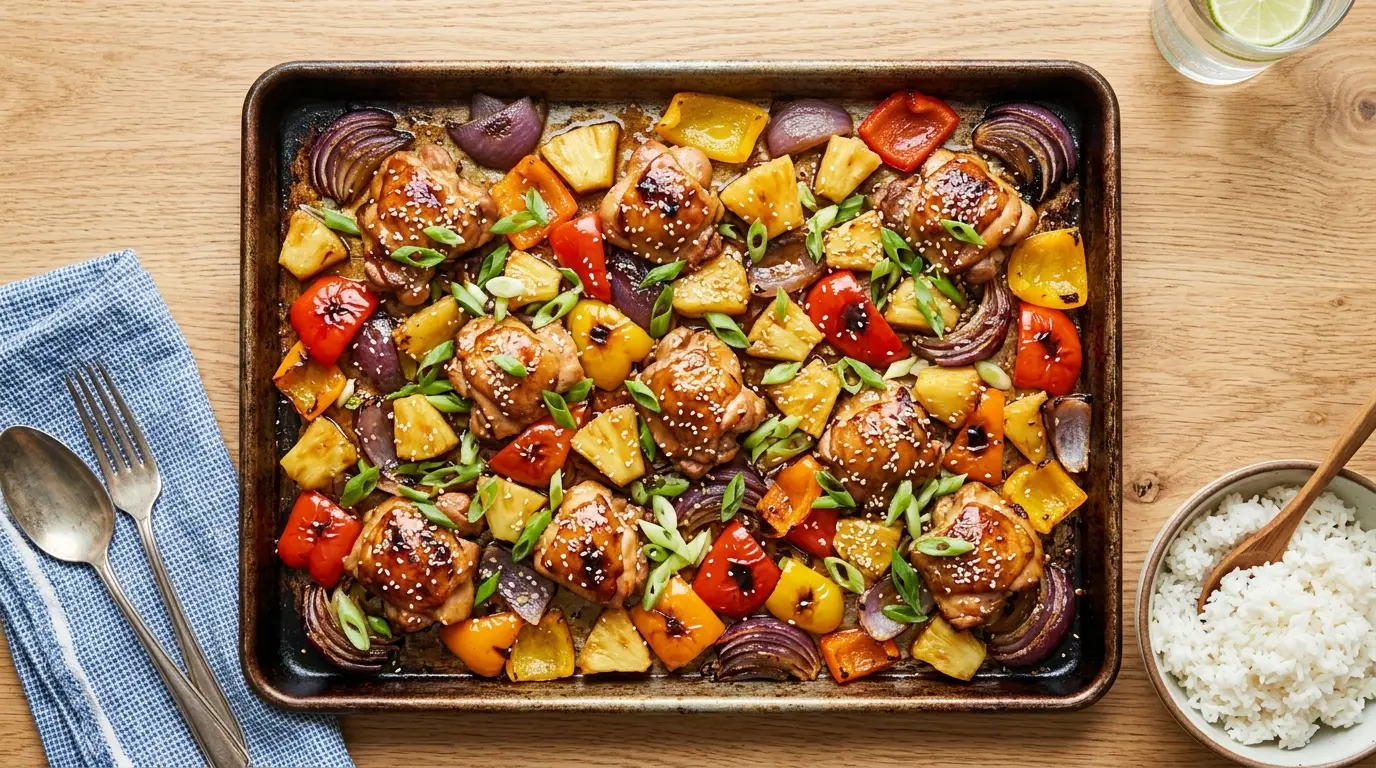
If you’re looking for a dinner that’s equal parts easy, colorful, and absolutely packed with flavor, this Hawaiian Chicken Sheet Pan Dinner is exactly what your weeknight rotation has been missing.
Everything cooks on a single pan, from juicy chunks of chicken breast to sweet pineapple, vibrant bell peppers, and tender red onion, all coated in a sticky, tangy-sweet sauce that ties the whole dish together beautifully.
The magic here is in the sauce. A blend of soy sauce, pineapple juice, brown sugar, ketchup, rice vinegar, garlic, and ginger creates a deeply savory, slightly sweet glaze that caramelizes in the oven and clings to every piece of chicken and vegetable.
It’s the kind of meal that looks and tastes like you spent way more time on it than you actually did.
Serve it over fluffy white rice or coconut rice and you’ve got a complete, satisfying dinner the whole family will love. Cleanup is practically effortless, too, since everything goes on one pan. It really doesn’t get better than that.
If you love easy chicken dinners made on a single pan, you’ll also want to bookmark the BBQ Chicken Sheet Pan Dinner for another weeknight favorite.

Why You’ll Love This Hawaiian Chicken Sheet Pan Dinner
This recipe hits every note you want in a weeknight dinner: it’s quick, flavorful, nutritious, and family-friendly all at once.
The balance of sweet and savory is absolutely spot-on, and the pineapple chunks roast in the oven until they’re caramelized and jammy, which intensifies their natural sweetness in the best possible way.
Sheet pan dinners are one of those magical cooking methods where the oven does all the heavy lifting for you.
Everything roasts together, the flavors meld, and the result is something that tastes far more complex than the effort involved.
Here’s a quick rundown of why this dish deserves a permanent spot in your meal rotation:
- One pan, minimal cleanup. Everything cooks together on a single sheet pan, which means fewer dishes at the end of the night.
- Ready in about 40 minutes. From prep to the table, you’re looking at a fast, weeknight-friendly timeline.
- Kid-approved flavors. The sweet pineapple and savory sauce combo tends to be a crowd-pleaser even with picky eaters.
- Nutritious and balanced. Lean protein, colorful vegetables, and fruit all in one meal.
- Highly customizable. Easy to swap proteins, add veggies, or adjust the heat level.
- Meal prep friendly. The leftovers reheat beautifully the next day.
You might also enjoy: Lemon Chicken Sheet Pan Dinner
Ingredients
This recipe uses simple, widely available ingredients, but each one plays an important role in building that signature Hawaiian flavor profile. The fresh pineapple in particular makes a noticeable difference over canned, since it holds its shape better during roasting and provides a cleaner, brighter sweetness.
For the chicken and vegetables:
- 2 lbs (900g) boneless, skinless chicken breasts, cut into 1-inch cubes
- 1 red bell pepper, cut into 1-inch pieces
- 1 orange or yellow bell pepper, cut into 1-inch pieces
- 1 red onion, cut into 1-inch chunks
- 2 cups (330g) fresh pineapple chunks
For the Hawaiian sauce:
- 3 tablespoons (45ml) soy sauce
- 3 tablespoons (45ml) pineapple juice (from the fresh pineapple or canned)
- 2 tablespoons (30g) ketchup
- 2 tablespoons (30g) brown sugar
- 1 tablespoon (15ml) rice vinegar
- 1 teaspoon (5ml) sesame oil
- 3 garlic cloves, minced
- 1 teaspoon fresh ginger, grated (or 1/2 teaspoon ground ginger)
- 1 tablespoon (8g) cornstarch
- 1/2 teaspoon red pepper flakes (optional, for heat)
- Salt and black pepper, to taste
For serving:
- Cooked white rice or coconut rice
- 2 tablespoons sesame seeds, for garnish
- 2 green onions, thinly sliced, for garnish
- Fresh cilantro (optional)
For another great tropical-inspired chicken dish, this Pineapple Salsa Chicken Recipe uses similar flavors in a totally different format.
Kitchen Equipment Needed
You don’t need any special equipment for this recipe, just a large sheet pan and a few basic kitchen tools you almost certainly already own. The size of the sheet pan matters here: using a full-sized rimmed baking sheet (18×13 inches) ensures everything roasts in a single layer without steaming, which gives you better caramelization and texture.
- 1 large rimmed baking sheet (18×13 inch / 45×33 cm)
- Parchment paper or aluminum foil
- Large mixing bowl
- Small mixing bowl or glass measuring cup
- Whisk
- Sharp chef’s knife
- Cutting board
- Garlic press or microplane grater (for garlic and ginger)
- Tongs or a large spoon for tossing
- Instant-read meat thermometer
Read Also: Sheet Pan Chicken and Veggies Dinner
Recommended Products for This Recipe
These are products I genuinely recommend based on quality and performance, all of which can make a real difference in how this recipe turns out.
1. Nordic Ware Natural Aluminum Commercial Baker’s Half Sheet
This professional-grade half-sheet pan is the gold standard for sheet pan dinners. Its heavy-gauge construction distributes heat evenly, so your chicken and vegetables roast rather than steam, giving you those beautiful caramelized edges. It resists warping at high heat, which is a common frustration with thinner pans.
2. Microplane Premium Zester/Grater
Fresh ginger makes a huge flavor difference in the sauce, and a Microplane makes grating it effortless. It finely breaks down the ginger fiber so it blends seamlessly into the sauce without any fibrous pieces. It works equally well for garlic if you don’t have a press.
3. ThermoWorks Thermapen Instant-Read Thermometer
The most reliable way to make sure your chicken is perfectly cooked (165°F / 74°C) without cutting it open and losing all those juices. This thermometer reads in about two seconds and takes all the guesswork out of doneness.
4. Bragg Organic Raw Apple Cider Vinegar or Marukan Rice Vinegar
Rice vinegar brings the essential brightness and gentle acidity that balances the sweetness in the Hawaiian sauce. A quality rice vinegar has a clean, mild flavor that won’t overpower the other ingredients the way white vinegar would.
5. Pure Sesame Oil
A small splash of sesame oil in the sauce adds a deep, nutty aroma that rounds out the Hawaiian flavor profile and ties together the soy, ginger, and garlic. A little goes a long way, and a good quality bottle lasts a long time.
This same sauce base works beautifully in a Chicken Teriyaki Recipe if you want to explore more sweet-savory Asian-inspired chicken dishes.

Step-by-Step Instructions
1. Preheat the Oven and Prep Your Pan
- Preheat your oven to 400°F (200°C). Allow the oven to fully come up to temperature before adding the pan.
- Line your large rimmed baking sheet (18×13 inches) with parchment paper or aluminum foil. This makes cleanup much easier and prevents the sugary sauce from burning and sticking to the pan.
- Set the prepared baking sheet aside while you prep the other components.
2. Make the Hawaiian Sauce
- In a small mixing bowl or glass measuring cup, combine the soy sauce, pineapple juice, ketchup, brown sugar, rice vinegar, and sesame oil.
- Add the minced garlic and grated fresh ginger to the bowl.
- Sprinkle in the cornstarch and add the red pepper flakes if you’re using them.
- Whisk everything together vigorously until the cornstarch is fully dissolved and the sauce is smooth with no lumps. The cornstarch is what helps the sauce thicken and cling to the chicken and vegetables as it bakes.
- Taste the sauce and adjust as needed. If you want it sweeter, add a bit more brown sugar. If you want more tang, add a touch more rice vinegar.
- Set aside approximately 2-3 tablespoons of the sauce in a separate small bowl to use as a finishing glaze right before serving.
3. Prepare the Chicken and Vegetables
- On a clean cutting board, cut the boneless, skinless chicken breasts into uniform 1-inch (2.5 cm) cubes. Keeping the pieces uniform ensures they all cook at the same rate, so nothing ends up overcooked or undercooked.
- Cut the red bell pepper and the orange or yellow bell pepper into 1-inch (2.5 cm) pieces. Remove the seeds and white pith before cutting.
- Cut the red onion into 1-inch (2.5 cm) chunks. Separate the layers slightly so they cook evenly.
- Cut the fresh pineapple into 1-inch (2.5 cm) chunks if not already pre-cut. Set the pineapple aside separately for now, as it will be added to the pan later in the cooking process. If added too early, pineapple releases too much liquid and can make the sauce watery.
- Pat the chicken cubes dry with paper towels. This step is often skipped but makes a real difference: dry chicken caramelizes in the oven rather than steaming, giving you better color and texture.
- Season the chicken lightly with salt and black pepper.
4. Toss the Chicken and Vegetables with the Sauce
- Add the chicken cubes, bell peppers, and red onion to a large mixing bowl.
- Pour approximately two-thirds of the Hawaiian sauce over the chicken and vegetables, reserving the other third (plus your pre-set finishing glaze) for later.
- Toss everything together until the chicken and vegetables are thoroughly and evenly coated in the sauce.
- Spread the coated chicken and vegetables in a single, even layer on the prepared baking sheet. Make sure nothing is piled on top of each other, as this causes steaming rather than roasting. If your pan seems crowded, use two pans rather than overfilling one.
5. Roast the Chicken and Vegetables
- Place the baking sheet in the fully preheated oven on the middle rack.
- Roast for 18-20 minutes, until the chicken is mostly cooked through and the vegetables are beginning to soften and caramelize around the edges.
- While the chicken and vegetables are in the oven, toss the fresh pineapple chunks with the remaining third of the sauce in the large mixing bowl.
6. Add the Pineapple and Finish Roasting
- After the first 18-20 minutes, carefully remove the baking sheet from the oven.
- Scatter the sauce-coated pineapple chunks evenly across the pan, nestling them in among the chicken and vegetables.
- Return the pan to the oven and roast for another 8-10 minutes. During this stage, the pineapple will caramelize and soften, and the sauce on the chicken will thicken and become slightly sticky.
- In the final 2-3 minutes, switch your oven to broil (keeping the pan on the middle rack) to get a little extra caramelization on the tops of the chicken and vegetables. Watch carefully during this step, as the sugary sauce can go from caramelized to burned quickly.
7. Check for Doneness
- Remove the pan from the oven and check that the chicken is fully cooked by inserting an instant-read thermometer into the thickest piece. It should read 165°F (74°C) or above.
- The vegetables should be tender with some caramelized edges, and the pineapple should be golden and slightly shrunken.
- If the chicken hasn’t reached temperature yet, return the pan to the oven (turn off the broiler first) for another 3-5 minutes and check again.
8. Add the Finishing Glaze and Serve
- Drizzle the reserved 2-3 tablespoons of sauce over the finished dish directly on the pan, or transfer everything to a serving platter first.
- Sprinkle the sesame seeds and sliced green onions evenly over the top.
- Add fresh cilantro if desired.
- Serve immediately over cooked white rice, coconut rice, or even cauliflower rice for a lower-carb option.
- Spoon any remaining sauce and pan juices from the baking sheet over the rice, as it’s packed with flavor and shouldn’t go to waste.
Read Also: Chicken Stir Fry Recipe
Tips for Success
Getting great results with this Hawaiian Chicken Sheet Pan Dinner comes down to a few key techniques. These tips will help you avoid the most common pitfalls and get the best possible texture and flavor every single time.
- Don’t skip patting the chicken dry. Moisture on the surface of the chicken creates steam in the oven, which prevents browning. Dry chicken = better caramelization.
- Cut everything to a uniform size. One-inch pieces across the board ensure the chicken, peppers, onion, and pineapple all finish cooking at the same time.
- Use a large enough pan. Overcrowding the pan is the number one reason sheet pan dinners turn out disappointing. Everything needs space for hot air to circulate around it.
- Add the pineapple late. Fresh pineapple contains bromelain, an enzyme that breaks down protein and releases a lot of liquid when heated. Adding it in the second half of cooking keeps it from making the sauce watery and the chicken mushy.
- Reserve some sauce for finishing. Drizzling a little fresh, uncooked sauce over the dish right before serving adds a bright, vibrant punch of flavor that the baked sauce alone can’t replicate.
- Broil at the end. That final 2-3 minutes under the broiler makes a big difference for color and caramelization.
- Use fresh ginger when possible. Fresh ginger is more aromatic and flavorful than ground ginger in this sauce. A microplane makes grating it easy.
- Rest briefly before serving. Let the pan rest for 2-3 minutes out of the oven before serving. This helps the sauce settle and makes it easier to plate cleanly.
For more tips on getting perfect results with chicken and vegetables, the Mediterranean Chicken Sheet Pan Dinner has some great overlapping techniques worth reading.
Serving Suggestions
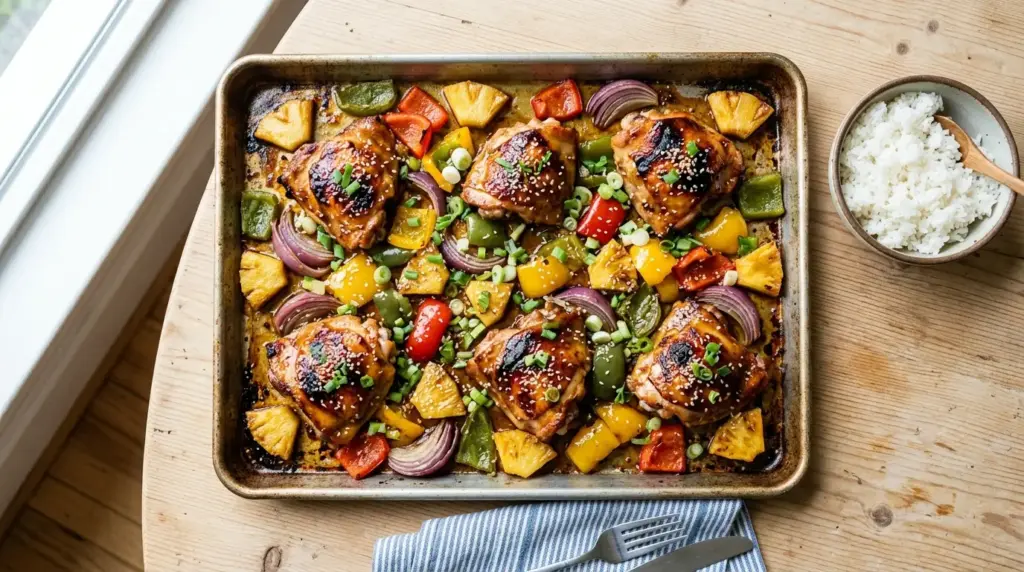
This Hawaiian Chicken Sheet Pan Dinner is a complete meal on its own, but a few simple sides can round it out beautifully and make it feel more like a special spread.
Coconut rice is the classic pairing here because its subtle sweetness complements the Hawaiian sauce perfectly. You can also keep things simple with plain white rice, or try brown rice for a more nutritious base. Here are a few other serving ideas:
- Cilantro Lime Rice adds a bright, herby contrast to the sweet and savory flavors of the chicken.
- Chicken Fried Rice can work as a fun alternative base if you want to use up leftover rice.
- Broccoli Salad provides a crisp, cool contrast to the warm, saucy chicken.
- Corn on the Cob feels right at home with a tropical Hawaiian-themed dinner.
- Roasted Broccoli is a simple, nutritious side that pairs well without competing with the dish’s flavors.
- Lettuce cups make a fun, low-carb alternative to rice as a base for serving.
- Pineapple smoothie rounds out the tropical theme perfectly as a drink pairing.
Read Also: Chicken Lettuce Wraps Recipe
Variations to Try
This recipe is wonderfully adaptable. Once you have the basic technique and sauce down, there are so many delicious ways to put your own spin on it depending on what you have on hand or what flavors you’re craving.
- Chicken thighs instead of breasts. Boneless, skinless chicken thighs are more forgiving, stay juicier, and soak up the sauce even better. They may need 5-10 extra minutes in the oven.
- Add broccoli or snap peas. These hold up well at high heat and add great color and crunch to the pan.
- Swap the protein. Shrimp works beautifully with this sauce, though add it only in the last 10 minutes since it cooks very quickly. Firm tofu is another great option for a vegetarian version.
- Spicy Hawaiian version. Double the red pepper flakes or add a tablespoon of sriracha to the sauce for a kicked-up version.
- Teriyaki twist. Add a tablespoon of teriyaki sauce to the sauce mixture for an even deeper, richer glaze.
- Add mango. Replace half the pineapple with fresh mango chunks for a slightly different tropical sweetness.
- BBQ Hawaiian version. Substitute the ketchup with your favorite BBQ sauce for a smokier, richer flavor.
- Low-sodium option. Use reduced-sodium soy sauce or coconut aminos to cut the sodium content while keeping the savory depth.
For another variation on the sheet pan chicken theme, the Greek Chicken Sheet Pan Dinner is another crowd-pleaser with completely different flavors.
Storage and Reheating
This dish stores and reheats incredibly well, making it a fantastic option for meal prep or next-day lunches. The sauce actually deepens in flavor after a night in the refrigerator, so the leftovers are often just as delicious as the fresh version.
- Refrigerator: Allow the dish to cool completely before transferring to an airtight container. Store in the refrigerator for up to 4 days.
- Freezer: Transfer cooled leftovers to a freezer-safe container or zip-lock bag. Store for up to 2 months. Note that the pineapple and bell peppers may soften more upon thawing, but the flavor remains excellent.
- Reheating from the fridge: Add the leftovers to a skillet over medium heat with a splash of water or pineapple juice to loosen the sauce. Heat until warmed through, about 5 minutes. Alternatively, microwave in 60-second intervals, stirring between each, until heated through.
- Reheating from frozen: Thaw overnight in the refrigerator, then reheat using the skillet method above for best results.
- Meal prep tip: Store the cooked chicken and vegetable mixture separately from the rice to prevent the rice from absorbing all the sauce and becoming soggy.
Another meal-prep-friendly chicken recipe worth checking out: Chicken Breast Sheet Pan Dinner
Nutritional Facts
The following nutritional values are estimates based on a serving of the Hawaiian Chicken Sheet Pan Dinner (chicken, vegetables, and pineapple only, not including rice), for one of four servings.
| Nutrient | Amount Per Serving |
|---|---|
| Calories | ~310 kcal |
| Protein | ~38g |
| Carbohydrates | ~22g |
| Fat | ~6g |
| Saturated Fat | ~1g |
| Fiber | ~3g |
| Sugar | ~16g |
| Sodium | ~720mg |
Note: Adding a 1-cup serving of cooked white rice adds approximately 205 calories and 45g of carbohydrates per serving. Nutritional values are estimates and can vary based on exact ingredient quantities, brands used, and serving sizes. For precise nutritional information, use a nutrition calculator with your specific ingredients.
For more ideas on complete, balanced dinners, check out the Chicken Sheet Pan Dinner.
Health Benefits of Key Ingredients
Beyond being delicious, this Hawaiian Chicken Sheet Pan Dinner packs some impressive nutritional benefits. Each key ingredient brings something valuable to the table.
This is a genuinely well-rounded meal that provides lean protein, vitamins, antioxidants, and natural sugars all in one pan.
- Chicken breast is one of the leanest, highest-protein foods available. A single serving provides about 35-40g of protein with minimal fat, which supports muscle maintenance and keeps you feeling full.
- Pineapple is rich in vitamin C (an immune-supporting antioxidant) and contains bromelain, a natural enzyme that has been studied for its anti-inflammatory properties and potential to support digestion.
- Bell peppers are an exceptional source of vitamin C, particularly red and orange bell peppers, which contain more than most citrus fruits. They also provide vitamin A, B6, and folate.
- Red onion contains quercetin, a plant flavonoid with antioxidant properties, as well as prebiotic fiber that supports healthy gut bacteria.
- Garlic has been widely studied for its potential cardiovascular benefits, including helping to support healthy blood pressure and cholesterol levels.
- Fresh ginger has long been used to soothe digestive discomfort and has well-documented anti-inflammatory properties.
- Sesame oil provides healthy unsaturated fats and contains sesamin, a lignan with antioxidant properties.
Read Also: Chicken and Broccoli Recipe
Frequently Asked Questions
1. Can I use canned pineapple instead of fresh?
Yes, canned pineapple will work in a pinch, though fresh pineapple gives the best results. Canned pineapple tends to be softer and releases more liquid when heated, which can make the sauce slightly thinner and the pineapple a bit mushy. If using canned, choose pineapple chunks packed in 100% juice rather than syrup, and drain them well before adding to the pan. You can also use the juice from the can in your sauce.
2. Can I marinate the chicken ahead of time?
Absolutely, and it’s actually encouraged. Tossing the chicken (without the vegetables or pineapple) with half the sauce and letting it marinate in the refrigerator for 1-4 hours before cooking will deepen the flavor significantly. Don’t marinate for more than 4 hours, however, as the pineapple juice and vinegar in the sauce will start to break down the texture of the chicken over longer periods.
3. What temperature should the chicken reach?
The chicken needs to reach an internal temperature of 165°F (74°C) at its thickest point to be safely cooked through. An instant-read thermometer is the most reliable way to check this without having to cut into the pieces and lose their juices. If you don’t have a thermometer, the chicken should be opaque all the way through with no pink remaining.
4. How do I keep the sheet pan from getting too crowded?
The rule of thumb is that the chicken and vegetables should be in a single layer with a little space between pieces. If everything is piled on top of each other, the moisture can’t escape and the food will steam rather than roast, resulting in pale, soggy chicken. If you’re doubling the recipe or your pan is smaller, divide everything across two sheet pans and roast them on the middle and upper racks, rotating halfway through.
5. Can I make this recipe gluten-free?
Yes, easily. The only ingredient that typically contains gluten in this recipe is soy sauce. Simply swap it out for tamari (a Japanese soy sauce that is usually certified gluten-free) or coconut aminos (a soy-free, gluten-free alternative with a slightly milder, sweeter flavor). All other ingredients in the recipe are naturally gluten-free. Check the labels on any pre-made teriyaki or BBQ sauce if you’re using those in a variation.
For more ideas on pairing this dish with complementary sides and sauces, check out the Teriyaki Sauce Recipe.

Hawaiian Chicken Sheet Pan Dinner

Equipment
- Large rimmed baking sheet - 18×13 inch (45×33 cm)
- Parchment paper or aluminum foil
- Large mixing bowl
- Small mixing bowl or glass measuring cup
- Whisk
- Sharp chef's knife
- Cutting board
- Garlic press or microplane grater
- Tongs or large spoon
- Instant-read meat thermometer - Optional but recommended
Ingredients
- 2 lbs boneless skinless chicken breasts - 900g, cut into 1-inch cubes
- 1 red bell pepper - cut into 1-inch pieces
- 1 orange or yellow bell pepper - cut into 1-inch pieces
- 1 red onion - cut into 1-inch chunks
- 2 cups fresh pineapple chunks - 330g
For the Hawaiian Sauce
- 3 tablespoons soy sauce - 45ml
- 3 tablespoons pineapple juice - 45ml (from the fresh pineapple or canned)
- 2 tablespoons ketchup - 30g
- 2 tablespoons brown sugar - 30g
- 1 tablespoon rice vinegar - 15ml
- 1 teaspoon sesame oil - 5ml
- 3 garlic cloves - minced
- 1 teaspoon fresh ginger - grated (or 1/2 teaspoon ground ginger)
- 1 tablespoon cornstarch - 8g
- 1/2 teaspoon red pepper flakes - optional, for heat
- Salt and black pepper - to taste
For Serving
- Cooked white rice or coconut rice
- 2 tablespoons sesame seeds - for garnish
- 2 green onions - thinly sliced, for garnish
- Fresh cilantro - optional
Instructions
- Preheat oven to 400°F (200°C). Line a large rimmed baking sheet with parchment paper or aluminum foil.
- In a small bowl, whisk together soy sauce, pineapple juice, ketchup, brown sugar, rice vinegar, sesame oil, garlic, ginger, cornstarch, and red pepper flakes until smooth. Reserve 2-3 tablespoons for finishing.
- Cut chicken into 1-inch cubes, bell peppers into 1-inch pieces, and red onion into 1-inch chunks. Pat chicken dry with paper towels and season with salt and pepper.
- In a large bowl, toss chicken, bell peppers, and onion with two-thirds of the sauce until thoroughly coated. Spread in a single layer on the prepared baking sheet.
- Roast for 18-20 minutes until chicken is mostly cooked through and vegetables are beginning to caramelize. While roasting, toss pineapple chunks with remaining sauce.
- Remove pan from oven, scatter pineapple chunks across the pan, and return to roast for 8-10 more minutes until pineapple is caramelized and chicken reaches 165°F (74°C).
- Broil for 2-3 minutes for extra caramelization if desired. Drizzle with reserved sauce, garnish with sesame seeds, green onions, and cilantro. Serve immediately over rice.
Notes
- Pineapple: Fresh pineapple gives the best results with better texture and brighter flavor. Canned pineapple can be used but drain well and expect it to be softer.
- Chicken: Pat the chicken dry before coating to ensure proper caramelization and browning in the oven.
- Pan size: Use a large enough pan (18×13 inches) to avoid overcrowding. If needed, use two pans to ensure everything roasts rather than steams.
- Doneness: Chicken is safely cooked when it reaches an internal temperature of 165°F (74°C) at its thickest point.
- Marinating: For deeper flavor, marinate the chicken (without vegetables) in half the sauce for 1-4 hours before cooking. Don’t exceed 4 hours or the texture may break down.
- Storage: Store leftovers in an airtight container in the refrigerator for up to 4 days. Reheat in a skillet with a splash of water or pineapple juice.
- Variations: Swap chicken for boneless thighs, shrimp, or firm tofu. Add broccoli or snap peas in the last 10 minutes for extra vegetables.
- Gluten-free: Use tamari or coconut aminos instead of soy sauce to make this recipe gluten-free.
- Spice level: Adjust heat by increasing red pepper flakes or adding sriracha to the sauce for a spicier version.
- Serving: Coconut rice is the classic pairing, but white rice, brown rice, or cauliflower rice all work beautifully.
Final Thoughts
This Hawaiian Chicken Sheet Pan Dinner is the kind of recipe that earns a permanent spot in your regular dinner rotation.
It’s simple enough for a busy weeknight but flavorful and impressive enough to serve to guests.
The combination of juicy chicken, caramelized pineapple, sweet peppers, and that sticky, tangy-sweet sauce hits all the right notes without requiring any special techniques or hard-to-find ingredients.
If you haven’t tried it yet, I genuinely hope you give it a go this week.
Once you taste how all those flavors come together on one pan, I think you’ll be hooked.
If you make this recipe, I’d love to hear how it turned out in the comments below. Did you make any fun variations? Serve it with something unexpected? Share it with someone who’d love it too!
Recommended:
- Chicken Thigh Sheet Pan Dinner
- Chicken Sausage Sheet Pan Dinner
- Sheet Pan Tacos Recipe
- Baked Honey Mustard Chicken
- Mango Salsa Chicken
- Chicken Teriyaki Recipe
- Bourbon Chicken Recipe
- Pineapple Quick Bread
- Pineapple Smoothie
- Classic Pina Colada