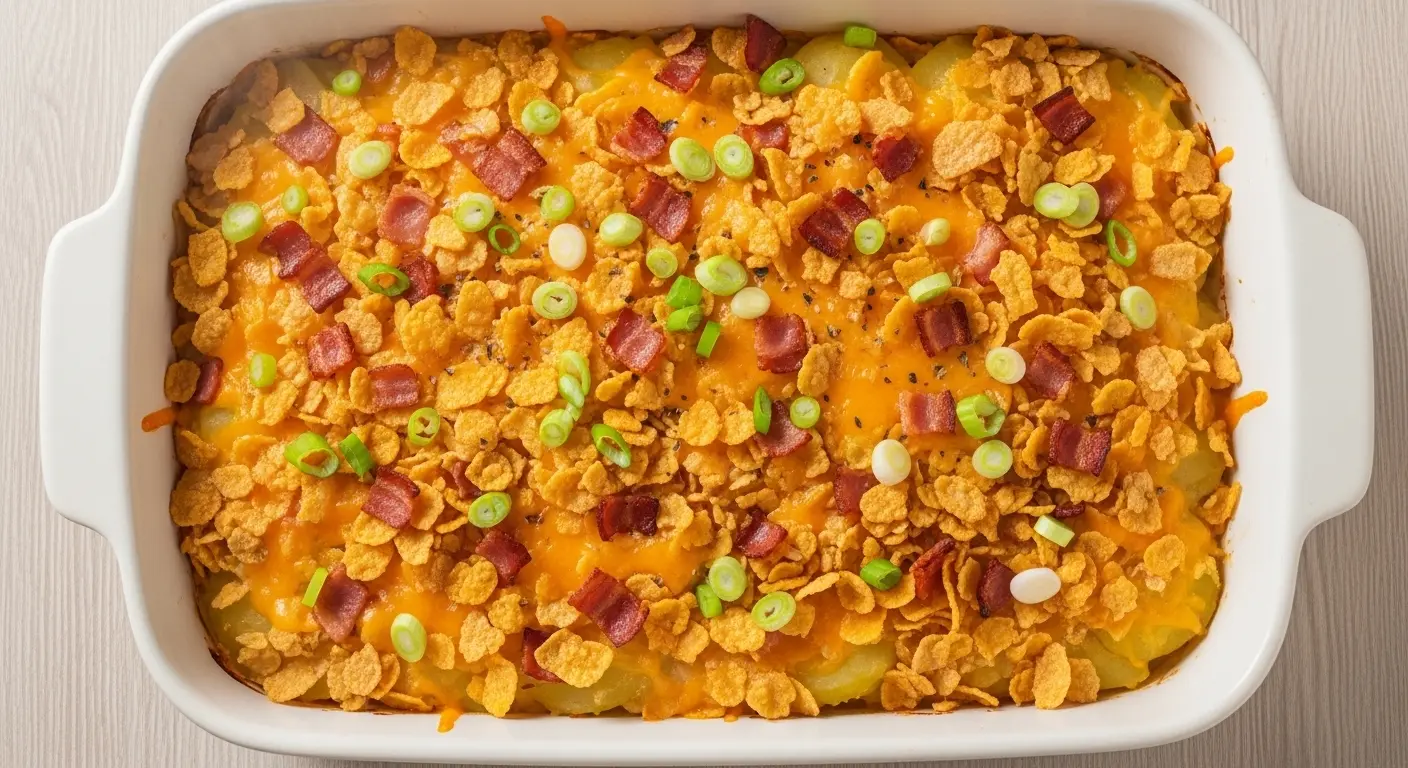
If you’ve been searching for the ultimate potato casserole recipe, your search ends right here. This dish is the kind of comfort food that never goes out of style — creamy, golden, bubbling with melted cheese, and just the right amount of indulgent.
Potato casserole has long been a staple at holiday tables, potlucks, and Sunday family dinners. What makes this version stand out is the combination of tender diced potatoes folded into a rich, buttery sauce and blanketed under a thick layer of shredded cheddar. It’s simple to assemble, easy to make ahead, and genuinely satisfying every single time.
The real secret to a great potato casserole lies in two things: using the right potato (Russet or Yukon Gold hold up beautifully without turning mushy) and not skipping the par-cooking step. Partially boiling the potatoes first ensures they bake evenly and absorb all that cheesy goodness without turning into a gummy mess.
This recipe feeds a crowd, looks impressive on a table, and tastes even better than it looks. Let’s get into it.
You might also enjoy: Cheesy Potatoes Recipe

Why You’ll Love This Potato Casserole Recipe
This is the kind of dish that earns you recipe requests every single time you bring it somewhere.
It’s rich, creamy, and deeply comforting — without being fussy or complicated to make.
You only need a handful of pantry staples and everyday ingredients.
It’s a perfect make-ahead dish, so you can prep it entirely the night before and just pop it in the oven when needed.
The texture is absolutely on point — soft, tender potatoes in a velvety sauce, topped with a bubbly cheese crust.
It pairs effortlessly with almost any protein, making it one of the most versatile side dishes you can have in your repertoire.
Leftovers reheat beautifully, which means you’ll enjoy this just as much the next day.
Read Also: Funeral Potatoes Recipe
Ingredients
This potato casserole keeps things simple and straightforward. Every ingredient plays a role in the final flavor and texture.
- 3 lbs (1.4 kg) Russet or Yukon Gold potatoes, peeled and cut into 1-inch cubes
- 3 tablespoons (42g) unsalted butter
- 1 medium yellow onion, finely diced
- 3 cloves garlic, minced
- 2 tablespoons (16g) all-purpose flour
- 1 ½ cups (360ml) whole milk, warmed
- 1 cup (240ml) sour cream
- 2 ½ cups (280g) sharp cheddar cheese, freshly shredded, divided
- 1 teaspoon garlic powder
- 1 teaspoon onion powder
- 1 teaspoon salt, plus more for boiling
- ½ teaspoon black pepper
- 6 slices thick-cut bacon, cooked and crumbled (optional but highly recommended)
- 3 green onions (scallions), thinly sliced, for topping
- Nonstick cooking spray, for the baking dish
For the crumb topping:
- 1 cup (30g) corn flake cereal or Panko breadcrumbs, lightly crushed
- 2 tablespoons (28g) unsalted butter, melted
The cheesy sauce from scratch — made with butter, flour, milk, and sour cream — gives this casserole a flavor depth that canned soup versions simply cannot match.
For a lighter option, you can try this Au Gratin Potatoes Recipe as a great alternative.
Kitchen Equipment Needed
Having the right tools on hand makes the process smooth from start to finish.
- 9×13 inch baking dish (ceramic or glass)
- Large pot (for boiling potatoes)
- Medium saucepan (for making the cheese sauce)
- Box grater or food processor with grating attachment
- Large mixing bowl
- Whisk
- Wooden spoon or silicone spatula
- Colander for draining
- Cutting board and chef’s knife
- Aluminum foil
Recommended Products for This Recipe
These are products chosen based on quality and performance — the kind of kitchen tools and ingredients that genuinely make a difference in how your potato casserole turns out.
1. Le Creuset Enameled Cast Iron Baking Dish
This baking dish distributes heat evenly from edge to center, which means your casserole bakes consistently without hot spots. The enamel surface also prevents sticking, making both serving and cleanup much easier. It’s a worthwhile investment that will serve your kitchen for decades.
2. OXO Good Grips Box Grater
Freshly grated cheese melts significantly better than pre-shredded, and this grater makes the job fast and easy with its non-slip base and comfortable handle. The difference in your cheese sauce will be immediately noticeable. Pre-shredded cheese contains anti-caking agents that prevent smooth melting.
3. Wilton Perfect Results 9×13 Baking Pan
This pan heats evenly and has a non-stick interior that releases casseroles cleanly. The wide, handled sides give you a firm grip when pulling a hot dish out of the oven. It’s one of the most practical pans you can own for casserole cooking.
4. Premium Thick-Cut Applewood Smoked Bacon
If you’re adding bacon to your casserole — and you absolutely should — a high-quality thick-cut version brings a smoky depth that transforms the dish entirely. Applewood smoked bacon especially adds a slightly sweet, fragrant note that pairs beautifully with cheddar.
This recipe also pairs wonderfully with the flavors in this Hashbrown Casserole Recipe.

Step-by-Step Instructions
Step 1: Preheat the Oven and Prepare Your Baking Dish
- Preheat your oven to 375°F (190°C) and allow it to fully come to temperature before you begin baking.
- Lightly coat your 9×13 inch baking dish with nonstick cooking spray, ensuring all surfaces are covered so the casserole does not stick.
- Set the prepared baking dish aside on your counter.
Step 2: Peel and Boil the Potatoes
- Peel all 3 lbs (1.4 kg) of potatoes using a vegetable peeler, removing all skin.
- Cut the potatoes into approximately 1-inch cubes — not too small or they’ll turn mushy, not too large or they’ll be undercooked in the center.
- Place the cubed potatoes into a large pot and cover with cold water. Starting in cold water helps the potatoes cook evenly all the way through.
- Add a generous pinch of salt to the water and bring to a boil over high heat.
- Once boiling, reduce to a steady simmer and cook for 10 to 12 minutes, until the potatoes are just barely fork-tender — you want some resistance when pierced with a fork. They will finish cooking in the oven.
- Drain the potatoes through a colander and allow them to steam dry for 2 to 3 minutes. Excess moisture will water down your casserole.
Step 3: Cook the Bacon (If Using)
- While the potatoes are boiling, cook your 6 slices of thick-cut bacon in a skillet over medium-low heat, turning occasionally, until crispy and golden.
- Transfer the cooked bacon to a paper-towel-lined plate to drain and cool.
- Once cooled, crumble the bacon into small pieces and divide into two portions — half for mixing into the casserole and half for topping.
- Set aside.
Step 4: Make the Cheese Sauce
- In a medium saucepan, melt 3 tablespoons (42g) of unsalted butter over medium heat.
- Add the finely diced yellow onion and cook, stirring frequently, for 3 to 4 minutes until softened and slightly translucent.
- Add the minced garlic and cook for another 1 minute, stirring constantly, until fragrant. Don’t let the garlic brown or it will turn bitter.
- Sprinkle the 2 tablespoons (16g) of flour over the butter and onion mixture. Stir constantly for 1 to 2 minutes to cook out the raw flour taste. This forms your roux — the thickening base for the sauce.
- Slowly pour in the warmed whole milk, about ¼ cup (60ml) at a time, whisking constantly after each addition to prevent lumps from forming.
- Continue stirring over medium heat until the sauce begins to thicken slightly, about 3 to 4 minutes.
- Remove the saucepan from heat and stir in the 1 cup (240ml) of sour cream until fully incorporated and smooth.
- Add 1 ½ cups (168g) of the freshly shredded sharp cheddar cheese — reserving the remaining 1 cup (112g) for topping — and stir until completely melted and creamy.
- Season the sauce with the garlic powder, onion powder, 1 teaspoon salt, and ½ teaspoon black pepper. Stir well and taste, adjusting seasoning as needed.
Step 5: Combine the Potatoes and Sauce
- Transfer the drained potatoes to your large mixing bowl.
- Pour the cheese sauce over the potatoes and gently fold everything together using a spatula, being careful not to mash or break the potato cubes.
- Add half the crumbled bacon (if using) and fold it in gently.
- Spoon the potato mixture into your prepared 9×13 inch baking dish and spread evenly into a smooth layer.
Step 6: Prepare and Add the Crumb Topping
- In a small bowl, combine 1 cup (30g) of lightly crushed corn flake cereal or Panko breadcrumbs with 2 tablespoons (28g) of melted butter. Stir until the crumbs are evenly coated.
- Sprinkle the reserved 1 cup (112g) of shredded cheddar cheese over the top of the casserole in an even layer.
- Scatter the remaining crumbled bacon over the cheese.
- Distribute the buttered crumb topping evenly over the cheese and bacon layer. This crumb topping adds a satisfying crunch that contrasts beautifully with the creamy interior.
Step 7: Bake the Casserole
- Slide the casserole dish into the preheated oven, uncovered.
- Bake for 25 to 30 minutes, until the top is golden and the casserole is bubbling around the edges.
- If the top starts to brown too quickly before the 25-minute mark, loosely tent the dish with aluminum foil for the remainder of baking.
- Remove from the oven and allow the casserole to rest for 5 minutes before serving — this helps the sauce settle and makes it easier to portion.
Step 8: Garnish and Serve
- Scatter the sliced green onions over the top of the hot casserole just before serving.
- Serve directly from the baking dish, using a large spoon to scoop generous portions.
Read Also: Scalloped Potatoes Recipe
Tips for Success
A few small details make a big difference in the final result of this casserole.
- Grate your own cheese. Pre-shredded cheese from a bag contains anti-caking agents like cellulose that prevent it from melting smoothly. Block cheese that you grate at home will give you a far superior, silky cheese sauce.
- Don’t overboil the potatoes. They should be just barely tender when they come off the stove — they’ll continue cooking in the oven. Overcooked potatoes will turn mushy and fall apart in the casserole.
- Warm the milk before adding it. Adding cold milk to a hot roux can cause lumps and may seize the sauce. A quick 30-second microwave warm-up to take the chill off makes all the difference.
- Dry the potatoes thoroughly. After draining, let the potatoes steam dry in the colander for a few minutes. Wet potatoes will dilute your cheese sauce and make the casserole watery.
- Make it ahead. You can assemble the casserole completely (without the crumb topping) up to two days in advance. Cover tightly with foil and refrigerate. Add the crumb topping right before baking and add about 10 minutes to the bake time since it will be cold.
- Let it rest before serving. Give the casserole at least 5 minutes of rest time out of the oven before scooping. This allows the sauce to settle slightly and makes cleaner portions.
You can apply the same make-ahead approach used for this French Toast Casserole Recipe.
Serving Suggestions
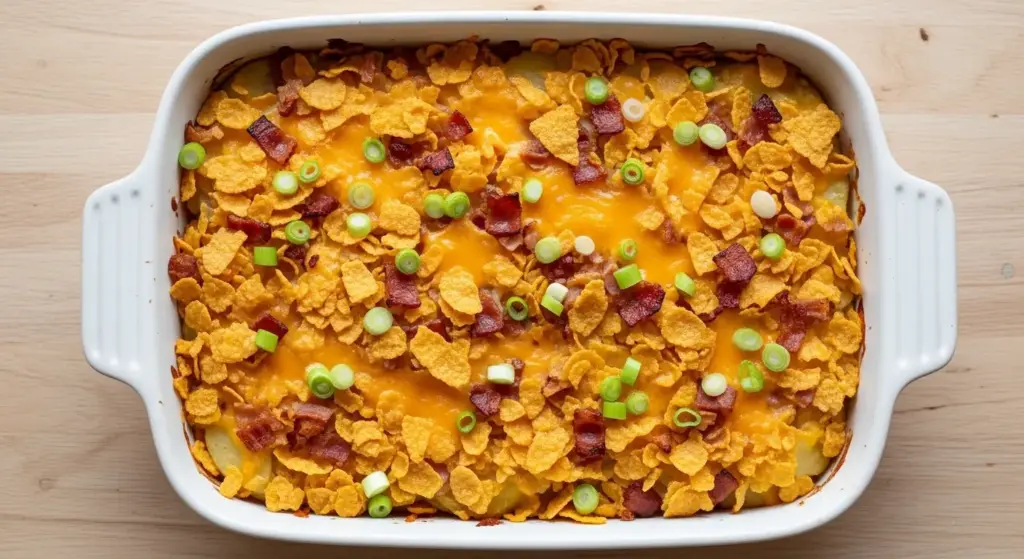
Potato casserole is one of those rare side dishes that works beautifully alongside just about everything.
It pairs exceptionally well with classic comfort food mains and holiday favorites.
- Serve alongside a roasted whole chicken or Classic Chicken Parmesan for an impressive family dinner.
- It’s a natural match for baked ham or holiday turkey — this casserole is practically made for Thanksgiving and Christmas tables.
- Pair it with a simple Meatloaf for a weeknight dinner that feels extra special.
- Serve it with a crisp Broccoli Salad on the side to add some freshness and crunch to the meal.
- At potlucks, this pairs wonderfully with barbecue ribs, pulled pork, or grilled sausages.
- For a lighter pairing, serve alongside a simple Fruit Salad and a light green salad to balance the richness.
Variations to Try
Once you have the base recipe mastered, there are lots of fun ways to put your own spin on it.
- Frozen Hash Brown Version: Swap the fresh potatoes for 2 lbs (900g) of frozen shredded hash browns (thawed and squeezed dry). This is the classic shortcut version and takes even less time to prepare.
- Ham and Potato Casserole: Fold in 1 cup (150g) of diced cooked ham in place of the bacon for a heartier, slightly sweeter flavor.
- Jalapeño Popper Style: Stir in ¼ cup (60g) of softened cream cheese into the sauce and add 2 finely diced jalapeños for a spicy, creamy kick.
- Broccoli Cheddar Potato Casserole: Add 2 cups (180g) of small broccoli florets to the potato mixture before baking for extra color, texture, and nutrition.
- Vegetarian Version: Simply omit the bacon and use vegetable broth in the sauce in place of the milk if needed. Add smoked paprika for a hint of that smoky depth.
- Greek Yogurt Swap: Replace the sour cream with full-fat plain Greek yogurt for a slightly tangier, higher-protein version that works just as well.
For a great variation on baked potato dishes, check out this Twice Baked Potato Recipe.
Storage and Reheating
This casserole stores and reheats wonderfully, making it a great candidate for meal prep.
- Refrigerator: Store any leftover casserole in an airtight container or cover the baking dish tightly with aluminum foil. It will keep well in the refrigerator for up to 4 days.
- Freezer: To freeze, allow the casserole to cool completely, then wrap tightly in plastic wrap followed by aluminum foil. Store in the freezer for up to 3 months. Thaw overnight in the refrigerator before reheating.
- Oven reheating (best method): Cover the casserole dish with foil and reheat in a 350°F (175°C) oven for 20 to 25 minutes, or until heated all the way through. Remove the foil for the last 5 minutes to re-crisp the topping.
- Microwave reheating (quick method): Place individual portions in a microwave-safe dish and heat on medium power in 1-minute intervals, stirring gently between each, until heated through. Add a splash of milk if the sauce has thickened too much.
Read Also: Loaded Potato Soup Recipe
Nutritional Facts
The following values are approximate and based on 8 servings per recipe.
| Nutrient | Per Serving |
|---|---|
| Calories | ~420 kcal |
| Total Fat | 23g |
| Saturated Fat | 13g |
| Cholesterol | 70mg |
| Sodium | 620mg |
| Total Carbohydrates | 40g |
| Dietary Fiber | 4g |
| Sugars | 4g |
| Protein | 15g |
Nutritional values will vary based on specific brands and any ingredient modifications you make. The values above are calculated with bacon included.
For another hearty and satisfying potato-based side, try this Baked Potato Recipe.
Health Benefits of Key Ingredients
Despite being a comfort food dish, this potato casserole contains some genuinely nutritious ingredients.
Each key component contributes something beneficial to the overall meal.
- Potatoes are an excellent source of potassium, which supports heart health and helps regulate blood pressure. They’re also rich in vitamin C, B6, and dietary fiber when consumed with the skin.
- Sharp cheddar cheese delivers a meaningful dose of calcium, which is essential for bone strength and density. It also contributes protein that helps keep you satisfied longer.
- Garlic contains allicin, a compound studied for its antimicrobial and anti-inflammatory properties. Even a small amount adds functional nutrition alongside its incredible flavor.
- Green onions (scallions) are low in calories and rich in vitamin K, which supports blood clotting and bone metabolism. They also contain antioxidants that support overall cellular health.
- Sour cream adds calcium and B vitamins. For a lighter version with added protein, Greek yogurt is a one-to-one swap that boosts the nutritional profile even further.
Read Also: Roasted Potatoes Recipe
Frequently Asked Questions
1. Can I make this potato casserole ahead of time?
Yes, this is one of the best features of this recipe. You can assemble the entire casserole — potatoes, sauce, and toppings — up to two days in advance and store it covered in the refrigerator.
When you’re ready to bake, remove it from the fridge and let it sit at room temperature for 20 to 30 minutes. Add the crumb topping, then bake as directed, adding 10 to 15 extra minutes to the bake time to account for the colder starting temperature.
2. Can I use frozen hash browns instead of fresh potatoes?
Absolutely. Using frozen shredded hash browns (thawed and squeezed dry) is a popular shortcut that saves significant prep time. Use about 2 lbs (900g) of thawed, drained hash browns and skip the boiling step entirely.
Simply mix the hash browns with your prepared cheese sauce, transfer to the baking dish, top with cheese and crumbs, and bake as instructed.
3. What’s the best type of potato to use for this casserole?
Russet potatoes and Yukon Gold potatoes are both excellent choices. Russets are starchy and create a soft, creamy interior. Yukon Golds are slightly waxier, which means they hold their shape better after cooking and have a naturally buttery flavor.
Avoid using red potatoes or new potatoes for this recipe, as their waxy texture tends to become gluey when mixed with a creamy sauce.
4. Why is my potato casserole watery?
A watery casserole is almost always caused by excess moisture in the potatoes. After boiling and draining, make sure to let the potatoes steam dry in the colander for several minutes before adding the sauce.
Also make sure your sauce is properly thickened on the stovetop before combining it with the potatoes. Undercooked roux or using cold milk without whisking thoroughly can result in a thin sauce.
5. Can I freeze this casserole before baking?
Yes. Assemble the casserole without the crumb topping, allow it to cool completely, then cover tightly with plastic wrap and foil and freeze for up to 3 months.
Thaw overnight in the refrigerator, add the fresh crumb topping, and bake as directed with an additional 15 to 20 minutes added to the bake time.
For more potato inspiration, check out this Breakfast Potatoes Recipe.

Ultimate Potato Casserole

Equipment
- 9×13-inch baking dish - Ceramic or glass
- Large pot - For boiling potatoes
- Medium saucepan - For making cheese sauce
- Box grater - Or food processor with grating attachment
- Large mixing bowl
- Whisk
- Wooden spoon - Or silicone spatula
- Colander
- Cutting board
- Chef’s knife
- Aluminum foil - For tenting if needed
Ingredients
- 3 lbs Russet or Yukon Gold potatoes - 1.4 kg, peeled and cut into 1-inch cubes
- 3 tbsp unsalted butter - 42g
- 1 medium yellow onion - finely diced
- 3 cloves garlic - minced
- 2 tbsp all-purpose flour - 16g
- 1 ½ cups whole milk - 360ml, warmed
- 1 cup sour cream - 240ml
- 2 ½ cups sharp cheddar cheese - 280g, freshly shredded, divided into 1 ½ cups and 1 cup
- 1 tsp garlic powder
- 1 tsp onion powder
- 1 tsp salt - plus more for boiling
- ½ tsp black pepper
- 6 slices thick-cut bacon - cooked and crumbled (optional)
- 3 green onions - scallions, thinly sliced, for topping
- nonstick cooking spray - for the baking dish
For the Crumb Topping
- 1 cup corn flake cereal - 30g, lightly crushed, or Panko breadcrumbs
- 2 tbsp unsalted butter - 28g, melted
Instructions
- Preheat oven to 375°F (190°C). Coat a 9×13 inch baking dish with nonstick spray.
- Peel and cut potatoes into 1-inch cubes. Boil in salted water for 10-12 minutes until just fork-tender. Drain and steam dry for 2-3 minutes.
- Cook bacon in a skillet over medium-low heat until crispy. Drain on paper towels, crumble, and set aside.
- In a saucepan, melt butter over medium heat. Sauté onion for 3-4 minutes until softened. Add garlic and cook 1 minute until fragrant.
- Stir in flour and cook for 1-2 minutes. Gradually whisk in warm milk, stirring constantly, until the sauce thickens, about 3-4 minutes.
- Remove from heat and stir in sour cream, 1 ½ cups of cheddar cheese, garlic powder, onion powder, salt, and pepper until smooth and creamy.
- Combine the drained potatoes with the cheese sauce in a large bowl. Fold in half the crumbled bacon. Transfer to the prepared baking dish.
- Mix crushed cereal or Panko with melted butter. Sprinkle the remaining 1 cup of cheddar, remaining bacon, and buttered crumb topping over the casserole.
- Bake uncovered for 25-30 minutes until golden and bubbling. Tent with foil if browning too quickly. Rest for 5 minutes before serving.
- Garnish with sliced green onions and serve hot directly from the baking dish.
Notes
- Grate your own cheese: Pre-shredded cheese contains anti-caking agents that prevent smooth melting. Freshly grated block cheese makes a superior, silky sauce.
- Don’t overboil potatoes: They should be just barely fork-tender, as they will finish cooking in the oven. Overcooked potatoes become mushy.
- Warm the milk: Adding cold milk to a hot roux can cause lumps. Warm the milk for about 30 seconds in the microwave before adding.
- Dry potatoes thoroughly: Let them steam dry after draining to avoid a watery casserole. Excess moisture dilutes the sauce.
- Make ahead: Assemble the casserole completely (without the crumb topping) up to two days in advance. Cover and refrigerate. Add topping just before baking and add 10-15 minutes to bake time.
- Frozen hash brown shortcut: Substitute 2 lbs (900g) of thawed and drained frozen shredded hash browns for fresh potatoes. Skip the boiling step entirely.
- Variations: Try adding diced cooked ham, diced jalapeños, or broccoli florets. For a lighter version, use plain Greek yogurt instead of sour cream.
- Storage: Leftovers keep in the refrigerator for up to 4 days. Reheat covered in a 350°F oven for 20-25 minutes, or in the microwave with a splash of milk.
- Freezing: Assemble the casserole without the crumb topping, cool completely, and freeze for up to 3 months. Thaw overnight in the fridge before adding topping and baking.
- Let it rest: Allow the casserole to rest for at least 5 minutes before serving. This helps the sauce settle for cleaner portions.
Final Thoughts
This potato casserole recipe is the kind of dish that quietly becomes a household staple.
It’s unpretentious, deeply comforting, and endlessly adaptable to different occasions and preferences.
Give it a try for your next family dinner, holiday gathering, or potluck — and don’t be surprised when you’re asked to bring it every time after that.
If you make this recipe, drop a comment below and share how it turned out! Tag us on social media so we can see your cheesy, golden creation.
Recommended:
- Potato Casserole Recipe
- Cowboy Casserole Recipe
- Tater Tot Casserole Recipe
- Broccoli Casserole Recipe
- Chicken Broccoli Rice Casserole Recipe
- Sweet Potato Casserole Recipe
- Squash Casserole Recipe
- Ham and Potato Soup Recipe
- Baked Potato Soup Recipe
- Garlic Mashed Potatoes Recipe