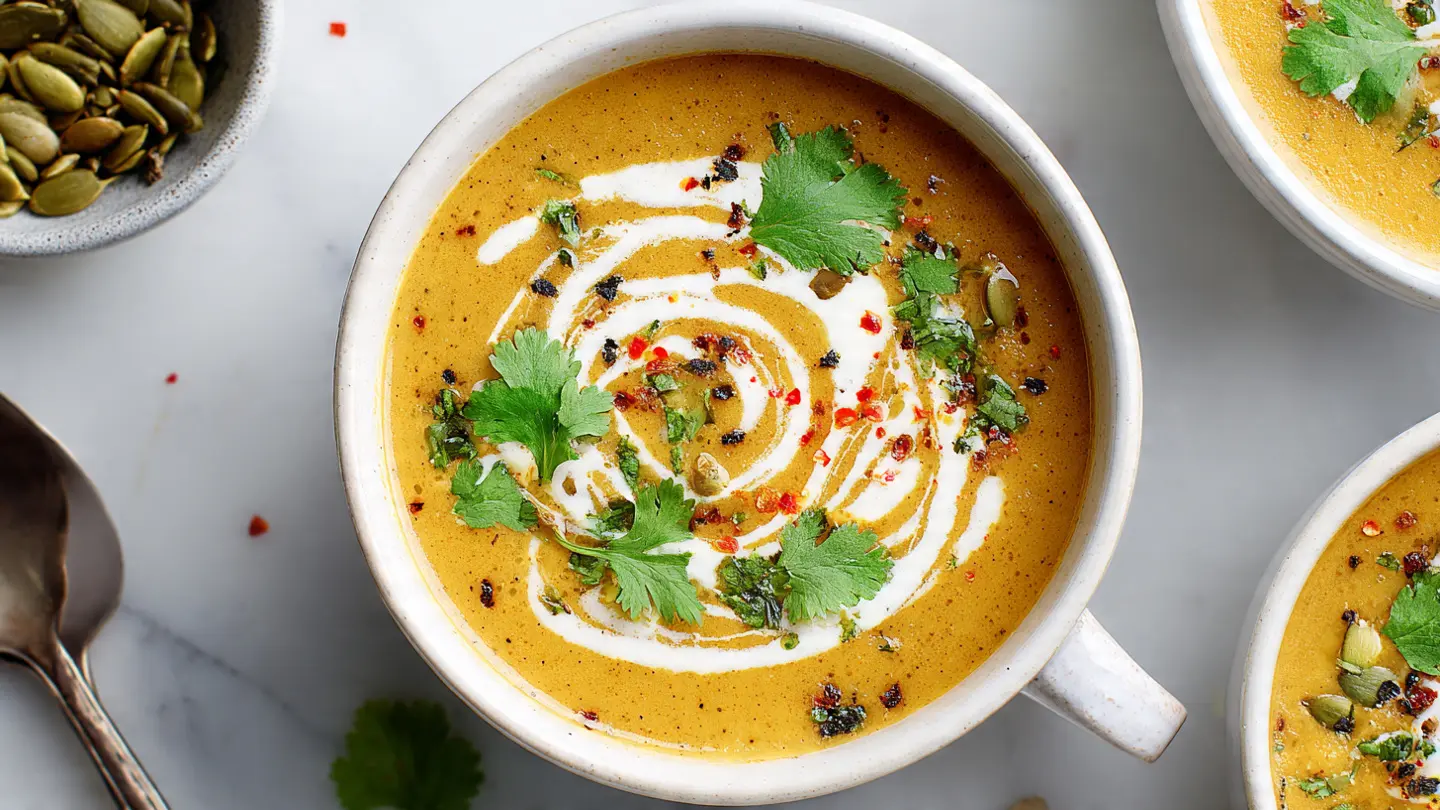
This curried cauliflower soup recipe is everything a great weeknight bowl of soup should be: warming, deeply flavorful, and surprisingly simple to pull together.
A whole head of cauliflower gets roasted until golden and nutty, then simmered with sautéed onion, garlic, fresh ginger, and a generous helping of curry powder before being blended into a silky, velvety soup that feels far more indulgent than it actually is.
The secret to getting so much flavor out of so few ingredients is that two-step process: roasting first, then simmering. Roasting concentrates the cauliflower’s natural sweetness and gives the soup a deeper, more complex base than you’d ever get from simply boiling it.
Coconut milk is stirred in at the end for creaminess and a subtle richness, while a squeeze of fresh lemon juice lifts the whole thing and keeps it from feeling heavy. A drizzle of coconut milk on top, a scatter of fresh cilantro, and maybe a pinch of red pepper flakes finish the bowl beautifully.
It’s a naturally vegan, gluten-free soup that truly delivers on flavor.

Why You’ll Love This Curried Cauliflower Soup Recipe
This soup earns a permanent spot in your rotation for a reason.
It starts with roasted cauliflower, which means the flavor is deeper and more developed than most blended soups you’ll find. Roasting draws out the natural sugars and creates those caramelized edges that give the finished soup its gorgeous golden color and nutty undertone.
The curry powder blooms in the hot oil with the onion and garlic, which is a key step that many recipes skip. Blooming spices in fat unlocks far more aroma and depth than simply simmering them in liquid.
Here is a quick look at why this recipe stands out:
- Bold, layered flavor from roasted cauliflower, bloomed curry powder, fresh ginger, and garlic
- Naturally creamy texture with no heavy cream required, thanks to blended cauliflower and coconut milk
- Vegan and gluten-free so it works for a wide range of dietary needs
- Ready in about 40 minutes, making it realistic for busy weeknights
- Meal-prep friendly as it stores beautifully in the fridge or freezer
- Minimal ingredients with a short, pantry-friendly list
- Endlessly flexible with easy swaps and add-ins to suit your taste
Looking for more warming cauliflower soups? Check out this Roasted Cauliflower Soup for another cozy bowl to add to your rotation.
Ingredients
The ingredient list is intentionally short, because each component carries its weight. Quality curry powder makes a real difference here, so reach for a fresh jar rather than one that has been sitting in the back of your cabinet for two years.
Here is everything you need:
- 1 large head of cauliflower (about 2.5 lbs / 1.1 kg), cut into florets
- 3 tablespoons olive oil, divided
- 1 medium yellow onion, diced
- 4 garlic cloves, minced
- 1 tablespoon fresh ginger, grated (about a 1-inch / 2.5 cm piece)
- 2 teaspoons curry powder
- 1/2 teaspoon ground turmeric
- 1/4 teaspoon cayenne pepper (adjust to taste)
- 4 cups (950 ml) vegetable broth, low-sodium preferred
- 1 can (13.5 oz / 400 ml) full-fat coconut milk
- 1 tablespoon fresh lemon juice
- 1 teaspoon kosher salt, plus more to taste
- Black pepper to taste
For Garnish (Optional):
- A swirl of coconut milk
- Fresh cilantro, roughly chopped
- Red pepper flakes
- Toasted pumpkin seeds or croutons
You might also enjoy this Cauliflower Soup Recipe if you love this vegetable in soup form.
Kitchen Equipment Needed
No special equipment beyond an immersion blender or a standard countertop blender is required. If you use a countertop blender, blend the soup in batches and leave the lid slightly ajar (covered with a folded kitchen towel) to let steam escape and avoid accidents.
Here is what to gather before you start:
- Large rimmed baking sheet
- Large heavy-bottomed pot or Dutch oven (5-6 quart)
- Immersion blender (preferred) or countertop blender
- Sharp chef’s knife and cutting board
- Wooden spoon or silicone spatula
- Ladle
- Measuring cups and spoons
- Box grater or microplane (for ginger)
Read Also: Mulligatawny Soup Recipe
Recommended Products for This Recipe
These are products I recommend based on quality and performance. Each one makes a genuine difference in how this soup turns out.
1. High-Quality Yellow Curry Powder
A fresh, vibrant curry powder is the backbone of this entire recipe. A stale or low-quality blend will leave your soup flat and dull no matter how carefully you follow everything else. Look for a bright yellow color and a strong, fragrant aroma.
2. Full-Fat Coconut Milk (Canned)
Full-fat coconut milk gives this soup its signature creamy, luxurious texture. Light coconut milk works in a pinch, but you will notice the difference in body and richness. Look for a brand with no guar gum or additives for the cleanest flavor.
3. Enameled Cast Iron Dutch Oven
A heavy-bottomed Dutch oven distributes heat evenly, which is essential when you are blooming spices and building the soup base. The enamel coating makes cleanup easy and does not retain odors, so your pot is always ready for the next use.
4. Immersion Blender
Blending a hot soup directly in the pot is so much safer and easier than transferring it in batches to a countertop blender. A good stick blender creates a perfectly smooth, velvety texture in under a minute. It is one of the most useful tools for any soup lover.
5. Microplane Zester/Grater
Freshly grated ginger is far more aromatic and vibrant than dried, and a fine microplane makes grating it effortless. You can also use it to zest citrus for garnishing the bowls.
This Pumpkin Soup Recipe uses many of the same tools and makes a wonderful companion dish if you are stocking up on soup essentials.

Step-by-Step Instructions
Step 1: Preheat Your Oven and Prep the Cauliflower
- Preheat your oven to 425°F (220°C) and position a rack in the center.
- Cut the cauliflower into evenly-sized florets, roughly 1.5 to 2 inches each. Uniform sizing helps everything roast evenly so you do not end up with some pieces burnt and others undercooked.
- Place the florets on a large rimmed baking sheet. Make sure they are in a single layer with a little space between them. Crowding the pan causes the cauliflower to steam rather than roast, and you will lose all those caramelized, golden edges that add so much flavor.
- Drizzle 2 tablespoons of olive oil over the florets.
- Sprinkle with a generous pinch of salt and a few cracks of black pepper.
- Toss well to coat every piece evenly, then spread back out in a single layer.
Step 2: Roast the Cauliflower
- Slide the baking sheet into the preheated oven.
- Roast for 25 to 30 minutes, flipping the florets once at the halfway mark (around 12 to 15 minutes) using a spatula.
- The cauliflower is done when the edges are deep golden brown and the centers are completely tender when pierced with a fork or knife. Do not rush this step. Those caramelized bits are where most of the flavor lives. If your oven runs cool, you may need to add 5 extra minutes.
- Remove from the oven and set aside while you build the soup base.
Step 3: Build the Soup Base
- Heat the remaining 1 tablespoon of olive oil in your Dutch oven or large heavy-bottomed pot over medium heat.
- Once the oil shimmers, add the diced onion. Cook, stirring occasionally, for 6 to 8 minutes until the onion is soft, translucent, and just beginning to turn golden at the edges. Taking your time here creates a sweeter, more complex foundation for the soup.
- Add the minced garlic and freshly grated ginger to the pot. Stir everything together and cook for another 60 to 90 seconds, until very fragrant. Watch carefully at this stage as garlic and ginger can burn quickly, which will make the soup bitter.
- Add the curry powder, turmeric, and cayenne pepper directly to the pot. Stir to coat the onion, garlic, and ginger with the spices.
- Cook the spice mixture, stirring constantly, for 1 to 2 minutes. This step, called blooming, allows the fat to carry the spice compounds and dramatically deepens the flavor. You will notice the color shifting to a rich golden yellow and the kitchen filling with aroma.
Step 4: Add the Cauliflower and Broth
- Add all of the roasted cauliflower florets to the pot. Stir to coat them in the spiced oil and onion mixture.
- Pour in the 4 cups (950 ml) of vegetable broth. Stir everything together gently, scraping up any browned bits from the bottom of the pot, as those contribute deep flavor to the soup.
- Increase the heat to medium-high and bring the soup to a boil.
- Once boiling, reduce the heat to medium-low, cover the pot with a lid, and let the soup simmer for 10 minutes. At this stage the cauliflower is already cooked from roasting, so this step is simply about melding the flavors together in the broth.
Step 5: Blend the Soup
- Remove the pot from the heat and let it cool for 2 to 3 minutes before blending. This brief cooling helps prevent steam from building up dangerously during blending.
- If using an immersion blender: submerge the blending wand into the soup and blend directly in the pot, moving the blender in slow circles to catch all of the solids. Blend until completely smooth and creamy, which should take about 60 to 90 seconds. Pay particular attention to the edges and bottom of the pot where chunks can hide.
- If using a countertop blender: ladle the soup into the blender in batches, filling it no more than halfway each time. Place the lid on firmly, but cover it with a folded kitchen towel and hold it down with your hand. Blend until smooth, then transfer to a clean pot. Repeat with remaining soup.
- Once blended, the soup should be pale golden and silky smooth. If it looks too thick at this point, you can add a splash of additional broth to reach your preferred consistency.
Step 6: Stir in Coconut Milk and Season
- Return the blended soup to medium-low heat if it has cooled too much (or leave the pot on low if you blended with an immersion blender).
- Pour in the full can of coconut milk, stirring gently as you add it. Use a spoon to scrape the thicker coconut cream from the sides and bottom of the can into the pot, as that is the richest part.
- Stir until the coconut milk is fully incorporated and the soup is uniformly creamy and pale golden.
- Add 1 tablespoon of fresh lemon juice. The acidity brightens the entire soup and balances the richness of the coconut milk. Start with 1 tablespoon and add more to taste.
- Season with 1 teaspoon of kosher salt, then taste and adjust. Depending on your broth’s sodium content, you may need more or less. Add black pepper to taste as well.
- Let the soup heat gently on low for 3 to 5 minutes, but do not bring it back to a boil once the coconut milk is added, as this can cause the milk to separate.
Step 7: Serve and Garnish
- Ladle the finished soup into bowls. Each serving should be a rich, golden bowl of velvety smoothness.
- Drizzle a small swirl of coconut milk from the can over the top of each bowl for a beautiful presentation and an extra hit of creaminess.
- Scatter fresh cilantro leaves over the top.
- Add a pinch of red pepper flakes if you like a little extra heat.
- Finish with a few toasted pumpkin seeds or croutons if you enjoy a bit of crunch against the smooth soup.
- Serve immediately with crusty bread or warm naan on the side for dipping.
Read Also: Spinach Soup Recipe
Tips for Success
Small adjustments during cooking make a significant difference in the final result. Here are the key things to keep in mind:
- Do not skip the roasting step. Roasting the cauliflower before adding it to the pot is what separates a deeply flavorful soup from a bland one. The golden caramelized edges add layers you simply cannot replicate by boiling.
- Bloom your spices. Always cook the curry powder in the oil for at least 1 to 2 minutes before adding liquid. Raw curry powder tastes dusty and flat. Cooked curry powder tastes complex, aromatic, and bold.
- Use full-fat coconut milk. Light coconut milk will work but produces a noticeably thinner, less rich soup. Full-fat is worth it here.
- Season in layers. Add a pinch of salt when roasting the cauliflower, when sautéing the onion, and again when finishing the soup. Layering salt throughout the cooking process gives the soup a more rounded, well-seasoned flavor than salting only at the end.
- Taste before serving. The soup can need different amounts of lemon, salt, or cayenne depending on your broth and spice blend. Always adjust at the very end.
- Fresh ginger over dried. Freshly grated ginger has a brightness that dried ginger cannot replicate in this recipe. It is worth the extra step.
For another example of a boldly-spiced, blended soup done right, try this Moroccan Lentil Soup Recipe.
Serving Suggestions

This soup is wonderfully satisfying on its own but really shines when paired with the right accompaniments.
The creamy, spiced broth pairs beautifully with something to dip or scoop, and a small side salad or light protein rounds it into a complete meal.
Here are some favorite ways to serve it:
- Warm naan or garlic bread for dipping into the velvety broth (this is the classic pairing and it works perfectly)
- A simple Broccoli Salad on the side adds freshness and crunch that contrasts the smooth soup beautifully
- Crusty sourdough or dinner rolls for mopping up the bowl
- A dollop of plain yogurt or coconut cream swirled into each bowl for extra richness
- Croutons or toasted pepitas for crunch and texture contrast
- Serve alongside a light Chicken Tortilla Soup as part of a soup duo for entertaining
Variations to Try
The base recipe is wonderful on its own, but this soup takes well to tweaks and additions. Once you have made it once, it is easy to start experimenting.
Here are a few favorite ways to change it up:
- Add a potato: Dice one medium Yukon Gold potato and add it along with the broth. It blends into the soup seamlessly and adds extra body and creaminess.
- Stir in red lentils: Add 1/3 cup of dry red lentils with the broth for a heartier, protein-rich version. They dissolve as they cook and blend invisibly into the soup.
- Use Thai red curry paste instead of powder: Substitute 1 to 2 tablespoons of red curry paste for the curry powder for a more aromatic, slightly different flavor profile.
- Make it chunky: Reserve about one cup of roasted cauliflower florets before blending, then stir them back into the pureed soup for a mix of textures.
- Add a roasted red pepper: Roast one red bell pepper alongside the cauliflower and blend it in for a slightly sweeter, smokier variation.
- Garnish with crispy chickpeas: Toss canned chickpeas in olive oil and curry powder, roast at 425°F for 20 minutes, and scatter over each bowl as a crunchy topping.
You might also enjoy this Red Lentil Soup Recipe for another plant-based, spiced soup that is just as easy and satisfying.
Storage and Reheating
This soup stores beautifully, which makes it an excellent option for meal prepping ahead of a busy week.
Follow these guidelines for the best results:
- Refrigerator: Allow the soup to cool completely before transferring to an airtight container. Store in the fridge for up to 5 days. The flavors often deepen and improve overnight, so leftovers are especially good.
- Freezer: Freeze in a freezer-safe airtight container or zip-lock bag for up to 3 months. Leave about an inch of headspace at the top of the container as the soup expands slightly when frozen. Thaw overnight in the refrigerator before reheating.
- Reheating: Warm gently on the stovetop over medium-low heat, stirring frequently. Add a splash of broth or water if the soup has thickened. Avoid boiling after the coconut milk has been added as this can cause slight separation. Microwave reheating works fine: heat in 90-second intervals, stirring between each one.
- Do not freeze with garnishes: Always add fresh cilantro, coconut milk drizzle, and any crunchy toppings just before serving, never before freezing.
Read Also: Roasted Butternut Squash Soup Recipe
Nutritional Facts
Approximate values per serving (recipe makes 4 servings). Values include coconut milk and broth but exclude optional garnishes.
| Nutrient | Per Serving |
|---|---|
| Calories | ~240 kcal |
| Total Fat | 17 g |
| Saturated Fat | 11 g |
| Carbohydrates | 19 g |
| Dietary Fiber | 5 g |
| Sugars | 7 g |
| Protein | 5 g |
| Sodium | ~680 mg |
| Vitamin C | ~90 mg (100% DV) |
| Iron | ~2.5 mg |
Note: Nutritional values are estimates and will vary based on specific brands used, exact measurements, and optional additions.
This soup is naturally low in calories, high in fiber, and packed with micronutrients from the cauliflower. The coconut milk adds healthy medium-chain triglycerides (MCTs) along with its creamy texture.
For a lower-calorie version, substitute light coconut milk and reduce olive oil by half. For a higher-protein version, stir in a cup of cooked red lentils or serve alongside a protein side.
Another great option for nutrient-dense soup: this Celery Soup Recipe is similarly light and veggie-forward.
Health Benefits of Key Ingredients
Every bowl of this soup does more than just taste good. The ingredients each bring something meaningful to the table nutritionally.
Here is a closer look at the key players:
- Cauliflower is a powerhouse cruciferous vegetable, rich in vitamin C, vitamin K, folate, and fiber. It contains compounds called glucosinolates that have been studied for their potential cancer-protective properties. One cup of cooked cauliflower provides nearly all of your daily vitamin C requirement.
- Turmeric contains curcumin, a compound studied extensively for its anti-inflammatory and antioxidant effects. Pairing turmeric with black pepper (which contains piperine) significantly increases curcumin absorption in the body, which is exactly what this recipe does.
- Ginger has been used for centuries for its anti-nausea and anti-inflammatory properties. Modern research supports its use for easing digestive discomfort and reducing muscle soreness.
- Garlic contains allicin, a sulfur compound linked to immune support and cardiovascular benefits. Garlic also contributes powerful antioxidants that help protect cells from damage.
- Coconut milk provides medium-chain triglycerides (MCTs), a type of fat that the body processes more efficiently than long-chain fatty acids. It is also a good source of manganese, copper, and selenium.
- Olive oil is rich in monounsaturated fats and polyphenol antioxidants, and has been associated with reduced risk of heart disease and inflammation as part of a balanced diet.
Read Also: Corn Soup Recipe
Frequently Asked Questions
1. Can I make this curried cauliflower soup without coconut milk?
Yes, absolutely. If you prefer not to use coconut milk, substitute an equal amount of cashew cream (blend 1/2 cup soaked cashews with 1 cup water until smooth), or use full-fat dairy cream for a non-vegan version. You can also use a good quality whole milk or oat milk, though the texture will be slightly thinner. The soup still blends beautifully creamy from the cauliflower itself, so even without any added dairy or non-dairy milk it will have a pleasant texture.
2. How do I make this soup spicier or milder?
The cayenne pepper is your primary heat control in this recipe. Increase it to 1/2 teaspoon or more if you want significant heat, or leave it out entirely for a very mild version. You can also use a mild curry powder versus a hot one to adjust the base spice level. Adding a fresh chili to the onion sauté is another way to increase heat, and swirling in a spoonful of chili oil at serving adds a finishing kick without cooking heat into the entire batch.
3. Can I skip roasting the cauliflower to save time?
You can, but the soup will taste noticeably different. Roasting concentrates the sugars in the cauliflower and adds caramelized, nutty flavor that you simply cannot replicate through boiling. If you are short on time, steam or boil the cauliflower florets in the broth directly in the pot for 12 to 15 minutes before blending, but know that you are trading depth of flavor for convenience. The roasting step takes 25 to 30 minutes but is largely hands-off and absolutely worth it.
4. Is this curried cauliflower soup freezer-friendly?
Yes, this soup freezes very well for up to 3 months. Coconut milk-based soups can sometimes separate slightly upon thawing, but a good stir or 30 seconds with an immersion blender after reheating will restore the creamy, smooth texture. Always freeze in airtight, freezer-safe containers and leave a little headspace at the top for expansion. Label with the date so you know how long it has been stored.
5. What is the best way to get the smoothest possible texture?
The two most important factors are: blending for long enough (at least 90 seconds) and using a powerful blender. An immersion blender works well for a smooth result, but a high-powered countertop blender like a Vitamix or Blendtec will produce an even silkier texture. If you want an ultra-smooth, restaurant-quality consistency, you can also pass the blended soup through a fine-mesh sieve, pressing with the back of a spoon to push through as much liquid as possible.

Curried Cauliflower Soup

Equipment
- Large rimmed baking sheet
- Large heavy-bottomed pot or Dutch oven (5-6 quart)
- Immersion blender or countertop blender - Immersion blender is preferred
- Sharp chef's knife
- Cutting board
- Wooden spoon or silicone spatula
- Ladle
- Measuring cups and spoons
- Box grater or microplane - For ginger
Ingredients
- 1 large head of cauliflower (about 2.5 lbs / 1.1 kg) - cut into florets
- 3 tablespoons olive oil - divided
- 1 medium yellow onion - about 1 cup or 150g, diced
- 4 cloves garlic - minced
- 1 tablespoon fresh ginger - about a 1-inch or 2.5 cm piece, grated
- 2 teaspoons curry powder
- 0.5 teaspoon ground turmeric
- 0.25 teaspoon cayenne pepper - adjust to taste
- 4 cups vegetable broth - 950 ml, low-sodium preferred
- 1 can full-fat coconut milk - 13.5 oz or 400 ml
- 1 tablespoon fresh lemon juice
- 1 teaspoon kosher salt - plus more to taste
- black pepper - to taste
For Garnish (Optional)
- coconut milk - a swirl for drizzling
- fresh cilantro - roughly chopped
- red pepper flakes
- toasted pumpkin seeds - or croutons
Instructions
- Preheat oven to 425°F (220°C). Cut cauliflower into 1.5-2 inch florets. Place on a baking sheet, drizzle with 2 tablespoons olive oil, season with salt and pepper, and toss to coat.
- Roast cauliflower for 25-30 minutes, flipping once at halfway point, until edges are deep golden brown and centers are tender.
- Heat remaining 1 tablespoon olive oil in a Dutch oven over medium heat. Sauté onion for 6-8 minutes until soft and translucent. Add garlic and ginger, cook for 60-90 seconds until fragrant.
- Add curry powder, turmeric, and cayenne. Cook for 1-2 minutes, stirring constantly, until spices are fragrant and color deepens.
- Add roasted cauliflower to the pot and stir to coat. Pour in vegetable broth, scraping up any browned bits. Bring to a boil, reduce heat to medium-low, cover, and simmer for 10 minutes.
- Remove from heat and cool for 2-3 minutes. Blend with an immersion blender directly in the pot until completely smooth and creamy, about 60-90 seconds.
- Return to medium-low heat. Stir in coconut milk and lemon juice. Season with salt and pepper to taste. Heat gently for 3-5 minutes, but do not boil.
- Ladle into bowls and garnish with a swirl of coconut milk, fresh cilantro, red pepper flakes, and toasted pumpkin seeds if desired. Serve immediately.
Notes
- Roasting is essential: Don’t skip roasting the cauliflower. The caramelized edges add a deep, nutty flavor that boiling cannot replicate.
- Bloom your spices: Always cook curry powder in oil for 1-2 minutes before adding liquid to unlock its full aromatic potential.
- Use full-fat coconut milk: It provides the best creamy texture and richness. Light coconut milk will result in a thinner soup.
- Season in layers: Add salt when roasting, when sautéing onions, and at the end. This builds a more complex flavor profile.
- Fresh is best: Use fresh ginger rather than dried for the brightest flavor. A microplane makes grating effortless.
- Adjust consistency: If the soup is too thick, add a splash of vegetable broth or water until you reach your desired texture.
- Storage: Store in an airtight container in the refrigerator for up to 5 days or freeze for up to 3 months. Flavors often improve overnight.
- Reheating: Warm gently on the stovetop over medium-low heat, stirring frequently. Add a splash of broth if it has thickened. Do not boil after adding coconut milk.
- Variations: Add a diced potato for extra body, stir in red lentils for protein, or substitute Thai red curry paste for the curry powder for a different flavor profile.
- Make it chunky: Reserve about 1 cup of roasted cauliflower before blending and stir it back into the pureed soup for textural contrast.
Final Thoughts
This curried cauliflower soup is the kind of recipe that earns a permanent spot in your regular rotation after the very first bowl.
It is cozy without being heavy, deeply flavorful without being complicated, and wholesome enough to feel genuinely good about eating.
The combination of golden roasted cauliflower, fragrant bloomed spices, and creamy coconut milk creates something that tastes like it took far more effort than it actually did.
If you have been looking for a go-to soup for cold days, meal prep Sundays, or any night you want something nourishing and satisfying, this is exactly the recipe to keep on hand.
Give it a try and let me know what you think in the comments below. Did you try any variations? Add extra heat? Swap in a different base? I would love to hear how your bowl turned out!
Recommended:
- Cauliflower Soup Recipe
- Roasted Cauliflower Soup Recipe
- Carrot Soup Recipe
- Roasted Carrot Soup Recipe
- Greek Lentil Soup Recipe
- Turkish Lentil Soup Recipe
- Vegetable Soup Recipe
- Kale Soup Recipe
- Zucchini Soup Recipe
- Chicken Vegetable Soup Recipe