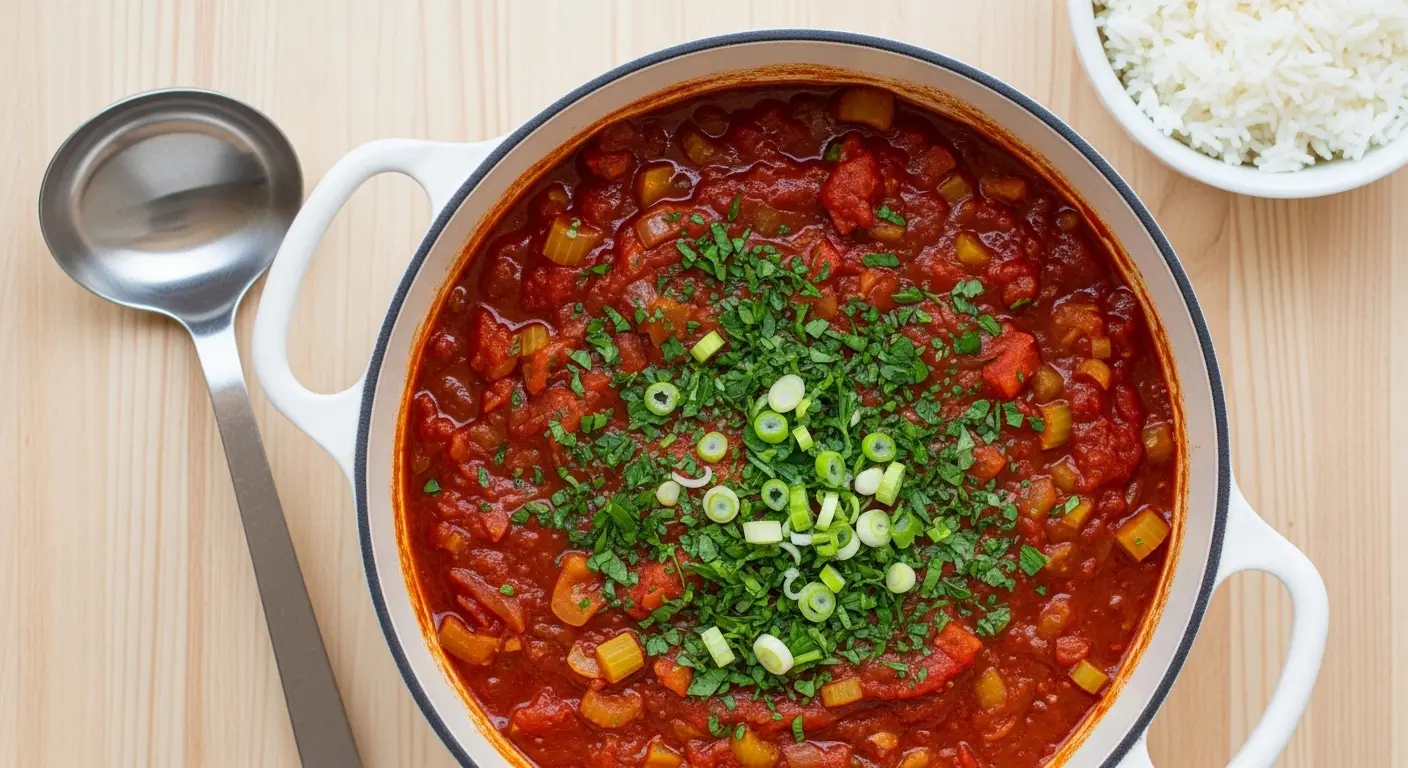
If you’ve ever tasted something deeply savory, gently spiced, and layered with flavor that just makes you close your eyes for a second, you’ve probably had a great Creole sauce recipe. This iconic Louisiana sauce is one of the most versatile things you can have in your cooking arsenal.
It starts with the “Holy Trinity” of Creole cooking: onions, bell peppers, and celery. From there, garlic, tomatoes, Creole seasoning, Worcestershire sauce, and a few aromatic herbs come together over low, patient heat to create something genuinely spectacular.
This is not a shortcut sauce. It’s the real deal, slow-simmered until it develops that rich, complex depth of flavor that makes Creole and Cajun cooking so beloved around the world.
Once you make it from scratch, store-bought versions will never cut it again.

Why You’ll Love This Creole Sauce Recipe
This sauce has everything you want in a homemade condiment: bold flavor, incredible versatility, and a straightforward process that even beginners can nail.
It’s deeply rooted in New Orleans culinary tradition, which means every bowl carries a story.
The Holy Trinity base is one of the most flavor-packed aromatic combinations in the culinary world. Slowly cooking onions, bell peppers, and celery in butter builds a foundation that makes every other ingredient shine.
The sauce works with practically any protein, from shrimp and crawfish to chicken, sausage, and even tofu.
It actually tastes even better the next day, making it a dream for meal prep.
Here’s why this recipe is going to become a staple in your kitchen:
- It’s made with pantry-friendly ingredients that you likely already have on hand
- The flavor is bold but balanced, with savory, slightly spicy, and subtly tangy notes
- It’s incredibly versatile and works as a base sauce, simmer sauce, pasta sauce, or dipping sauce
- It freezes beautifully, so you can make a big batch and use it for weeks
- It’s customizable for heat level, from mild to fire-hot, based on your preference
- The process is approachable for cooks at any level, with no complicated techniques required
You might also enjoy: Classic Red Beans and Rice
Ingredients
The key to an outstanding Creole sauce is using quality ingredients and giving them the time they need to develop flavor together. Here’s what you’ll need:
Use fresh vegetables whenever possible for the most vibrant taste. For the canned tomatoes, opt for whole peeled or crushed tomatoes rather than diced if you prefer a smoother sauce.
- 3 tablespoons (42g) unsalted butter, divided
- 1 tablespoon (15ml) olive oil
- 1 medium yellow onion (about 1 cup / 150g), finely diced
- 1 medium green bell pepper (about 1 cup / 150g), finely diced
- 3 stalks celery (about 3/4 cup / 100g), finely diced
- 4 cloves garlic, minced
- 2 tablespoons (30g) tomato paste
- 1 can (14.5 oz / 411g) crushed tomatoes
- 1 can (14.5 oz / 411g) diced tomatoes with their juices
- 1/2 cup (120ml) chicken broth or stock (use vegetable broth for a vegetarian version)
- 2 tablespoons (30ml) Worcestershire sauce
- 1 tablespoon (15ml) hot sauce (Louisiana-style, such as Tabasco or Crystal)
- 2 teaspoons Creole seasoning (such as Tony Chachere’s or Zatarain’s)
- 1 teaspoon dried thyme
- 1 teaspoon dried oregano
- 1/2 teaspoon smoked paprika
- 1/4 teaspoon cayenne pepper (adjust to taste)
- 2 bay leaves
- 1 teaspoon lemon zest
- 1 tablespoon (15ml) lemon juice
- 3 green onions, thinly sliced
- 2 tablespoons fresh flat-leaf Italian parsley, chopped
- Salt and black pepper to taste
Read Also: Vodka Sauce Recipe
Kitchen Equipment Needed
You don’t need any special equipment to make this sauce. A heavy-bottomed pan is your most important tool here because it distributes heat evenly and prevents the tomato base from scorching during the long simmer.
- Large heavy-bottomed skillet or Dutch oven (at least 4-quart capacity)
- Sharp chef’s knife for dicing vegetables
- Cutting board
- Wooden spoon or heat-proof silicone spatula
- Measuring cups and spoons
- Microplane or zester for the lemon zest
- Ladle for serving
- Immersion blender (optional, if you prefer a smoother sauce)
- Airtight glass storage containers for refrigerating or freezing leftovers
For a lighter option, try: Tomato Sauce Recipe
Recommended Products for This Recipe
These are products I genuinely recommend based on quality and performance. They’ll make this recipe easier and the results even better.
1. Tony Chachere’s Original Creole Seasoning
This is the gold standard for Creole seasoning and a pantry staple in New Orleans households. It delivers the perfect balance of salt, spice, garlic, and herbs so you’re not fumbling with half a dozen individual spices. One jar goes a long way and is essential for authentic Creole flavor in this sauce and beyond.
2. Lodge Enameled Cast Iron Dutch Oven
A heavy-bottomed Dutch oven is the ideal vessel for this sauce. It distributes heat evenly, prevents scorching, and retains heat beautifully during the long simmer. The Lodge Enameled Cast Iron is a durable, affordable version that performs like cookware twice its price point.
3. Crystal Louisiana Hot Sauce
Crystal is a Louisiana hot sauce staple with a vinegary tang and mild-to-medium heat that’s perfect for this recipe. Unlike some commercial hot sauces, it adds flavor rather than just heat, and won’t overpower the other aromatics in the sauce.
4. Cuisinart Cordless Immersion Blender
If you prefer a smoother Creole sauce, an immersion blender lets you puree it right in the pot without the mess of transferring hot liquid to a stand blender. The Cuisinart cordless version is powerful, easy to clean, and incredibly handy for soups, sauces, and more.
5. Zatarain’s Smoked Paprika
Smoked paprika adds a subtle smoky undertone to the sauce that rounds out the tomato base beautifully. Zatarain’s, rooted in New Orleans culinary tradition, makes a high-quality version that blends seamlessly into Creole cooking.
This sauce pairs beautifully with shrimp and grits for a true New Orleans experience.

Step-by-Step Instructions
Step 1: Prep All Your Vegetables
- Finely dice the yellow onion into small, even pieces roughly 1/4 inch (6mm) in size. Uniform cuts ensure even cooking.
- Finely dice the green bell pepper to the same size as the onion.
- Finely dice the celery stalks, also to approximately 1/4 inch (6mm). Remove any tough outer strings before dicing.
- Mince the garlic cloves finely. You can use a garlic press or minced them by hand. Set aside separately from the other vegetables.
- Zest the lemon using a microplane, then halve the lemon and juice it. Set the zest and juice aside together.
- Thinly slice the green onions and roughly chop the flat-leaf parsley. Set aside to use at the end.
- Measure out all your dried herbs, spices, Worcestershire sauce, hot sauce, and broth. Having everything ready before you start cooking (called mise en place) is key to making this sauce with confidence.
Step 2: Sauté the Holy Trinity
- Place your Dutch oven or large heavy-bottomed skillet on the stovetop over medium heat.
- Add 2 tablespoons (28g) of the butter along with the olive oil. Using a combination of both prevents the butter from burning.
- Once the butter is melted and the pan is hot, add the diced onion, bell pepper, and celery all at once.
- Stir to coat everything with the fat, then spread the vegetables into an even layer.
- Cook, stirring occasionally, for 6 to 8 minutes until the vegetables are softened and the onion has become translucent. The vegetables should look slightly shiny and smell wonderfully fragrant.
- Do not rush this step. This slow softening of the Holy Trinity is where a huge portion of the sauce’s flavor is built.
Step 3: Add Garlic and Tomato Paste
- Push the softened vegetables to the sides of the pan and add the remaining 1 tablespoon (14g) of butter to the center.
- Add the minced garlic to the butter and cook for about 30 seconds to 1 minute, stirring constantly, until it is fragrant. Be careful not to burn the garlic, as it will turn bitter.
- Add the tomato paste directly to the pan. Spread it around among the vegetables.
- Cook the tomato paste, stirring constantly, for about 2 to 3 minutes. You’ll notice it will deepen slightly in color and smell sweeter and more concentrated. This step is called “blooming” the tomato paste and it removes its raw, tinny flavor.
Step 4: Add Tomatoes, Broth, and Seasonings
- Pour in the crushed tomatoes and the diced tomatoes with all of their juices. Stir well to incorporate everything.
- Add the chicken broth and stir to combine.
- Add the Worcestershire sauce, hot sauce, Creole seasoning, dried thyme, dried oregano, smoked paprika, cayenne pepper, and bay leaves.
- Stir everything together thoroughly until the spices are evenly distributed throughout the sauce.
- Bring the mixture to a boil over medium-high heat, stirring occasionally to prevent sticking at the bottom.
Step 5: Simmer Low and Slow
- Once the sauce reaches a boil, reduce the heat to low or medium-low. You want a gentle, bubbling simmer, not a rolling boil.
- Let the sauce simmer uncovered for 25 to 30 minutes, stirring every 5 to 7 minutes to make sure nothing sticks to the bottom of the pan.
- As it simmers, the sauce will reduce slightly, the tomatoes will break down, and the flavors will meld and deepen considerably. The color will shift from a bright orange-red to a deeper, richer red.
- If the sauce thickens too much for your liking, add a small splash of additional broth or water to loosen it.
- For a smoother sauce, use an immersion blender to partially blend the sauce right in the pot. You can also leave it fully chunky, which is the more traditional presentation.
Step 6: Finish and Season
- Remove the bay leaves from the sauce and discard them.
- Stir in the lemon zest and lemon juice. The brightness of the lemon lifts the whole sauce and balances the richness beautifully.
- Add the sliced green onions and chopped fresh parsley. Stir to incorporate.
- Taste the sauce and adjust the seasoning. Add more salt, black pepper, cayenne, or hot sauce based on your preference.
- For a spicier sauce, add more cayenne or a few more dashes of hot sauce. For a milder version, reduce the cayenne and hot sauce at the start.
- The sauce is now ready to serve immediately, or it can be cooled and stored for later use.
Read Also: Sunshine Sauce Recipe
Tips for Success
Making Creole sauce well is about patience and layering flavor at each step. These tips will help you get the best results every time.
Follow the mise en place approach from the start: have every ingredient prepped before your first onion hits the pan. Once you start cooking this sauce, it moves quickly in the early stages and having everything ready means you won’t scramble.
- Don’t skip the tomato paste cooking step. Blooming it in the pan for a couple of minutes removes the raw taste and adds caramelized depth that canned tomatoes alone cannot replicate.
- Use a heavy-bottomed pan. Thin pans cause the tomato base to scorch and develop bitter notes during the long simmer.
- Taste as you go. Creole seasoning blends vary in saltiness, so always taste before adding any additional salt.
- Simmer uncovered. An uncovered pot allows moisture to evaporate so the sauce reduces and the flavors concentrate properly.
- Let it rest. This sauce genuinely tastes better after sitting for a few hours or overnight. Make it ahead whenever you can.
- Adjust heat with intention. Add cayenne gradually in small amounts. You can always add more spice, but you cannot take it away once it’s in the sauce.
- Use fresh lemon juice at the end. Adding it too early causes the brightness to cook off. Stir it in right before serving for maximum impact.
The same patience-first approach works beautifully in homemade marinara sauce too.
Serving Suggestions
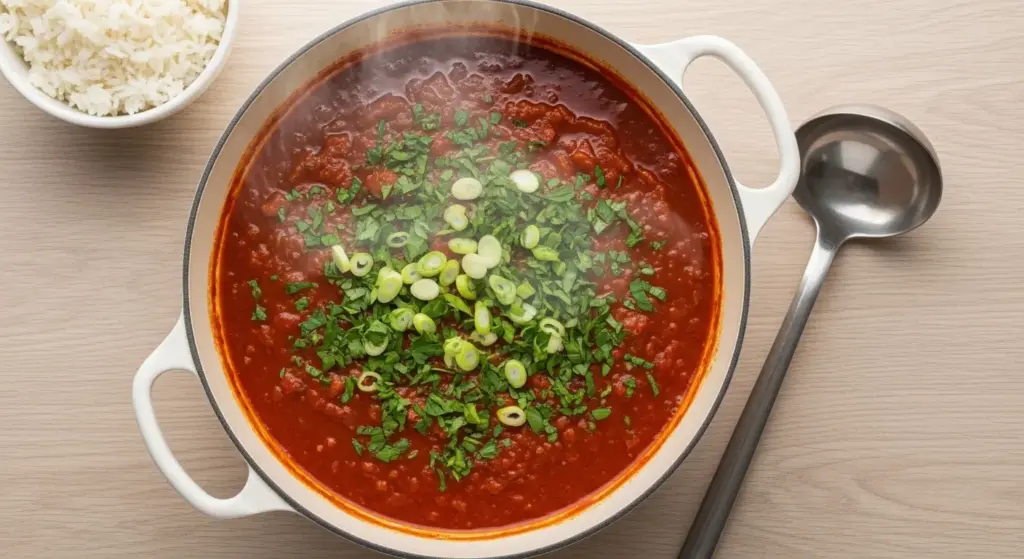
Creole sauce is endlessly versatile. It can transform a humble pot of white rice into a restaurant-worthy bowl, or serve as the flavoring base for a whole dinner spread.
The classic New Orleans way is to ladle it generously over steamed white rice with a protein simmered right into the sauce, whether that’s shrimp, chicken, or smoked sausage. A side of crusty French bread to soak up every drop is non-negotiable.
Here are some great ways to serve this sauce:
- Serve it over Shrimp and Grits for a classic Southern pairing
- Ladle it over baked or pan-seared Baked Salmon for a bold weeknight dinner
- Use it as the sauce for Chicken Casserole for a Creole-inspired twist
- Spoon it over creamy Creamy Mashed Potatoes as a deeply savory gravy
- Toss it with cooked pasta for a spicy Creole pasta dish
- Use it as a base for adding sautéed shrimp and serving over steamed white rice for a classic shrimp Creole
- Serve it alongside a hearty bowl of Collard Greens for a full Southern spread
- Spoon it over pan-fried fish fillets for a simple, flavorful main dish
Variations to Try
Once you’ve mastered the classic version, there are plenty of delicious directions to take this sauce. Creole cuisine is built on improvisation and personal touches, so don’t be afraid to make it your own.
The base of this sauce is a blank canvas for so many creative additions. Here are some well-loved variations worth experimenting with:
- Creole Cream Sauce: Stir in 1/2 cup (120ml) of heavy cream at the very end of cooking for a rich, velvety sauce that’s incredible over pasta or grilled fish. Let it simmer for 2 to 3 minutes after adding the cream to help it incorporate fully.
- Shrimp Creole: Add 1 pound (450g) of peeled, deveined shrimp directly to the finished sauce. Simmer on low for 3 to 5 minutes until the shrimp are pink and cooked through. Serve over white rice.
- Chicken Creole: Sear bone-in chicken thighs in the pan first, then build the sauce around them and braise until fully cooked, about 35 to 40 minutes.
- Vegetarian Version: Substitute chicken broth with vegetable broth and add mushrooms, diced zucchini, or cubed eggplant to make it a hearty meatless sauce. Add the vegetables alongside the Holy Trinity.
- Spicy Creole Sauce: Add 1 to 2 finely diced jalapeño peppers along with the Holy Trinity, and double the cayenne for a sauce with serious heat.
- Sausage Creole: Brown 8 ounces (225g) of sliced smoked andouille sausage in the pan before adding the vegetables, then build the sauce in the same pan for a smoky, deeply flavored variation.
Read Also: Comeback Sauce Recipe
Storage and Reheating
Creole sauce stores extremely well, which makes it one of the best batch-cooking sauces in your repertoire.
Allow the sauce to cool completely to room temperature before transferring it to airtight containers. Never store hot sauce directly in the refrigerator, as it raises the internal temperature and can compromise food safety.
- Refrigerator: Store in an airtight glass or plastic container for up to 5 days. The flavor deepens as it sits, so leftovers are often even better than the freshly made batch.
- Freezer: Transfer the cooled sauce to freezer-safe containers or zip-top bags laid flat. Freeze for up to 3 months. Label with the date so you always know what you have.
- Reheating from the refrigerator: Warm over medium-low heat in a saucepan, stirring occasionally. Add a small splash of broth or water if the sauce has thickened in the fridge.
- Reheating from frozen: Thaw overnight in the refrigerator. Reheat gently on the stovetop over medium-low heat. Avoid microwave reheating from frozen, as it heats unevenly and can break the texture of the sauce.
- Avoid boiling when reheating. A gentle simmer is all you need to bring it back to life without overcooking the herbs and aromatics.
For a great make-ahead meal idea, pair this sauce with Chicken Stew and prep both on the weekend.
Nutritional Facts
The following nutritional information is estimated per serving, based on this recipe making approximately 6 servings.
| Nutrient | Amount Per Serving |
|---|---|
| Calories | ~140 kcal |
| Total Fat | 8g |
| Saturated Fat | 4g |
| Cholesterol | 15mg |
| Sodium | 520mg |
| Total Carbohydrates | 14g |
| Dietary Fiber | 3g |
| Sugars | 7g |
| Protein | 2g |
| Vitamin C | 35% DV |
| Vitamin A | 20% DV |
| Iron | 10% DV |
Note: Nutritional values are estimates and will vary based on specific ingredients and brands used. Sodium content will be significantly affected by your choice of Creole seasoning and broth.
Another great low-calorie sauce to have in your rotation is this BBQ Sauce Recipe.
Health Benefits of Key Ingredients
This sauce is not only deeply flavorful but also packed with nutritious ingredients that work hard for your health.
The Holy Trinity of onions, bell peppers, and celery is one of the most antioxidant-dense vegetable combinations in Southern cooking.
Here’s a closer look at what makes this sauce nutritionally worthwhile:
- Tomatoes are rich in lycopene, a powerful antioxidant linked to heart health and reduced inflammation. Cooking tomatoes in oil, as this recipe does, actually increases lycopene bioavailability.
- Garlic contains allicin, a bioactive compound with well-documented antimicrobial and cardiovascular-supportive properties. It also adds significant depth of flavor without adding calories.
- Celery is low in calories and provides vitamin K, folate, and potassium, making it a valuable addition to any sauce base.
- Bell peppers are one of the most vitamin C-dense vegetables available. Green bell peppers in particular contain more vitamin C per weight than oranges.
- Onions contain quercetin, a plant-based flavonoid with anti-inflammatory and immune-supporting effects.
- Olive oil provides heart-healthy monounsaturated fats and helps the body absorb fat-soluble vitamins from the vegetables in the sauce.
- Fresh parsley and lemon juice deliver a concentrated burst of vitamin C and fresh antioxidants that brighten both the flavor and nutritional profile of the finished sauce.
For more Southern-inspired comfort with wholesome roots, check out the Lobster Bisque Recipe.
Frequently Asked Questions
1. What is Creole sauce made of?
Creole sauce is a tomato-based sauce built on the “Holy Trinity” of Creole cooking: onions, green bell peppers, and celery. These aromatics are cooked in butter, then combined with garlic, tomato paste, crushed and diced tomatoes, Worcestershire sauce, hot sauce, Creole seasoning, dried herbs, and lemon juice. The result is a bold, savory, and mildly spicy sauce that’s deeply rooted in Louisiana culinary tradition.
2. What is the difference between Cajun sauce and Creole sauce?
Both are foundational to Louisiana cuisine and share many ingredients, but Creole sauce typically features tomatoes as a primary component, while Cajun dishes often skip tomatoes and rely more heavily on dark roux and bold spice blends. Creole cooking also reflects more European (particularly French) influence and tends to be slightly more refined, while Cajun cooking is often described as rustic country cooking. In practice, the two cuisines overlap significantly.
3. What do you eat Creole sauce with?
Creole sauce pairs beautifully with a wide range of proteins and dishes. The most classic pairing is shrimp simmered directly in the sauce and served over steamed white rice. It also works wonderfully with chicken, crawfish, catfish, smoked sausage, and even vegetarian options like eggplant or tofu. Beyond proteins, it can be used as a pasta sauce, a simmer sauce for stews, or a topping for grilled meats.
4. Can I make Creole sauce ahead of time?
Absolutely, and it’s actually recommended. Like most braised and simmered sauces, Creole sauce tastes even better after the flavors have had time to meld overnight. You can make it up to 5 days in advance and store it refrigerated in an airtight container. It also freezes beautifully for up to 3 months.
5. Is Creole sauce very spicy?
The heat level in Creole sauce is fully customizable. As written, this recipe produces a mildly spicy sauce with a gentle kick from the cayenne and hot sauce. For a milder version, reduce or eliminate the cayenne pepper and cut back on the hot sauce. For a hotter sauce, increase the cayenne, add jalapeño or serrano peppers to the Holy Trinity, or use a spicier hot sauce variety.
Read Also: Worcestershire Sauce Recipe

Creole Sauce

Equipment
- Large heavy-bottomed skillet or Dutch oven - at least 4-quart capacity
- Sharp chef's knife
- Cutting board
- Wooden spoon or heat-proof silicone spatula
- Measuring cups and spoons
- Microplane or zester - for the lemon zest
- Ladle - for serving
- Immersion Blender - optional, if you prefer a smoother sauce
- Airtight glass storage containers - for refrigerating or freezing leftovers
Ingredients
- 3 tablespoons unsalted butter - 42g, divided
- 1 tablespoon olive oil - 15ml
- 1 medium yellow onion - about 1 cup or 150g, finely diced
- 1 medium green bell pepper - about 1 cup or 150g, finely diced
- 3 stalks celery - about 3/4 cup or 100g, finely diced
- 4 cloves garlic - minced
- 2 tablespoons tomato paste - 30g
- 1 can crushed tomatoes - 14.5 oz or 411g
- 1 can diced tomatoes - 14.5 oz or 411g, with their juices
- 1/2 cup chicken broth or stock - 120ml, use vegetable broth for vegetarian version
- 2 tablespoons Worcestershire sauce - 30ml
- 1 tablespoon hot sauce - 15ml, Louisiana-style such as Tabasco or Crystal
- 2 teaspoons Creole seasoning - such as Tony Chachere’s or Zatarain’s
- 1 teaspoon dried thyme
- 1 teaspoon dried oregano
- 1/2 teaspoon smoked paprika
- 1/4 teaspoon cayenne pepper - adjust to taste
- 2 bay leaves
- 1 teaspoon lemon zest
- 1 tablespoon lemon juice - 15ml
- 3 green onions - thinly sliced
- 2 tablespoons fresh flat-leaf Italian parsley - chopped
- salt and black pepper - to taste
Instructions
- Finely dice the onion, green bell pepper, and celery into even 1/4-inch pieces. Mince the garlic. Zest and juice the lemon. Slice the green onions and chop the parsley.
- In a Dutch oven over medium heat, melt 2 tablespoons of butter with the olive oil. Add the onion, bell pepper, and celery. Cook, stirring occasionally, for 6 to 8 minutes until softened.
- Push vegetables to the sides, add the remaining 1 tablespoon butter and minced garlic. Cook for 30 seconds to 1 minute until fragrant. Add tomato paste and cook for 2 to 3 minutes, stirring constantly, until deepened in color.
- Add crushed tomatoes, diced tomatoes with juices, chicken broth, Worcestershire sauce, hot sauce, Creole seasoning, thyme, oregano, smoked paprika, cayenne, and bay leaves. Stir well to combine.
- Bring mixture to a boil over medium-high heat, then reduce heat to low for a gentle simmer. Cook uncovered for 25 to 30 minutes, stirring every 5 to 7 minutes.
- Remove bay leaves. Stir in lemon zest, lemon juice, sliced green onions, and chopped parsley. Taste and adjust seasoning with salt, pepper, or additional cayenne.
Notes
- Mise en place: Have every ingredient prepped before you start cooking. Once you begin, the sauce moves quickly in the early stages.
- Don’t skip blooming the tomato paste: Cooking it for 2 to 3 minutes removes the raw, tinny flavor and adds caramelized depth.
- Use a heavy-bottomed pan: Thin pans cause the tomato base to scorch during the long simmer.
- Creole seasoning varies in saltiness: Always taste before adding any additional salt.
- Simmer uncovered: This allows moisture to evaporate so the sauce reduces and flavors concentrate properly.
- Let it rest: This sauce tastes even better the next day. Make it ahead whenever you can.
- Add cayenne gradually: You can always add more spice, but you cannot take it away once it’s in the sauce.
- Add lemon juice at the end: Adding it too early causes the brightness to cook off. Stir it in right before serving.
- Storage: Refrigerate for up to 5 days or freeze for up to 3 months. Reheat gently on the stovetop.
- For a smooth sauce: Use an immersion blender to partially blend the sauce right in the pot.
Final Thoughts
This Creole sauce recipe is the kind of thing that makes your whole kitchen smell amazing and has everyone wandering in to ask what you’re making.
It’s a sauce with genuine soul, rooted in a culinary tradition that prizes depth, spice, and the alchemy of humble vegetables transformed into something extraordinary.
Make a big batch on Sunday and you’ll have the foundation for multiple easy, spectacular meals throughout the week.
Give it a try this weekend and bring a little New Orleans magic into your kitchen. If you make it, drop a comment below and let me know how you served it. I’d love to hear your favorite pairings!
Recommended:
- Shrimp and Grits Recipe
- Chicken Cacciatore Recipe
- Brunswick Stew Recipe
- Hollandaise Sauce Recipe
- Enchilada Sauce Recipe
- Spaghetti Sauce Recipe
- Seafood Stew Recipe
- Chicken Marsala Recipe
- Southern Fried Chicken Recipe
- Baked Cod Recipe