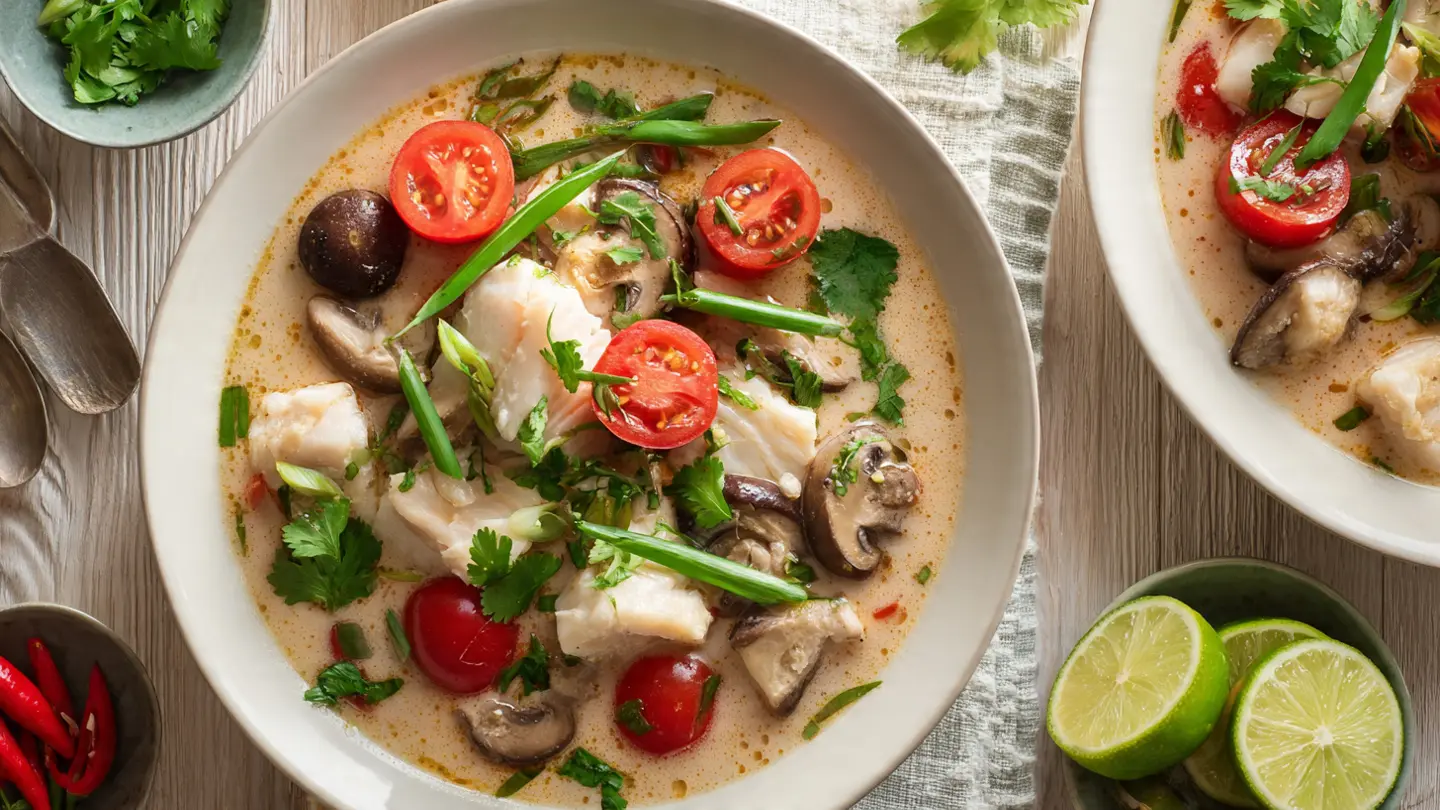
A steaming bowl of Thai fish soup recipe is one of those meals that hits every note at once. It’s bright and citrusy, deeply savory, gently spicy, and comforting in a way that feels nourishing all the way to your bones.
This soup is rooted in the tradition of Tom Yum Pla, Thailand’s beloved hot and sour fish soup. The broth gets its signature flavor from three essential aromatics: lemongrass, galangal, and kaffir lime leaves. These fragrant ingredients infuse the liquid with a citrusy, herbal depth that you simply can’t replicate with anything else.
What makes this version especially approachable is that the whole pot comes together in about 30 minutes. The fish cooks in just a few minutes once the broth is ready, so you’re never far from a bowl of something spectacular.
The key is building the broth patiently. Taking a few extra minutes to simmer the aromatics properly makes a massive difference in the final flavor. Don’t skip that step, and the rest practically takes care of itself.
This is the kind of soup that makes people lean in for a second spoonful before they’ve even finished their first. It is vibrant and bold without being heavy, and it works just as well on a busy weeknight as it does for a dinner party.
You might also enjoy: Mexican Fish Soup Recipe

Why You’ll Love This Thai Fish Soup Recipe
This soup earns its place in the regular rotation for so many reasons. It delivers restaurant-quality flavor with ingredients you can find at most well-stocked grocery stores or any Asian market.
The broth is genuinely extraordinary. Lemongrass, galangal, and kaffir lime leaves create a base that is fragrant, tangy, and complex without any heavy cream or complicated technique.
It is naturally gluten-free and dairy-free, making it a great option for households with dietary restrictions. You only need one pot and about 30 minutes from start to finish.
The fish cooks directly in the broth, which means the flavors meld beautifully. Every piece of fish is perfectly seasoned all the way through.
It’s incredibly versatile. Swap the protein, adjust the heat level, add noodles or serve it over rice, and it still comes out delicious.
Here’s a quick summary of what makes it so good:
- Bold, aromatic broth built on classic Thai aromatics
- Tender, flaky white fish cooked gently in the broth
- Bright acidity from fresh lime juice balanced with savory fish sauce
- Customizable heat level from Thai bird’s eye chilies
- One pot, 30 minutes, minimum cleanup
- Naturally gluten-free and dairy-free
For another vibrant Asian-inspired soup, check out this Tom Yum Soup Recipe.
Ingredients
The ingredients list might look unfamiliar if you’re new to Thai cooking, but each one plays a specific role. The aromatics are not interchangeable with their Western cousins, so it’s worth tracking them down at an Asian grocery store for the best results.
- 1.5 lbs (680g) firm white fish fillets (tilapia, cod, snapper, or halibut), cut into 2-inch chunks
- 4 cups (950ml) chicken or seafood stock
- 1 can (13.5 oz / 400ml) coconut milk (full-fat recommended for creamier broth)
- 2 stalks lemongrass, bruised and cut into 2-inch pieces
- 1-inch (2.5cm) piece galangal root, sliced into coins (or substitute fresh ginger)
- 6 kaffir lime leaves, torn in half
- 3 shallots, halved
- 4 cloves garlic, smashed
- 3-5 Thai bird’s eye chilies, lightly smashed (adjust to your heat preference)
- 1 cup (70g) mushrooms (oyster or straw mushrooms work great, or button mushrooms)
- 1 cup (150g) cherry tomatoes, halved
- 3 tablespoons fish sauce, or to taste
- 3 tablespoons fresh lime juice (about 2-3 limes), plus extra wedges for serving
- 1 teaspoon sugar (palm sugar or white sugar)
- 2 tablespoons Nam Prik Pao (Thai roasted chili paste) (optional but highly recommended)
- Fresh cilantro, for garnish
- 2 green onions, sliced, for garnish
Read Also: Chinese Fish Soup Recipe
Kitchen Equipment Needed
You don’t need any specialized equipment for this recipe. A good pot and some basic kitchen tools are all it takes.
- Large soup pot or Dutch oven (at least 4-quart capacity)
- Sharp chef’s knife
- Cutting board
- Wooden spoon or silicone spatula
- Citrus juicer
- Ladle
- Fine mesh strainer (optional, for clearer broth)
- Measuring cups and spoons
This pairs wonderfully with a bowl of Udon Noodle Soup if you’re planning an Asian-inspired dinner spread.
Recommended Products for This Recipe
These are products selected based on quality and performance, and they genuinely make a difference in how this soup turns out.
1. Thai Roasted Chili Paste (Nam Prik Pao)
This is the secret ingredient that elevates a good Thai fish soup into a great one. It adds deep umami, a touch of sweetness, and a rich, smoky background heat that no other ingredient can replicate. A spoonful stirred in just before serving transforms the broth completely.
2. Megachef Premium Fish Sauce
Not all fish sauce is created equal. A high-quality Thai fish sauce like Megachef is less pungent and more balanced than cheaper alternatives, which means you can use it generously without the broth becoming overly salty or fishy. It forms the savory backbone of this entire recipe.
3. Frozen Kaffir Lime Leaves
If you can’t find fresh kaffir lime leaves at a local Asian market, frozen ones are the next best thing. They retain their aromatic oils much better than dried leaves and make a huge difference in the broth’s fragrance. Keep a bag in your freezer and you’ll always be ready to make this soup.
4. OXO Good Grips Ladle
A quality ladle with a long handle makes serving hot soup much easier and safer. The OXO design is comfortable to hold and pours cleanly without dripping, which matters more than you’d think when you’re ladling hot broth into bowls.
5. Le Creuset Signature Enameled Cast Iron Dutch Oven
A heavy-bottomed pot like a Le Creuset ensures even heat distribution, so your broth simmers gently without hot spots that could toughen the fish. The enameled interior is also easy to clean even after a full pot of aromatic soup.
Another favorite seafood dish: Lobster Bisque

Step-by-Step Instructions
Step 1: Prep All Your Aromatics and Ingredients
- Trim the dry ends off the lemongrass stalks and remove the tough outer layers until you reach the softer, pale yellow interior.
- Using the back of your knife, bruise the lemongrass stalks firmly along their length to release the essential oils, then cut them into 2-inch (5cm) pieces.
- Peel the galangal root and slice it into thin coins, about 1/4-inch (6mm) thick.
- Tear the kaffir lime leaves in half to break the spine and release their fragrance.
- Halve the shallots and smash the garlic cloves flat with the broad side of your knife.
- Lightly smash the bird’s eye chilies with the flat of the knife to release heat without splitting them completely. Use 3 for mild heat, 4-5 for a more noticeable kick.
- Cut the cherry tomatoes in half and slice the mushrooms if they are large.
- Cut the fish fillets into 2-inch (5cm) chunks and pat them dry with a paper towel. Drying the fish helps it hold together in the broth rather than falling apart.
- Juice your limes and have the fish sauce, sugar, and Nam Prik Pao measured and ready to go.
Step 2: Build the Aromatic Broth Base
- Pour the chicken or seafood stock into your large soup pot and set it over medium heat.
- Add the lemongrass pieces, galangal coins, torn kaffir lime leaves, halved shallots, smashed garlic, and smashed chilies directly into the cold stock.
- Bring the stock to a gentle boil over medium-high heat, then reduce to a steady simmer.
- Let the aromatics infuse the broth for 15 minutes, stirring occasionally. The stock will turn a pale golden color and the fragrance will be noticeably lemony and floral. Do not rush this step; this is where most of the soup’s flavor is built.
Step 3: Add the Coconut Milk and Seasonings
- Once the broth has simmered for 15 minutes, pour in the full can of coconut milk and stir gently to combine.
- Add the fish sauce, lime juice, and sugar.
- If using Nam Prik Pao (Thai roasted chili paste), stir it in now. It will dissolve into the broth and add a deeper, richer flavor.
- Taste the broth carefully at this point. It should be savory, tangy, slightly sweet, and fragrant. Adjust by adding more fish sauce for saltiness, more lime juice for brightness, or more sugar to balance.
- Bring the broth back up to a gentle simmer over medium heat.
Step 4: Cook the Mushrooms and Tomatoes
- Add the sliced mushrooms to the simmering broth first, as they need a little longer to cook than the fish.
- Stir gently and let the mushrooms simmer for 3-4 minutes until they are tender and have absorbed some of the broth’s flavor.
- Add the halved cherry tomatoes and stir to combine.
- Let everything simmer together for another 2 minutes. The tomatoes will soften slightly and release their juices into the broth, adding a gentle sweetness and body.
Step 5: Add the Fish and Finish the Soup
- Gently slide the fish pieces into the simmering broth in a single layer. Do not stir aggressively once the fish is in the pot, as it is delicate and will break apart.
- Reduce the heat to medium-low and let the fish cook gently for 3-5 minutes, depending on the thickness of the pieces.
- The fish is done when it turns opaque all the way through and flakes easily when pressed with a fork. Avoid overcooking, as fish can become rubbery quickly.
- Taste the soup one final time and adjust the seasoning. Add a little more fish sauce, lime juice, or a pinch of sugar if needed.
- Turn off the heat.
Step 6: Garnish and Serve
- Ladle the soup into individual bowls.
- Top each bowl with a generous handful of fresh cilantro leaves and a few slices of green onion.
- Add extra sliced chilies if you want more heat.
- Place a wedge of fresh lime on the side of each bowl so guests can squeeze in additional lime juice to their own taste.
- Serve immediately over steamed jasmine rice or with rice noodles on the side.
Note: The lemongrass, galangal, and kaffir lime leaves are used for flavoring only and are not meant to be eaten. You can remove them before serving or simply let guests set them aside in their bowls.
For more seafood inspiration, try this Seafood Chowder Recipe.
Tips for Success
A few key techniques will take this soup from good to genuinely impressive. These are the things experienced Thai cooks know by heart that make all the difference.
- Bruise, don’t chop the aromatics. Lemongrass, galangal, and kaffir lime leaves all release their flavors through bruising and tearing, not through fine chopping. This infuses the broth without making it cloudy or leaving fibrous pieces that are unpleasant to bite into.
- Use full-fat coconut milk. Low-fat coconut milk produces a thinner, less rich broth. The fat in full-fat coconut milk carries the aromatic flavors and gives the soup its beautiful body.
- Don’t overcook the fish. Fish needs only 3-5 minutes in simmering broth. Set a timer and check it early. Overcooked fish becomes tough and dry, which works against everything you’ve built in this soup.
- Season in layers. Add your fish sauce, lime juice, and sugar before the fish goes in, taste the broth, and adjust. Then taste again after the fish cooks and do a final adjustment. This two-step seasoning approach gives you much more control.
- Add lime juice off the heat. Lime juice can turn bitter if boiled for too long. If you want maximum brightness, stir in a last squeeze of fresh lime juice just before serving, with the heat off.
- Use quality fish sauce. This is not the place to cut corners. A good Thai fish sauce (Tiparos, Megachef, or Tra Chang are reliable brands) gives the soup its savory depth without harsh saltiness.
- Pat the fish dry. Removing excess moisture from the fish before adding it to the broth helps it stay intact rather than becoming waterlogged and falling apart.
Read Also: Caribbean Fish Soup Recipe
Serving Suggestions
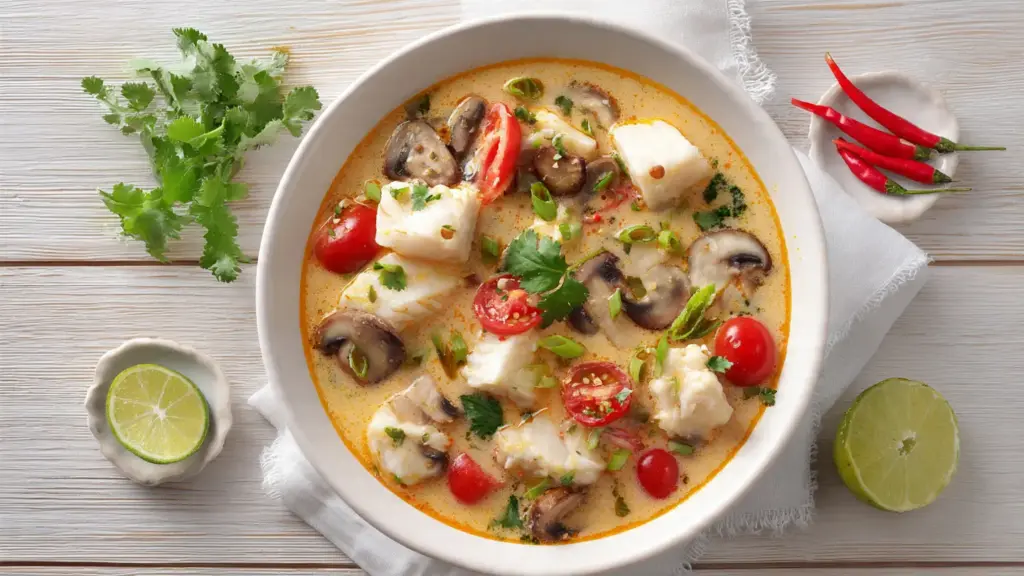
Thai fish soup is a complete meal on its own but it also pairs beautifully with a few simple accompaniments that round out the experience.
Serve it over a bed of steamed jasmine rice, which soaks up the flavorful broth and makes the meal even more satisfying. Alternatively, add softened rice noodles directly to the bowls just before ladling the soup over the top.
A simple Miso Soup on the side makes a lovely starter if you’re turning this into a more elaborate meal.
Here are some other great serving ideas:
- Steamed jasmine rice served in the bowl with soup ladled on top, as is traditional in Thailand
- Rice noodles or vermicelli softened in boiling water and added to the bowl before serving
- Fresh bean sprouts on the side for crunch and freshness
- A simple cucumber salad dressed with rice vinegar and sesame oil as a cooling contrast
- Crusty bread for dipping, if you prefer a Western-style accompaniment
- Thai basil leaves scattered over the top as a garnish for extra fragrance
- Extra lime wedges and sliced chilies on the table so everyone can customize their bowl
Variations to Try
Once you’ve made the base recipe, there are so many directions to take it. The aromatic broth is versatile enough to work with a wide range of proteins and add-ins.
- Tom Yum Style (no coconut milk): Skip the coconut milk entirely and increase the stock to 5 cups (1.2 liters). The result is a lighter, cleaner, more intensely sour broth that is closer to a classic Tom Yum Pla.
- Shrimp and Fish Combo: Add 1/2 lb (225g) of peeled and deveined shrimp along with the fish in the final step. Shrimp cook slightly faster than fish, so add them 1 minute after the fish goes in.
- Tofu Version: Replace the fish with 1 block (14 oz / 400g) of firm tofu, cubed. Use soy sauce instead of fish sauce to keep it vegan. The broth is so flavorful that the tofu becomes absolutely delicious.
- Noodle Soup Version: Add 4 oz (115g) of rice noodles to the simmering broth 3 minutes before the fish goes in, and cook according to package directions. This turns the soup into a heartier, more filling noodle dish.
- Spicier Version: Add 1-2 extra chilies and stir in an additional tablespoon of Nam Prik Pao for a soup with serious heat.
- Greens Addition: Stir in 2 handfuls of baby spinach or bok choy in the last minute of cooking. They wilt quickly and add color and nutrition.
You might also love this Mediterranean Fish Soup Recipe for another globally inspired take.
Storage and Reheating
Thai fish soup stores reasonably well, though fish-based soups are always best eaten fresh. Here’s how to handle leftovers properly.
- Refrigeration: Store leftover soup in an airtight container in the refrigerator for up to 2 days. The broth will actually taste even more flavorful the next day as the aromatics continue to develop.
- Freezing: Freeze the broth separately without the fish for up to 1 month. Fish does not freeze well in broth as it becomes rubbery and falls apart upon reheating. If you plan to make this ahead for freezing, freeze only the broth and add fresh fish when you reheat and serve.
- Reheating: Warm the broth over medium-low heat in a saucepan until it returns to a gentle simmer. Add fresh fish pieces and cook for 3-5 minutes until heated through. Do not boil the soup aggressively during reheating as this will toughen the fish.
- Leftover broth tip: If you have leftover broth without fish, it makes a wonderful base for cooking rice or noodles. The aromatics give everything cooked in it a beautiful flavor.
Another cozy seafood option: Fish Chowder Recipe
Nutritional Facts
The following is an approximate nutritional breakdown per serving based on 4 servings. Values will vary based on the type of fish used and exact ingredient quantities.
| Nutrient | Per Serving |
|---|---|
| Calories | ~320 kcal |
| Protein | ~30g |
| Total Fat | ~16g |
| Saturated Fat | ~10g |
| Carbohydrates | ~12g |
| Fiber | ~2g |
| Sugars | ~5g |
| Sodium | ~980mg |
| Cholesterol | ~65mg |
Note: These values are estimates. Using a leaner fish like cod will reduce the fat content. Serving over rice will add approximately 200 calories and 45 grams of carbohydrates per cup of cooked rice.
For a lighter soup option, check out this Spinach Soup Recipe.
Health Benefits of Key Ingredients
This soup is not only delicious but genuinely good for you. The combination of fresh herbs, lean protein, and anti-inflammatory ingredients makes it a nutritional powerhouse.
Here are the standout health benefits of the key ingredients in this recipe:
- White fish (tilapia, cod, snapper): An excellent source of lean protein, omega-3 fatty acids (especially in wild-caught varieties), B vitamins, and selenium. Fish protein is highly bioavailable, meaning your body absorbs and uses it efficiently.
- Galangal: A close relative of ginger with powerful anti-inflammatory and antioxidant properties. Traditional Thai medicine has used galangal for centuries to aid digestion and reduce nausea.
- Lemongrass: Contains antioxidants and has been studied for its antimicrobial properties. It also has mild calming effects and has been used traditionally to support digestive health.
- Kaffir lime leaves: Rich in antioxidants, these aromatic leaves are used in traditional Thai medicine to support oral health and aid digestion.
- Coconut milk: Provides medium-chain triglycerides (MCTs), which are fats that the body metabolizes differently than long-chain fats. MCTs are a quick energy source and may support brain function.
- Lime juice: An excellent source of vitamin C, which supports immune function and helps the body absorb iron from plant-based foods in the meal.
- Garlic: Contains allicin, a compound with well-documented antimicrobial and immune-supporting properties. Regular garlic consumption has been linked to cardiovascular health benefits.
- Chilies: Capsaicin in Thai bird’s eye chilies has anti-inflammatory properties and may support metabolism. Even in small amounts, chilies add meaningful antioxidant activity to a dish.
Read Also: Hot and Sour Soup Recipe
Frequently Asked Questions
1. What is the best fish to use for Thai fish soup?
Firm white fish fillets work best because they hold their shape during cooking and absorb the aromatic broth beautifully.
Tilapia, cod, snapper, and halibut are all excellent choices. Avoid flaky fish like flounder or sole, as they tend to fall apart in soup. If you prefer a richer flavor, salmon also works well and pairs nicely with the coconut broth.
2. Can I make this soup without coconut milk?
Absolutely. Leaving out the coconut milk gives you a lighter, more intensely sour and savory broth that is closer to a traditional Tom Yum Pla.
Simply replace the coconut milk with an additional cup (240ml) of stock and proceed with the rest of the recipe as written. The flavor will be bolder and less creamy.
3. Where can I find galangal and kaffir lime leaves?
Most well-stocked Asian grocery stores carry fresh galangal and kaffir lime leaves. Larger supermarkets sometimes carry them in the international foods section.
If you can’t find fresh galangal, fresh ginger is the closest substitute, though the flavor will be somewhat different. Frozen kaffir lime leaves are widely available online and work just as well as fresh.
4. How spicy is this soup, and can I adjust the heat?
The spice level in this recipe is moderate with 3-4 Thai bird’s eye chilies, which produces a noticeable but manageable heat.
For a milder version, use just 1-2 chilies or skip them entirely and add a small pinch of red chili flakes instead. For more heat, add extra chilies or increase the amount of Nam Prik Pao paste.
5. Can I make the broth ahead of time?
Yes, and it’s actually a great idea. The broth can be made up to 2 days in advance and stored in the refrigerator.
When ready to serve, bring the broth back to a gentle simmer, add the mushrooms, tomatoes, and fish, and finish the recipe from Step 4. This makes entertaining much easier since all the time-consuming work is done in advance.
Read Also: Seafood Stew Recipe

Thai Fish Soup (Tom Yum Pla)

Equipment
- Large soup pot or Dutch oven - at least 4-quart capacity
- Sharp chef's knife
- Cutting board
- Wooden spoon or silicone spatula
- Citrus juicer
- Ladle
- Fine-mesh strainer - optional, for clearer broth
- Measuring cups and spoons
Ingredients
- 1.5 lbs firm white fish fillets - 680g, tilapia, cod, snapper, or halibut, cut into 2-inch chunks
- 4 cups chicken or seafood stock - 950ml
- 1 can coconut milk - 13.5 oz / 400ml, full-fat recommended for creamier broth
- 2 stalks lemongrass - bruised and cut into 2-inch pieces
- 1 inch galangal root - 2.5cm piece, sliced into coins (or substitute fresh ginger)
- 6 kaffir lime leaves - torn in half
- 3 shallots - halved
- 4 cloves garlic - smashed
- 3-5 Thai bird’s eye chilies - lightly smashed, adjust to your heat preference
- 1 cup mushrooms - 70g, oyster or straw mushrooms work great, or button mushrooms, sliced
- 1 cup cherry tomatoes - 150g, halved
- 3 tablespoons fish sauce - or to taste
- 3 tablespoons fresh lime juice - about 2-3 limes, plus extra wedges for serving
- 1 teaspoon sugar - palm sugar or white sugar
- 2 tablespoons Nam Prik Pao - Thai roasted chili paste, optional but highly recommended
- fresh cilantro - for garnish
- 2 green onions - sliced, for garnish
- steamed jasmine rice - for serving, optional
- rice noodles - for serving, optional
- Thai basil leaves - for garnish, optional
- fresh bean sprouts - for serving, optional
Instructions
- Prep aromatics: Trim lemongrass, bruise, and cut into 2-inch pieces. Slice galangal into coins, tear kaffir lime leaves, halve shallots, smash garlic, and lightly smash chilies. Cut fish into 2-inch chunks and pat dry.
- Pour stock into a large pot. Add lemongrass, galangal, kaffir lime leaves, shallots, garlic, and chilies. Bring to a gentle boil, then reduce to a simmer and infuse for 15 minutes.
- Stir in coconut milk, fish sauce, lime juice, sugar, and Nam Prik Pao if using. Bring back to a gentle simmer. Taste and adjust seasoning.
- Add mushrooms and simmer for 3-4 minutes until tender. Add cherry tomatoes and simmer for 2 more minutes.
- Gently slide fish pieces into the broth in a single layer. Reduce heat to medium-low and cook for 3-5 minutes until fish is opaque and flakes easily.
- Taste one final time and adjust seasoning. Ladle into bowls and garnish with cilantro, green onions, and extra lime wedges. Serve immediately over rice or noodles if desired.
Notes
- Bruise, don’t chop: Bruising lemongrass, galangal, and kaffir lime leaves releases their essential oils without making the broth cloudy or leaving fibrous pieces that are unpleasant to bite into.
- Use full-fat coconut milk: Low-fat coconut milk produces a thinner, less rich broth. The fat in full-fat coconut milk carries the aromatic flavors and gives the soup its beautiful body.
- Don’t overcook the fish: Fish needs only 3-5 minutes in simmering broth. Set a timer and check it early. Overcooked fish becomes tough and dry.
- Season in layers: Add fish sauce, lime juice, and sugar before the fish goes in, taste the broth, and adjust. Then taste again after the fish cooks and do a final adjustment.
- Add lime juice off the heat: Lime juice can turn bitter if boiled for too long. For maximum brightness, stir in a last squeeze of fresh lime juice just before serving with the heat off.
- Use quality fish sauce: A good Thai fish sauce (Tiparos, Megachef, or Tra Chang) gives the soup its savory depth without harsh saltiness.
- Pat the fish dry: Removing excess moisture from the fish before adding it to the broth helps it stay intact rather than becoming waterlogged and falling apart.
- Storage: Store leftover soup in an airtight container in the refrigerator for up to 2 days. Freeze the broth separately without the fish for up to 1 month.
- No coconut milk version: Skip the coconut milk entirely and increase the stock to 5 cups (1.2 liters) for a lighter, more intensely sour broth closer to classic Tom Yum Pla.
- Make ahead: The broth can be made up to 2 days in advance. When ready to serve, bring the broth back to a gentle simmer, add the mushrooms, tomatoes, and fish, and finish the recipe from Step 4.
Final Thoughts
This Thai fish soup recipe is proof that truly spectacular food doesn’t have to be complicated. A handful of fresh aromatics, a good piece of fish, and about 30 minutes is all it takes to produce something that genuinely tastes like it came from a restaurant kitchen.
The balance of flavors in this soup is something special. Tart lime juice, savory fish sauce, fragrant lemongrass, and creamy coconut milk come together in a way that is simultaneously bold and delicate.
If you’ve been hesitant to cook Thai food at home because the ingredient list feels unfamiliar, this soup is the perfect starting point. Most of the aromatics keep well in the freezer, so once you’ve stocked up, you’re only 30 minutes away from this soup on any given night.
Give it a try and make it your own. Adjust the heat, swap the fish, add noodles, and leave your mark on it. Once you’ve made it once, you’ll find yourself coming back to it again and again.
If you tried this recipe, share it with a friend or drop a comment below. We’d love to hear how your bowl turned out!
Recommended:
- Tom Yum Soup Recipe
- Chinese Fish Soup Recipe
- Mediterranean Fish Soup Recipe
- Seafood Chowder Recipe
- Salmon Chowder Recipe
- Baked Cod Recipe
- Baked Salmon Recipe
- Chicken Rice Soup Recipe
- Miso Soup Recipe
- Vegetable Soup Recipe