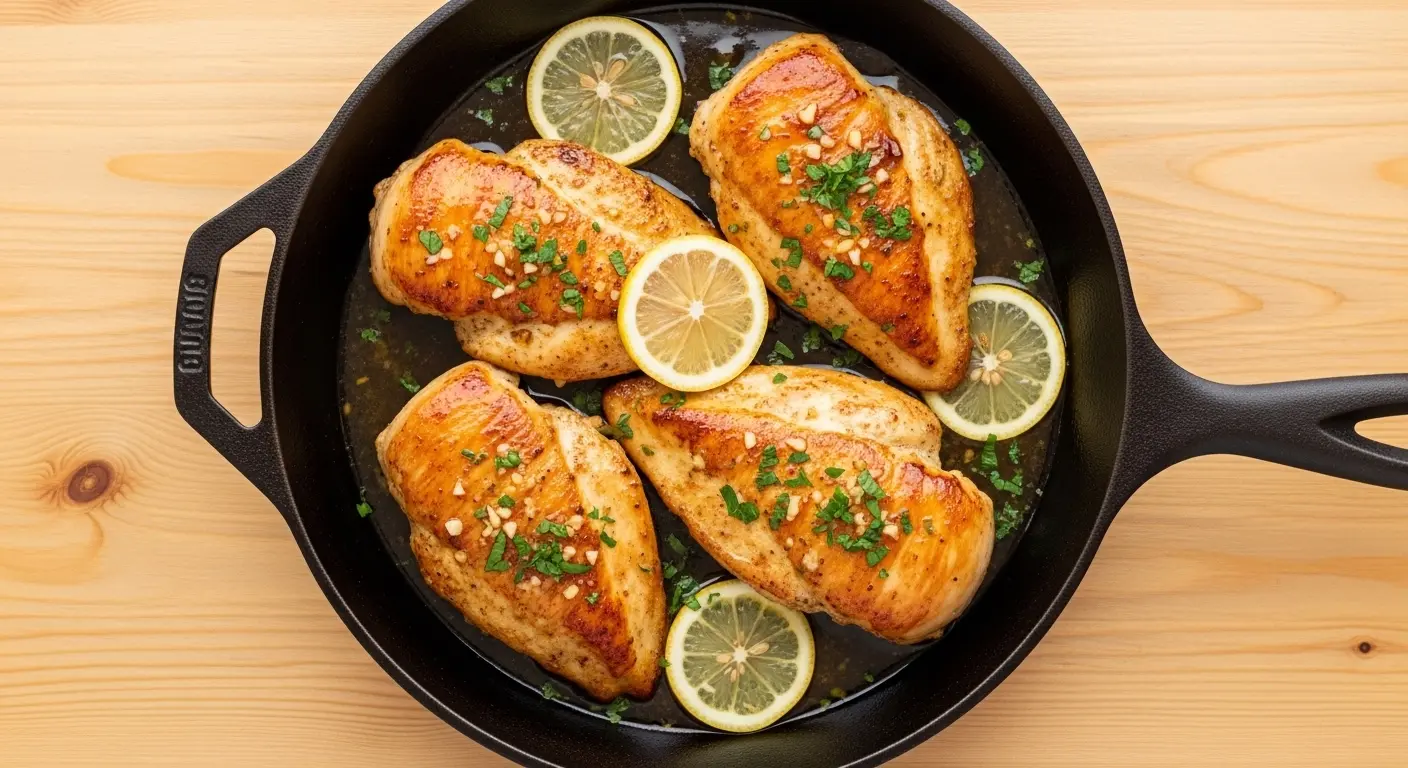
If you are looking for a dinner that delivers juicy, golden-seared chicken in a rich garlic butter sauce with minimal cleanup, this chicken skillet recipe is exactly what you need.
It comes together in one pan, uses simple pantry staples, and is on the table in about 30 minutes.
The secret to making this so satisfying lies in two things: a screaming-hot skillet for that perfect golden crust, and a quick pan sauce made from the flavorful drippings left behind.
Those caramelized bits stuck to the bottom of the pan after searing the chicken? They are pure gold, and deglazing with chicken broth pulls every bit of that flavor into the sauce.
This is the kind of recipe that feels far more impressive than the effort it requires, making it perfect for busy weeknights and relaxed weekend dinners alike.
For another skillet dinner with big, bold flavor, check out this Taco Skillet Recipe — it is equally easy and just as crowd-pleasing.
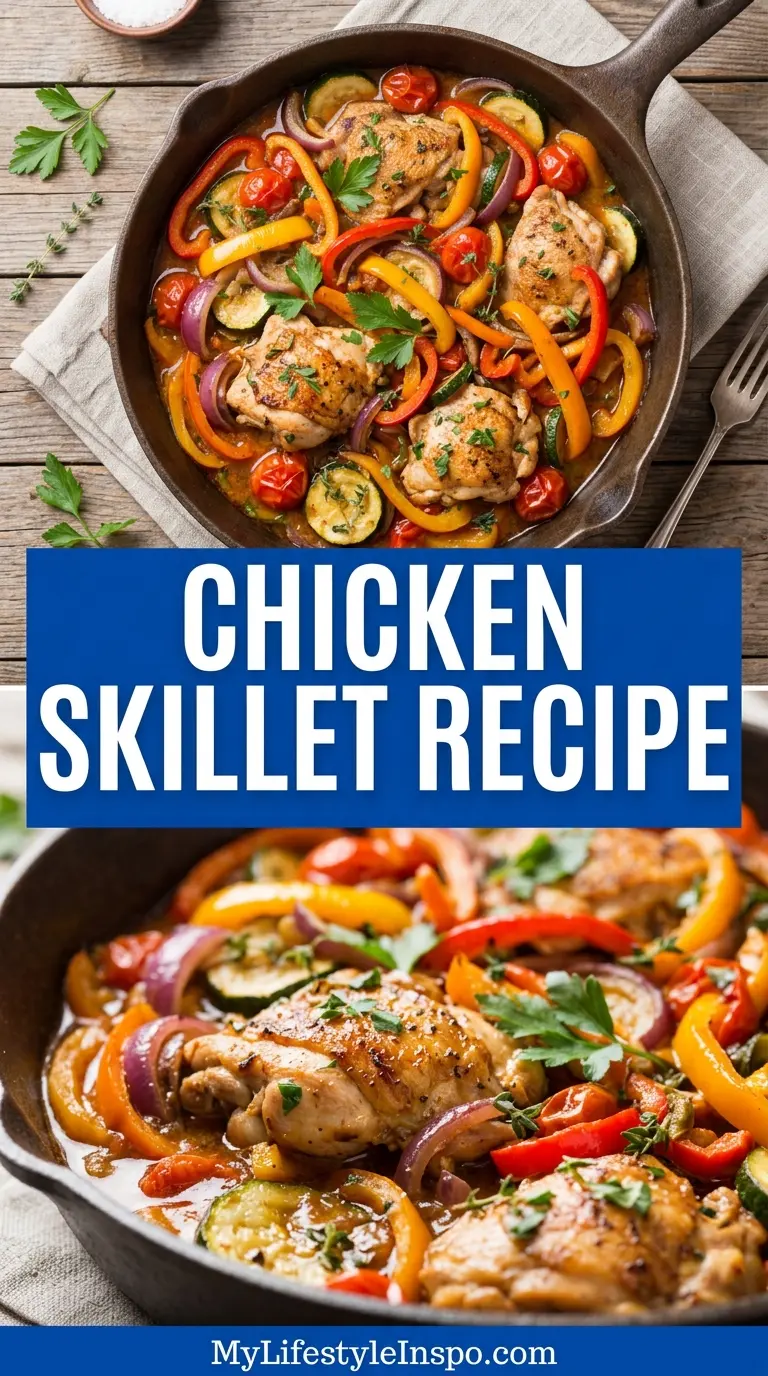
Why You’ll Love This Chicken Skillet Recipe
This recipe hits all the marks: fast, flavorful, and approachable for any skill level.
You only need one pan, which means less mess and faster cleanup after dinner.
The garlic butter sauce is velvety and rich without requiring heavy cream or complicated technique.
Chicken breasts stay surprisingly juicy when you use the sear-and-baste method outlined in this recipe.
You can customize it endlessly with different herbs, veggies, or proteins depending on what you have on hand.
It is naturally low-carb and pairs well with almost any side dish imaginable.
- Ready in about 30 minutes from start to finish
- Uses one skillet for easy cleanup
- Juicy, golden-seared chicken every single time
- Rich garlic butter pan sauce that elevates the entire dish
- Adaptable to different dietary needs and preferences
- Beginner-friendly with detailed step-by-step instructions
Another one-pan dinner that deserves a spot in your rotation: Salmon Skillet Recipe
Ingredients
This recipe uses simple, widely available ingredients that come together to create a deeply satisfying meal. The chicken broth is the backbone of the pan sauce, so using a good-quality low-sodium version really makes a difference here.
- 4 boneless, skinless chicken breasts (about 1.5 lbs / 680g total), pounded to even thickness
- 1 teaspoon garlic powder
- 1 teaspoon onion powder
- 1 teaspoon smoked paprika
- 1/2 teaspoon dried Italian seasoning
- 1/2 teaspoon salt, plus more to taste
- 1/4 teaspoon black pepper
- 2 tablespoons (30ml) olive oil
- 3 tablespoons (42g) unsalted butter, divided
- 5 garlic cloves, minced
- 1/2 cup (120ml) low-sodium chicken broth
- 1 tablespoon (15ml) fresh lemon juice
- 1 teaspoon fresh thyme leaves (or 1/2 teaspoon dried thyme)
- 1 tablespoon fresh parsley, chopped (for garnish)
You might also enjoy: Lemon Chicken Recipe
Kitchen Equipment Needed
Having the right tools makes this recipe a breeze. A 12-inch skillet or larger is especially important — you need enough surface area to sear the chicken without crowding, which is what causes steaming instead of browning.
- 12-inch cast iron skillet or heavy stainless steel skillet (oven-safe preferred)
- Meat mallet or rolling pin (for pounding chicken to even thickness)
- Instant-read meat thermometer
- Cutting board
- Chef’s knife
- Measuring spoons and cups
- Tongs
- Wooden spoon or silicone spatula (for deglazing)
- Small bowl (for mixing spice rub)
- Aluminum foil (for resting the chicken)
Read Also: Chicken Fajita Recipe
Recommended Products for This Recipe
These are products that genuinely improve your results when making this chicken skillet recipe. They have been selected based on quality, performance, and how much of a difference they make in the cooking process.
1. Lodge 12-Inch Cast Iron Skillet
A cast iron skillet retains heat better than any other pan, giving you that deep, even sear on your chicken that you just cannot replicate with thin cookware. It also transitions seamlessly from stovetop to oven, which is useful when finishing thicker chicken breasts. Lodge is a trusted brand that has been making reliable cast iron for over a century.
2. ThermoPro Instant-Read Meat Thermometer
The biggest mistake people make with skillet chicken is overcooking it out of fear. An instant-read thermometer takes the guesswork out completely. Pull the chicken at exactly 165°F (74°C) every time for perfectly juicy results.
3. Microplane Zester/Grater
A lemon zest added to the pan sauce takes the flavor to a completely different level. A Microplane makes quick work of citrus zesting and is also useful for grating fresh garlic or parmesan when finishing the dish.
4. Smoked Paprika (Spanish Style)
Not all paprika is created equal. Spanish smoked paprika (pimentón) has a deeper, more complex flavor than regular sweet paprika, and it gives the chicken its beautiful reddish-golden crust. A quality smoked paprika makes a noticeable difference in the finished dish.
The same one-pan technique works beautifully in this Stuffed Pepper Skillet Recipe if you want to mix things up during the week.
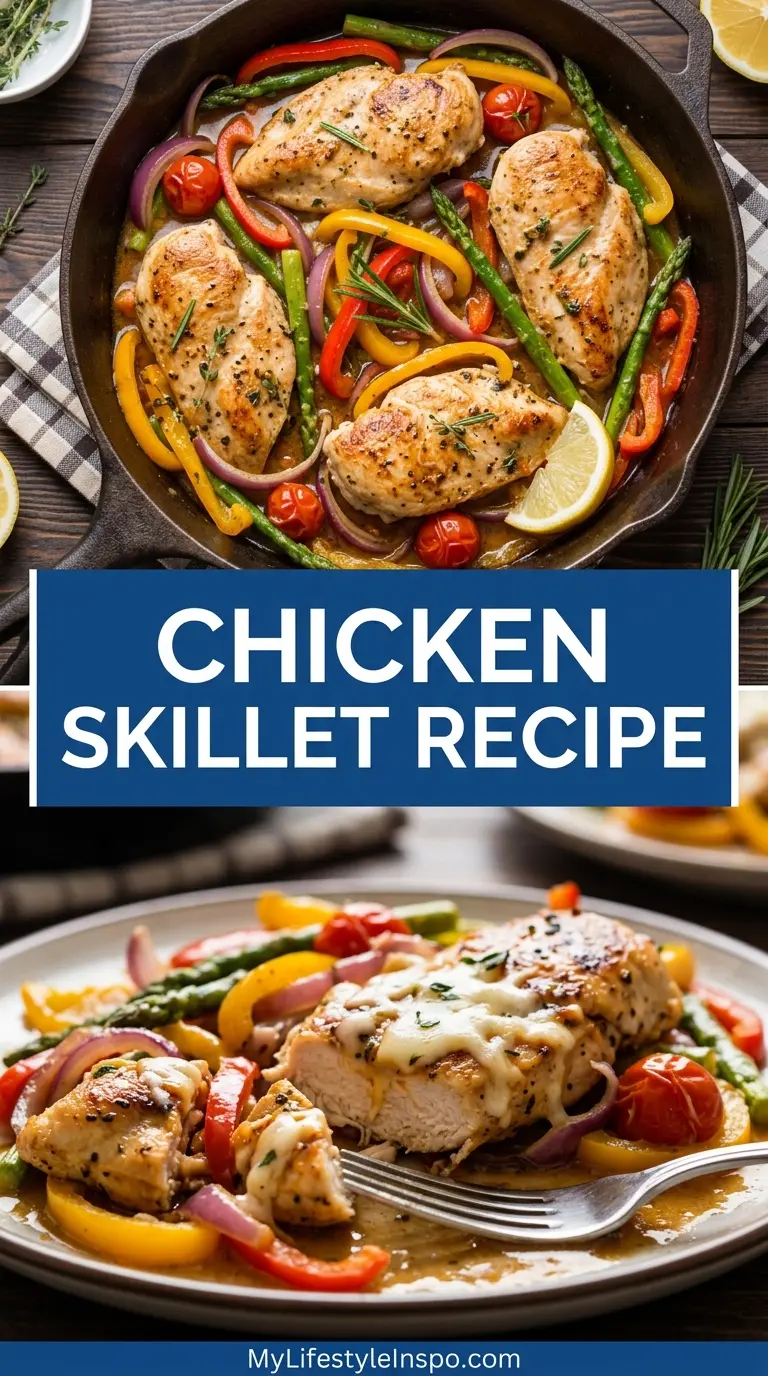
Step-by-Step Instructions
1. Prepare the Chicken
- Place each chicken breast between two sheets of plastic wrap or inside a zip-lock bag.
- Using a meat mallet or rolling pin, pound the thicker end of each breast until the whole piece is an even 3/4-inch (2cm) thickness. This ensures the chicken cooks evenly and prevents the thin end from drying out before the thick center is done.
- Pat the chicken breasts completely dry with paper towels. This step is critical for achieving a golden-brown crust — moisture on the surface of the meat will cause steaming instead of searing.
- In a small bowl, combine the garlic powder, onion powder, smoked paprika, Italian seasoning, salt, and black pepper.
- Rub the spice mixture evenly over both sides of each chicken breast, pressing gently so it adheres well. Let the seasoned chicken sit at room temperature for 10 minutes while you prepare the pan.
2. Sear the Chicken
- Heat a 12-inch cast iron or heavy stainless-steel skillet over medium-high heat for about 2 minutes until very hot.
- Add the olive oil and 1 tablespoon (14g) of the butter to the pan. Swirl to coat, and wait until the butter stops foaming — this means the pan is at the right temperature for searing.
- Place the seasoned chicken breasts into the pan in a single layer, making sure they are not touching. If they are touching, they will steam rather than sear.
- Cook undisturbed for 5 to 6 minutes without moving them. You will see the edges start to turn opaque and golden. Resist the urge to move or lift the chicken during this time — it needs to release naturally from the pan when it is ready.
- Using tongs, flip each breast carefully. The seared side should be deep golden-brown.
- Reduce the heat to medium and cook on the second side for 4 to 5 minutes more, or until the internal temperature reaches 165°F (74°C) when measured at the thickest point with an instant-read thermometer.
- Transfer the cooked chicken to a plate, tent loosely with aluminum foil, and let it rest for 5 minutes. Resting allows the juices to redistribute back into the meat so you get a juicy result when you cut into it.
3. Make the Garlic Butter Pan Sauce
- With the heat at medium, carefully pour off any excess oil from the pan, leaving behind the flavorful browned bits (called fond) — do not wipe the pan.
- Add the remaining 2 tablespoons (28g) of butter to the pan and let it melt.
- Add the minced garlic to the butter. Stir continuously and cook for about 45 to 60 seconds until fragrant and lightly golden. Be careful not to let it burn — garlic goes from golden to bitter very quickly.
- Pour in the chicken broth, scraping up all the browned bits from the bottom of the pan with a wooden spoon or spatula. Those bits are intensely flavored and will enrich the sauce significantly.
- Stir in the fresh lemon juice and thyme leaves.
- Let the sauce simmer for 2 to 3 minutes until it reduces slightly and thickens just enough to coat a spoon.
- Taste the sauce and adjust salt and pepper as needed.
4. Finish and Serve
- Return the rested chicken breasts to the pan, nestling them into the sauce.
- Tilt the pan and use a spoon to baste the sauce over the top of each chicken breast several times to coat them well.
- Let the chicken warm through in the sauce for about 1 minute.
- Sprinkle with freshly chopped parsley and serve immediately, spooning the pan sauce generously over each piece.
Read Also: Chicken Marsala Recipe
Tips for Success
Getting this recipe right is all about a few key techniques that make a big difference between dry, bland chicken and something truly exceptional. Keep these in mind every time you make it.
- Pound the chicken to even thickness. This is the single biggest factor in getting evenly cooked, juicy chicken every time. Uneven thickness means one part dries out before the rest is done.
- Dry the chicken thoroughly. Patting it dry with paper towels before seasoning is non-negotiable for a proper sear. Surface moisture kills the crust.
- Use a hot pan. Add the oil only when the pan is already hot. A cold pan will cause the chicken to stick and steam.
- Do not overcrowd the pan. Sear in batches if needed. Overcrowding drops the temperature of the pan and produces steamed, gray chicken instead of golden-brown, caramelized results.
- Use a thermometer. Do not rely on visual cues alone. Chicken is safely cooked at 165°F (74°C), and a thermometer prevents both under- and over-cooking.
- Rest the chicken before slicing. Even 5 minutes of resting time makes a huge difference in juiciness.
- Deglaze thoroughly. Those dark bits on the bottom of the pan after searing are the flavor foundation of your sauce — scrape them up completely.
This same tip about not overcrowding the pan also applies beautifully to the Cowboy Skillet Recipe — definitely worth adding to your weeknight rotation.
Serving Suggestions
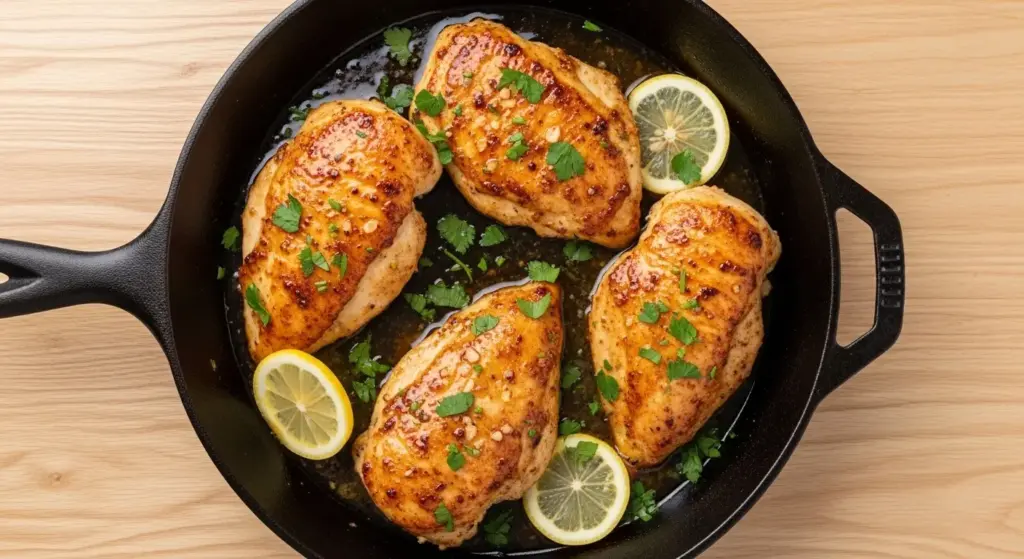
This garlic butter chicken skillet is incredibly versatile and pairs well with a wide variety of sides, making it a recipe you can rotate regularly without it feeling repetitive.
The rich pan sauce is especially delicious when served over something that can absorb it, like mashed potatoes, rice, or crusty bread.
- Serve over Creamy Mashed Potatoes to soak up the garlic butter sauce
- Pair with Roasted Broccoli for a simple, balanced plate
- Serve alongside Garlic Mashed Potatoes for a comforting, hearty dinner
- Slice the chicken and serve over a bed of cooked pasta or egg noodles with the pan sauce as the dressing
- Pair with steamed white rice or cauliflower rice to keep it light
- Add a simple side salad with vinaigrette for a fresh contrast to the rich sauce
- Serve with warm Skillet Cornbread for a Southern-inspired twist
Another family-friendly chicken dinner to try alongside this one: Chicken Casserole
Variations to Try
Once you master the base technique, this chicken skillet is endlessly adaptable. These variations use the same core method but swap a few ingredients for completely different flavor profiles.
- Creamy version: After deglazing with broth, stir in 1/3 cup (80ml) of heavy cream or half-and-half before adding the chicken back. The sauce becomes velvety and rich.
- Sun-dried tomato and spinach: Add 2 tablespoons of sun-dried tomatoes and a large handful of fresh baby spinach to the sauce just before serving.
- Mushroom version: Sauté 8 oz (225g) of sliced cremini mushrooms in the butter before adding the garlic for a hearty, earthy pan sauce.
- Parmesan finish: Stir 2 tablespoons of freshly grated parmesan into the sauce just before serving. It melts in and adds a salty, nutty depth.
- Spicy version: Add a pinch of red pepper flakes along with the garlic, and swap lemon juice for a splash of white wine vinegar.
- Mediterranean style: Add olives, diced sun-dried tomatoes, capers, and a pinch of oregano to the sauce for a bold, briny flavor.
- Chicken thigh version: Bone-in, skin-on thighs work beautifully in this recipe. Sear skin-side down for 7 to 8 minutes to render the fat and crisp the skin before flipping.
For a hearty, cheese-topped skillet dinner, this Cheeseburger Skillet Recipe is a total crowd-pleaser.
Storage and Reheating
This chicken skillet stores and reheats well, making it a smart option for meal prep. Store the chicken and sauce together to keep the meat moist during refrigeration.
- Refrigerator: Store leftover chicken and sauce in an airtight container for up to 3 to 4 days.
- Freezer: Freeze in a freezer-safe container for up to 2 months. Thaw overnight in the refrigerator before reheating.
- Stovetop reheating: Place chicken and sauce in a skillet over medium-low heat with a splash of chicken broth. Cover and heat for 5 to 7 minutes, turning once, until warmed through.
- Microwave reheating: Place chicken in a microwave-safe dish with a spoonful of sauce on top. Cover with a damp paper towel and heat in 60-second intervals until warmed through.
- Avoid high heat when reheating: Reheating chicken over high heat dries it out quickly. Low and slow is the key to keeping it juicy.
- Best practice: Slice the chicken before storing if you plan to use it in salads, wraps, or grain bowls throughout the week.
You might also enjoy: Chicken Stew Recipe
Nutritional Facts
The following nutritional estimates are based on one serving (one chicken breast with sauce), assuming the recipe serves 4.
| Nutrient | Amount per Serving |
|---|---|
| Calories | ~310 kcal |
| Protein | 38g |
| Total Fat | 16g |
| Saturated Fat | 6g |
| Carbohydrates | 3g |
| Fiber | 0.5g |
| Sodium | ~420mg |
| Cholesterol | 120mg |
Nutritional values are estimates and will vary based on exact portion sizes and ingredient brands used.
Read Also: Chicken and Broccoli Recipe
Health Benefits of Key Ingredients
This chicken skillet is not just delicious — many of its core ingredients offer real nutritional value that supports a healthy, balanced diet.
Beyond its taste, this recipe is a genuinely nourishing meal with ingredients that have been recognized for their health-supporting properties.
- Chicken breast is one of the leanest, highest-protein animal foods available. A single serving provides around 35 to 40 grams of protein, supporting muscle maintenance, satiety, and metabolic health.
- Garlic contains allicin and other sulfur compounds that have been widely studied for their anti-inflammatory and immune-supporting properties. Fresh garlic also supports heart health by helping to manage blood pressure.
- Olive oil is rich in monounsaturated fats and oleocanthal, a compound with anti-inflammatory effects. Using olive oil as your cooking fat supports cardiovascular health as part of a balanced diet.
- Smoked paprika contains antioxidants including vitamin C and carotenoids like beta-carotene, which support eye and skin health.
- Lemon juice provides vitamin C and citric acid, which may support iron absorption and digestive health. The acid in lemon juice also brightens the flavor of the entire dish without adding calories.
- Fresh thyme is a good source of vitamin K and contains thymol, a natural compound with antimicrobial properties.
For a lighter chicken dinner packed with greens, the Chicken Broccoli Rice Casserole Recipe is a satisfying option to explore.
Frequently Asked Questions
1. Can I use chicken thighs instead of chicken breasts?
Absolutely. Boneless, skinless chicken thighs work wonderfully in this recipe and are actually more forgiving than breasts because they have a higher fat content.
They take slightly longer to cook, around 6 to 7 minutes per side, and should also reach an internal temperature of 165°F (74°C).
2. How do I keep the chicken from drying out?
The two most important steps are pounding the chicken to an even thickness and using a meat thermometer.
Overcooking is the primary reason chicken dries out, and a thermometer eliminates that risk completely by telling you exactly when to pull it from the heat.
3. Can I make this recipe dairy-free?
Yes. Simply substitute the butter with a dairy-free butter alternative or use an extra tablespoon of olive oil in its place.
The pan sauce will be slightly less rich but still very flavorful, especially if you use a good-quality chicken broth.
4. What is the best pan for this recipe?
A cast iron skillet is the gold standard for this recipe because it retains heat exceptionally well and creates the best sear.
A heavy stainless-steel skillet is also an excellent option. Avoid non-stick pans for this particular recipe, as they do not get hot enough to produce the deep golden crust you are looking for.
5. Can I add vegetables to cook in the same pan?
Yes, and it is a great way to turn this into a more complete one-pan dinner.
After removing the cooked chicken to rest, add vegetables like sliced zucchini, cherry tomatoes, or baby spinach to the pan and cook them in the pan sauce for 2 to 3 minutes before returning the chicken to serve.
Read Also: Enchilada Skillet Recipe
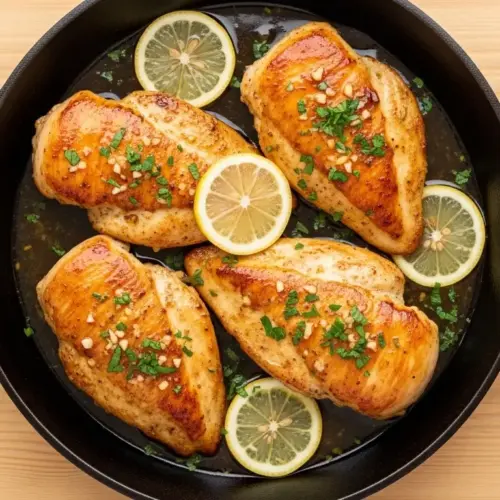
Garlic Butter Chicken Skillet

Equipment
- 12-inch cast iron skillet or heavy stainless steel skillet - oven-safe preferred
- Meat mallet or rolling pin
- Instant-read meat thermometer
- Cutting board
- Chef’s knife
- Measuring spoons and cups
- Tongs
- Wooden spoon or silicone spatula - for deglazing
- Small bowl - for mixing spice rub
- Aluminum foil - for resting the chicken
Ingredients
- 4 boneless, skinless chicken breasts - about 1.5 lbs or 680g total, pounded to even thickness
- 1 teaspoon garlic powder
- 1 teaspoon onion powder
- 1 teaspoon smoked paprika
- 1/2 teaspoon dried Italian seasoning
- 1/2 teaspoon salt - plus more to taste
- 1/4 teaspoon black pepper
- 2 tablespoons olive oil - 30ml
- 3 tablespoons unsalted butter - 42g, divided
- 5 garlic cloves - minced
- 1/2 cup low-sodium chicken broth - 120ml
- 1 tablespoon fresh lemon juice - 15ml
- 1 teaspoon fresh thyme leaves - or 1/2 teaspoon dried thyme
- 1 tablespoon fresh parsley - chopped, for garnish
Instructions
- Pound chicken between plastic wrap to 3/4-inch even thickness. Pat dry thoroughly.
- Mix garlic powder, onion powder, smoked paprika, Italian seasoning, salt, and pepper in a small bowl. Rub evenly over both sides of chicken. Let sit at room temperature for 10 minutes.
- Heat a 12-inch cast iron skillet over medium-high heat for 2 minutes. Add olive oil and 1 tablespoon butter. When butter stops foaming, add chicken in a single layer without crowding.
- Cook undisturbed for 5-6 minutes until deep golden-brown. Flip and cook for 4-5 minutes more until internal temperature reaches 165°F (74°C). Transfer to a plate, tent with foil, and rest for 5 minutes.
- Pour off excess oil from the pan, leaving browned bits. Add remaining 2 tablespoons butter and melt. Add minced garlic and cook 45-60 seconds until fragrant.
- Pour in chicken broth and scrape up browned bits from the pan bottom. Stir in lemon juice and thyme. Simmer 2-3 minutes until slightly reduced.
- Return chicken to the pan, nestle into sauce, and baste with spoon. Warm through for 1 minute. Garnish with parsley and serve with pan sauce spooned over top.
Notes
- Pound to even thickness: This is the single most important step for evenly cooked, juicy chicken. Aim for 3/4-inch (2cm) thickness throughout.
- Pat chicken completely dry: Surface moisture prevents browning. Use paper towels to remove all moisture before seasoning.
- Don’t overcrowd the pan: Chicken pieces need space to sear properly. If your skillet is small, cook in batches.
- Use a thermometer: Pull chicken at exactly 165°F (74°C) for perfect results every time — don’t rely on visual cues alone.
- Rest before slicing: Let the chicken rest for 5 minutes after cooking to allow juices to redistribute for maximum juiciness.
- Deglaze thoroughly: Scrape up all the browned bits from the bottom of the pan — they are packed with flavor and are the foundation of the sauce.
- Make it creamy: Stir in 1/3 cup (80ml) heavy cream after deglazing for a richer, velvety sauce.
- Dairy-free option: Substitute butter with dairy-free butter alternative or use an extra tablespoon of olive oil.
- Storage: Store leftovers in an airtight container in the refrigerator for up to 3-4 days. Reheat gently over medium-low heat with a splash of broth.
- Freezing: Freeze in a freezer-safe container for up to 2 months. Thaw overnight in the refrigerator before reheating.
Final Thoughts
This chicken skillet recipe proves that weeknight dinners do not have to be complicated to be truly memorable.
With juicy, golden chicken and a simple garlic butter sauce built from pantry staples, this is the kind of meal that earns a permanent spot in your regular cooking lineup.
Give it a try this week — and once you see how easy it is, you will find yourself making it on repeat.
If you make it, leave a comment below to share how it turned out! Feel free to share this recipe with a friend who loves a great, fuss-free chicken dinner.
Recommended:
- Taco Skillet Recipe
- Mexican Beef and Rice Skillet Recipe
- Turkey Skillet Recipe
- Cabbage Roll Skillet Recipe
- Summer Tortellini Skillet Recipe
- Egg Skillet Recipe
- Mexican Skillet Recipe
- Breakfast Skillet Recipe
- Loaded Breakfast Skillet Recipe
- Creamy Tuscan White Bean Skillet Recipe