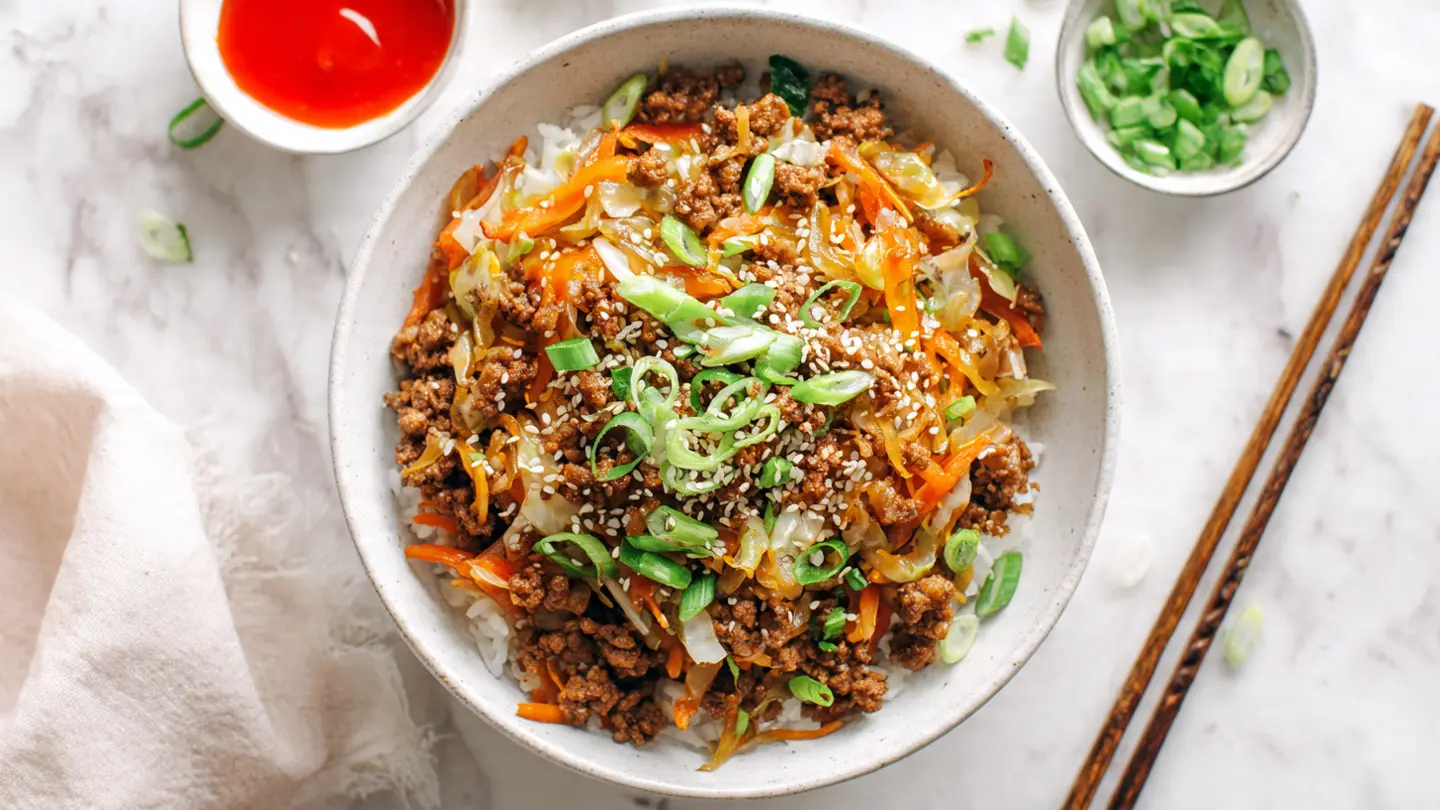
If you’ve been looking for a weeknight dinner that comes together in under 30 minutes and tastes like your favorite takeout, this egg roll in a bowl recipe is exactly what you need. It takes every classic flavor from a traditional egg roll, the savory ground pork, the tender shredded cabbage, the aromatic ginger and garlic, and ditches the wrapper entirely.
What you’re left with is a saucy, protein-packed skillet meal that’s ready before you’d even finish rolling actual egg rolls.
The secret to making this dish taste genuinely authentic lies in a few key choices. First, using fresh ginger rather than powdered makes a noticeable difference in brightness and depth. Second, a good splash of toasted sesame oil added at the very end of cooking preserves that nutty, unmistakably Asian aroma. And third, not overcooking the cabbage, you want it tender but still with a little bite, so it holds onto the sauce rather than becoming soggy.
This is a recipe you’ll come back to again and again, whether for busy weeknights, easy meal prep, or a low-carb dinner that actually feels satisfying.
You might also enjoy: Air Fryer Egg Rolls
Why You’ll Love This Egg Roll in a Bowl Recipe
This dish has earned its place as a regular in so many home kitchens, and for good reason.
It’s truly a one-pan meal, which means minimal cleanup and maximum convenience.
The whole thing cooks in about 20 to 25 minutes, making it one of the fastest complete dinners you can put on the table.
It’s naturally low in carbohydrates, especially if you skip the rice, which makes it a great fit for anyone eating keto, Whole30, or just cutting back on carbs in general.
The flavor profile hits all the right notes: savory, slightly sweet, and rich with that unmistakable sesame-ginger character.
It’s endlessly flexible. You can swap the protein, adjust the heat level, or pile it over rice or noodles depending on your mood.
It’s a crowd-pleaser that works for picky eaters and adventurous palates alike.
Read Also: Chicken Lettuce Wraps Recipe
Ingredients
This recipe uses a short list of pantry staples and one grocery store shortcut (bagged coleslaw mix!) that makes the whole thing almost entirely hands-free on the prep side.
- 1 lb (450g) ground pork (or ground beef or ground turkey)
- 1 tablespoon vegetable oil or sesame oil for browning
- 1 small yellow onion, diced (about 1 cup / 150g)
- 3 cloves garlic, minced
- 1 tablespoon fresh ginger, peeled and minced (or 1 teaspoon ground ginger)
- 1 bag (14 oz / 400g) coleslaw mix (shredded green cabbage and carrots)
- 3 tablespoons low-sodium soy sauce (or coconut aminos for Whole30/gluten-free)
- 1 tablespoon hoisin sauce
- 1 teaspoon brown sugar (omit for strict keto)
- 1 tablespoon toasted sesame oil
- 1 teaspoon rice vinegar
- 1/4 teaspoon white pepper (or black pepper)
- Red pepper flakes to taste (optional, for heat)
- 3 green onions (scallions), sliced, whites and greens separated
- 1 tablespoon sesame seeds, for garnish
- Sriracha, for serving (optional)
Read Also: Stir Fry Sauce Recipe
Kitchen Equipment Needed
You really don’t need much for this recipe, which is part of why it’s so appealing on busy nights.
- 1 large non-stick skillet or wok (12-inch / 30cm or larger)
- Wooden spoon or silicone spatula
- Sharp chef’s knife and cutting board
- Measuring spoons
- Small mixing bowl (for combining the sauce)
- Microplane or fine grater (for fresh ginger, highly recommended)
This pairs beautifully with easy fried rice if you want to round out the meal.
Recommended Products for This Recipe
These are products I genuinely recommend based on quality and how much they improve the final result.
1. Carbon Steel Wok
A high-quality carbon steel wok conducts heat faster and more evenly than a standard pan, giving you that signature stir-fry sear that makes the pork browned and caramelized rather than steamed. It also has the wide surface area you need to cook the coleslaw mix without it piling up and steaming itself soggy. A well-seasoned wok will last a lifetime.
2. Premium Toasted Sesame Oil
Not all sesame oils are equal. A high-quality toasted sesame oil has a deeply nutty, rich aroma that is the defining flavor note of this dish. Cheaper versions can taste flat or overly mild. Look for one labeled “toasted” or “roasted” for the best results.
3. Coconut Aminos (Soy Sauce Alternative)
For anyone cooking Whole30, paleo, or avoiding soy, coconut aminos is the perfect swap. It has a slightly sweeter, milder flavor that works beautifully in this recipe. It’s also lower in sodium than most soy sauces, so the overall dish comes out more balanced.
4. OXO Good Grips Silicone Spatula
Breaking up ground pork properly during browning is key to getting those crispy, golden bits that add texture to the dish. A good silicone spatula with a sturdy head makes this easy without scratching your skillet or wok.
For another quick and satisfying skillet dinner, try this Chicken Skillet Recipe.
Step-by-Step Instructions
1. Mix the Sauce
- In a small bowl, combine the soy sauce, hoisin sauce, brown sugar, rice vinegar, and white pepper.
- Stir everything together until the sugar fully dissolves and the sauce is uniform in color.
- Set aside. Having the sauce ready before you start cooking is important because this dish moves fast, and you won’t want to be measuring ingredients mid-stir.
- Taste the sauce at this point. If you want it saltier, add a little more soy sauce. If you want it sweeter, add a small pinch of extra brown sugar.
2. Prep Your Vegetables and Aromatics
- Dice your yellow onion into small, even pieces about 1/4 inch in size so they cook evenly.
- Peel your fresh ginger by scraping the skin off with the edge of a spoon (easier and less wasteful than a peeler), then mince finely or use a Microplane to grate it directly into the pan later.
- Mince your garlic cloves as finely as possible. Smaller pieces mean better distribution of flavor throughout the dish.
- Slice your green onions, keeping the white and light green parts separate from the dark green tops. The whites go in early with the aromatics; the dark green tops are used as a garnish at the end.
- Open and measure out your coleslaw mix. If using a pre-shredded bag, give it a quick look and break up any large clumps.
3. Brown the Ground Pork
- Set your large skillet or wok over medium-high heat and let it get fully hot before adding anything. A properly preheated pan is what gives you a brown, caramelized sear rather than grey, steamed meat.
- Add the vegetable oil (or 1 tablespoon of your sesame oil) and swirl to coat the pan.
- Add the ground pork in a single layer, spreading it out as much as possible. Resist the urge to immediately stir. Let it sit undisturbed for about 2 minutes so it develops a golden-brown crust on the bottom.
- Break the pork apart with your spatula, continuing to cook and break it into small, crumble-size pieces.
- Cook until no pink remains and you have some golden bits in the pan, about 5 to 7 minutes total.
- If your pork releases a lot of fat (more than a few tablespoons), carefully tilt the pan and spoon out the excess, leaving just enough to cook the aromatics. This prevents the final dish from feeling greasy.
4. Add the Aromatics
- Reduce the heat slightly to medium to avoid burning the garlic.
- Add the diced onion and the white parts of the green onions directly to the pan with the browned pork.
- Cook, stirring occasionally, for about 3 to 4 minutes until the onion turns translucent and soft.
- Add the minced garlic and grated fresh ginger. Stir constantly for 30 to 45 seconds. You’re looking for everything to become very fragrant. Do not let the garlic brown, as it will turn bitter.
- If you see the pan getting dry, add a small splash of water (about 2 tablespoons) to loosen things up.
5. Add the Coleslaw Mix
- Add the entire bag of coleslaw mix to the pan. It will look like an enormous amount. This is normal. The cabbage will cook down significantly.
- Using your spatula, toss and fold the coleslaw mix into the meat and aromatics, making sure everything is well combined.
- Cook, stirring occasionally, for about 5 to 7 minutes. You want the cabbage to wilt and become tender while still retaining a slight bite. It should not be mushy or completely translucent.
- If the pan looks dry, add 2 to 3 tablespoons of water to create a little steam, which helps the cabbage cook through evenly.
6. Add the Sauce
- Pour the prepared sauce evenly over the contents of the pan.
- Toss and stir everything vigorously for 1 to 2 minutes to make sure every piece of pork and cabbage gets coated.
- Taste the dish. Adjust seasoning as needed: more soy sauce for saltiness, a pinch of sugar for sweetness, or red pepper flakes for heat.
- Cook for one more minute so the sauce absorbs slightly into the meat and vegetables rather than just sitting on top.
7. Finish with Sesame Oil and Serve
- Remove the pan from heat.
- Drizzle the full tablespoon of toasted sesame oil over the dish. Adding it off-heat preserves the nutty aroma, which can dissipate quickly if cooked at high temperatures.
- Toss once more to distribute the sesame oil.
- Divide into bowls and garnish with the dark green tops of your sliced scallions, sesame seeds, and a drizzle of Sriracha if desired.
- Serve immediately as a bowl on its own, or over steamed white rice, brown rice, cauliflower rice, or ramen noodles.
You might also enjoy: Easy Pad Thai Recipe
Tips for Success
A few extra details can make the difference between a good version and a truly great one.
- Don’t overcrowd the pan. If your skillet is on the smaller side, cook the pork in two batches. Crowded pork steams rather than sears, and you lose that crispy, caramelized texture that makes the dish satisfying.
- Use fresh ginger if at all possible. Ground ginger works in a pinch, but fresh ginger has a brighter, more floral heat. The flavor difference is genuinely significant in a dish where ginger is a lead ingredient.
- Don’t skip the resting step for sesame oil. Always add toasted sesame oil after removing the pan from heat. This is one of the most impactful flavor tips in the whole recipe.
- Taste before serving. The soy sauce and hoisin vary in saltiness by brand. Always taste and adjust before bringing the dish to the table.
- Use a wok if you have one. The sloped sides make tossing the coleslaw mix much easier, and the high heat surface area helps cabbage cook down quickly without steaming.
- Drain excess fat from the pork. Ground pork can render quite a bit of fat. Leaving too much behind makes the final dish heavy. A small amount is fine and adds flavor, but more than 2 to 3 tablespoons should be removed.
Read Also: Cabbage Roll Skillet Recipe
Serving Suggestions
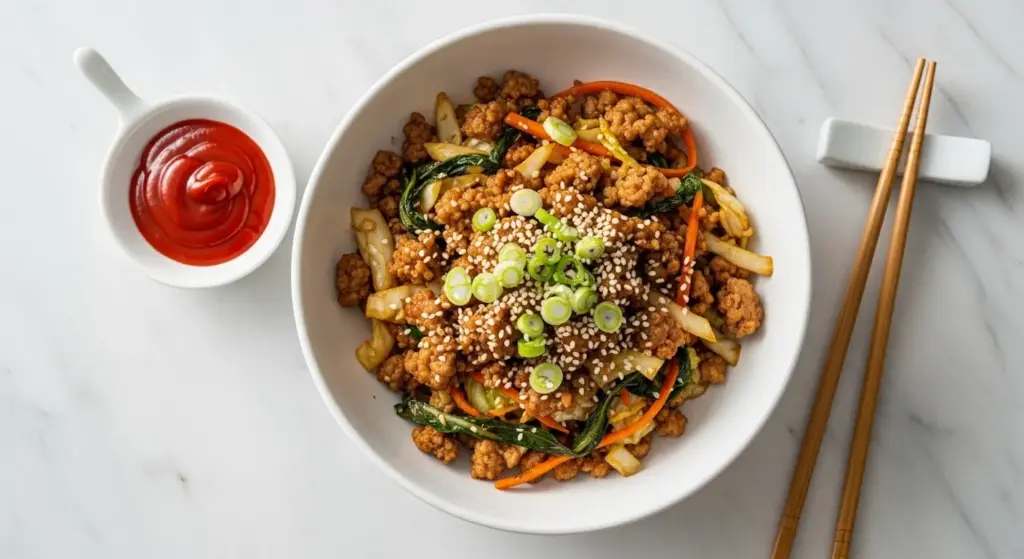
Egg roll in a bowl is satisfying all on its own, but it pairs wonderfully with a few simple accompaniments.
- Serve it over steamed jasmine rice or brown rice for a more filling meal that stretches it into generous portions.
- Pile it over cauliflower rice to keep everything low-carb and keto-friendly.
- Ladle it over a bed of ramen noodles (cook separately and drain) for a comforting noodle bowl.
- Serve it alongside Fried Cabbage for a double-cabbage spread that works surprisingly well.
- Add a drizzle of peanut sauce or spicy mayo on top for an extra layer of richness.
- Serve it in lettuce cups for a fun, low-carb presentation at parties or casual dinners.
- Top with crispy wonton strips for crunch if you want to recreate a little of that original egg roll wrapper texture.
Read Also: Bibimbap Recipe
Variations to Try
The base recipe is a classic, but there are so many easy ways to customize it to your taste or what you have on hand.
- Ground beef version: Swap the pork for 85% lean ground beef for a heartier, slightly beefier flavor. It works extremely well with the hoisin-soy sauce combination.
- Ground turkey or chicken: For a leaner option, ground turkey or chicken works well. Add a little extra hoisin sauce to compensate for the lower fat content, which is what carries much of the flavor in the pork version.
- Vegetarian/vegan: Replace the ground meat with crumbled firm tofu (press it dry first) or cooked and crumbled tempeh. Use a few extra tablespoons of hoisin sauce and cook on high heat to get some browning.
- Spicy version: Add 1 to 2 teaspoons of sambal oelek, Sriracha, or chili crisp to the sauce mixture before adding it to the pan.
- Add an egg: Make a well in the center of the finished dish, crack in 1 or 2 eggs, and scramble them into the mixture. This adds extra protein and gives it a fried rice-like quality.
- Mushroom addition: Finely chop 6 to 8 oz (170 to 225g) of cremini or shiitake mushrooms and add them with the onions. They add a meaty umami depth that’s especially welcome in the turkey or tofu version.
- Water chestnuts: For extra crunch, stir in one small can of drained, chopped water chestnuts along with the coleslaw mix.
For another Asian-inspired skillet dinner, try this Easy Mongolian Beef Recipe.
Storage and Reheating
This recipe stores and reheats exceptionally well, making it one of the best meal prep options in your weekly rotation.
- Refrigerator: Store cooled leftovers in an airtight container for up to 4 days. The flavors actually deepen overnight, making it arguably better the next day.
- Freezer: Transfer to a freezer-safe container and freeze for up to 3 months. Thaw overnight in the refrigerator before reheating.
- Reheating on the stovetop: Add the leftovers to a skillet over medium heat with a small splash of water or soy sauce and toss until heated through, about 3 to 4 minutes.
- Reheating in the microwave: Transfer to a microwave-safe bowl, cover loosely, and heat in 60-second intervals, stirring between each, until hot throughout.
- Meal prep tip: Store the egg roll mixture separately from any rice or noodles to prevent the grains from absorbing all the sauce and becoming mushy.
For another easy one-pan meal that reheats beautifully, check out this Mexican Beef and Rice Skillet Recipe.
Nutritional Facts
The following estimates are based on 1 serving (approximately 1/4 of the total recipe) using ground pork, without rice or optional garnishes. Values will vary based on exact brands and fat content of the meat used.
| Nutrient | Amount Per Serving |
|---|---|
| Calories | ~340 kcal |
| Total Fat | ~22g |
| Saturated Fat | ~7g |
| Cholesterol | ~75mg |
| Sodium | ~870mg |
| Total Carbohydrates | ~11g |
| Dietary Fiber | ~3g |
| Net Carbs | ~8g |
| Sugar | ~5g |
| Protein | ~24g |
Using ground turkey instead of pork reduces fat to approximately 11g and calories to approximately 240 per serving.
For a lighter, veggie-forward side that rounds out this bowl nicely, try this Broccoli Salad Recipe.
Health Benefits of Key Ingredients
This dish doesn’t just taste good. It’s packed with genuinely nutritious ingredients that pull real weight.
The cabbage and coleslaw mix at the heart of this recipe is a nutritional powerhouse that often gets overlooked. Cabbage is rich in vitamins C and K, contains a good amount of fiber, and provides glucosinolates, plant compounds that have been studied for their role in supporting cellular health. It also keeps the dish volume high without adding many calories.
- Ginger has well-established anti-inflammatory properties and has been shown in studies to support digestion, reduce nausea, and help with post-exercise muscle soreness.
- Garlic contains allicin, a compound linked to immune support, reduced blood pressure, and improved cardiovascular health markers.
- Sesame oil provides healthy monounsaturated and polyunsaturated fats, along with sesamol and sesaminol, antioxidants unique to sesame that may have anti-inflammatory effects.
- Ground pork is an excellent source of complete protein, B vitamins (especially B12, B6, and niacin), zinc, and phosphorus. Choosing an 85 to 90% lean blend gives you nutrition without excessive saturated fat.
- Carrots (naturally present in coleslaw mix) are rich in beta-carotene, which the body converts to vitamin A for eye health, immune function, and skin support.
Read Also: Sauteed Cabbage Recipe
Frequently Asked Questions
1. Can I make egg roll in a bowl ahead of time?
Yes, and it actually tastes even better the next day once the flavors have had time to meld. Cook the recipe fully, let it cool completely, then store in an airtight container in the refrigerator for up to 4 days. Reheat on the stovetop with a small splash of soy sauce or water to loosen it back up.
2. What’s the best meat to use for egg roll in a bowl?
Ground pork is the most traditional and flavorful option, as it’s what classic egg roll filling is made with. That said, ground beef, ground turkey, and ground chicken all work well. If using a very lean meat like turkey breast, add a little extra hoisin sauce to compensate for the reduced fat, which is where a lot of the richness comes from.
3. Can I make this recipe gluten-free?
Absolutely. Swap the soy sauce for tamari or coconut aminos, and replace the hoisin sauce with a gluten-free hoisin (several brands make one). All other ingredients in this recipe are naturally gluten-free. Double-check your rice vinegar label as well, since most are gluten-free but it varies by brand.
4. Can I use fresh cabbage instead of bagged coleslaw mix?
Yes, you can absolutely shred your own cabbage. Use about 4 to 5 cups (300 to 350g) of finely shredded green cabbage combined with 1 medium carrot, julienned or grated. The bagged coleslaw mix is purely a convenience shortcut. The fresh version tastes identical and takes about 5 extra minutes of prep.
5. Is egg roll in a bowl keto-friendly?
Yes. The base recipe as written is quite low in carbohydrates, with roughly 8 grams of net carbs per serving when made with pork. To make it strictly keto, swap the brown sugar for a keto-friendly sweetener like erythritol or monk fruit, replace soy sauce with coconut aminos, and omit the hoisin sauce or use a keto-approved version. Serve over cauliflower rice to keep the whole meal keto.
For another keto-friendly dinner idea, try this Taco Skillet Recipe.
Final Thoughts
This egg roll in a bowl recipe is one of those rare dishes that checks every box: fast, easy, healthy, and genuinely delicious.
It has all the savory, gingery, sesame-kissed flavor of a classic egg roll without any of the rolling, sealing, or frying.
Once you make it the first time, you’ll understand why it’s become such a beloved staple in so many kitchens.
Try it this week and make it your own. Swap the protein, turn up the heat, or pile it over noodles. Just don’t forget the sesame oil at the end.
If you make this recipe, leave a comment below and let me know how it turned out! And if you have a favorite variation, share it. I’d love to hear what you’re cooking.
Recommended:
- Air Fryer Egg Rolls
- Hoisin Sauce Recipe
- Peanut Sauce Recipe
- Teriyaki Sauce Recipe
- Chicken Fried Rice Recipe
- Easy Orange Chicken Recipe
- Fried Cabbage Recipe
- Cabbage Soup Recipe
- Vinegar Coleslaw Recipe
- Easy Mongolian Beef Recipe