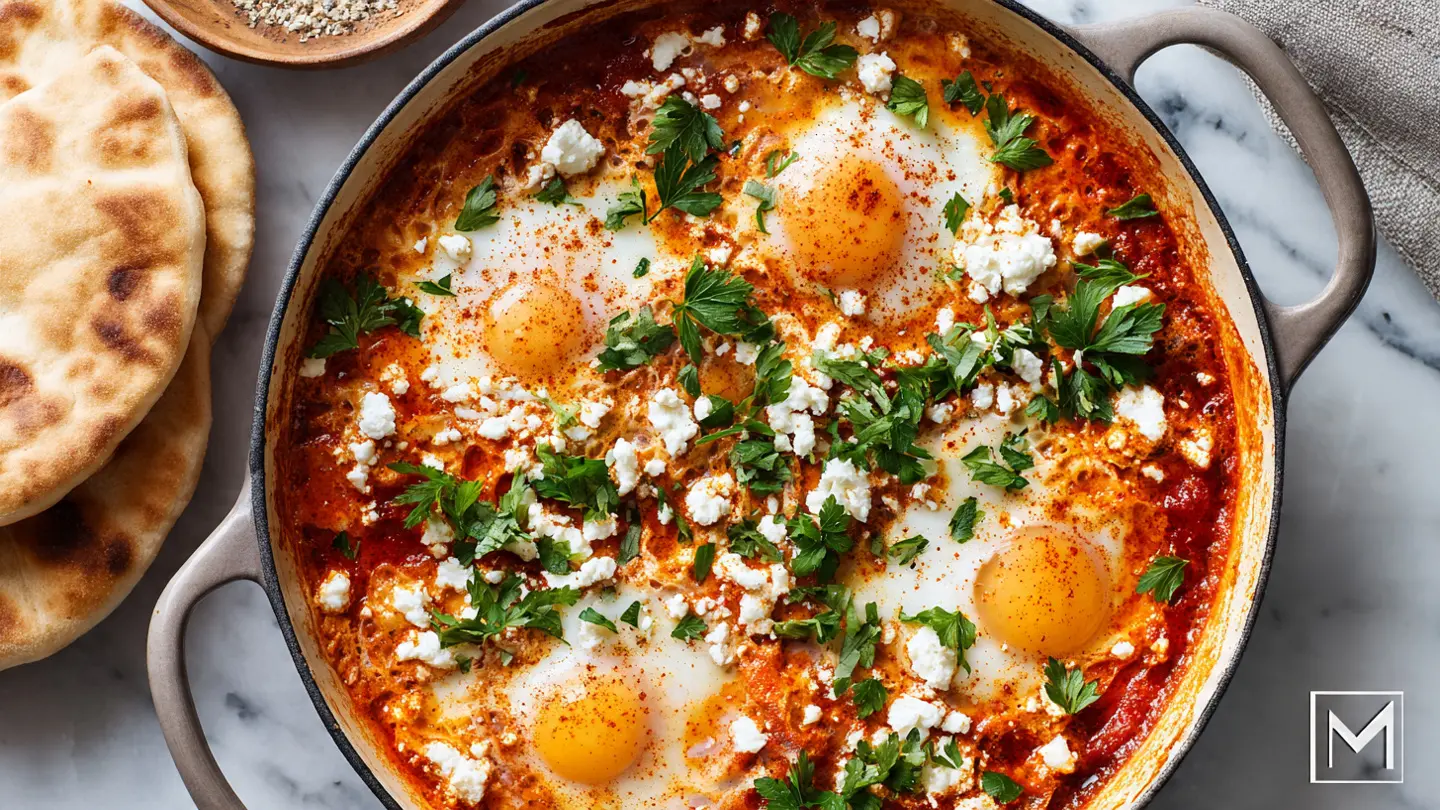
If you have never made a shakshuka recipe at home, today is the day everything changes. This North African and Middle Eastern classic is one of those rare dishes that feels special every single time you make it, yet it comes together with a handful of pantry staples in about 30 minutes.
Imagine cracking eggs into a bubbling, brick-red tomato and pepper sauce spiked with cumin, paprika, and garlic. The whites set into silky cushions while the yolks stay soft and golden, and the whole thing is served right from the skillet with warm pita or crusty bread for mopping up every last drop.
It is deeply savory, just a little smoky, and has that irresistible one-pan quality that makes cleanup feel like no big deal.
The name shakshuka literally means “a mixture” in Arabic, and the dish is thought to have originated in Tunisia before spreading across North Africa, the Levant, and Israel, where it became a beloved staple. Today it shows up on brunch menus worldwide for good reason.
This version sticks to the most traditional, widely recognized preparation: a sofrito base of onion, bell pepper, and garlic, a rich spiced tomato sauce, and gently poached eggs finished with crumbled feta and fresh herbs.
It is weeknight-easy and weekend-worthy all at once.
You might also enjoy: Egg Skillet Recipe
Why You’ll Love This Shakshuka Recipe
This dish checks every box, and then some.
It is a true one-pan meal, which means minimal cleanup and maximum flavor.
The ingredients are almost entirely pantry staples, with the possible exception of fresh eggs and feta, which means you can make it on a whim without a special grocery run.
It scales beautifully: the base recipe serves two to four people, but you can easily double it for a crowd or halve it for a solo meal.
It works for any meal of the day. Shakshuka is traditionally a breakfast or brunch dish in many cultures, but it is equally satisfying for lunch or a cozy weeknight dinner.
The spice level is completely customizable. Leave out the red pepper flakes for a mild version, or add a spoonful of harissa for something with real heat.
Here is a quick summary of what makes this recipe a keeper:
- Ready in about 30 minutes from start to finish
- One skillet means simple cleanup
- Naturally vegetarian and gluten-free when served without bread
- Rich, layered flavor from toasted spices and simmered tomatoes
- Endlessly versatile with easy protein and veggie add-ins
- Works for breakfast, brunch, lunch, or dinner
- Crowd-friendly and easy to serve straight from the pan
Read Also: Breakfast Skillet Recipe
Ingredients
The beauty of shakshuka is that the ingredient list is short but every item does heavy lifting. The spices are what transform a basic tomato sauce into something aromatic and deeply flavored, so do not skip or swap them out lightly.
Here is everything you need:
For the sauce:
- 3 tablespoons (45 ml) extra-virgin olive oil
- 1 large yellow onion, finely diced (about 1 1/2 cups / 200 g)
- 1 large red bell pepper, seeded and diced (about 1 cup / 150 g)
- 4 cloves garlic, minced
- 2 tablespoons (30 g) tomato paste
- 1 teaspoon ground cumin
- 1 teaspoon smoked paprika
- 1/2 teaspoon sweet paprika
- 1/4 teaspoon ground coriander
- 1/4 to 1/2 teaspoon crushed red pepper flakes (adjust to taste)
- 1 can (28 oz / 800 g) whole peeled tomatoes, crushed by hand
- 1/2 teaspoon kosher salt, plus more to taste
- 1/4 teaspoon black pepper
For the eggs:
- 5 to 6 large eggs
For finishing:
- 2 oz (56 g) crumbled feta cheese
- Small handful of fresh flat-leaf parsley or cilantro, roughly chopped
- Warm pita bread or crusty bread for serving
Read Also: Avocado Toast Recipe
Kitchen Equipment Needed
You do not need any specialty equipment to make shakshuka, but the right pan makes a noticeable difference. A wide, shallow skillet with a lid is the key to getting the eggs to cook evenly without overcooking the yolks.
Here is what you will want to have on hand:
- Large (12-inch / 30 cm) stainless steel skillet or enameled cast iron pan with a tight-fitting lid (stainless steel or enameled cast iron is preferred over bare cast iron, as the tomato’s acidity can react with unsealed cast iron)
- Wooden spoon or silicone spatula for stirring the sauce
- Sharp chef’s knife for dicing the vegetables
- Cutting board
- Can opener for the canned tomatoes
- Small bowl for cracking each egg into before adding to the sauce (this prevents shell fragments and lets you control placement)
- Measuring spoons for the spices
For a prettier presentation and easy table-serving, an enameled skillet doubles as both cooking vessel and serving dish.
Read Also: Egg Bake Recipe
Recommended Products for This Recipe
These are a few products I genuinely recommend based on quality and how much they improve the final dish.
1. Enameled Cast Iron Skillet
An enameled skillet is the single best pan for shakshuka. It distributes heat evenly so the sauce simmers without scorching, and it goes from stove to table beautifully. The enameled coating means no reactivity with acidic tomatoes, and cleanup is simple.
2. San Marzano Whole Peeled Tomatoes
The quality of your canned tomatoes directly affects the depth of your sauce. San Marzano-style tomatoes are sweeter, less acidic, and meatier than standard canned tomatoes, making them the gold standard for shakshuka sauce. The difference is immediately noticeable in the final flavor.
3. Harissa Paste
A tablespoon of good harissa stirred into the sauce adds smoky, complex heat that takes the dish to the next level. It is optional but highly recommended for anyone who loves a bolder, spicier shakshuka.
4. Block Feta Cheese
Pre-crumbled feta tends to be drier and less creamy than feta sold in brine as a block. Buying a block of feta in brine and crumbling it yourself gives you creamier, tangier bites that melt slightly into the hot sauce in a way pre-crumbled feta simply cannot match.
5. Za’atar Spice Blend
A pinch of za’atar over the finished shakshuka adds an herby, sesame-forward brightness that feels very authentic to the region. It is one of those finishing touches that makes your version taste like it came from a Middle Eastern kitchen.
For a Mediterranean-inspired morning, pair this with a warm bowl of Moroccan Lentil Soup for a full and nourishing spread.
Step-by-Step Instructions
Prep time: 10 minutes Cook time: 20 minutes Total time: 30 minutes Servings: 2 to 4
1. Prepare Your Ingredients
- Finely dice the yellow onion into small, even pieces. Smaller pieces soften faster and meld into the sauce rather than remaining chunky.
- Seed the red bell pepper and dice it into pieces roughly the same size as the onion.
- Mince the garlic cloves finely. Pre-minced jarred garlic can work in a pinch, but fresh garlic gives a noticeably brighter flavor.
- Open the can of whole peeled tomatoes and use your hands to crush the tomatoes directly in the can, breaking them into rough chunks. This technique gives you a more rustic, textured sauce than crushed canned tomatoes would provide.
- Crack each egg individually into a small bowl or ramekin. This gives you control when adding them to the sauce and prevents any shell fragments from ending up in your dish.
- Measure out all your spices and set them aside in a small bowl or on a plate so they are ready to go at once.
2. Sauté the Aromatics
- Heat 3 tablespoons (45 ml) of olive oil in your large skillet over medium heat until the oil shimmers but is not smoking.
- Add the diced onion and bell pepper to the pan. Spread them out in an even layer.
- Cook, stirring occasionally, for 7 to 8 minutes until the onion becomes soft and translucent and the edges begin to turn a light golden color. Do not rush this step. Properly softened aromatics form the sweet, savory backbone of the entire dish.
- Add the minced garlic and stir constantly for about 60 seconds until fragrant. The garlic should smell sweet and nutty, not sharp or burnt. Burnt garlic will make the whole dish bitter, so keep it moving.
3. Build the Spiced Tomato Base
- Add the 2 tablespoons (30 g) of tomato paste directly to the pan. Stir it into the onion and pepper mixture.
- Cook the tomato paste, stirring constantly, for about 2 minutes. It will darken from a bright red to a deeper brick-red color. This step is called “blooming” the paste, and it removes the raw, tinny flavor while adding a subtle caramelized richness.
- Add all the spices: the cumin, smoked paprika, sweet paprika, ground coriander, and red pepper flakes. Stir everything together for about 30 seconds. The spices should smell warm and fragrant as they toast briefly in the oil.
- Pour in the crushed whole peeled tomatoes along with all their juices. Use your wooden spoon to scrape up any bits stuck to the bottom of the pan, which will add flavor to the sauce.
4. Simmer the Sauce
- Stir the sauce to combine all the ingredients thoroughly.
- Bring the sauce to a gentle simmer over medium heat.
- Reduce the heat to medium-low and let the sauce cook uncovered for 10 to 12 minutes, stirring occasionally.
- The sauce is ready when it has thickened noticeably, the tomato chunks have broken down further, and the color has deepened to a rich red-orange. It should be thick enough that when you drag a spoon through it, the line holds for a moment before filling back in.
- Taste the sauce and season with 1/2 teaspoon kosher salt and 1/4 teaspoon black pepper. Adjust as needed. The sauce is the heart of the dish, so make sure you are happy with the seasoning before adding the eggs.
5. Add the Eggs
- Using the back of a large spoon, create 5 to 6 small wells, or indentations, in the sauce. Space them out evenly so each egg has room to cook without running into the others.
- Gently tip one egg from its small bowl into each well. Try to keep the yolk intact and centered.
- The sauce should be simmering gently. If it is boiling hard, reduce the heat before adding the eggs. A hard boil will cook the bottoms of the whites too quickly and may toughen them before the tops set.
6. Cover and Cook the Eggs
- Place the lid on the skillet.
- Cook the eggs over medium-low heat for 5 to 7 minutes for runny yolks, or 8 to 10 minutes for fully set yolks.
- At the 5-minute mark, lift the lid and check on the eggs. The whites should look opaque and set with no translucent jiggly areas. The yolk should still be rounded and glossy for a runny result. For jammy yolks, the surface of the yolk will appear slightly matte and set around the edges.
- Check them frequently during the last minute or two of cooking, because they can go from perfectly runny to fully set very quickly.
- If you do not have a lid, you can cover the skillet tightly with a large baking sheet or piece of aluminum foil.
7. Finish and Serve
- Remove the skillet from the heat immediately once the eggs reach your preferred doneness.
- Scatter the crumbled feta cheese generously over the top of the eggs and sauce. The heat from the pan will soften the feta slightly without fully melting it.
- Sprinkle fresh flat-leaf parsley or cilantro over everything for color and a bright, herby contrast to the rich sauce.
- Bring the skillet directly to the table for a beautiful, informal presentation.
- Serve immediately with warm pita bread or toasted crusty bread for dipping and scooping. Shakshuka waits for no one, so dig in right away.
The same principle of building bold flavor in one pan works wonderfully in this Loaded Breakfast Skillet Recipe as well.
Tips for Success
A few small adjustments make the difference between a good shakshuka and a truly great one. These tips address the most common points where things can go slightly sideways.
Keep these in mind before you start cooking:
- Do not rush the aromatics. Sautéing the onion and pepper for a full 7 to 8 minutes develops sweetness and depth that shortcuts simply cannot replicate.
- Bloom the tomato paste. Cooking the paste in the oil for two full minutes removes any raw, acidic bite and adds a richer, caramelized flavor to the sauce.
- Crack eggs into a small bowl first. This simple habit lets you lower each egg gently and precisely into its well without breaking the yolk or dropping in any shell fragments.
- Keep the simmer gentle when cooking the eggs. A hard bubble will toughen the whites. Lower the heat if needed.
- Cover the pan with a lid. The steam trapped inside helps the egg whites cook on top without needing to flip anything, giving you that perfectly set white and soft yolk.
- Pull the pan off heat a minute early. The eggs continue cooking from residual heat, so removing the pan before they look completely done ensures they will be perfect by the time they hit the table.
- Season the sauce generously. A well-seasoned tomato sauce is the backbone of the dish. Taste and adjust before adding the eggs.
Another great egg-forward dish worth trying is this Egg Bites Recipe.
Serving Suggestions
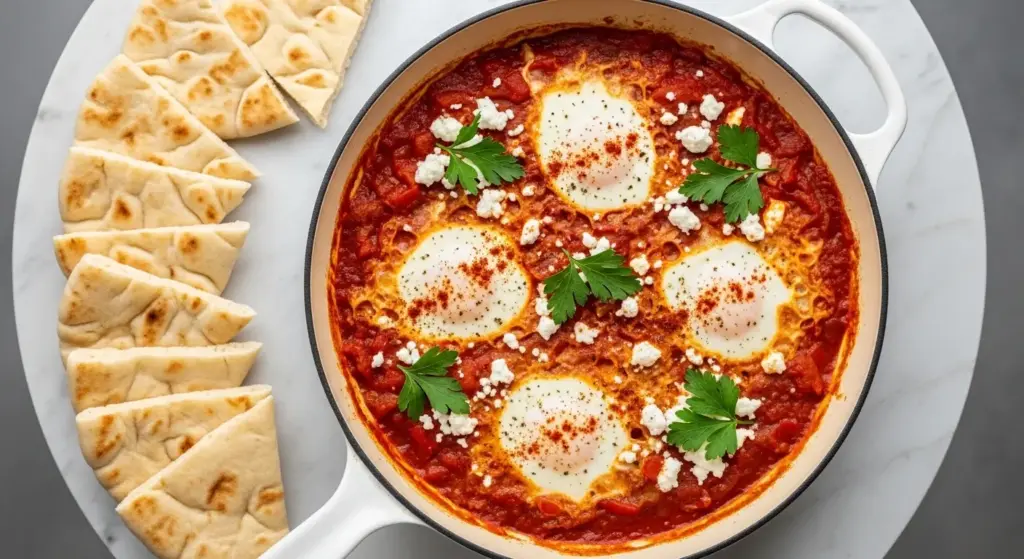
Shakshuka is traditionally served straight from the pan, which makes it feel communal and relaxed. A generous piece of bread is non-negotiable for scooping up that sauce.
Here are some of the best ways to serve and round out your meal:
- Warm or toasted pita bread is the classic pairing, perfect for scooping and sopping
- A thick slice of crusty sourdough is equally good and easier to find in many households
- A small bowl of Easy Hummus on the side adds a creamy, protein-rich contrast
- A simple green salad with lemon vinaigrette cuts through the richness of the sauce beautifully
- A bowl of Classic Guacamole adds a fresh, creamy complement if you are going a more eclectic route
- A drizzle of good olive oil or a spoonful of labneh (thick strained yogurt) over the eggs just before serving adds richness and tang
- Top with a pinch of za’atar, a drizzle of harissa, or extra red pepper flakes for a more layered finish
Variations to Try
Once you have mastered the base recipe, shakshuka is one of the most fun dishes to riff on. The spiced tomato base is a welcoming canvas for so many additions.
Here are some of the most popular and delicious variations:
- Green Shakshuka: Replace the tomato sauce with a base of sautéed spinach, kale, or Swiss chard with garlic and cream. Add tomatillos for a tangy note. Finish with the same egg-poaching method.
- Shakshuka with Chickpeas: Stir 1 can of drained and rinsed chickpeas into the sauce before adding the eggs. This adds heartiness and plant-based protein, making it a more filling meal.
- Spicy Harissa Shakshuka: Stir 1 to 2 tablespoons of harissa paste into the sauce after adding the tomatoes. The result is smokier, more complex, and deeply satisfying.
- Feta and Spinach Shakshuka: Add 2 packed cups (60 g) of fresh baby spinach to the sauce during the last 2 minutes of simmering, before adding the eggs. It wilts quickly and adds color and nutrition.
- Merguez Sausage Shakshuka: Brown 1/2 pound (225 g) of sliced merguez or spicy lamb sausage in the pan before adding the aromatics. Remove it, build the sauce, then return the sausage to simmer with the tomatoes before nestling in the eggs.
- Shakshuka with Feta and Olives: Scatter kalamata olives alongside the crumbled feta for a briny, Mediterranean-inflected version.
- Moroccan Shakshuka: Add a splash of full-fat coconut milk to the sauce before the eggs for a richer, slightly sweet version.
You might also enjoy this Easy Ratatouille Recipe for another vegetable-forward one-pan dish.
Storage and Reheating
Shakshuka is best eaten fresh from the pan, but the tomato sauce stores beautifully and makes meal prep genuinely easy. The eggs, however, do not reheat as well once poached.
Here is the smartest approach to storing and reheating leftovers:
- Store the sauce separately from the eggs whenever possible. Let the sauce cool completely, then transfer it to an airtight container and refrigerate for up to 4 days.
- If the eggs are already cooked into the sauce, store the whole dish in an airtight container in the refrigerator for up to 2 days. The yolks will set fully during storage.
- To reheat the sauce, warm it in a skillet over medium heat, adding a small splash of water if it has thickened too much, until it comes back to a gentle simmer. Then crack fresh eggs into the sauce and cook as directed.
- To reheat with eggs already in it, place in a covered skillet over low heat until just warmed through. Avoid microwaving if possible, as it makes the eggs rubbery.
- The sauce freezes well. Portion it into freezer-safe containers or zip-lock bags and freeze for up to 3 months. Thaw overnight in the refrigerator before reheating.
For another make-ahead-friendly egg dish, check out this Breakfast Casserole Recipe.
Nutritional Facts
The following is an approximate nutritional estimate per serving, based on 4 servings with 1 to 2 eggs each and 1 oz (28 g) of feta. Values will vary based on exact ingredients and portion sizes.
| Nutrient | Per Serving |
|---|---|
| Calories | ~280 kcal |
| Total Fat | 18 g |
| Saturated Fat | 5 g |
| Cholesterol | 285 mg |
| Sodium | 680 mg |
| Total Carbohydrates | 14 g |
| Dietary Fiber | 3 g |
| Sugars | 8 g |
| Protein | 15 g |
| Vitamin A | 35% DV |
| Vitamin C | 55% DV |
| Iron | 20% DV |
| Calcium | 15% DV |
Nutritional values are estimates only. Serving with bread will increase carbohydrates and calories significantly.
Another nutrient-dense recipe worth bookmarking is this Moroccan Lentil Soup Recipe for a fiber-rich plant-based meal.
Health Benefits of Key Ingredients
Shakshuka is not just delicious. It is genuinely nutritious, built from whole ingredients that each bring real health value to the table.
Here is a closer look at what you are getting with each bowl:
- Eggs are one of the most complete protein sources available, providing all essential amino acids as well as choline for brain health, vitamin D, and B12. They are also rich in lutein and zeaxanthin, antioxidants that support eye health.
- Tomatoes are loaded with lycopene, a powerful antioxidant associated with reduced risk of certain cancers and cardiovascular disease. Cooking tomatoes in oil actually increases lycopene bioavailability, making shakshuka an especially smart way to eat them.
- Bell peppers are an outstanding source of vitamin C, with a single red bell pepper containing more than twice the daily recommended intake. They also provide vitamin A, folate, and antioxidant flavonoids.
- Garlic has been studied extensively for its antimicrobial and anti-inflammatory properties. The compound allicin, released when garlic is crushed or minced, is the main driver of its many documented health benefits.
- Olive oil is the foundation of the Mediterranean diet and is rich in heart-healthy monounsaturated fats and anti-inflammatory polyphenols, particularly oleocanthal.
- Cumin is rich in iron and antioxidants, and some studies suggest it can help improve digestion and blood sugar regulation.
- Feta cheese provides a meaningful dose of calcium and protein while being naturally lower in fat and calories than many other cheeses.
Read Also: Easy Tomato Soup Recipe
Frequently Asked Questions
1. What does shakshuka taste like?
Shakshuka tastes rich, savory, and warmly spiced. The tomato base has a sweet-tangy depth from long simmering and toasted spices, and the eggs add a creamy richness that balances the acidity of the tomatoes. The feta brings a salty, tangy contrast, and fresh herbs lighten everything up.
It is bold but not heavy, and the overall effect is deeply comforting.
2. Is shakshuka supposed to be spicy?
Traditional shakshuka has a mild to moderate heat level from cumin and a small amount of red pepper flakes or cayenne. It is not intended to be blow-your-mouth-off spicy.
That said, you can easily dial the heat up or down by adjusting the red pepper flakes or adding harissa paste. Many people enjoy it completely mild, especially when serving to kids.
3. Can I make shakshuka ahead of time?
Yes, the tomato sauce can absolutely be made ahead. In fact, many cooks say the flavor improves after a day in the refrigerator as the spices continue to meld.
Make the sauce up to 4 days in advance and store it in an airtight container in the fridge. When ready to serve, reheat the sauce in a skillet until simmering, then add fresh eggs and proceed with the recipe as written.
4. What kind of pan is best for shakshuka?
A wide, shallow skillet with a lid is ideal. The width gives the eggs room to spread out and cook evenly, and the lid traps steam to help the tops of the whites set without needing to flip.
Stainless steel and enameled cast iron are both excellent choices because they do not react with the acidic tomatoes. Bare cast iron can work but may give a slight metallic taste and can damage the seasoning over time.
5. Can I use fresh tomatoes instead of canned?
Absolutely. Fresh, ripe tomatoes, especially Roma or vine-ripened varieties, make a wonderful shakshuka during peak season. You will need about 4 to 5 medium ripe tomatoes (roughly 1.5 lbs / 680 g), diced.
Keep in mind that fresh tomatoes have more water and less concentrated flavor than canned, so you will likely need to simmer the sauce for a few extra minutes to achieve the same thick, jammy consistency. Canned whole peeled tomatoes are simply more consistent year-round.
For more egg-forward recipes, check out these Air Fryer Egg Bites.
Final Thoughts
Shakshuka is one of those recipes that earns a permanent spot in your rotation from the very first time you make it.
It is fast enough for a Tuesday morning and impressive enough for a relaxed weekend brunch with friends. The ingredients are humble, the technique is forgiving, and the results are genuinely stunning every single time.
Once you understand the simple building blocks of a good spiced tomato sauce, you can riff on this dish endlessly, adding chickpeas, leafy greens, different cheeses, or a swirl of harissa whenever the mood strikes.
Give this shakshuka recipe a try this week. Serve it with good bread, share it with someone you love, and enjoy it straight from the pan.
If you make it, I would love to hear how it turned out! Drop a comment below and let me know your favorite variation or topping. Sharing is always welcome.
Recommended:
- Breakfast Burrito Recipe
- Cloud Eggs Recipe
- Scrambled Eggs Recipe
- Starbucks Egg Bites Recipe
- Quiche Lorraine Recipe
- Creamy Tomato Soup Recipe
- Easy Ratatouille Recipe
- Tomato Sauce Recipe
- Easy Hummus Recipe
- Garlic Naan Bread Recipe