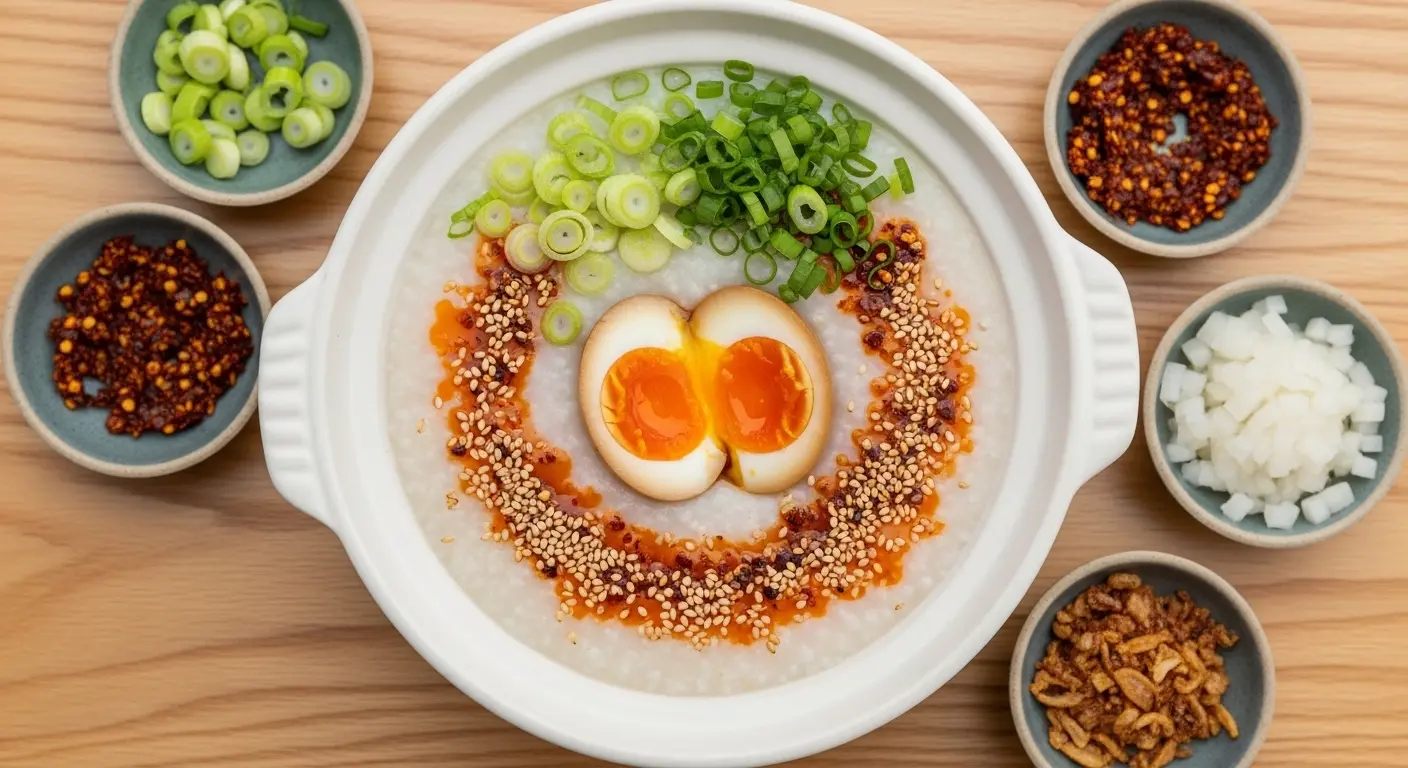
A warm bowl of congee recipe is one of the most comforting things you can make at home. It’s a simple Chinese rice porridge that has been feeding families across Asia for centuries, and once you try it, you’ll completely understand why it has such a devoted following.
Congee starts with just two things: rice and water. But the magic happens over time as the rice slowly breaks down, releasing its starch and transforming into a silky, velvety porridge that feels like a hug in a bowl.
It’s deeply savory when you use a good broth, subtly fragrant from ginger, and endlessly customizable with toppings. This is the kind of dish that feels just right on a cold morning, when you’re feeling under the weather, or honestly any night you want something warm, filling, and easy.
It’s the Chinese equivalent of chicken noodle soup, and it hits exactly the same emotional notes. The base recipe here focuses on the classic Cantonese-style congee: smooth, creamy, and full of flavor from chicken broth and aromatics like ginger and scallions.
Once you master the base, you can take it in whatever direction you like.
You might also enjoy this Chicken Rice Soup if you love simple, comforting rice-based bowls.
Why You’ll Love This Congee Recipe
This congee recipe is the definition of low-effort, high-reward cooking. You don’t need special skills or fancy equipment — just a pot, some pantry staples, and a little patience.
It’s also one of the most forgiving dishes you’ll ever make. The ratios are flexible, the cook time is adjustable, and it tastes great with whatever toppings you happen to have on hand.
- Incredibly comforting: The creamy texture and gentle flavors are deeply soothing, making it perfect when you’re feeling tired, sick, or just in need of something cozy.
- Only a few ingredients: You likely already have everything you need in your kitchen right now.
- Ready in under an hour: Unlike some traditional methods that take two-plus hours, this version is ready in about 45 to 50 minutes without sacrificing flavor or texture.
- Infinitely customizable: From soft-boiled eggs to shredded chicken to crispy fried shallots, the topping options are endless.
- Great for meal prep: Congee reheats beautifully and can be stored in the fridge for several days.
- Naturally gluten-free and dairy-free: The base recipe is friendly to a wide range of dietary needs.
Read Also: Miso Soup Recipe
Ingredients
Making congee at home requires just a handful of core ingredients. The quality of your broth makes a significant difference here — if you have homemade chicken stock, use it. If not, a good store-bought low-sodium broth works perfectly well.
- 1 cup (200g) jasmine or medium-grain white rice
- 8 cups (2 liters) chicken broth (or water, or a combination of both)
- 1-inch (2.5cm) piece of fresh ginger, peeled and thinly sliced
- 3 cloves garlic, thinly sliced
- 1 teaspoon (5ml) toasted sesame oil, plus more for drizzling
- 1 tablespoon (15ml) soy sauce or light soy sauce
- Salt and white pepper, to taste
- 3 scallions (green onions), thinly sliced
- Optional toppings: soft-boiled egg, shredded chicken, chili crisp oil, fried shallots, fresh cilantro, white sesame seeds
Read Also: Pho Recipe
Kitchen Equipment Needed
You don’t need anything specialized to make this congee. A basic pot and a wooden spoon are really all that’s required, though a few other items make the process smoother.
- Large heavy-bottomed soup pot or Dutch oven (at least 4-quart capacity)
- Fine-mesh strainer or colander, for rinsing the rice
- Wooden spoon or silicone spatula, for stirring to prevent sticking
- Ladle, for serving
- Sharp knife and cutting board, for prepping ginger, garlic, and scallions
- Measuring cups and spoons
Read Also: Tom Yum Soup Recipe
Recommended Products for This Recipe
These are products I’d genuinely recommend based on quality and how much of a difference they can make in your finished bowl of congee.
1. Koda Farms Kokuho Rose Medium Grain Rice
Medium-grain white rice strikes the perfect balance for creamy congee. It has just the right starch content to break down into a smooth, velvety porridge without going gummy or pasty. This well-regarded California-grown rice is a pantry staple in many Asian households for exactly this reason.
2. Lodge Enameled Cast Iron Dutch Oven
A heavy-bottomed pot distributes heat evenly, which means the congee simmers at a consistent temperature without hot spots that cause burning or uneven cooking. The Lodge enameled Dutch oven is a reliable workhorse that handles everything from congee to soups to braises with ease.
3. Lee Kum Kee Premium Light Soy Sauce
The right soy sauce adds depth and umami without overwhelming the delicate flavor of the porridge. Lee Kum Kee’s premium light soy sauce has a clean, bright saltiness that blends seamlessly into the broth without muddying the flavor.
4. Laoganma Chili Crisp
If there’s one topping that takes congee from simple to spectacular, it’s a spoonful of chili crisp. Laoganma is the gold standard — packed with fried chili flakes, garlic, and a savory-spicy oil that adds incredible complexity to every bite.
5. Premium Ground White Pepper
White pepper is the traditional seasoning choice for congee, giving it a gentle warmth and slight floral spice that black pepper simply cannot replicate. Freshly ground white pepper makes a noticeable difference in the final flavor profile.
This Chicken Tinola Recipe is another deeply comforting Asian bowl you’ll want to bookmark.
Step-by-Step Instructions
Step 1: Rinse the Rice
- Place the 1 cup (200g) of rice in a fine-mesh strainer or in a bowl and rinse it under cold running water.
- Gently swish the rice around with your fingers as the water runs over it, releasing the loose surface starch and any impurities.
- Rinse until the water runs mostly clear, which usually takes 2 to 3 passes. This should take about 1 to 2 minutes total.
- Note: You do NOT want to rinse the rice thoroughly the way you would for steamed white rice. A brief rinse is all that’s needed. The starch remaining inside each grain is what creates the creamy, porridge-like consistency of congee — don’t wash it all away.
- Drain the rinsed rice well and set it aside.
Step 2: Prepare the Aromatics
- Peel the 1-inch (2.5cm) piece of fresh ginger using the edge of a spoon (which removes the skin without wasting any flesh) or a vegetable peeler.
- Slice the peeled ginger into thin coins, about 1/8-inch (3mm) thick. Thin slices have more surface area and release more flavor during the long simmer.
- Peel the 3 garlic cloves and slice them thinly. They should be thin enough to soften completely and mellow out as the congee cooks, contributing savory depth without any sharp raw garlic bite.
- Thinly slice the 3 scallions crosswise. Separate the white and light green parts from the darker green tops. The white parts will go into the pot for flavor during cooking; save the dark green tops as a fresh, vibrant garnish for serving.
- Set all the prepared aromatics aside.
Step 3: Combine Rice and Broth in the Pot
- Pour the 8 cups (2 liters) of chicken broth into your large heavy-bottomed pot or Dutch oven.
- Add the rinsed and drained rice directly into the broth while it is still cold or at room temperature. Starting in cold liquid — rather than adding it to boiling liquid — gives the rice more time to slowly hydrate and allows it to release starch more gradually, contributing to a smoother final texture.
- Add the thinly sliced ginger coins to the pot.
- Add the thinly sliced garlic to the pot.
- Add the white and light green parts of the sliced scallions.
- Stir everything together briefly with a wooden spoon so the rice is evenly distributed throughout the liquid and not clumped at the bottom.
Step 4: Bring to a Boil
- Place the pot over medium-high heat.
- Bring the liquid to a full, rolling boil, stirring occasionally with a wooden spoon to prevent any rice from settling and sticking to the bottom of the pot before it heats through.
- As the liquid heats up, you may notice some pale foam forming on the surface. This is completely normal and is simply starch and protein from the rice and broth. You can skim it off with a large spoon for a cleaner-looking congee, but leaving it in won’t affect the flavor at all.
- Watch the pot closely during this heating phase. Once the liquid comes to a boil, the congee can bubble up and overflow quite quickly if the heat is not managed. Stay nearby and be ready to reduce the heat.
Step 5: Reduce Heat and Simmer
- As soon as the congee reaches a rolling boil, immediately reduce the heat to low or medium-low.
- You want a gentle, steady simmer — small, lazy bubbles slowly breaking the surface, not a vigorous boil. A vigorous boil will cause the congee to splatter, thicken unevenly, and may scorch the bottom of the pot.
- Partially cover the pot with a lid, leaving a gap of about 1 to 2 inches to allow steam to escape and prevent overflow.
- Cook the congee at this gentle simmer, stirring every 8 to 10 minutes to prevent the rice from clumping or sticking to the bottom of the pot.
- Continue cooking for 35 to 45 minutes total, until the rice grains have fully broken down and the mixture has reached a smooth, porridge-like consistency with no visible whole grains remaining.
- If the congee thickens too quickly before the rice has fully broken down, add a splash of water or broth (about 1/4 cup at a time), stir to incorporate, and continue cooking.
Step 6: Season the Congee
- Once the congee has reached your desired consistency (smooth, creamy, and thick enough to coat a spoon), remove the pot from the heat.
- Add the 1 tablespoon (15ml) of soy sauce and stir it in evenly throughout the congee. Taste before adding more — different chicken broths and soy sauces vary significantly in saltiness.
- Drizzle in the 1 teaspoon (5ml) of toasted sesame oil and stir it through. This adds a nutty, aromatic depth that beautifully rounds out the savory broth flavor. A little goes a long way.
- Season with salt to taste and a generous pinch of white pepper. White pepper is the traditional seasoning for Chinese congee — it has a subtly floral, earthy warmth that’s quite different from black pepper and is the authentic choice here.
- Taste the finished congee one final time and adjust any seasoning as needed. It should be savory, slightly rich, and fragrant from the ginger.
Step 7: Serve with Toppings
- Using tongs or a spoon, remove and discard the sliced ginger pieces from the finished congee. They have released all of their flavor into the broth during cooking and the texture of cooked ginger is not pleasant to eat.
- Ladle the hot congee generously into individual serving bowls.
- Top each bowl with the reserved sliced dark green scallion tops.
- Add any additional toppings you like: a soft-boiled or poached egg, shredded poached or rotisserie chicken, a drizzle of chili crisp or chili oil, crispy fried shallots or fried garlic, fresh cilantro leaves, a drizzle of extra sesame oil, or white sesame seeds.
- Serve immediately while hot. Congee cools relatively quickly, so serve it in warmed bowls if possible and eat it right away for the best experience.
You might also enjoy this Hot and Sour Soup Recipe as another warming Chinese classic for weeknight dinners.
Tips for Success
Getting congee right the first time is completely achievable, but a few specific techniques make a real difference in the final result.
- Don’t fully rinse the rice: A brief rinse removes surface impurities but leaves the internal starch intact. That internal starch is what transforms the liquid into smooth, creamy congee rather than watery liquid with floating grains.
- Use chicken broth for deeper flavor: While traditional plain white congee (baizhou) uses water, substituting all or part of the water with good chicken broth adds a savory, satisfying depth that makes the dish significantly more complex.
- Stir regularly: Congee can and will stick to the bottom of the pot if left unattended. A thorough stir every 8 to 10 minutes keeps things moving and helps the rice break down evenly throughout.
- Adjust consistency with liquid: Prefer a thinner congee? Use 10 cups (2.5 liters) of liquid instead of 8. Prefer it thicker and sturdier? Stick to 7 cups (1.75 liters). You can always add more liquid during cooking to loosen it up.
- Add white pepper at the end: White pepper loses its subtle floral notes when it cooks for too long. Add it in the final seasoning step, just before serving, for the most impact.
- Always use fresh ginger: Pre-cut, jarred, or dried ginger won’t give you the same clean, fragrant aroma. Fresh ginger is worth it here and makes a noticeable difference.
Read Also: Chinese Egg Drop Soup Recipe
Serving Suggestions
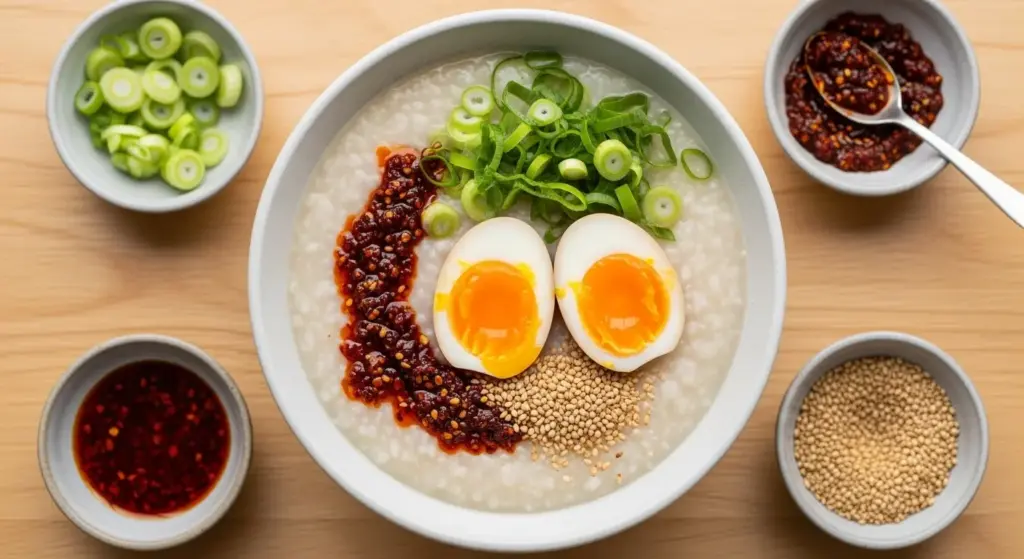
Congee is as much about the toppings as it is about the base porridge. The warm, neutral base is genuinely a blank canvas, and what you add on top transforms it from a simple bowl into a full, exciting meal.
Classic Asian sides and condiments pair particularly well here. Think punchy, savory, or crunchy elements that contrast the smooth, gentle congee.
- Soft-boiled or century eggs: The creamy yolk of a jammy soft-boiled egg melts into the congee beautifully. Century eggs (preserved eggs) add a uniquely rich, intense flavor that’s beloved in traditional Cantonese versions of this dish.
- Shredded poached or rotisserie chicken: Tender shredded chicken adds protein and texture without weighing down the delicate porridge base.
- Fried shallots or fried garlic: These provide essential crunch and a deep savory sweetness. You can buy them pre-made at most Asian grocery stores or fry your own quickly in a few tablespoons of oil.
- Chili crisp or chili oil: A spoonful swirled in just before eating adds heat, richness, and complexity that takes the whole bowl to another level.
- Chinese dough sticks (youtiao): These crispy fried bread sticks are classic congee accompaniments, dunked directly into the hot porridge and absolutely addictive.
- Soy sauce and extra sesame oil drizzle: A small additional drizzle of each right at the table intensifies the umami flavor and lets everyone customize their own bowl.
- Fresh cilantro and scallions: Bright, fresh herbs lift the whole dish and add a pop of color.
For a complementary Asian-inspired side, try these Chinese Dumplings.
Variations to Try
Once you have the base recipe down, there are dozens of delicious directions you can take your congee. Regional variations across China and Southeast Asia offer a remarkable amount of inspiration.
- Chicken congee: Add thinly sliced raw chicken breast or thighs directly to the simmering congee about 15 minutes before it finishes cooking. The chicken cooks gently in the porridge and comes out incredibly tender and moist.
- Pork and preserved egg congee: This is arguably the most iconic Cantonese version. Marinate ground or thinly sliced pork loin in a little cornstarch and oyster sauce, add to the congee in the final 5 minutes of cooking, and top the finished bowls with diced century eggs.
- Fish congee: Add very thinly sliced fresh white fish — tilapia, cod, or sea bass all work beautifully — in the last 3 to 5 minutes of cooking. The fish poaches gently in the hot porridge and comes out silky, delicate, and extremely flavorful.
- Seafood congee: Add raw shrimp and sliced scallops in the final 3 minutes of cooking for a restaurant-style version that feels quite luxurious.
- Vegetarian congee: Use vegetable broth in place of chicken broth. Top with sauteed shiitake mushrooms, silken tofu, and steamed bok choy for a fully plant-based bowl that’s still deeply satisfying.
- Plain white congee: Skip the broth entirely and use water. Season simply with sesame oil, white pepper, and a small splash of soy sauce for the most traditional, delicate version. This is the version most commonly eaten as a simple breakfast in China.
- Leftover rice congee: Use cooked leftover rice instead of raw rice. The ratio changes significantly (use about 2 cups of cooked rice to 4 cups of liquid), and the total cook time drops to just 15 to 20 minutes — a great weeknight shortcut.
Another comforting Asian bowl worth trying is this Udon Noodle Soup Recipe.
Storage and Reheating
Congee stores well and actually develops a slightly deeper flavor after a day in the refrigerator, making it a smart choice for meal prepping at the start of the week.
- Refrigerator: Transfer cooled congee to an airtight container and refrigerate for up to 5 days.
- Freezer: Congee freezes well in airtight containers or freezer bags for up to 1 month. Portion it out before freezing for easy single-serving reheating throughout the week.
- Stovetop reheating: Transfer the congee to a small pot over medium-low heat. Add a generous splash of water or broth (start with 1/4 cup) and stir continuously as it warms up, adding more liquid as needed until it reaches your preferred consistency.
- Microwave reheating: Place the congee in a microwave-safe bowl, add a small splash of water, cover loosely with a microwave-safe lid or plate, and microwave in 1-minute intervals, stirring between each, until fully heated through.
- Important: Congee always thickens significantly in the refrigerator as the cooked rice continues to absorb liquid. Don’t be alarmed when it looks much thicker after chilling — a good splash of water or broth during reheating brings it right back to a smooth, pourable consistency.
Another great make-ahead comfort meal is this Bibimbap Recipe.
Nutritional Facts
Per serving (based on 4 servings, base recipe without toppings)
- Calories: approximately 220
- Total Fat: 2g
- Saturated Fat: 0.5g
- Cholesterol: 5mg
- Carbohydrates: 44g
- Fiber: 1g
- Sugar: 1g
- Protein: 5g
- Sodium: 580mg (will vary based on the broth and soy sauce used)
These values are estimates based on standard ingredients. Nutritional content will vary depending on specific brands, portion size, and any toppings added.
For another warming, nourishing Asian dish, try this Chicken Soup Recipe.
Health Benefits of Key Ingredients
Congee has been described as one of the most digestible foods you can eat, and there are well-documented reasons for that long-held reputation.
It’s traditionally served to people recovering from illness, to young children being introduced to solid foods, and to anyone whose digestive system needs a gentle reset. The long, slow cooking process breaks down the rice so thoroughly that it requires very little effort from your body to digest.
- White rice: Easily digestible and gentle on the stomach. It provides quick, efficient carbohydrate energy without taxing a sensitive digestive system, which is why congee is a go-to recovery food across Asia.
- Fresh ginger: A well-studied anti-inflammatory ingredient with strong digestive benefits. Ginger helps reduce nausea, supports gut motility, and adds warmth and circulation to the body from the inside out.
- Garlic: Known for its immune-supportive properties, garlic contains allicin, a bioactive compound with established antimicrobial and antioxidant properties.
- Chicken broth: A good homemade or quality store-bought broth provides protein, minerals, and in the case of bone broth, collagen. It’s hydrating, warming, and widely considered supportive of gut lining health.
- Scallions: Rich in vitamins C and K, scallions also contain flavonoids and sulfur compounds that support immune function and cardiovascular health.
- Toasted sesame oil: Contains healthy unsaturated fats and antioxidants, including sesamol and sesamin. Used in small amounts, it adds significant flavor while contributing beneficial plant compounds.
You might also enjoy: Bok Choy Recipe
Frequently Asked Questions
1. What is the best rice for congee?
Medium-grain white rice is the most widely recommended choice because its starch content strikes a great balance — it breaks down smoothly into a creamy porridge without becoming gluey or pasty. Jasmine rice is another excellent option and adds a subtle floral fragrance to the finished dish.
Short-grain rice breaks down too quickly and can become stodgy, while basmati stays too firm and separate, so both are best avoided for this recipe.
2. How long does it take to make congee?
Using raw rice on the stovetop, congee typically takes 40 to 50 minutes from start to finish. If you’re short on time, the frozen rice method — wash the rice, freeze it overnight, then cook it from frozen — reduces the cook time to around 20 minutes, since the freezing process breaks down the cell walls of each grain.
Using an Instant Pot or pressure cooker also reduces the cooking time to approximately 15 to 20 minutes at high pressure, making it a great hands-off option.
3. Can I make congee with leftover cooked rice?
Yes, absolutely. The ratio changes significantly: use about 2 cups of cooked rice to 4 cups of liquid, and the total cook time drops to just 15 to 20 minutes. The texture won’t be quite as silky as congee made from raw rice, but it’s a fantastic option for quickly using up leftovers, and many home cooks actually love the slightly heartier texture.
4. Why did my congee turn out too thick?
Congee thickens substantially as it cools and as the cooked rice continues to absorb any remaining liquid. If your congee is too thick while it’s still on the stove, simply add water or broth a few tablespoons at a time, stir well, and let it warm back up.
If it thickens considerably in the refrigerator overnight, that’s completely expected and normal. Reheat it with a generous splash of liquid and stir as it warms to restore its original creamy consistency.
5. Is congee the same as rice porridge or jook?
Yes — congee, jook (Cantonese), juk, and zhou (Mandarin) all refer to essentially the same dish: rice cooked in a large quantity of water or broth until it breaks down into a thick, creamy porridge. Different Asian cultures have their own closely related versions, including Thai khao tom, Filipino lugaw, and Japanese okayu, but Chinese-style congee is the version most widely known by that English name in the West.
Read Also: Easy Fried Rice Recipe
Final Thoughts
Congee is one of those recipes that’s so much greater than the sum of its parts. A cup of rice, some broth, a knob of ginger, and about 45 minutes of patient simmering — and what comes out of that pot is something genuinely special.
It’s the kind of food that generations of families across Asia have turned to for comfort, warmth, and nourishment. Once you make this congee recipe at home, you’ll completely understand why it has never gone out of style.
Give it a try, make it your own with whatever toppings you love, and I’d love to hear how it turns out — drop a comment below or share your version with us!
Recommended:
- Chicken Fried Rice Recipe
- Mulligatawny Soup Recipe
- Hoisin Sauce Recipe
- Stir Fry Sauce Recipe
- Chicken Sopas Recipe
- Easy Pad Thai Recipe
- Corn Egg Drop Soup Recipe
- Vegetable Soup Recipe
- Lentil Soup Recipe
- Chicken and Broccoli Recipe