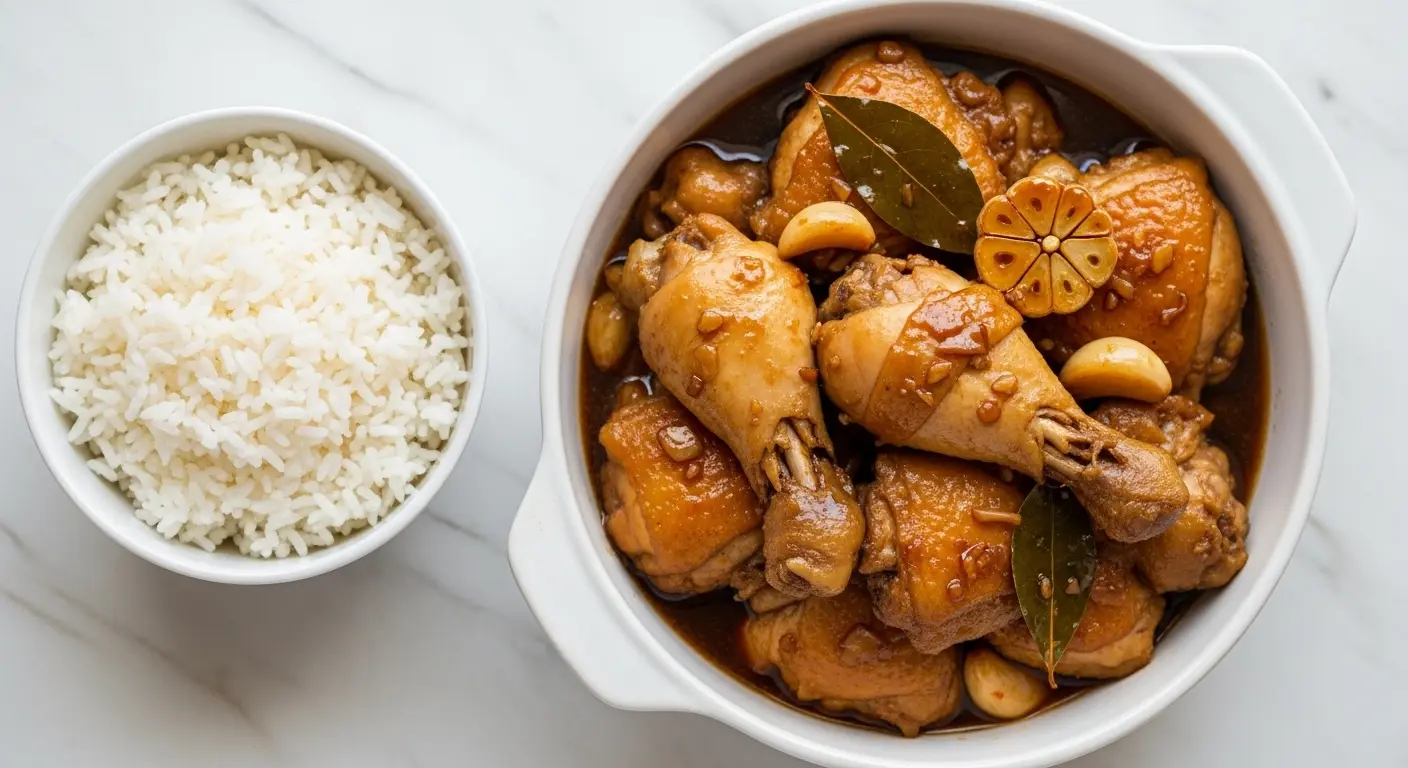
If you’ve never made a chicken adobo recipe before, you are seriously missing out on one of the most deeply satisfying meals you can put on your dinner table.
This iconic Filipino dish combines tender, slow-braised chicken with a punchy, savory-tangy sauce made from vinegar, soy sauce, garlic, and bay leaves. The result is rich, glossy, and absolutely irresistible over a big bowl of steamed white rice.
What makes this dish so special is the science behind the braising liquid. The vinegar acts as a natural tenderizer and preservative, while also mellowing out into a subtly tangy sauce that balances the salty depth of soy sauce perfectly.
It’s one of those meals that smells even better than it tastes, which is really saying something. The garlic slowly blooms in the sauce, and those bay leaves add a haunting, herbal undertone that you just can’t get from any other dish.
This is a weeknight dinner that feels like a weekend project, but without any of the fuss.
If you love bold, braised chicken dishes, you might also enjoy this Chicken Tinola for another classic Filipino chicken experience.
Why You’ll Love This Chicken Adobo Recipe
This dish has earned its reputation as the unofficial national dish of the Philippines for very good reason.
The combination of vinegar and soy sauce creates a sauce that is complex, deeply savory, and perfectly balanced. You get salty, tangy, garlicky, and slightly sweet all in one bite.
It is also incredibly forgiving and flexible. You can use chicken thighs, drumsticks, a mix of both, or even a whole cut-up chicken.
The longer it sits, the better it tastes. This is one of those magical recipes where leftovers the next day are genuinely superior to the fresh batch.
It requires no special equipment and comes together with pantry staples you likely already have on hand.
Here is why this dish belongs in your regular dinner rotation:
- The braising sauce reduces into a glossy, intensely flavored coating that clings to every piece of chicken.
- Vinegar-based dishes are naturally more resistant to spoilage, making this an excellent meal-prep recipe.
- It is endlessly adaptable, and regional variations across the Philippines prove just how versatile the core method truly is.
- The dish reheats beautifully, with the flavors deepening overnight.
- It pairs with nearly any simple side dish, from white rice to roasted vegetables.
You might also enjoy Chicken Cacciatore, another braised chicken classic that shares a similar slow-cooked depth of flavor.
Ingredients
The beauty of this chicken adobo recipe is how straightforward the ingredient list really is. Every single component plays a critical role in building that signature sauce. Here is a quick note on a few of them: use a good-quality Filipino cane vinegar if you can find it, as it is slightly sweeter and more mellow than distilled white vinegar. Tamari or low-sodium soy sauce works well too if you want a slightly richer, less salty result.
- 3 lbs (1.36 kg) bone-in, skin-on chicken thighs and drumsticks
- 1/2 cup (120 ml) white cane vinegar or white wine vinegar
- 1/2 cup (120 ml) soy sauce
- 1 whole head of garlic (about 10-12 cloves), peeled and lightly crushed
- 4-6 dried bay leaves
- 1 teaspoon whole black peppercorns
- 1 tablespoon neutral oil (vegetable or canola)
- 1 teaspoon granulated sugar (optional, to balance)
- 1/2 cup (120 ml) water
For serving:
- Steamed white rice
- Sliced green onions (optional garnish)
Read Also: Chicken Tortilla Soup Recipe
Kitchen Equipment Needed
You do not need anything fancy to make an outstanding chicken adobo. A heavy-bottomed pan or enameled cast iron Dutch oven is ideal because it distributes heat evenly and allows you to both sear and braise in the same vessel. If you do not have one, a large stainless steel skillet with a lid works perfectly well too.
- Large Dutch oven or deep skillet with a lid (at least 12 inches / 30 cm)
- Tongs for turning chicken
- Measuring cups and spoons
- Sharp knife and cutting board
- Garlic press or knife for crushing garlic
- Wooden spoon or silicone spatula
- Serving bowls
For serving, a rice cooker makes perfectly fluffy white rice every single time and is well worth the investment if you cook Asian-inspired dishes regularly.
Another favorite: Chicken Marsala Recipe
Recommended Products for This Recipe
These are hand-picked products that will genuinely make your chicken adobo experience better, based on quality and performance.
1. Filipino Cane Vinegar (Datu Puti or Similar)
Authentic Filipino cane vinegar is the heart of a truly traditional adobo. It has a slightly softer, rounder acidity compared to standard distilled vinegar, which gives the sauce a more nuanced depth without any harshness.
2. Enameled Cast Iron Dutch Oven
A quality enameled Dutch oven distributes heat perfectly for searing and braising, which is exactly what chicken adobo requires. The heavy lid traps steam and creates that tender, fall-off-the-bone result every time.
3. Tamari Soy Sauce (Low Sodium)
Tamari produces a darker, richer sauce than standard soy sauce, and the low-sodium version gives you more control over the saltiness of the final dish. It is a small upgrade that makes a noticeable difference.
4. Whole Black Peppercorns
Freshly cracked whole peppercorns release far more aromatic oils than pre-ground pepper, and in chicken adobo they are not just background seasoning. They are a featured flavor component that you will actually bite into.
This braising technique also works beautifully in a dish like Chicken Stew, which shares a similar low-and-slow cooking philosophy.
Step-by-Step Instructions
1. Marinate the Chicken (Optional but Recommended)
- Combine the soy sauce, vinegar, crushed garlic, bay leaves, and black peppercorns in a large bowl or zip-lock bag.
- Add the chicken pieces and toss to coat every surface thoroughly.
- Cover and refrigerate for at least 30 minutes, or up to 8 hours overnight. Marinating is optional, but even a brief soak noticeably deepens the flavor.
- When ready to cook, remove the chicken from the marinade and pat the skin dry with paper towels. Reserve the marinade liquid, garlic, bay leaves, and peppercorns. You will use all of it.
- Patting the skin dry is critical for achieving a good sear. Moisture on the surface will cause the chicken to steam rather than brown.
2. Sear the Chicken
- Heat 1 tablespoon of neutral oil in your Dutch oven or skillet over medium-high heat. The pan should be hot before the chicken goes in. You will know it is ready when a small drop of water flicked onto the surface immediately sizzles.
- Place the chicken pieces skin-side down in a single layer, working in batches if needed so you do not overcrowd the pan.
- Sear without moving for 4 to 5 minutes, until the skin is deeply golden brown and releases cleanly from the pan. Forcing it too early will tear the skin.
- Flip and sear the other side for 2 to 3 minutes.
- Transfer the seared chicken to a plate. You are not cooking it through at this stage, just building color and fond (those delicious browned bits on the bottom of the pan).
3. Build the Braising Sauce
- Reduce the heat to medium. If there is excess oil in the pan, carefully pour off all but about 1 tablespoon, leaving any browned bits behind.
- Add the reserved garlic cloves from the marinade directly into the pan. Stir for about 1 minute until fragrant and lightly golden. The garlic will pick up all those caramelized bits from the bottom of the pan.
- Pour in the reserved marinade liquid (the soy sauce and vinegar mixture), plus the 1/2 cup (120 ml) of water.
- Add the bay leaves and peppercorns to the pan.
- Stir everything together, scraping up any browned bits from the bottom with a wooden spoon. Those bits are loaded with flavor and should be fully incorporated into the sauce.
- If using sugar, add it now and stir to dissolve.
4. Braise the Chicken
- Nestle the seared chicken pieces back into the pan, skin-side up. The braising liquid should come about halfway up the sides of the chicken. If it is too low, add a small splash of water.
- Bring the liquid to a gentle boil, then immediately reduce the heat to low.
- Cover the pan with a lid and braise for 25 to 30 minutes. The chicken should be fully cooked through and very tender by this point. You can check by inserting an instant-read thermometer into the thickest part of a thigh. It should read at least 165°F (74°C).
- The braising process lets the chicken absorb all those flavors from the sauce while becoming incredibly tender.
5. Reduce the Sauce
- Remove the lid and increase the heat to medium. This step is what transforms the thin braising liquid into that glossy, lacquered sauce that makes chicken adobo so iconic.
- Continue to cook uncovered for 10 to 15 minutes, turning the chicken pieces once or twice as the sauce reduces and thickens.
- You are looking for a sauce that coats the back of a spoon and clings to the chicken. Keep a close eye at this stage, as the high sugar and sodium content means it can burn quickly once it gets thick enough.
- Taste the reduced sauce and adjust. If it is too salty, add a small splash of water or a pinch of sugar. If it needs more punch, a tiny splash of vinegar brightens it right up.
6. Serve
- Remove the bay leaves before serving, as they are aromatic but not meant to be eaten.
- Arrange the chicken over generous portions of steamed white rice, spooning plenty of the reduced sauce over the top.
- Garnish with sliced green onions if desired, and serve immediately.
The same slow-braise technique used here works wonderfully in Chicken Cacciatore if you want to explore another rich braised chicken dish.
Tips for Success
A few small adjustments can take your chicken adobo from good to absolutely outstanding. Bone-in, skin-on chicken is non-negotiable for the best result. The bones add body and collagen to the sauce as it braises, giving it that rich, slightly sticky texture. Skinless or boneless chicken will work in a pinch, but the sauce will be noticeably thinner.
- Always sear the chicken in batches. Overcrowding the pan drops the temperature and causes steaming instead of browning.
- Do not skip patting the chicken dry before searing. This single step makes a significant difference in the quality of the crust you develop.
- Use whole peppercorns rather than ground pepper. They slowly infuse the sauce with warmth without making it overwhelmingly spicy, and the occasional whole peppercorn you bite into is actually a pleasant textural moment.
- Adjust the vinegar-to-soy sauce ratio to your taste. More vinegar gives a brighter, sharper sauce. More soy sauce gives a deeper, saltier one. The standard 1:1 ratio is a great starting point.
- Make it the day before you plan to serve it. The flavors meld and deepen overnight in the refrigerator, and the fat that solidifies on top can be skimmed off easily before reheating.
- Remove the bay leaves before serving. They are wonderful as they steep, but unpleasant if bitten into whole.
You might also enjoy: Bourbon Chicken Recipe
Serving Suggestions
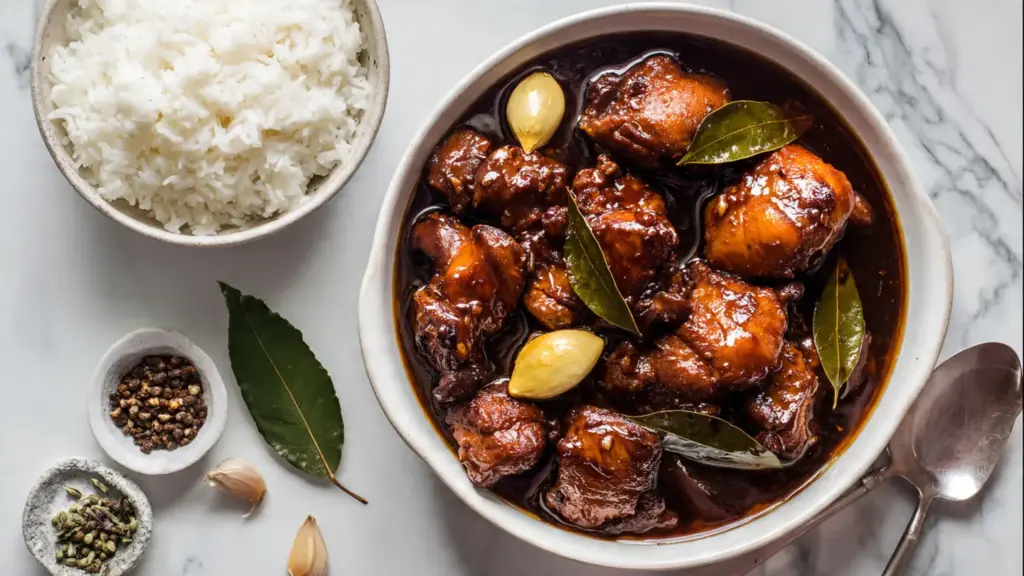
Chicken adobo was built to be served over rice, and there is a good reason that combination has endured for generations. The steamed rice acts like a sponge for the intensely flavorful sauce, and you really do not want a single drop going to waste.
Beyond the classic pairing, here are some other ways to round out the meal:
- Steamed jasmine rice or garlic fried rice, which soaks up the sauce beautifully and adds an aromatic complement.
- Simple steamed or stir-fried bok choy, which provides a fresh, slightly bitter contrast to the richness of the chicken.
- A light Chicken Sopas served alongside makes for a full Filipino-inspired meal.
- Pickled vegetables or a simple cucumber salad, which cut through the richness with their bright acidity.
- Warm, crusty bread for those who want to soak up every last bit of sauce from the bowl.
- Chicken Fried Rice the next day, made with leftover adobo chicken pulled from the bone and tossed with rice and eggs.
Variations to Try
The brilliance of the adobo formula is that it is more of a method than a strict recipe. Once you master the base technique, experimenting with different proteins and additions becomes genuinely exciting. The core concept, braising in vinegar and soy sauce with aromatics, is surprisingly adaptable.
- Pork Adobo: Substitute pork belly, shoulder, or ribs for the chicken. Pork adobo is equally iconic and requires a slightly longer braise of about 45 to 60 minutes to become truly tender.
- Adobo sa Gata (Coconut Milk Adobo): In the final stages of braising, stir in 1/2 cup (120 ml) of full-fat coconut milk. This Bicolano variation creates a richer, slightly sweeter, creamier sauce that is extraordinary.
- Dry Adobo: Continue reducing the sauce until it is almost completely evaporated, allowing the chicken to re-fry slightly in its own rendered fat. The result is crispy, caramelized, and intensely flavored.
- White Adobo (Adobong Puti): Omit the soy sauce entirely and use only vinegar, garlic, and salt. This version has a much lighter color and a sharper, cleaner flavor.
- Adobo with Potatoes: Add cubed potatoes to the braise during the last 20 minutes of cooking. They absorb the sauce and become incredibly flavorful.
Read Also: Tandoori Chicken Recipe
Storage and Reheating
Chicken adobo is one of the best meal-prep dishes you will ever make, and the storage process is beautifully simple. Because of its vinegar content, it keeps exceptionally well in the refrigerator, and the flavor genuinely improves after a day or two as the sauce continues to penetrate the chicken.
- Refrigerator: Store in an airtight container for up to 5 days. The surface fat will solidify when cold and can easily be skimmed off before reheating if preferred.
- Freezer: Transfer to a freezer-safe container or zip-lock bag and freeze for up to 3 months. Thaw overnight in the refrigerator before reheating.
- Stovetop Reheating: Place the chicken and sauce in a saucepan over medium-low heat. Add a small splash of water if the sauce has thickened too much, and heat gently until warmed through, about 5 to 8 minutes.
- Microwave Reheating: Place in a microwave-safe dish, cover loosely, and heat in 90-second intervals, stirring the sauce between each interval, until heated evenly.
- Do not boil aggressively when reheating, as overcooked chicken can become stringy and dry.
This recipe also pairs wonderfully as a filling for Breakfast Burrito the next morning with leftover shredded adobo chicken.
Nutritional Facts
The following nutritional estimates are based on one serving (approximately 2 pieces of bone-in chicken with sauce), assuming 4 servings total from 3 lbs of chicken. These values are approximate and will vary based on the exact cut of chicken used, how much sauce is consumed, and any modifications made.
| Nutrient | Per Serving (approx.) |
|---|---|
| Calories | 380-420 kcal |
| Protein | 34-38 g |
| Total Fat | 22-26 g |
| Saturated Fat | 6-8 g |
| Carbohydrates | 5-8 g |
| Sodium | 1100-1300 mg |
| Fiber | 0.5 g |
| Sugar | 2-3 g |
Note: The sodium content is higher due to the soy sauce base. Using low-sodium soy sauce can reduce this significantly. The values above do not include the rice served alongside.
You might also enjoy: Chicken Fajita Recipe
Health Benefits of Key Ingredients
Beyond its incredible flavor, this chicken adobo recipe actually contains several ingredients that offer meaningful nutritional benefits when consumed as part of a balanced diet.
The combination of vinegar, garlic, and lean protein makes this more than just comfort food.
- Bone-in chicken thighs and drumsticks are rich in protein, which supports muscle repair and satiety, and they contain more collagen than breast meat, which supports joint health.
- Garlic is one of the most studied natural foods in nutritional research and contains allicin, a compound with documented anti-inflammatory and immune-supportive properties.
- Apple cider or cane vinegar contains acetic acid, which some research suggests may support healthy blood sugar regulation when consumed as part of a balanced meal.
- Black peppercorns contain piperine, a compound that enhances the bioavailability of other nutrients consumed alongside it, meaning your body may absorb more nutrients from the whole meal.
- Bay leaves have been used in traditional medicine for centuries and contain compounds with antioxidant properties.
Here are the key nutritional highlights of this dish’s main ingredients:
- High-protein chicken thighs supporting muscle health and long-lasting fullness.
- Garlic providing immune-boosting sulfur compounds.
- Vinegar contributing to a lower glycemic response from the accompanying rice.
- Black peppercorns enhancing nutrient absorption from the whole meal.
- Minimal added sugar when prepared as written, making it naturally lower in refined carbohydrates.
Read Also: Chicken and Broccoli Recipe
Frequently Asked Questions
1. What type of vinegar is best for chicken adobo?
Filipino cane vinegar (sukang maasim) is the most traditional choice and produces the most authentic flavor. It is slightly less sharp than distilled white vinegar, with a gentler acidity that integrates beautifully into the sauce.
White wine vinegar or apple cider vinegar are the best substitutes if cane vinegar is unavailable. Avoid balsamic or red wine vinegar, as they will significantly alter the color and flavor profile of the dish.
2. Can I use boneless, skinless chicken for this recipe?
You technically can, but the result will be noticeably different. Bone-in chicken contributes collagen and body to the braising liquid, which is responsible for that slightly sticky, glossy sauce texture.
Boneless, skinless chicken breast or thighs will cook faster (reduce braising time to about 15 to 20 minutes) but will produce a thinner sauce. If using boneless thighs, the result will still be quite good, just not as deeply flavored.
3. Why does my adobo sauce taste too salty?
This is the most common issue, and it almost always comes down to the specific soy sauce used. Different brands vary widely in sodium content.
The fix is simple: add a splash of water to dilute the sauce, a small pinch of sugar to balance, or a tiny extra splash of vinegar to shift the flavor away from saltiness. Switching to low-sodium soy sauce for future batches will also help significantly.
4. Can I make chicken adobo in a slow cooker?
Yes, with a few adjustments. Sear the chicken first in a separate pan to develop color and flavor, then transfer everything to the slow cooker with the sauce ingredients.
Cook on low for 6 to 7 hours or high for 3 to 4 hours. When done, transfer the liquid to a saucepan and reduce it on the stovetop to concentrate the flavors, then pour it back over the chicken to serve.
5. Is chicken adobo supposed to be sweet or tangy?
Traditional chicken adobo leans savory and tangy rather than sweet. The vinegar is very present in the flavor, balanced by the saltiness of the soy sauce and the aromatic depth of the garlic.
Some cooks add a small amount of sugar to soften the edges of the vinegar slightly, which is a matter of personal preference rather than tradition. Regional variations across the Philippines can be sweeter or more tart depending on local cooking customs, so there is no single “correct” answer.
This dish pairs wonderfully on the table alongside Chicken Rice Soup for a complete, warming Filipino-inspired spread.
Final Thoughts
Chicken adobo is the kind of recipe that earns a permanent spot in your weekly rotation after just one try.
It is deeply flavorful, incredibly simple, and made almost entirely from pantry staples. The combination of vinegar, soy sauce, garlic, and bay leaves creates something truly extraordinary from very humble ingredients.
The best part is that it only gets better the next day, making it ideal for meal prepping or cooking in large batches.
Give this chicken adobo recipe a try this week, and do not be surprised when it becomes a household favorite almost immediately.
If you make it, leave a comment below letting me know how it turned out! I would love to hear which variation you tried and what you served alongside it.
Recommended:
- Chicken Tinola Recipe
- Chicken Sopas Recipe
- Chicken Stew Recipe
- Chicken and Dumplings Recipe
- Lemon Chicken Recipe
- Crack Chicken Recipe
- Chipotle Chicken Recipe
- Chicken Lettuce Wraps Recipe
- Chicken Marsala Recipe
- Caldo de Pollo Recipe