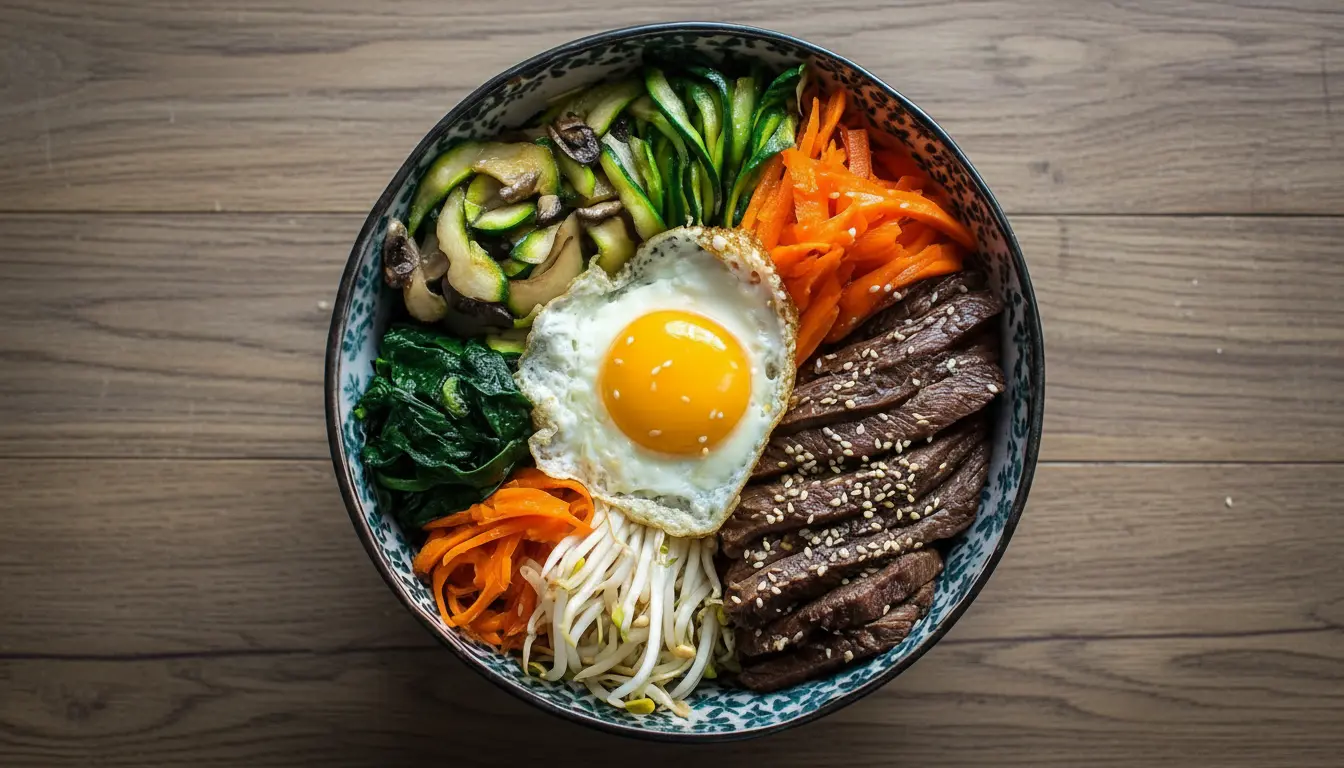
If you’ve been curious about Korean cooking, this bibimbap recipe is the perfect place to start. Bibimbap, which literally translates to “mixed rice,” is one of Korea’s most beloved dishes, and for good reason. It’s a colorful, deeply satisfying bowl of warm short-grain rice topped with individually seasoned vegetables, savory marinated beef, and a fried egg, all finished with a bold, spicy-sweet gochujang sauce. The magic happens the moment you stir it all together at the table.
What makes bibimbap so special is the philosophy behind it. Each topping is seasoned separately to honor its unique flavor and texture, so when everything comes together in the bowl, you get this beautiful harmony of tastes in every spoonful.
The gochujang sauce is absolutely essential here. It’s the ingredient that binds the whole dish together, delivering that signature sweet, spicy, and umami punch that makes bibimbap so craveable. Don’t skip it or substitute it with just any hot sauce.
This recipe follows the classic restaurant-style bibimbap with marinated beef bulgogi, crispy sauteed carrots, tender spinach, earthy shiitake mushrooms, crunchy bean sprouts, and zucchini, all arranged artfully over steamed rice. It’s a complete meal in one beautiful bowl.
If you love vibrant, flavor-packed rice bowls, you might also enjoy this Tom Yum Soup for another bold and aromatic Asian-inspired dish.
Why You’ll Love This Bibimbap Recipe
This dish has so many things going for it. First, it’s endlessly adaptable. You can swap out vegetables based on what you have on hand, make it vegetarian by skipping the beef, or dial up the heat in the gochujang sauce.
It’s also a wonderful meal prep recipe. Each topping can be prepared up to three days in advance and stored separately in the fridge, so assembly on a busy weeknight takes just minutes.
The textures and colors are genuinely stunning. Few dishes look as impressive in a bowl as a well-assembled bibimbap.
Here’s a quick list of reasons this recipe deserves a spot in your regular rotation:
- Deeply flavorful thanks to individually seasoned toppings and the signature gochujang sauce
- Nutritious and balanced with lean protein, plenty of vegetables, and complex carbohydrates
- Naturally customizable for different dietary needs including vegetarian, gluten-free, and low-spice versions
- Great for meal prep since all the components can be made ahead and assembled fresh
- Restaurant quality at home without complicated techniques or special equipment
For a similarly satisfying and globally inspired one-bowl meal, check out this Pho Recipe.
Ingredients
Here’s everything you’ll need to make a classic bibimbap for four servings. Each component is seasoned simply so the flavors complement each other when mixed together.
- For the rice: 2 cups (400g) short-grain white rice, rinsed and cooked
- For the beef: 8 oz (225g) thinly sliced beef ribeye or sirloin
- Beef marinade: 2 tablespoons (30ml) soy sauce, 1 tablespoon (15ml) sesame oil, 1 tablespoon (12g) sugar, 2 cloves garlic (minced), 1 teaspoon (5ml) rice wine or mirin, 1/4 Asian pear or apple (grated, for tenderizing)
- For the spinach: 4 oz (115g) fresh baby spinach, 1 teaspoon (5ml) sesame oil, 1/2 teaspoon salt, 1 teaspoon (3g) toasted sesame seeds
- For the carrots: 2 medium carrots, julienned, 1 teaspoon (5ml) sesame oil, pinch of salt
- For the zucchini: 1 medium zucchini, julienned, 1 teaspoon (5ml) sesame oil, pinch of salt
- For the shiitake mushrooms: 6 dried shiitake mushrooms, rehydrated and sliced, 1 tablespoon (15ml) soy sauce, 1 teaspoon (4g) sugar, 1 teaspoon (3g) toasted sesame seeds
- For the bean sprouts: 2 cups (100g) soybean or mung bean sprouts, 1 teaspoon (5ml) sesame oil, 1/2 teaspoon salt, 1 green onion (finely chopped)
- For the eggs: 4 large eggs, 1 tablespoon (15ml) neutral oil (for frying)
- For the bibimbap sauce: 3 tablespoons (45g) gochujang, 1 tablespoon (15ml) sesame oil, 1 tablespoon (15ml) soy sauce, 1 tablespoon (12g) sugar, 1 tablespoon (15ml) rice vinegar, 1 teaspoon (3g) toasted sesame seeds, 2 cloves garlic (minced)
- For garnish: Toasted sesame seeds, sesame oil drizzle
For another satisfying Asian-inspired dish that makes great use of similar pantry staples, try this Chicken Fried Rice.
Kitchen Equipment Needed
You don’t need any specialty equipment to make a great bibimbap at home. Here’s what you’ll use:
- Large pot for cooking rice and blanching vegetables
- Medium or large skillet or wok for sauteing vegetables and beef individually
- Small non-stick pan for frying eggs
- Small mixing bowls (several) for marinating and seasoning individual toppings
- Cutting board and sharp knife for julienning vegetables
- Wooden spoon or tongs for handling vegetables while cooking
- Box grater or microplane for grating the pear or apple for the beef marinade
- Dolsot stone bowls (optional, for serving and making crispy rice at the bottom)
- Large serving bowls (4, if not using stone bowls)
- Colander for draining blanched vegetables
Read Also: Easy Pad Thai Recipe
Recommended Products for This Recipe
These are products that genuinely elevate the bibimbap experience, based on quality and performance.
1. Gochujang Korean Chili Paste
The gochujang you use makes a tremendous difference in the final flavor of the sauce. A high-quality, authentic Korean gochujang has the right balance of fermented depth, sweetness, and heat that cheaper versions simply can’t replicate. Look for one made in Korea with short ingredient lists.
2. Korean Dolsot Stone Bowl Set
If you want that iconic dolsot bibimbap experience with the crackling, crispy rice on the bottom of the bowl, a proper dolsot stone bowl is the way to go. These heavy bowls retain heat incredibly well and create that signature texture. They also make an impressive presentation at the dinner table.
3. Premium Sesame Oil
Sesame oil is used throughout nearly every component of this recipe. A premium, cold-pressed Korean toasted sesame oil has a nutty fragrance and rich depth that makes every single topping taste better. It is one of the most impactful ingredient upgrades you can make in this dish.
4. Dried Shiitake Mushrooms
Dried shiitake mushrooms have a more concentrated, earthy, and umami-rich flavor compared to fresh ones. Rehydrating them in warm water and slicing them for the bibimbap topping gives a depth of flavor that fresh mushrooms simply can’t match.
5. Korean Short-Grain Rice
The stickiness and slight chewiness of short-grain rice is essential to authentic bibimbap. Long-grain rice just doesn’t have the right texture for mixing into this dish. A quality Korean short-grain rice makes a noticeable difference in the final bowl.
Another great Asian-inspired recipe worth exploring is this Miso Soup Recipe.
Step-by-Step Instructions
1. Make the Bibimbap Sauce
- In a small bowl, combine the gochujang, sesame oil, soy sauce, sugar, rice vinegar, minced garlic, and toasted sesame seeds.
- Stir well until the sugar fully dissolves and the sauce is smooth and glossy.
- Taste and adjust: if you want it spicier, add a little more gochujang. If it seems too thick, add a teaspoon of water to loosen it.
- Set the sauce aside at room temperature. It will mellow and develop as it sits.
2. Marinate the Beef
- Combine the soy sauce, sesame oil, sugar, minced garlic, rice wine or mirin, and grated Asian pear (or apple) in a medium bowl.
- Stir the marinade until the sugar dissolves. The grated fruit adds natural sweetness and enzymes that tenderize the beef.
- Add the thinly sliced beef to the marinade, toss to coat thoroughly, and cover.
- Marinate at room temperature for 20-30 minutes, or in the refrigerator for up to overnight.
3. Cook the Rice
- Rinse 2 cups of short-grain white rice under cold water, swishing with your hand and pouring off the starchy water. Repeat until the water runs mostly clear, about 3-4 rinses.
- Add the rinsed rice to a medium pot with 2.5 cups (600ml) of water. Bring to a boil over high heat.
- Once boiling, reduce the heat to the lowest setting, cover tightly with a lid, and cook for 15 minutes.
- Remove from heat and let the rice steam, still covered, for another 10 minutes. Do not lift the lid during this time.
- Fluff gently with a rice paddle or fork before using.
4. Blanch and Season the Spinach
- Bring a medium pot of water to a rolling boil. Add the baby spinach and blanch for 30-45 seconds, just until wilted.
- Transfer immediately to a bowl of ice-cold water to stop cooking and preserve the vibrant green color.
- Drain well and use your hands to squeeze out as much excess water as possible. The spinach should form a compact ball.
- Chop the squeezed spinach roughly into 2-inch pieces.
- In a bowl, toss the spinach with 1 teaspoon sesame oil, 1/2 teaspoon salt, and 1 teaspoon sesame seeds. Set aside.
5. Blanch and Season the Bean Sprouts
- In the same pot of boiling water, add the bean sprouts and blanch for 1 minute exactly. They should be cooked through but still have a slight snap.
- Drain and rinse briefly with cold water to stop cooking.
- Squeeze out excess water, then toss in a bowl with 1 teaspoon sesame oil, 1/2 teaspoon salt, and the chopped green onion.
- Set aside in a small bowl or on a plate.
6. Saute the Carrots
- Heat 1 teaspoon sesame oil in a skillet over medium heat.
- Add the julienned carrots with a pinch of salt.
- Saute, stirring frequently, for 2-3 minutes until slightly softened but still with a little bite. You want a little color but not mush.
- Transfer to a plate and set aside.
7. Saute the Zucchini
- In the same skillet, add another teaspoon of sesame oil over medium heat.
- Add the julienned zucchini with a pinch of salt.
- Cook for 2 minutes, stirring gently. Zucchini releases water quickly, so keep the heat at medium and work fast to avoid it getting soggy.
- Remove from the pan and set aside.
8. Cook the Shiitake Mushrooms
- Drain the rehydrated shiitake mushrooms, squeezing out excess liquid. Reserve 2 tablespoons of the soaking liquid.
- Slice the mushrooms into thin strips.
- In the skillet over medium heat, add the mushrooms, soy sauce, sugar, and the reserved soaking liquid.
- Cook for 3-4 minutes until the liquid is mostly absorbed and the mushrooms are glossy and tender.
- Sprinkle with toasted sesame seeds and set aside.
9. Cook the Beef
- Heat 1 tablespoon of neutral oil in the skillet over high heat until shimmering.
- Shake off excess marinade from the beef (this prevents steaming and helps it sear properly) and add to the hot pan in a single layer.
- Cook undisturbed for 1-2 minutes until you see caramelized edges, then stir and cook for another 1-2 minutes until fully cooked through.
- Remove from heat and set aside.
10. Fry the Eggs
- Wipe out the skillet and add 1 tablespoon of neutral oil over medium-low heat.
- Crack each egg gently into the pan, keeping the yolks intact.
- Cook undisturbed for 2-3 minutes until the whites are fully set and opaque but the yolks remain runny. This is the classic bibimbap egg: golden-edged, glossy yolk.
- If you prefer a firmer yolk, add a teaspoon of water to the pan and cover with a lid for the last minute to steam the top of the egg.
- Season each egg lightly with a pinch of salt.
11. Assemble the Bowls
- Add a generous mound of warm rice to the center of each serving bowl (about 1 cup per bowl).
- Arrange each topping around the rice in separate sections: spinach, bean sprouts, carrots, zucchini, mushrooms, and beef. Place each topping in its own distinct section so the colors remain vibrant and separated.
- Carefully place one fried egg on top of the rice in the center.
- Drizzle with a teaspoon of sesame oil and a sprinkle of toasted sesame seeds.
- Serve immediately with the bibimbap sauce on the side so each person can add as much as they like.
- To eat, spoon 1-2 tablespoons of the gochujang sauce over the bowl and use a spoon to mix everything together vigorously before digging in.
If you enjoy making Korean-inspired dishes from scratch, you might also like this Kimchi Stew Recipe.
Tips for Success
A few key techniques will take your bibimbap from good to genuinely great every time you make it.
- Cook each vegetable separately. It’s the most important step in this recipe. Each vegetable has a different cook time and water content, so cooking them together leads to uneven textures and muddled flavors. Taking an extra 20 minutes to do this makes a huge difference.
- Squeeze vegetables dry before seasoning. Spinach and bean sprouts hold a lot of water after blanching. If you skip squeezing, the toppings will make your rice soggy and dilute the seasoning.
- Use short-grain rice. Its natural stickiness holds the bowl together and makes mixing much more satisfying. Long-grain rice will make the bowl feel dry and less cohesive.
- Let the beef marinate at least 20 minutes. Even a short marinate with the grated fruit makes the beef noticeably more tender and flavorful.
- Keep the egg yolk runny. The yolk acts like a natural sauce when mixed into the bowl, adding richness and coating the rice beautifully.
- Warm your bowls before serving. A warm bowl keeps the rice and toppings at the right temperature throughout the meal.
Another flavor-forward rice dish worth bookmarking is this Easy Fried Rice Recipe.
Serving Suggestions
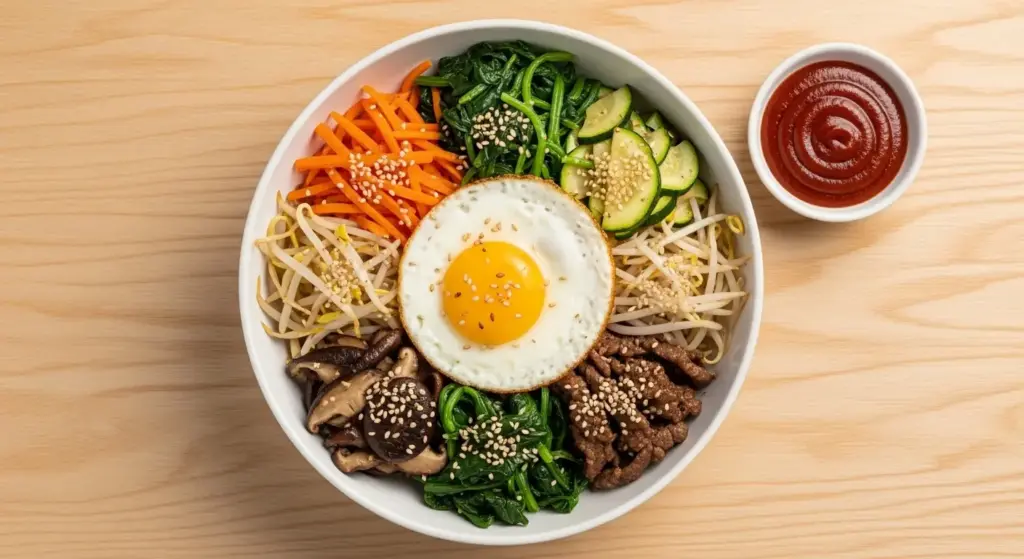
Bibimbap is a complete meal on its own, but a few simple sides and accompaniments can turn it into an authentic Korean spread.
Kimchi is the most natural companion for bibimbap. Its tangy, fermented heat contrasts beautifully with the nutty sesame and savory beef in the bowl. Serve it on the side and add a spoonful to the bowl before mixing.
Here are a few other ideas for rounding out the meal:
- Miso Soup or a simple doenjang jjigae on the side for a warming, salty broth
- Chicken Lettuce Wraps as a light appetizer before the main bowl
- Steamed edamame or simple pickled cucumber for a refreshing, crunchy contrast
- Korean barley tea (boricha) or iced green tea as a clean, palate-cleansing drink
- A side of crispy seaweed sheets (gim) to wrap spoonfuls of bibimbap in
Variations to Try
One of the great joys of bibimbap is how easily it adapts to different diets, ingredients, and preferences. Here are some popular variations that stay true to the spirit of the dish.
Once you’re comfortable with the classic version, experimenting becomes easy since the sauce and the assembly method remain the same no matter what you put in the bowl.
- Dolsot Bibimbap (Hot Stone Bowl): Preheat a dolsot stone bowl with a thin coating of sesame oil, add the rice and toppings, and place over the stove on medium heat for 5-7 minutes until you hear the rice crackling. The crispy crust at the bottom, called nurungji, is the best part.
- Vegetarian Bibimbap: Simply omit the beef and add tofu, pan-fried until golden, or extra mushrooms for protein. The dish is still wonderfully satisfying without meat.
- Vegan Bibimbap: Skip the egg and beef entirely. Double up on mushrooms, add pan-fried tofu, and use maple syrup instead of honey in the sauce.
- Chicken Bibimbap: Swap out the beef for thinly sliced chicken breast using the same marinade. It’s a lighter option with equally great flavor.
- Seafood Bibimbap: Top with lightly seasoned shrimp, scallops, or crab meat for a coastal Korean variation.
- Breakfast Bibimbap: Use leftover rice from the night before, top with whatever sauteed vegetables you have, and serve with a runny egg and a drizzle of sauce.
For another globally inspired rice bowl that swaps the flavors, try this Congee Recipe.
Storage and Reheating
Bibimbap is one of those dishes where storing and reheating requires a little strategy since the components are best kept separate until serving.
Keeping things organized in individual containers means you can have fresh-tasting bibimbap for several days without any sogginess or flavor transfer between toppings.
- Rice: Store in an airtight container in the fridge for up to 4 days. To reheat, add a tablespoon of water and microwave covered for 1-2 minutes, or steam briefly in a pot.
- Cooked beef: Store in a sealed container for up to 3 days. Reheat quickly in a hot skillet for 1-2 minutes.
- Cooked vegetables: Each vegetable can be stored in separate small containers or bags in the fridge for up to 3 days. Serve them at room temperature straight from the fridge since bibimbap toppings are traditionally served at room temperature.
- Gochujang sauce: Stores beautifully in a jar in the fridge for up to 2 weeks. Actually improves in flavor after a day.
- Fried eggs: Always fry fresh right before serving. They do not reheat well and only take 3 minutes to make.
- Freezing: The cooked beef and rice can both be frozen for up to 1 month. Vegetables are not ideal for freezing as they lose their texture.
Read Also: Chicken Adobo Recipe
Nutritional Facts
The following estimates are based on one serving (1/4 of the full recipe) with all toppings and approximately 1.5 tablespoons of gochujang sauce.
| Nutrient | Amount Per Serving |
|---|---|
| Calories | ~570 kcal |
| Carbohydrates | 70g |
| Protein | 24g |
| Total Fat | 22g |
| Saturated Fat | 5g |
| Fiber | 6g |
| Sugar | 12g |
| Sodium | 900mg |
| Cholesterol | 180mg |
| Vitamin A | High (from spinach and carrots) |
| Iron | High (from beef and spinach) |
Nutritional values are estimates and will vary based on portion sizes, specific ingredients used, and the amount of gochujang sauce added.
You might also enjoy Shakshuka for another protein-rich, vegetable-forward meal in a bowl.
Health Benefits of Key Ingredients
Bibimbap isn’t just delicious. It’s a genuinely nutrient-dense meal with several ingredients that offer real health benefits.
The variety of vegetables ensures you’re getting a wide spectrum of vitamins, minerals, and antioxidants in a single bowl, which is one reason bibimbap has long been considered a balanced and wholesome meal in Korean cuisine.
Here are the key health contributions of the main ingredients:
- Spinach: Packed with iron, folate, and vitamins K and A. The brief blanching makes the nutrients more bioavailable while preserving the bright color.
- Carrots: An excellent source of beta-carotene, which the body converts to vitamin A for eye health and immune function.
- Bean sprouts: Low in calories and rich in vitamin C, folate, and plant-based protein. They add volume and crunch with minimal calories.
- Shiitake mushrooms: A source of B vitamins, zinc, and polysaccharides like lentinan, which research suggests may support immune health.
- Gochujang: Contains capsaicin from the chili peppers, which has been linked to metabolism support and anti-inflammatory properties. It’s also fermented, providing beneficial gut bacteria.
- Sesame oil: Contains sesamol and sesamin, antioxidants linked to reducing oxidative stress. It also adds heart-healthy unsaturated fats to the dish.
- Beef: Provides high-quality complete protein, heme iron (the most easily absorbed form), zinc, and B12.
- Eggs: One of the most nutritionally complete foods available, providing all essential amino acids plus choline, which supports brain health.
For another well-rounded Asian dish packed with vegetables, explore this Egg Roll in a Bowl Recipe.
Frequently Asked Questions
1. What does bibimbap taste like?
Bibimbap has a complex, layered flavor profile. You get savory umami from the beef and mushrooms, a nutty richness from the sesame oil, a sweet-spicy kick from the gochujang sauce, and fresh, slightly grassy notes from the vegetables.
When you mix everything together, the runny egg yolk adds a creamy, rich coating that ties it all together. It’s genuinely one of the most harmonious bowls of food you’ll ever eat.
2. Can I make bibimbap without gochujang?
The dish won’t be the same without gochujang, as it’s the defining flavor of the sauce. However, if you can’t find it, you can substitute with a mix of regular chili paste, a small amount of miso paste, soy sauce, and a touch of sugar to approximate the sweet, spicy, fermented quality.
Gochujang is increasingly available at major grocery stores, Asian markets, and online, so it’s worth tracking down the real thing.
3. What is the correct way to eat bibimbap?
The correct and traditional way to eat bibimbap is to add your desired amount of gochujang sauce on top, then mix everything vigorously together with a spoon before eating. The word “bibim” literally means “to mix.”
Some people prefer to mix gently to keep some components distinct, but true bibimbap is meant to be fully combined so every spoonful has a little of everything.
4. Can I use brown rice instead of white rice for bibimbap?
You can use brown rice, and it will still taste great. However, the texture will be different. Brown rice is chewier and less sticky, which changes how it absorbs the sauce and mixes with the other ingredients.
If you’re using brown rice, cook it per package directions and know that the overall bowl will be heartier and more filling with slightly more chew.
5. How do I get crispy rice at the bottom like at a Korean restaurant?
That crispy rice layer is called nurungji and comes from the dolsot stone bowl. To recreate it at home, heat a well-seasoned cast-iron skillet or small wok with a thin film of sesame oil over medium heat.
Add a portion of cooked rice and press it gently into the pan. Arrange your toppings on top, cover with a lid, and cook for 5-7 minutes until you can hear the rice sizzling and crackling. Mix at the table immediately and enjoy those crunchy bits.
Read Also: Chicken and Broccoli Recipe
Final Thoughts
Making bibimbap at home is one of the most rewarding cooking experiences. Each time you set down that bowl with its beautiful arrangement of colors, you can’t help but feel proud of what you’ve created.
The process of seasoning each vegetable separately, building the sauce, and searing that beef is meditative in its own way. And when you mix it all together and take that first spoonful, the payoff is absolutely worth every minute of prep.
This recipe is approachable, deeply flavorful, and endlessly variable, which is exactly why bibimbap has stood the test of time for centuries in Korean cuisine.
Give this bibimbap recipe a try this week and see for yourself. Leave a comment below to tell us how it turned out, what toppings you used, or any tweaks you made. And if you loved it, share it with someone who needs a great Korean recipe in their life!
Recommended:
- Tom Yum Soup Recipe
- Easy Pad Thai Recipe
- Hot and Sour Soup Recipe
- Udon Noodle Soup Recipe
- Bok Choy Recipe
- Chicken Lettuce Wraps Recipe
- Stir Fry Sauce Recipe
- Hoisin Sauce Recipe
- Teriyaki Sauce Recipe
- Peanut Sauce Recipe