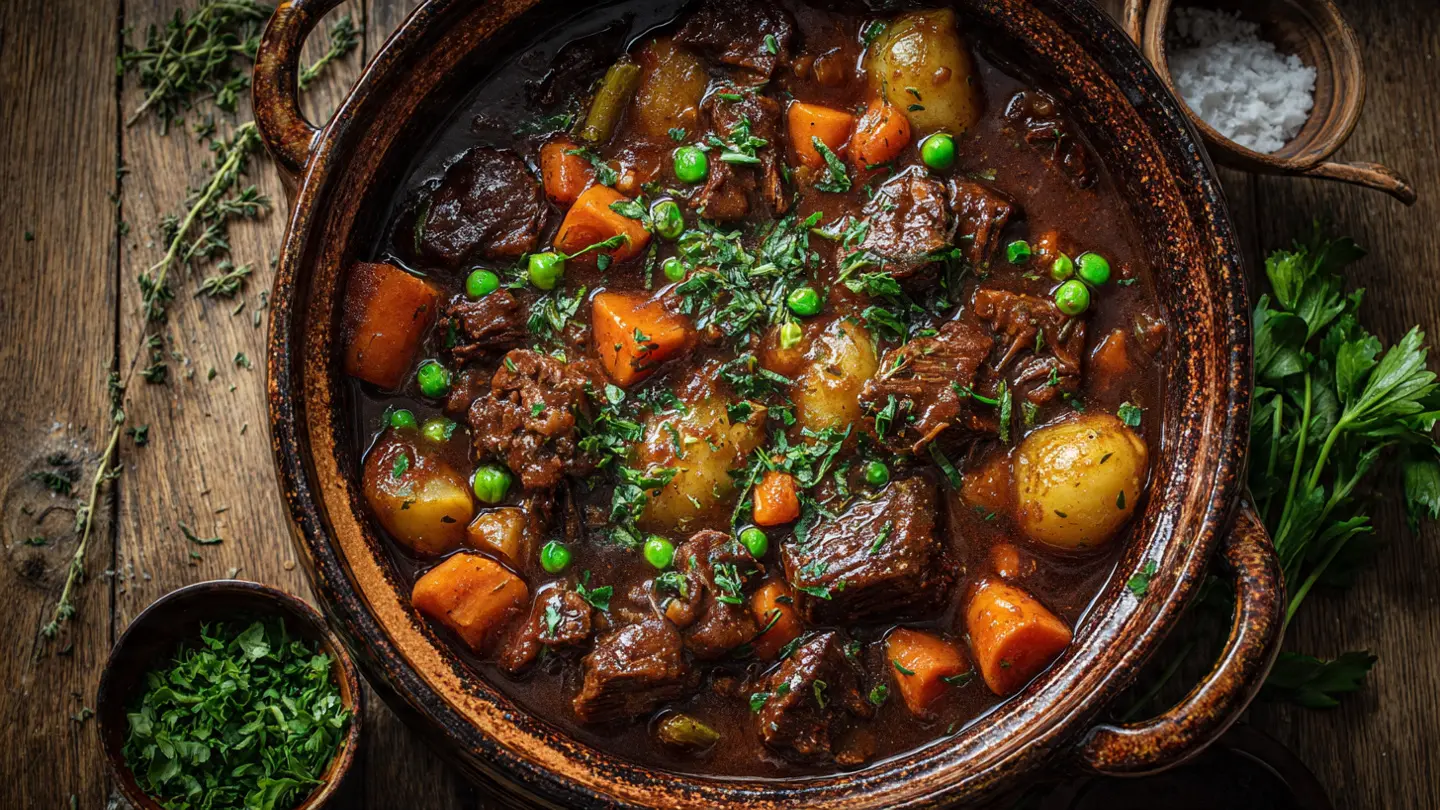
A good lamb stew recipe is the kind of meal that makes everyone stop what they’re doing the moment that aroma starts drifting through the house. Rich, savory, and deeply comforting, this classic stew brings together tender chunks of lamb shoulder, hearty root vegetables, and a velvety broth that you’ll want to mop up with every last piece of crusty bread on the table.
What makes this version stand out is the combination of a proper browning technique and a slow braise in beef broth spiked with a splash of Guinness. That step alone transforms simple, affordable ingredients into something that tastes like it simmered all day at a farmhouse in the Irish countryside.
The whole thing comes together in one pot, which means less cleanup and more time to relax while the oven does the heavy lifting. The lamb turns melt-in-your-mouth tender, the potatoes soak up all that gorgeous braising liquid, and the carrots add a touch of natural sweetness to balance the deep, savory broth.
This is the kind of recipe that gets requested again and again, and once you make it, you’ll understand why.
You might also enjoy: Irish Stew
Why You’ll Love This Lamb Stew Recipe
This lamb stew recipe checks every box for a satisfying one-pot dinner.
The slow braise makes the lamb incredibly tender without requiring any special technique. Even beginner cooks will get fall-apart results every single time.
Browning the lamb first creates a deeply flavored, caramelized crust on the outside of each piece. That browned fond left on the bottom of the pot is pure flavor, and deglazing it with Guinness pulls every last bit into the broth.
The vegetables cook to just the right texture, soft and yielding but not mushy. Potatoes, carrots, and celery all contribute to a stew that’s genuinely hearty and filling.
This recipe is completely make-ahead friendly. In fact, the stew tastes even better the next day after the flavors have had time to meld overnight in the fridge.
It’s also a crowd-pleaser across the board. Even people who think they don’t like lamb often discover they love it in a stew, where the braising process mellows the flavor beautifully.
- One-pot meal with minimal cleanup
- Beginner-friendly, yet impressive enough for dinner guests
- Uses affordable lamb shoulder for maximum flavor
- Deeply savory broth with rich, complex depth
- Perfect for meal prepping and feeding a crowd
- Leftovers taste even better the next day
Read Also: Crockpot Beef Stew Recipe
Ingredients
This recipe uses simple, wholesome ingredients that work together to create a rich and satisfying stew. Lamb shoulder is the best cut here because its fat content and connective tissue break down slowly, giving the broth incredible body and the meat that signature melt-in-your-mouth quality.
- 2.5 lbs (1.1 kg) boneless lamb shoulder, cut into 2-inch (5 cm) chunks
- 1 tsp kosher salt (for the lamb)
- 1/2 tsp black pepper (for the lamb)
- 3 tbsp all-purpose flour
- 2 tbsp olive oil, divided
- 4 strips bacon, chopped
- 1 large yellow onion, diced
- 3 cloves garlic, minced
- 3 stalks celery, sliced into 1/2-inch pieces
- 1 tbsp tomato paste
- 1 cup (240 ml) Guinness stout (or another dark beer)
- 3 cups (720 ml) beef broth
- 1 tbsp Worcestershire sauce
- 3 medium carrots, peeled and cut into 1-inch (2.5 cm) chunks
- 1 lb (450 g) Yukon gold potatoes, cut into 1.5-inch (3.8 cm) chunks
- 2 bay leaves
- 1 tsp dried thyme (or 3 fresh sprigs)
- 1 sprig fresh rosemary
- 1 cup (150 g) frozen peas
- Fresh parsley, chopped, for garnish
Read Also: Venison Stew Recipe
Kitchen Equipment Needed
You don’t need anything fancy to make this stew, but having the right pot makes a real difference. A heavy Dutch oven is essential because it distributes heat evenly and goes straight from stovetop to oven, making the whole process seamless.
- 5-6 quart Dutch oven (oven-safe with a tight-fitting lid)
- Large cutting board
- Sharp chef’s knife
- Wooden spoon or silicone spatula
- Slotted spoon
- Ladle
- Instant-read meat thermometer
- Measuring cups and spoons
- Vegetable peeler
This pairs beautifully with creamy mashed potatoes as a serving base, so having a potato masher or ricer nearby is handy too.
Recommended Products for This Recipe
These are a few products I genuinely recommend based on quality and performance. They’ll make cooking this stew easier and the results even better.
1. Le Creuset Enameled Cast Iron Dutch Oven
A cast iron Dutch oven is the single best piece of equipment you can own for braised dishes like lamb stew. It holds heat evenly across the bottom and sides, which means better browning and a more consistent simmer. The enamel interior also means no metallic taste in your broth.
2. Guinness Extra Stout (4-Pack)
The dark, malty depth that Guinness adds to this stew is hard to replicate with anything else. It deepens the broth color, adds a subtle bitterness that balances the richness of the lamb, and gives the whole dish a distinctly comforting, pub-style flavor.
3. Better Than Bouillon Roasted Beef Base
For the richest possible broth, using a high-quality beef base instead of canned broth makes a noticeable difference. This concentrated paste dissolves quickly and gives the stew a deep, full-bodied flavor foundation.
4. Microplane Fine Grater
If you enjoy finishing your stew with a touch of fresh lemon zest to brighten the broth (a wonderful little trick), a fine Microplane grater makes the job quick and precise. It’s also endlessly useful for zesting, grating hard cheese, and more.
Read Also: Seafood Stew Recipe
Step-by-Step Instructions
Step 1: Prepare and Season the Lamb
- Pat the lamb shoulder chunks completely dry with paper towels. Moisture on the surface of the meat will cause it to steam rather than brown, which prevents the caramelization that builds so much flavor.
- Season all sides of each lamb chunk generously with 1 tsp kosher salt and 1/2 tsp black pepper.
- Sprinkle the 3 tablespoons of all-purpose flour over the seasoned lamb and toss to coat evenly. The flour helps create a better crust during browning and also begins to thicken the broth as it cooks.
- Set the coated lamb pieces aside on a plate while you prepare the pot.
Step 2: Cook the Bacon
- Preheat your oven to 325°F (160°C).
- Place your Dutch oven on the stovetop over medium heat. Add the chopped bacon strips.
- Cook the bacon, stirring occasionally, for about 4 to 5 minutes until browned and the fat has rendered out.
- Use a slotted spoon to transfer the cooked bacon to a plate lined with paper towels. Leave the bacon fat in the pot — this is your cooking fat for browning the lamb, and it adds incredible depth of flavor.
Step 3: Brown the Lamb in Batches
- Increase the heat under the Dutch oven to medium-high. Add 1 tablespoon of olive oil to the bacon fat already in the pot.
- Add the lamb pieces in a single layer, making sure not to crowd the pot. Crowding drops the temperature and causes steaming instead of browning. Work in 2 to 3 batches if needed.
- Let each batch of lamb cook undisturbed for 3 to 4 minutes per side until a deep brown crust forms. The meat should release easily from the pot when it’s properly browned — don’t try to force it.
- Use a slotted spoon to transfer the browned lamb to the plate with the bacon. Continue with remaining lamb batches, adding a little more olive oil if the pot looks dry.
Step 4: Sauté the Aromatics
- Reduce the heat to medium. Add the remaining 1 tablespoon of olive oil to the pot if needed.
- Add the diced onion and sliced celery to the pot. Cook, stirring often, for about 5 minutes until the onion has softened and turned translucent.
- Add the minced garlic and cook for 1 more minute, stirring constantly so the garlic doesn’t burn. Burnt garlic will make the whole stew taste bitter.
- Stir in the 1 tablespoon of tomato paste and cook for another 2 minutes, until it darkens slightly and begins to stick to the bottom of the pot. This brief caramelization deepens the richness of the final broth.
Step 5: Deglaze with Guinness
- Pour in the 1 cup of Guinness stout. Using your wooden spoon, scrape up all of the browned bits stuck to the bottom of the pot. These bits (called fond) are packed with concentrated flavor, and you don’t want to leave any of them behind.
- Let the Guinness come to a rapid simmer and cook for about 2 minutes, allowing some of the alcohol to cook off and the liquid to reduce slightly.
Step 6: Build the Stew Broth
- Pour in the 3 cups of beef broth and 1 tablespoon of Worcestershire sauce. Stir everything together.
- Return the browned lamb and cooked bacon to the pot.
- Add the 2 bay leaves, dried thyme (or fresh thyme sprigs), and the sprig of fresh rosemary.
- Stir gently to combine all the ingredients. Bring the liquid to a gentle boil over medium-high heat.
Step 7: Add the Vegetables
- Once the liquid is boiling, add the carrot chunks and Yukon gold potato chunks to the pot. Stir to distribute them evenly throughout the stew.
- Make sure the vegetables are mostly submerged in the broth. Add a splash more beef broth or water if needed to just cover everything.
Step 8: Braise in the Oven
- Place the lid tightly on the Dutch oven and transfer it to your preheated 325°F (160°C) oven.
- Braise for 1 hour and 30 minutes to 2 hours, until the lamb is completely fork-tender and practically falling apart. The low, gentle heat of the oven braises the meat more evenly than stovetop simmering.
- Check at the 90-minute mark by testing a piece of lamb with a fork. It should pull apart easily with very little resistance. If it still feels tough, cover and return to the oven for another 20 to 30 minutes.
Step 9: Finish the Stew and Serve
- Remove the Dutch oven from the oven and place it back on the stovetop over low heat.
- Carefully remove and discard the bay leaves, thyme sprigs (if using fresh), and rosemary sprig.
- Stir in the 1 cup of frozen peas. They only need about 3 to 4 minutes in the hot stew to cook through, so keep the heat gentle and don’t overcook them.
- Taste the stew and adjust seasoning with additional salt and pepper as needed.
- Ladle the stew into bowls and garnish generously with fresh chopped parsley before serving.
For another hearty one-pot dinner, try this chicken and dumplings recipe that’s just as warming and satisfying.
Tips for Success
A few simple tricks will take your lamb stew from good to genuinely memorable. The most impactful thing you can do is take your time at the browning stage, which sets the entire flavor foundation for the dish.
- Dry the lamb thoroughly. Any surface moisture steams the meat instead of browning it. Use paper towels to pat every piece completely dry before seasoning.
- Brown in batches. Adding too much lamb at once drops the pan temperature and you lose that golden crust entirely. Never crowd the pot.
- Don’t skip the tomato paste caramelization. Those 2 minutes of cooking the paste directly in the pot add a savory, slightly sweet depth that you can’t get any other way.
- Use lamb shoulder, not leg. Shoulder has more fat and connective tissue, which breaks down into gelatin during the long braise and gives the broth an incredibly silky, full-bodied texture.
- Taste and season before serving. The broth reduces during cooking and can concentrate the salt. Always taste and adjust at the very end.
- Let it rest. If you have time, let the stew sit for 10 to 15 minutes after coming out of the oven. The flavors settle and deepen even more.
Another cozy braised dish worth bookmarking: Beef Bourguignon
Serving Suggestions
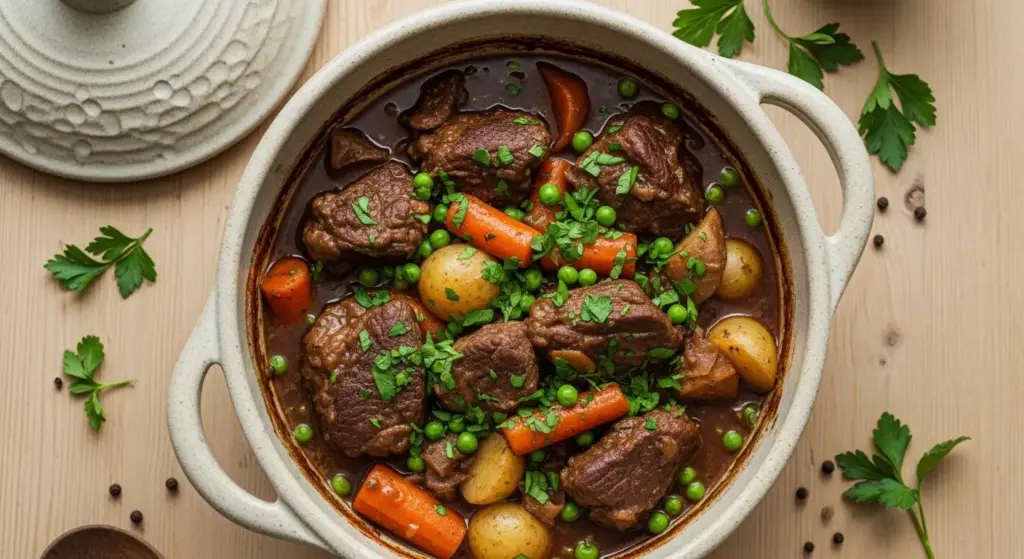
Lamb stew is hearty enough to stand on its own, but pairing it with the right side makes the whole meal feel even more complete. A starchy base or crusty bread is always the move here because the broth is too good to leave in the bowl.
Serve the stew over creamy mashed potatoes or alongside warm, buttery dinner rolls for soaking up every drop of that gorgeous broth.
- Garlic Mashed Potatoes as a base for ladling the stew over the top
- Dinner Rolls or crusty bread for mopping up the broth
- Roasted Broccoli as a simple, nutritious side
- Sauteed Cabbage for a traditional Irish-inspired pairing
- Broccoli Salad as a fresh, crunchy contrast to the richness of the stew
Variations to Try
Once you’re comfortable with the base recipe, there are plenty of delicious directions to take this stew. Each variation tweaks a few ingredients or the cooking method while keeping that same rich, deeply satisfying character.
- Slow Cooker Lamb Stew: Brown the lamb and sauté the aromatics on the stovetop as directed, then transfer everything to a 6-quart slow cooker. Cook on low for 8 to 9 hours or high for 4 to 5 hours until the lamb is tender.
- Moroccan-Inspired Lamb Stew: Add 1 teaspoon of cumin, 1/2 teaspoon of cinnamon, and 1/2 teaspoon of smoked paprika with the aromatics. Stir in a handful of dried apricots and a can of chickpeas for a North African twist.
- Lamb Stew without Guinness: Swap the Guinness for an extra cup of beef broth plus 1 tablespoon of balsamic vinegar for a similar depth without the beer.
- Gluten-Free Version: Replace the all-purpose flour with a gluten-free flour blend or use a cornstarch slurry (2 tablespoons cornstarch mixed with 2 tablespoons cold water) to thicken at the end.
- Root Vegetable Swap: Replace or supplement the potatoes with parsnips, turnips, or sweet potatoes for a different flavor profile. Turnips in particular are a traditional Irish stew ingredient.
Read Also: Cowboy Stew Recipe
Storage and Reheating
One of the best things about lamb stew is how well it keeps, and how much better the leftovers taste after a night in the fridge. The flavors continue to develop as everything sits together, so consider making a double batch intentionally.
- Refrigerator: Allow the stew to cool completely before storing. Transfer to an airtight container and refrigerate for up to 4 days.
- Freezer: Lamb stew freezes beautifully. Store in freezer-safe containers or zip-top bags for up to 3 months. For best results, omit the potatoes before freezing as they can become grainy when thawed. Add freshly cooked potatoes when reheating.
- Reheating on the stovetop: Transfer the desired amount to a saucepan and warm over medium-low heat, stirring occasionally, until heated through. Add a splash of beef broth or water if the stew has thickened too much during storage.
- Reheating in the microwave: Transfer to a microwave-safe bowl, cover loosely, and heat in 1-minute increments on medium power, stirring between each round.
- Do not boil when reheating. High heat can toughen the lamb and cause the vegetables to break down completely. Gentle, low-and-slow reheating is always the better option.
For another hearty meal that reheats brilliantly, check out this Brunswick Stew.
Nutritional Facts
The following values are estimates per serving based on 6 servings. Actual values will vary depending on specific ingredients used and any variations made.
| Nutrient | Per Serving |
|---|---|
| Calories | ~490 kcal |
| Protein | 38 g |
| Total Fat | 20 g |
| Saturated Fat | 7 g |
| Carbohydrates | 32 g |
| Dietary Fiber | 5 g |
| Sugar | 5 g |
| Sodium | 750 mg |
| Cholesterol | 110 mg |
| Iron | 4 mg |
| Potassium | 920 mg |
| Vitamin A | 80% DV |
These values are calculated using a standard online nutritional calculator and should be treated as estimates only.
For another protein-rich, satisfying meal with a detailed nutritional breakdown, check out this beef and barley soup recipe.
Health Benefits of Key Ingredients
Beyond being deeply satisfying, this lamb stew is packed with ingredients that genuinely nourish your body. The combination of quality protein, fiber-rich vegetables, and antioxidant-rich herbs makes it one of the more nutritionally complete comfort food meals you can make.
Lamb shoulder is an excellent source of high-quality protein, iron, zinc, and B vitamins, particularly B12, which is essential for nerve function and energy metabolism. It’s also a good source of conjugated linoleic acid (CLA), a fatty acid associated with several health benefits.
- Lamb: Rich in complete protein, heme iron (the most absorbable form), zinc, and selenium. One serving of lamb provides a significant portion of your daily protein needs.
- Carrots: Loaded with beta-carotene, which the body converts to vitamin A. Vital for eye health, immune function, and skin health.
- Yukon Gold Potatoes: A good source of potassium, vitamin C, and vitamin B6. Leaving the skins on increases the dietary fiber content significantly.
- Celery: Often overlooked, celery provides vitamin K, folate, and potassium. It also contains plant compounds with anti-inflammatory properties.
- Garlic: Contains allicin and other sulfur compounds with well-documented antimicrobial and cardiovascular benefits. Regular consumption is associated with reduced blood pressure and improved cholesterol.
- Peas: A plant-based protein source with a good amount of fiber, vitamin K, manganese, and folate.
- Fresh herbs (thyme, rosemary, parsley): All three are rich in antioxidants and have anti-inflammatory properties. They’re also a way to add considerable flavor without any added sodium.
Another nutritionally dense, vegetable-packed meal worth trying: Minestrone Soup
Frequently Asked Questions
1. What is the best cut of lamb for lamb stew?
Lamb shoulder is the best choice for stew by a significant margin. It has more fat and connective tissue than leg or loin cuts, and that tissue slowly melts into the broth during the long braise. The result is incredibly tender meat and a rich, slightly silky broth that has real body to it. Avoid lean cuts like lamb loin chops — they’ll dry out and turn tough under the same cooking conditions.
2. Can I make this lamb stew without Guinness?
Absolutely. The Guinness adds a malty, slightly bitter depth to the broth, but you can replace it with an additional cup of beef broth and a tablespoon of balsamic vinegar. The balsamic adds a similar richness and a touch of sweetness that compensates for the beer. Alternatively, a dry red wine like Cabernet Sauvignon or Merlot works beautifully in its place.
3. How do I keep the lamb from getting tough?
The key is low and slow heat. Lamb shoulder needs a prolonged braise at a gentle temperature to break down the collagen and connective tissue that makes it tender. Cooking at a high temperature or for too short a time will result in chewy, tough meat. Make sure your oven is at 325°F (160°C) and braise for a minimum of 90 minutes, checking for tenderness before pulling it out.
4. Can I make this lamb stew in a slow cooker?
Yes, and it works wonderfully. Brown the lamb and sauté the aromatics on the stovetop first — this step is important and should not be skipped even for a slow cooker version. Transfer everything to a 6-quart slow cooker and cook on low for 8 to 9 hours or high for 4 to 5 hours. Add the frozen peas in the last 15 minutes of cooking. If you want a thicker stew, stir in a cornstarch slurry (2 tablespoons cornstarch mixed with 2 tablespoons cold water) and cook on high for another 15 minutes.
5. Why is my stew broth too thin?
A few things can cause a thin broth. First, make sure you used all-purpose flour to coat the lamb before browning — this is the primary thickener. If your broth is still too thin at the end, mix 2 tablespoons of cornstarch with 2 tablespoons of cold water until smooth, then stir the slurry into the stew. Simmer gently over medium heat for 5 to 10 minutes and the broth will thicken noticeably. You can also remove the lid and let the stew simmer uncovered on the stovetop for 15 to 20 minutes to reduce and concentrate the broth naturally.
Read Also: Kimchi Stew Recipe
Final Thoughts
This lamb stew recipe is exactly what comfort food should be: simple, deeply flavorful, and completely satisfying. It rewards a little patience with results that feel genuinely special, even though the technique is well within reach of any home cook.
Give it a try on your next cool evening, and don’t be surprised when it becomes a regular on your dinner rotation. If you make it, leave a comment below to let me know how it turned out, and feel free to share a photo — there’s nothing more inspiring than seeing your versions of these recipes!
Recommended:
- Chicken Stew Recipe
- Oyster Stew Recipe
- Mississippi Pot Roast
- Slow Cooker Pot Roast
- Beef Bourguignon Recipe
- Caldo de Res Recipe
- Hamburger Soup Recipe
- Prime Rib Soup Recipe
- Cottage Pie Recipe
- Easy Shepherd’s Pie Recipe