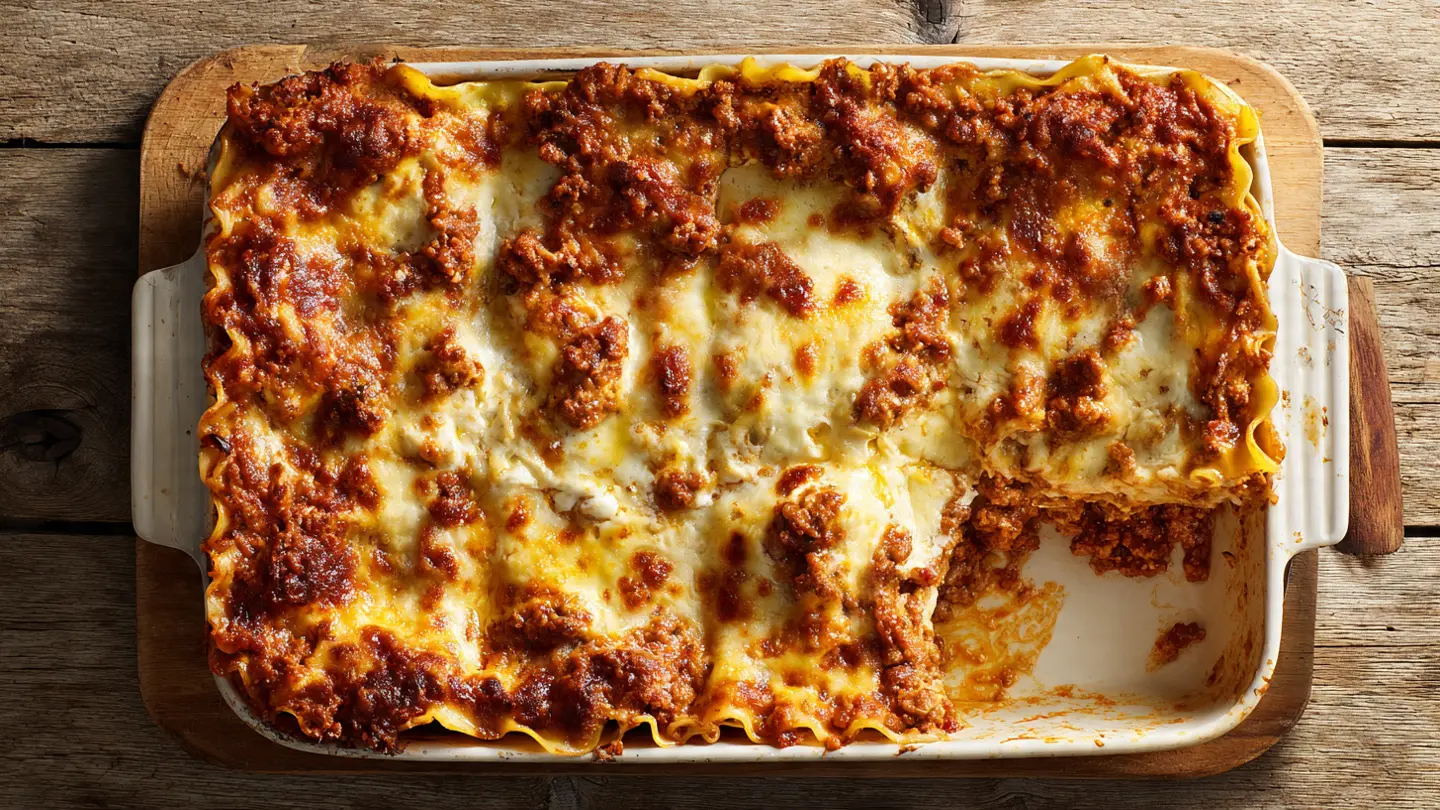
Making a lasagna recipe with ricotta from scratch is one of those cooking experiences that fills your kitchen with the most incredible aromas. The combination of rich meat sauce, creamy ricotta cheese, and melted mozzarella creates layers of pure comfort food that everyone at the table will love.
I started making this recipe years ago when I wanted to master a classic Italian-American dish that could feed a crowd. After testing different versions and techniques, I landed on this foolproof method that delivers perfect results every time.
The ricotta mixture stays creamy without being runny, the meat sauce has just the right balance of savory and sweet, and the cheese melts into golden, bubbly perfection.
What makes this version special is the attention to detail in each component. The ricotta filling gets mixed with egg to bind it properly, preventing it from sliding out when you cut into the lasagna. The meat sauce combines ground beef and Italian sausage for complex flavor, and a touch of sugar balances the acidity of the tomatoes.
This recipe serves 12 generous portions, making it ideal for family gatherings, potlucks, or meal prep for the week. You can assemble it ahead of time and bake it when you’re ready, and leftovers reheat beautifully for several days.
Looking for a lighter take on Italian classics? Try this Mediterranean Lentil Soup for a different kind of comfort.
Why You’ll Love This Lasagna Recipe with Ricotta
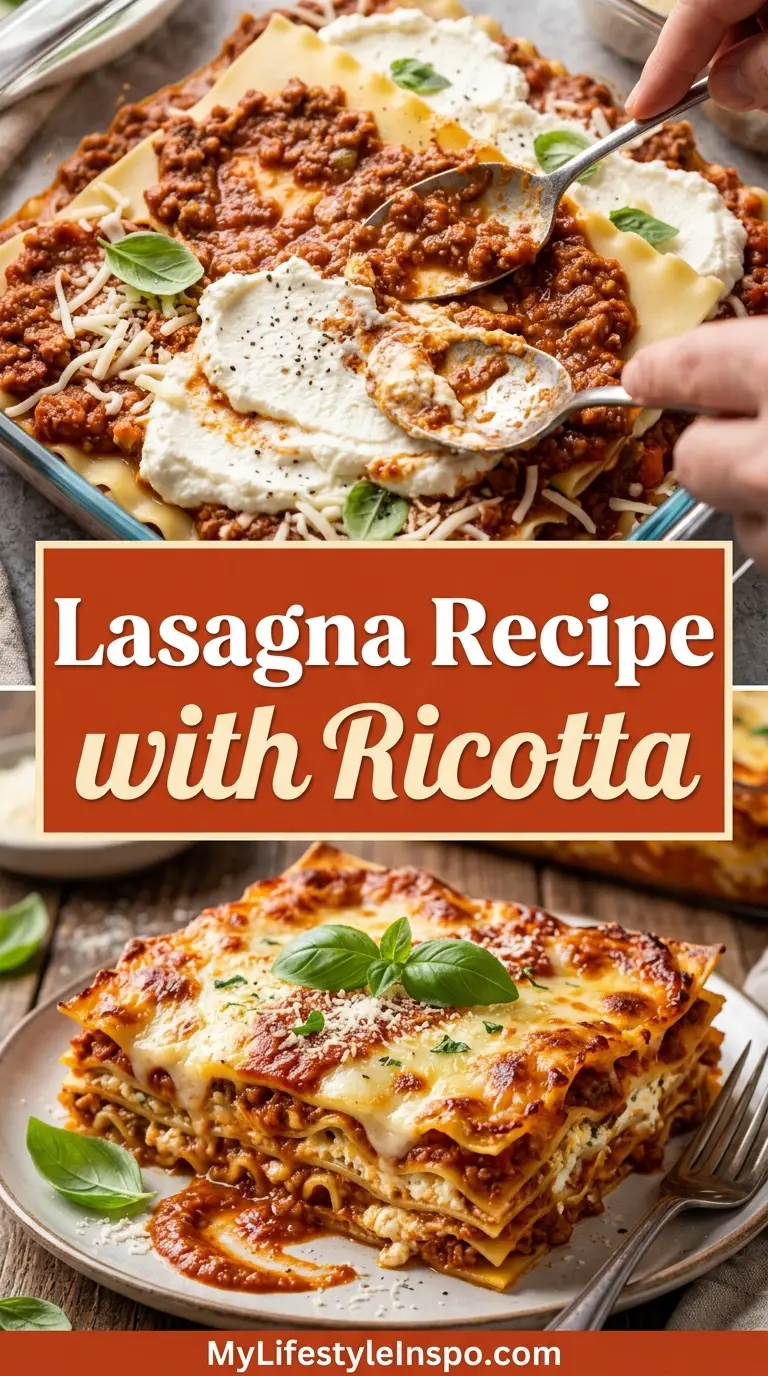
This classic lasagna delivers everything you want in a baked pasta dish. The layers work together perfectly, with the ricotta providing creaminess that contrasts beautifully with the hearty meat sauce.
The recipe is surprisingly forgiving for beginners. You don’t need fancy knife skills or complicated techniques, just patience to layer everything properly. Once you master the basic structure, you can customize it endlessly with different cheeses, vegetables, or sauces.
- Rich and satisfying – Combination of three cheeses creates incredible depth of flavor
- Make-ahead friendly – Assemble up to 24 hours in advance and bake when ready
- Freezer-friendly – Freezes beautifully for up to three months
- Perfect for crowds – One 9×13 pan serves 12 people generously
- Impressive presentation – Clean layers look restaurant-quality when sliced
- Customizable – Easy to adapt with different meats, vegetables, or make it vegetarian
- Great leftovers – Tastes even better the next day as flavors meld together
Another favorite: Easy Lasagna Recipe
Ingredients
The ingredients for this lasagna are straightforward and available at any grocery store. Using quality ingredients makes a noticeable difference in the final dish.
For the Meat Sauce:
- 1 pound (454g) ground beef (80/20 blend)
- 1 pound (454g) Italian sausage, casings removed
- 1 large yellow onion, diced
- 5 cloves garlic, minced
- 2 cans (28 ounces/794g each) crushed tomatoes
- 1 can (6 ounces/170g) tomato paste
- 2 teaspoons sugar
- 2 teaspoons dried basil
- 2 teaspoons dried oregano
- 1 teaspoon salt
- 1/2 teaspoon black pepper
- 1/4 teaspoon red pepper flakes (optional)
- 2 tablespoons olive oil
For the Ricotta Mixture:
- 32 ounces (907g) whole milk ricotta cheese
- 2 large eggs
- 1 cup (100g) grated Parmesan cheese
- 1/4 cup fresh parsley, chopped
- 1/2 teaspoon salt
- 1/4 teaspoon black pepper
For Assembly:
- 1 pound (454g) lasagna noodles (about 12-15 noodles)
- 4 cups (450g) shredded mozzarella cheese, divided
- 1/2 cup (50g) additional grated Parmesan cheese for topping
- Fresh parsley for garnish
Read Also: Baked Ziti Recipe
Kitchen Equipment Needed
Having the right tools makes assembling lasagna much easier and ensures even cooking. Most of these items are basic kitchen staples.
- 9×13 inch baking dish (deep-dish preferred)
- Large stockpot for boiling noodles
- Large skillet or Dutch oven for meat sauce
- Medium mixing bowl for ricotta mixture
- Wooden spoon for stirring sauce
- Colander for draining noodles
- Aluminum foil
- Ladle or large spoon for spreading sauce
- Measuring cups and spoons
- Cheese grater (if using block cheese)
You might also enjoy: Lasagna Soup Recipe
Recommended Products for This Recipe
These specific products will help you achieve the best results with this lasagna. I’ve tested many options and these consistently deliver superior quality.
1. Le Creuset Enameled Cast Iron Baking Dish
This baking dish distributes heat evenly throughout the lasagna, ensuring perfect cooking from edge to center. The enameled interior prevents sticking and makes cleanup simple even with baked-on cheese. It’s an investment that will serve you for decades of lasagna making.
2. Galbani Whole Milk Ricotta Cheese
This Italian-made ricotta has a velvety texture that stays creamy during baking without becoming watery. The whole milk version provides rich flavor that cheap ricotta simply cannot match. It’s worth seeking out for lasagna where the cheese is a star ingredient.
3. Rao’s Homemade Marinara Sauce
While this recipe makes sauce from scratch, having quality jarred sauce on hand speeds up the process significantly. Rao’s uses simple, high-quality ingredients and tastes like homemade. Mix it with your browned meat and you’ll save 30 minutes without sacrificing flavor.
4. Barilla No-Boil Lasagna Noodles
These oven-ready noodles eliminate the most annoying step of traditional lasagna making. They absorb moisture from the sauce as they bake, creating perfect texture without the hassle of boiling. Just make sure your sauce is slightly thinner to compensate for absorption.
5. Microplane Premium Classic Zester Grater
Freshly grated Parmesan makes an enormous difference in lasagna compared to pre-grated cheese. This grater creates fine, fluffy shreds that melt beautifully and distribute evenly throughout the ricotta mixture. It also works perfectly for grating garlic and citrus zest.
For a lighter option, try: Healthy Broccoli Soup Recipe
Step-by-Step Instructions
Follow these detailed steps to create perfect lasagna layers. Take your time with assembly and you’ll be rewarded with beautiful presentation.
1. Prepare the Meat Sauce
- Heat olive oil in a large Dutch oven or skillet over medium-high heat until shimmering but not smoking
- Add diced onion and cook for 8-10 minutes, stirring occasionally, until softened and translucent (this releases natural sugars that balance the tomato acidity)
- Add ground beef and Italian sausage to the pot, breaking it into small crumbles with a wooden spoon or spatula
- Cook the meat for 10-12 minutes, stirring frequently and breaking up any large chunks, until completely browned with no pink remaining
- Add minced garlic and cook for 1 minute, stirring constantly to prevent burning
- If there’s excessive fat in the pan (more than 2 tablespoons), drain most of it off, leaving just enough to keep the sauce from being dry
- Stir in crushed tomatoes, tomato paste, sugar, basil, oregano, salt, black pepper, and red pepper flakes if using
- Bring the sauce to a simmer, then reduce heat to low
- Let the sauce simmer uncovered for 30-40 minutes, stirring occasionally to prevent sticking, until it thickens slightly and the flavors meld together
- Taste and adjust seasoning with additional salt or pepper if needed
- Remove from heat and set aside
2. Cook the Lasagna Noodles
- Fill a large stockpot two-thirds full with water and add 2 tablespoons salt
- Bring to a rolling boil over high heat
- Add lasagna noodles one at a time, stirring gently to prevent sticking
- Cook noodles for 8-10 minutes (or 2 minutes less than package directions) until al dente (they should be flexible but still have a slight bite in the center)
- While noodles cook, prepare a large baking sheet by lightly coating it with olive oil or cooking spray
- Drain noodles in a colander but do NOT rinse them (the starch helps sauce cling to the noodles)
- Lay noodles flat in a single layer on the prepared baking sheet to prevent them from sticking together
- If using no-boil noodles, skip this entire step and proceed directly to assembling
3. Make the Ricotta Mixture
- In a medium mixing bowl, combine ricotta cheese, eggs, grated Parmesan, chopped parsley, salt, and black pepper
- Mix thoroughly with a fork or wooden spoon until all ingredients are evenly distributed and the mixture is smooth and creamy
- The eggs will help bind the ricotta so it holds together when you cut the lasagna instead of running all over the plate
- Set aside until ready to assemble
4. Assemble the Lasagna
- Preheat your oven to 375°F (190°C)
- Lightly grease a 9×13 inch baking dish with cooking spray or a thin layer of olive oil
- Spread 1 1/2 cups of meat sauce evenly across the bottom of the dish (this prevents the noodles from sticking and adds moisture)
- Arrange 4 lasagna noodles over the sauce, slightly overlapping if needed to cover the surface completely
- Spread one-third of the ricotta mixture (about 1 1/2 cups) evenly over the noodles using the back of a spoon or offset spatula
- Sprinkle 1 cup of shredded mozzarella cheese evenly over the ricotta layer
- Spoon 1 1/2 cups of meat sauce over the mozzarella, spreading it to the edges
- Repeat this layering process two more times: noodles, ricotta mixture (1/3), mozzarella (1 cup), meat sauce (1 1/2 cups)
- For the final layer, place 4 noodles on top, then spread the remaining meat sauce over them
- Top with the remaining 1 cup mozzarella cheese and sprinkle with the additional 1/2 cup Parmesan cheese
- The cheese topping should cover the surface completely for even browning
5. Bake the Lasagna
- Cover the baking dish tightly with aluminum foil (spray the underside of the foil with cooking spray to prevent the cheese from sticking to it)
- Place the covered lasagna on the center rack of the preheated oven
- Bake covered for 45 minutes to allow the layers to cook through and the flavors to meld
- Remove the foil carefully (watch for steam) and return the lasagna to the oven
- Bake uncovered for an additional 15-20 minutes until the cheese on top is golden brown and bubbly
- If you want extra browning, turn on the broiler for the last 2-3 minutes, watching carefully to prevent burning
- Remove from oven and let the lasagna rest for at least 15-20 minutes before cutting (this crucial step allows the layers to set so your slices hold their shape)
- Garnish with fresh chopped parsley if desired
- Cut into 12 squares and serve with extra Parmesan cheese on the side
This pairs beautifully with Classic Bruschetta as an appetizer.
Tips for Success
These professional tips will help you avoid common lasagna pitfalls and achieve restaurant-quality results every time.
- Don’t skip the resting time – Letting lasagna sit for 15-20 minutes after baking is crucial for clean slices that hold their shape
- Prevent watery lasagna – Make sure your meat sauce is thick enough (it should coat the back of a spoon), and don’t rinse the noodles after cooking
- Use whole milk ricotta – Low-fat ricotta tends to be grainy and watery; whole milk ricotta stays creamy and rich
- Shred your own cheese – Pre-shredded cheese contains anti-caking agents that prevent smooth melting; buy blocks and grate them yourself
- Layer strategically – Keep layers relatively thin and even for the best texture and appearance when sliced
- Grease your foil – Always spray the underside of the foil with cooking spray to prevent the cheese from sticking when you remove it
- Check doneness – Insert a knife into the center of the lasagna; it should slide in easily and come out hot
- Prevent overflow – Place your baking dish on a rimmed baking sheet to catch any sauce that bubbles over during baking
- Fresh vs. dried herbs – If using fresh herbs instead of dried, triple the amount (1 tablespoon fresh equals 1 teaspoon dried)
Read Also: San Giorgio Lasagna Recipe
Serving Suggestions
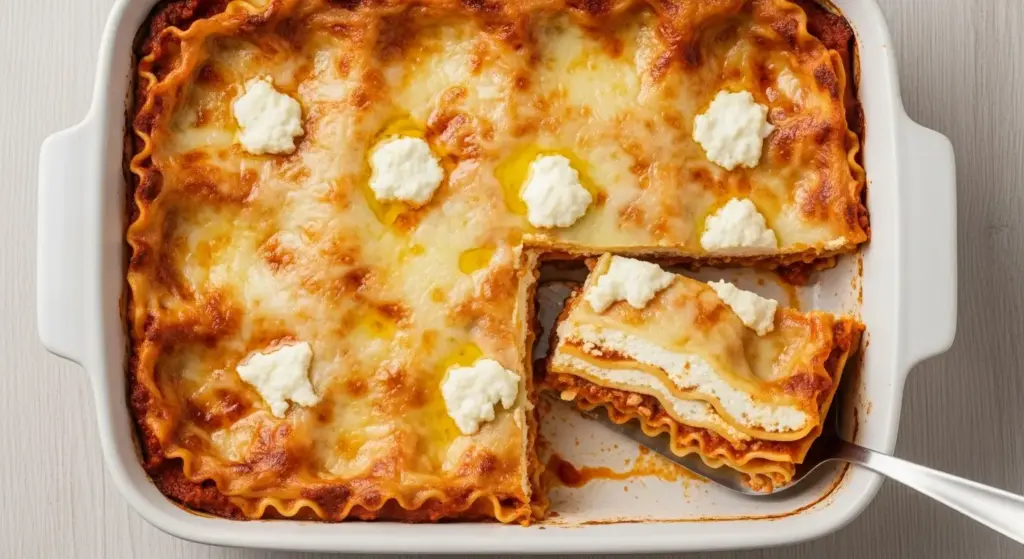
Lasagna is a complete meal on its own, but the right accompaniments elevate it to a full Italian feast. Choose sides that complement rather than compete with the rich flavors.
- Serve with warm Cunettos Garlic Cheese Bread for soaking up extra sauce
- Add a crisp Italian salad with mixed greens, tomatoes, red onion, and balsamic vinaigrette to cut through the richness
- Pair with roasted vegetables like zucchini, bell peppers, or broccoli for added nutrition and color
- Offer Classic Bruschetta as a light appetizer before the main course
- Serve with a dry red wine like Chianti or Sangiovese that pairs perfectly with tomato-based sauces
- Include a simple arugula salad with lemon dressing for peppery freshness that balances the cheese
- Finish the meal with Classic Tiramisu for an authentic Italian dessert
You might also enjoy: Chicken Parmesan Recipe
Variations to Try
Once you master the basic technique, these variations let you customize the recipe to your preferences or dietary needs.
- Vegetarian lasagna – Omit the meat and add sautéed mushrooms, spinach, zucchini, and bell peppers to the tomato sauce
- White lasagna – Replace the tomato sauce with béchamel (white sauce) and add cooked chicken, spinach, and extra mozzarella
- Spicy lasagna – Add 1-2 teaspoons crushed red pepper flakes to the meat sauce and use hot Italian sausage instead of mild
- Cheese variations – Mix in 1 cup of shredded fontina or provolone with the mozzarella for more complex flavor
- Meat alternatives – Use ground turkey, chicken, or plant-based meat substitute instead of beef and sausage
- Spinach addition – Add 10 ounces of thawed and squeezed-dry frozen spinach to the ricotta mixture
- Fresh pasta sheets – Replace dried noodles with fresh pasta sheets from the deli section (no boiling required)
- Cottage cheese substitute – Use 32 ounces of drained cottage cheese instead of ricotta for a lighter, tangier flavor
- Bolognese style – Replace crushed tomatoes with 3 cups of Tomato Sauce for a smoother, more refined sauce
Another favorite: Creamy Mac and Cheese Recipe
Storage and Reheating
Proper storage keeps your lasagna fresh and delicious for days, and it actually tastes better as the flavors develop.
- Refrigerator storage – Cover leftover lasagna tightly with plastic wrap or aluminum foil and refrigerate for up to 4 days
- Freezing before baking – Assemble the lasagna completely in a freezer-safe dish, wrap tightly in plastic wrap then aluminum foil, and freeze for up to 3 months; thaw in refrigerator overnight before baking as directed
- Freezing after baking – Let baked lasagna cool completely, cut into portions, wrap individual pieces in plastic wrap then foil, and freeze for up to 3 months
- Reheating in oven – Cover refrigerated lasagna with foil and bake at 350°F (175°C) for 20-25 minutes until heated through; remove foil for last 5 minutes to crisp the top
- Reheating single portions – Microwave individual slices on medium power for 2-3 minutes, checking every 30 seconds and adding a splash of water to prevent drying out
- Reheating frozen lasagna – Thaw completely in refrigerator overnight, then reheat in oven at 350°F (175°C) for 30-40 minutes covered with foil
- Preventing dry reheating – Add 2-3 tablespoons of water or extra sauce over the lasagna before reheating to restore moisture
For a lighter option, try: Vegetarian Split Pea Soup Recipe
Nutritional Facts
Per serving (1/12 of recipe, approximately 400g):
- Calories: 520
- Total Fat: 28g
- Saturated Fat: 14g
- Cholesterol: 115mg
- Sodium: 890mg
- Total Carbohydrates: 38g
- Dietary Fiber: 4g
- Sugars: 8g
- Protein: 32g
- Calcium: 450mg
- Iron: 4mg
Nutritional information is approximate and will vary based on specific ingredients used.
Read Also: Tuna Noodle Casserole Recipe
Health Benefits of Key Ingredients
While lasagna is certainly an indulgent dish, it contains several ingredients that offer nutritional value beyond just great taste.
Ricotta cheese provides high-quality protein and calcium for bone health. Made from whey, it’s easier to digest than many other cheeses and contains beneficial probiotics when made traditionally. The whole milk version offers vitamin A and healthy fats that help absorb fat-soluble vitamins.
- Tomatoes – Rich in lycopene, an antioxidant that may reduce risk of heart disease and certain cancers; cooking tomatoes actually increases lycopene availability
- Garlic – Contains compounds that may boost immune function and reduce blood pressure; allicin has antimicrobial properties
- Olive oil – Monounsaturated fats support heart health and reduce inflammation throughout the body
- Parmesan cheese – Excellent source of calcium and phosphorus for strong bones; aged cheese is naturally lactose-free
- Ground beef – Provides complete protein, iron, zinc, and B vitamins essential for energy production
- Onions – Contain quercetin, a flavonoid with anti-inflammatory properties; also support gut health with prebiotic fiber
- Italian sausage – While higher in fat, provides protein and flavor; fennel seeds traditionally used have digestive benefits
This pairs beautifully with Roasted Carrot Soup for a balanced meal.
Frequently Asked Questions
1. Can I use cottage cheese instead of ricotta in lasagna?
Yes, cottage cheese works as a substitute for ricotta, though the texture and flavor will be slightly different. Cottage cheese has a tangier taste and higher water content, so drain it for 30-60 minutes before using. Mix it thoroughly to break up the curds for a smoother consistency closer to ricotta.
2. Do I need to boil lasagna noodles first?
Traditional lasagna noodles require boiling until al dente before assembling. However, no-boil or oven-ready noodles can go directly into the lasagna uncooked, though they absorb more moisture from the sauce. If using no-boil noodles, make sure your sauce is slightly thinner to compensate.
3. Why is my lasagna watery?
Watery lasagna typically results from not draining the meat properly, using sauce that’s too thin, or not letting the lasagna rest after baking. Make sure to simmer your sauce until thickened, drain excess fat from the meat, and always let the lasagna sit for 15-20 minutes before cutting to allow the layers to set.
4. How do I know when lasagna is done baking?
Lasagna is done when the internal temperature reaches 165°F (74°C), the cheese is melted and golden on top, and the sauce is bubbling around the edges. A knife inserted into the center should slide in easily and come out very hot to the touch.
5. Can I make lasagna ahead of time?
Absolutely, lasagna is one of the best make-ahead dishes. Assemble it completely up to 24 hours in advance, cover tightly, and refrigerate until ready to bake. You can also freeze assembled unbaked lasagna for up to 3 months; thaw in the refrigerator overnight before baking as directed.
You might also enjoy: Chicken Casserole Recipe
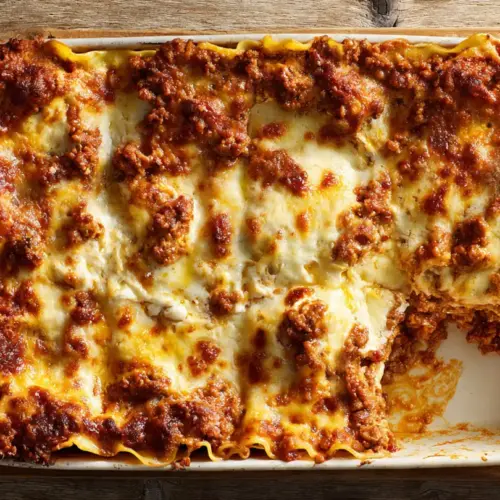
Lasagna Recipe with Ricotta

Equipment
- 9×13-inch baking dish - deep-dish preferred
- Large stockpot - for boiling noodles
- Large skillet or Dutch oven - for meat sauce
- Medium mixing bowl - for ricotta mixture
- Wooden spoon
- Colander
- Aluminum foil
- Ladle or large spoon - for spreading sauce
- Measuring cups and spoons
- Cheese grater - if using block cheese
Ingredients
For the Meat Sauce
- 1 pound ground beef - 454g, 80/20 blend
- 1 pound Italian sausage - 454g, casings removed
- 1 large yellow onion - diced
- 5 cloves garlic - minced
- 2 cans crushed tomatoes - 28 ounces/794g each
- 1 can tomato paste - 6 ounces/170g
- 2 teaspoons sugar
- 2 teaspoons dried basil
- 2 teaspoons dried oregano
- 1 teaspoon salt
- 1/2 teaspoon black pepper
- 1/4 teaspoon red pepper flakes - optional
- 2 tablespoons olive oil
For the Ricotta Mixture
- 32 ounces whole milk ricotta cheese - 907g
- 2 large eggs
- 1 cup grated Parmesan cheese - 100g
- 1/4 cup fresh parsley - chopped
- 1/2 teaspoon salt
- 1/4 teaspoon black pepper
For Assembly
- 1 pound lasagna noodles - 454g, about 12-15 noodles
- 4 cups shredded mozzarella cheese - 450g, divided
- 1/2 cup grated Parmesan cheese - 50g, for topping
- fresh parsley - for garnish
Instructions
- Heat olive oil in a large Dutch oven or skillet over medium-high heat. Add diced onion and cook 8-10 minutes until softened. Add ground beef and Italian sausage, breaking into crumbles, and cook 10-12 minutes until browned. Drain excess fat if needed.
- Add minced garlic and cook 1 minute. Stir in crushed tomatoes, tomato paste, sugar, basil, oregano, salt, black pepper, and optional red pepper flakes. Simmer uncovered on low for 30-40 minutes until thickened. Set aside.
- Boil lasagna noodles in salted water until al dente (8-10 minutes or 2 minutes less than package). Drain but do not rinse, then lay flat on an oiled baking sheet to prevent sticking. Skip if using no-boil noodles.
- In a medium bowl, mix ricotta cheese, eggs, grated Parmesan, chopped parsley, salt, and black pepper until smooth and creamy. Set aside.
- Preheat oven to 375°F (190°C). Grease a 9×13 inch baking dish. Spread 1 1/2 cups meat sauce on the bottom. Layer 4 noodles, one-third ricotta mixture, 1 cup mozzarella, and 1 1/2 cups sauce. Repeat twice more. Top with final noodles, remaining sauce, 1 cup mozzarella, and 1/2 cup Parmesan.
- Cover tightly with foil (sprayed underside with cooking spray) and bake 45 minutes. Remove foil and bake uncovered 15-20 minutes until cheese is golden and bubbly. Optional: broil 2-3 minutes for extra browning.
- Let lasagna rest 15-20 minutes before slicing into 12 squares. Garnish with fresh parsley if desired. Serve with extra Parmesan.
Notes
- Don’t skip the resting time after baking for clean slices that hold their shape.
- Use whole milk ricotta for the creamiest texture; low-fat can become watery.
- Shred your own mozzarella and Parmesan for better melting without anti-caking agents.
- Make-ahead friendly: Assemble up to 24 hours in advance and refrigerate, or freeze unbaked up to 3 months.
- Grease the underside of the foil to prevent cheese from sticking.
- Place the baking dish on a rimmed sheet to catch any overflow.
- For no-boil noodles, ensure sauce is slightly thinner to allow proper absorption.
- Leftovers reheat beautifully and taste even better the next day.
- Customize with vegetables for a vegetarian version or different cheeses/meats.
- Let lasagna rest 15-20 minutes before cutting so layers set properly.
Final Thoughts
This lasagna recipe with ricotta represents everything wonderful about Italian-American comfort food. The layers of pasta, meat sauce, and creamy cheese come together in a dish that satisfies both body and soul.
Making lasagna does require some time and effort, but the payoff is enormous. You’ll have a crowd-pleasing dinner that feeds a large group or provides delicious leftovers for several days. The basic technique becomes second nature after you make it once or twice, and then you can experiment with endless variations.
I hope you’ll give this recipe a try and experience the joy of pulling a bubbling, golden lasagna from the oven. Don’t forget to let it rest before slicing, and save me a corner piece with the crispy cheese edges.
What variations will you try first? Leave a comment below and let me know how your lasagna turns out!
Recommended:
- Baked Mac and Cheese Recipe
- Vodka Sauce Recipe
- Homemade Alfredo Sauce Recipe
- Olive Garden Alfredo Sauce Recipe
- Chicken Alfredo Recipe with Jar Sauce
- Baked Chicken with Alfredo Sauce Recipe
- French Toast Casserole Recipe
- Breakfast Casserole Recipe
- Tuna Casserole Recipe
- Corn Casserole Recipe