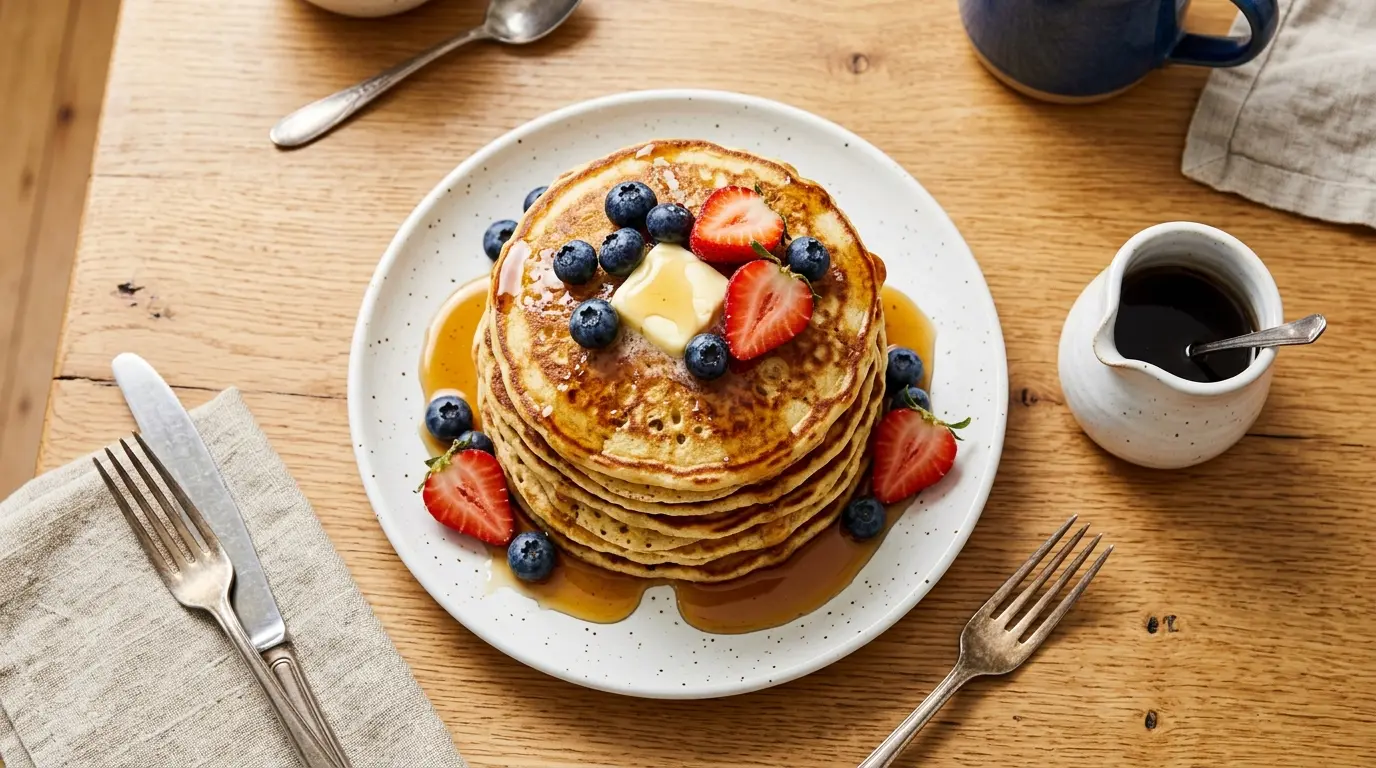
If you’ve been keeping a sourdough starter, you already know the guilt that comes with pouring discard down the drain. This sourdough discard pancakes recipe is the answer you’ve been waiting for. Made with unfed sourdough starter, a handful of pantry staples, and cooked up in about 30 minutes, these pancakes are light, golden, and perfectly fluffy with just the right hint of tang. They’re not just a way to use up leftovers. They’re genuinely one of the best pancake breakfasts you’ll ever make.
The magic here lies in what the discard brings to the batter. That natural acidity from the fermented starter tenderizes the flour proteins, giving you a softer, more pillowy pancake than anything boxed mix can produce. Combined with baking powder and baking soda, the lift is incredible.
This is a same-day recipe, no overnight rest required. Mix the batter, heat your griddle, and you’re stacking pancakes in minutes. It’s the kind of breakfast that feels special even on a regular Tuesday.
You might also enjoy: Sourdough Pancake Recipe
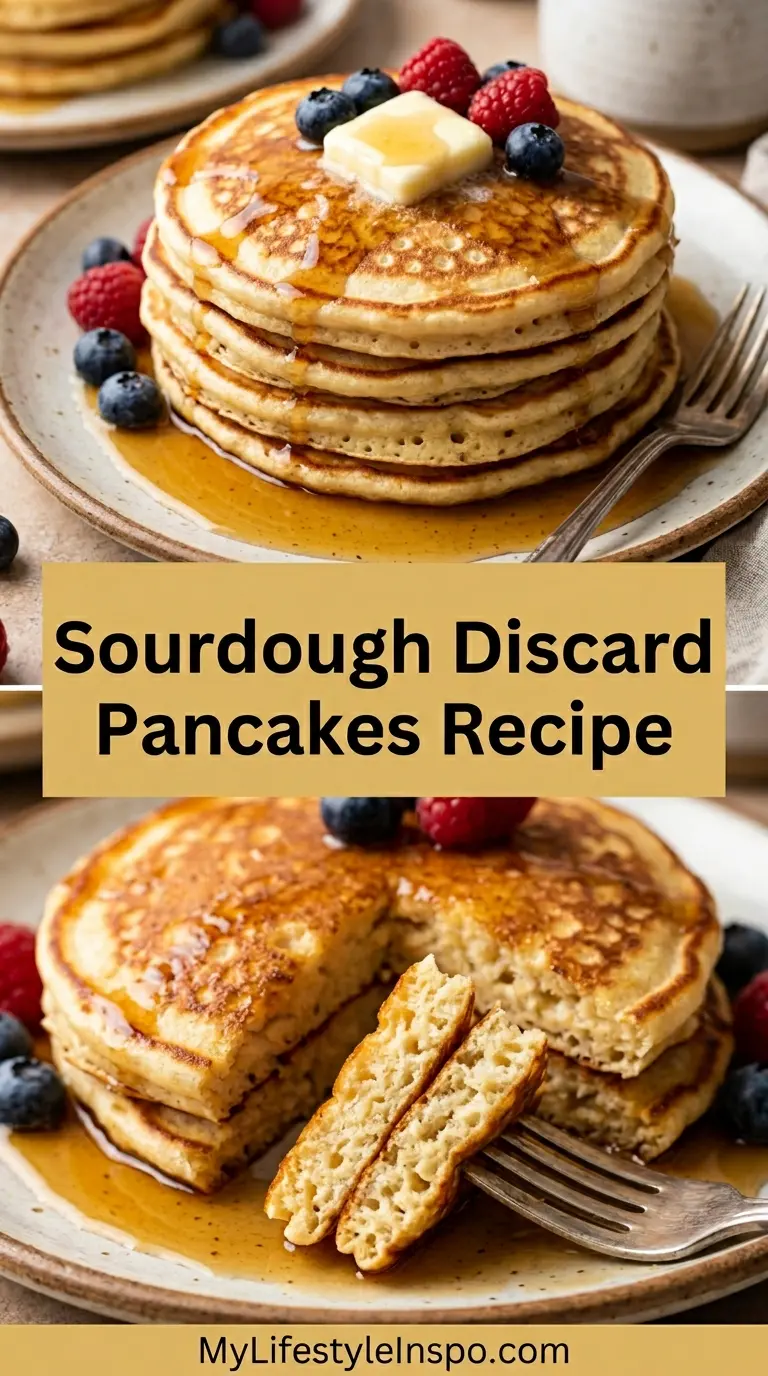
Why You’ll Love This Sourdough Discard Pancakes Recipe
Once you make these, boxed pancake mix is going to feel like a downgrade.
The sourdough discard adds a gentle tang that plays beautifully with maple syrup and fresh berries. It’s not sour in an overwhelming way. It’s more like a depth of flavor that makes you wonder why all pancakes don’t taste this good.
You’re also doing something genuinely responsible with food. Instead of discarding that jar of starter every time you feed it, you’re turning it into a proper, satisfying meal.
These come together with ingredients you almost certainly already have. Flour, eggs, milk, butter, baking powder, baking soda, sugar, and your discard. That’s it.
They cook up beautifully golden on the outside with a pillowy, soft interior. The edges get those irresistible crispy-buttered bits that make you want to eat them straight off the griddle.
This recipe is also incredibly flexible. You can keep the batter plain and classic, or fold in blueberries, chocolate chips, or a pinch of cinnamon depending on your mood.
- Deep, naturally tangy flavor from the fermented sourdough discard
- Extra fluffy and tender texture thanks to the acidity of the starter
- Uses up sourdough discard so nothing goes to waste
- Ready in under 30 minutes with no overnight rest needed
- Made with simple pantry ingredients most people already have
- Easy to customize with fruit, chocolate, or spices
- Works with discard straight from the fridge, no need to bring it to room temperature
If you’re new to sourdough baking, start with a Sourdough Starter Recipe so you’ll always have discard on hand for mornings like this.
Ingredients
This recipe uses a full cup of sourdough discard, which gives you the most pronounced flavor and ensures you’re actually using a meaningful amount of discard each time. The leaveners do the heavy lifting for rise and fluffiness, so your discard doesn’t need to be active or bubbly.
- 1 cup (240g) sourdough discard (unfed, straight from the fridge)
- 1 cup (125g) all-purpose flour
- 1 tablespoon granulated sugar
- 1 teaspoon baking powder
- 1/2 teaspoon baking soda
- 1/2 teaspoon fine salt
- 1 large egg
- 3/4 cup (180ml) whole milk
- 2 tablespoons (30g) unsalted butter, melted and slightly cooled, plus more for the pan
- 1 teaspoon pure vanilla extract
For serving: maple syrup, fresh berries, powdered sugar, whipped cream, or honey butter.
Read Also: Easy Sourdough Bread Recipe
Kitchen Equipment Needed
Simple tools are all you need here. A good non-stick griddle or skillet is the most important piece. If you have a cast iron griddle or a non-stick electric griddle, this is the recipe to break it out for.
- Large mixing bowl
- Medium mixing bowl
- Balloon whisk
- Non-stick electric griddle or cast iron griddle
- Rubber spatula or flat pancake spatula
- Measuring cups and spoons
- Ladle or 1/4-cup measuring cup for portioning batter
- Pastry brush or paper towel for greasing the pan
These pancakes are best made with a digital kitchen scale if you want consistent results every time. Weighing the flour and discard is the easiest way to ensure the batter isn’t too thick or too thin.
Another favorite morning recipe: Buttermilk Pancake Recipe
Recommended Products for This Recipe
These are products that genuinely make this recipe easier and the result better. Each one is selected based on quality and performance, not gimmicks.
1. Lodge Cast Iron Griddle
A cast iron griddle holds heat evenly and distributes it consistently across the surface, which means every pancake comes out the same golden color. It also develops a natural non-stick seasoning over time. This is the kind of tool that lasts a lifetime with minimal care.
2. OXO Good Grips Non-Stick Griddle Pan
If cast iron feels intimidating for mornings, this OXO non-stick griddle is a brilliant alternative. It heats up fast, releases pancakes without sticking, and is incredibly easy to clean. The sloped edges make flipping simple, even for beginners.
3. KitchenAid Stainless Steel Balloon Whisk
Proper whisking is what prevents overmixing. A good balloon whisk incorporates wet and dry ingredients in fewer strokes, keeping the batter light and lump-free without activating too much gluten. This one handles batter beautifully.
4. OXO Digital Kitchen Scale
Measuring sourdough discard by weight rather than volume is the most reliable method, since discard consistency can vary. A kitchen scale takes the guesswork out and makes the recipe foolproof every single time.
5. Pure Vermont Maple Syrup
Sourdough discard pancakes deserve real maple syrup. The depth of flavor in a grade B or dark amber maple syrup matches the slight tang of the pancakes perfectly. Don’t let a great stack get buried under corn syrup imitation.
For a fluffier variation on your weekend breakfast rotation, check out the Pumpkin Pancake Recipe.
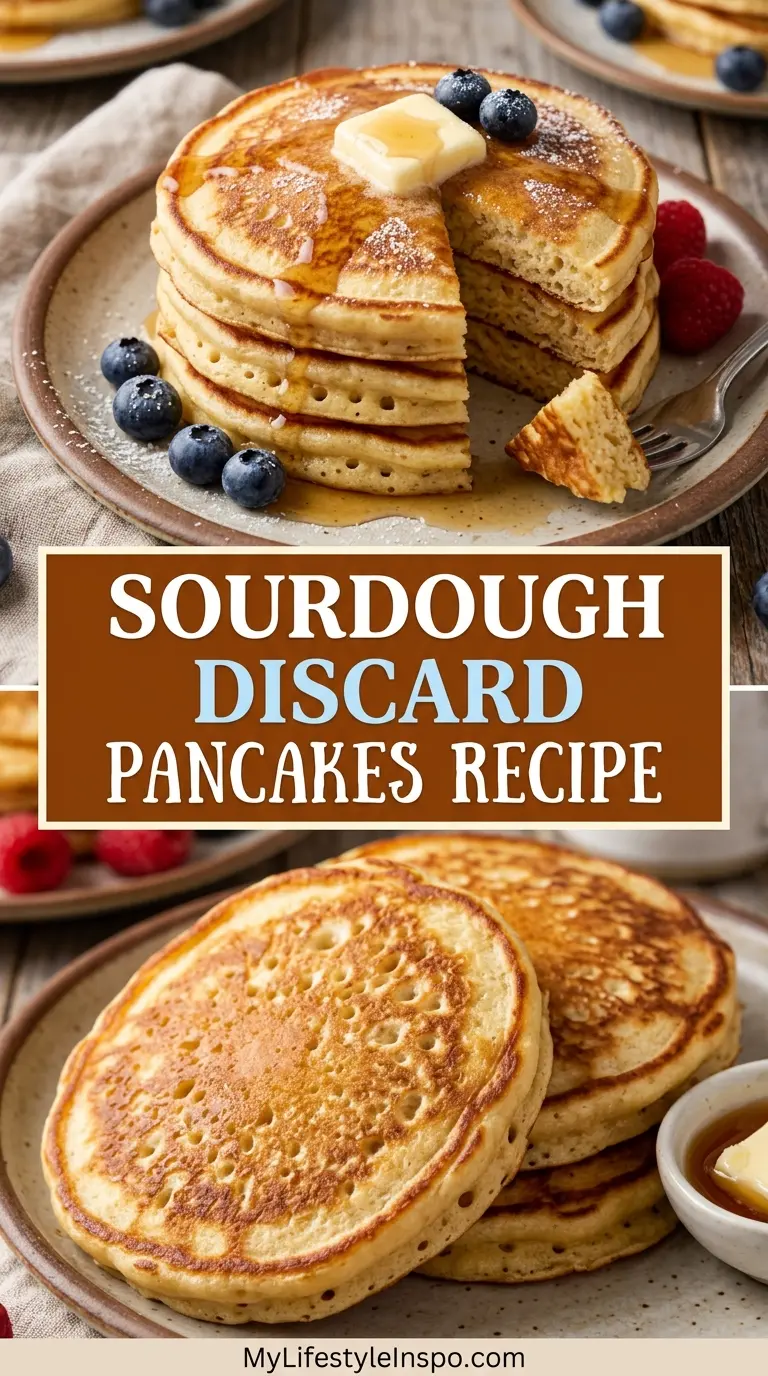
Step-by-Step Instructions
Step 1: Gather and Prep Your Ingredients
- Pull your sourdough discard from the refrigerator. It can be used cold, straight from the fridge. No need to bring it to room temperature first.
- Melt the 2 tablespoons of butter either in a small saucepan over low heat or in a microwave-safe bowl in 20-second bursts. Set it aside and let it cool slightly so it doesn’t cook the egg when you add it.
- Crack the egg into a small bowl or cup and set it aside. This makes it easier to check for shell fragments.
- Measure out your milk. Whole milk gives the richest result, but 2% or oat milk also work well.
- Have all your ingredients on the counter before you start. This recipe comes together quickly and you don’t want to be hunting for the baking soda mid-batter.
Step 2: Mix the Dry Ingredients
- In a large mixing bowl, add the 1 cup (125g) of all-purpose flour, 1 tablespoon of granulated sugar, 1 teaspoon of baking powder, 1/2 teaspoon of baking soda, and 1/2 teaspoon of fine salt.
- Whisk the dry ingredients together until they are well combined and evenly distributed. This prevents any pockets of baking powder or soda from showing up in your finished pancakes.
- Make a small well in the center of the dry ingredients. This will make it easier to fold in the wet mixture without overworking the batter.
Step 3: Combine the Wet Ingredients
- In a separate medium bowl, add the 1 cup (240g) of sourdough discard. Whisk it briefly to loosen it up if it has formed a skin or become quite stiff in the fridge.
- Add the egg, the 3/4 cup (180ml) of milk, the 2 tablespoons of cooled melted butter, and the 1 teaspoon of vanilla extract to the bowl with the discard.
- Whisk the wet ingredients together until fully combined. The mixture should look smooth and slightly loose. The sourdough discard may create a slightly lumpy texture at first, but keep whisking gently until everything is incorporated.
Step 4: Combine Wet and Dry Ingredients
- Pour the wet ingredient mixture into the well you made in the dry ingredients.
- Using a rubber spatula or large spoon, gently fold the wet into the dry. Stir in slow, deliberate strokes, scraping the bottom of the bowl to catch any dry flour.
- Stop mixing as soon as the dry streaks of flour disappear. A few small lumps in the batter are completely normal and actually desirable. Overmixing develops gluten, which leads to tough, dense pancakes.
- Do not stir vigorously or whisk at this stage. The gentle fold is what keeps the pancakes tender and fluffy.
- Let the batter rest for 3 to 5 minutes while you heat the pan. This resting time allows the baking powder and baking soda to begin activating, giving the pancakes more lift.
Step 5: Preheat and Grease the Griddle
- Place your griddle or non-stick skillet over medium-low to medium heat. Getting the heat right is the most important step in making beautiful pancakes.
- Allow the griddle to preheat for about 3 to 5 minutes before adding any batter. A properly preheated surface ensures even cooking and the signature golden crust.
- To test whether the pan is ready, flick a few drops of water onto the surface. If the water sizzles and evaporates immediately, the pan is ready.
- Add a small pat of butter to the pan and let it melt, swirling to coat the surface evenly. Alternatively, use a paper towel to spread a thin layer of butter across the cooking surface.
- Avoid using cooking spray as it can create an uneven surface and affect the color of the pancakes.
Step 6: Cook the Pancakes
- Using a 1/4-cup (60ml) measuring cup or a ladle, pour the batter onto the preheated griddle, spacing pancakes at least 2 inches (5cm) apart so they have room to spread slightly.
- Do not press or flatten the batter after you pour it. Let it spread naturally on its own.
- Watch the surface of each pancake carefully. When bubbles begin to form across the top and the edges look set (no longer shiny or wet), the pancake is ready to flip. This typically takes 2 to 3 minutes.
- Flip the pancake gently using a flat spatula. Slide the spatula fully under the pancake before flipping to avoid breaking it.
- Cook the second side for another 1 to 2 minutes until golden brown. The second side will cook faster than the first.
- Transfer cooked pancakes to a wire rack set over a baking sheet in a warm oven (200°F / 93°C) to keep them warm while you finish the batch.
- Repeat with the remaining batter, adding a small amount of butter to the pan between each batch.
Step 7: Stack and Serve
- Stack the pancakes on warm plates, three to four per serving.
- Top with a generous pour of maple syrup, a handful of fresh berries, and a dusting of powdered sugar if you like.
- Serve immediately while hot. Sourdough discard pancakes are at their absolute best fresh off the griddle, when the exterior is still slightly crisp and the interior is pillowy soft.
For another classic weekend stack, try the Old Fashioned Pancake Recipe.
Tips for Success
These small adjustments make a genuine difference between a good pancake and a great one. Most of them require no extra effort, just a slightly different approach.
- Don’t overmix the batter. Lumps are fine. Overmixing creates gluten, which makes pancakes chewy and flat instead of light and fluffy.
- Rest the batter. Even a 3 to 5 minute rest gives the leaveners a chance to start working before the batter hits the pan. The bubbles you see forming are a good sign.
- Control the heat. Medium-low is almost always the right setting. Too high and the outside burns before the inside cooks through. If pancakes are coming out pale, nudge the heat up slightly.
- Use room temperature egg and milk if possible. Cold dairy can cause the melted butter to resolidify, creating small lumps of fat in the batter. If your kitchen is warm, this is rarely an issue.
- Don’t flip too early. Wait for bubbles across the whole surface, not just the edges. Flipping early causes the pancake to fold or tear.
- Test with a small pancake first. Pour a tiny amount of batter to test the heat and timing of your specific pan before committing to full-size pancakes.
- Avoid pressing down after flipping. Pressing squeezes out the air bubbles that give the pancake its fluffiness.
This technique also works beautifully if you want to make Sourdough Focaccia as a savory complement to your breakfast spread.
Serving Suggestions
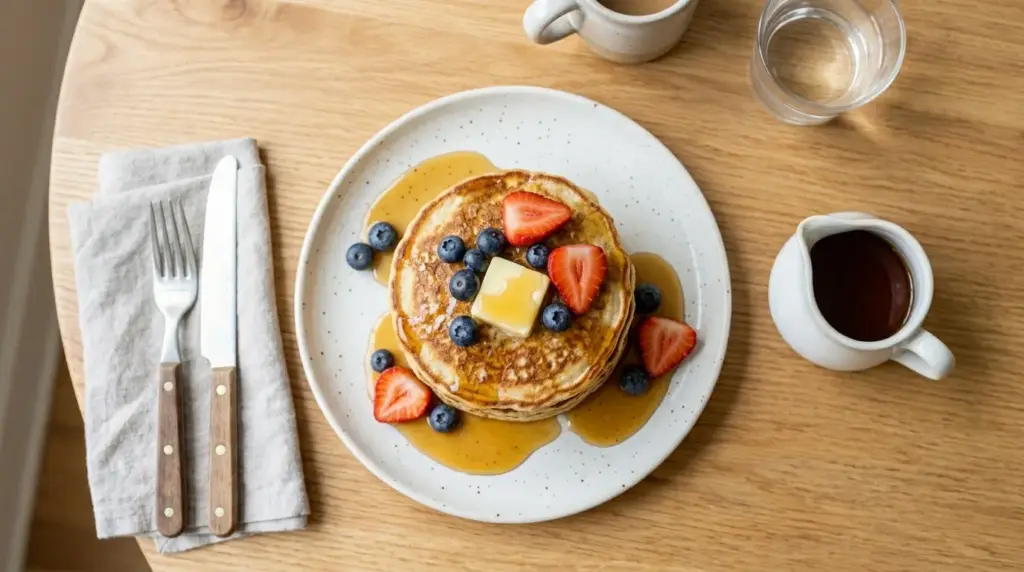
Sourdough discard pancakes have that gentle tang that pairs incredibly well with both sweet and lightly savory toppings. The slight acidity in the batter creates a balance that makes rich toppings taste bright and fresh.
Classic maple syrup is always the right call. Real dark amber maple syrup has enough depth to stand up to the sourdough flavor beautifully. Fresh berries, sliced bananas, and a dollop of whipped cream are the kind of simple additions that make the whole plate look like something from a brunch restaurant.
If you want to go a bit more elevated, warm Fresh Strawberry Sauce over the top is stunning. Lemon curd is another brilliant pairing that highlights the natural tang of the sourdough.
- A drizzle of real maple syrup and a handful of fresh blueberries or sliced strawberries
- Whipped cream or crème fraîche with sliced bananas and toasted walnuts
- Peanut butter and honey for a protein-packed, satisfying stack
- Warm caramel sauce and sliced apples for an autumn-inspired version
- A side of crispy bacon or breakfast sausage to balance the sweetness
- Scrambled eggs on the side for a full breakfast spread
Variations to Try
The basic batter in this recipe is a fantastic canvas. You can take it in nearly any direction with just a few additions.
- Blueberry Sourdough Pancakes: Fold 1/2 cup (75g) of fresh or frozen blueberries into the finished batter just before cooking. Don’t stir them in aggressively or they’ll bleed color throughout.
- Chocolate Chip Sourdough Pancakes: Add 1/3 cup (60g) of mini chocolate chips to the batter after mixing. Mini chips distribute more evenly than full-size ones.
- Lemon Poppy Seed Sourdough Pancakes: Add the zest of one lemon and 1 tablespoon of poppy seeds to the batter along with the wet ingredients.
- Cinnamon Spice Sourdough Pancakes: Whisk 1 teaspoon of cinnamon and 1/4 teaspoon of nutmeg into the dry ingredients.
- Banana Sourdough Pancakes: Mash one ripe banana and mix it into the wet ingredients before combining with the dry. Reduce the milk by 2 tablespoons to account for the extra moisture.
- Buttermilk Sourdough Pancakes: Replace the whole milk with buttermilk for an even tangier, more tender result. Reduce the baking powder to 3/4 teaspoon to balance the acidity.
- Whole Wheat Sourdough Pancakes: Swap half of the all-purpose flour for whole wheat flour for a nuttier, heartier flavor and a slight boost in fiber.
For a gluten-sensitive version that still delivers on texture, take a look at the Gluten Free Pancake Recipe.
Storage and Reheating
Sourdough discard pancakes store and reheat surprisingly well, which makes them a great candidate for batch cooking on the weekend.
Allow cooked pancakes to cool completely on a wire rack before storing. Stacking them while still warm traps steam and makes them soggy.
- Refrigerator: Stack cooled pancakes with a small piece of parchment paper between each one to prevent sticking. Store in an airtight container for up to 4 days.
- Freezer: Place cooled pancakes in a single layer on a baking sheet and freeze for 1 hour. Once frozen solid, transfer them to a zip-lock freezer bag with parchment between each pancake. Freeze for up to 2 months.
- Reheating in a toaster: The best method for restoring the slightly crisp exterior. Toast on medium until warmed through and lightly golden, about 2 minutes.
- Reheating in an oven: Place pancakes on a wire rack set over a baking sheet in a 350°F (175°C) oven for 5 to 8 minutes until heated through.
- Reheating in a microwave: Place pancakes on a microwave-safe plate and cover with a damp paper towel. Heat in 20-second intervals until warmed through. The exterior will be softer using this method.
- Make-ahead batter tip: You can store the mixed batter (without leaveners) in the refrigerator overnight. Add the baking powder and baking soda just before cooking in the morning.
For another satisfying make-ahead breakfast, try this Baked Oatmeal Recipe.
Nutritional Facts
The values below are approximate and based on a serving size of 3 medium pancakes (about 1/4 of the total batter), cooked in butter, without toppings.
| Nutrient | Per Serving (3 pancakes) |
|---|---|
| Calories | 280 kcal |
| Total Fat | 9g |
| Saturated Fat | 5g |
| Cholesterol | 70mg |
| Sodium | 420mg |
| Total Carbohydrates | 40g |
| Dietary Fiber | 1g |
| Sugars | 5g |
| Protein | 8g |
Note: Nutritional values will vary based on the hydration and flour composition of your sourdough discard, the type of milk used, and any toppings added.
If you’re looking to increase your protein at breakfast, the Easy Protein Pancakes Recipe is worth a look alongside this one.
Health Benefits of Key Ingredients
Sourdough discard pancakes aren’t just delicious. A few of the core ingredients bring real nutritional value to the table.
Understanding what’s in your food makes the whole experience more satisfying.
Sourdough Discard
The fermentation process that produces sourdough starter creates beneficial bacteria and organic acids. These organic acids, particularly lactic and acetic acid, lower the glycemic index of the baked goods made with the discard. This means slower glucose absorption compared to standard pancakes. The fermentation also begins breaking down phytic acid, an antinutrient found in wheat, which can improve mineral absorption.
Eggs
Eggs are one of the most complete protein sources available. One large egg contains all nine essential amino acids and provides vitamin D, choline, and B vitamins. The yolk specifically is rich in lutein and zeaxanthin, two antioxidants linked to eye health.
Whole Milk
Whole milk provides calcium, phosphorus, vitamin D, and B12. The fat content in whole milk also helps your body absorb the fat-soluble vitamins in the recipe. Using whole milk over skim results in a richer, more tender pancake.
All-Purpose Flour
While not a superfood, all-purpose flour provides a modest amount of B vitamins and iron, particularly in enriched forms. Swapping in a portion of whole wheat flour increases fiber content meaningfully.
- Sourdough fermentation lowers the glycemic index compared to regular pancakes
- Improved mineral bioavailability from reduced phytic acid content
- High-quality complete protein from eggs supports muscle repair and satiety
- Calcium and phosphorus from milk support bone strength
- Choline from egg yolks supports brain function and liver health
- Lower digestive strain from fermented flour compared to unfermented
Pair these with a Breakfast Smoothie for an even more balanced morning meal.
Frequently Asked Questions
1. Can I use active sourdough starter instead of discard?
Yes, active sourdough starter works in this recipe. The flavor will be slightly more complex and you may notice a bit more rise from the active culture. The texture will be very similar. The main advantage of using discard is that it doesn’t require any planning. You simply pull the jar from the fridge and start cooking.
2. My sourdough discard has been in the fridge for two weeks. Is it still safe to use?
Discard that has been refrigerated for up to two weeks is generally safe to use for pancakes as long as there is no visible mold, it doesn’t smell like nail polish remover (a sign of excess acetone production), and the liquid layer on top (called “hooch”) is still grayish-brown rather than pink or orange. Simply stir the hooch back into the discard and proceed. The older the discard, the more pronounced the sour tang will be.
3. Why are my pancakes not fluffy?
The most common causes are overmixing the batter, which develops gluten and creates a dense texture, and cooking on too-high heat, which sets the exterior before the interior can puff up. Check that your baking powder and baking soda are fresh. Both lose effectiveness over time. Baking powder should be replaced every 6 to 12 months.
4. Can I make the batter the night before?
Yes, with a small adjustment. Combine all the wet and dry ingredients except the baking powder and baking soda. Store the batter in the refrigerator overnight. When you’re ready to cook in the morning, stir in the leaveners and let the batter rest for 3 to 5 minutes before cooking. This overnight rest actually deepens the sourdough flavor significantly.
5. Can I make this recipe dairy-free?
Absolutely. Replace the whole milk with oat milk, almond milk, or full-fat coconut milk. Replace the butter with a neutral oil like avocado or refined coconut oil, or use a plant-based butter. The pancakes will still be fluffy and flavorful. Oat milk tends to produce the closest result to whole milk in terms of texture and richness.
Read Also: Dutch Baby Recipe

Sourdough Discard Pancakes

Equipment
- Large mixing bowl
- Medium mixing bowl
- Balloon whisk
- Non-stick electric griddle or cast iron griddle
- Rubber spatula or flat pancake spatula
- Measuring cups and spoons
- Ladle or 1/4 cup measuring cup - for portioning batter
- Pastry brush or paper towel - for greasing the pan
- Digital kitchen scale - (optional but recommended)
Ingredients
- 1 cup sourdough discard - 240g, unfed, straight from the fridge
- 1 cup all-purpose flour - 125g
- 1 tablespoon granulated sugar
- 1 teaspoon baking powder
- 1/2 teaspoon baking soda
- 1/2 teaspoon fine salt
- 1 large egg
- 3/4 cup whole milk - 180ml
- 2 tablespoons unsalted butter - 30g, melted and slightly cooled, plus more for the pan
- 1 teaspoon pure vanilla extract
- maple syrup - for serving
- fresh berries - for serving
- powdered sugar - (optional) for serving
- whipped cream - (optional) for serving
- honey butter - (optional) for serving
Instructions
- Gather and prep your ingredients. Pull the sourdough discard from the refrigerator, melt the butter and let it cool slightly, and have all other ingredients measured and ready.
- In a large mixing bowl, whisk together the all-purpose flour, granulated sugar, baking powder, baking soda, and fine salt until well combined. Make a well in the center.
- In a separate medium bowl, whisk the sourdough discard to loosen it. Add the egg, milk, cooled melted butter, and vanilla extract. Whisk until fully combined and smooth.
- Pour the wet ingredients into the well of the dry ingredients. Gently fold together with a rubber spatula using slow strokes until just combined and no dry streaks remain. A few lumps are okay.
- Let the batter rest for 3 to 5 minutes while you preheat your griddle or skillet over medium-low to medium heat.
- Grease the preheated griddle with a small pat of butter, swirling to coat the surface evenly. Test the heat by flicking water onto the surface.
- Using a 1/4-cup measuring cup or ladle, pour batter onto the griddle, spacing pancakes at least 2 inches apart. Cook until bubbles form across the top and the edges look set, about 2 to 3 minutes.
- Flip gently with a flat spatula and cook the second side for another 1 to 2 minutes until golden brown. Transfer to a wire rack in a warm oven while you finish the batch.
- Stack pancakes on warm plates, top with maple syrup, fresh berries, and any other desired toppings. Serve immediately while hot.
Notes
- Don’t overmix: Overmixing develops gluten and results in tough, dense pancakes. Stop mixing as soon as dry streaks disappear.
- Rest the batter: Even a 3 to 5 minute rest allows the leaveners to activate, giving pancakes more lift and fluffiness.
- Control heat: Medium-low is almost always the right setting. Too high burns the outside before the inside cooks through.
- Use room temperature dairy: Cold milk or eggs can cause the melted butter to resolidify. Room temperature ingredients incorporate more smoothly.
- Wait to flip: Don’t flip too early. Wait for bubbles across the whole surface and set edges for the best results.
- Avoid pressing down: Never press down on pancakes after flipping. It squeezes out the air bubbles that create fluffiness.
- Dairy-free option: Replace whole milk with oat milk, almond milk, or full-fat coconut milk, and use neutral oil instead of butter.
- Make-ahead tip: Store mixed batter without leaveners overnight in the fridge. Add baking powder and baking soda just before cooking.
- Storage: Cooled pancakes keep in the refrigerator for up to 4 days or freeze for up to 2 months. Reheat in the toaster for best results.
- Customization: Fold blueberries, chocolate chips, or spices into the batter after mixing for easy variations.
Final Thoughts
Sourdough discard pancakes deserve a permanent spot in your breakfast rotation.
They’re proof that zero-waste cooking doesn’t mean compromising on flavor. Every time you feed your starter, you have the building blocks for one of the best weekend breakfasts possible.
The slight tang from the fermented discard elevates a simple stack into something genuinely memorable. Topped with real maple syrup and fresh fruit, it’s the kind of breakfast that slows down a morning in the best possible way.
Give this recipe a try next time you’re looking at that jar of discard in your fridge. Drop a comment below and let me know how yours turned out or share your favorite variation. I’d love to hear about the stacks you create.
Recommended:
- Sourdough Sandwich Bread Recipe
- Same Day Sourdough Bread Recipe
- Sweet Sourdough Bread Recipe
- Cracker Barrel Pancake Recipe
- Easy Waffle Recipe
- Easy French Toast Recipe
- Basic Crepe Recipe
- Sausage Gravy Recipe
- Honey Butter Recipe
- Caramel Sauce Recipe