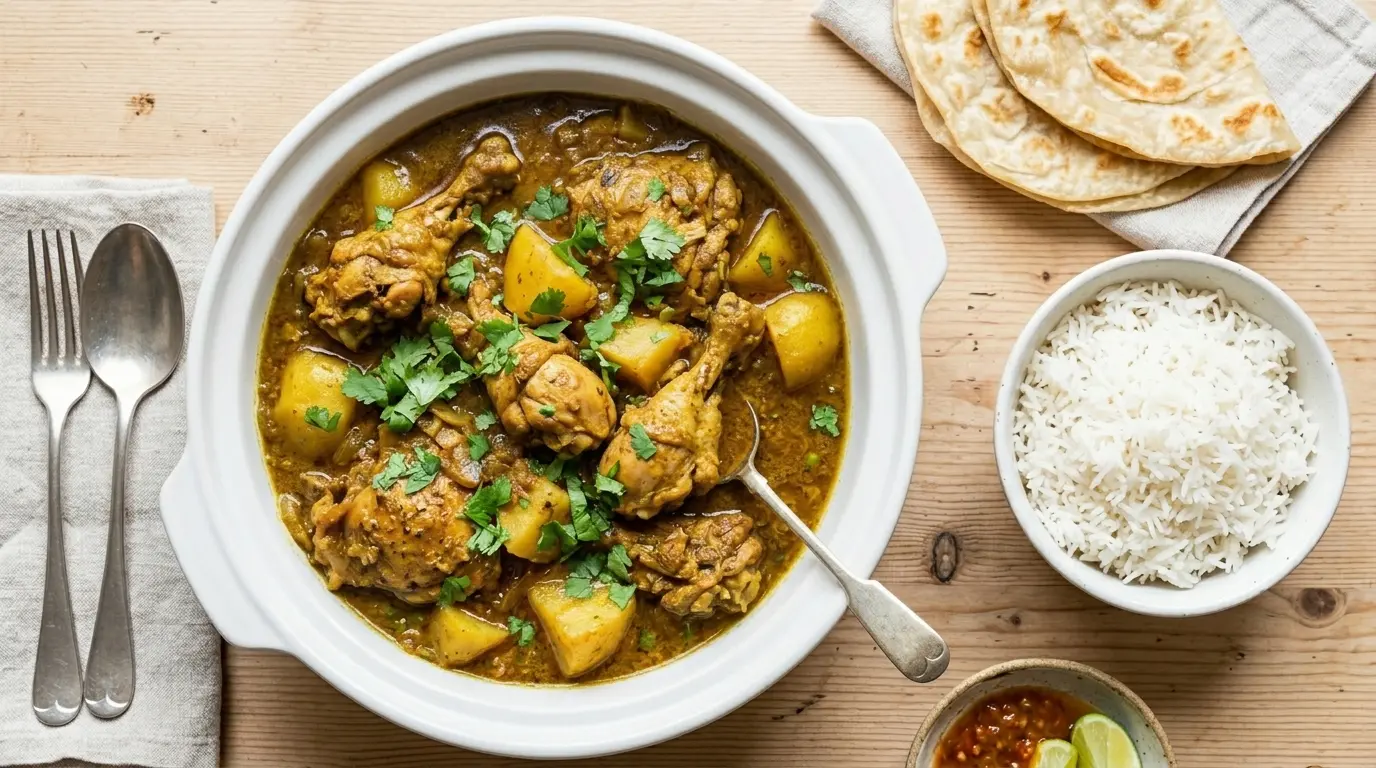
If you’ve ever sat down to a plate of Trinidad curry chicken recipe, you already know it hits differently from any other curry you’ve tried. This isn’t a mild, cream-heavy curry. It’s bold, deeply aromatic, and built on a foundation of fresh green seasoning and properly bloomed curry powder that gives every bite layers of flavor you won’t forget.
Trinidadian curry chicken is rooted in the island’s rich Indian-Caribbean culinary heritage, a tradition brought over by Indian indentured laborers in the 19th century and beautifully woven into local cooking. The result is a dish that’s earthy, a little spicy, herbaceous, and utterly satisfying.
What makes this version stand out is the technique. Trini cooks bloom the curry in hot oil before the chicken goes in, which transforms raw curry powder into something deep and toasty. That single step is what separates an authentic Trini curry from a flat, powdery one.
This recipe uses bone-in chicken pieces, a whole scotch bonnet (left intact for gentle heat), and a quick homemade green seasoning paste. It comes together in under an hour and pairs perfectly with roti, paratha, or a big scoop of steamed basmati rice.
You might also enjoy: Jamaican Curry Chicken

Why You’ll Love This Trinidad Curry Chicken Recipe
This dish delivers restaurant-quality results with pantry-friendly ingredients and one pot.
The green seasoning paste is the soul of this recipe. It’s a blend of fresh herbs, garlic, and aromatics that infuses the chicken from the inside out.
You get incredible depth of flavor without hours of slow cooking. The whole dish from prep to table takes less than 60 minutes.
It’s naturally gluten-free and dairy-free, making it a crowd-pleasing option for a range of dietary needs.
The heat level is completely adjustable. Leaving the scotch bonnet whole adds mild, fragrant heat without full-on spice, while piercing or chopping it turns up the fire considerably.
- Bone-in chicken becomes melt-tender in the curry sauce
- The bloomed curry base creates a rich, complex sauce
- Fresh herbs and ginger make the flavors bright and lively
- It reheats beautifully, often tasting even better the next day
- Works for weeknight dinners and Sunday lunch spreads alike
- Leftovers fold easily into wraps, rice bowls, and sandwiches
Read Also: Coconut Curry Chicken Recipe
Ingredients
You’ll need a mix of fresh aromatics, everyday pantry staples, and one key specialty ingredient: a good-quality West Indian curry powder. Brands like Chief or Turban are authentic Trinidadian options and make a noticeable difference in the final dish.
- 3 lbs (1.4 kg) bone-in chicken pieces (drumsticks, thighs, or a mix), skin removed
- 3 tbsp West Indian curry powder (Chief or Turban brand preferred)
- 1 tbsp green seasoning (store-bought, or use the homemade paste below)
- 1 tsp salt, plus more to taste
- 1/2 tsp black pepper
- 3 tbsp vegetable oil or coconut oil
- 1 medium onion, roughly chopped
- 4 garlic cloves, roughly chopped
- 1-inch piece fresh ginger, roughly chopped
- 1/2 cup (15g) fresh cilantro, roughly chopped
- 1/4 cup (8g) fresh culantro (shadow beni), roughly chopped (or substitute more cilantro)
- 1 whole scotch bonnet or habanero pepper (do not cut for mild heat)
- 2 medium potatoes, peeled and cut into 1.5-inch (4 cm) chunks
- 2 cups (480 ml) water, plus more as needed
- 3 green onions (scallions), roughly chopped
- 3 sprigs fresh thyme
- 1/2 tsp ground cumin
This pairs wonderfully with cilantro lime rice for a complete and satisfying meal.
Kitchen Equipment Needed
You don’t need any fancy gadgets here, just a solid pot and a food processor or blender to build that green seasoning paste quickly.
- Large heavy-bottomed pot or Dutch oven (at least 5-quart/5L capacity)
- Food processor or blender for the green seasoning paste
- Sharp chef’s knife and cutting board
- Measuring spoons and cups
- Wooden spoon or heatproof spatula
- Ladle for serving
- Large mixing bowl for marinating the chicken
Read Also: Indian Curry Chicken Recipe
Recommended Products for This Recipe
These are a few products that genuinely make this dish easier to pull off and taste more authentic. Each recommendation is based on quality and performance.
1. Chief Curry Powder (West Indian Style)
Chief curry powder is one of the most iconic Trinidadian spice brands and is the gold standard for this recipe. Its blend is specifically formulated for Caribbean-style curries, giving you that distinctive fragrant depth you can’t quite replicate with generic Indian curry powder. It’s worth seeking out for the most authentic flavor.
2. Le Creuset Enameled Cast Iron Dutch Oven
A heavy-bottomed Le Creuset Dutch oven distributes heat evenly and holds temperature beautifully, which is essential when you’re blooming curry powder and simmering chicken low and slow. The wide base also gives you better browning. It’s a lifetime investment for any serious home cook.
3. Scotch Bonnet Hot Sauce (for serving)
If fresh scotch bonnets are hard to find locally, a good scotch bonnet hot sauce lets you dial in the heat at the table without overpowering the curry during cooking. It’s a great pantry staple for any Caribbean recipe.
4. Cuisinart 7-Cup Food Processor
A reliable food processor makes building the green seasoning paste effortless and consistent. Manually mincing all those fresh herbs and aromatics takes time, and a food processor gets it done in under 30 seconds with a better, more uniform texture.
This recipe also goes beautifully with garlic naan bread for scooping up every last drop of that curry sauce.

Step-by-Step Instructions
Step 1: Make the Green Seasoning Paste
- Add the roughly chopped onion, garlic, ginger, cilantro, culantro (or extra cilantro), green onions, and thyme leaves to a food processor or blender.
- Pulse several times until you have a coarse, textured paste. You don’t want it completely smooth. A little chunkiness adds body to the curry.
- Add 1-2 tablespoons of water if needed to help the blender move. Avoid adding too much or the paste will be watery.
- Set aside about 3/4 of the paste for the curry base. Reserve 1/4 of the paste to stir in at the end for a fresh herb finish.
Step 2: Marinate the Chicken
- Pat the chicken pieces completely dry with paper towels. Removing excess moisture helps the seasoning adhere better and promotes browning later.
- Remove the skin from each piece if your butcher hasn’t already. Grip the skin with a paper towel for a better grip and pull firmly.
- Place the chicken in a large bowl and add 1 tablespoon of the green seasoning paste, 1 tablespoon of the curry powder, 1 teaspoon of salt, and 1/2 teaspoon of black pepper.
- Toss everything together until each piece of chicken is evenly coated in the seasoning.
- Let the chicken marinate for at least 15-20 minutes at room temperature. If you have more time, cover and refrigerate for up to 4 hours for deeper flavor.
Step 3: Bloom the Curry Powder
- Heat 3 tablespoons of oil in your large pot over medium-high heat until shimmering but not smoking.
- Add the remaining 2 tablespoons of curry powder and the ground cumin directly into the hot oil.
- Stir constantly with a wooden spoon. You’ll see the curry powder absorb the oil and darken slightly within 30-60 seconds. This blooming step is essential. It cooks out the raw taste and unlocks the fat-soluble flavor compounds in the spices.
- Watch carefully. You want the curry to bloom and become fragrant, but you don’t want it to burn. If the pot looks dry, add a splash more oil.
Step 4: Add the Green Seasoning and Build the Base
- Once the curry is bloomed and fragrant, quickly add the 3/4 portion of the green seasoning paste to the pot.
- Stir well to combine the paste with the curried oil. It will sizzle and splatter slightly, which is normal.
- Cook the paste into the curry oil for 2-3 minutes, stirring frequently. The moisture from the herbs will evaporate and the paste will darken slightly and become very fragrant.
- You’re building what Trinis call the “curry base.” This is what makes the sauce so rich and complex.
Step 5: Brown the Chicken
- Add the marinated chicken pieces to the pot in a single layer, fitting them snugly. If your pot is smaller, do this in two batches.
- Stir to coat every piece in the curry base. Make sure each piece is well-covered.
- Cook the chicken, stirring occasionally, for 8-10 minutes. The chicken will release its natural juices and begin to cook in that liquid. Some of that liquid will evaporate and you’ll start to hear a bit of sizzling.
- You’re not looking for deep browning here like you would in a roast. You want the chicken opaque and coated in the thick curry paste.
Step 6: Add Water, Potatoes, and the Scotch Bonnet
- Add 2 cups (480 ml) of water to the pot, stirring to scrape up any bits from the bottom.
- Add the potato chunks around and between the chicken pieces.
- Place the whole scotch bonnet (do not cut it) into the pot. Leaving it whole lets the curry absorb the pepper’s floral, fruity aroma without releasing the full punch of heat. If you want more spice, pierce it once with a knife or slice it open.
- Season with an additional pinch of salt and stir everything together gently.
Step 7: Simmer Until Tender
- Bring the pot to a gentle boil over medium-high heat, then reduce the heat to medium-low.
- Cover the pot with a lid and let everything simmer for 25-30 minutes, checking and stirring every 8-10 minutes.
- The chicken is done when it’s cooked through and very tender. If you’re using drumsticks, the meat should be starting to pull away from the bone.
- The potatoes should be fork-tender but not falling apart.
- If the sauce looks too thin, remove the lid and cook on medium heat for a few more minutes to reduce it. If it looks too thick, add a splash of water.
Step 8: Finish with Fresh Seasoning and Adjust
- Remove the scotch bonnet from the pot and discard it (or set it aside if someone at the table wants extra heat).
- Stir in the reserved 1/4 portion of the fresh green seasoning paste. Adding a portion of fresh herbs at the end brightens the dish and gives it a beautiful, lively flavor that balances the deep, cooked curry base.
- Taste the sauce and adjust salt as needed.
- Allow the curry to rest off the heat for 5 minutes before serving. This lets the sauce thicken slightly and the flavors to settle.
This recipe uses a very similar technique to the Thai Red Curry Chicken Recipe in terms of building a fragrant spice base, so if you enjoy that one, this will feel familiar and equally rewarding.
Tips for Success
A few key habits separate a great Trini curry from a good one, and most of them are about technique rather than ingredients.
- Bloom your curry powder properly. Don’t skip or rush this step. Dry curry powder has a raw, sharp taste. A minute in hot oil transforms it into something nutty and deep.
- Keep the scotch bonnet whole if you’re sensitive to heat. The floral, fruity aroma of the pepper will infuse the curry without making it fiery.
- Don’t over-blend the green seasoning. A coarse paste clings to the chicken better and gives the sauce more texture.
- Use bone-in chicken. The bones add collagen and flavor to the sauce as they cook. Boneless thighs work in a pinch but the sauce won’t be as rich.
- Taste as you go. Different curry powder brands vary in salt and spice level, so always adjust at the end rather than front-loading salt.
- Let it rest before serving. Five minutes off the heat lets the sauce tighten and the flavors mellow and meld.
- Add potatoes, not flour, to thicken the sauce. As the potatoes break down slightly at the edges, they naturally thicken the curry the traditional way.
For another deeply flavored chicken dish to add to your rotation, check out this Curry Stand Chicken Tikka Masala Sauce.
Serving Suggestions
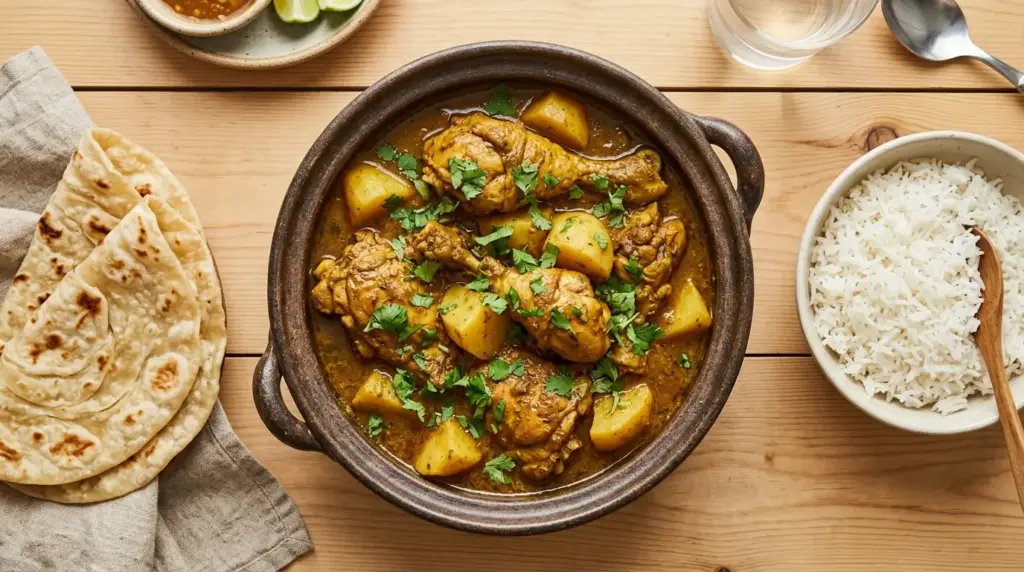
Trinidad curry chicken is a complete meal on its own, but the right sides transform it into a full-on feast. In Trinidad, this dish is most traditionally served wrapped in soft roti or alongside steamed white rice.
The rich, fragrant sauce is practically made for soaking up with bread or rice. Don’t let a drop go to waste.
- Soft paratha roti or easy naan bread for scooping up the curry sauce
- Steamed basmati rice or jeera rice for a classic pairing
- Cucumber raita to cool things down alongside the spicy curry
- Mexican rice for a bright, slightly smoky contrast
- A simple green salad with lime dressing to balance the richness
- Collard greens cooked simply with garlic for a hearty side
For another warming, spiced chicken dinner perfect for sharing, the Chicken Cacciatore is a hearty option worth bookmarking.
Variations to Try
Once you’ve mastered the classic version, there are plenty of ways to riff on this dish while staying true to the spirit of Trini cooking.
- Coconut milk curry chicken. Swap 1 cup of the water for full-fat coconut milk. It creates a creamier, slightly sweeter sauce that’s rich and luscious. This is especially good served over rice.
- Boneless curry chicken. Use boneless skinless chicken thighs cut into chunks for a quicker cook time (about 20 minutes simmering instead of 30). The sauce won’t be as rich, but it works great for a weeknight dinner.
- Curry chicken with chickpeas. Add one 15 oz can of drained chickpeas along with the potatoes for extra protein and heartiness.
- Vegetable curry. Skip the chicken entirely and use a mix of potatoes, carrots, eggplant, and chickpeas. Reduce simmer time to 20 minutes.
- Extra-spicy version. Dice the scotch bonnet instead of using it whole and add a second one. This is not for the faint of heart.
- Slow cooker version. Build the curry base in a skillet, then transfer everything to a slow cooker and cook on low for 6-7 hours.
If you love Caribbean-inspired chicken dishes, this Chicken Vindaloo hits that same bold, warming spice note and is absolutely worth adding to your rotation.
Storage and Reheating
This curry stores and reheats exceptionally well, making it ideal for meal prep. The flavor deepens overnight as the spices continue to bloom into the sauce.
- Refrigerator: Store in an airtight container for up to 4 days. The curry sauce will thicken as it cools, which is normal.
- Freezer: Freeze in portioned containers for up to 3 months. Potatoes can change texture slightly after freezing, so you may want to leave them out if you plan to freeze a batch.
- Reheating on the stovetop: Add the curry to a pot over medium-low heat with a splash of water to loosen the sauce. Stir gently and heat until warmed through, about 5-7 minutes.
- Reheating in the microwave: Transfer to a microwave-safe bowl, add a tablespoon of water, cover loosely, and heat in 90-second intervals, stirring between each, until hot.
- Do not boil aggressively when reheating. Gentle, low heat keeps the chicken tender and prevents the sauce from separating.
Another dish that reheats beautifully and pairs well with curry on a dinner spread is this Chicken Stew.
Nutritional Facts
The following nutrition estimate is based on a single serving (approximately 1/4 of the total recipe), including two pieces of bone-in chicken and a portion of potatoes and sauce.
| Nutrient | Per Serving |
|---|---|
| Calories | 385 |
| Protein | 38g |
| Total Fat | 16g |
| Saturated Fat | 3g |
| Carbohydrates | 20g |
| Dietary Fiber | 3g |
| Sugars | 2g |
| Sodium | 520mg |
| Potassium | 780mg |
| Vitamin C | 22% DV |
| Iron | 18% DV |
Note: Nutrition values are estimates and will vary depending on the specific cut of chicken, brand of curry powder, and any additions such as coconut milk.
For another protein-rich, warming curry option, the Chicken Korma Recipe is a milder, nut-based alternative worth exploring.
Health Benefits of Key Ingredients
This dish isn’t just delicious. It’s built on ingredients that have genuine nutritional and wellness value, especially the fresh herbs and spices at its core.
Every bowl of this curry delivers a meaningful dose of anti-inflammatory compounds, lean protein, and vitamins from the fresh herb base.
- Turmeric (in curry powder). Contains curcumin, a powerful anti-inflammatory compound that has been studied for its potential role in reducing chronic inflammation and supporting joint health.
- Ginger. Known for supporting digestion, reducing nausea, and containing antioxidants that help combat oxidative stress.
- Garlic. Rich in allicin, a compound associated with immune support, cardiovascular health, and antimicrobial properties.
- Cilantro and culantro. Both are rich in vitamins A, C, and K, and have been used in traditional medicine for their digestive and detoxifying properties.
- Scotch bonnet pepper. Contains capsaicin, which supports metabolism, may help reduce appetite, and has pain-relieving properties.
- Chicken (bone-in). Provides high-quality complete protein that supports muscle repair and satiety. Bone-in cooking releases collagen and minerals into the broth.
- Potatoes. A good source of potassium, vitamin B6, and complex carbohydrates that provide steady energy.
For a creamy take on a similar spiced dish that also brings big nutritional value, the Chicken Tikka Masala is another excellent option packed with warm spices.
Frequently Asked Questions
1. What is the difference between Trinidad curry chicken and regular curry chicken?
Trinidad curry chicken is distinct because of two things: the green seasoning paste and the method of blooming the curry powder in oil before anything else goes in.
Most generic curry chicken recipes skip both of these steps. Trini cooking uses a fresh herb-forward base (cilantro, culantro, scallions, garlic, ginger, and thyme) blended into a paste that deeply flavors the chicken. The bloomed curry base gives the sauce a toasty, deep flavor that’s unmistakably Caribbean.
2. How spicy is this dish?
Using a whole, uncut scotch bonnet makes this mildly spicy to moderately spicy.
The pepper’s heat stays mostly contained when it’s left whole. Piercing or chopping the pepper releases significantly more heat, so adjust based on your heat tolerance.
3. Can I use chicken breast instead of bone-in pieces?
You can, but it’s not recommended for the best results.
Bone-in thighs and drumsticks stay tender and juicy during the long simmer, while chicken breast tends to dry out. If you use breast, cut it into large chunks and reduce the simmering time to 15-18 minutes.
4. What is culantro and can I skip it?
Culantro (also called shadow beni in Trinidad) is a herb related to cilantro but with a much stronger, more pungent flavor.
It’s widely used in Trinidadian cooking and is available at Caribbean or Latin grocery stores. If you can’t find it, simply double the cilantro. The flavor won’t be identical, but the dish will still be excellent.
5. Can I make this recipe ahead of time?
Absolutely, and it’s highly recommended.
Like most curries, this dish tastes even better the next day after the spices have had time to deepen and meld into the sauce. Make it up to 2 days ahead, store it in the fridge, and reheat gently on the stovetop before serving.
For a similarly prep-friendly spiced chicken dish, the Chicken Adobo Recipe is another great make-ahead option with deep, layered flavor.
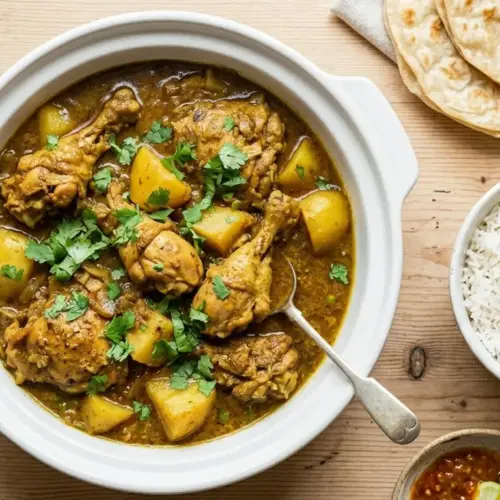
Trinidad Curry Chicken

Equipment
- Large heavy-bottomed pot or Dutch oven - At least 5-quart / 5L capacity
- Food processor or blender - For the green seasoning paste
- Sharp chef's knife
- Cutting board
- Measuring spoons and cups
- Wooden spoon or heatproof spatula
- Ladle - For serving
- Large mixing bowl - For marinating the chicken
Ingredients
- 3 lbs bone-in chicken pieces - 1.4 kg, drumsticks, thighs, or a mix, skin removed
- 3 tbsp West Indian curry powder - Chief or Turban brand preferred
- 1 tbsp green seasoning - store-bought, or use the homemade paste below
- 1 tsp salt - plus more to taste
- 0.5 tsp black pepper
- 3 tbsp vegetable oil - or coconut oil
- 1 medium onion - roughly chopped
- 4 garlic cloves - roughly chopped
- 1 inch fresh ginger - roughly chopped
- 0.5 cup fresh cilantro - 15g, roughly chopped
- 0.25 cup fresh culantro - 8g, shadow beni, roughly chopped (or substitute more cilantro)
- 1 scotch bonnet - or habanero pepper, whole, do not cut for mild heat
- 2 medium potatoes - peeled and cut into 1.5-inch (4 cm) chunks
- 2 cups water - 480 ml, plus more as needed
- 3 green onions - scallions, roughly chopped
- 3 sprigs fresh thyme
- 0.5 tsp ground cumin
Recommended for Serving
- Steamed basmati rice
- Soft paratha roti - or easy naan bread
- Cucumber raita
- Cilantro lime rice
Instructions
- Make the green seasoning by blending onion, garlic, ginger, cilantro, culantro, green onions, and thyme with 1-2 tablespoons of water until coarse. Set 3/4 aside for the curry base and reserve 1/4 for finishing.
- Pat chicken dry, remove skin, then toss with 1 tablespoon green seasoning, 1 tablespoon curry powder, salt, and pepper. Marinate for 15-20 minutes at room temperature.
- Heat oil in a large pot over medium-high heat. Add remaining 2 tablespoons curry powder and cumin, stirring constantly for 30-60 seconds until fragrant and darkened. Do not burn.
- Add the 3/4 portion of green seasoning to the bloomed curry and cook for 2-3 minutes, stirring frequently, until the paste darkens and becomes fragrant.
- Add marinated chicken and cook for 8-10 minutes, stirring occasionally, until chicken is opaque and coated in the thick curry paste.
- Add 2 cups water, potato chunks, and the whole scotch bonnet. Bring to a gentle boil, then reduce heat to medium-low, cover, and simmer for 25-30 minutes until chicken is tender and potatoes are fork-tender.
- Remove scotch bonnet, stir in reserved fresh green seasoning, adjust salt to taste, and let rest 5 minutes before serving.
Notes
- Bloom the curry powder properly. Don’t skip this step. A minute in hot oil transforms dry curry powder into something nutty and deep, unlocking fat-soluble flavor compounds.
- Keep the scotch bonnet whole if you’re sensitive to heat. The floral, fruity aroma infuses the curry without making it fiery. Pierce or chop it for significantly more heat.
- Don’t over-blend the green seasoning. A coarse paste clings to the chicken better and gives the sauce more texture.
- Use bone-in chicken for the richest sauce. The bones release collagen and flavor as they cook. Boneless thighs work but reduce simmer time to 20 minutes.
- Potatoes naturally thicken the sauce as they break down at the edges. No flour or cornstarch needed.
- Make it ahead. This curry tastes even better the next day as the spices deepen. Store in the fridge for up to 4 days.
- To freeze: Freeze in portioned containers for up to 3 months. Potatoes may change texture slightly, so consider leaving them out if you plan to freeze.
- Variation: For a creamier version, swap 1 cup of the water for full-fat coconut milk. It creates a rich, luscious sauce.
- Reheat gently on the stovetop with a splash of water over medium-low heat to keep the chicken tender and prevent the sauce from separating.
- West Indian curry powder is key to authentic flavor. Brands like Chief or Turban are readily available online and in Caribbean grocery stores.
Final Thoughts
This Trinidad curry chicken recipe is one of those dishes that rewards you every single time you make it.
The process is approachable, the ingredients are accessible, and the result is a bowl of warm, intensely flavorful curry that tastes like it took all day. Once you make it once, you’ll understand why this dish is a Sunday lunch staple across Trinidad and Tobago and in Caribbean homes around the world.
Don’t be intimidated by the green seasoning paste or the blooming step. Both are simple, and both are what make this curry taste genuinely authentic.
Give this recipe a try, and if you do, leave a comment below and tell me how it turned out. Did you add coconut milk? Keep the scotch bonnet whole? Share your version with us, and if you loved it, share it with someone who needs a little Caribbean warmth in their kitchen.
Recommended:
- Japanese Curry Chicken
- Thai Green Curry Chicken
- Chicken Curry
- Chicken Saag
- Chicken Biryani
- Tandoori Chicken
- Mango Chutney
- Curry Chicken Salad
- Chicken Shawarma
- Mulligatawny Soup