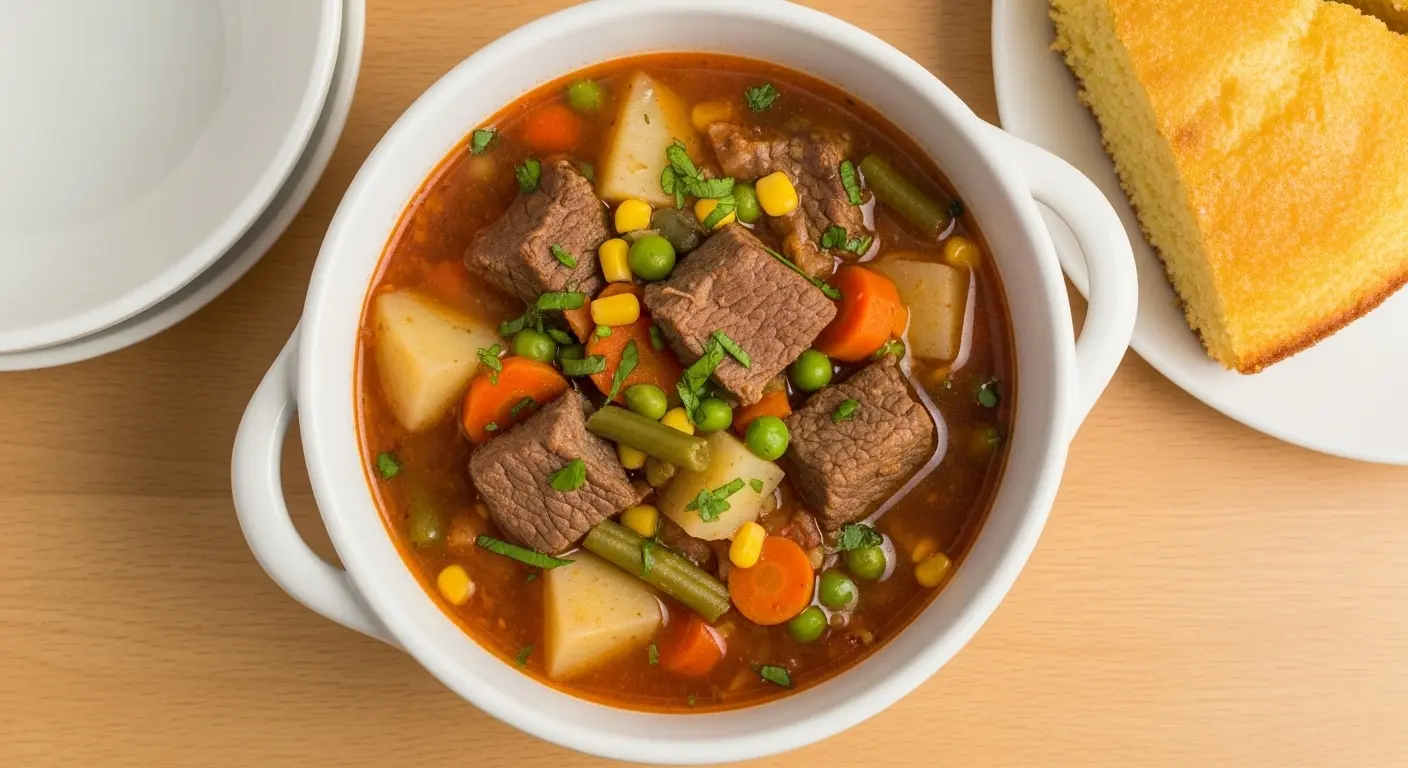
A good vegetable beef soup recipe is the kind of meal that wraps you up like a warm blanket on a cold day. This one is loaded with tender chunks of chuck roast, hearty root vegetables, and a rich, deeply savory broth that simmers together into something truly satisfying. It tastes like the soup your grandmother used to make, the kind that filled the whole house with a comforting aroma before you even sat down at the table.
What makes this recipe stand out is in the technique. Browning the beef properly before adding the broth creates a deep, caramelized flavor that you simply cannot get by dumping everything into the pot at once. That sear locks in the juices and leaves behind beautiful browned bits on the bottom of the pot, which dissolve into the broth and give it an incredible richness.
This is a one-pot stovetop recipe that serves 6 to 8 people and is beginner-friendly from start to finish.
If you love hearty, brothy soups like this one, you might also enjoy this Chicken Vegetable Soup for a lighter weeknight version.
Why You’ll Love This Vegetable Beef Soup Recipe
This soup is the definition of honest, soul-filling comfort food.
It uses simple, affordable ingredients that most people already have on hand, and it comes together without any fussy techniques.
The broth develops a beautiful depth of flavor from the browned beef and the slow simmer, making it taste like it has been cooking all day even when it hasn’t.
It is naturally packed with vegetables, which means you are getting a nutritious, well-rounded meal in every bowl.
The recipe is also incredibly flexible, making it easy to swap in whatever vegetables you have available.
Here is a quick look at everything to love about this recipe:
- Rich, deeply flavorful beef and tomato broth
- Tender, fall-apart chunks of chuck roast
- Hearty mix of potatoes, carrots, celery, and green beans
- Easy one-pot stovetop method
- Excellent for meal prep and freezer-friendly
- Feeds a crowd with minimal effort
- Even better the next day as the flavors continue to develop
You might also love this Hamburger Soup for a quicker, weeknight-friendly alternative.
Ingredients
The classic lineup of ingredients for vegetable beef soup strikes a perfect balance between a beefy, savory broth and a rainbow of wholesome vegetables. Chuck roast is the preferred cut here because its high collagen content breaks down during the long simmer, resulting in incredibly tender, flavorful beef. Here is what you will need:
- 2 lbs (900g) beef chuck roast, cut into 1-inch cubes
- 2 tbsp olive oil
- 1 large yellow onion, diced
- 3 cloves garlic, minced
- 3 stalks celery, sliced
- 3 medium carrots, peeled and sliced into rounds
- 3 medium Yukon Gold or russet potatoes, peeled and cut into 1-inch cubes
- 1 cup (150g) green beans, trimmed and cut into 1-inch pieces (fresh or frozen)
- 1 cup (150g) frozen corn kernels
- 1 cup (150g) frozen peas
- 1 can (14.5 oz / 411g) diced tomatoes with juices
- 2 tbsp tomato paste
- 4 cups (950ml) beef broth
- 2 cups (475ml) water
- 2 tbsp Worcestershire sauce
- 1 tsp dried thyme
- 1 tsp dried oregano
- 1 tsp dried basil
- 2 bay leaves
- 1 tsp salt, plus more to taste
- 1/2 tsp black pepper, plus more to taste
- 2 tbsp fresh flat-leaf parsley, chopped (for garnish)
For a delicious pairing, check out this Skillet Cornbread that goes perfectly alongside a steaming bowl.
Kitchen Equipment Needed
You do not need any specialized gear for this recipe, just a few reliable kitchen staples. A large, heavy-bottomed pot like a Dutch oven is particularly important here because it distributes heat evenly and holds up well to the long simmer time, preventing any scorching on the bottom.
- Large Dutch oven or heavy-bottomed stockpot (at least 6 quarts)
- Cutting board
- Chef’s knife
- Wooden spoon or heatproof spatula
- Ladle
- Measuring cups and spoons
- Peeler
- Paper towels (for drying the beef)
- Serving bowls
Read Also: Beef and Barley Soup Recipe
Recommended Products for This Recipe
These are personally recommended products based on quality and performance that can genuinely elevate your soup-making experience.
1. Lodge Enameled Cast Iron Dutch Oven
A good Dutch oven is an absolute must for this recipe. The heavy cast iron distributes heat evenly and prevents hot spots that can cause the broth to scorch during the long simmer. The enameled interior makes cleanup a breeze even after hours of cooking.
2. Better Than Bouillon Beef Base
Using a high-quality beef base alongside your store-bought broth makes a noticeable difference in the depth of flavor of this soup. It adds that rich, roasted beefy taste that makes homemade soup taste truly homemade rather than canned.
3. OXO Good Grips Y-Peeler
A sharp, comfortable vegetable peeler makes prepping carrots and potatoes fast and effortless. The OXO Y-peeler has a comfortable, non-slip handle and a sharp swivel blade that glides through vegetables smoothly.
4. Kuhn Rikon Swiss Peeler Set
If you do a lot of vegetable prep, this lightweight and incredibly sharp peeler is a great addition to your kitchen toolkit. It makes prepping large batches of carrots and potatoes feel almost effortless.
Another cozy beef-based classic worth bookmarking: Beef Bourguignon.
Step-by-Step Instructions
1. Prep and Dry the Beef
- Remove the chuck roast from the refrigerator about 20 to 30 minutes before cooking to allow it to come closer to room temperature, which helps it brown more evenly.
- Use a sharp chef’s knife on a clean cutting board to trim any large, hard pieces of fat from the chuck roast, then cut the meat into 1-inch (2.5cm) cubes.
- Spread the beef cubes out on a plate or sheet pan lined with paper towels.
- Pat every piece thoroughly dry with additional paper towels. This step is critical: moisture on the surface of the beef creates steam in the pan, which prevents proper browning. Dry beef browns; wet beef steams.
- Season the dried beef generously on all sides with 1 tsp of salt and 1/2 tsp of black pepper.
2. Sear the Beef in Batches
- Place your large Dutch oven or stockpot over medium-high heat and allow it to preheat for about 1 to 2 minutes.
- Add 1 tbsp of olive oil to the hot pot and swirl to coat the bottom.
- Add only half of the beef cubes to the pot in a single layer, making sure no pieces are touching. Overcrowding the pot causes the temperature to drop and results in steaming instead of searing.
- Let the beef cook undisturbed for 3 to 4 minutes until a deep brown crust forms on the bottom.
- Flip each piece and sear the other side for another 2 to 3 minutes until browned.
- Use a slotted spoon or tongs to transfer the browned beef to a plate, leaving any drippings in the pot.
- Add another 1 tbsp of olive oil if needed, then add the remaining beef cubes and repeat the searing process.
- Once all the beef is browned and set aside, do not discard the browned bits stuck to the bottom of the pot. These are packed with flavor and will dissolve into the broth later.
3. Sauté the Aromatics
- Reduce the heat to medium.
- Add the diced onion and sliced celery to the pot, scraping the bottom with your wooden spoon as you stir to begin loosening those browned bits.
- Sauté the onion and celery for 4 to 5 minutes, stirring occasionally, until the onion becomes soft and begins to turn translucent.
- Add the minced garlic to the pot and stir constantly for 1 full minute, until fragrant. Be careful not to let the garlic burn as it can turn bitter quickly.
4. Add Tomato Paste and Build the Base
- Push the aromatics to the sides of the pot and add 2 tbsp of tomato paste directly to the center of the pot.
- Cook the tomato paste for about 1 to 2 minutes, stirring and pressing it around the bottom of the pot. This caramelizes the natural sugars in the tomato paste, removing any raw or tinny taste and adding a deeper, richer flavor to the broth.
- Stir the tomato paste into the sautéed aromatics until everything is evenly coated.
5. Deglaze and Add Broth
- Pour in the 4 cups (950ml) of beef broth and 2 cups (475ml) of water.
- Use your wooden spoon to vigorously scrape up all of the browned bits from the bottom of the pot. These are called fond and they are the flavor foundation of your broth.
- Add the can of diced tomatoes with all of their juices and the 2 tbsp of Worcestershire sauce.
- Stir in the dried thyme, dried oregano, dried basil, and 2 bay leaves.
- Return all of the browned beef cubes and any accumulated juices from the plate back into the pot.
- Stir everything together to combine, then bring the pot to a boil over medium-high heat.
6. First Simmer
- Once the soup reaches a boil, reduce the heat to medium-low so that the liquid is simmering gently with small bubbles breaking the surface.
- Cover the pot with a lid, leaving it slightly ajar to allow some steam to escape.
- Let the soup simmer for 45 minutes, stirring occasionally.
- This initial simmer begins to tenderize the beef and allows the broth to develop its rich, complex flavor.
7. Add the Root Vegetables
- After 45 minutes, uncover the pot and add the peeled, cubed potatoes and sliced carrots.
- Stir to distribute the vegetables throughout the broth.
- Return the pot to a gentle simmer, cover partially again, and cook for another 20 to 25 minutes until the potatoes and carrots are tender when pierced with a fork but not falling apart.
8. Add the Remaining Vegetables
- Once the potatoes and carrots are nearly tender, add the green beans to the pot.
- Stir and continue simmering for 10 to 12 minutes, until the green beans are tender but still have a slight bite.
- Add the frozen corn kernels and frozen peas to the pot.
- Stir and simmer for an additional 5 minutes until everything is heated through and the peas and corn are tender.
9. Final Seasoning and Finishing
- Remove and discard the 2 bay leaves.
- Taste the soup and adjust seasoning with additional salt and pepper as needed. Remember that the broth will taste more intense once in a bowl, so season thoughtfully.
- Stir in the freshly chopped parsley.
- Ladle the soup into bowls and serve immediately while hot.
This soup pairs beautifully with Dinner Rolls for a complete and satisfying meal.
Tips for Success
Getting a truly outstanding vegetable beef soup comes down to a handful of key techniques. These tips will help you nail it every single time, even if it is your first attempt.
- Dry the beef thoroughly before searing. Moisture is the enemy of a good brown crust, and the crust is where much of the flavor in your broth comes from.
- Sear in batches and never overcrowd the pan. Each piece of beef needs direct contact with the hot surface of the pot to brown properly.
- Cook the tomato paste for at least a minute before adding the liquids. This simple step dramatically deepens the flavor of the broth.
- Deglaze the pot after the beef is browned and you have sautéed the aromatics to capture every bit of flavor from the bottom.
- Add vegetables in stages. Potatoes and carrots go in earlier because they take longer to cook; peas and corn go in near the end because they only need a few minutes.
- Use chuck roast rather than pre-packaged lean stew meat if you can. The marbling and collagen in chuck creates a more tender, flavorful result.
- Season at the end. Taste the soup near the finish line and adjust salt and pepper then, as the flavors concentrate during cooking.
You might also enjoy: Crockpot Beef Stew
Serving Suggestions
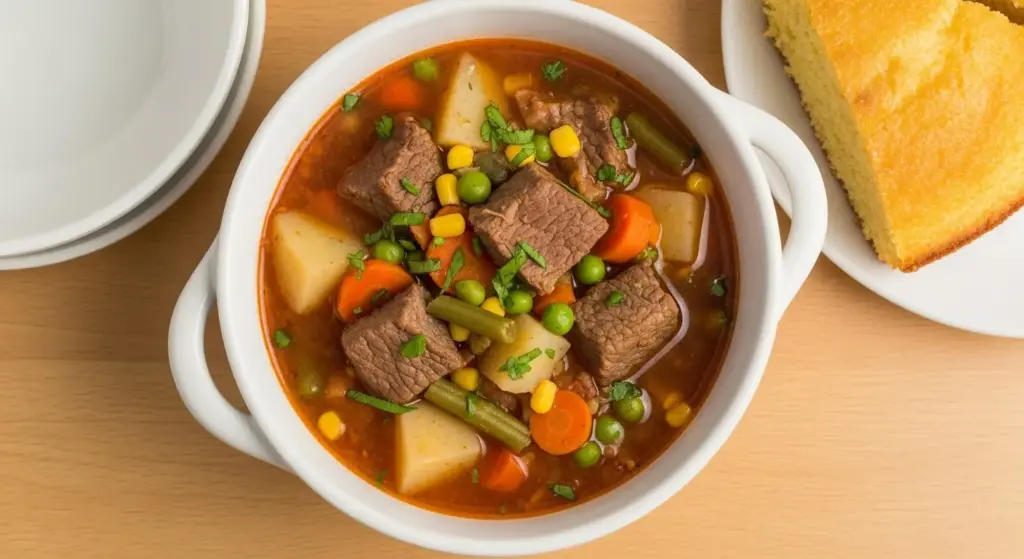
This soup is hearty and filling enough to stand on its own as a full meal, but pairing it with the right sides takes the whole experience up a notch.
The rich, savory broth practically begs for something to soak it up, making crusty bread or cornbread the most natural accompaniment. A simple green salad on the side balances the warmth and heartiness of the soup beautifully.
Here are some great ideas for what to serve alongside:
- Skillet Cornbread for a classic Southern pairing
- Dinner Rolls for soaking up every last drop of broth
- Garlic Bread for a crowd-pleasing side
- Broccoli Salad for a fresh, crunchy contrast
- Classic Deviled Eggs as a fun appetizer before the soup
- A simple green salad dressed with olive oil and lemon
Read Also: Loaded Potato Soup Recipe
Variations to Try
Once you have the base recipe down, this soup is incredibly easy to customize. The classic stovetop version is always the go-to, but these variations keep things interesting and cater to different tastes, dietary preferences, and time constraints.
- Slow Cooker Version: Brown the beef on the stovetop first for the best flavor, then transfer everything to your slow cooker and cook on LOW for 8 to 10 hours or HIGH for 4 to 5 hours.
- Ground Beef Version: Swap the chuck roast for 1.5 lbs of ground beef. Brown it first, drain the excess fat, then proceed with the recipe. The cooking time is cut down significantly with no long simmer needed.
- Barley Addition: Add 1/2 cup of pearl barley along with the broth for a thicker, even more filling soup. Add an extra cup of broth to compensate.
- Cabbage Version: Stir in 2 cups of shredded green cabbage during the last 15 minutes of cooking for a heartier soup reminiscent of traditional borscht.
- Tomato-Forward Version: Add an extra can of diced tomatoes and a splash of V8 juice in place of some of the water for a more robust, tomato-rich broth.
- Herb-Boosted Version: Add a Parmesan rind to the simmering broth. It dissolves slightly into the soup and adds an incredible savory depth.
For another cozy beef dinner idea, check out Mississippi Pot Roast.
Storage and Reheating
One of the best things about this soup is how well it keeps. In fact, the flavors genuinely improve overnight as everything continues to meld together in the refrigerator. Here is how to store and reheat it properly:
- Refrigerator: Allow the soup to cool to room temperature before transferring it to airtight containers. It will keep in the refrigerator for up to 4 to 5 days.
- Freezer: This soup freezes beautifully. Cool it completely, then pour into freezer-safe containers or heavy-duty zip-lock bags, leaving about an inch of space for expansion. Freeze for up to 3 months.
- Thawing: Transfer frozen soup to the refrigerator the night before you plan to eat it. For a faster thaw, you can place the sealed container in a bowl of cool water.
- Reheating on the stovetop: Pour the soup into a pot and warm over medium-low heat, stirring occasionally, until heated through. Add a splash of broth or water if the soup has thickened too much.
- Reheating in the microwave: Transfer a single serving to a microwave-safe bowl and cover loosely. Heat in 1-minute intervals, stirring between each, until warmed through.
- Note on potatoes: If you plan to freeze a large batch, consider slightly undercooking the potatoes since they can become a bit grainy in texture after freezing and reheating.
Another freezer-friendly soup to add to your collection: Minestrone Soup
Nutritional Facts
The following values are approximate estimates per serving, based on 8 servings from this recipe.
| Nutrient | Per Serving (Approx.) |
|---|---|
| Calories | 320 kcal |
| Protein | 28g |
| Carbohydrates | 22g |
| Dietary Fiber | 4g |
| Total Fat | 12g |
| Saturated Fat | 4g |
| Sodium | 620mg |
| Potassium | 850mg |
| Vitamin A | 60% DV |
| Vitamin C | 20% DV |
| Iron | 20% DV |
Nutritional values are estimates and will vary based on specific ingredients used.
You might also enjoy: Beef and Barley Soup
Health Benefits of Key Ingredients
This is not just comfort food; it is nourishment in every bowl. The combination of lean protein, root vegetables, and a tomato-based broth delivers a genuinely impressive nutritional profile.
Beyond being filling and satisfying, each major ingredient contributes real health benefits that make this soup worth eating all winter long.
Here is a breakdown of what the key ingredients bring to the table:
- Chuck roast (beef): An excellent source of complete protein, zinc, and iron. Protein is essential for muscle repair and maintenance, while zinc supports immune function and iron helps carry oxygen through the bloodstream.
- Carrots: Loaded with beta-carotene, which the body converts to Vitamin A. This supports eye health, skin function, and immune defense.
- Potatoes: A great source of potassium and Vitamin C, as well as resistant starch when cooked and cooled, which supports gut health.
- Celery: Provides Vitamin K, which is important for blood clotting and bone health, along with antioxidants that may help reduce inflammation.
- Green beans: Rich in Vitamin C, Vitamin K, and folate, and a good source of fiber to support digestive health.
- Peas: One of the more protein-rich vegetables, peas also deliver a solid dose of Vitamin C, Vitamin K, and manganese.
- Diced tomatoes: A rich source of lycopene, a powerful antioxidant associated with reduced risk of certain chronic diseases.
- Garlic: Contains allicin, a compound known for its antimicrobial and anti-inflammatory properties that support cardiovascular and immune health.
Read Also: Vegetable Soup Recipe
Frequently Asked Questions
1. What is the best cut of beef for vegetable beef soup?
Chuck roast is consistently the best choice for this soup. It has a good amount of marbling and natural collagen, which breaks down during the long, slow simmer and produces incredibly tender, fall-apart beef.
Beef stew meat from the store is usually cut from chuck or round and works well too, though the texture can vary. Avoid lean cuts like sirloin or tenderloin, as they tend to turn tough and chewy when simmered for extended periods.
2. Do I have to brown the beef first?
Technically no, but you absolutely should. Browning the beef creates a deep, caramelized crust through a process called the Maillard reaction, and those browned bits left on the bottom of the pot dissolve into the broth and add tremendous depth of flavor.
Skipping the sear will still give you a decent soup, but it will taste noticeably thinner and less rich compared to the version with properly browned beef.
3. Can I make this soup in a slow cooker?
Yes, and it turns out beautifully. For the best results, still brown the beef on the stovetop before adding it to the slow cooker, as this step contributes so much flavor to the broth.
Transfer everything to the slow cooker, add the broth, vegetables, and seasonings, and cook on LOW for 8 to 10 hours or on HIGH for 4 to 5 hours. Add the peas and corn in the last 30 minutes.
4. How do I thicken vegetable beef soup?
If you prefer a thicker broth, there are a few easy options. You can mix 2 tablespoons of flour or cornstarch with 3 tablespoons of cold water to make a slurry, then stir it into the simmering soup and cook for 5 to 10 minutes.
Alternatively, you can mash a few of the cooked potato cubes directly into the broth, which naturally thickens the soup without any additional ingredients. Adding a small amount of tomato paste also contributes body to the broth.
5. Can I use frozen vegetables instead of fresh?
Absolutely. Frozen vegetables work very well in this soup and are a convenient, budget-friendly option. Add heartier frozen vegetables like green beans and corn alongside the potatoes, and add tender ones like peas in the last 5 minutes.
You may want to add an extra half cup of broth if using a large quantity of frozen vegetables, as they release some water as they heat up and can dilute the broth slightly.
Read Also: Chicken Soup Recipe
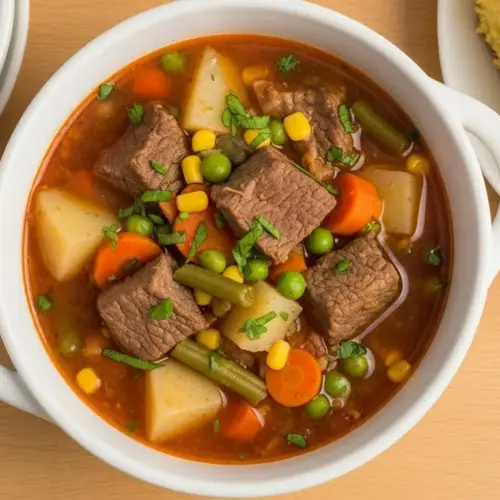
Vegetable Beef Soup

Equipment
- Large Dutch oven or heavy-bottomed stockpot - At least 6 quarts; cast iron enameled recommended
- Cutting board
- Chef’s knife
- Wooden spoon or heatproof spatula
- Ladle
- Measuring cups and spoons
- Peeler - For carrots and potatoes
- Paper towels - For drying the beef before searing
- Serving bowls
Ingredients
- 2 lbs beef chuck roast - 900g, cut into 1-inch cubes; trim large hard fat pieces
- 2 tbsp olive oil - divided
- 1 large yellow onion - diced
- 3 cloves garlic - minced
- 3 stalks celery - sliced
- 3 medium carrots - peeled and sliced into rounds
- 3 medium Yukon Gold or russet potatoes - peeled and cut into 1-inch cubes
- 1 cup green beans - 150g, fresh or frozen, trimmed and cut into 1-inch pieces
- 1 cup frozen corn kernels - 150g
- 1 cup frozen peas - 150g
- 1 can (14.5 oz) diced tomatoes - 411g, with all juices
- 2 tbsp tomato paste
- 4 cups beef broth - 950ml; high-quality or Better Than Bouillon recommended
- 2 cups water - 475ml
- 2 tbsp Worcestershire sauce
- 1 tsp dried thyme
- 1 tsp dried oregano
- 1 tsp dried basil
- 2 bay leaves - remove before serving
- 1 tsp salt - plus more to taste
- 1/2 tsp black pepper - plus more to taste
For Garnish
- 2 tbsp fresh flat-leaf parsley - chopped
Instructions
- Let the chuck roast rest at room temperature for 20–30 minutes, then cut into 1-inch cubes. Pat every piece thoroughly dry with paper towels, then season all sides with 1 tsp salt and ½ tsp pepper.
- Heat 1 tbsp olive oil in a large Dutch oven over medium-high heat. Add half the beef in a single layer and sear undisturbed for 3–4 minutes per side until deeply browned; repeat with remaining beef. Transfer to a plate, leaving all drippings in the pot.
- Reduce heat to medium, add the onion and celery, and sauté 4–5 minutes until softened, scraping up the browned bits. Add garlic and stir for 1 minute until fragrant.
- Push aromatics to the sides and add the tomato paste to the center of the pot. Cook for 1–2 minutes, stirring and pressing it around the pot, then stir into the aromatics.
- Pour in the beef broth and water, scraping up all browned bits from the bottom. Add diced tomatoes, Worcestershire sauce, thyme, oregano, basil, bay leaves, and the browned beef with any juices; stir to combine and bring to a boil.
- Reduce heat to medium-low, partially cover, and simmer gently for 45 minutes, stirring occasionally, until the beef begins to tenderize and the broth develops flavor.
- Stir in the cubed potatoes and sliced carrots, then partially cover and simmer for another 20–25 minutes until fork-tender but still holding their shape.
- Add the green beans and simmer 10–12 minutes until tender-crisp, then stir in the frozen corn and peas and cook 5 more minutes until heated through.
- Remove and discard the bay leaves, taste and adjust salt and pepper as needed, then stir in fresh parsley and ladle into bowls.
Notes
- Dry the beef: Thoroughly patting the beef dry before searing is the single most important step — moisture prevents browning and browning builds flavor.
- Sear in batches: Never overcrowd the pot; each piece needs direct contact with the hot surface to form a proper crust.
- Best cut of beef: Chuck roast is ideal because its collagen breaks down during the long simmer, yielding tender, flavorful meat. Avoid lean cuts like sirloin — they turn chewy.
- Slow cooker method: Brown the beef on the stovetop first, then transfer everything to a slow cooker and cook on LOW for 8–10 hours or HIGH for 4–5 hours, adding peas and corn in the last 30 minutes.
- Thickening the broth: For a thicker soup, stir in a slurry of 2 tbsp cornstarch mixed with 3 tbsp cold water, or mash a few potato cubes directly into the broth.
- Freezing tip: Slightly undercook the potatoes if you plan to freeze the soup — potatoes can turn grainy after freezing and reheating.
- Storage: Refrigerate in airtight containers for up to 4–5 days; freeze for up to 3 months. The flavors improve overnight.
- Add barley: Stir in ½ cup pearl barley with the broth for a heartier, thicker soup — add an extra cup of broth to compensate.
- Flavor booster: Drop a Parmesan rind into the simmering broth for incredible savory depth; remove before serving.
- Frozen vegetables: Work perfectly — just add heartier ones (green beans, corn) with the potatoes and delicate ones (peas) in the last 5 minutes. Add an extra ½ cup broth if using large quantities.
Final Thoughts
Homemade vegetable beef soup is one of those timeless recipes that proves the best food does not need to be complicated. With a handful of everyday ingredients, one pot, and a little patience, you end up with something truly nourishing and deeply satisfying.
This recipe is one to keep in your regular rotation all through fall and winter, and honestly any time you need a meal that feels like a warm hug. The rich broth, the tender beef, the colorful vegetables: it all comes together into a bowl that tastes like home.
Give this vegetable beef soup recipe a try and let it work its magic on your family’s dinner table. Drop a comment below to let me know how it turned out, what vegetables you added, or any fun twists you tried. I would love to hear from you!
Recommended:
- Chicken Tortilla Soup
- Beef Bone Broth Soup
- Stuffed Pepper Soup
- Lemon Chicken Orzo Soup
- Cabbage Soup
- Turkey Soup
- Baked Potato Soup
- Caldo de Res
- Prime Rib Soup
- Slow Cooker Pot Roast