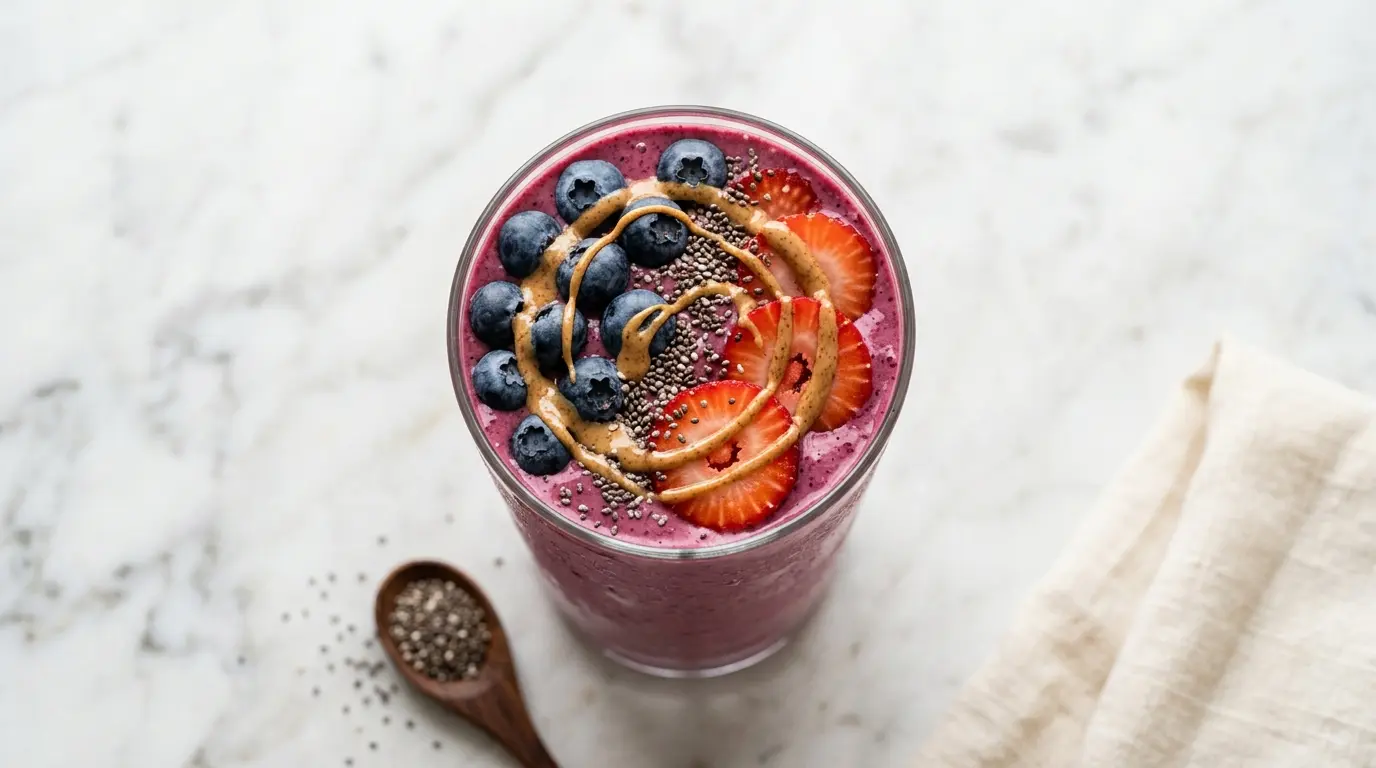
If you have ever stumbled out of the gym not knowing what to eat, this post workout smoothie recipe is about to become your new best friend. It hits all the right notes after exercise: quick carbohydrates from banana and berries, quality protein from Greek yogurt and protein powder, healthy fats from almond butter, and electrolyte-rich coconut water to get you rehydrated fast.
The whole thing comes together in under five minutes, which is exactly what you need when your muscles are screaming and your brain is only half switched on.
This recipe is built around the most widely accepted formula for post-workout recovery: a 2:1 ratio of carbohydrates to protein. That combination replenishes glycogen stores in your muscles and kickstarts the repair process at the same time.
No gimmicks, no exotic powders you can’t pronounce. Just whole, nourishing ingredients blended into something genuinely delicious.
This pairs beautifully with our Protein Smoothie Recipe if you want to explore other high-protein blends for your fitness routine.
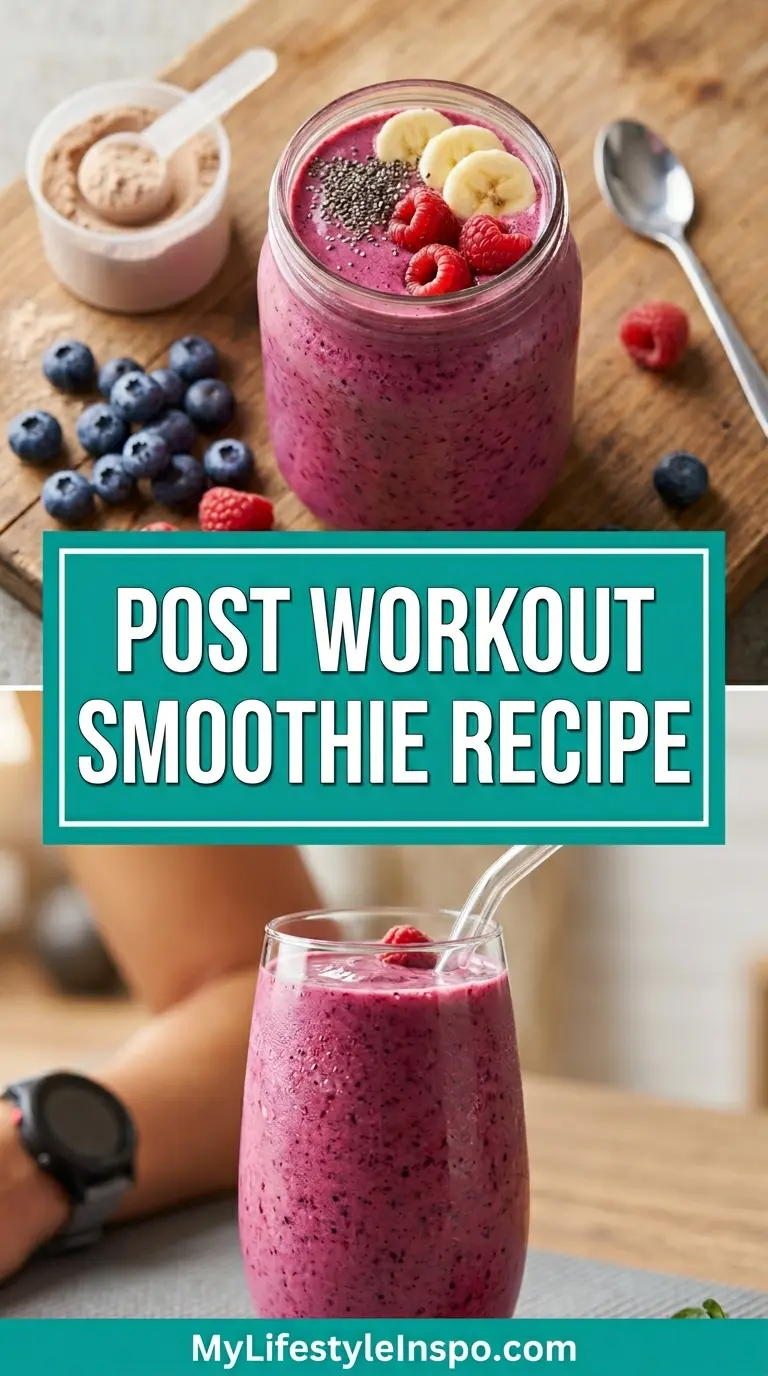
Why You’ll Love This Post Workout Smoothie Recipe
This smoothie was designed with recovery in mind from the first ingredient to the last.
Every single component earns its spot in the blender. Nothing is in there just to add color or bulk.
It takes literally five minutes to make, which means you can have it in your hand within the critical 30-minute recovery window after your session.
The flavor is rich, creamy, and satisfying. It tastes more like a milkshake than a health drink, which makes it a lot easier to stay consistent with.
Here is why readers keep coming back to this one:
- High protein content (around 35g per serving) to support muscle repair
- Natural carbohydrates from banana and berries to refill energy stores
- Coconut water adds potassium and electrolytes without the sugar load of sports drinks
- Greek yogurt provides probiotics alongside protein
- Almond butter contributes healthy fats and a subtle nutty flavor that works beautifully with the banana
- Easy to customize for different dietary needs
- No cooking, no prep, no mess (beyond a blender and a glass)
Another favorite that pairs well with this recipe: Banana Protein Smoothie
Ingredients
A well-made post workout smoothie does not need a long shopping list. These ingredients are easy to find, affordable, and nutritionally balanced to give your body exactly what it needs after exercise.
Here is what you will need (serves 1):
- 1 medium ripe banana, frozen (about 4 oz / 115g), broken into chunks
- 1 cup (240ml) coconut water, chilled
- ½ cup (120g) plain Greek yogurt (full-fat or low-fat)
- 1 scoop (about 30g) vanilla or chocolate protein powder, whey or plant-based
- ½ cup (75g) frozen blueberries
- ½ cup (75g) frozen strawberries
- 2 tablespoons almond butter, smooth or crunchy
- 1 tablespoon chia seeds
- ½ teaspoon ground cinnamon
- 4-6 ice cubes (optional, for a thicker and colder smoothie)
Read Also: Greek Yogurt Smoothie Recipe
Kitchen Equipment Needed
You do not need much to make this smoothie, but having the right tools makes a real difference in texture.
Here is what to have on hand:
- High-powered blender (a Vitamix or NutriBullet works great; a standard blender can work, but the texture may be slightly less smooth)
- Measuring cups and spoons
- A large glass or smoothie cup with a lid (a 16 oz / 475ml cup is ideal)
- A spatula or spoon for scraping down the sides of the blender
- Freezer bags for pre-portioning frozen fruit ahead of time (optional, but very helpful for meal prep)
You might also enjoy: Almond Milk Smoothie Recipe
Recommended Products for This Recipe
These are products I genuinely recommend based on quality and performance. They make the smoothie-making process easier, faster, and more nutritious.
1. Vitamix E310 Explorian Blender
A high-powered blender is the single most important tool for a silky-smooth post workout smoothie. The Vitamix E310 handles frozen fruit and seeds without leaving chunks or graininess. It is built to last for years and produces a professional-quality texture every single time.
2. Orgain Organic Protein Powder (Vanilla Bean)
This is a clean, plant-based protein powder that dissolves beautifully in smoothies without clumping or leaving a chalky taste. It packs 21 grams of protein per serving and is made with organic pea, brown rice, and chia protein, which makes it a great option for both vegans and non-vegans alike.
3. Anthony’s Organic Chia Seeds
Chia seeds add omega-3 fatty acids, fiber, and a small protein boost to this smoothie. Anthony’s sells a high-quality organic version that is non-GMO verified and free from additives. A single tablespoon makes a meaningful nutritional difference in your recovery blend.
4. Harmless Harvest Coconut Water
Most store-brand coconut waters are pasteurized at high temperatures, which destroys many of the natural electrolytes and nutrients. Harmless Harvest uses a cold-press process that preserves the potassium and natural goodness, making it a noticeably better base liquid for a recovery smoothie.
5. Barney Butter Bare Smooth Almond Butter
This almond butter contains just one ingredient: almonds. No added oils, no sugar, no salt. It blends seamlessly into smoothies without leaving a greasy texture, and the clean flavor works perfectly with banana and berries.
Read Also: Almond Butter Smoothie Recipe
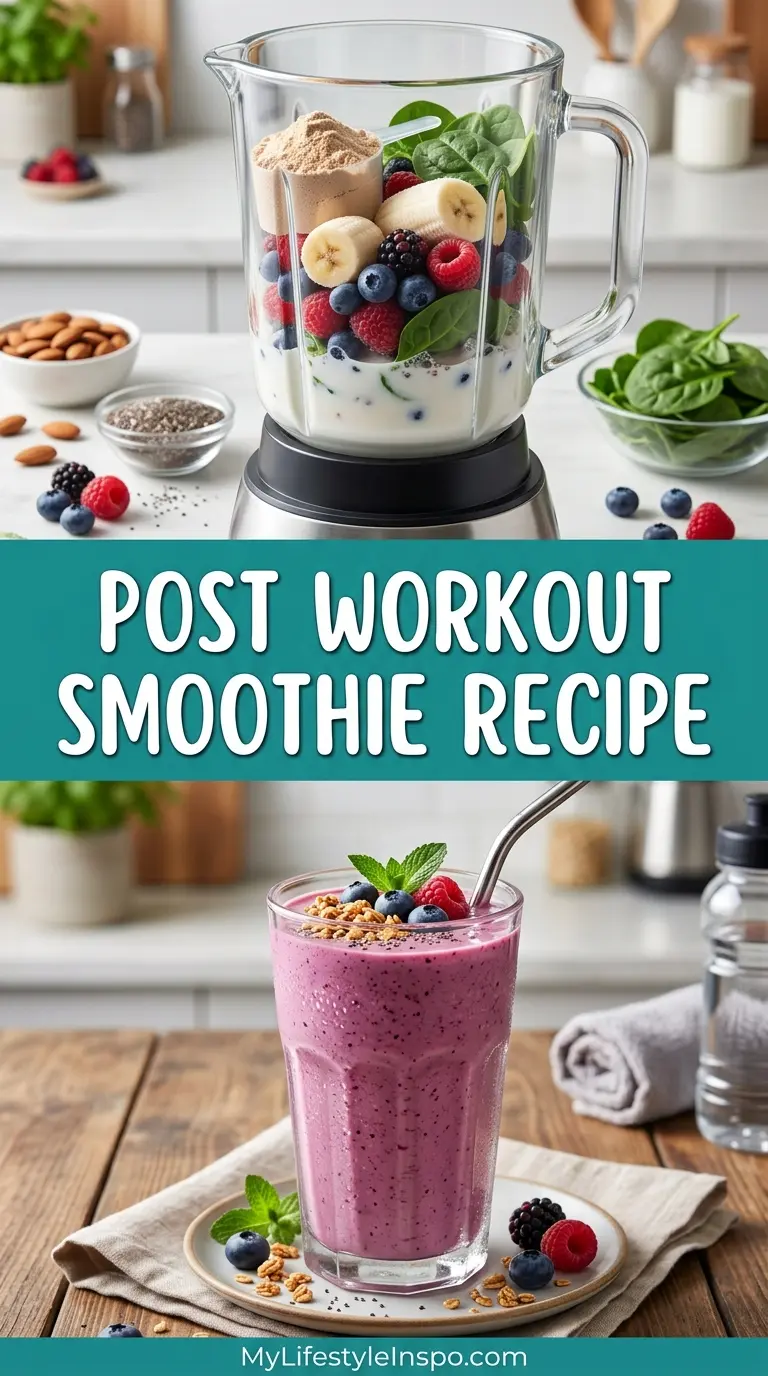
Step-by-Step Instructions
Step 1: Prepare Your Frozen Banana
- Peel the banana and break it into 3-4 chunks.
- If you are using a banana you froze in advance, remove it from the freezer 2-3 minutes before blending so it is slightly easier on your blender motor.
- A frozen banana (rather than a fresh one) is key here. It gives the smoothie a thick, creamy, almost ice-cream-like consistency without needing to add a ton of ice.
- If you do not have a frozen banana ready, use a fresh banana and add an extra 4-6 ice cubes to compensate.
Step 2: Add Your Liquid Base First
- Pour 1 cup (240ml) of chilled coconut water into the blender.
- Always add your liquid first. This creates a vortex at the bottom of the blender that helps pull the solid ingredients down into the blades efficiently, preventing jamming.
- Coconut water is the preferred liquid here because it naturally contains potassium, sodium, and magnesium, all electrolytes your body loses through sweat during exercise.
- If you prefer a creamier texture, swap half of the coconut water for unsweetened almond milk or coconut milk.
Step 3: Add the Greek Yogurt
- Spoon ½ cup (120g) of plain Greek yogurt directly into the blender on top of the liquid.
- Use plain, unsweetened Greek yogurt. Flavored yogurts often contain significant amounts of added sugar, which you do not need here since the fruit provides natural sweetness.
- Full-fat Greek yogurt creates a creamier, more satiating smoothie. Low-fat works fine if that is your preference.
- Greek yogurt contributes approximately 10-12 grams of protein per half cup, along with probiotics that support gut health and calcium for bone strength.
Step 4: Add the Protein Powder
- Add one scoop (approximately 30g) of your chosen protein powder to the blender.
- Vanilla is the most versatile flavor for this recipe and pairs well with the berries and banana.
- Chocolate protein powder is also a great choice if you prefer a richer, dessert-like flavor profile.
- If you are using a plant-based protein powder, note that pea protein can occasionally have a slightly earthy flavor, which the banana and chia seeds do a good job of masking.
- Place the protein powder on top of the yogurt so it does not clump directly against the liquid before blending.
Step 5: Add the Frozen Berries and Banana
- Add ½ cup (75g) of frozen blueberries into the blender.
- Add ½ cup (75g) of frozen strawberries on top of the blueberries.
- Add the frozen banana chunks on top of the berries.
- Using two types of berries gives you a broader range of antioxidants. Blueberries are particularly high in anthocyanins, which support muscle recovery, while strawberries are rich in vitamin C, which plays a role in collagen synthesis and tissue repair.
- Layering the frozen items on top of the liquid and yogurt helps prevent them from freezing to the blades of the blender before the machine gets going.
Step 6: Add the Almond Butter and Chia Seeds
- Spoon 2 tablespoons of almond butter into the blender over the fruit.
- Add 1 tablespoon of chia seeds on top.
- Almond butter provides healthy monounsaturated fats and a subtle nuttiness that complements the berry flavors well. It also helps make the smoothie more filling and slows digestion slightly, which gives you longer-lasting energy.
- Chia seeds are tiny but mighty. They add omega-3 fatty acids, fiber, and a few grams of protein, and they blend in seamlessly without altering the flavor.
Step 7: Add Cinnamon and Ice (Optional)
- Sprinkle ½ teaspoon of ground cinnamon over the top of the other ingredients.
- Cinnamon is not just for flavor. It has been shown in multiple studies to help regulate blood sugar and may reduce post-exercise inflammation.
- If you like your smoothie extra thick and cold, add 4-6 ice cubes at this stage.
- If you are already using a fully frozen banana and frozen berries, you may find you do not need any ice at all.
Step 8: Blend and Serve
- Secure the lid on your blender firmly and start on a low speed, then gradually increase to high.
- Blend on high for 45-60 seconds until completely smooth. Pause and scrape down the sides with a spatula if needed, then blend for another 15-20 seconds.
- Check the consistency. If the smoothie is too thick, add 2-3 tablespoons of coconut water and blend again for 10 seconds.
- If it is too thin, add a few more ice cubes or a small handful of frozen berries and blend again.
- Pour immediately into a large glass and enjoy right away. Smoothies are best consumed fresh, as the texture and nutrients start to degrade quickly once blended.
This technique also works wonderfully when making our Kale and Fruit Smoothie for a green recovery option.
Tips for Success
A few simple habits will take this smoothie from good to great every single time you make it.
Keep these in mind:
- Freeze your bananas in advance. Peel ripe bananas, slice them into chunks, and store in a zip-top freezer bag. They last up to 3 months frozen and are ready whenever you need them.
- Pre-portion your smoothie packs. Fill individual freezer bags with one serving of frozen fruit, chia seeds, and cinnamon so you can just dump the bag into the blender, add the liquid and yogurt, and go. This is a huge time-saver on busy mornings.
- Add liquid first, always. This prevents the blades from jamming and ensures a smoother blend from the start.
- Use a high-powered blender if you can. Standard blenders can leave small chunks of frozen fruit or chia seeds. A NutriBullet, Ninja, or Vitamix gives you a significantly silkier texture.
- Taste before you pour. Every banana and every batch of berries is slightly different in sweetness. Blend, taste, and adjust. A drizzle of honey or a few drops of vanilla extract can brighten the whole smoothie if needed.
- Consume within 20-30 minutes. The nutritional quality, texture, and flavor are all at their peak immediately after blending. Do not let it sit for hours before drinking.
- Rinse your blender immediately. Fill it halfway with warm water, add a drop of dish soap, and blend on low for 10 seconds. This makes cleanup almost effortless.
Read Also: Spinach Smoothie Recipe
Serving Suggestions
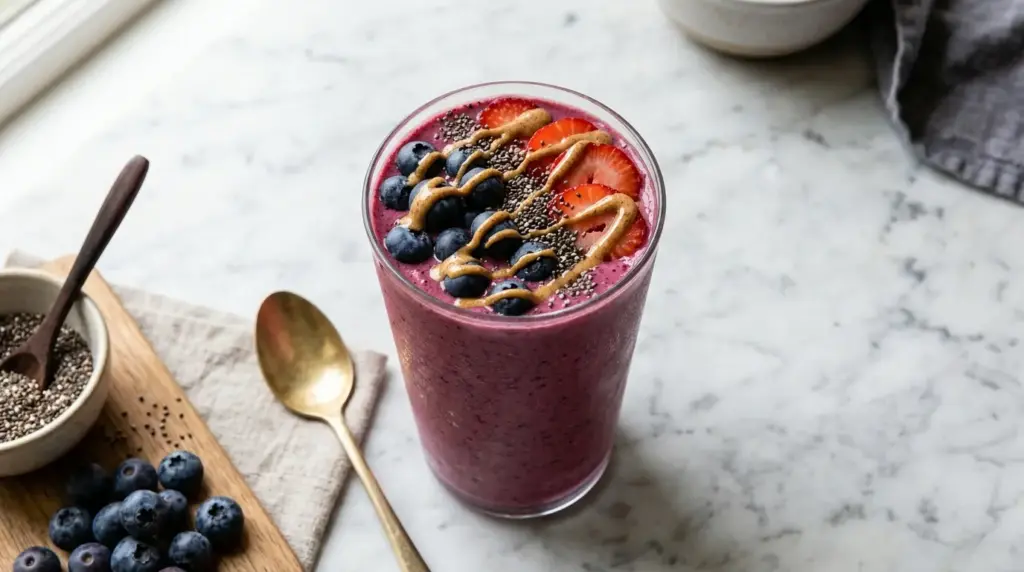
This post workout smoothie is satisfying enough to stand on its own as a full recovery meal.
On days when your workout was particularly intense, or when you just woke up ravenous, you can pair it with a light, complementary snack to round out your recovery nutrition.
Great ways to serve and enjoy this smoothie:
- Pour it into a tall glass over a couple of extra ice cubes for a more refreshing, drink-style texture
- Serve it alongside a small slice of Avocado Toast for additional healthy fats and complex carbohydrates
- Pair it with a couple of hard-boiled eggs if you want even more protein after a heavy lifting session
- Enjoy it alongside a small bowl of Baked Oatmeal on rest days when you need a heartier, more calorie-dense meal
- Pour into a bowl and top with a sprinkle of granola, a few fresh blueberries, and a light drizzle of honey for an acai bowl-style presentation
- Serve immediately after a morning run or gym session, ideally within 30 minutes of finishing your workout
Read Also: Breakfast Smoothie Recipe
Variations to Try
This base recipe is endlessly adaptable. Once you have made it once or twice and know how it works, it is easy to swap ingredients around based on your goals, preferences, or what you happen to have in the freezer.
Here are some popular variations worth trying:
- Chocolate Peanut Butter Recovery Smoothie: Replace the almond butter with peanut butter, use chocolate protein powder, and add 1 tablespoon of raw cacao powder for a genuinely indulgent post-workout treat that still nails your macros.
- Green Recovery Smoothie: Add a large handful of fresh spinach or kale to the base recipe. The spinach virtually disappears in flavor while adding iron, magnesium, and vitamin K. A great option after endurance workouts.
- Tropical Post Workout Smoothie: Swap the berries for frozen mango and pineapple, use coconut milk instead of coconut water, and add a squeeze of fresh lime juice. Bright, energizing, and packed with vitamin C.
- Vegan Version: Use a plant-based protein powder (pea or hemp), replace Greek yogurt with a thick coconut or almond milk yogurt, and ensure your other ingredients are vegan-friendly.
- High-Calorie Bulking Smoothie: Add an extra tablespoon of almond butter, an additional half banana, and swap coconut water for whole milk or oat milk. This bumps the calorie count significantly for those in a muscle-building phase.
- Lower-Carb Version: Reduce the banana to half and replace the berries with cucumber and spinach. Use unsweetened almond milk as your base. This keeps the protein and healthy fats while lowering the carbohydrate load.
You might also enjoy: Peanut Butter Banana Smoothie
Storage and Reheating
Smoothies are definitely best consumed fresh, right after blending. That said, there are a couple of ways to work ahead if your schedule demands it.
Storage tips:
- Short-term storage: Pour any leftover smoothie into an airtight mason jar or sealed smoothie cup, filling it all the way to the top to minimize air exposure. Refrigerate immediately and consume within 12-24 hours.
- Freezer smoothie packs: Portion out one serving of frozen fruit, chia seeds, and cinnamon per bag, seal, and freeze for up to 3 months. When ready, dump the contents into the blender, add the fresh ingredients (yogurt, protein powder, coconut water), and blend straight away.
- Overnight option: Blend the night before and refrigerate in a sealed jar. Shake or stir well before drinking, as separation is natural and normal.
- Do not store already-blended smoothies for more than 24 hours. The texture degrades, the fruit oxidizes, and some of the nutritional value is lost over time.
- Avoid freezing the already-blended smoothie. The texture becomes grainy and watery once thawed, and it is never quite the same as fresh.
Read Also: Frozen Fruit Smoothie Recipe
Nutritional Facts
The following nutritional breakdown is based on one full serving of this post workout smoothie recipe, using full-fat Greek yogurt, a standard vanilla whey protein powder, and all listed ingredients. Values are approximate and will vary slightly depending on the specific brands you use.
| Nutrient | Per Serving |
|---|---|
| Calories | approximately 420 kcal |
| Total Carbohydrates | 48g |
| Dietary Fiber | 9g |
| Natural Sugars | 28g |
| Protein | 34g |
| Total Fat | 12g |
| Saturated Fat | 2g |
| Sodium | 180mg |
| Potassium | 720mg |
| Calcium | 28% DV |
| Vitamin C | 45% DV |
| Iron | 12% DV |
This smoothie delivers a strong protein punch (around 34 grams) alongside meaningful carbohydrate intake, which aligns well with the post-exercise nutrition research suggesting a 2:1 or 3:1 carb-to-protein ratio for optimal glycogen replenishment and muscle recovery.
Another great option for hitting your protein targets: Smoothie Recipe with Protein Powder
Health Benefits of Key Ingredients
Every ingredient in this post workout smoothie pulls its weight nutritionally. Here is a closer look at what each one brings to your recovery.
These are not just feel-good marketing claims. Each benefit below is backed by solid nutritional science.
Here is the breakdown:
- Banana: One of the fastest sources of carbohydrates for glycogen replenishment. Rich in potassium, which helps regulate fluid balance and prevent post-workout muscle cramping. The natural sugars in banana spike insulin just enough to shuttle amino acids into muscle cells.
- Greek Yogurt: Provides casein and whey protein in a natural combination, offering both fast and slow-digesting protein fractions. Also a significant source of calcium and gut-friendly probiotics.
- Protein Powder: Delivers a concentrated dose of essential amino acids, particularly leucine, which is the key trigger for muscle protein synthesis. Critical in the 30-60 minute window after training.
- Blueberries: Exceptionally high in anthocyanins, a class of antioxidant compounds that have been shown to reduce exercise-induced inflammation and oxidative stress. Multiple studies link berry consumption to faster muscle recovery.
- Strawberries: High in vitamin C, which supports collagen production for connective tissue repair, and also provides folate and manganese for energy metabolism.
- Almond Butter: Supplies heart-healthy monounsaturated fats, vitamin E (an antioxidant), and magnesium, which is a mineral commonly depleted through sweat and critical for muscle function and sleep quality.
- Chia Seeds: An impressive source of plant-based omega-3 fatty acids (ALA), dietary fiber, and a small amount of protein. The omega-3s help moderate the inflammatory response that follows intense training.
- Coconut Water: A natural source of electrolytes including potassium, sodium, magnesium, and calcium. Helps restore hydration more effectively than plain water after moderate-intensity exercise.
- Cinnamon: Contains cinnamaldehyde and other bioactive compounds shown to improve insulin sensitivity, which means the carbohydrates from this smoothie are more efficiently shuttled into muscle cells after a workout.
You might also enjoy making: Avocado Banana Smoothie
Frequently Asked Questions
1. When is the best time to drink a post workout smoothie?
Aim to consume your post workout smoothie within 30-60 minutes of finishing your exercise session.
This window is often called the “anabolic window,” and while the research on its strict time limits has evolved, most sports nutrition experts agree that getting protein and carbohydrates in relatively soon after training is beneficial for glycogen replenishment and initiating muscle protein synthesis.
2. Can I make this smoothie without protein powder?
Yes, you absolutely can. The Greek yogurt already provides a meaningful amount of protein on its own (around 10-12 grams per half cup).
To boost protein without powder, you can increase the yogurt to 1 full cup, add a tablespoon of hemp seeds, or include a handful of silken tofu, all of which blend in seamlessly.
3. Can I use fresh fruit instead of frozen?
You can, but the texture and temperature will be quite different.
Frozen fruit is what gives this smoothie its thick, cold, creamy texture. If you use fresh fruit, add at least 6-8 ice cubes to compensate and expect a slightly thinner, less satisfying consistency.
4. Is this smoothie good for weight loss?
This smoothie is on the higher end calorie-wise (around 420 kcal) because it is designed for recovery and muscle rebuilding, not calorie restriction.
If you are using it in a weight loss context, reduce the almond butter to 1 tablespoon, use a lower-calorie plant-based yogurt, and skip the extra ice for a lighter version closer to 300-320 kcal.
5. What protein powder works best in this recipe?
Vanilla whey protein isolate blends the most smoothly and has a neutral, complementary flavor with the banana and berries.
Plant-based options like pea protein, brown rice protein, or a blended vegan protein powder all work well too. The one to be slightly cautious with is hemp protein, which has a more earthy, grassy taste that may not appeal to everyone in this particular flavor combination.
This is a great complement to our Blueberry Banana Smoothie if you prefer a version without protein powder.
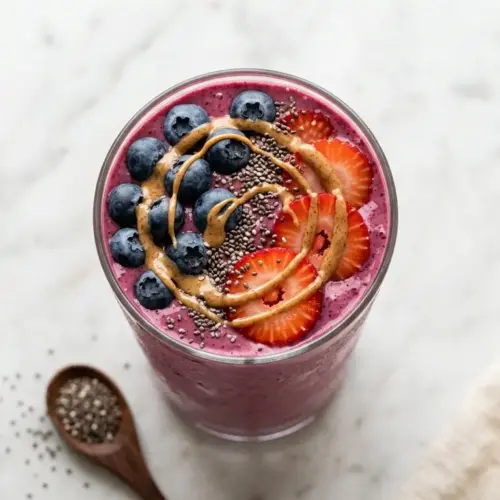
Post Workout Smoothie

Equipment
- High-powered blender - Vitamix, NutriBullet, or similar for silky smooth texture
- Measuring cups
- Measuring spoons
- Large glass or smoothie cup with lid - 16 oz / 475ml capacity ideal
- Spatula or spoon - For scraping down the sides of the blender
- Freezer bags - Optional, for pre-portioning fruit for meal prep
Ingredients
- 1 ripe banana - about 4 oz or 115g, frozen, broken into chunks
- 1 cup coconut water - 240ml, chilled
- ½ cup plain Greek yogurt - 120g, full-fat or low-fat
- 1 scoop vanilla or chocolate protein powder - about 30g, whey or plant-based
- ½ cup frozen blueberries - 75g
- ½ cup frozen strawberries - 75g
- 2 tablespoons almond butter - smooth or crunchy
- 1 tablespoon chia seeds
- ½ teaspoon ground cinnamon
- 4-6 ice cubes - optional, for a thicker and colder smoothie
Instructions
- Peel the banana and break it into 3-4 chunks. Use frozen banana for a thick, creamy consistency.
- Pour chilled coconut water into the blender first to create a vortex and prevent jamming.
- Spoon plain Greek yogurt directly into the blender on top of the liquid.
- Add one scoop of protein powder on top of the yogurt to prevent clumping.
- Add frozen blueberries, frozen strawberries, and frozen banana chunks into the blender.
- Spoon in almond butter and chia seeds over the fruit for healthy fats and omega-3s.
- Sprinkle cinnamon on top and add ice cubes if desired for extra thickness.
- Secure the lid and blend on low, gradually increasing to high for 45-60 seconds until smooth. Scrape down sides if needed and blend another 15-20 seconds. Pour immediately and enjoy.
Notes
- Freeze bananas in advance: Peel ripe bananas, slice into chunks, and store in a zip-top freezer bag for up to 3 months.
- Pre-portion smoothie packs: Fill individual freezer bags with one serving of frozen fruit, chia seeds, and cinnamon for a quick dump-and-blend breakfast.
- Add liquid first: Always pour liquid into the blender before other ingredients to prevent jamming and ensure a smooth blend.
- Use a high-powered blender: Standard blenders may leave small chunks; a NutriBullet, Ninja, or Vitamix gives a significantly silkier texture.
- Taste before pouring: Adjust sweetness with a drizzle of honey or a few drops of vanilla extract if needed.
- Consume immediately: Drink within 20-30 minutes for the best texture, flavor, and nutritional quality.
- Clean your blender quickly: Fill halfway with warm water, add a drop of dish soap, and blend on low for 10 seconds for effortless cleanup.
- Substitute coconut water: Swap half the coconut water for unsweetened almond milk or coconut milk for a creamier texture.
- Storage: Refrigerate any leftover smoothie in an airtight jar and consume within 12-24 hours. Do not freeze already-blended smoothies.
- Boost protein without powder: Increase Greek yogurt to 1 cup, add a tablespoon of hemp seeds, or include silken tofu.
Final Thoughts
This post workout smoothie recipe is the kind of thing that, once you make it, becomes a non-negotiable part of your fitness routine.
It is fast, it is genuinely delicious, and it covers all the bases your body needs after working hard: protein for repair, carbohydrates for energy replenishment, electrolytes for hydration, and antioxidants to calm the inflammation that follows intense training.
The fact that it takes five minutes from freezer to glass is honestly the biggest selling point. Recovery nutrition does not have to be complicated or joyless.
Give this recipe a try after your next workout and see how you feel. If you make it, drop a comment below and let us know what variation you tried, or share a photo on social media and tag us. We genuinely love hearing how you make these recipes your own.
Recommended:
- Protein Smoothie Recipe
- Oat Smoothie Recipe
- Green Smoothie Recipe
- Coconut Milk Smoothie Recipe
- Fruit Smoothie Recipe
- Acai Smoothie Recipe
- Keto Smoothie Recipe
- Chocolate Peanut Butter Banana Smoothie Recipe
- Peanut Butter Jelly Smoothie Recipe
- Easy Acai Bowl Recipe