If you’ve been hunting for a smoothie recipe with protein powder that actually tastes good, you’ve landed in the right place. So many protein smoothies end up gritty, chalky, or weirdly foamy, which is enough to put anyone off.
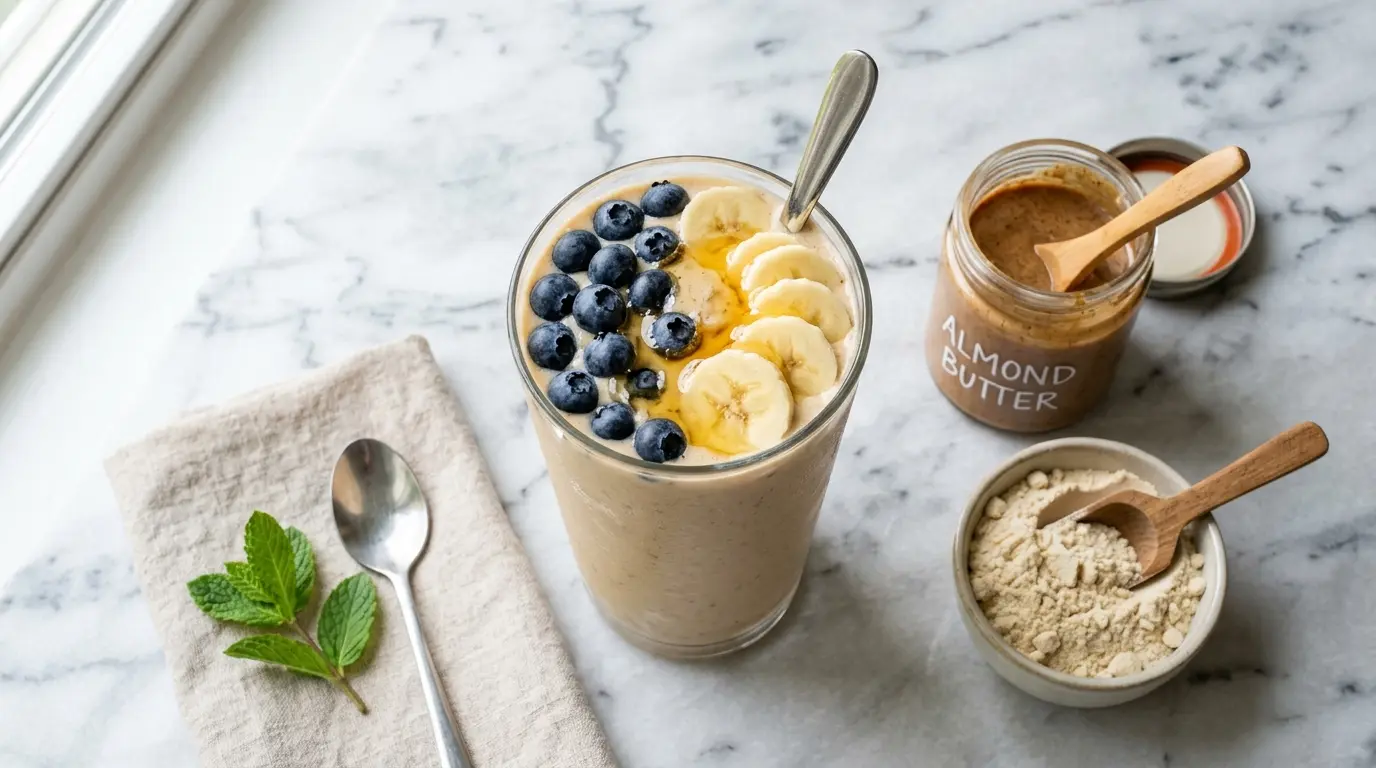
This version fixes all of that. It uses frozen banana as the creamy base, almond milk for blendability, vanilla protein powder for a clean flavor, and almond butter to round everything out with richness and healthy fats.
The result is a thick, satisfying smoothie that works as a quick breakfast, a post-workout recovery drink, or an afternoon pick-me-up.
You’ll have it ready in five minutes, and the texture is so good that it doesn’t feel like “health food” at all.
For another protein-packed drink worth bookmarking, check out this Banana Protein Smoothie that’s just as easy and filling.
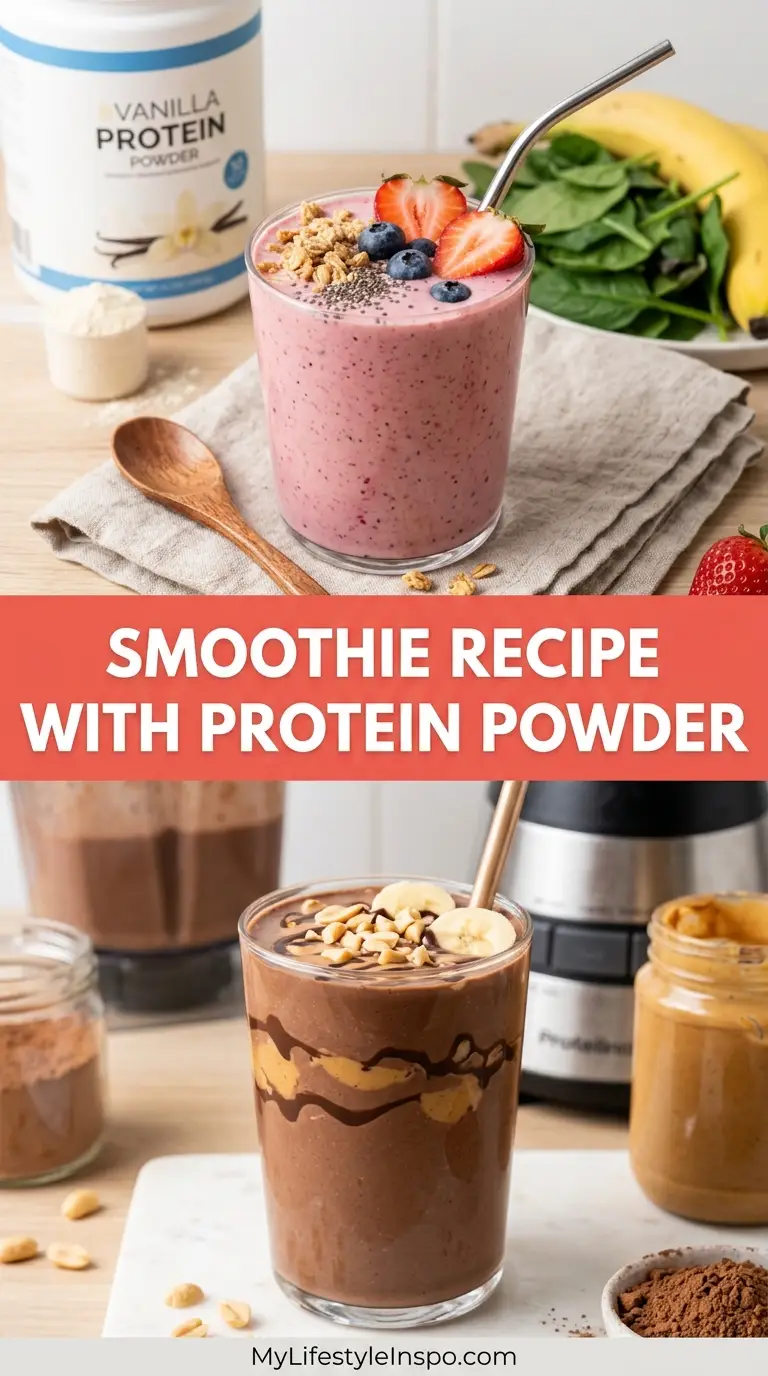
Why You’ll Love This Smoothie Recipe With Protein Powder
This smoothie hits all the marks, especially if you’re trying to eat more protein without eating another plain chicken breast.
It’s genuinely fast. You don’t need to prep anything the night before, and it comes together in the blender in under five minutes, making it one of the most practical recipes in your rotation.
The frozen banana is doing heavy lifting here. It adds natural sweetness, a thick milkshake-like consistency, and eliminates the need for ice, which can water down the flavor.
Almond butter is another key ingredient that people often overlook. It adds protein, healthy fats, and a subtle nuttiness that makes the smoothie feel way more satisfying than a plain fruit blend.
Here’s why readers come back to this one again and again:
- High protein content from both the protein powder and almond butter
- Naturally sweetened with banana and honey, no refined sugar needed
- Thick, creamy texture that doesn’t feel watered down
- Ready in under 5 minutes with minimal cleanup
- Easily customizable with different fruits, milks, or protein flavors
- Suitable for breakfast, post-workout refueling, or a midday snack
- Works well with dairy-free and vegan substitutions
Read Also: Peanut Butter Banana Smoothie Recipe
Ingredients
This smoothie is built around a handful of core ingredients that each play a specific role. Swapping liquid first in the blender keeps everything blending smoothly without any clumping.
- 1 cup (240 ml) unsweetened almond milk (or milk of choice)
- 1 scoop (about 30 g / 1 oz) vanilla protein powder
- 1 medium frozen banana (about 120 g / 4.2 oz), sliced before freezing
- 2 tablespoons (32 g) almond butter
- 1 tablespoon (21 g) honey or maple syrup (optional, adjust to taste)
- 1/2 cup (75 g) frozen blueberries or strawberries (optional, for extra antioxidants and color)
- 1/2 cup (75 g) ice cubes (optional, only if you want it extra thick and cold without adding banana)
You might also enjoy trying a Peanut Butter Smoothie if you love the nutty, creamy flavor profile in this one.
Kitchen Equipment Needed
You don’t need anything fancy to make this smoothie, but a powerful blender makes a noticeable difference in the final texture. Weak blenders sometimes leave small chunks of frozen banana or fibrous bits.
- High-powered blender (a Vitamix, Ninja, or NutriBullet all work well)
- Measuring cups and spoons
- Smoothie cups or tall glasses for serving
- A silicone spatula for scraping down the blender sides
- Freezer-safe bag or container for storing pre-sliced bananas
Read Also: Green Smoothie Recipe
Recommended Products for This Recipe
These are products that genuinely improve this smoothie, based on quality and real-world performance in the kitchen.
1. Vitamix A2500 Ascent Series Blender
A high-powered blender is the single most important tool for a perfectly smooth protein smoothie. Weak blenders leave frozen banana chunks and cause protein powder to clump at the bottom. A Vitamix blends everything in seconds and is easy to clean with a self-cleaning cycle.
2. Vanilla Whey Protein Powder (Unflavored or Lightly Sweetened)
The flavor of your protein powder will define the whole smoothie. A high-quality vanilla whey or plant-based blend that isn’t overly sweet gives you the most flexibility to customize your smoothie’s taste. Look for options with minimal fillers and at least 20 grams of protein per scoop.
3. Natural Almond Butter (No Added Sugar)
Most store-brand almond butters are loaded with added sugar and oils that undermine the nutrition profile of your smoothie. A natural, single-ingredient almond butter (just almonds, maybe salt) blends in cleanly and adds healthy fats that keep you full for hours.
4. Reusable Smoothie Cups With Lids and Straws
If you’re making this smoothie on the go, a wide-mouth smoothie cup with a secure lid is a must. Look for BPA-free options with thick silicone straws that can handle a thick shake without collapsing.
Another high-protein recipe worth adding to your routine is this Protein Smoothie Recipe for a quick comparison on ingredients and ratios.
Step-by-Step Instructions
Step 1: Prepare Your Banana
- Peel your banana before freezing if you haven’t already. Frozen bananas are much harder to peel once frozen solid.
- Slice the banana into coins about 1/2 inch (1.25 cm) thick. This helps the blender break them down faster and more evenly.
- If you’re using a banana that’s fresh (not frozen), add 1/2 cup of ice cubes to compensate for the lack of chill and thickness.
- For best results, use a banana that was ripe before freezing. Ripe bananas have more natural sugar and blend to a sweeter, smoother texture.
Step 2: Add the Liquid to the Blender First
- Pour the almond milk into the blender before any solid ingredients. This is the single most important technique tip for protein smoothies.
- Adding liquid first creates a vortex at the bottom of the blender that pulls the solid ingredients down into the blade zone, preventing clumping.
- Use 1 cup (240 ml) as a starting point. If you prefer a thinner smoothie, add up to 1/4 cup more. For thicker, use slightly less.
Step 3: Add the Fruit and Almond Butter
- Add the frozen banana slices directly on top of the liquid.
- Add the frozen blueberries or strawberries if using. These are optional but they add antioxidants, color, and a slightly tart flavor that balances the sweetness of the banana.
- Spoon in the almond butter. Because almond butter is thick, adding it before the protein powder helps it get fully incorporated before blending.
- If you’re adding honey or maple syrup, drizzle it in now. Start with 1 tablespoon if your banana is already quite sweet.
Step 4: Blend the Base Smooth
- Secure the blender lid tightly. Place a folded kitchen towel over the lid if you’re blending hot or frozen ingredients for extra security.
- Blend on high speed for 45 to 60 seconds, or until the mixture is completely smooth with no visible chunks of banana.
- Stop and scrape down the sides with a silicone spatula if needed, then blend for another 10 to 15 seconds.
- You’re looking for a thick, creamy consistency similar to a soft-serve ice cream milkshake at this point.
Step 5: Add the Protein Powder Last
- Remove the blender lid and add the protein powder scoop on top of the blended mixture.
- Replace the lid and blend on LOW speed for just 5 to 10 seconds. This is the key technique that prevents foaming.
- Over-blending protein powder incorporates too much air and turns the smoothie frothy and unpleasant. A quick low-speed blend is all you need to mix it in.
- Taste the smoothie and adjust if needed. Add more honey if it’s not sweet enough, a splash more almond milk if it’s too thick, or more frozen banana for extra creaminess.
Step 6: Pour and Serve Immediately
- Pour the finished smoothie into a tall glass or smoothie cup.
- For a thicker texture, eat it with a spoon like a smoothie bowl by reducing the almond milk to 3/4 cup (180 ml).
- Serve immediately for the best texture and temperature. Protein smoothies can thicken further as they sit due to the banana starch.
- Optional toppings include a drizzle of honey, a sprinkle of chia seeds, granola, or a few fresh berries on top.
For more post-workout smoothie inspiration, this Yogurt Smoothie is another great high-protein option.
Tips for Success
A few small adjustments make a big difference between a good smoothie and a great one. These are the tips that matter most based on the most common mistakes people make.
- Freeze your bananas in advance. Peel and slice bananas when they’re very ripe (covered in brown spots), then freeze flat on a baking sheet before transferring to a bag. Ripe bananas blend smoother and taste sweeter.
- Add liquid first, always. This is non-negotiable for a lump-free, evenly blended smoothie.
- Blend protein powder on low and briefly. High-speed blending of protein powder introduces air bubbles and makes your smoothie foamy.
- Use frozen fruit instead of ice. Frozen banana and frozen berries chill the smoothie without diluting the flavor the way ice does.
- Measure your protein powder. One heaping scoop can sometimes exceed the recommended serving, making the smoothie too thick or intensely flavored.
- Taste before serving. Every protein powder brand varies in sweetness and flavor intensity, so always taste and adjust with honey or vanilla extract.
- Use a ripe banana for the best flavor. An underripe banana will make your smoothie starchy and slightly bitter.
Another delicious variation in a similar vein is this Chocolate Peanut Butter Banana Smoothie if you want something a little more indulgent.
Serving Suggestions
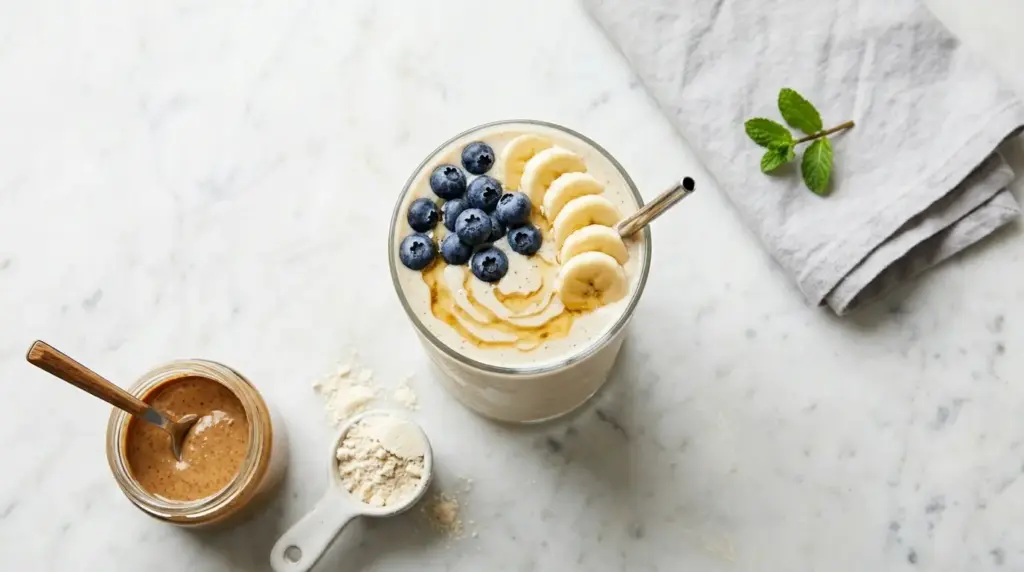
This smoothie is versatile enough to pair with several different foods depending on your goals, whether you’re having it as a complete breakfast or a light snack alongside something else.
Pair it with a couple of Easy Protein Pancakes for a seriously filling, high-protein breakfast that keeps you going all morning.
- Serve alongside Baked Oatmeal for a fiber-rich, balanced breakfast combo
- Top with granola, sliced bananas, and a drizzle of honey to turn it into a smoothie bowl
- Pair with Easy Deviled Eggs for a pre-workout snack that covers both protein and healthy fats
- Pour into popsicle molds and freeze overnight for a high-protein dessert that kids love
- Add a pinch of cinnamon and serve alongside Avocado Toast for a balanced, satisfying brunch
- Enjoy it post-workout alongside a handful of mixed nuts for even more protein and satiety
Variations to Try
One of the best things about this smoothie is how easily the base recipe adapts. Once you’ve nailed the technique, you can swap in different fruits, protein flavors, and add-ins to keep it interesting.
- Chocolate protein version: Use chocolate protein powder instead of vanilla, and add 1 tablespoon of unsweetened cocoa powder. This tastes like a chocolate milkshake.
- Tropical variation: Replace blueberries with 1/2 cup frozen mango, swap almond milk for coconut milk, and use an unflavored or vanilla protein powder. Pairs perfectly with this Pineapple Smoothie.
- Green protein smoothie: Add a large handful (about 1 cup / 30 g) of fresh spinach. It blends in invisibly and adds iron and vitamins without changing the flavor. Similar to this Spinach Smoothie.
- Coffee protein smoothie: Add 1/4 cup (60 ml) of cold brew coffee to the almond milk. The coffee and vanilla protein powder combination is especially good.
- Berry blast version: Use a mix of frozen strawberries, blueberries, and raspberries instead of just one berry, and try a strawberry or mixed berry protein powder.
- Vegan version: Use plant-based protein powder (pea, rice, or hemp protein) and swap honey for maple syrup. All other ingredients are already plant-based.
- High-calorie bulking smoothie: Add 2 tablespoons of oats, an extra tablespoon of almond butter, and a second banana for a calorie-dense smoothie that supports muscle-building goals.
Storage and Reheating
Protein smoothies are best fresh, but there are some practical ways to prep ahead if your mornings are hectic.
- Refrigerator: Store leftover smoothie in a sealed jar or bottle in the refrigerator for up to 24 hours. Give it a good shake or stir before drinking, as it will separate and thicken.
- Freezer (smoothie packs): Portion out all the ingredients except the almond milk and protein powder into zip-lock bags or silicone freezer bags. Freeze flat. When ready, dump the pack into the blender, add the liquid and protein powder, and blend.
- Do not microwave. This smoothie is meant to be served cold.
- Re-blending: If a refrigerated smoothie has thickened too much, add a splash of almond milk and shake or briefly blend to restore the consistency.
- Protein powder tip: Store your protein powder in a cool, dry place with the lid sealed tightly. Moisture causes clumping and can affect the flavor over time.
Read Also: Kale And Fruit Smoothie Recipe
Nutritional Facts
The values below are based on the standard recipe using 1 cup almond milk, 1 scoop vanilla whey protein powder (30 g), 1 frozen banana, 2 tablespoons almond butter, and 1 tablespoon honey. Values will vary depending on your specific protein powder brand.
| Nutrient | Per Serving |
|---|---|
| Calories | ~380 kcal |
| Protein | ~28 g |
| Carbohydrates | ~38 g |
| Dietary Fiber | ~4 g |
| Sugars | ~22 g (mostly from banana and honey) |
| Total Fat | ~12 g |
| Saturated Fat | ~1.5 g |
| Sodium | ~180 mg |
| Potassium | ~620 mg |
| Calcium | ~20% DV |
| Iron | ~8% DV |
Note: Adding frozen berries increases antioxidant content and adds an extra 1-2 g of fiber per serving.
For more nutrition-forward smoothie ideas, this Beet Smoothie is loaded with nitrates and antioxidants that support cardiovascular health.
Health Benefits of Key Ingredients
Every ingredient in this smoothie earns its place not just for flavor, but for genuine nutritional value. Understanding what each one does makes it easier to customize the recipe to your specific health goals.
Here’s a closer look at what’s working for you in every glass:
- Protein powder: The backbone of this recipe, protein powder supports muscle repair, reduces hunger hormones, and helps stabilize blood sugar after workouts. Whey protein is the most studied and widely used, while plant-based options work well for those with dairy sensitivities.
- Frozen banana: Bananas are rich in potassium, which supports healthy blood pressure and muscle function. They also provide quick-release carbohydrates that replenish glycogen stores after exercise.
- Almond butter: Provides heart-healthy monounsaturated fats, vitamin E, and magnesium. The fat content slows digestion, keeping you fuller for longer compared to a smoothie made with fruit alone.
- Almond milk: Naturally low in calories and free of saturated fat, almond milk is a lighter alternative to dairy that still provides a creamy consistency. Many brands are also fortified with calcium and vitamin D.
- Blueberries: Among the most antioxidant-dense fruits available. Blueberries contain anthocyanins that have been linked to reduced inflammation, improved brain function, and better cardiovascular health.
- Honey: A natural source of quick-release energy that also contains trace enzymes and antioxidants. It’s a better option than refined sugar for sweetening the smoothie.
For a smoothie that leans even harder into the antioxidant angle, this Strawberry and Blackberry Smoothie is a great follow-up to try.
Frequently Asked Questions
1. What type of protein powder works best in smoothies?
Vanilla-flavored whey protein powder is the most popular choice for smoothies because it blends well, doesn’t clump easily, and has a neutral enough flavor to work with virtually any fruit. Plant-based protein powders (made from pea, rice, or hemp) work just as well if you prefer a dairy-free option, though some have a slightly earthier flavor. The key is choosing a protein powder you already like the taste of on its own, since the smoothie will amplify the flavor.
2. Why does my protein smoothie get foamy?
Foaming happens when you blend protein powder at high speed for too long. The mechanical action of the blades incorporates air into the protein, which traps bubbles and turns the texture spongy. The fix is simple: blend all other ingredients first on high speed until completely smooth, then add the protein powder and blend on LOW for just 5 to 10 seconds. That’s all it takes to combine without foaming.
3. Can I make this smoothie without a banana?
Yes, absolutely. If you’re avoiding bananas (due to sugar content or preference), you can substitute 1/2 cup of frozen mango, 1/2 cup of frozen cauliflower florets (tasteless but creamy), or 1/4 of a medium avocado. Each substitute provides creaminess without a strong competing flavor. Just note that the smoothie will be less naturally sweet without the banana, so you may want to add a little extra honey.
4. How do I add more protein without adding another scoop of powder?
Great question. You can boost protein naturally by adding 2 tablespoons of Greek yogurt (adds about 3-4 g), 1 tablespoon of chia seeds (adds about 2 g), a tablespoon of hemp seeds (adds about 3 g), or a second tablespoon of almond butter. Cottage cheese is another surprisingly good addition that blends smooth and adds significant protein without much change in flavor.
5. Can I meal prep protein smoothies in advance?
The best method is to prep smoothie freezer packs rather than pre-blending. Place the banana, berries, and any other solid ingredients (except liquid and protein powder) into individual zip-lock bags and freeze them flat. On the day you want one, dump the pack into the blender, add the almond milk, then blend smooth and finish with the protein powder on low. This gives you the freshness of a just-made smoothie in about 90 seconds.
Read Also: Passion Fruit Smoothie Recipe
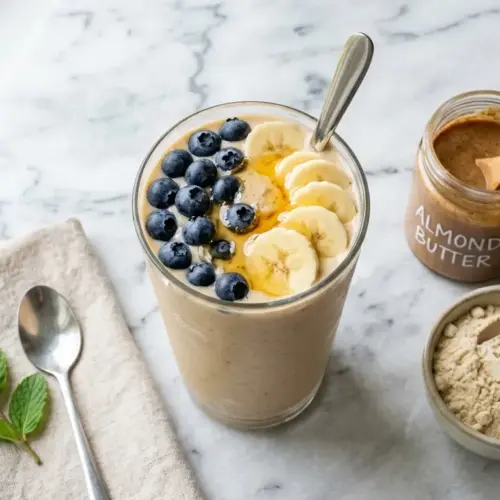
Vanilla Almond Butter Protein Smoothie

Equipment
- High-powered blender - Vitamix, Ninja, or NutriBullet all work well
- Measuring cups and spoons
- Smoothie cups or tall glasses - for serving
- Silicone spatula - for scraping down the blender sides
- Freezer-safe bag or container - for storing pre-sliced bananas
Ingredients
- 1 cup unsweetened almond milk - 240ml, or milk of choice
- 1 scoop vanilla protein powder - about 30g or 1oz
- 1 medium frozen banana - about 120g or 4.2oz, sliced before freezing
- 2 tablespoons almond butter - 32g
- 1 tablespoon honey - 21g, or maple syrup, optional, adjust to taste
Optional Add-ins
- 1/2 cup frozen blueberries - 75g, or strawberries, for extra antioxidants and color
- 1/2 cup ice cubes - 75g, optional, only if you want it extra thick and cold without adding banana
Instructions
- Prepare your banana by peeling it before freezing (if not already frozen) and slicing into 1/2 inch (1.25 cm) coins for easier blending.
- Pour the almond milk into the blender first, as adding liquid before solids creates a vortex that pulls ingredients into the blade and prevents clumping.
- Add frozen banana slices, optional frozen berries, almond butter, and honey or maple syrup on top of the liquid.
- Secure the lid and blend on high speed for 45 to 60 seconds until completely smooth, scraping down the sides with a silicone spatula if needed.
- Remove the lid, add the protein powder on top, then blend on LOW speed for just 5 to 10 seconds to prevent foaming and over-aeration.
- Taste and adjust if needed—add more honey for sweetness, a splash more almond milk for thinner consistency, or more frozen banana for extra creaminess.
- Pour immediately into a tall glass or smoothie cup and serve fresh for the best texture and temperature.
Notes
- Freeze ripe bananas: Use very ripe bananas with brown spots—they blend smoother and taste sweeter. Peel and slice before freezing flat on a baking sheet.
- Liquid first rule: Always add liquid to the blender before solids to create a vortex that pulls ingredients down evenly without clumping.
- Low-speed protein blend: Blending protein powder on high speed creates foam and a spongy texture. A quick low-speed blend (5-10 seconds) is all you need.
- Frozen fruit over ice: Frozen banana and berries chill the smoothie without watering it down like ice can.
- Adjust thickness: For a thicker smoothie bowl consistency, reduce almond milk to 3/4 cup (180ml) and eat with a spoon.
- Make-ahead freezer packs: Portion all solid ingredients (except milk and protein powder) into freezer bags. Freeze flat, then dump into the blender when ready.
- Storage: Refrigerate leftovers in a sealed jar for up to 24 hours—shake or stir before drinking as it will separate and thicken.
- No banana substitute: Swap banana with 1/2 cup frozen mango, frozen cauliflower florets, or 1/4 of a medium avocado for creaminess without the sweetness.
- Boost protein naturally: Add 2 tablespoons Greek yogurt, 1 tablespoon chia seeds, or 1 tablespoon hemp seeds for extra protein without more powder.
Final Thoughts
A great smoothie recipe with protein powder doesn’t have to be complicated, and it definitely shouldn’t taste like chalk.
This recipe works because every ingredient is there for a reason: the frozen banana for creaminess, the almond butter for satiety, and the low-speed blend at the end for a smooth (not foamy) finish.
Once you’ve made it once, you’ll have the technique locked in, and from there, the variations are endless.
Give this smoothie a try tomorrow morning and see how it holds you over compared to your usual breakfast. If you make it, leave a comment below sharing your favorite protein powder flavor or any add-ins that worked well for you. Sharing your combinations helps other readers find their perfect version too.
Recommended:
- Protein Smoothie Recipe
- Avocado Smoothie Recipe
- Dragon Fruit Smoothie Recipe
- Peach Smoothie Recipe With Yogurt
- Blueberry Smoothie Recipe Without Yogurt
- Mango Smoothie Recipe Without Yogurt
- Strawberry Banana Blueberry Smoothie
- Peanut Butter Jelly Smoothie
- Chia Banana Boost Tropical Smoothie
- Easy Acai Bowl Recipe