If you’ve been on the hunt for a keto smoothie recipe that actually tastes good, you’ve landed in the right place.
Most low-carb smoothies fall flat because they rely too heavily on ice or watery nut milks, leaving you with something thin and flavourless. This one is different. It uses frozen strawberries as the base, which naturally thickens the blend and keeps the carb count low, while heavy cream adds that rich, indulgent texture you’d expect from a proper smoothie.
The magic of this recipe is in the fat-to-fruit balance. Strawberries are one of the few fruits that work beautifully on keto, with only about 6 grams of net carbs per half-cup serving. Pair them with unsweetened almond milk and just a splash of heavy cream, and you get a smoothie that’s filling, creamy, and genuinely satisfying.
A touch of powdered monk fruit sweetener rounds everything out without any bitterness or grittiness. It dissolves right into the blend, giving you that natural sweetness without spiking your blood sugar.
This recipe comes together in under 5 minutes, needs just one blender, and is easy enough to make on a busy weekday morning. Ready to blend?
You might also enjoy this Protein Smoothie Recipe for another quick, high-fat breakfast option.

Why You’ll Love This Keto Smoothie Recipe
This keto smoothie hits every mark you want from a morning drink.
It’s thick and creamy without being overly heavy, so it satisfies your hunger without weighing you down. The strawberry base gives it a naturally bright, fruity flavour that makes it feel like a treat rather than a diet drink.
At just around 5 net carbs per serving, it fits comfortably within most keto daily macros. You’re also getting a solid dose of healthy fats from the heavy cream, which helps keep you full for hours.
It takes less than 5 minutes from start to finish, making it one of the easiest breakfasts in your rotation.
Here’s a quick rundown of what makes this recipe a keeper:
- Only 5 net carbs per serving
- Rich and creamy texture thanks to heavy cream
- Naturally sweetened with monk fruit, no artificial aftertaste
- Dairy-free friendly with easy swaps
- Blends in under 2 minutes
- Customisable with different low-carb berries or add-ins
- No cooking or heating required
- Keeps you full for 3-4 hours thanks to healthy fats
Read Also: Peanut Butter Smoothie Recipe
Ingredients
This recipe uses a small handful of simple ingredients that are easy to find at any grocery store. The key is using frozen strawberries rather than fresh ones, since frozen berries make the smoothie thick and cold without needing to add a lot of ice, which can water it down.
Here’s everything you’ll need to make one large serving (or two smaller ones):
- 1 cup (150 g) frozen strawberries
- 1 cup (240 ml) unsweetened almond milk
- 3 tablespoons (45 ml) heavy cream
- 1-2 tablespoons powdered monk fruit sweetener (adjust to taste)
- 1/2 teaspoon pure vanilla extract
- Pinch of salt (brings out the sweetness)
- Optional: 1 tablespoon MCT oil for extra healthy fats and an energy boost
- Optional: 1 tablespoon chia seeds for added fibre and omega-3s
- Optional: 2-3 ice cubes if you prefer an even colder, thicker smoothie
For a dairy-free version, swap the heavy cream for full-fat coconut cream. It gives a slightly tropical note but works beautifully with strawberries.
Also great for a post-workout morning: Smoothie Recipe with Protein Powder
Kitchen Equipment Needed
You don’t need much equipment for this recipe, which is part of what makes it so appealing. A powerful blender is the single most important tool here, and it makes a real difference when it comes to achieving that smooth, creamy consistency without any chunks of frozen fruit.
Here’s what you’ll need:
- High-powered blender (a Vitamix or Ninja works great; a personal blender like a NutriBullet also works well)
- Measuring cups and spoons
- Tall drinking glass or a to-go cup with a lid
- Straw (optional but recommended for thick smoothies)
Read Also: Spinach Smoothie Recipe
Recommended Products for This Recipe
These are products I genuinely recommend based on quality and performance. They make a noticeable difference in the final result.
1. Vitamix E310 Explorian Blender
The Vitamix E310 is the gold standard for smoothie-making. Its powerful motor tears through frozen strawberries in seconds, giving you a silky-smooth result with zero icy chunks. It’s also much easier to clean than many high-powered blenders, with a self-cleaning cycle that takes about 60 seconds.
2. Anthony’s Organic Powdered Monk Fruit Sweetener
This is one of the cleanest monk fruit sweeteners available. It dissolves completely into the smoothie without gritty bits or a strange aftertaste, which is a common problem with other brands. The powdered form is specifically designed for blended drinks and baked goods.
3. Nutiva Organic MCT Oil
Adding a tablespoon of MCT oil to your keto smoothie provides fast-burning energy without any flavour impact. MCT oil is rapidly absorbed by the liver and converted to ketones, making it ideal for anyone on a ketogenic diet. Nutiva’s version is sustainably sourced and completely flavourless.
4. Bob’s Red Mill Organic Chia Seeds
Chia seeds are a brilliant optional add-in for this smoothie. They add fibre, omega-3 fatty acids, and a slight gel texture that makes the smoothie even thicker and more filling. Bob’s Red Mill uses whole organic chia seeds with no additives.
Another favourite morning option worth trying: Peanut Butter Banana Smoothie Recipe

Step-by-Step Instructions
Step 1: Measure and prepare your ingredients
- Take your frozen strawberries directly from the freezer. Do not thaw them. Frozen strawberries are what give the smoothie its thick, milkshake-like consistency.
- Measure out 1 cup (150 g) of frozen strawberries and set aside.
- Measure 1 cup (240 ml) of unsweetened almond milk.
- Measure 3 tablespoons (45 ml) of heavy cream.
- Measure 1 to 2 tablespoons of powdered monk fruit sweetener. Start with 1 tablespoon if you prefer a lightly sweet smoothie, or go up to 2 tablespoons for a sweeter result.
- Measure 1/2 teaspoon of vanilla extract.
- If you’re using MCT oil or chia seeds, measure those out as well.
- Have a pinch of salt ready.
Step 2: Add the liquid ingredients to the blender first
- Pour the unsweetened almond milk into the blender first. This is important because adding liquid before frozen fruit helps the blades catch and blend evenly from the start.
- Add the heavy cream directly on top of the almond milk.
- Add the vanilla extract.
- If you’re using MCT oil, add it now as well.
Step 3: Add the dry and frozen ingredients
- Add the powdered monk fruit sweetener on top of the liquid.
- Add the pinch of salt.
- Add the chia seeds now if you’re using them.
- Finally, pour in the frozen strawberries on top of everything. Placing the frozen fruit last (on top of the liquid) makes it easier for the blender to process everything without the blades getting stuck.
Step 4: Blend until completely smooth
- Secure the lid on your blender tightly.
- Start blending on low speed for about 10 seconds to break up the frozen fruit.
- Increase to high speed and blend for 30 to 60 seconds, until the smoothie is completely smooth and no chunks of strawberry remain.
- If the smoothie is too thick to blend, add 2 to 3 tablespoons more almond milk and blend again briefly.
- If it seems too thin, add 2 to 3 ice cubes and blend again on high for another 20 seconds.
Step 5: Taste and adjust sweetness
- Stop the blender and remove the lid.
- Use a spoon to taste the smoothie.
- If it needs more sweetness, add an extra half tablespoon of monk fruit sweetener, replace the lid, and blend for another 10 seconds.
- If it seems slightly tart (which can happen depending on the strawberries), a tiny extra pinch of salt can actually help balance the flavour and bring out more sweetness.
Step 6: Pour and serve immediately
- Pour the finished smoothie into a tall glass or a to-go cup.
- Serve immediately for the best thick, cold texture.
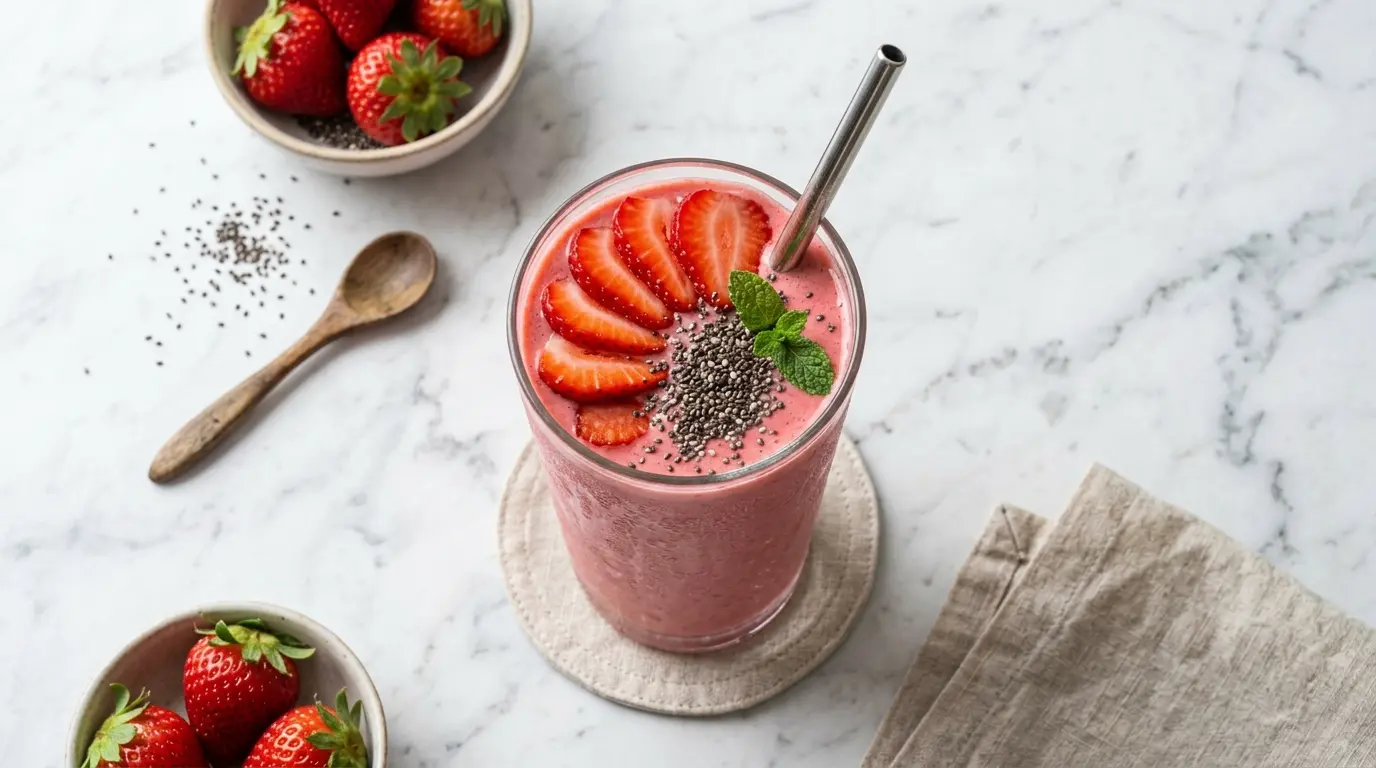
- If desired, top with a few fresh strawberry slices, a sprinkle of chia seeds, or a small dollop of sugar-free whipped cream for presentation.
- Drink with a wide straw for the best experience, since the smoothie is quite thick.
Beet Smoothie Recipe is another beautiful low-sugar option to try after your workout.
Tips for Success
A few small details make the difference between a good keto smoothie and a great one. Keep these in mind before you blend:
- Always use frozen strawberries, not fresh. Fresh strawberries will give you a thin, watery result. Frozen berries act as their own ice and create that thick, creamy texture.
- Add liquid to the blender before the fruit. This simple step prevents the blades from getting jammed on frozen chunks and helps everything blend faster.
- Use powdered monk fruit sweetener, not granulated. Granulated versions can leave a grainy texture. Powdered dissolves seamlessly into the cold liquid.
- Don’t over-blend. Blending for too long introduces air and warms the smoothie, making it thinner. Once it looks smooth, stop the blender.
- Taste before serving. Every batch of strawberries has a different natural sweetness level. Always adjust sweetener to your taste before pouring.
- For extra creaminess, freeze the almond milk in ice cube trays. Swapping a few regular ice cubes for almond milk cubes means you’re adding more creaminess instead of diluting the flavour.
- Start on low speed, finish on high. This protects your blender motor and ensures the frozen fruit breaks down gradually and evenly.
For more low-carb breakfast inspiration, check out this Kale and Fruit Smoothie Recipe.
Serving Suggestions
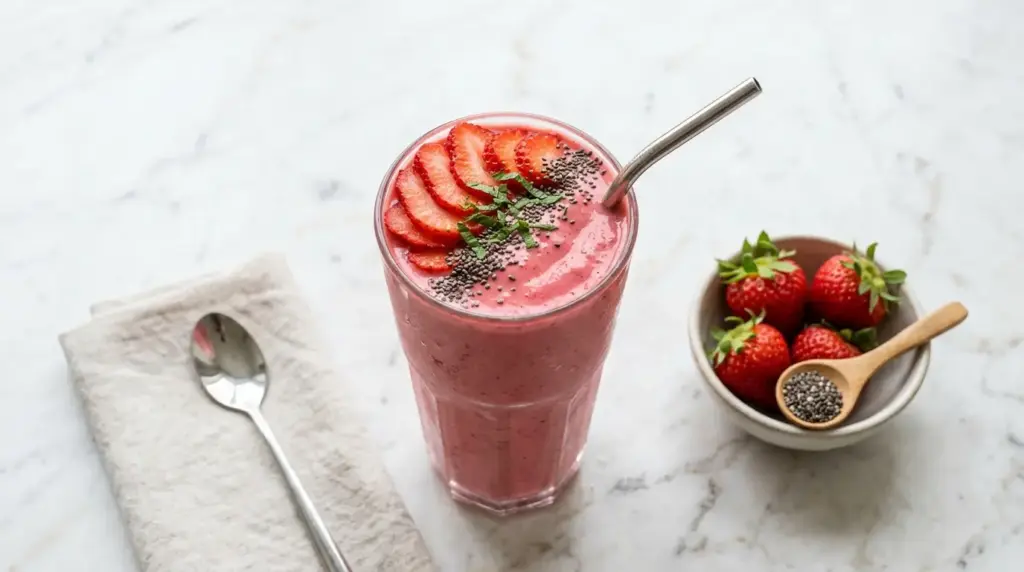
This keto smoothie is filling enough to be a complete breakfast on its own, but it also pairs beautifully with a few other low-carb options if you want a more substantial morning meal.
A couple of Cloud Eggs on the side make a satisfying protein-rich accompaniment to this smoothie without pushing your carb count up. For a heartier option, a slice of toasted low-carb bread with almond butter keeps everything clean and keto-friendly.
Here are some great ways to enjoy and serve this keto smoothie:
- Pair with two or three scrambled eggs for a balanced keto breakfast
- Serve alongside keto-friendly granola or a small handful of mixed nuts for crunch
- Pour into popsicle moulds and freeze for a refreshing keto ice lolly
- Use as a base for a smoothie bowl by reducing the almond milk slightly and topping with low-carb granola, sliced strawberries, and a drizzle of nut butter
- Serve in a chilled glass over a couple of ice cubes for an even colder, more refreshing result
- Take it on the go in a sealed tumbler with a straw for a quick car or commute breakfast
Variations to Try
One of the best things about this base keto smoothie recipe is how easy it is to customise. Swap out the strawberries or add different fats and flavours to keep things interesting throughout the week.
Here are some delicious variations to explore:
- Keto Green Smoothie: Add a large handful of fresh baby spinach and replace the strawberries with half an avocado. Add a squeeze of lemon juice to brighten the flavour. You won’t taste the spinach at all.
- Keto Chocolate Peanut Butter Smoothie: Replace the strawberries with 2 tablespoons of unsweetened cocoa powder and 2 tablespoons of natural peanut butter. Use a little extra almond milk for a thinner consistency.
- Keto Blueberry Smoothie: Swap the strawberries for the same quantity of frozen blueberries. Blueberries have slightly more carbs, so reduce the amount to 3/4 cup and add a tablespoon of lemon zest for freshness.
- Keto Raspberry Lemon Smoothie: Use frozen raspberries instead of strawberries and add 1 teaspoon of fresh lemon juice plus a little lemon zest for a bright, tangy flavour.
- Keto Coffee Smoothie: Add 1/2 cup (120 ml) of cold brew coffee to the blender and reduce the almond milk by the same amount. This is a brilliant option for mornings when you want both breakfast and coffee in one.
- Keto Coconut Cream Smoothie: Replace the heavy cream with 3 tablespoons of full-fat coconut cream for a dairy-free, tropical twist.
You might also love this Avocado Smoothie Recipe for a creamy, fat-rich variation.
Storage and Reheating
Keto smoothies are best drunk fresh, immediately after blending, for the best texture and flavour. However, if you need to prep ahead, here’s how to store it properly:
- Refrigerator: Pour the smoothie into a sealed mason jar or airtight container and store in the refrigerator for up to 24 hours. Shake or stir vigorously before drinking, as natural separation will occur.
- Freezer: Pour into a freezer-safe container or into popsicle moulds and freeze for up to one month. Thaw in the refrigerator overnight before drinking, then re-blend briefly to restore the creamy texture.
- Meal-prep hack: Portion the dry and frozen ingredients into individual zip-lock bags and store in the freezer. In the morning, just empty one bag into the blender, add the liquids, and blend. This saves significant time on busy mornings.
- Do not microwave. Reheating a smoothie is not recommended. If it has been refrigerated and separated, a quick stir or short blend is all that’s needed.
- Glass storage is best. Plastic containers can retain odours and are less airtight. A glass mason jar with a tight lid is the most reliable storage option.
Also worth trying for another speedy low-carb morning option: Dragon Fruit Smoothie Recipe
Nutritional Facts
The following values are approximate and based on one full serving of the base recipe (using 1 cup frozen strawberries, 1 cup unsweetened almond milk, 3 tablespoons heavy cream, and 1.5 tablespoons powdered monk fruit sweetener). Optional add-ins like MCT oil and chia seeds will add additional calories and fat.
| Nutrient | Amount Per Serving |
|---|---|
| Calories | 175 kcal |
| Total Fat | 14 g |
| Saturated Fat | 8 g |
| Total Carbohydrates | 9 g |
| Dietary Fibre | 2 g |
| Net Carbs | 5 g |
| Sugars (natural) | 6 g |
| Protein | 2 g |
| Sodium | 95 mg |
| Potassium | 220 mg |
| Vitamin C | 85 mg (95% DV) |
| Calcium | 280 mg (22% DV) |
Note: Monk fruit sweetener does not contribute to net carbs or calories as it has zero glycaemic impact.
Read Also: Green Smoothie Recipe
Health Benefits of Key Ingredients
Each ingredient in this keto smoothie was chosen not just for flavour, but for its specific nutritional role. Understanding why these ingredients work so well together makes it easier to appreciate why this smoothie supports a ketogenic lifestyle.
Here’s a closer look at what each key ingredient brings to the table:
- Frozen Strawberries: Strawberries are one of the lowest-carb fruits available, and they’re packed with vitamin C, fibre, and antioxidants called anthocyanins that support heart health and reduce inflammation. The high water content also contributes to hydration.
- Unsweetened Almond Milk: Almond milk is naturally very low in carbohydrates (typically under 1 gram per cup in the unsweetened version) and provides a mild, slightly nutty base that doesn’t overpower the flavour of other ingredients. It also contains a small amount of vitamin E, a fat-soluble antioxidant.
- Heavy Cream: Heavy cream is one of the best fat sources for a keto smoothie. The high fat content slows digestion, keeping you full much longer than a fruit-only smoothie would. It also contributes to the rich, creamy texture that makes this smoothie feel indulgent.
- Monk Fruit Sweetener: Unlike sugar, monk fruit sweetener has zero glycaemic impact and zero calories. The active compounds, called mogrosides, provide sweetness without raising blood sugar or insulin levels, which is critical on a ketogenic diet.
- MCT Oil (optional): MCT stands for medium-chain triglycerides. These fats are rapidly absorbed and converted to ketones by the liver, providing a fast source of mental and physical energy. Adding MCT oil to a morning smoothie can sharpen mental focus for the first few hours of the day.
- Chia Seeds (optional): Chia seeds are an excellent source of fibre, omega-3 fatty acids, and plant-based protein. The soluble fibre they contain forms a gel when mixed with liquid, which slows digestion and supports a healthy gut microbiome.
- Vanilla Extract: Beyond flavour, pure vanilla extract contains small amounts of vanillin, a compound with antioxidant properties that may help reduce inflammation.
For a beautifully nourishing morning drink, also consider this Yogurt Smoothie Recipe.
Frequently Asked Questions
1. Can I use fresh strawberries instead of frozen?
Fresh strawberries will work in a pinch, but the result will be noticeably thinner and less cold than a smoothie made with frozen berries. If you only have fresh strawberries, slice them and freeze them on a baking sheet for at least two hours before blending. You can also add four to five extra ice cubes to compensate for the lack of frozen fruit, though the texture won’t be quite as thick and creamy.
2. How do I keep this smoothie under 5 net carbs?
The key is sticking to the ingredient amounts listed in the recipe and using unsweetened almond milk rather than regular cow’s milk or sweetened plant milks. Cow’s milk contains around 12 grams of carbs per cup, which would significantly push up the net carb count. Powdered monk fruit sweetener also contributes zero net carbs, so you can adjust the sweetness without affecting your macros.
3. Can I make this smoothie dairy-free?
Yes, absolutely. Simply replace the heavy cream with an equal amount of full-fat coconut cream. Coconut cream has a naturally rich fat content that gives the smoothie a similar thick, creamy texture to heavy cream. It does add a slight coconut flavour, which works beautifully with strawberries. You can also use unsweetened coconut yoghurt for a slightly tangier result.
4. Is this smoothie suitable for intermittent fasting?
This depends on your specific intermittent fasting protocol. This smoothie contains calories and fat, which means it will technically break a fast if you’re following a strict approach like a water or dry fast. However, some people following fat-based fasting protocols consider a pure fat-and-low-carb meal to be acceptable during the fasting window. If you’re unsure, check with your healthcare provider or nutritionist for guidance specific to your routine.
5. Why does my smoothie turn out watery or thin?
This usually happens for one of three reasons. First, the strawberries may have been thawed before blending, losing the frozen texture that creates thickness. Second, too much liquid was added. Reduce the almond milk by 2 to 3 tablespoons and blend again. Third, blending for too long heats the ingredients and introduces air, which thins the consistency. Blend only until smooth and stop immediately after.
Read Also: Peach Smoothie Recipe with Yogurt

Keto Strawberry Smoothie

Equipment
- High-powered blender - Vitamix, Ninja, or personal blender like NutriBullet
- Measuring cups
- Measuring spoons
- Tall drinking glass - or a to-go cup with a lid
- Straw - optional but recommended for thick smoothies
Ingredients
- 1 cup frozen strawberries - 150g, do not thaw
- 1 cup unsweetened almond milk - 240ml
- 3 tablespoons heavy cream - 45ml
- 1-2 tablespoons powdered monk fruit sweetener - adjust to taste
- 1/2 teaspoon pure vanilla extract
- salt - a pinch, to bring out sweetness
Optional Add-Ins
- 1 tablespoon MCT oil - for extra healthy fats and energy
- 1 tablespoon chia seeds - for fibre and omega-3s
- 2-3 ice cubes - if you prefer an even colder, thicker smoothie
Dairy-Free Substitution
- 3 tablespoons full-fat coconut cream - 45ml, instead of heavy cream
For Serving (Optional)
- fresh strawberry slices
- sugar-free whipped cream
Instructions
- Measure and prepare all ingredients. Keep frozen strawberries frozen, do not thaw.
- Pour almond milk, heavy cream, vanilla extract, and MCT oil (if using) into the blender first.
- Add monk fruit sweetener, salt, chia seeds (if using), and frozen strawberries on top of the liquids.
- Secure lid and blend on low speed for 10 seconds, then increase to high and blend for 30-60 seconds until completely smooth.
- Taste and adjust sweetness with extra monk fruit sweetener if needed. Add a tiny pinch more salt to balance tartness.
- Pour into a tall glass and serve immediately for the best thick, cold texture. Top with optional garnishes if desired.
Notes
- Always use frozen strawberries, not fresh, for a thick, creamy texture. Fresh berries will make the smoothie watery.
- Add liquid ingredients to the blender before the frozen fruit to help the blades catch and blend evenly.
- Use powdered monk fruit sweetener rather than granulated to avoid a gritty texture that doesn’t dissolve.
- Do not over-blend — blending too long introduces air and warms the smoothie, making it thinner.
- For extra creaminess, freeze almond milk in ice cube trays and use in place of regular ice cubes.
- To make dairy-free, swap heavy cream for an equal amount of full-fat coconut cream.
- Store leftovers in a sealed mason jar in the refrigerator for up to 24 hours. Shake or stir before drinking.
- For meal prep, portion the dry and frozen ingredients into zip-lock bags and freeze. In the morning, just add liquids and blend.
- This smoothie can be frozen in popsicle moulds for a refreshing keto ice lolly treat.
- If the smoothie is too thick, add 2-3 tablespoons more almond milk and blend again. If too thin, add 2-3 ice cubes and re-blend.
Final Thoughts
This keto smoothie recipe proves that eating low-carb doesn’t have to mean sacrificing flavour or satisfaction.
With just a handful of simple ingredients and less than 5 minutes of effort, you get a thick, creamy, and genuinely delicious breakfast that supports your keto goals without any fuss.
The frozen strawberry base gives it a natural sweetness and vibrant colour, while the heavy cream and optional MCT oil turn it into a truly filling, fat-rich meal that keeps hunger at bay for hours.
Give this recipe a try and see how it fits into your morning routine. If you make it, drop a comment below to share how it turned out, and feel free to share this recipe with anyone else who’s navigating the keto lifestyle!
Recommended:
- Smoothie Recipe with Protein Powder
- Beet Smoothie Recipe
- Kale and Fruit Smoothie Recipe
- Peanut Butter Smoothie Recipe
- Watermelon Smoothie Recipe
- Passion Fruit Smoothie Recipe
- Chocolate Peanut Butter Banana Smoothie Recipe
- Pineapple Smoothie Recipe
- Papaya Smoothie Recipe
- Mango Smoothie Recipe Without Yogurt