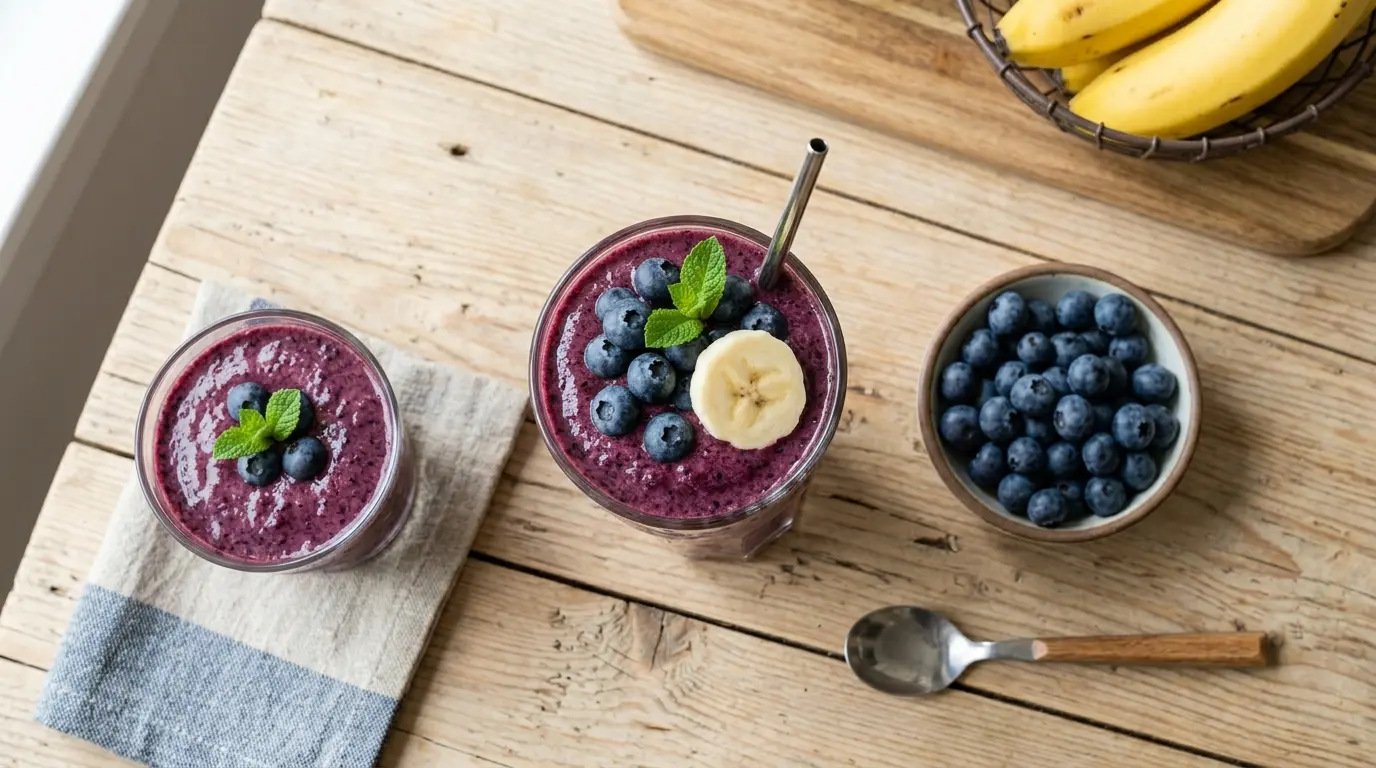
This blueberry banana smoothie recipe is one of those drinks you’ll make on repeat. It’s thick, naturally sweet, and takes less than five minutes to pull together.
The secret to that perfectly creamy texture is frozen banana. Unlike fresh banana, frozen banana blends into a velvety, almost ice cream-like base that makes the smoothie feel indulgent without any added sugar or dairy.
Blueberries bring a gorgeous deep purple color and a mild tartness that balances the sweetness of the banana. They’re also loaded with antioxidants, which makes this smoothie as nutritious as it is delicious.
You can make it with Greek yogurt for a protein boost, or keep it dairy-free with almond milk or coconut milk. Either way, the result is a smooth, creamy blend that works as a quick breakfast, a post-workout snack, or an afternoon pick-me-up.
This is also a recipe that’s incredibly flexible. Toss in a handful of spinach and you won’t taste it at all. Add a scoop of protein powder and it becomes a meal. Or keep it simple with just three ingredients and enjoy it as-is.
Looking for a smoothie with a similar banana base? You’ll also love this Peanut Butter Banana Smoothie for a richer, nuttier twist.
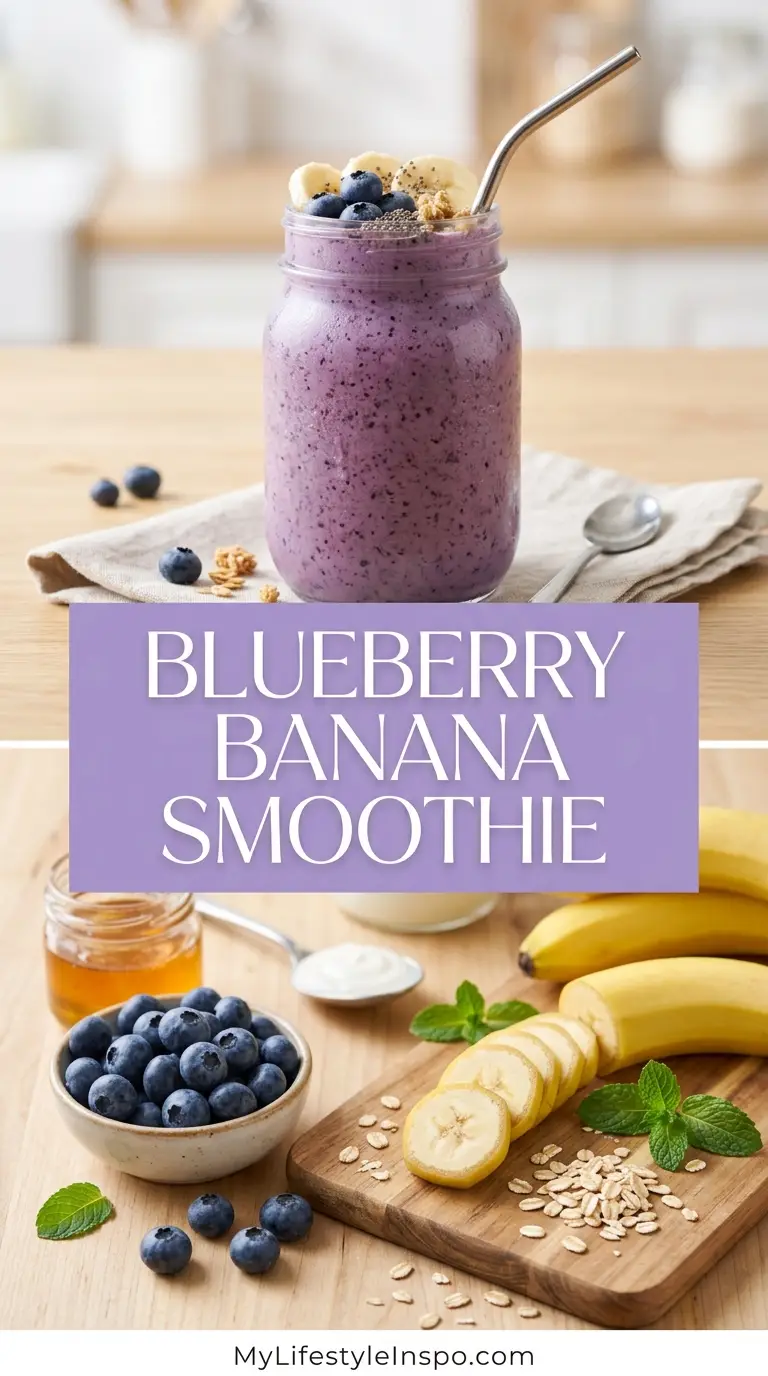
Why You’ll Love This Blueberry Banana Smoothie Recipe
This smoothie is genuinely easy. You add everything to a blender, press a button, and pour it into a glass in under five minutes.
No cooking, no prep beyond peeling a banana, and almost no cleanup.
The ingredients are affordable and easy to find at any grocery store. Frozen blueberries are available year-round, which means you can make this smoothie in January just as easily as in July.
The flavor is crowd-pleasing without being boring. It’s sweet, fruity, slightly tart, and incredibly refreshing.
Here’s why readers keep coming back to this recipe:
- Quick and effortless: Ready in under 5 minutes with no cooking required
- Naturally sweetened: Ripe banana provides all the sweetness you need, no added sugar necessary
- Customizable: Easily made vegan, dairy-free, high-protein, or extra thick depending on your needs
- Kid-friendly: The bright purple color and sweet flavor make it a hit with children
- Nutrient-dense: Packed with antioxidants, potassium, fiber, and vitamin C
- Freezer-friendly: Prep the ingredients in freezer bags for fast morning smoothies all week
Another great option with a fruity twist is this Strawberry Banana Blueberry Smoothie if you want to mix in strawberries for even more berry flavor.
Ingredients
This recipe uses simple, whole-food ingredients that blend together into something truly satisfying. The frozen banana is non-negotiable for texture, so don’t skip that step.
Here’s what you’ll need (serves 1-2):
- 1 large ripe banana, peeled and frozen (about 120g / 4 oz)
- 1 cup (150g / 5.3 oz) frozen blueberries
- ¾ cup (180ml / 6 fl oz) almond milk (or any milk of choice)
- ½ cup (120g / 4.2 oz) plain Greek yogurt (optional, for creaminess and protein)
- 1 tablespoon honey or maple syrup (optional, if extra sweetness is desired)
- ½ teaspoon pure vanilla extract (optional)
- ½ cup (75g / 2.6 oz) ice cubes (only if using fresh banana instead of frozen)
For more dairy-free smoothie inspiration, check out this Banana Smoothie Recipe Without Yogurt for a lighter version.
Kitchen Equipment Needed
You don’t need much to make this smoothie. A good blender makes the biggest difference, especially when working with frozen fruit.
Here’s what to have on hand:
- High-powered blender (a Vitamix or Ninja works beautifully)
- Measuring cups and measuring spoons
- A knife and cutting board (for slicing the banana before freezing)
- A tall glass or mason jar for serving
- A reusable straw (optional but recommended)
- Freezer-safe bag or container for storing frozen bananas
Read Also: Frozen Fruit Smoothie Recipe
Recommended Products for This Recipe
These are products I genuinely recommend based on quality, performance, and how much they improve the smoothie-making process.
1. Vitamix 5200 Blender
A high-powered blender is the single most important tool for a smooth, lump-free result. The Vitamix 5200 pulverizes frozen fruit and ice into a silky blend in seconds, without leaving any icy chunks behind. It’s a long-term kitchen investment that pays off every single time you use it.
2. Organic Frozen Wild Blueberries
Wild blueberries are smaller and more intensely flavored than cultivated ones. They also contain higher concentrations of antioxidants, making your smoothie more nutritious without any extra effort.
3. Chia Seeds
Adding a tablespoon of chia seeds to your smoothie boosts fiber, omega-3s, and protein without affecting the flavor. They blend in seamlessly and help the smoothie keep you fuller for longer.
4. Reusable Glass Smoothie Cups with Lids and Straws
A wide-mouth glass cup with a secure lid makes it easy to take this smoothie on the go. Glass keeps the drink cold longer than plastic and doesn’t absorb flavors from previous smoothies.
You might also enjoy: Greek Yogurt Smoothie Recipe
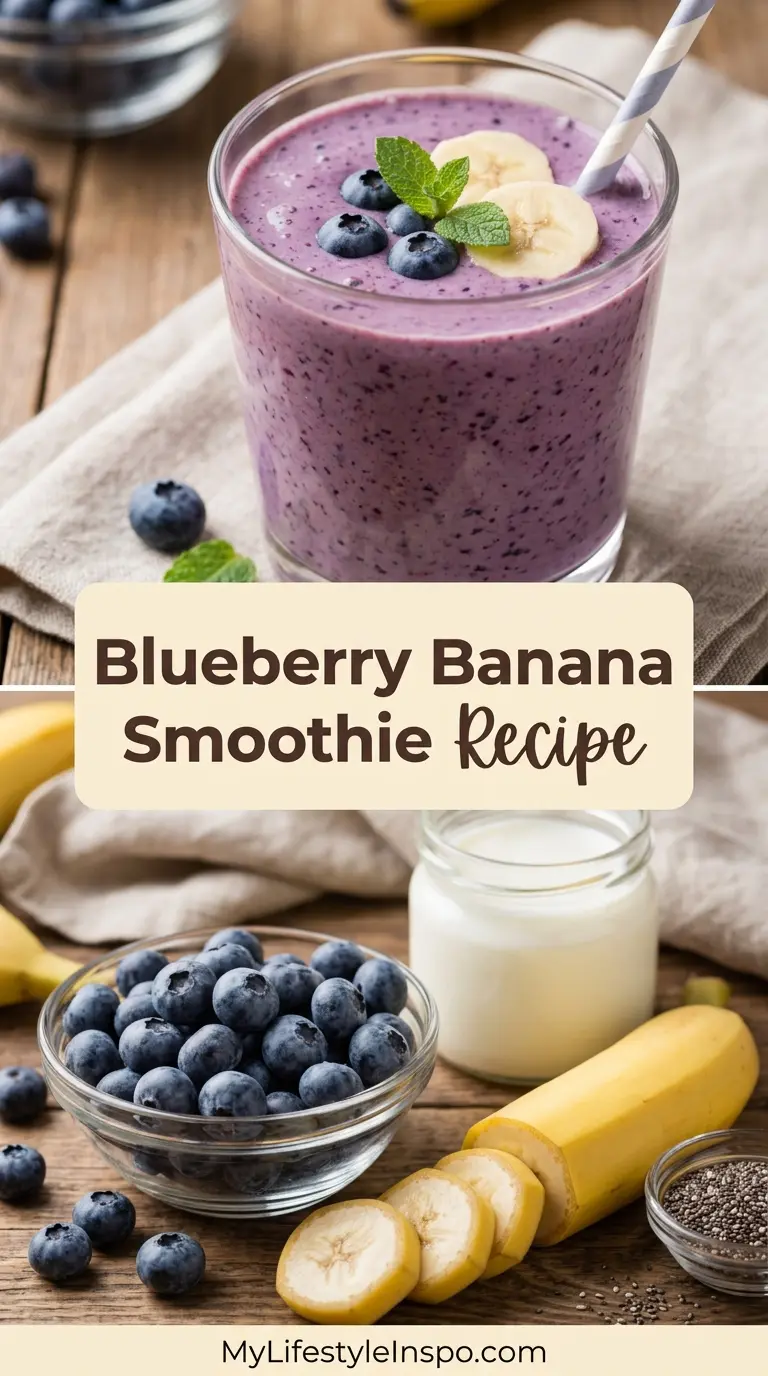
Step-by-Step Instructions
Follow these steps carefully for a thick, creamy smoothie every time. If this is your first time making a blended smoothie, don’t worry. Each step is broken down so even a complete beginner can nail it.
Step 1: Freeze Your Banana in Advance
- Peel the banana and slice it into coins roughly 1 inch (2.5 cm) thick.
- Lay the banana slices in a single layer on a parchment-lined baking sheet or plate.
- Place in the freezer for at least 2 hours, or overnight for best results.
- Once frozen solid, transfer the banana slices to a zip-lock freezer bag and store for up to 3 months.
- Why this matters: Frozen banana is what gives this smoothie its thick, creamy, milkshake-like texture. Fresh banana with ice works, but it won’t be as smooth or rich.
Step 2: Measure and Add Your Liquid First
- Pour ¾ cup (180ml) of almond milk into the blender.
- Tip: Always add liquid to the blender first. This creates a vortex at the bottom that pulls the frozen ingredients down into the blades, preventing the motor from straining.
- If you’re using vanilla extract, add the ½ teaspoon now along with the liquid.
Step 3: Add the Frozen Fruit
- Add 1 cup (150g) of frozen blueberries directly on top of the liquid.
- Add your frozen banana slices on top of the blueberries.
- Note: If you’re using fresh banana, add the banana slices now and also add ½ cup (75g) of ice cubes to compensate for the missing frozen texture.
Step 4: Add the Greek Yogurt (If Using)
- Spoon ½ cup (120g) of plain Greek yogurt on top of the frozen fruit.
- Greek yogurt adds creaminess, a slight tang, and a significant protein boost (around 10-12g of protein per serving).
- For a fully dairy-free smoothie, skip the yogurt or use a coconut yogurt alternative.
Step 5: Sweeten (Optional)
- Taste your banana before freezing. If it was very ripe (with brown spots), you likely won’t need any sweetener at all.
- If a little extra sweetness is desired, drizzle 1 tablespoon of honey or maple syrup over the ingredients.
- For a vegan version, use maple syrup instead of honey.
Step 6: Blend Until Completely Smooth
- Secure the blender lid firmly with one hand on top before blending.
- Start on low speed for 10 seconds to break down the larger frozen chunks.
- Increase to high speed and blend for 30-60 seconds until the mixture is completely smooth and no visible pieces of blueberry or banana remain.
- If the blender stalls or struggles, stop the machine, use a tamper tool or spatula to push ingredients toward the blades, then blend again.
- The finished smoothie should have a thick, pourable consistency. It should coat a spoon but still pour easily.
Step 7: Adjust the Consistency
- If the smoothie is too thick, add a splash more almond milk (2-3 tablespoons at a time) and blend briefly.
- If the smoothie is too thin, add a few more frozen blueberries or another small piece of frozen banana and blend again.
- The ideal consistency is thick enough to hold toppings but loose enough to drink through a straw.
Step 8: Pour, Top, and Serve
- Pour the smoothie into a tall glass or a 16 oz (475ml) mason jar.
- If you’d like to add toppings, try a small handful of fresh blueberries, a few banana slices, a drizzle of honey, or a sprinkle of granola.
- Serve immediately while it’s cold and at peak texture. Smoothies made with frozen fruit start to separate if left sitting too long.
For a rich and satisfying variation, try this Banana Protein Smoothie using the same blending technique.
Tips for Success
A few small adjustments make a big difference in the final result. Keep these in mind every time you blend.
Here are the most important tips:
- Use very ripe bananas: Bananas with brown spots are sweeter and creamier when blended. Under-ripe bananas have a starchy, slightly bitter flavor that comes through in the smoothie.
- Freeze in pre-portioned bags: Peel and slice a bunch of bananas at once, divide them into single-serving portions in zip-lock bags, and freeze. This makes morning smoothies effortless.
- Add liquid before solids: Always pour in your milk or liquid base first to avoid blender jam-ups and motor strain.
- Don’t over-blend: Blending too long on high speed warms up the frozen ingredients and results in a thinner, more watery smoothie. Blend just until smooth.
- Use full-fat coconut milk for extra richness: If you want a more indulgent, tropical smoothie, swap almond milk for canned full-fat coconut milk.
- Chill your glass: Pop your serving glass in the freezer for 10-15 minutes before pouring. This keeps the smoothie colder, longer.
Read Also: Blueberry Smoothie Recipe Without Yogurt
Serving Suggestions
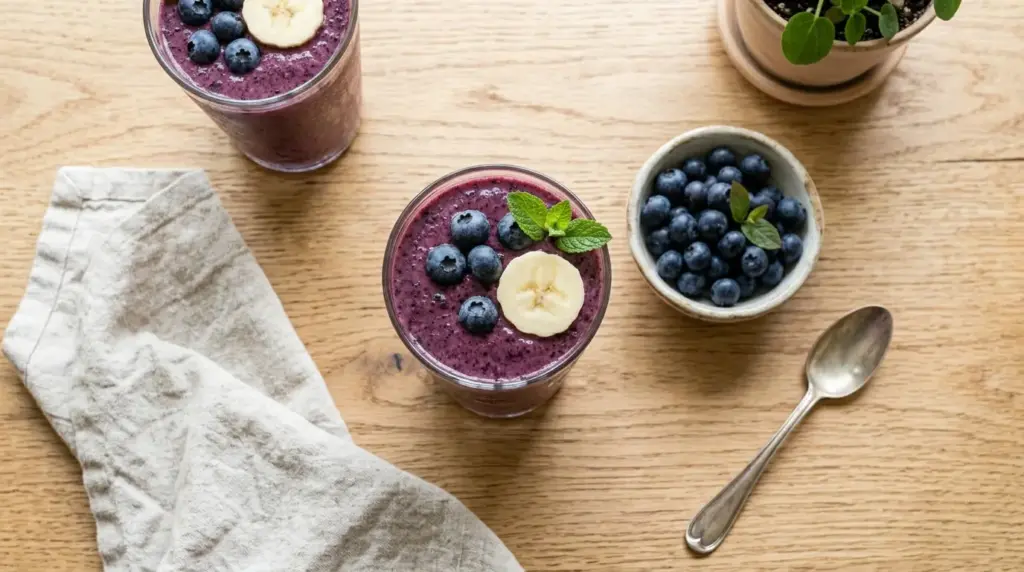
This smoothie is wonderful on its own, but pairing it with a small bite of food makes it a more balanced, sustaining meal.
It also works beautifully as a smoothie bowl base. Just reduce the liquid slightly so the blend is very thick, pour it into a bowl, and top with granola, fresh berries, coconut flakes, and sliced banana for a breakfast that feels special with minimal effort.
Here are some great ways to serve and enjoy it:
- Topped with homemade granola as a smoothie bowl
- Alongside baked oatmeal for a filling, fiber-rich breakfast
- Paired with avocado toast for a balanced morning meal
- Poured into popsicle molds and frozen for a healthy frozen treat
- Served in a wide glass with a bamboo straw and a sprig of fresh mint for a café-style presentation
- Alongside a bowl of overnight oats for a two-part meal prep breakfast
Variations to Try
This base recipe is easy to customize based on what you have on hand or what nutritional goals you’re working toward. Don’t be afraid to experiment.
Here are some popular and delicious variations:
- Chocolate Peanut Butter Banana Smoothie: Add 1 tablespoon of peanut butter and 1 tablespoon of cocoa powder to the base recipe for a dessert-worthy twist
- High-protein version: Blend in one scoop of vanilla protein powder or use extra Greek yogurt for up to 25g of protein per serving
- Green smoothie version: Add a large handful of fresh spinach or 1 tablespoon of spirulina powder. The spinach becomes invisible once blended and adds iron, folate, and vitamin K without changing the flavor
- Tropical version: Swap almond milk for coconut milk and add ½ cup of frozen mango chunks for a tropical, creamy blend similar to this Banana Mango Smoothie
- Vegan and nut-free version: Use oat milk instead of almond milk and skip the yogurt entirely
- Extra thick (smoothie bowl) version: Reduce the liquid to ½ cup and use the blender tamper to push ingredients down as needed. The result is a spoonable, bowl-ready texture
Storage and Reheating
Smoothies are best enjoyed immediately after blending, but they can be stored short-term with good results.
Here are the best ways to store leftover smoothie:
- Refrigerator: Pour leftover smoothie into a sealed mason jar or airtight container and refrigerate for up to 24 hours. Shake or stir well before drinking, as some separation is normal.
- Freezer: Pour the smoothie into ice cube trays and freeze. Pop the frozen cubes into a blender bag and store for up to 3 months. When ready to enjoy, re-blend the cubes with a small splash of milk.
- Meal prep: Prep individual smoothie ingredient bags with pre-sliced frozen banana and measured frozen blueberries. Store in the freezer and dump directly into the blender with milk when ready.
- Do not microwave: This smoothie is meant to be served cold. There is no reheating step.
- Stir before serving from fridge: If stored overnight, use a long spoon or shake the jar vigorously to recombine the ingredients before drinking.
Read Also: Breakfast Smoothie Recipe
Nutritional Facts
The following values are approximate and based on one full serving (makes about 16 oz / 475ml) using almond milk and Greek yogurt, with no added sweetener.
| Nutrient | Per Serving |
|---|---|
| Calories | 270 kcal |
| Total Fat | 3g |
| Saturated Fat | 0.5g |
| Cholesterol | 5mg |
| Sodium | 120mg |
| Total Carbohydrates | 52g |
| Dietary Fiber | 6g |
| Total Sugars | 33g (naturally occurring) |
| Protein | 12g |
| Vitamin C | 18% DV |
| Potassium | 620mg |
| Calcium | 20% DV |
| Iron | 4% DV |
Note: Values will vary depending on the specific milk, yogurt, and banana size used. Using full-fat dairy or added sweeteners will increase the calorie count. Omitting yogurt will reduce the protein to approximately 3g per serving.
You might also enjoy: Protein Smoothie Recipe
Health Benefits of Key Ingredients
Every ingredient in this smoothie has a reason to be there, nutritionally speaking.
Beyond just tasting great, each component brings something meaningful to your body. Here’s a closer look at why these ingredients are worth eating regularly.
- Blueberries: One of the highest antioxidant foods on the planet. They contain anthocyanins, a class of compounds linked to improved brain function, reduced inflammation, and lower risk of heart disease. A single cup of blueberries provides around 24% of your daily vitamin C needs.
- Banana: Rich in potassium, which supports heart health and proper muscle function. Bananas also contain vitamin B6, which the body uses to produce serotonin. They’re a quick source of natural energy, making them ideal before or after a workout.
- Greek yogurt: Contains probiotics, which support gut health and immune function. It’s also one of the most protein-dense dairy foods available, with around 10-12g of protein per half cup. Protein in the morning helps regulate appetite throughout the day.
- Almond milk: A naturally low-calorie milk alternative that’s typically fortified with calcium and vitamin D. It’s suitable for lactose-intolerant individuals and keeps the smoothie light while still adding liquid volume and a subtle nuttiness.
- Vanilla extract: More than just a flavor enhancer, vanilla contains small amounts of antioxidants and has been studied for its potential calming effects. In a smoothie, it rounds out the berry flavor and makes the whole drink taste more complete.
For another antioxidant-rich option, try this Kale and Fruit Smoothie which layers leafy greens with sweet fruit for a serious nutritional punch.
Frequently Asked Questions
1. Can I use fresh blueberries instead of frozen?
Yes, fresh blueberries work fine in this recipe. The main trade-off is texture. Frozen blueberries help create a thicker, colder smoothie without diluting it with ice. If using fresh blueberries, add ½ cup of ice cubes to the blender to compensate and achieve a similar chilled consistency.
2. Do I have to use Greek yogurt?
Not at all. Greek yogurt is optional and is included mainly for protein and creaminess. For a dairy-free version, skip it entirely. For a creamier dairy-free option, try adding ¼ of a ripe avocado or two tablespoons of cashew butter. Both add richness without changing the fruity flavor significantly.
3. Can I make this smoothie ahead of time?
Yes. Pour the finished smoothie into a sealed jar and refrigerate for up to 24 hours. Some liquid separation is normal. Simply shake or stir before drinking. For the best texture and flavor, drinking it fresh within 30 minutes of blending is ideal.
4. How do I make this smoothie thicker?
Use frozen banana and frozen blueberries (not fresh). Reduce the liquid to ½ cup rather than ¾ cup. You can also add ½ a frozen avocado, which adds body and healthy fats without a strong flavor. If you want a spoonable smoothie bowl consistency, reduce liquid to ¼ cup and use a blender tamper to process it.
5. What can I use instead of almond milk?
Any milk works in this recipe. Regular whole milk creates the richest result. Oat milk adds a subtle sweetness and is great for a nut-free option. Coconut milk (from a carton, not a can) adds a tropical flavor. Canned full-fat coconut milk makes the smoothie very rich and indulgent, closer to a milkshake. Soy milk is a good option for a higher-protein, plant-based liquid base.
Read Also: Almond Milk Smoothie Recipe,
Blueberry Banana Smoothie

Equipment
- High-powered blender - Vitamix or Ninja recommended
- Measuring cups
- Measuring spoons
- Knife - for slicing banana
- Cutting board
- Tall glass or mason jar - for serving
- Reusable straw - optional
- Freezer-safe bag or container - for storing frozen bananas
Ingredients
- 1 large ripe banana - about 120g or 4 oz, peeled and frozen
- 1 cup frozen blueberries - 150g or 5.3 oz
- ¾ cup almond milk - 180ml or 6 fl oz, or any milk of choice
- ½ cup plain Greek yogurt - 120g or 4.2 oz, optional for creaminess and protein
- 1 tablespoon honey or maple syrup - optional, if extra sweetness is desired; use maple syrup for vegan
- ½ teaspoon pure vanilla extract - optional
- ½ cup ice cubes - 75g or 2.6 oz, only if using fresh banana instead of frozen
For Topping (Optional)
- fresh blueberries - small handful
- banana slices - a few
- honey - drizzle
- granola - sprinkle
Instructions
- Peel the banana and slice it into coins roughly 1 inch (2.5 cm) thick. Lay the banana slices in a single layer on a parchment-lined baking sheet or plate. Place in the freezer for at least 2 hours, or overnight for best results. Once frozen solid, transfer to a zip-lock freezer bag and store for up to 3 months.
- Pour ¾ cup (180ml) of almond milk into the blender. If using vanilla extract, add ½ teaspoon now.
- Add 1 cup (150g) of frozen blueberries directly on top of the liquid, then add your frozen banana slices on top. If using fresh banana, add ½ cup (75g) of ice cubes now.
- Spoon ½ cup (120g) of plain Greek yogurt on top of the frozen fruit for added creaminess and protein. Skip this for a fully dairy-free version.
- If extra sweetness is desired, drizzle 1 tablespoon of honey or maple syrup over the ingredients. Taste your banana first—if very ripe, you likely won’t need sweetener.
- Secure the blender lid firmly, start on low speed for 10 seconds, then increase to high speed and blend for 30-60 seconds until completely smooth and no visible pieces remain. Use a tamper or spatula if the blender stalls.
- If the smoothie is too thick, add a splash more almond milk (2-3 tablespoons at a time). If too thin, add more frozen blueberries or banana and blend again.
- Pour the smoothie into a tall glass or 16 oz (475ml) mason jar. Add desired toppings and serve immediately while cold.
Notes
- Freeze bananas when overripe: Bananas with brown spots are sweeter and creamier. Freeze them in pre-portioned bags so they’re ready to go.
- Always add liquid first: Pouring milk into the blender before solids prevents the motor from straining and creates a better vortex for blending.
- Don’t over-blend: Blending too long on high speed warms up the frozen ingredients and results in a thinner, more watery smoothie. Stop as soon as it’s smooth.
- Make it thicker: Use frozen banana and reduce liquid to ½ cup. For a smoothie bowl, reduce to ¼ cup and use a tamper to process.
- Dairy-free options: Use oat milk, coconut milk (from a carton), or soy milk instead of almond milk. Skip the yogurt or use coconut yogurt for a fully plant-based version.
- Boost the protein: Add a scoop of vanilla protein powder or use extra Greek yogurt for up to 25g of protein per serving.
- Green smoothie twist: Toss in a handful of fresh spinach—it blends invisibly and adds iron and vitamin K without changing the flavor.
- Storage: Refrigerate in a sealed jar for up to 24 hours. Shake or stir before drinking—some separation is normal. Freeze in ice cube trays for up to 3 months and re-blend with a splash of milk.
- Chill your glass: Pop your serving glass in the freezer for 10-15 minutes to keep the smoothie colder for longer.
- Use full-fat coconut milk for indulgence: Swap almond milk for canned full-fat coconut milk for a richer, more tropical smoothie.
Final Thoughts
This blueberry banana smoothie recipe is proof that the simplest ingredients can produce something truly satisfying.
It’s quick, it’s nourishing, and it tastes like something you’d pay good money for at a juice bar.
Once you start making it regularly, you’ll find yourself keeping frozen bananas stocked at all times. It really does become that much of a staple.
Give it a try tomorrow morning and see what you think. If you make it and love it, leave a comment below to let me know, or share your version on social media and tag the blog. I’d love to see your creations!
Recommended:
- Peanut Butter Jelly Smoothie
- Peach Smoothie Recipe With Yogurt
- Avocado Smoothie
- Dragon Fruit Smoothie
- Watermelon Smoothie
- Green Smoothie
- Spinach Smoothie
- Chia Banana Boost Tropical Smoothie
- Passion Fruit Smoothie
- Coconut Milk Smoothie