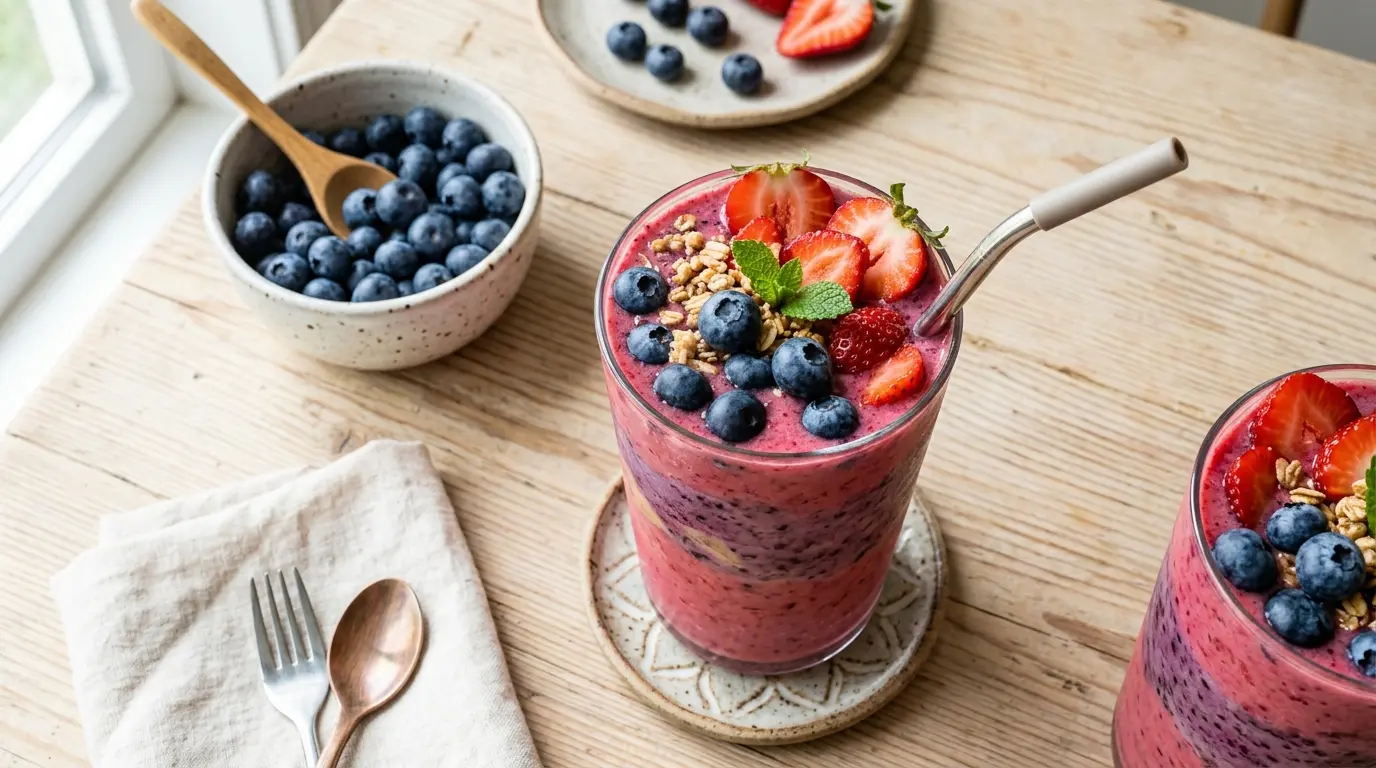
If you’ve been searching for the perfect fruit smoothie recipe, you’ve landed in the right place. This classic blend of strawberries, banana, blueberries, and Greek yogurt is everything a smoothie should be: creamy, naturally sweet, and packed with real fruit flavor. It comes together in under five minutes using just a handful of ingredients you probably already have at home.
What makes this recipe stand out is the balance between sweetness, tartness, and body. The banana acts as a natural thickener and sweetener, the berries add a vibrant punch of antioxidants, and the Greek yogurt brings that creamy, satisfying texture that keeps you full longer. Pineapple juice ties it all together and adds a tropical brightness that makes every sip feel like a little treat.
This is the kind of recipe you’ll make on repeat, whether it’s for a quick breakfast, a post-workout recovery drink, or an afternoon pick-me-up. Let’s get into it.
You might also enjoy the Frozen Fruit Smoothie Recipe for an even thicker, icier version of this classic blend.
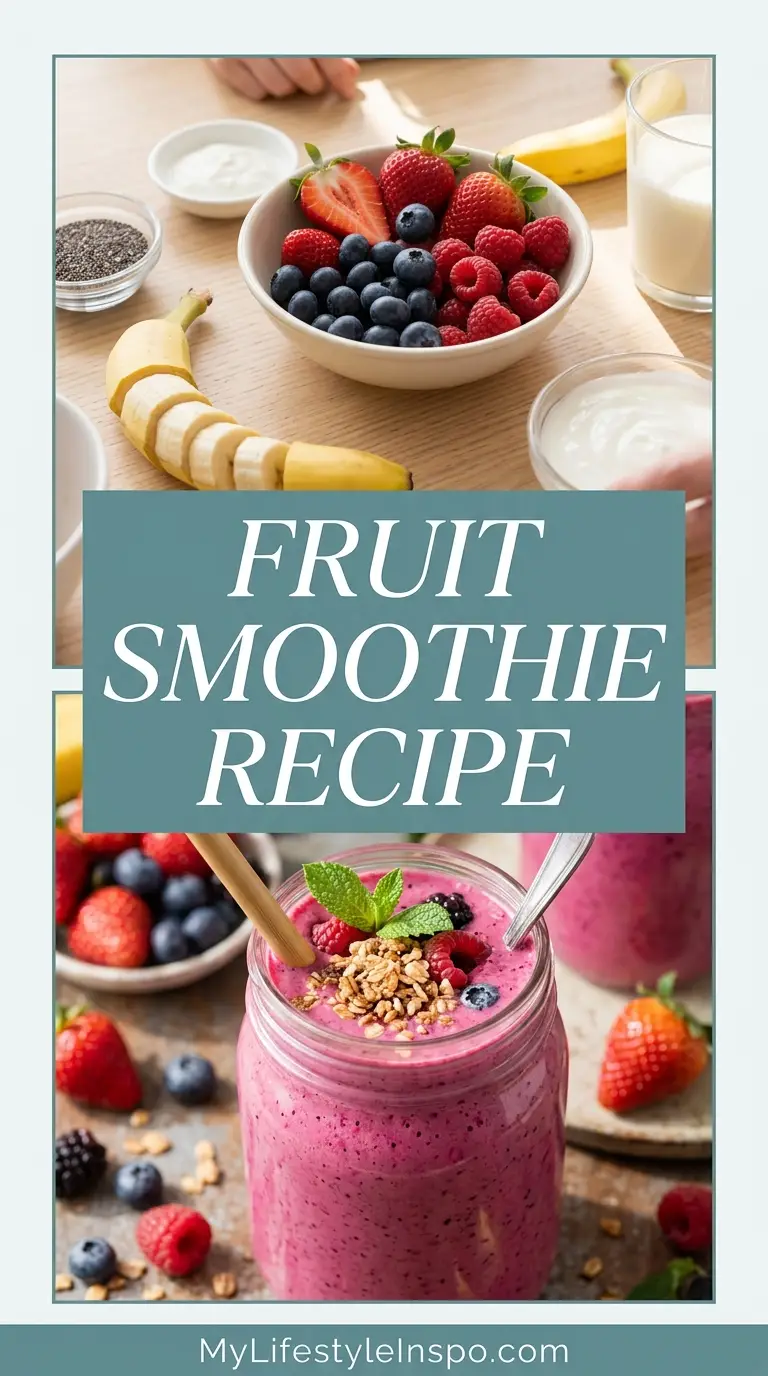
Why You’ll Love This Fruit Smoothie Recipe
This smoothie is practically impossible not to love. It takes all of five minutes to make, requires zero cooking skills, and produces a drink that tastes like something from a juice bar.
The ingredients are simple and flexible. If you don’t have blueberries, swap them for raspberries. Short on pineapple juice? Orange juice works just as beautifully.
It’s also naturally sweetened. No added sugar, no syrups, just real fruit doing what it does best.
The Greek yogurt adds a protein boost that makes this smoothie genuinely filling. It’s not just a drink; it’s a meal.
Cleanup is almost nothing. One blender, a couple of measuring cups, and you’re done.
- Quick and easy: Ready in 5 minutes with minimal cleanup.
- Naturally sweet: Sweetened only by real fruit, with optional honey if you prefer more sweetness.
- Nutrient-rich: Loaded with vitamins, antioxidants, fiber, and protein.
- Totally customizable: Swap fruits, adjust the liquid, or boost it with protein powder or seeds.
- Kid-friendly: Kids love the naturally sweet, fruity flavor.
- No cooking required: Just blend and drink.
For another delicious morning option, check out this Greek Yogurt Smoothie Recipe that uses the same creamy base with a slightly different fruit combination.
Ingredients
This recipe keeps things simple and uses widely available ingredients you can find at any grocery store. Fresh or frozen fruit both work well here, though frozen fruit will give you a thicker, colder texture without needing ice.
- 1 cup (150 g) fresh or frozen strawberries, hulled
- 1 medium ripe banana (about 120 g), sliced
- 1/2 cup (75 g) fresh or frozen blueberries
- 1/2 cup (120 ml) plain or vanilla Greek yogurt
- 1/2 cup (120 ml) pineapple juice (or orange juice)
- 1/2 cup (75 g) ice cubes (skip if using frozen fruit)
- 1 tablespoon honey (optional, for extra sweetness)
This Greek yogurt smoothie recipe uses similar base ingredients if you want another variation to try with your leftover yogurt.
Kitchen Equipment Needed
You don’t need much to make this smoothie. A good blender is really the only essential piece of equipment, and even a mid-range model will produce great results with soft fruit.
- High-speed blender (a 64 oz / 1.9 L blender jug works perfectly for this recipe)
- Cutting board and knife (for hulling strawberries and slicing banana)
- Measuring cups and spoons
- Tall serving glass or mason jar
- Silicone spatula (for scraping down the sides if needed)
Read Also: Breakfast Smoothie Recipe
Recommended Products for This Recipe
These are a few products that genuinely make the smoothie-making experience easier and more enjoyable, chosen for quality and performance.
1. Vitamix 5200 Blender
The Vitamix 5200 is the gold standard for smoothies. Its powerful motor crushes frozen fruit completely smooth in seconds, so you never end up with icy chunks or stringy bits. It’s built to last for years and comes with a full warranty.
2. Organic Frozen Mixed Berries
Using high-quality frozen berries makes a huge difference in flavor and texture. Organic frozen strawberries and blueberries are picked at peak ripeness and flash-frozen, which means the flavor is often better than fresh out-of-season berries.
3. Chobani Plain Greek Yogurt
Greek yogurt is what gives this smoothie its thick, creamy texture and protein content. Chobani’s plain Greek yogurt has a clean flavor that doesn’t overpower the fruit, and it blends seamlessly into the mixture.
4. Reusable Glass Smoothie Bottles
If you like to make your smoothie ahead or take it on the go, a set of glass smoothie bottles keeps your drink fresh and avoids plastic. They’re easy to clean and look great too.
5. Chia Seeds
Adding a tablespoon of chia seeds to your smoothie is an easy way to boost fiber, omega-3s, and protein without changing the flavor. They blend in completely and add a nutritional punch to every serving.
This Kale and Fruit Smoothie Recipe is another fantastic option that uses a blender and some of the same equipment to make a nutrient-dense green version.
Step-by-Step Instructions
1. Prep Your Fruit
- If using fresh strawberries, rinse them under cold water and remove the hulls (the green leafy tops) by using a small paring knife or simply twisting them off with your fingers.
- Slice the banana into rounds about 1/2 inch (1.25 cm) thick. This makes it easier for the blender to break down and ensures even blending.
- If using fresh blueberries, give them a quick rinse and pick out any stems.
- If using frozen fruit, you can skip rinsing and add it directly to the blender from the freezer.
2. Add Ingredients to the Blender
- Start by adding the pineapple juice (120 ml / 1/2 cup) to the blender first. Adding liquid to the bottom helps the blender blades catch and pull the fruit down for smoother blending.
- Add the Greek yogurt (120 ml / 1/2 cup) directly on top of the juice. The yogurt acts as the creamy base for the entire smoothie.
- Add the sliced banana pieces on top of the yogurt. The banana will start to soften and blend in quickly.
- Add the hulled strawberries (150 g / 1 cup) next.
- Add the blueberries (75 g / 1/2 cup) on top.
- Finally, add the ice cubes (75 g / 1/2 cup) if you are using fresh fruit. If you used frozen fruit, skip the ice entirely because the frozen fruit will already chill the smoothie.
- If you want extra sweetness, drizzle in the honey (1 tablespoon) now.
3. Blend Until Completely Smooth
- Secure the blender lid firmly. Place one hand on top of the lid for extra safety when starting the machine.
- Start the blender on low speed for the first 10 to 15 seconds to break down the larger pieces of fruit and ice.
- Increase the blender speed to high and blend for an additional 30 to 45 seconds until the mixture is completely smooth with no visible chunks.
- If the blender is struggling or the mixture looks too thick, add an extra splash of pineapple juice (about 2 tablespoons at a time) and blend again.
- Stop the blender and use a silicone spatula to scrape down the sides if any fruit has stuck to the walls. Blend for another 10 seconds after scraping.
4. Taste and Adjust
- Remove the blender lid and taste the smoothie with a clean spoon.
- If it tastes too tart, add the optional honey (or an extra half banana) and blend for 10 more seconds.
- If it is too sweet, add a squeeze of fresh lemon juice to balance the flavors and blend briefly.
- If it is too thick, add more pineapple juice or water in small amounts (1 to 2 tablespoons at a time) until you reach your desired consistency.
- If it is too thin, add more frozen fruit or a few more ice cubes and blend again.
5. Pour and Serve
- Pour the smoothie immediately into a tall glass or mason jar. Tilting the glass at a slight angle as you pour helps control the flow and prevents splashing.
- If you’d like a garnish, top with a fresh strawberry on the rim, a few whole blueberries, or a thin slice of banana.
- Serve immediately for the freshest flavor and best texture. Smoothies start to separate and lose their creamy consistency after about 20 to 30 minutes.
For another blended drink that uses a similar technique, this Peach Smoothie Recipe with Yogurt is a summer favorite that follows the exact same steps.
Tips for Success
A few simple tricks make the difference between a good smoothie and a great one. These tips cover texture, flavor, and prep, so you’ll get a perfect result every time.
- Use ripe bananas. The riper the banana, the sweeter and creamier your smoothie will be. Bananas with brown spots on the peel are ideal for blending.
- Freeze your banana in advance. If you have time, peel and slice bananas then freeze them in a zip-lock bag. Frozen banana eliminates the need for ice and gives the smoothie an incredibly thick, almost milkshake-like texture.
- Liquid first, always. Always add juice or yogurt to the blender before adding fruit. This protects the blades and produces a smoother result.
- Blend in stages. Start on low speed then increase to high. This prevents the machine from struggling and reduces splashing.
- Don’t over-blend. Once the smoothie is smooth, stop the blender. Over-blending can warm up the smoothie and make it lose its refreshing cold temperature.
- Taste before you pour. Always taste the smoothie before serving so you can adjust sweetness, tartness, or thickness.
Read Also: Spinach Smoothie Recipe
Serving Suggestions
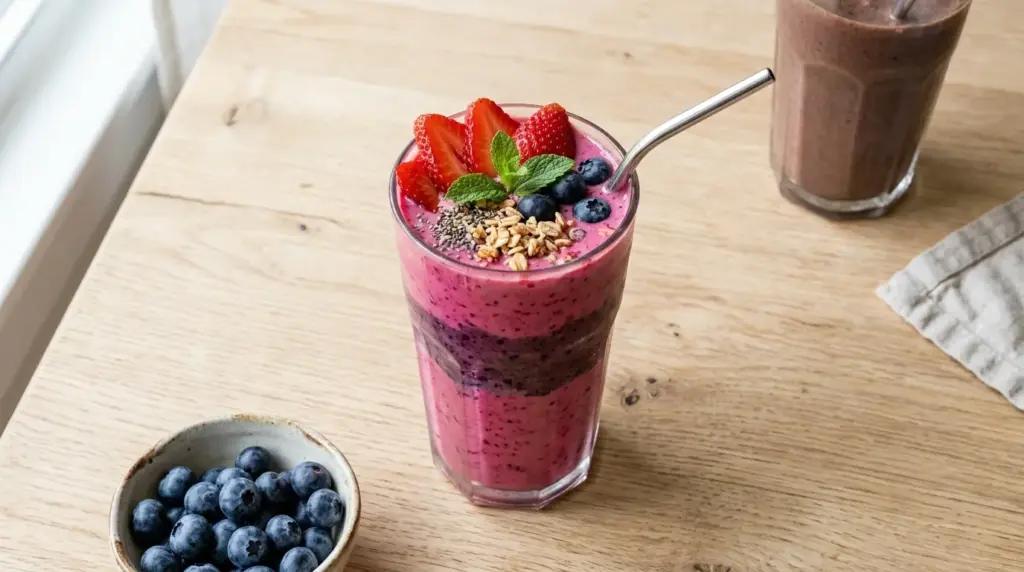
This fruit smoothie is a complete breakfast on its own, but it pairs beautifully with a few other light options if you want a more substantial morning spread.
- Serve alongside Homemade Granola for a satisfying crunch contrast with the creamy smoothie.
- Pour the smoothie over a bowl of Easy Overnight Oats for a filling, layered breakfast.
- Pair with a slice of Avocado Toast for a balanced, protein-rich morning meal.
- Serve in a bowl rather than a glass and top with granola, sliced fresh fruit, and chia seeds to make a smoothie bowl.
- Use as a light dessert or afternoon snack on warm days when you want something cool and naturally sweet.
Another great pairing: Easy Acai Bowl Recipe
Variations to Try
One of the best things about this base recipe is how easy it is to customize. Once you have the basic formula down (fruit + yogurt + liquid), you can swap and add ingredients endlessly.
- Strawberry Banana Classic: Use only strawberries and banana with the Greek yogurt and orange juice. This is the most traditional fruit smoothie combination and a crowd favorite.
- Tropical Twist: Replace strawberries and blueberries with frozen mango chunks and pineapple. Use coconut milk instead of pineapple juice for a richer, tropical flavor.
- Green Power: Add a large handful of fresh baby spinach to the blender before everything else. The spinach blends in completely and adds nutrients without affecting the sweet fruit flavor.
- Protein Boost: Add one scoop of vanilla protein powder to the blender with the other ingredients. This turns the smoothie into a complete post-workout meal.
- Peanut Butter Berry: Add 2 tablespoons of peanut butter for a nutty, filling twist that pairs surprisingly well with the berry flavors.
- Almond Milk Version: Replace the pineapple juice with unsweetened almond milk for a nuttier, slightly less sweet flavor profile that’s also dairy-free.
If you love a nutty blended drink, the Peanut Butter Smoothie Recipe is a must-try.
Storage and Reheating
Smoothies are always best enjoyed immediately after blending, but if you need to store leftovers or prep ahead, here are the best methods.
- Smoothies taste best when consumed right away. The texture, flavor, and nutritional content are all at their peak fresh from the blender.
- If you need to store leftover smoothie, pour it into an airtight jar or sealed container and refrigerate. It will keep for up to 24 hours.
- Before drinking stored smoothie, stir or shake it well as it naturally separates in the fridge. You may also need to re-blend briefly to restore the creamy texture.
- For longer storage, pour the smoothie into ice cube trays and freeze. Once frozen solid, transfer the cubes to a zip-lock bag. To serve, blend the frozen cubes with a splash of fresh juice until smooth.
- Do not store this smoothie at room temperature for more than 30 minutes.
Read Also: Almond Milk Smoothie Recipe
Nutritional Facts
The following nutritional information is estimated per serving (one 16 oz / 480 ml smoothie) based on the base recipe with pineapple juice, Greek yogurt, and fresh fruit. Values will vary depending on the size of your banana and the brand of yogurt used.
| Nutrient | Per Serving |
|---|---|
| Calories | 280 kcal |
| Total Fat | 2 g |
| Saturated Fat | 0.5 g |
| Cholesterol | 5 mg |
| Sodium | 45 mg |
| Total Carbohydrates | 55 g |
| Dietary Fiber | 5 g |
| Total Sugars | 38 g |
| Protein | 10 g |
| Vitamin C | 85 mg (94% DV) |
| Potassium | 620 mg |
| Calcium | 130 mg |
Note: These values are approximate estimates based on standard ingredient amounts and may vary based on specific brands and exact quantities used.
This Protein Smoothie Recipe is a great next step if you want to boost the protein content significantly for a post-workout drink.
Health Benefits of Key Ingredients
Every ingredient in this smoothie earns its place not just for flavor, but for the genuine nutritional value it brings to the drink.
This is a genuinely functional food, not just a tasty treat.
- Strawberries are an excellent source of vitamin C, manganese, folate, and potassium. They’re also rich in antioxidants called anthocyanins, which have been linked to heart health and reduced inflammation. A single cup of strawberries provides nearly 100% of your daily recommended vitamin C intake.
- Banana provides easily digestible natural energy from complex carbohydrates. It’s rich in potassium, which supports healthy blood pressure, and contains vitamin B6, which plays a role in brain health and mood regulation. The natural pectin in bananas also helps support healthy digestion.
- Blueberries are considered one of the most antioxidant-rich foods available. They contain powerful compounds called flavonoids that have been studied for their potential benefits on brain function, memory, and cardiovascular health. They’re also low in calories relative to their nutrient density.
- Greek yogurt provides a significant amount of protein per serving, making this smoothie more filling than a juice-only blend. It also contains calcium for bone health, probiotics for gut health, and vitamin B12 for energy metabolism.
- Pineapple juice adds vitamin C, manganese, and a natural digestive enzyme called bromelain, which helps the body break down proteins and may support digestive comfort.
Beet Smoothie Recipe is another nutrient-dense smoothie you may want to explore for a different set of powerful health benefits.
Frequently Asked Questions
1. Can I make this fruit smoothie without yogurt?
Yes, absolutely. If you don’t eat dairy or simply don’t have yogurt on hand, you can substitute it with coconut yogurt, silken tofu, or simply leave it out entirely. Without yogurt, the smoothie will be thinner and slightly less creamy. Adding an extra half banana or a handful of frozen mango can help compensate for the lost thickness.
2. Can I use frozen fruit instead of fresh?
Frozen fruit works beautifully in this recipe and is actually preferred by many smoothie fans. Frozen fruit eliminates the need for ice, which means your smoothie stays flavorful and doesn’t get diluted as it melts. Frozen strawberries and blueberries are typically less expensive than fresh and are available year-round.
3. How do I make the smoothie thicker?
The easiest way to thicken a fruit smoothie is to use frozen fruit instead of fresh, or to freeze your banana before blending. You can also reduce the amount of liquid slightly, or add a tablespoon of chia seeds or rolled oats to the blender before blending. These add thickness and fiber without significantly changing the flavor.
4. Can I add vegetables to this smoothie?
Yes, and it’s a great idea. Baby spinach is the most popular vegetable to add to fruit smoothies because it blends in completely and has a very mild flavor that the fruit easily masks. A large handful of spinach adds iron, folate, and vitamin K without noticeably changing the taste or color much. Kale is another good option, though it has a stronger flavor.
5. Why does my smoothie come out watery?
A watery smoothie usually means too much liquid relative to the fruit, or that you used fresh fruit instead of frozen. Start by reducing the pineapple juice by half, then add more only if the blender is struggling. Using at least one frozen ingredient, whether frozen banana, frozen strawberries, or ice, will give you a noticeably thicker, more satisfying texture every time.
For a thicker, more filling variation, try the Coconut Milk Smoothie Recipe which uses a richer liquid base that naturally creates a creamier texture.
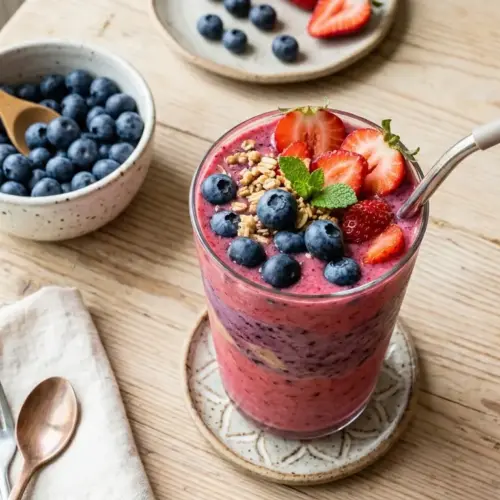
Strawberry Blueberry Banana Smoothie

Equipment
- High-speed blender - 64 oz / 1.9 L blender jug recommended
- Cutting board - for hulling strawberries and slicing banana
- Chef’s knife - for hulling strawberries and slicing banana
- Measuring cups
- Measuring spoons
- Tall serving glass or mason jar
- Silicone spatula - for scraping down the sides if needed
Ingredients
- 1 cup strawberries - 150g, fresh or frozen, hulled
- 1 ripe banana - about 120g, sliced
- 1/2 cup blueberries - 75g, fresh or frozen
- 1/2 cup Greek yogurt - 120ml, plain or vanilla
- 1/2 cup pineapple juice - 120ml, or orange juice
- 1/2 cup ice cubes - 75g, skip if using frozen fruit
- 1 tablespoon honey - optional, for extra sweetness
Instructions
- Prep your fruit by hulling the strawberries and slicing the banana into 1/2 inch rounds.
- Add pineapple juice, Greek yogurt, banana, strawberries, blueberries, and ice cubes to the blender in that order.
- Blend on low speed for 10-15 seconds, then increase to high and blend for 30-45 seconds until completely smooth.
- Taste and adjust sweetness or thickness by adding honey, juice, or more fruit as needed.
- Pour immediately into a tall glass, garnish if desired, and serve fresh.
Notes
- Ripe bananas are key: Use bananas with brown spots on the peel for maximum sweetness and creaminess.
- Freeze your banana: Peel, slice, and freeze bananas in advance for an even thicker, milkshake-like texture without using ice.
- Liquid first: Always add juice or yogurt to the blender before fruit to protect blades and ensure smoother blending.
- Blend in stages: Start on low speed then increase to high to prevent splashing and reduce strain on the blender.
- Don’t over-blend: Stop as soon as the smoothie is smooth to keep it cold and refreshing.
- Substitute juice: Orange juice or unsweetened almond milk work beautifully if you don’t have pineapple juice.
- Make it dairy-free: Use coconut yogurt or silken tofu instead of Greek yogurt for a creamy, dairy-free version.
- Boost nutrition: Add a tablespoon of chia seeds, a handful of spinach, or a scoop of protein powder without changing the flavor.
- Storage: Smoothies are best fresh, but leftover can be refrigerated in an airtight jar for up to 24 hours — shake or re-blend before serving.
- Freeze for later: Pour leftover smoothie into ice cube trays and freeze; blend frozen cubes with a splash of juice when ready to enjoy.
Final Thoughts
A good fruit smoothie recipe is one of those kitchen staples that pays for itself in convenience, nutrition, and sheer enjoyment. Once you know the basic formula, fresh fruit plus yogurt plus juice plus ice, you can riff on it endlessly depending on what’s in your fridge or freezer.
This version, with strawberries, blueberries, banana, and Greek yogurt, is the one I come back to most often because the balance is just right. It’s sweet without being cloying, creamy without being heavy, and filling enough to last through a busy morning.
Give this recipe a try and see how fast it becomes part of your weekly routine. If you make it, leave a comment below to let me know how it turned out, or share your favorite fruit combination. I’d love to hear what variations you’re loving.
Recommended:
- Strawberry Banana Smoothie Recipe without Yogurt
- Banana Mango Smoothie Recipe
- Green Smoothie Recipe
- Watermelon Smoothie Recipe
- Dragon Fruit Smoothie Recipe
- Pineapple Smoothie Recipe
- Papaya Smoothie Recipe
- Passion Fruit Smoothie Recipe
- Keto Smoothie Recipe
- Smoothie Recipe with Protein Powder