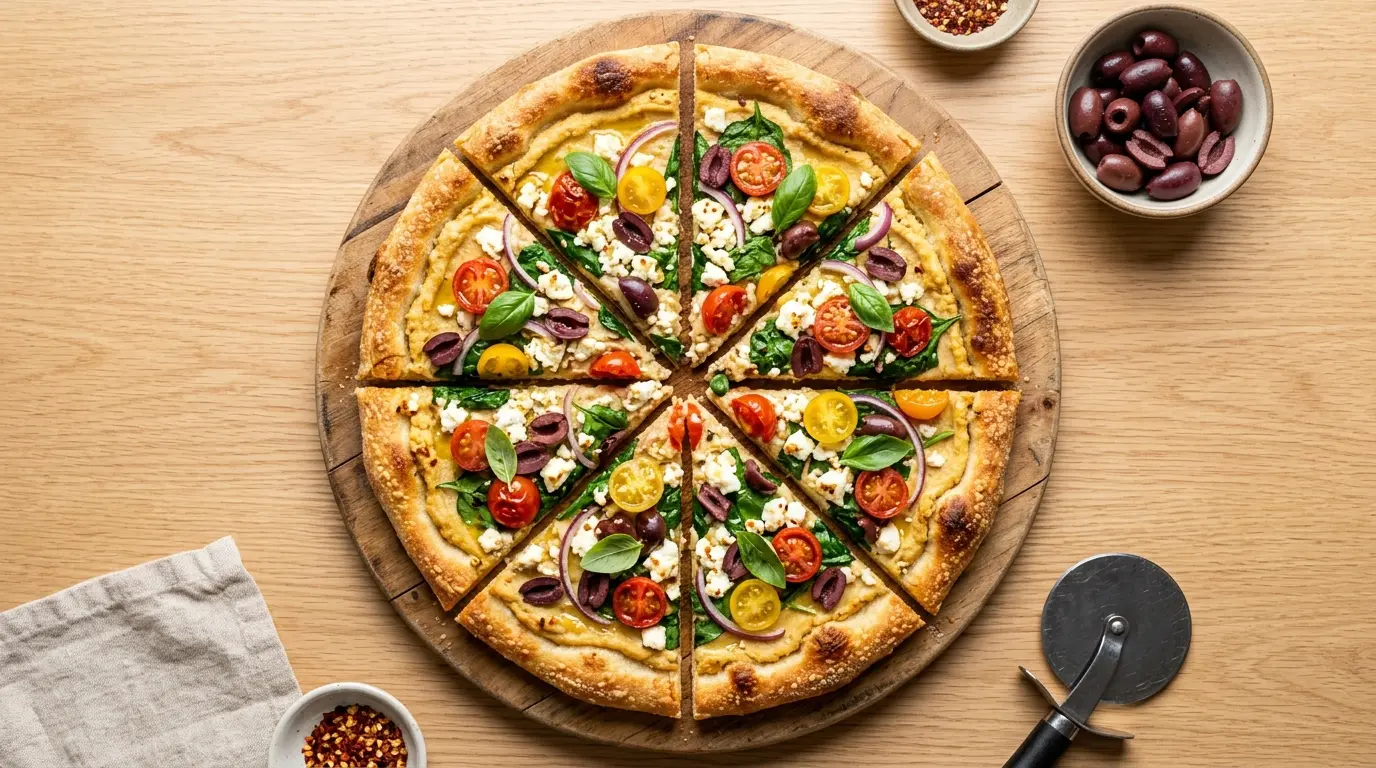
If you’ve never made a hummus pizza recipe before, you’re about to discover your new favorite weeknight dinner. This pizza swaps the traditional tomato sauce for a generous spread of creamy hummus, turning every slice into a rich, protein-packed bite loaded with Mediterranean flavor. The combination of smooth, garlicky hummus with roasted vegetables, salty feta, briny olives, and fresh herbs makes this pizza anything but ordinary.
What makes it so special is how effortlessly the hummus works as a sauce. It doesn’t get watery when baked, it holds up beautifully under the toppings, and it adds a depth of flavor that regular tomato sauce simply can’t compete with.
This recipe is built on a simple, crowd-pleasing formula: a crispy pizza crust, a thick layer of seasoned hummus, classic Mediterranean toppings, and a drizzle of good olive oil at the end. It comes together in about 30 minutes and works beautifully for dinner, appetizers, or weekend entertaining.
You don’t need any fancy skills or special equipment. This is the kind of recipe that’s forgiving, flexible, and almost impossible to mess up.
If you love making homemade pizza bases from scratch, you’ll also want to bookmark this Easy Pizza Dough for future pizza nights.

Why You’ll Love This Hummus Pizza Recipe
This hummus pizza recipe checks every box you want in a go-to dinner.
It’s incredibly fast. From prep to plate, you’re looking at about 30 minutes, making it completely realistic on a busy weeknight.
The flavor profile is something truly different. Creamy, garlicky hummus gives the pizza a savory, nutty base that pairs beautifully with the salty punch of feta and the tang of sun-dried tomatoes.
It’s naturally vegetarian and can easily be made vegan by skipping the feta. That makes it a great option when you’re feeding a mixed crowd.
The toppings are endlessly customizable. Think of the hummus as your canvas.
- No tomato sauce is needed, which cuts down on ingredients and prep time
- The hummus base stays moist and creamy, even after baking
- Every slice is loaded with plant-based protein from the chickpeas in the hummus
- It works great as a party appetizer when cut into small squares
- Kids and adults alike tend to love the creamy, mild flavors
- It stores and reheats beautifully for next-day lunches
For another Mediterranean-inspired recipe that works wonderfully alongside this pizza, check out this Tzatziki Sauce for dipping.
Ingredients
This recipe uses simple, easy-to-find ingredients that come together quickly. Use store-bought hummus for convenience, or homemade if you have the time.
- 1 pre-baked 12-inch (30 cm) pizza crust (or homemade pizza dough, par-baked)
- 1 cup (240g) plain or garlic hummus
- 1 teaspoon dried oregano
- ¼ teaspoon red pepper flakes (optional, adjust to taste)
- ½ cup (75g) crumbled feta cheese
- ½ cup (75g) cherry tomatoes, halved
- ¼ cup (45g) sun-dried tomatoes, roughly chopped (oil-packed, drained)
- ¼ cup (40g) Kalamata olives, pitted and halved
- ½ small red onion, thinly sliced
- ½ cup (50g) baby spinach leaves
- 2 tablespoons extra virgin olive oil, divided
- ¼ cup (15g) fresh basil leaves, for topping
- Salt and black pepper, to taste
You might also enjoy making your own hummus from scratch to use as the base. This Easy Hummus Recipe is smooth, creamy, and ready in minutes.
Kitchen Equipment Needed
You don’t need much to pull this recipe together. Most of these tools are standard kitchen staples.
- Baking sheet or 12-inch pizza pan
- Pizza stone (optional, but helps achieve a crispier crust)
- Cutting board
- Sharp knife
- Mixing bowl (small)
- Spoon or offset spatula for spreading hummus
- Oven (preheated to 450°F / 230°C)
- Pizza cutter or wheel for slicing
Read Also: No Yeast Pizza Dough Recipe
Recommended Products for This Recipe
These are products selected based on quality and how much they improve the overall cooking experience for this recipe.
1. Sabra Roasted Garlic Hummus
Using a high-quality, store-bought hummus makes the base of this pizza significantly more flavorful. Sabra’s roasted garlic variety adds an extra layer of depth that pairs beautifully with the Mediterranean toppings. It’s widely available and has the perfect spreadable consistency for pizza.
2. Lodge Pre-Seasoned Cast Iron Pizza Pan
A cast iron pizza pan distributes heat evenly across the crust, giving you a golden, crispy bottom every time. It’s more durable than a standard baking sheet and can handle extremely high oven temperatures without warping. This is a long-lasting investment that will serve countless pizza nights.
3. Roland Sun-Dried Tomatoes in Olive Oil
Oil-packed sun-dried tomatoes are far more flavorful and tender than their dry-packed counterparts. The Roland brand is widely praised for its rich, concentrated tomato flavor that brings a sweet, tangy depth to every bite. They’re a small upgrade that makes a big difference in the finished pizza.
4. Kalamata Olives in Brine
Not all olives are created equal. Authentic Kalamata olives have a fruity, slightly sweet, briny flavor that elevates this Mediterranean pizza beyond anything you’d get with generic canned black olives. Look for whole, pitted olives packed in brine for the best texture and taste.
5. Boar’s Head Crumbled Feta Cheese
Quality feta cheese has a creamy, tangy character that cheap imitations can’t replicate. Boar’s Head crumbled feta is made with real sheep’s milk, giving it an authentic salty bite and soft texture that melts slightly under the heat of the oven. It’s the finishing touch that ties the whole pizza together.
Another great appetizer-style recipe to try alongside this pizza is this Classic Bruschetta, which uses similar fresh Mediterranean flavors.

Step-by-Step Instructions
1. Preheat the Oven
- Preheat your oven to 450°F (230°C). This high heat is essential for getting a crispy crust and warming the toppings through without drying out the hummus.
- If you’re using a pizza stone, place it in the oven while it preheats so the stone is piping hot when the pizza goes in. A hot stone dramatically improves the crust texture.
- If you don’t have a pizza stone, place your pizza pan or baking sheet in the oven to preheat as well. This technique mimics the effect of a pizza stone.
2. Prepare the Toppings
- Halve the cherry tomatoes and set them aside. Because they contain moisture, halving helps them roast more quickly without releasing too much liquid onto the pizza.
- Thinly slice the red onion into half-moon shapes. Aim for slices about ⅛ inch (3mm) thick so they soften slightly in the oven without burning.
- Drain the sun-dried tomatoes from their oil and roughly chop them into smaller pieces, about ½ inch (1 cm) in size.
- Halve the Kalamata olives and pat them dry with a paper towel to remove excess brine. This prevents the pizza from becoming soggy.
- Rinse and dry the fresh basil leaves and set them aside. Fresh basil is added after baking, not before, so it stays bright and fragrant.
3. Season the Hummus
- Spoon 1 cup (240g) of hummus into a small mixing bowl.
- Add 1 teaspoon of dried oregano and ¼ teaspoon of red pepper flakes to the hummus.
- Stir well until the spices are evenly distributed throughout the hummus.
- Taste the seasoned hummus and adjust with a pinch of salt or an extra pinch of oregano if you like. The hummus should taste bold and well-seasoned since it’s the primary flavor carrier of the pizza.
4. Prepare the Crust
- Place your pre-baked 12-inch pizza crust on your preheated baking sheet or pizza pan. If using homemade dough, par-bake it for 5 to 7 minutes at 450°F (230°C) until the surface is just set and dry to the touch but not fully browned.
- Drizzle 1 tablespoon of extra virgin olive oil lightly over the crust surface before spreading the hummus. This creates a subtle barrier that helps keep the crust from absorbing too much moisture from the hummus.
- Allow the crust to cool slightly if you just par-baked it, about 2 to 3 minutes, so the hummus doesn’t slide when you spread it.
5. Spread the Hummus
- Using an offset spatula or the back of a spoon, spread the seasoned hummus evenly over the surface of the crust.
- Leave a ¾-inch (2 cm) border around the edges bare for the crust. This allows the outer edge to crisp up properly.
- Apply a generous, even layer. The hummus should be thick enough that you can’t see the crust through it, roughly ¼ inch (6mm) deep. This thickness is what makes the pizza rich and satisfying.
6. Add the Toppings
- Scatter the baby spinach leaves evenly over the hummus layer. Don’t pile them too thick; a single loose layer is ideal because spinach wilts significantly in the oven.
- Distribute the halved cherry tomatoes evenly across the surface, cut side up. Cut side up allows the tomatoes to caramelize slightly on top rather than steaming.
- Scatter the chopped sun-dried tomatoes across the pizza.
- Distribute the Kalamata olives evenly across the toppings.
- Scatter the sliced red onion evenly over the pizza.
- Finish by crumbling the feta cheese generously over the entire surface. The feta will soften slightly in the oven but won’t fully melt, which is exactly what you want.
7. Bake the Pizza
- Transfer the pizza to the oven and bake for 8 to 10 minutes at 450°F (230°C).
- You’re looking for the crust edges to turn deep golden brown and the feta to become slightly golden in places.
- Avoid overbaking. The hummus layer is already cooked (it’s made from cooked chickpeas), so you really just need to heat everything through and crisp the crust.
- Begin checking at the 8-minute mark. If the crust edges look deep golden and the toppings are heated through and slightly caramelized, the pizza is done.
8. Finish and Serve
- Remove the pizza from the oven and let it rest for 2 to 3 minutes before slicing. This brief resting time allows the toppings to settle and prevents the toppings from sliding off when you cut it.
- Drizzle the remaining 1 tablespoon of extra virgin olive oil over the finished pizza. This final drizzle adds a beautiful gloss and a fresh, fruity note that ties the Mediterranean flavors together.
- Scatter fresh basil leaves generously over the top. The heat of the pizza will gently wilt the basil and release its fragrance.
- Slice and serve immediately.
Read Also: Easy Pesto Recipe
Tips for Success
A few small adjustments make a big difference in how this pizza turns out.
- Don’t skip draining the olives and sun-dried tomatoes. Excess moisture from these ingredients is the number one cause of a soggy hummus pizza.
- Use full-fat hummus. Low-fat or fat-free hummus tends to be thinner and more watery, which can make the crust soggy and dilute the flavor.
- Add greens after baking if preferred. While baked spinach is delicious, you can skip adding it before baking and instead toss fresh arugula or spinach on the hot pizza right as it comes out of the oven. The heat wilts the greens just enough.
- Use a par-baked or pre-baked crust. Raw dough needs longer baking time, which will dry out and potentially burn the hummus topping. Starting with a par-baked or pre-baked base ensures everything cooks evenly.
- Let the oven fully preheat. This takes about 15 to 20 minutes. A properly preheated oven is the difference between a crispy, professional-quality crust and a pale, soft one.
- Season as you go. The hummus, feta, and olives are all salty, so taste before adding any extra salt to avoid an overly salty pizza.
- Cut into smaller pieces for serving as an appetizer. This pizza slices beautifully into small squares or rectangles, making it a stunning addition to a party spread.
You might also enjoy serving this alongside this Avocado Toast for a satisfying Mediterranean-inspired brunch spread.
Serving Suggestions
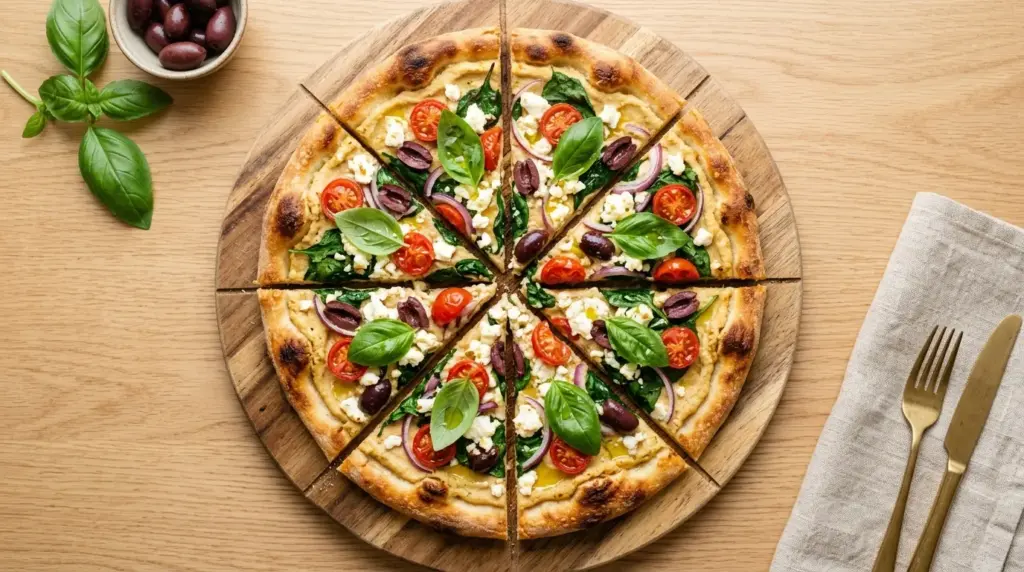
Hummus pizza is satisfying on its own, but it also pairs wonderfully with a range of simple sides that complement its Mediterranean flavors.
Serve it alongside a bright, crunchy salad to add freshness and contrast to the rich, creamy pizza. A simple arugula salad with lemon and olive oil is a perfect pairing.
- Broccoli Salad for a hearty, crunchy side
- Classic Deviled Eggs as a crowd-pleasing party starter
- Fruit Salad for a light, sweet contrast to the savory pizza
- Easy Nachos if you’re putting together a full snack spread for entertaining
- A glass of crisp white wine or sparkling water with lemon for a refreshing pairing
Read Also: Seven Layer Dip Recipe
Variations to Try
Once you’ve made the classic version, this recipe becomes an endlessly versatile template.
The hummus base and Mediterranean toppings are just the starting point. From there, you can take the pizza in dozens of different directions based on what you have in the fridge.
- Roasted Red Pepper Hummus Pizza: Swap plain hummus for roasted red pepper hummus and top with arugula, sliced pepperoncini, and shaved Parmesan for a different flavor profile.
- Beet Hummus Pizza: Use vibrant beet hummus as the base and top with goat cheese, walnuts, and fresh arugula for a stunning, earthy pizza.
- Spicy Hummus Pizza: Mix sriracha or harissa paste into the hummus before spreading, then top with jalapeños, thinly sliced red onion, and shredded mozzarella for a spicy kick.
- Greek Chicken Hummus Pizza: Add shredded rotisserie chicken, cucumber, and a drizzle of tzatziki after baking for a heartier pizza with Greek diner vibes.
- White Bean and Herb Variation: Blend white cannellini beans with garlic and olive oil as an alternative hummus-style base, then top with rosemary, roasted garlic cloves, and thin slices of fresh tomato.
- Pita Hummus Pizzas: Use individual pita breads instead of a full pizza crust for personal-sized portions. These are perfect for kids’ lunches and take less than 8 minutes to bake.
- Naan Hummus Pizzas: Use naan bread as the crust for a chewier, slightly thicker base with a beautiful golden char.
Another fun baked pizza variation worth trying is this Air Fryer French Bread Pizza, which comes together incredibly fast using the air fryer.
Storage and Reheating
Hummus pizza stores well and tastes great the next day, making it excellent for meal prep and leftovers.
Follow these guidelines for keeping your pizza fresh:
- Refrigerator: Store leftover slices in an airtight container or wrapped tightly in plastic wrap. They will stay fresh for up to 3 days.
- Freezer: You can freeze leftover hummus pizza, though the texture of the hummus may become slightly grainy after thawing. Wrap slices individually in plastic wrap and place in a freezer-safe bag. Freeze for up to 1 month.
- Reheating in the oven: Place slices on a baking sheet and reheat at 375°F (190°C) for 5 to 7 minutes. This restores the crispness of the crust far better than a microwave.
- Reheating in a skillet: Place a slice in a dry skillet over medium heat, cover with a lid, and heat for 3 to 4 minutes. The covered skillet traps heat and warms the toppings while crisping the bottom.
- Microwave: If you’re short on time, the microwave works in a pinch. Heat for 60 to 90 seconds on a microwave-safe plate. The crust will be softer, but the flavor will still be great.
- Do not add fresh basil before storing. The fresh basil leaves will wilt and become slimy in the fridge. Keep them separate and add fresh when you’re ready to eat.
Read Also: Classic Hummus Recipe
Nutritional Facts
The following nutritional information is for one serving, based on 8 slices per 12-inch pizza.
| Nutrient | Per Serving (1 slice) |
|---|---|
| Calories | 210 kcal |
| Total Fat | 10g |
| Saturated Fat | 3g |
| Cholesterol | 10mg |
| Sodium | 410mg |
| Total Carbohydrates | 24g |
| Dietary Fiber | 3g |
| Sugars | 2g |
| Protein | 7g |
Nutritional values are estimates based on standard ingredients and may vary depending on the specific brands and quantities used.
You might also enjoy this Basil Pesto Recipe as an alternative pizza base that brings an equally rich, herby flavor to homemade pizza nights.
Health Benefits of Key Ingredients
One of the best things about hummus pizza is that it delivers genuine nutritional value alongside all that great flavor.
Unlike traditional pizza which relies heavily on cheese for richness, this version gets its creaminess from chickpea-based hummus, which is packed with nutrients that make a real difference for your health.
- Chickpeas (in the hummus): Chickpeas are an excellent source of plant-based protein and dietary fiber, both of which promote satiety and help stabilize blood sugar levels. They also contain iron, folate, and phosphorus.
- Olive oil: Extra virgin olive oil is rich in heart-healthy monounsaturated fats and antioxidants, particularly oleocanthal, which has anti-inflammatory properties similar to ibuprofen.
- Garlic: Garlic contains allicin, a powerful compound with antibacterial, antiviral, and immune-boosting properties. It also supports cardiovascular health by helping regulate blood pressure.
- Spinach: This leafy green is loaded with vitamins K, A, and C, as well as iron, magnesium, and folate. Cooking spinach slightly, as it does during baking, actually increases the bioavailability of some of its nutrients.
- Cherry tomatoes: Tomatoes are one of the best dietary sources of lycopene, an antioxidant linked to reduced risk of heart disease and certain cancers. They’re also high in vitamin C and potassium.
- Feta cheese: Feta is naturally lower in calories and fat than mozzarella or cheddar while delivering significant amounts of calcium and protein. It also contains probiotics from the fermentation process that support gut health.
- Kalamata olives: These olives are rich in monounsaturated fats and polyphenols, both of which are associated with reduced inflammation and improved heart health. They’re also a good source of vitamin E.
For another appetizer that highlights the goodness of fresh vegetables and dips, try this Easy Guacamole for your next gathering.
Frequently Asked Questions
1. Can I use homemade hummus instead of store-bought?
Absolutely, and it’s highly recommended. Homemade hummus tends to be creamier and more flavorful than most store-bought varieties because you can control the garlic, lemon, and tahini ratios to your exact taste. Just make sure your homemade hummus is thick enough to hold its shape when spread on the crust. If it’s too runny, add a bit less lemon juice or water when blending.
2. Will the hummus dry out in the oven at such a high temperature?
At 450°F (230°C) for just 8 to 10 minutes, the hummus stays creamy rather than drying out. The brief bake time heats everything through without cooking the hummus to the point of dryness. That said, overbaking will eventually cause the hummus to dry out, so keep a close eye on the pizza and pull it out as soon as the crust edges are golden.
3. Can I make this pizza vegan?
Yes, and it’s very easy. Simply omit the feta cheese entirely, or replace it with a vegan feta alternative. Many grocery stores now carry plant-based feta made from cashews or tofu that crumbles and tastes remarkably similar to the real thing. All other ingredients in this recipe are naturally vegan.
4. What type of crust works best for hummus pizza?
A pre-baked store-bought pizza crust works excellently because it gives you consistent results with minimal effort. However, you can also use naan bread, pita bread, flatbread, or a homemade pizza dough that you par-bake first. The key is to ensure the crust is already set and dry before adding the hummus, so the moisture from the topping doesn’t make it soggy. A crescent roll crust also works well for a softer, pull-apart style.
5. Can I make this pizza ahead of time for a party?
You can prepare all the toppings and season the hummus up to a day in advance. Store everything separately in the refrigerator. When you’re ready to serve, assemble and bake the pizza fresh. Fully assembled and baked pizza can be made a few hours ahead and served at room temperature, though the crust will lose some of its crispness. For the best results at a party, bake it right before serving and keep it warm in a 200°F (93°C) oven for up to 20 minutes.
For another crowd-pleasing party snack that’s easy to prep ahead, this Cheese Ball Recipe is always a hit.

Hummus Pizza

Equipment
- Baking sheet - 12-inch pizza pan
- Pizza stone - optional, helps achieve a crispier crust
- Cutting board
- Sharp knife
- Small mixing bowl
- Spoon or offset spatula - for spreading hummus
- Oven - preheated to 450°F / 230°C
- Pizza cutter or wheel - for slicing
Ingredients
- 1 pre-baked 12-inch pizza crust - or homemade pizza dough, par-baked
- 1 cup plain or garlic hummus - 240g
- 1 teaspoon dried oregano
- ¼ teaspoon red pepper flakes - optional, adjust to taste
- ½ cup crumbled feta cheese - 75g
- ½ cup cherry tomatoes - 75g, halved
- ¼ cup sun-dried tomatoes - 45g, oil-packed, drained and roughly chopped
- ¼ cup Kalamata olives - 40g, pitted and halved
- ½ small red onion - thinly sliced
- ½ cup baby spinach leaves - 50g
- 2 tablespoons extra virgin olive oil - divided
- ¼ cup fresh basil leaves - 15g, for topping
- salt - to taste
- black pepper - to taste
Instructions
- Preheat oven to 450°F (230°C). If using a pizza stone, place it in the oven to preheat as well. If using a pizza pan, place it in the oven to preheat too.
- Halve the cherry tomatoes. Thinly slice the red onion into half-moon shapes. Drain the sun-dried tomatoes and roughly chop them. Halve the Kalamata olives and pat dry. Rinse and dry the fresh basil and set aside.
- In a small bowl, combine 1 cup of hummus with 1 teaspoon of oregano and ¼ teaspoon of red pepper flakes. Stir until well combined. Taste and adjust seasoning if needed.
- Place the pre-baked pizza crust on the preheated baking sheet or pizza pan. If using homemade dough, par-bake for 5-7 minutes first. Drizzle 1 tablespoon of olive oil over the crust.
- Spread the seasoned hummus evenly over the crust using an offset spatula, leaving a ¾-inch border bare around the edges for the crust to crisp up.
- Scatter baby spinach leaves evenly over the hummus. Distribute halved cherry tomatoes (cut side up), sun-dried tomatoes, Kalamata olives, and sliced red onion across the surface. Finish by crumbling the feta cheese generously over the entire pizza.
- Bake for 8-10 minutes until the crust edges are deep golden brown and the feta is slightly golden. Begin checking at the 8-minute mark to avoid overbaking.
- Remove from oven and let rest for 2-3 minutes. Drizzle with remaining 1 tablespoon of olive oil, scatter fresh basil leaves on top, slice, and serve immediately.
Notes
- Don’t skip draining the olives and sun-dried tomatoes. Excess moisture is the number one cause of a soggy hummus pizza.
- Use full-fat hummus for the best flavor and texture. Low-fat hummus tends to be thinner and more watery.
- Add greens after baking if preferred. Toss fresh arugula or spinach on the hot pizza right as it comes out of the oven.
- Use a par-baked or pre-baked crust. Raw dough needs longer baking time, which can dry out the hummus topping.
- Let the oven fully preheat for 15-20 minutes for a crispy, professional-quality crust.
- Season as you go. The hummus, feta, and olives are all salty, so taste before adding extra salt.
- Cut into smaller pieces for serving as an appetizer. This pizza slices beautifully into small squares or rectangles.
- Store leftovers in an airtight container in the refrigerator for up to 3 days. Reheat in the oven at 375°F for 5-7 minutes for best results.
- For a vegan version, simply omit the feta cheese or replace it with a vegan feta alternative.
- Make it your own by swapping hummus flavors (roasted red pepper, beet) or adding toppings like shredded chicken, pepperoncini, or arugula.
Final Thoughts
This hummus pizza recipe is proof that simple swaps can lead to extraordinary results.
By replacing traditional tomato sauce with creamy, garlicky hummus and loading the pizza with vibrant Mediterranean toppings, you get a dish that’s genuinely fresh, deeply satisfying, and totally different from anything in your usual dinner rotation.
The best part is how forgiving and flexible it is. Use the toppings you love, switch up the hummus flavor, change the crust, and make it entirely your own.
Give it a try this week and see how quickly it earns a permanent spot in your recipe lineup. If you loved it, leave a comment below and share a photo. Your feedback and ideas always make this community more delicious!
Recommended:
- Pizza Sauce Recipe
- Easy Pita Bread / Homemade Tortilla Chips
- Roasted Broccoli Recipe
- Fresh Salsa Recipe
- Easy Salsa Recipe
- Buffalo Chicken Dip Recipe
- Easy Loaded Nachos Recipe
- Pico de Gallo Recipe
- Corn Salsa Recipe
- Easy Ratatouille Recipe