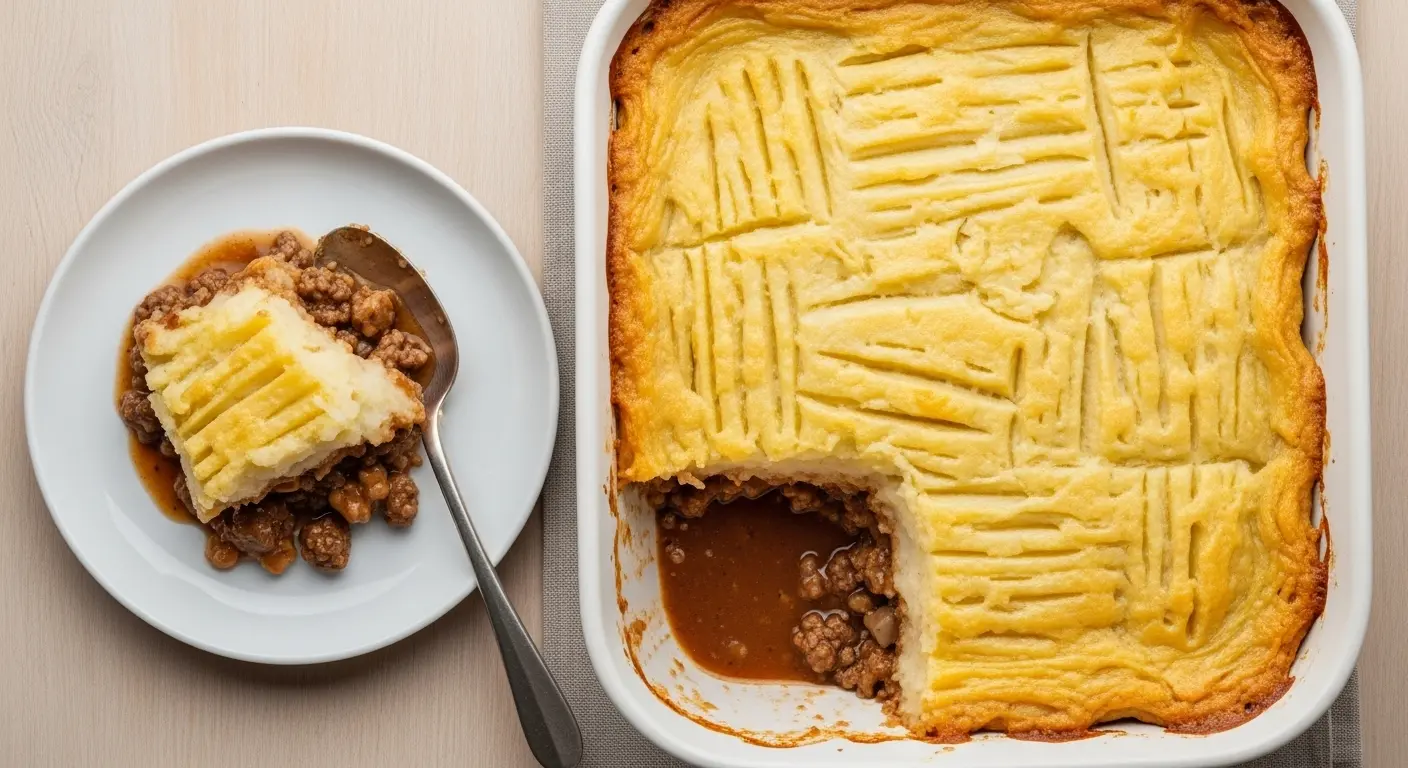
Few meals feel as deeply satisfying as a steaming dish of cottage pie fresh out of the oven. This traditional British cottage pie recipe gives you a savory, richly seasoned ground beef filling simmered in a thick, glossy gravy, then crowned with a layer of creamy, buttery mashed potatoes baked until golden and lightly crispy on top.
If you have never made cottage pie before, you are in for a treat.
The beauty of this dish lies in how humble ingredients transform into something truly spectacular. The low-and-slow simmer is what makes the beef filling so deeply flavored, and there is a reason cooks have been making this dish for over 200 years. It just works.
One important distinction before diving in: cottage pie uses ground beef, which is what sets it apart from shepherd’s pie, which uses ground lamb. The two are prepared almost identically, but the type of meat makes each dish its own.
This recipe walks you through every step, from browning the beef to nailing that perfectly golden potato topping, so even complete beginners can pull this off with confidence.
Why You’ll Love This Cottage Pie Recipe
Cottage pie is one of those recipes that checks every box for a comforting weeknight dinner.
It is deeply hearty and satisfying, with layers of flavor from the slow-cooked beef, aromatic vegetables, Worcestershire sauce, and rich beef stock.
The mashed potato topping acts as a lid that traps all the heat and juices underneath as it bakes, which means the filling stays incredibly moist and saucy.
It is also a brilliant make-ahead meal. You can assemble the entire dish a day in advance, refrigerate it, and simply pop it in the oven when you are ready to eat.
The leftovers taste even better the next day, as the flavors continue to develop overnight in the fridge.
It is also budget-friendly. Ground beef, potatoes, carrots, and onions are affordable, accessible ingredients that most people keep on hand.
Here is a quick summary of what makes this recipe so great:
- Classic British comfort food with centuries of tradition behind it
- Rich, deeply flavorful beef filling thanks to a long simmer with beef stock, tomato paste, and Worcestershire sauce
- Creamy mashed potato topping that bakes up golden and lightly crisp
- Family-friendly and universally loved, even by picky eaters
- Freezer-friendly and perfect for batch cooking
- Make-ahead ready for easy weeknight dinners
For another British classic made with a hearty meat-and-potato combination, try this Easy Shepherd’s Pie for a lamb-based version using a very similar method.
Ingredients
Getting the right ingredients makes all the difference in this cottage pie recipe. The Worcestershire sauce and tomato paste are non-negotiable for depth of flavor, and using a starchy potato like Russet or Maris Piper for the topping guarantees a fluffy, smooth mash that holds up well during baking.
For the Beef Filling:
- 1.5 lbs (680g) ground beef (80/20 blend recommended for flavor)
- 1 large yellow onion, finely diced
- 2 medium carrots, peeled and finely diced
- 2 celery stalks, finely diced
- 3 garlic cloves, minced
- 2 tablespoons olive oil
- 2 tablespoons tomato paste
- 2 tablespoons all-purpose flour
- 1.5 cups (360ml) beef stock
- 2 tablespoons Worcestershire sauce
- 1 teaspoon fresh thyme leaves (or ½ tsp dried thyme)
- 1 sprig fresh rosemary (or ½ tsp dried rosemary)
- 1 bay leaf
- ¾ cup (90g) frozen peas
- Salt and black pepper to taste
For the Mashed Potato Topping:
- 2.5 lbs (1.1kg) Russet or Yukon Gold potatoes, peeled and chopped into 2-inch chunks
- 4 tablespoons (60g) unsalted butter
- ½ cup (120ml) whole milk, warmed
- ½ cup (50g) grated Parmesan cheese or sharp cheddar
- Salt and white pepper to taste
Read Also: Classic Shepherd’s Pie Recipe
Kitchen Equipment Needed
Having the right tools makes this cottage pie recipe much more straightforward. A large, deep oven-safe skillet or separate frying pan for browning the beef, plus a quality baking dish for the final assembly and bake, are the two most important pieces of equipment.
- Large deep skillet or cast iron skillet (for cooking the beef filling)
- 9×13 inch baking dish or equivalent large casserole dish
- Large saucepan (for boiling potatoes)
- Potato masher or ricer
- Wooden spoon or silicone spatula
- Sharp knife and cutting board
- Measuring cups and spoons
- Colander for draining potatoes
- Fork (for scoring the potato topping)
This pairs well with a warm bowl of Beef and Barley Soup for a full British-inspired spread.
Recommended Products for This Recipe
Here are a few products that will genuinely elevate your cottage pie experience, based on quality and real-world performance.
1. Le Creuset Enameled Cast Iron Casserole Dish
A heavy, enameled cast iron dish distributes heat evenly across the entire base of the cottage pie, which means the filling stays bubbling hot all the way to the edges and the potato topping browns uniformly. The enameled surface also makes cleanup simple, even after long oven bakes. This is a kitchen investment that will serve you for decades.
2. OXO Good Grips Stainless Steel Potato Ricer
A potato ricer produces a far smoother and lump-free mashed potato topping compared to a standard masher. For cottage pie, a silky mash is key because it pipes or spreads evenly and bakes into a neater, more attractive crust. The OXO model is durable and easy to clean.
3. Lea & Perrins Worcestershire Sauce (Large Bottle)
Worcestershire sauce is one of the defining flavors of a proper cottage pie filling. The fermented, umami-rich depth it adds to the beef gravy is irreplaceable. Having a generous supply on hand means you can add a dash more to taste without worrying about running out.
4. All-Clad Stainless Deep Saute Pan
A high-quality, deep sauté pan ensures even heat distribution when you brown the beef and simmer the filling for 30+ minutes. Cheaper pans can create hot spots that burn the bottom of your gravy before it reduces properly. A durable sauté pan is a worthwhile tool for any recipe that requires a long simmer.
5. Microplane Premium Zester/Grater
Freshly grated Parmesan cheese melts and crisps far better than the pre-grated variety, which often contains anti-caking agents that inhibit browning. A Microplane zester makes quick, easy work of grating the cheese directly onto the mashed potato topping for that gorgeous golden crust.
You might also enjoy this equally cozy and hearty Crockpot Beef Stew recipe for another slow-cooked beef classic.
Step-by-Step Instructions
1. Prep Your Vegetables and Potatoes
- Peel and finely dice the onion into small, even pieces roughly 1/4 inch in size. Small, uniform dice ensures the vegetables cook evenly and blend seamlessly into the gravy.
- Peel the carrots and dice them to the same size as the onion, approximately 1/4 inch.
- Trim and dice the celery stalks into similarly-sized pieces.
- Mince the garlic cloves finely or use a garlic press.
- Peel the potatoes and cut them into roughly 2-inch chunks. Keeping them uniform in size ensures they cook through at the same rate. Place them in a bowl of cold water to prevent browning while you work on the filling.
2. Brown the Ground Beef
- Heat a large, deep skillet or Dutch oven over medium-high heat until hot.
- Add 1 tablespoon of olive oil and swirl to coat the bottom of the pan.
- Add the ground beef in a single layer where possible. Do not stir it immediately; allow it to sear for about 2-3 minutes until the bottom develops a deep brown crust.
- Break the beef up with a wooden spoon or spatula and continue cooking, stirring occasionally, until the beef is browned all over and no pink remains, approximately 6-8 minutes total.
- Using a spoon, carefully drain off most of the excess fat from the pan, leaving just a thin layer behind for flavor.
- Transfer the browned beef to a plate and set aside. Do not skip draining the fat, as excess grease will make the filling greasy rather than glossy.
3. Sauté the Aromatics
- Reduce the heat to medium. Add the remaining tablespoon of olive oil to the same pan.
- Add the diced onion, carrots, and celery to the pan.
- Cook, stirring occasionally, for about 8-10 minutes until the vegetables have softened significantly. The onion should be translucent and the carrots should be slightly tender when poked with a fork.
- Add the minced garlic and cook for a further 1-2 minutes, stirring constantly, until fragrant. Be careful not to let the garlic burn, as this will make the filling bitter.
4. Build the Gravy
- Stir in the tomato paste and cook for 2 minutes, stirring it through the vegetables. Cooking the tomato paste briefly before adding liquid removes its raw taste and adds a deeper, richer color to the gravy.
- Sprinkle the flour over the vegetable mixture and stir thoroughly to coat everything. Cook for 1-2 minutes, stirring constantly. This flour will thicken the gravy as it simmers.
- Pour in the beef stock slowly, stirring as you go to prevent lumps from forming.
- Add the Worcestershire sauce and stir everything to combine.
- Return the browned beef to the pan and mix it into the gravy.
- Add the thyme, rosemary sprig, and bay leaf.
- Season generously with salt and black pepper. You will adjust the seasoning again at the end, but this initial seasoning builds flavor throughout the cooking process.
- Bring the mixture to a gentle boil, then reduce the heat to low and simmer, uncovered, for 25-30 minutes until the gravy has thickened considerably and coats the back of a spoon with a rich, dark glaze.
5. Add the Peas and Cool the Filling
- Remove the rosemary sprig and bay leaf and discard them.
- Stir in the frozen peas. They do not need to be pre-thawed; the heat of the filling will cook them through.
- Taste the filling and adjust seasoning with additional salt, pepper, or a splash more Worcestershire sauce if needed.
- Pour the beef filling into your baking dish and spread it into an even layer. Allow it to cool for at least 15-20 minutes before adding the mashed potato topping. This is an important step: if the filling is too hot when you top it, the mash will sink into the gravy rather than sitting neatly on top.
6. Boil and Mash the Potatoes
- While the filling is cooling, drain the potatoes from their water bath and place them in a large saucepan.
- Cover with cold, salted water and bring to a boil over high heat.
- Reduce the heat to medium and cook for 15-18 minutes until the potatoes are completely tender when pierced with a knife and a piece falls apart easily.
- Drain the potatoes thoroughly in a colander and return them to the warm saucepan.
- Allow them to steam dry for 2-3 minutes over low heat, stirring gently. Drying out the potatoes before mashing is crucial for achieving a fluffy, non-watery mash that will not sink into the filling during baking.
- Add the butter to the warm potatoes and mash until the butter is fully melted.
- Pour in the warm milk gradually while continuing to mash, adding just enough to achieve a smooth, creamy consistency that is soft but not runny.
- Stir in half of the grated Parmesan or cheddar cheese.
- Season generously with salt and white pepper. Taste and adjust as needed.
7. Top and Score the Cottage Pie
- Preheat your oven to 400°F (200°C).
- Spoon the mashed potato topping over the cooled beef filling.
- Spread it all the way to the edges of the dish using a spatula or the back of a spoon, making sure there are no gaps for steam to escape.
- Use a fork to drag a crosshatch or wave pattern across the surface of the mashed potato. These ridges catch heat and brown faster, giving the cottage pie its signature golden, slightly crispy topping.
- Sprinkle the remaining grated Parmesan or cheddar evenly over the top.
8. Bake Until Golden
- Place the baking dish on the center rack of the preheated oven.
- Bake for 25-30 minutes until the potato topping is golden brown and the gravy is visibly bubbling at the edges of the dish.
- For an extra-crispy, deeply golden topping, switch the oven to broil for the final 2-3 minutes, keeping a close eye on it to prevent burning.
- Remove from the oven and allow to rest for 5-10 minutes before serving. This resting time allows the filling to settle and makes for much cleaner portions.
This technique for building a rich, layered gravy works equally well in a Beef Bourguignon.
Tips for Success
A few key techniques make the difference between a good cottage pie and an absolutely excellent one. Read through these before you start and you will avoid the most common pitfalls.
- Do not rush the simmer. The 25-30 minute simmer is what transforms a thin, bland beef broth into a rich, glossy gravy. The filling should be very thick, almost like a stew, before going into the baking dish.
- Cool the filling before topping. As mentioned in the instructions, this is critical. A hot filling produces steam that pushes up through the mash, creating a watery, unstable topping that slides and sinks.
- Dry the potatoes before mashing. Steam the drained potatoes in their warm pot for a few minutes before mashing. This removes excess moisture, giving you a stiffer, fluffier mash that stays neatly on top of the filling during baking.
- Warm the milk before adding it. Adding cold milk to hot potatoes cools them down and makes them gluey. Warm milk blends in smoothly and keeps the mash light and fluffy.
- Score the top generously. Those fork marks in the mash are not just decorative; they significantly increase the surface area exposed to heat, resulting in a crispier, more flavorful topping.
Here is a quick tip list:
- Use 80/20 ground beef for the best flavor in the filling
- Brown the beef in batches if your pan is small to avoid steaming rather than browning
- Always drain excess fat after browning the beef
- Let the finished pie rest for at least 5 minutes before serving
- Add a splash of red wine with the beef stock for extra depth (optional)
- Use a fork to create ridges on the mash topping for the crispiest result
For another deeply satisfying beef dish with a similar flavor profile, try this Meatloaf recipe.
Serving Suggestions
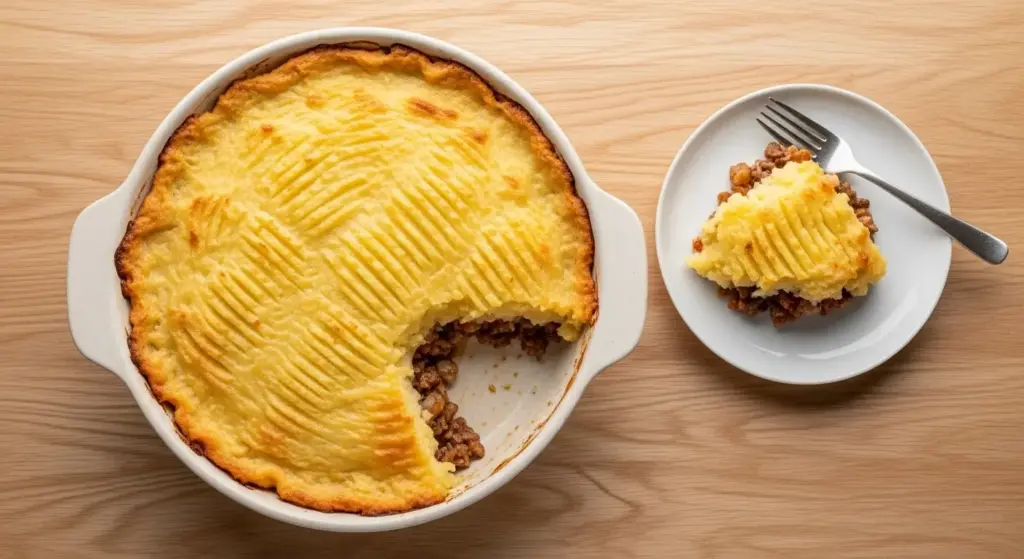
Cottage pie is a complete meal on its own, but a few simple sides take it from satisfying to truly special. The dish has a rich, meaty base, so lighter vegetable sides work best as accompaniments.
Bright, simply cooked green vegetables are the classic British pairing for cottage pie. Steamed or boiled green beans, tender-crisp broccoli, or buttered peas provide a fresh contrast to the richness of the beef filling.
A simple dressed side salad with sharp vinegar or lemon juice also cuts through the heaviness of the dish in a very satisfying way.
For a full, crowd-pleasing spread, consider these serving ideas:
- Roasted Broccoli tossed in olive oil and garlic for a simple, flavorful side
- Honey Roasted Carrots that complement the sweetness already in the beef filling
- Steamed green beans or peas for a traditional British pairing
- Crusty bread or dinner rolls to scoop up any extra gravy left in the dish
- A simple green salad dressed with a light vinaigrette to balance the richness
- A glass of full-bodied red wine such as a Shiraz or Cabernet Sauvignon
Another favorite: Yorkshire Pudding
Variations to Try
The classic cottage pie recipe is endlessly adaptable. Once you have mastered the base recipe, these variations keep things fresh and exciting throughout the year.
Each version follows the same fundamental method but swaps one or two components to create a completely different dish with very little extra effort.
Here are some crowd-pleasing twists to experiment with:
- Shepherd’s Pie: Swap the ground beef for ground lamb and follow the exact same recipe. The lamb has a slightly gamier, richer flavor that works beautifully with the same herbs and gravy.
- Sweet Potato Topping: Replace the standard mashed potato topping with creamy mashed sweet potato. The natural sweetness of the sweet potato plays off the savory beef filling in a surprisingly delicious way.
- Cheesy Topping: Stir a generous handful of sharp cheddar directly into the mashed potato topping and add extra on top before baking for a molten, bubbly cheese crust.
- Vegetarian Cottage Pie: Replace the ground beef with a combination of green or brown lentils, diced mushrooms, and extra root vegetables simmered in vegetable stock with the same seasonings.
- Spiced Version: Add a teaspoon of smoked paprika, a pinch of cumin, and a small diced jalapeño to the beef filling for a gently spiced, slightly smoky variation.
- Individual Portions: Divide the filling and mash into individual oven-safe ramekins or small casserole dishes for a restaurant-style presentation, ideal for dinner parties.
Read Also: Turkey Pot Pie Recipe
Storage and Reheating
Cottage pie stores and reheats exceptionally well, making it one of the most practical batch-cooking recipes in this collection. Proper storage ensures the flavors remain vibrant and the texture stays as close to freshly baked as possible.
Follow these guidelines for safe, delicious storage and reheating:
- Refrigerator: Allow the cottage pie to cool completely before covering tightly with plastic wrap or a lid. Store in the fridge for up to 4 days.
- Freezer: Assemble the cottage pie as directed up to the point of baking, then cover tightly with plastic wrap followed by a layer of aluminum foil. Freeze for up to 3 months. Thaw overnight in the refrigerator before baking as directed.
- Reheating from fridge (oven): Preheat the oven to 350°F (175°C) and bake, covered with foil, for 20-25 minutes. Remove the foil for the final 10 minutes to re-crisp the topping.
- Reheating a single portion (microwave): Transfer to a microwave-safe dish, cover loosely, and heat on medium power for 3-4 minutes, stirring the filling portion once halfway through.
- Reheating from frozen (oven): Bake directly from frozen at 375°F (190°C) for 55-65 minutes until heated through and the top is golden.
- Do not freeze after baking more than once. Once baked and frozen, reheat fully and consume rather than refreezing.
This Slow Cooker Pot Roast is another make-ahead, batch-cook-friendly beef recipe worth bookmarking.
Nutritional Facts
The following nutritional information is an estimate based on a standard cottage pie recipe serving 6 people. Actual values will vary depending on specific ingredients, fat content of the beef, and exact portions.
Per Serving (1/6 of recipe, approximately):
| Nutrient | Amount |
|---|---|
| Calories | 480–520 kcal |
| Protein | 28–32g |
| Total Fat | 20–24g |
| Saturated Fat | 9–11g |
| Carbohydrates | 45–50g |
| Dietary Fiber | 5–6g |
| Sugars | 5–7g |
| Sodium | 550–700mg |
| Iron | 15–20% DV |
| Calcium | 10–12% DV |
| Potassium | 900–1100mg |
Cottage pie is a calorie-dense, protein-rich meal that is best suited as a main course.
Reducing the amount of butter and milk in the mashed potato topping, or substituting lower-fat milk, will reduce the overall calorie and fat content without dramatically affecting the flavor.
Using lean ground beef (90/10) instead of the standard 80/20 blend will also lower the fat content of the filling, though the filling may be slightly less rich in flavor.
For a lighter take on a similar comfort food concept, try this Hamburger Soup recipe.
Health Benefits of Key Ingredients
While cottage pie is undeniably a comforting, indulgent dish, several of its core ingredients carry genuine nutritional value that makes it a well-rounded meal.
Here is a look at what each key ingredient brings to the table beyond flavor:
- Ground beef is an excellent source of complete protein, providing all nine essential amino acids. It is also rich in iron (particularly heme iron, which is highly bioavailable), zinc, and B vitamins, particularly B12, which supports nerve function and red blood cell production.
- Potatoes are often unfairly maligned from a nutrition standpoint. They are naturally high in potassium (higher than bananas, ounce for ounce), vitamin C, and vitamin B6. When prepared without excessive butter or cream, potatoes are a filling and relatively low-calorie complex carbohydrate.
- Carrots provide beta-carotene, the precursor to vitamin A, which supports healthy vision and immune function. They also add natural sweetness and body to the gravy.
- Onions and garlic are both rich in quercetin and allicin respectively, two plant compounds associated with anti-inflammatory and cardiovascular health benefits. They are also the foundation of nearly every great savory sauce for a reason; they add irreplaceable depth of flavor.
- Peas add a boost of plant-based protein, dietary fiber, and vitamin K to the dish without adding significant calories.
- Tomato paste is a concentrated source of lycopene, a powerful antioxidant most effective when consumed with a small amount of fat, which makes it particularly well-absorbed in a beef and oil-based filling like this one.
Read Also: Creamy Mashed Potatoes Recipe
Frequently Asked Questions
1. What is the difference between cottage pie and shepherd’s pie?
The only difference between the two is the meat. Cottage pie uses ground beef, while shepherd’s pie uses ground lamb.
The name is a helpful memory trick: shepherds herd sheep (lamb), while a cottage was historically associated with the rural poor who used whatever meat was available, most commonly beef.
2. Can I make cottage pie in advance?
Absolutely. You can assemble the entire dish, cover it tightly, and refrigerate it for up to 24 hours before baking.
When ready to cook, remove it from the fridge 30 minutes before baking to take the chill off, then bake as directed, adding 5-10 extra minutes to the bake time if needed.
3. How do I stop the mashed potato from sinking into the filling?
Two techniques prevent this: first, make sure your beef filling is thick (it should almost hold its shape when spooned) before assembling. Second, allow the filling to cool before topping it with mash.
A hot filling generates steam that pushes up through the mash, causing it to sink. A cooled, thickened filling provides a stable base for the mash to sit on.
4. Can I freeze cottage pie?
Yes, cottage pie freezes very well. For best results, assemble the pie and freeze it before baking.
Cover tightly with plastic wrap and foil, and freeze for up to 3 months. Thaw overnight in the fridge and bake as directed, adding 10-15 minutes extra bake time.
5. What type of potatoes work best for the topping?
Starchy potatoes like Russet (in the US) or Maris Piper (in the UK) produce the fluffiest, driest mash, which is ideal for the topping.
Waxy potatoes like red potatoes tend to become gluey when mashed and do not crisp up as nicely in the oven. If Russets or Maris Pipers are not available, Yukon Golds are an excellent middle-ground option with a naturally buttery flavor.
For a related side dish idea, check out these Garlic Mashed Potatoes as a standalone recipe.
Final Thoughts
Cottage pie is one of those recipes that rewards patience and simplicity.
The long simmer, the careful mash, and the golden-baked topping come together into something that feels like a warm hug from the inside out.
It is the kind of meal that brings people to the table and keeps them coming back for seconds, whether it is a midweek family dinner or a lazy weekend cook-up that fills the whole house with the most incredible smell.
Give this classic cottage pie recipe a try this week and see for yourself why it has been a beloved staple on British tables for centuries.
If you make it, drop a comment below and let me know how it turned out. I would love to hear what variations you tried and who in your household went back for thirds!
Recommended:
- Easy Shepherd’s Pie
- Chicken Pot Pie Recipe with Cream of Chicken Soup
- Beef Stroganoff
- Cowboy Casserole
- Chicken Stew
- Tater Tot Casserole
- Scalloped Potatoes
- Sticky Toffee Pudding
- Spotted Dick
- Roasted Potatoes