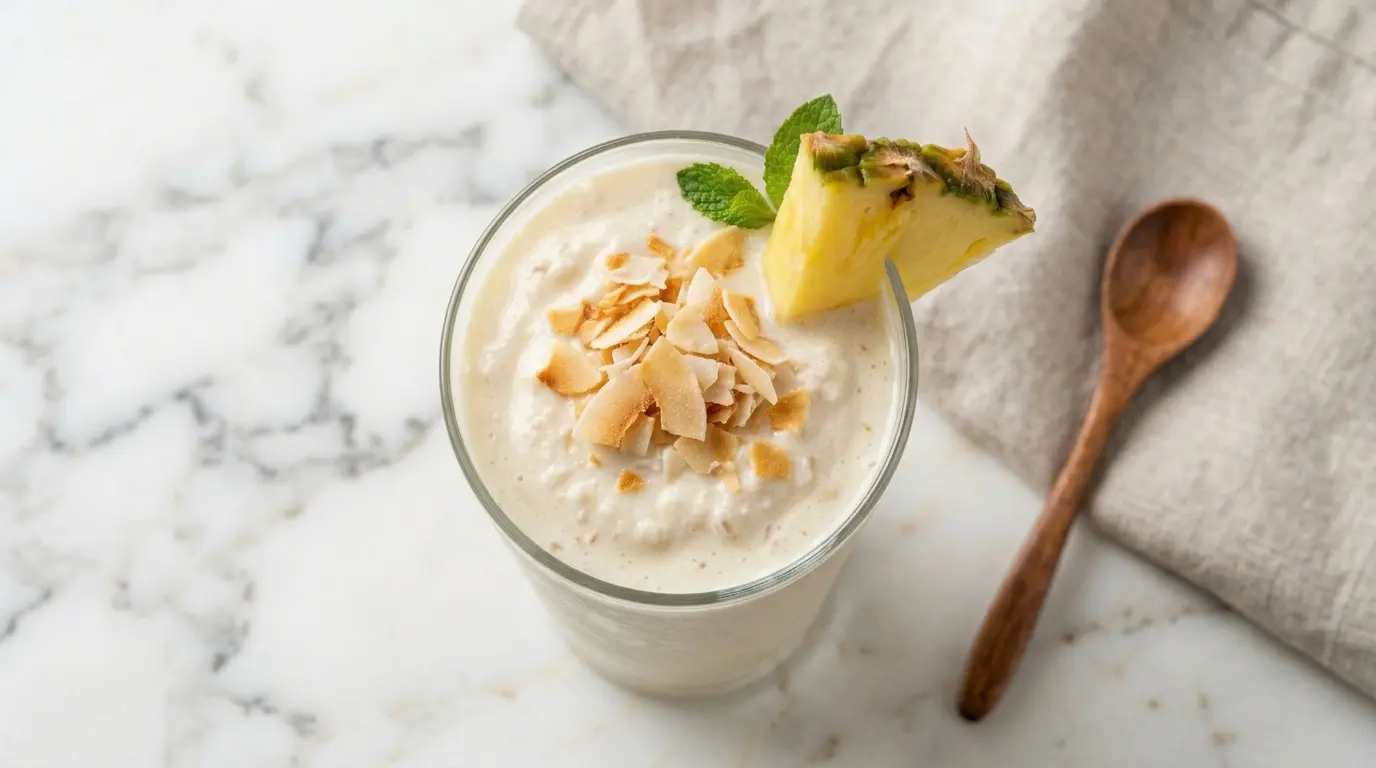
A good coconut smoothie recipe is one of those things that feels both indulgent and genuinely nourishing at the same time. This one is thick, velvety, and packed with that warm tropical flavor that makes every sip feel like a little getaway. Made with creamy coconut milk, frozen banana, pineapple chunks, and a handful of pantry staples, it comes together in under five minutes and requires zero cooking skills.
What makes this version stand out is the combination of full-fat canned coconut milk and frozen fruit. Full-fat coconut milk gives the smoothie that rich, almost dessert-like texture without any dairy. The frozen banana is the real MVP here: it thickens the blend naturally and adds just enough sweetness so you don’t need to reach for added sugar.
This is the kind of drink that works as a quick breakfast, a post-workout refuel, or an afternoon treat when you want something cold and satisfying. It’s naturally dairy-free, gluten-free, and vegan, so it fits a wide range of dietary needs without any swaps.
For a smoothie that tastes this good with this few steps, keep reading. You will want to make it every single day.
This tropical treat pairs beautifully with a Coconut Milk Smoothie if you are looking to explore more coconut-forward blends.
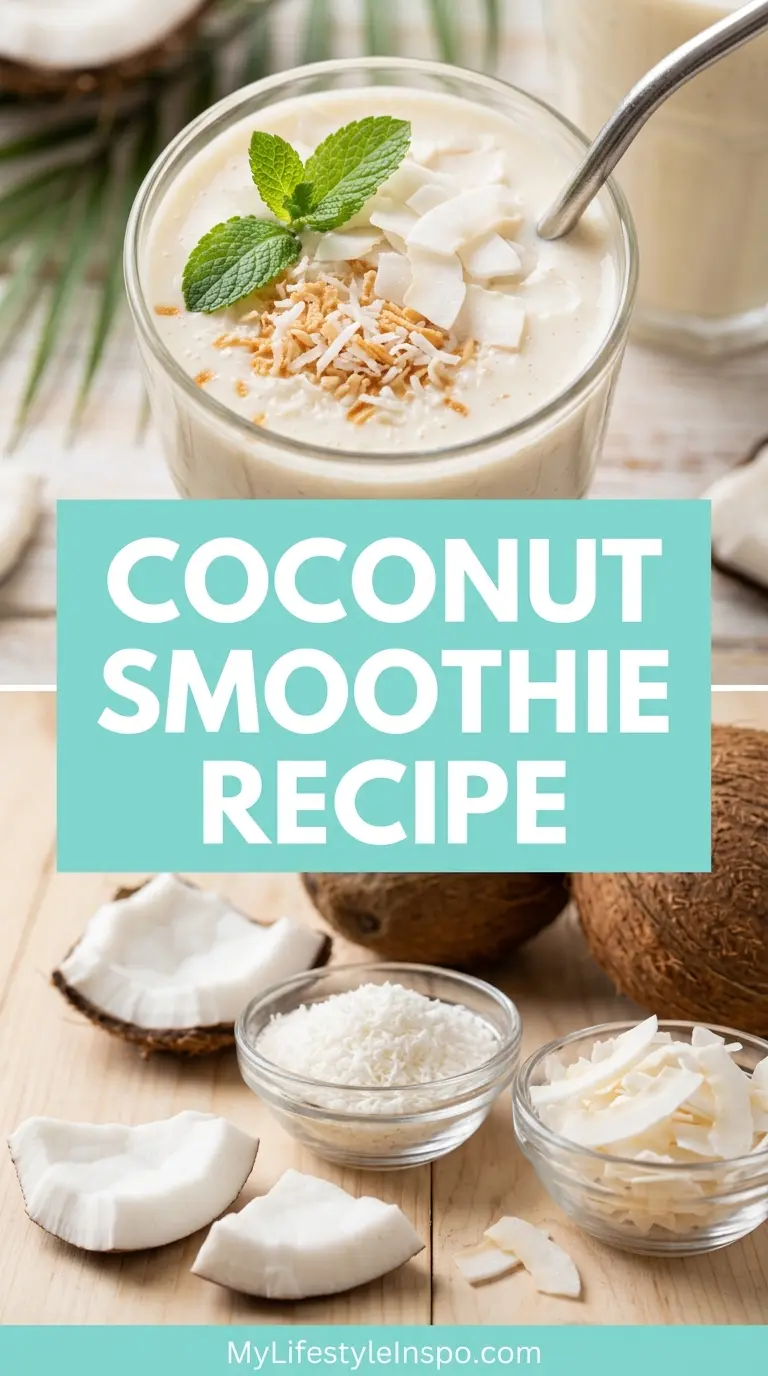
Why You’ll Love This Coconut Smoothie Recipe
This smoothie genuinely delivers on its promise of tropical flavor in every sip.
It uses simple, real ingredients with no artificial flavors, no added sugar, and nothing that requires a trip to a specialty grocery store.
The texture is unbeatable. Full-fat coconut milk combined with frozen banana creates a consistency that is thick, spoonable, and indulgent without being heavy.
It is ready in under five minutes from start to finish, including cleanup.
The recipe is naturally vegan, dairy-free, and gluten-free, making it a crowd-pleaser that works for most dietary restrictions.
It is endlessly customizable. You can adjust the sweetness, swap fruits, add protein powder, or stir in greens without losing the core coconut flavor.
- Tropical flavor without the beach fare price tag – This smoothie tastes like a resort drink but costs a fraction of the price.
- Naturally sweetened – The frozen banana and pineapple provide all the sweetness you need, no added sugar required.
- Meal-prep friendly – You can freeze portions in advance and blend fresh in the morning.
- Protein-rich option available – Add Greek yogurt or your favorite protein powder to make it a filling meal replacement.
- Kid-approved – The creamy, fruity flavor is a hit with picky eaters of all ages.
You might also enjoy: Pineapple Smoothie
Ingredients
This smoothie uses a short list of ingredients that work together to create something genuinely special. The full-fat coconut milk is non-negotiable for that creamy, luxurious texture. Light coconut milk will produce a thinner, icier result. The frozen banana is what gives the smoothie body without needing ice cream or yogurt.
- 1 cup (240 ml) full-fat canned coconut milk, shaken well before opening
- 1 large frozen banana (about 120g / 4 oz), peeled and sliced before freezing
- 1 cup (150g / 5 oz) frozen pineapple chunks
- 1/2 cup (75g / 2.5 oz) frozen mango chunks
- 1 tablespoon (15 ml) honey or maple syrup (optional, adjust to taste)
- 1/2 teaspoon vanilla extract
- 1/4 cup (60 ml) water or additional coconut milk, to help blending
- 2 tablespoons (10g) unsweetened toasted coconut flakes, for garnish (optional)
- Pinch of fine sea salt (enhances and balances sweetness)
Read Also: Mango Smoothie Without Yogurt
Kitchen Equipment Needed
You do not need much to make this smoothie. A high-powered blender is the one piece of equipment that makes the biggest difference since it produces a silkier result. A standard blender will work, but you may need to blend for longer and scrape down the sides a couple of times.
- High-powered blender (Vitamix, Ninja, or Blendtec recommended for smoothest results)
- Measuring cups and measuring spoons
- Can opener
- Knife and cutting board (for prepping fresh banana before freezing)
- Tall serving glasses (16 oz / 480 ml capacity recommended)
- Straw
- Spatula or tamper for scraping down the blender jar
You might also enjoy: Fruit Smoothie Recipe
Recommended Products for This Recipe
These are products chosen based on quality and performance that genuinely elevate the smoothie-making experience.
1. Vitamix 5200 Blender
The Vitamix 5200 is the gold standard for smoothie blending. Its variable speed control and aircraft-grade stainless steel blades pulverize frozen fruit into a perfectly smooth, lump-free result every single time. The self-cleaning function means cleanup takes about 30 seconds.
2. Thai Kitchen Full Fat Coconut Milk
This is one of the most widely recommended canned coconut milks for smoothies and cooking. It is rich, creamy, and free from unnecessary additives that can cause that unpleasant metallic aftertaste you sometimes get with cheaper brands.
3. Bob’s Red Mill Unsweetened Coconut Flakes
For garnish and added texture, these large, unsweetened coconut flakes toast beautifully in seconds and add a satisfying crunch on top of your smoothie. They are minimally processed with no added sugar.
4. Reusable Wide-Mouth Smoothie Straws
Standard straws get overwhelmed by thick smoothies. These wide stainless steel straws are perfect for thick blends and are both eco-friendly and dishwasher safe.
Read Also: Frozen Fruit Smoothie Recipe
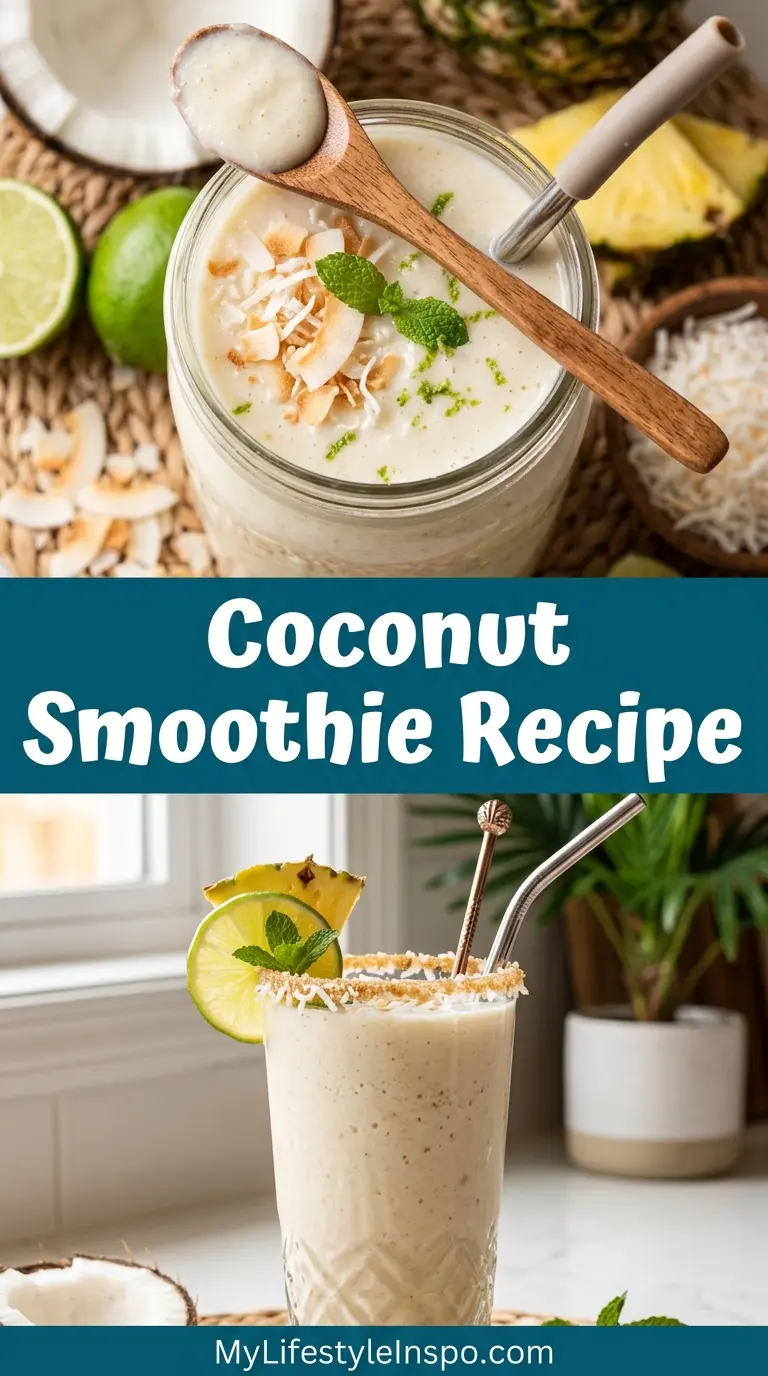
Step-by-Step Instructions
Step 1: Freeze Your Banana in Advance
- Peel the banana the day before (or at least 4 hours ahead) and slice it into 1-inch (2.5 cm) rounds.
- Lay the banana slices flat on a parchment-lined baking sheet so they do not clump together.
- Place the sheet in the freezer for at least 4 hours, or until completely frozen solid.
- Transfer frozen banana pieces to a zip-top freezer bag for easy access. Frozen banana keeps well for up to 2 months.
Step 2: Prep the Coconut Milk
- Shake the can of coconut milk vigorously for 30 seconds before opening. Full-fat coconut milk separates in the can, with the thick cream rising to the top and the liquid settling at the bottom.
- If the coconut milk is still separated after shaking, open the can and use a fork or small whisk to stir the cream and liquid together until fully combined.
- Measure out 1 cup (240 ml) of the well-combined coconut milk and set aside.
Step 3: Measure and Layer All Ingredients
- Add the liquid ingredients to the blender first. Pour in the 1 cup (240 ml) coconut milk and 1/4 cup (60 ml) water.
- Add the vanilla extract and honey or maple syrup directly on top of the liquid. Adding sweetener to liquid first helps it blend evenly rather than sticking to the frozen fruit.
- Add the pinch of sea salt.
- Next, add the frozen mango chunks (1/2 cup / 75g), followed by the frozen pineapple chunks (1 cup / 150g).
- Finally, add the frozen banana slices on top. Layering with frozen items on top of liquid helps the blender pull everything down efficiently.
Step 4: Blend Until Completely Smooth
- Secure the blender lid tightly and start on the lowest speed setting.
- Gradually increase the speed to high over about 10 seconds. This prevents air pockets and ensures even blending.
- Blend on high for 45 to 60 seconds, or until the smoothie is completely smooth with no visible chunks.
- If the blender is struggling or air pockets are forming, turn it off, remove the lid, and use a spatula to push the frozen fruit down toward the blades. Replace the lid and continue blending.
- Taste the smoothie and adjust sweetness by adding an extra drizzle of honey if needed. Blend for an additional 5 seconds if you add more sweetener.
Step 5: Check Consistency and Adjust
- If the smoothie is too thick to blend properly, add water or additional coconut milk one tablespoon at a time and blend again. Start with just 1 tablespoon (15 ml) at a time so you do not over-thin it.
- If the smoothie is too thin for your preference, add a few more frozen banana slices or a small handful of ice and blend again for 15 seconds.
- The ideal texture is thick enough to hold a shape briefly when poured but smooth enough to drink through a wide straw.
Step 6: Pour and Garnish
- Pour the smoothie immediately into tall serving glasses.
- For the optional toasted coconut flake garnish, sprinkle 1 tablespoon of coconut flakes on top of each serving.
- Add a straw and serve immediately, as the smoothie will begin to warm and thin within 10 to 15 minutes.
This bright tropical blend pairs wonderfully with a Green Smoothie if you want to alternate your morning routine.
Tips for Success
Getting this smoothie right every time comes down to a few small details that make a big difference. The most important is keeping everything cold: warm bananas or room-temperature pineapple will make the smoothie thin and watery instead of thick and creamy.
- Freeze your banana before you need it – A fully frozen banana is essential for texture. A slightly chilled or just-peeled banana will not give the same result.
- Use full-fat coconut milk, not light – Light coconut milk contains more water and will produce a thinner, icier smoothie.
- Shake the can thoroughly – Unincorporated coconut cream creates clumpy blending and uneven flavor.
- Layer liquid at the bottom – Always add liquids first, then frozen solids on top, so the blades have something to grip.
- Add liquid sparingly – It is much easier to thin a thick smoothie than to thicken a runny one.
- Taste before you pour – Sweetness levels vary depending on the ripeness of your banana and the brand of canned pineapple you use. Always taste and adjust before serving.
- Serve immediately – Frozen smoothies start to separate and warm up fast. Pour and enjoy right after blending for the best texture.
Read Also: Avocado Smoothie Recipe
Serving Suggestions
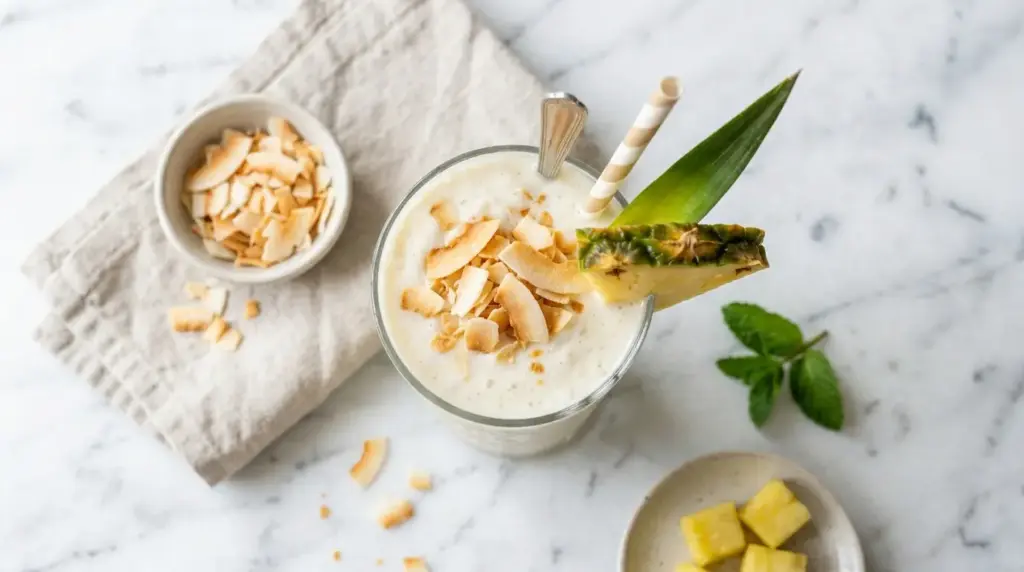
This coconut smoothie is satisfying on its own, but it also pairs well with a range of breakfast and snack options that complement its tropical vibe.
Serve it alongside a piece of avocado toast for a filling, balanced breakfast that covers healthy fats, fiber, and natural sugar. The creaminess of the smoothie works beautifully next to something savory.
A bowl of easy granola alongside the smoothie makes for a crunchy, satisfying morning combo. Sprinkle a few tablespoons directly on top of the smoothie for an almost-bowl effect.
- Acai bowl pairing – Serve the smoothie next to an Easy Acai Bowl for a power-packed tropical breakfast spread.
- On its own as a snack – Pour into a shorter glass with a handful of coconut flakes on top for an afternoon treat.
- As a post-workout drink – Add a scoop of vanilla protein powder before blending and drink within 30 minutes of exercise.
- Smoothie bowl style – Use slightly less liquid, pour into a bowl, and top with granola, sliced fresh banana, and shredded coconut for a more substantial meal.
- With a savory egg dish – The sweetness of the coconut smoothie balances well alongside a savory egg breakfast like scrambled eggs or an egg skillet.
Variations to Try
The base recipe is just the beginning. Once you have the core coconut-banana-pineapple formula down, you can take it in many different directions based on what you have on hand or what flavor profile you are craving.
- Coconut Mango Smoothie – Double the mango to 1 cup (150g) and reduce the pineapple to 1/2 cup (75g) for a mango-forward version. Try the Banana Mango Smoothie for more inspiration.
- Coconut Green Smoothie – Add a large handful (about 1 cup / 30g) of fresh spinach or kale. The coconut and pineapple flavors completely mask any bitterness.
- Coconut Protein Smoothie – Stir in one scoop of vanilla or unflavored protein powder. Check out the Protein Smoothie Recipe for tips on the best powders to use.
- Coconut Berry Smoothie – Replace the mango with 1/2 cup (75g) of frozen mixed berries for a more antioxidant-rich version.
- Piña Colada Smoothie (non-alcoholic) – Skip the mango, double the pineapple, and add a squeeze of fresh lime juice. It tastes just like the classic cocktail without the rum.
- Keto Coconut Smoothie – Replace the banana with 1/2 an avocado and use a few drops of liquid stevia as sweetener. Explore the Keto Smoothie Recipe for more low-carb ideas.
Storage and Reheating
Smoothies are best consumed immediately after blending, but if you need to prepare ahead or have leftovers, there are a few ways to keep them at their best. Do not “reheat” this smoothie as it is meant to be served cold.
- Refrigerator – Pour leftover smoothie into an airtight jar or container and refrigerate for up to 24 hours. Stir or shake vigorously before drinking, as some separation is normal.
- Freezer – Pour individual portions into ice cube trays and freeze solid. Pop the cubes into a zip-top bag and store for up to 2 months. To serve, blend the cubes with a splash of coconut milk for an instant smoothie.
- Smoothie packs – Portion the frozen banana, pineapple, and mango into individual zip-top bags and freeze. When ready to blend, dump one pack into the blender, add coconut milk and remaining liquid ingredients, and blend.
- Do not refrigerate for more than 24 hours – The smoothie will begin to oxidize and lose its bright tropical color and fresh flavor after a day in the fridge.
- Stir before serving – Even after a short time in the fridge, coconut milk may separate. A quick stir with a spoon brings it back together.
Read Also: Breakfast Smoothie Recipe
Nutritional Facts
The following estimates are based on one serving (approximately 1.5 cups / 360 ml) made with full-fat coconut milk, one frozen banana, frozen pineapple, frozen mango, and one tablespoon of honey. Values are approximate and will vary based on specific brands and ingredient amounts.
| Nutrient | Per Serving |
|---|---|
| Calories | 320 kcal |
| Total Fat | 19g |
| Saturated Fat | 17g |
| Carbohydrates | 38g |
| Dietary Fiber | 3g |
| Sugars | 24g (natural) |
| Protein | 3g |
| Sodium | 55mg |
| Potassium | 520mg |
| Vitamin C | 45% DV |
| Magnesium | 12% DV |
Note: Using light coconut milk reduces total fat to approximately 8g and drops calorie count to around 220 kcal per serving. Adding a scoop of protein powder adds 20-25g protein.
Another great option to explore is the Greek Yogurt Smoothie Recipe for a higher-protein version of a creamy blended drink.
Health Benefits of Key Ingredients
Every ingredient in this smoothie earns its place for both flavor and nutrition. This is not just a pretty drink.
Coconut milk contains medium-chain triglycerides (MCTs), a type of fat that the body absorbs and uses for energy more efficiently than long-chain fats. MCTs are particularly well-studied for their role in supporting sustained energy levels without the blood sugar spike that comes from sugar-heavy drinks.
The frozen banana is a potent source of potassium, vitamin B6, and resistant starch, particularly when frozen slightly underripe. Resistant starch acts as a prebiotic and supports gut health by feeding beneficial bacteria.
- Coconut milk – Rich in MCTs for quick, steady energy. Contains lauric acid, which has antiviral and antibacterial properties.
- Frozen banana – High in potassium for heart and muscle function. Provides natural sweetness without refined sugar.
- Pineapple – An excellent source of vitamin C and bromelain, an enzyme with anti-inflammatory properties that also supports digestion.
- Mango – Rich in vitamin A and beta-carotene, both essential for eye health and immune function.
- Coconut flakes (garnish) – Provide a small dose of dietary fiber and additional healthy fats.
- Sea salt – Even a small pinch helps balance electrolytes and actually amplifies the natural sweetness of the other ingredients.
- Vanilla extract – Contains small amounts of antioxidants and adds depth of flavor without any calories from sweetener.
For another nutrient-dense blended option, the Almond Milk Smoothie Recipe is a wonderful lower-fat alternative.
Frequently Asked Questions
1. Can I use coconut water instead of coconut milk?
You can, but the result will be significantly thinner and less creamy. Coconut water has a very light, subtle coconut flavor and almost no fat, which means the smoothie will taste more like a watered-down juice than the thick, tropical blend this recipe aims for. If you want a lighter smoothie, use light coconut milk as a compromise. It retains more of the coconut flavor and some creaminess while being lower in calories than full-fat canned coconut milk.
2. Do I need to freeze the banana ahead of time?
Yes, a frozen banana is essential for this recipe. A fresh, room-temperature banana will make the smoothie thin, foamy, and slightly warm. Freezing the banana is what creates that thick, ice-cream-like consistency. If you forgot to freeze your banana, you can add a small handful of ice cubes (about 1/2 cup / 120 ml) and a fresh banana instead, though the texture will be slightly icier and less creamy.
3. How can I make this smoothie thicker?
The easiest way is to add more frozen banana. You can also add 1/4 of a ripe avocado, which adds creaminess and healthy fats without changing the flavor dramatically. Reducing the liquid slightly, or using frozen mango and pineapple straight from the freezer (rather than letting them sit at room temperature), also helps. Avoid blending for too long, as extended blending generates heat that can slightly melt the frozen fruit and thin the smoothie.
4. Is this smoothie suitable for kids?
Absolutely. This is one of the most kid-friendly smoothies you can make. It is sweet, tropical, and creamy without any strong green vegetable flavors or unusual add-ins. You can serve it without the optional honey for toddlers and young children, since the ripe banana and pineapple provide more than enough natural sweetness. It is also a great way to sneak in some fruit servings for picky eaters.
5. Can I add protein powder to this smoothie?
Yes, this smoothie works very well with protein powder. Vanilla-flavored protein powder is the most complementary choice because it enhances the tropical notes already present in the coconut, pineapple, and banana. Unflavored or plain protein powder also works without altering the taste. Add one scoop (roughly 25-30g) along with the other liquid ingredients before blending. If the smoothie becomes too thick after adding protein powder, add an extra splash of coconut milk to loosen it. For more guidance, see the Smoothie Recipe with Protein Powder.
Read Also: Dragon Fruit Smoothie Recipe
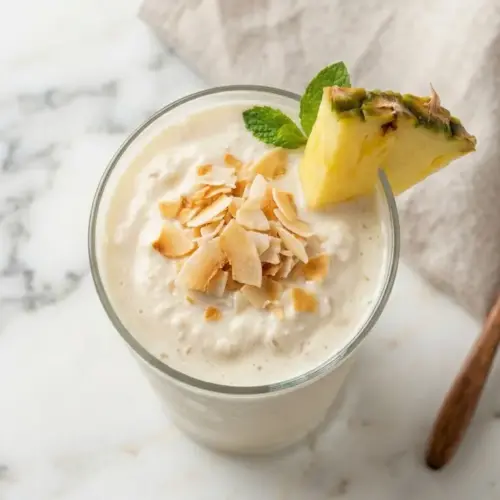
Coconut Smoothie

Equipment
- High-powered blender - Vitamix, Ninja, or Blendtec recommended for smoothest results
- Measuring cups and spoons
- Can opener
- Knife and cutting board - For prepping fresh banana before freezing
- Tall serving glasses - 16 oz capacity recommended
- Straw - Wide-mouth straw recommended for thick smoothies
- Spatula or tamper - For scraping down the blender jar
- Baking sheet - (optional) For freezing banana slices
- Parchment paper - (optional) For freezing banana slices
- Zip-top freezer bag - (optional) For storing frozen banana
- Ice cube trays - (optional) For freezing leftover smoothie
Ingredients
- 1 cup full-fat canned coconut milk - 240ml, shaken well before opening
- 1 large frozen banana - about 120g, peeled and sliced before freezing
- 1 cup frozen pineapple chunks - 150g
- 1/2 cup frozen mango chunks - 75g
- 1 tablespoon honey or maple syrup - 15ml, optional, adjust to taste
- 1/2 teaspoon vanilla extract
- 1/4 cup water - 60ml, or additional coconut milk, to help blending
- 2 tablespoons unsweetened toasted coconut flakes - 10g, for garnish, optional
- fine sea salt - pinch, enhances and balances sweetness
Instructions
- Freeze the banana in advance: peel, slice into 1-inch rounds, and freeze on a parchment-lined baking sheet for at least 4 hours until solid. Transfer to a freezer bag for easy access.
- Shake the can of coconut milk vigorously for 30 seconds. If separated after shaking, open and stir the cream and liquid together until fully combined. Measure out 1 cup.
- Add liquid ingredients to the blender first: coconut milk, water, vanilla extract, honey or maple syrup, and a pinch of salt. Top with frozen mango, pineapple, and finally the frozen banana slices.
- Secure the lid, start on low speed, and gradually increase to high over 10 seconds. Blend for 45 to 60 seconds until completely smooth. Scrape down the sides if needed and continue blending.
- Taste and adjust sweetness if needed, then check consistency. Add more liquid by the tablespoon to thin, or add extra frozen fruit to thicken. Blend briefly after any adjustments.
- Pour immediately into tall serving glasses. Garnish with toasted coconut flakes and serve with a wide straw. Enjoy right away for the best texture.
Notes
- Use only full-fat canned coconut milk for the creamiest results – light coconut milk will produce a thinner, icier smoothie.
- Frozen banana is essential for thick, creamy texture. A fresh banana will make the smoothie thin and foamy.
- Always add liquids to the blender first, then frozen fruit on top to help the blades pull everything down efficiently.
- Add liquid sparingly – it’s easier to thin a thick smoothie than to thicken a runny one.
- If the smoothie is too thick, add water or extra coconut milk one tablespoon at a time and blend again.
- For a thicker smoothie, add more frozen banana, 1/4 of an avocado, or reduce the liquid slightly.
- Store leftovers in an airtight jar in the refrigerator for up to 24 hours – stir well before drinking as separation is normal.
- Freeze leftover smoothie in ice cube trays and blend with a splash of coconut milk for an instant smoothie.
- Prep smoothie packs by portioning frozen fruit into freezer bags. When ready, dump into the blender with liquid ingredients and blend.
- Sweetness varies depending on fruit ripeness – always taste and adjust honey or maple syrup before serving.
Final Thoughts
This coconut smoothie recipe is one of those recipes that looks and tastes impressive but takes almost no effort to pull together. It is thick, tropical, naturally sweet, and completely dairy-free.
Once you have frozen banana and canned coconut milk stocked in your kitchen, you are always just a blender away from something genuinely delicious. The hardest part is remembering to freeze the banana the night before.
Give this recipe a try and let us know how it turns out! Leave a comment below with your favorite variation, or share a photo of your smoothie on social media. We love seeing your creations.
Recommended:
- Watermelon Smoothie Recipe
- Papaya Smoothie Recipe
- Acai Smoothie Recipe
- Blueberry Banana Smoothie Recipe
- Passion Fruit Smoothie Recipe
- Strawberry Banana Smoothie Recipe Without Yogurt
- Peanut Butter Banana Smoothie Recipe
- Cherry Smoothie Recipe
- Classic Pina Colada Recipe
- Raspberry Smoothie Recipe