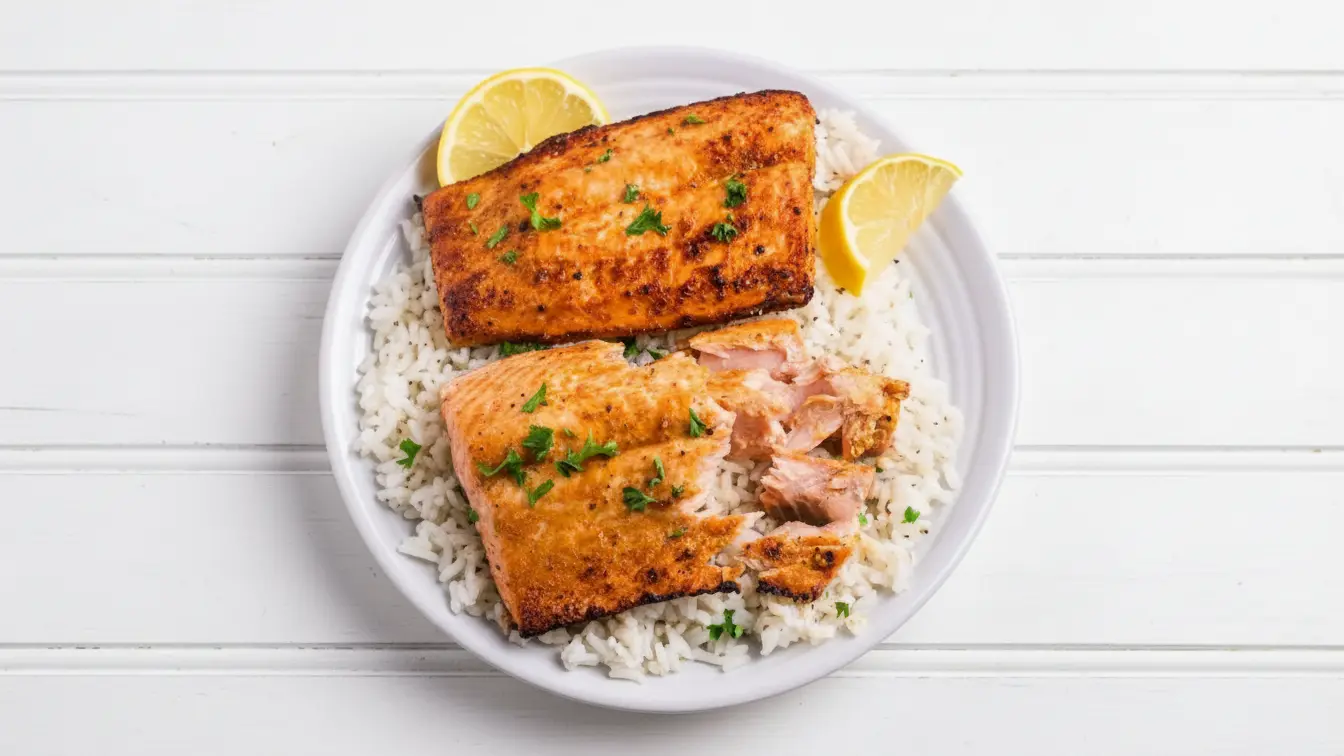
Cooking frozen salmon in the air fryer is one of those kitchen tricks that feels almost too easy to be true. I discovered this method on a particularly busy weeknight when I forgot to thaw my salmon fillets, and now it’s become my go-to way to prepare this Air Fryer Frozen Salmon Recipe.
You can go from freezer to table in less than 20 minutes with perfectly cooked, flaky salmon that tastes like you spent hours on it. No thawing required, no complicated steps, just simple seasoning and the magic of hot air circulation.
This technique has saved countless dinners at my house. The air fryer creates a beautifully caramelized exterior while keeping the inside moist and tender, something I always struggled to achieve when cooking frozen fish in the oven.
Why You’ll Love This Air Fryer Frozen Salmon Recipe
This recipe eliminates the number one hurdle most people face when cooking salmon: remembering to defrost it ahead of time. I can’t count how many times I’ve stared at frozen fish fillets at 5 PM, wondering what to make for dinner.
The air fryer does something magical to frozen salmon. It crisps the outside while gently cooking the inside, giving you restaurant-quality results without any special skills or equipment beyond the air fryer itself.
Here’s what makes this recipe so fantastic:
- No thawing necessary – Cook straight from frozen in under 20 minutes
- Minimal cleanup – Just the air fryer basket and maybe a plate
- Perfectly cooked every time – The air fryer’s consistent heat prevents overcooking
- Versatile seasoning options – Works with any spice blend you prefer
- Healthy and nutritious – High in protein and omega-3 fatty acids
- Budget-friendly – Frozen salmon is often more affordable than fresh
If you’re looking for more air fryer seafood inspiration, my Air Fryer Salmon Bites Recipe are perfect for snacking or meal prep.
Ingredients
The beauty of this recipe lies in its simplicity. You probably have most of these ingredients in your pantry already, and the frozen salmon is the star of the show.
- Frozen salmon fillets (4 fillets, about 6 oz each) – Skin-on or skinless both work
- Olive oil (2 tablespoons) – Helps the seasonings stick and promotes browning
- Garlic powder (1 teaspoon) – Adds savory depth
- Paprika (1 teaspoon) – For a subtle smoky flavor and color
- Dried dill (1 teaspoon) – Classic salmon pairing
- Salt (½ teaspoon) – Enhances all the flavors
- Black pepper (½ teaspoon) – Adds a gentle kick
- Lemon (1, cut into wedges) – For serving
Kitchen Equipment Needed
You don’t need a fancy kitchen setup for this recipe. Just a few basic items will get you perfectly cooked salmon every time.
Here’s what you’ll need:
- Air fryer (any size that fits your fillets)
- Small mixing bowl – For combining seasonings
- Pastry brush or spoon – To apply oil
- Meat thermometer – Optional but helpful for checking doneness
- Tongs – For safely removing the hot salmon
Recommended Products for This Recipe
After making this recipe dozens of times, I’ve found a few products that really elevate the results and make the cooking process smoother.
1. Premium Wild-Caught Frozen Salmon
Quality matters when it comes to salmon, and wild-caught varieties have better texture and flavor than farm-raised options. They hold up beautifully in the air fryer and have that rich, buttery taste you want from salmon.
2. COSORI Air Fryer
This is my personal favorite air fryer for cooking salmon. The square basket design fits fillets perfectly without crowding, and the temperature control is incredibly precise, which matters when you’re cooking from frozen.
3. McCormick Gourmet Dill Weed
Fresh herbs are great, but quality dried dill like this adds concentrated flavor that works perfectly with the quick cooking time. This brand has consistently fresh-tasting herbs that don’t taste dusty or old.
4. ThermoPro Meat Thermometer
Taking the guesswork out of doneness is crucial with salmon, and this instant-read thermometer gives you results in seconds. You’ll never overcook your fish again once you start checking the internal temperature.
Step-by-Step Instructions
Follow these detailed steps for perfectly cooked frozen salmon every single time. I’ve included all the little details that make a difference.
1. Preheat Your Air Fryer
- Set your air fryer to 390°F (200°C)
- Let it preheat for 3-5 minutes
- Preheating ensures even cooking from the moment the salmon goes in
- Some air fryers have a preheat function; use it if available
2. Prepare the Seasoning Blend
- In a small bowl, combine garlic powder, paprika, dried dill, salt, and black pepper
- Mix thoroughly with a fork or small whisk
- This pre-mixed seasoning makes application much easier
- You can make extra and store it in an airtight container for future use
3. Brush the Frozen Salmon with Oil
- Remove frozen salmon fillets from packaging and place on a clean plate
- Don’t rinse the salmon; any ice crystals will melt during cooking
- Brush olive oil evenly over the top surface of each frozen fillet
- Use about ½ tablespoon of oil per fillet
- The oil helps seasonings adhere even to frozen fish
4. Season the Salmon
- Sprinkle the seasoning mixture generously over the oiled side of each fillet
- Press gently with your fingers to help the seasonings stick
- Don’t worry if some falls off; that’s normal with frozen fish
- You can season just the top since you won’t flip the fish
5. Arrange in the Air Fryer Basket
- Place seasoned salmon fillets in a single layer in the air fryer basket
- Leave at least ½ inch of space between fillets for proper air circulation
- Position fillets skin-side down if using skin-on salmon
- Don’t overcrowd; cook in batches if necessary
6. Air Fry the Frozen Salmon
- Cook at 390°F (200°C) for 12-15 minutes
- Thinner fillets (under 1 inch) will take closer to 12 minutes
- Thicker fillets (over 1 inch) may need the full 15 minutes
- No need to flip the salmon during cooking
- The fish is done when it flakes easily with a fork and reaches 145°F (63°C) internally
7. Check for Doneness
- Insert a meat thermometer into the thickest part of the fillet
- It should read 145°F (63°C) for safe consumption
- The flesh should appear opaque and flake easily when tested with a fork
- If needed, cook for an additional 2-3 minutes and check again
8. Rest and Serve
- Remove salmon carefully with tongs or a spatula
- Let rest for 2-3 minutes before serving
- This allows juices to redistribute throughout the fish
- Squeeze fresh lemon juice over the top just before serving
- Garnish with fresh dill or parsley if desired
Another favorite in my house is this Air Fryer Salmon Patties Recipe recipe, perfect for using up leftover cooked salmon.
Tips for Success
These tips come from trial and error, and they’ll help you avoid the common pitfalls I encountered when I first started cooking frozen salmon in the air fryer.
Small adjustments can make a big difference in your results. Here’s what I’ve learned:
- Don’t thaw the salmon – Seriously, cook it frozen. Partially thawed salmon won’t cook as evenly.
- Pat away excess ice – If there are large ice crystals, gently brush them off before oiling.
- Adjust cooking time by thickness – A ¾-inch fillet needs less time than a 1½-inch fillet.
- Use skin-on for easier removal – The skin acts as a barrier and makes flipping or removing easier.
- Don’t overcrowd – Air needs to circulate freely around each fillet for even cooking.
- Check temperature, not time – Every air fryer is different; use a thermometer for accuracy.
- Let it rest – Those 2-3 minutes make the salmon more tender and juicy.
- Season generously – Frozen fish needs a bit more seasoning than fresh.
For perfectly crispy sides to go with your salmon, check out my Air Fryer Zucchini Fries Recipe.
Serving Suggestions
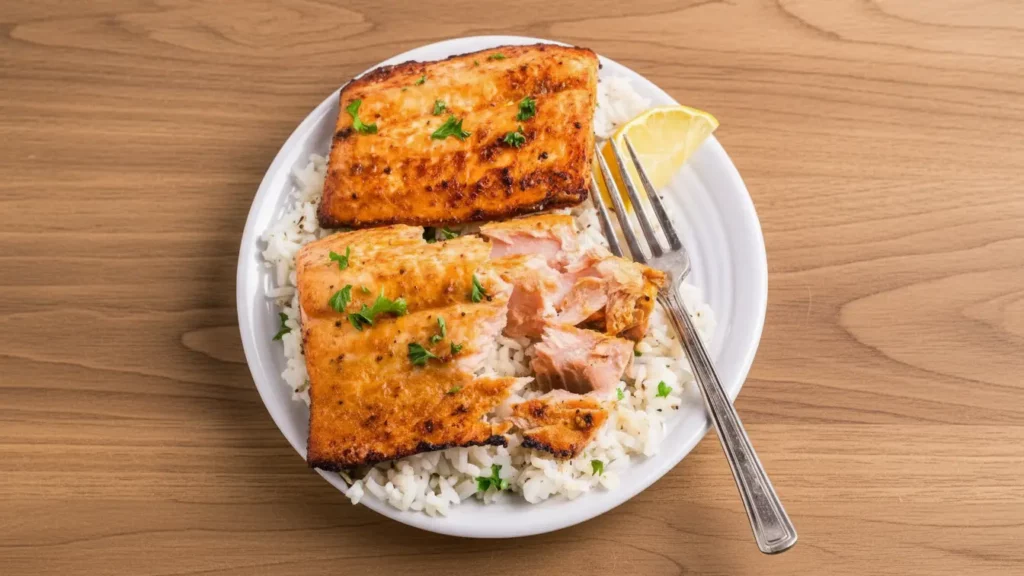
This air fryer salmon is incredibly versatile and pairs beautifully with all sorts of sides and accompaniments. I love how quickly you can pull together a complete meal.
The mild, flaky salmon works with everything from light salads to hearty grains.
Here are my favorite ways to serve it:
- Over a bed of mixed greens – Top with Asian Chicken Salad ingredients for a fusion twist
- With roasted vegetables – Try my Roasted Broccoli or Roasted Potatoes
- Alongside quinoa or rice – Add steamed vegetables for a balanced meal
- In tacos – Flake the salmon and serve in corn tortillas with cabbage slaw
- With pasta – Toss with olive oil, garlic, and cherry tomatoes
- On a grain bowl – Combine with farro, roasted vegetables, and tahini dressing
- With a baked potato – Simple and satisfying comfort food pairing
You might also enjoy: Air Fryer Salmon Recipe for variations using fresh fillets.
Variations to Try
Once you’ve mastered the basic recipe, these variations will keep things interesting. I rotate through these different flavor profiles depending on what I’m in the mood for.
Feel free to get creative with your seasonings and sauces:
- Cajun-style – Replace dill with Cajun seasoning for a spicy kick
- Teriyaki glaze – Brush with teriyaki sauce during the last 3 minutes of cooking
- Mediterranean – Use oregano, basil, and sun-dried tomatoes
- Honey garlic – Drizzle with honey and minced garlic after cooking
- Lemon pepper – Use lemon pepper seasoning instead of the herb blend
- Blackened – Coat heavily with blackening seasoning for a crusty exterior
- Maple mustard – Mix maple syrup and Dijon mustard for a sweet-tangy glaze
Read Also: Air Fryer Chicken Breast Recipe
Storage and Reheating
Properly stored salmon stays fresh and delicious for several days. I often make extra fillets for quick lunches throughout the week.
Follow these guidelines for the best results:
- Refrigerator storage – Place cooled salmon in an airtight container for up to 3 days
- Freezer storage – Wrap tightly in plastic wrap, then foil, for up to 2 months
- Reheating in air fryer – Heat at 350°F (175°C) for 3-4 minutes
- Reheating in microwave – Use 50% power for 1-2 minutes to avoid drying out
- Cold leftovers – Flake and use in salads or sandwiches without reheating
Nutritional Facts
Per serving (1 fillet, approximately 6 oz cooked):
- Calories: 340
- Protein: 38g
- Fat: 19g
- Saturated Fat: 3g
- Carbohydrates: 1g
- Fiber: 0g
- Sugar: 0g
- Cholesterol: 95mg
- Sodium: 320mg
- Omega-3 fatty acids: 2.5g
Another quick and healthy option: Air Fryer Chicken Thighs Recipe.
Health Benefits of Key Ingredients
This recipe isn’t just convenient—it’s packed with nutrients that support overall health. I feel good knowing I’m serving my family something truly nutritious.
Salmon is one of the most nutrient-dense proteins available, and cooking it from frozen preserves those nutrients beautifully.
Here’s what makes this dish so healthy:
- Omega-3 fatty acids – Support heart health, brain function, and reduce inflammation
- High-quality protein – Helps build and repair muscles, keeps you satisfied longer
- Vitamin D – Essential for bone health and immune function, rare in food sources
- B vitamins – Support energy metabolism and nervous system health
- Selenium – Powerful antioxidant that supports thyroid function
- Potassium – Helps regulate blood pressure and supports heart health
If you love healthy air fryer recipes, try my Air Fryer Zucchini Chips Recipe for a nutritious snack.
Frequently Asked Questions
1. Can I cook frozen salmon without oil in the air fryer?
Yes, you can cook frozen salmon without oil, but I don’t recommend it. The oil serves multiple purposes: it helps seasonings stick to the frozen surface, promotes even browning, and prevents the salmon from drying out during cooking. Without oil, your salmon might turn out dry and the seasonings will mostly fall off into the basket.
2. How do I know when frozen salmon is fully cooked?
The most reliable way is using a meat thermometer inserted into the thickest part of the fillet—it should read 145°F (63°C). Visually, the salmon should be opaque throughout and flake easily when tested with a fork. The flesh will change from translucent to solid pink or orange, and any white albumin (protein) that appears on the surface is normal and indicates the fish is cooked.
3. Why is my air fryer salmon dry?
Dry salmon usually results from overcooking, which happens easily because air fryers cook so efficiently. Make sure you’re checking the internal temperature rather than relying solely on time, as air fryer models vary. Also ensure you’re using enough oil—at least ½ tablespoon per fillet—and not cooking at too high a temperature.
4. Can I cook frozen salmon with skin on in the air fryer?
Absolutely, and I actually prefer it this way. The skin protects the flesh from direct heat and makes it easier to remove the salmon from the basket without it breaking apart. Place the fillet skin-side down and cook as directed—the skin will crisp up nicely and you can either eat it or easily peel it off after cooking.
5. What’s the difference between cooking frozen and fresh salmon in the air fryer?
Fresh salmon cooks faster—typically 8-10 minutes at the same temperature—because it doesn’t need time to thaw. Frozen salmon takes 12-15 minutes because the air fryer must first defrost the fish, then cook it through. The texture and flavor are remarkably similar, though some people detect a slightly better texture with fresh salmon.
For more air fryer poultry options, check out my Air Fryer Chicken Wings Recipe.
Final Thoughts
This Air Fryer Frozen Salmon Recipe has become my answer to “what’s for dinner?” on those nights when I haven’t planned ahead. The simplicity of cooking straight from frozen without sacrificing quality or flavor is truly remarkable.
I hope this recipe brings the same convenience and confidence to your kitchen that it’s brought to mine. Don’t be surprised if this becomes your new go-to method for cooking salmon, frozen or otherwise.
Give this recipe a try and let me know how it turns out in the comments below! I’d love to hear about your favorite seasoning combinations or what you served alongside your salmon.
Recommended:
- Air Fryer Chicken Cutlets Recipe
- Air Fryer Chicken Nuggets Recipe
- Air Fryer Chicken Parmesan Recipe
- Air Fryer Chicken Tenders Recipe
- Air Fryer Chicken Drumsticks Recipe
- Air Fryer Zucchini Fritters Recipe
- Air Fryer Zucchini Boats Recipe
- Baked Salmon Recipe
- Baked Cod Recipe
- Salmon Skillet Recipe