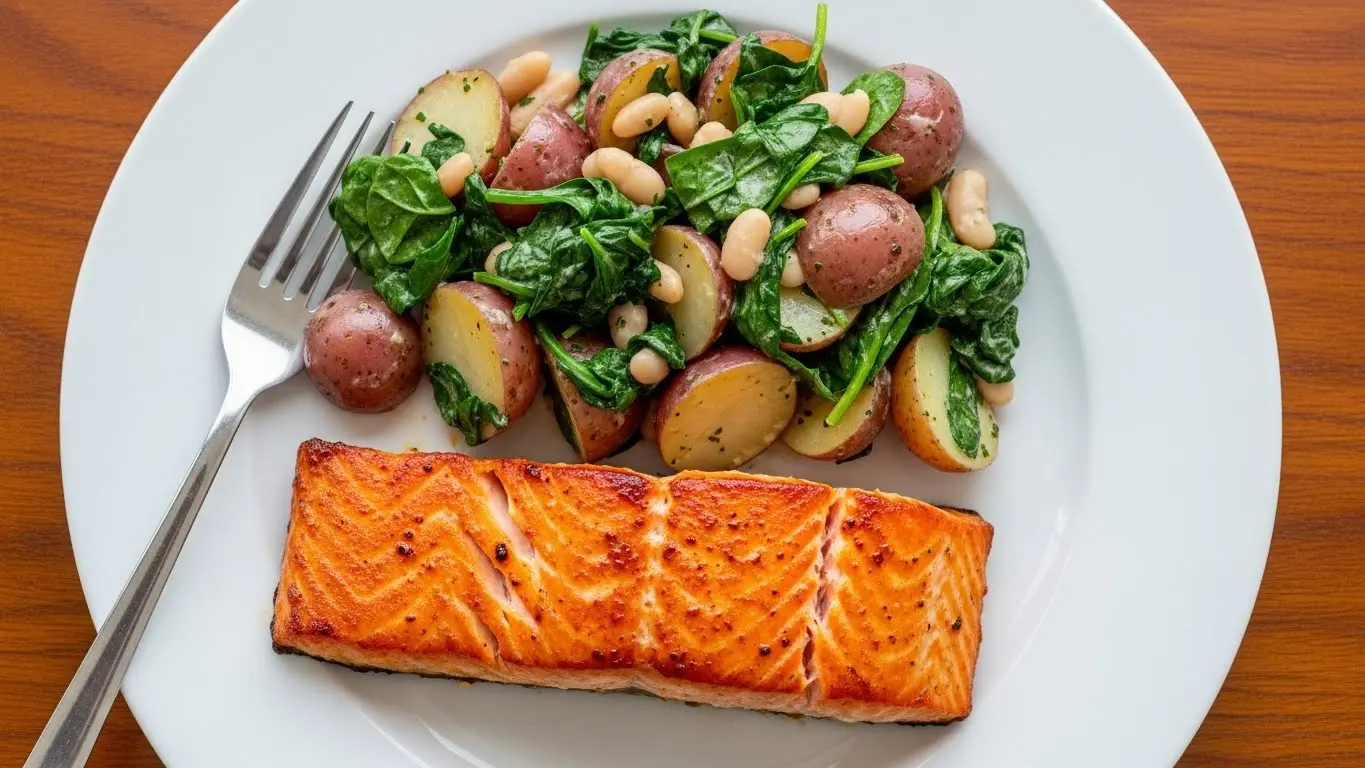
Dinner doesn’t have to be complicated to be absolutely delicious. I discovered this salmon skillet recipe during one of those nights when I needed something impressive but didn’t have the energy for a multi-pot production.
The beauty of a one-pan meal is that it saves you time without sacrificing flavor. This salmon skillet recipe comes together in about 25 minutes and delivers perfectly cooked, flaky fish with golden edges and a flavor-packed sauce that’ll have everyone asking for seconds.
I love how versatile this dish is. You can dress it up for a special dinner or keep it casual for a weeknight meal. Either way, you’re getting restaurant-quality salmon without the fuss or the cleanup nightmare.
Why You’ll Love This Salmon Skillet Recipe
This recipe has become my go-to for busy evenings when I want something nutritious and satisfying. The salmon gets beautifully crispy on the outside while staying tender and moist inside.
Here’s what makes this salmon skillet recipe so fantastic:
- Ready in under 30 minutes – Perfect for those hectic weeknights when time is tight
- One pan means minimal cleanup – You’ll appreciate this when you’re tired after dinner
- Packed with omega-3s and protein – Guilt-free eating that actually tastes amazing
- Easily customizable – Swap out herbs, add vegetables, or change up the sauce to match your mood
- Impressive enough for guests – Looks and tastes like you spent hours in the kitchen
- Budget-friendly – Uses simple ingredients you probably already have
Another favorite of mine: Baked Salmon Recipe
Ingredients
The ingredients for this salmon skillet recipe are straightforward and easy to find. I always recommend using fresh salmon when possible, but frozen works beautifully too.
- 4 salmon fillets (6 ounces each, skin on or off)
- 3 tablespoons olive oil, divided
- 4 cloves garlic, minced
- 1 cup cherry tomatoes, halved
- 1/2 cup white wine (or chicken broth)
- 2 tablespoons fresh lemon juice
- 1 teaspoon lemon zest
- 1/4 cup heavy cream
- 2 tablespoons fresh dill, chopped
- 1 tablespoon fresh parsley, chopped
- 1 teaspoon salt
- 1/2 teaspoon black pepper
- 1/4 teaspoon red pepper flakes (optional)
- 2 cups fresh spinach
Kitchen Equipment Needed
Having the right tools makes cooking this salmon skillet recipe so much easier. You don’t need anything fancy, just a few kitchen basics.
- Large cast iron skillet or heavy-bottomed pan (12-inch works best)
- Fish spatula (makes flipping salmon foolproof)
- Sharp knife
- Cutting board
- Measuring cups and spoons
- Small bowl for mixing
- Tongs
- Paper towels
Recommended Products for This Recipe
After making this salmon skillet recipe countless times, I’ve found a few products that really elevate the final dish and make the cooking process smoother.
1. Lodge Pre-Seasoned Cast Iron Skillet
A good cast iron skillet is the secret to getting that perfect golden crust on your salmon. Lodge skillets heat evenly and retain temperature beautifully, which means your fish cooks consistently without hot spots. Plus, they last forever with proper care.
2. Wild-Caught Alaskan Salmon Fillets
The quality of your salmon makes all the difference in this recipe. I always look for wild-caught Alaskan salmon because it has superior flavor and texture compared to farm-raised options. The flesh is firmer, the taste is cleaner, and you can really notice the difference.
3. OXO Good Grips Fish Turner
This fish spatula has a thin, flexible edge that slides under delicate salmon fillets without tearing them apart. The slotted design lets excess oil drain away, and the angled shape gives you perfect control when flipping. It’s one of those tools you’ll wonder how you lived without.
4. California Olive Ranch Extra Virgin Olive Oil
Not all olive oils are created equal, and this premium extra virgin olive oil brings a fruity, peppery note that complements the salmon perfectly. It has a higher smoke point than many other olive oils, which means it won’t burn when you’re searing the fish at higher temperatures.
This pairs beautifully with my Roasted Broccoli for a complete meal.
Step-by-Step Instructions
Follow these detailed instructions to create perfectly cooked salmon every time. Take your time with each step, especially if this is your first time making this salmon skillet recipe.
1. Prepare the Salmon
- Remove the salmon fillets from the refrigerator about 15 minutes before cooking to bring them to room temperature
- Pat the salmon completely dry with paper towels on both sides (this is crucial for getting a good sear)
- Season both sides generously with salt and black pepper
- If your fillets have skin, score it with a sharp knife in a crosshatch pattern to prevent curling
2. Heat the Skillet
- Place your cast iron skillet over medium-high heat and let it warm up for 2-3 minutes
- Add 2 tablespoons of olive oil to the pan and swirl to coat the bottom evenly
- Wait until the oil shimmers and just begins to smoke slightly (this means it’s hot enough)
- The pan should be hot enough that a drop of water sizzles and evaporates immediately
3. Sear the Salmon
- Carefully place the salmon fillets in the hot skillet, skin-side down if they have skin
- Press down gently with your spatula for the first 10 seconds to ensure even contact with the pan
- Let the salmon cook undisturbed for 4-5 minutes until the edges turn opaque and a golden crust forms
- Resist the urge to move or flip the fish too early (it will naturally release from the pan when ready)
- Flip the salmon carefully and cook for another 3-4 minutes until just cooked through
- Remove the salmon from the skillet and set aside on a plate
4. Build the Sauce Base
- Reduce the heat to medium and add the remaining tablespoon of olive oil to the same skillet
- Add the minced garlic and sauté for 30-45 seconds until fragrant (don’t let it brown)
- Toss in the halved cherry tomatoes and cook for 2-3 minutes until they start to soften and release their juices
- Use your spatula to scrape up any browned bits from the bottom of the pan (that’s flavor gold)
5. Deglaze and Create the Pan Sauce
- Pour in the white wine (or chicken broth) and bring to a simmer
- Let it bubble for 2-3 minutes to reduce by about half and cook off the alcohol
- Add the lemon juice, lemon zest, and red pepper flakes if using
- Stir in the heavy cream and let the sauce simmer for another 2 minutes until it thickens slightly
- The sauce should coat the back of a spoon when it’s ready
6. Add Fresh Greens and Herbs
- Toss the fresh spinach into the sauce and stir until it wilts down (this takes about 1 minute)
- Stir in the chopped dill and parsley, reserving a little for garnish
- Taste the sauce and adjust seasoning with more salt, pepper, or lemon juice as needed
- The sauce should be bright, creamy, and well-balanced
7. Return Salmon and Finish
- Nestle the salmon fillets back into the skillet, spooning some of the sauce over the top
- Let everything heat together for 1-2 minutes to warm the salmon through
- Be careful not to overcook the salmon at this stage (it should be just opaque in the center)
- Remove from heat and garnish with the reserved fresh herbs and an extra squeeze of lemon if desired
You might also enjoy: Baked Cod Recipe
Tips for Success
These tried-and-true tips will help you nail this salmon skillet recipe every single time. I’ve learned these through plenty of practice and a few kitchen mishaps along the way.
- Don’t skip drying the salmon – Moisture is the enemy of a good sear, so pat those fillets bone dry
- Use a hot pan – The skillet needs to be properly heated before the fish goes in, or you’ll end up with steamed salmon instead of seared
- Choose similar-sized fillets – This ensures even cooking so everything finishes at the same time
- Let the salmon tell you when it’s ready to flip – If it sticks, it’s not ready yet; properly seared fish releases naturally
- Check for doneness with a fork – The flesh should flake easily but still look slightly translucent in the very center (it will finish cooking from residual heat)
- Don’t overcrowd the pan – Work in batches if needed to maintain high heat and proper searing
- Taste as you go – Adjust the seasoning throughout the cooking process for the best flavor
- Save some fresh herbs for garnish – That pop of green color and fresh flavor at the end makes a huge difference
Read Also: Lemon Chicken Recipe
Serving Suggestions
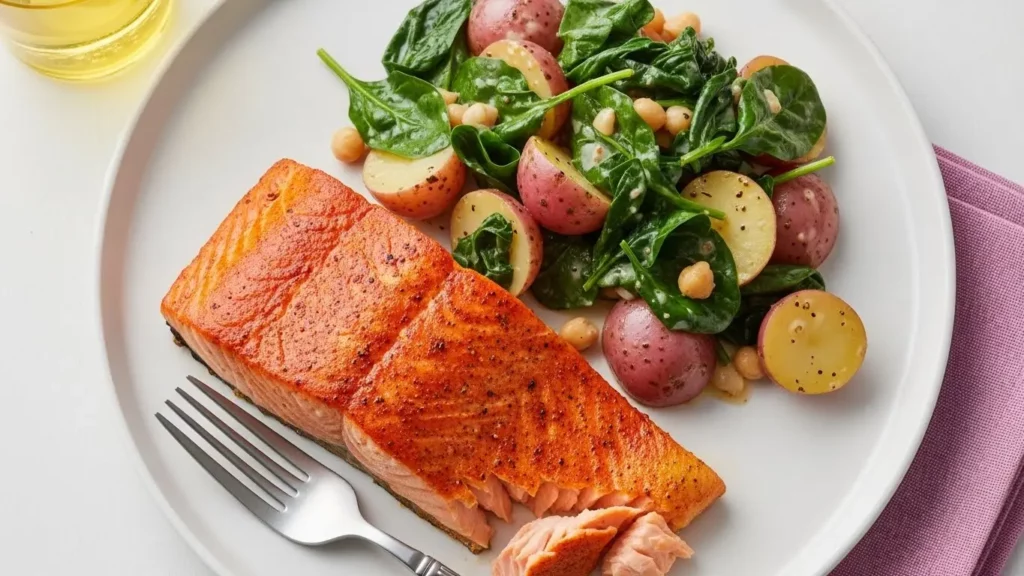
This salmon skillet recipe is incredibly versatile and pairs beautifully with so many different sides. I love serving it with something that can soak up all that delicious sauce.
Here are my favorite ways to serve this dish:
- Over creamy mashed potatoes – The sauce mingles perfectly with the potatoes
- With fluffy rice or quinoa – Absorbs every drop of that lemony cream sauce
- Alongside Roasted Potatoes – Crispy on the outside, fluffy inside
- With garlic bread – Perfect for mopping up the sauce
- On a bed of pasta – Angel hair or linguine works wonderfully
- Next to steamed asparagus – A classic pairing that never disappoints
- With a simple green salad – Keeps things light and fresh
- Over cauliflower rice – For a low-carb option that doesn’t sacrifice satisfaction
Variations to Try
Once you’ve mastered the basic salmon skillet recipe, have fun experimenting with these delicious variations. Each one brings something unique to the table.
- Mediterranean style – Add kalamata olives, sun-dried tomatoes, and feta cheese to the sauce
- Cajun spiced – Rub the salmon with Cajun seasoning before searing for a spicy kick
- Asian-inspired – Use soy sauce, ginger, and sesame oil instead of the cream sauce
- Tuscan salmon – Add white beans and extra garlic for a heartier meal
- Lemon butter – Skip the cream and finish with a generous pat of butter for a lighter sauce
- Pesto crusted – Spread pesto on top of the salmon halfway through cooking
- Honey garlic – Drizzle honey over the salmon and add extra garlic to the sauce
- Coconut curry – Replace cream with coconut milk and add curry powder for tropical flavors
For a lighter option, try: Chinese Chicken Salad Recipe
Storage and Reheating
Properly storing and reheating your salmon skillet recipe ensures you can enjoy leftovers without sacrificing quality. Here’s how I do it.
- Refrigerate promptly – Store leftover salmon in an airtight container within 2 hours of cooking
- Keep sauce separate if possible – This prevents the salmon from getting soggy
- Use within 3 days – Fresh fish doesn’t last as long as other proteins, so enjoy leftovers quickly
- Reheat gently – Use low heat in a covered skillet with a splash of water or broth to prevent drying out
- Microwave option – Heat in 30-second intervals at 50% power, covered with a damp paper towel
- Cold salmon works too – Flake leftover salmon over a salad for a quick lunch
- Freeze for up to 2 months – While texture changes slightly, frozen cooked salmon still tastes great in pasta or rice dishes
Nutritional Facts
This salmon skillet recipe delivers impressive nutrition along with incredible flavor. Here’s what you’re getting per serving (based on 4 servings).
- Calories: 420
- Protein: 35g
- Fat: 28g
- Saturated Fat: 8g
- Carbohydrates: 6g
- Fiber: 1g
- Sugar: 2g
- Sodium: 680mg
- Omega-3 Fatty Acids: 2.5g
Health Benefits of Key Ingredients
The ingredients in this salmon skillet recipe aren’t just delicious, they’re incredibly good for you too. Let me break down why this meal is such a nutritional powerhouse.
Salmon is one of the best sources of omega-3 fatty acids you can eat, which support heart health, brain function, and reduce inflammation throughout your body. It’s also loaded with high-quality protein that keeps you satisfied for hours.
- Omega-3 fatty acids – Support cardiovascular health and cognitive function
- Vitamin D – Essential for bone health and immune system support
- B vitamins – Help convert food into energy and support nervous system health
- Selenium – Powerful antioxidant that protects cells from damage
- Garlic – Contains compounds that may boost immune function and heart health
- Spinach – Packed with iron, calcium, and vitamins A, C, and K
- Tomatoes – Rich in lycopene, an antioxidant linked to reduced disease risk
- Olive oil – Contains healthy monounsaturated fats and anti-inflammatory compounds
This works wonderfully alongside Broccoli Salad for added nutrients.
Frequently Asked Questions
1. Can I use frozen salmon for this recipe?
Absolutely! Just make sure you thaw it completely first, preferably in the refrigerator overnight. Pat it extra dry before cooking since frozen salmon tends to release more moisture. The cooking time remains the same, and you’ll still get delicious results.
2. How do I know when the salmon is perfectly cooked?
The salmon is done when it flakes easily with a fork and reaches an internal temperature of 145°F. I prefer mine slightly underdone in the center (around 125-130°F) because it continues cooking from residual heat. The flesh should be opaque but still moist, never dry or chalky.
3. Can I make this recipe dairy-free?
Yes! Simply substitute the heavy cream with full-fat coconut milk or cashew cream. The sauce will have a slightly different flavor profile, but it’s still incredibly delicious. You can also use coconut cream for an even richer texture.
4. What if I don’t have white wine?
No problem at all! Chicken broth works perfectly as a substitute and adds its own savory depth to the sauce. You could also use vegetable broth for a lighter option. If you want to mimic the acidity of wine, add an extra tablespoon of lemon juice.
5. Can I add other vegetables to this skillet?
Definitely! This salmon skillet recipe is very forgiving and adaptable. Asparagus, zucchini, bell peppers, and mushrooms all work beautifully. Just add heartier vegetables earlier in the cooking process and more delicate ones toward the end.
Read Also: Beef Stroganoff Recipe
Final Thoughts
This salmon skillet recipe has earned its place in my regular dinner rotation, and I have a feeling it’ll do the same for you. The combination of tender, flaky salmon with that bright, creamy sauce is simply irresistible.
What I love most is how this recipe makes weeknight cooking feel special without requiring hours in the kitchen. You get restaurant-quality results with minimal effort and just one pan to clean. Give it a try tonight and see why it’s become one of my most-requested meals.
I’d love to hear how your salmon skillet turns out! Drop a comment below with your favorite variations or share a photo of your creation.
Recommended:
- Mexican Skillet Recipe
- Taco Skillet Recipe
- Enchilada Skillet Recipe
- Cabbage Roll Skillet Recipe
- Summer Tortellini Skillet Recipe
- Cookie Skillet Recipe
- Loaded Breakfast Skillet Recipe
- Breakfast Skillet Recipe
- Salmon Chowder Recipe
- Fish Chowder Recipe