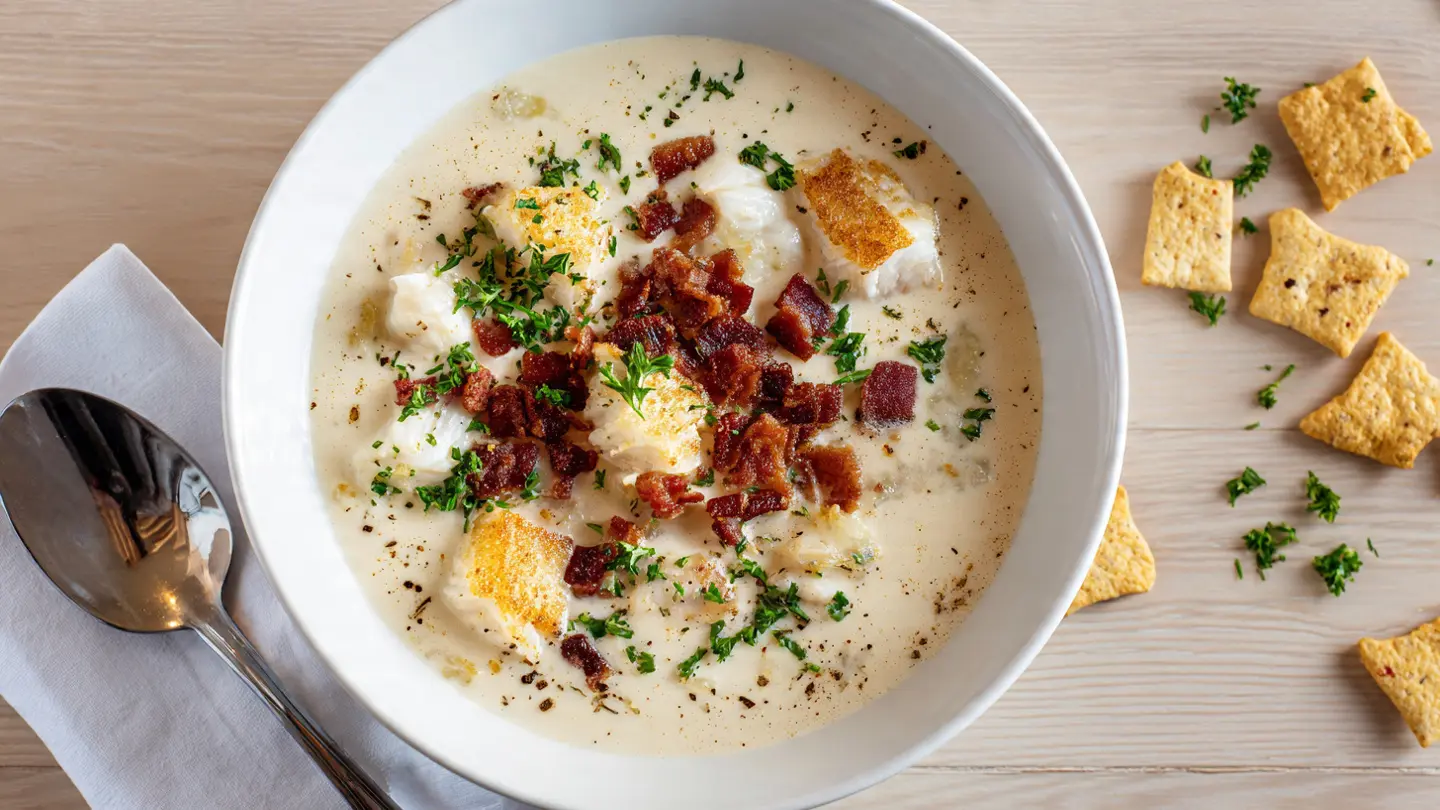
A good fish chowder recipe is one of those dishes that feels like a warm hug in a bowl. This New England classic comes together with tender chunks of cod, soft potatoes, smoky bacon, and a rich, creamy broth that is deeply satisfying on any cold evening.
What makes this chowder so special is how every ingredient plays a specific role. The bacon adds smokiness and fat that forms the flavor base. The clam juice deepens the seafood taste without being overpowering. And the heavy cream adds that luxurious, velvety body that separates a true chowder from a regular fish soup.
This recipe stays true to the most beloved, widely recognized version of New England fish chowder. You will find a creamy milk-and-cream base, firm white fish, diced potatoes, aromatics, and bacon, all cooked together in one pot.
It is the kind of recipe you make on a Sunday and enjoy all week. The flavors develop beautifully overnight, making leftovers even more delicious than the first bowl.
If you love hearty seafood soups, you might also enjoy this Seafood Chowder for an equally satisfying bowl with mixed seafood.
Why You’ll Love This Fish Chowder Recipe
This fish chowder recipe is the kind of dish that earns a permanent spot in your weeknight rotation.
It is surprisingly simple, using everyday pantry staples alongside fresh fish and a short list of vegetables.
One pot is all you need, which means minimal cleanup. You can have a restaurant-quality bowl on the table in under an hour.
The recipe is incredibly flexible. Cod, haddock, halibut, and pollock all work beautifully, so you can use whatever firm white fish looks freshest at your market.
It is also a great make-ahead meal. Like most chowders, this one tastes even better after sitting in the fridge for a day, as the flavors meld and deepen.
Here is why readers keep coming back to this recipe:
- Rich, creamy broth that is thick enough to satisfy but not so heavy it weighs you down
- Tender, flaky fish that holds its shape and adds real substance to every bite
- Simple aromatics like onion, celery, and garlic provide a classic flavor foundation
- Smoky bacon adds depth and savory contrast to the creamy base
- Ready in under an hour, making it realistic for a weeknight dinner
- Family-friendly flavor that even picky eaters tend to enjoy
Another favorite for cool evenings: Lobster Bisque is a luxurious option when you want to elevate your seafood soup game.
Ingredients
Here is everything you need to make a classic, creamy fish chowder. Look for fresh cod or haddock at your local seafood counter for the best results, though frozen fillets that have been thawed overnight work just as well.
- 2 lbs (900g) fresh cod fillets (or haddock, halibut, or pollock), cut into 1.5-inch chunks
- 4 slices thick-cut bacon, cut into small pieces
- 1 large yellow onion, diced (about 1.5 cups)
- 3 stalks celery, diced
- 3 cloves garlic, minced
- 3 cups (720ml) clam juice (about 3 bottles)
- 1 lb (450g) Yukon Gold potatoes, peeled and cut into 1/2-inch cubes
- 2 cups (480ml) heavy cream
- 1 cup (240ml) whole milk
- 2 tablespoons unsalted butter
- 1 tablespoon all-purpose flour
- 2 bay leaves
- 1 teaspoon fresh thyme (or 1/2 teaspoon dried thyme)
- 1/2 teaspoon Old Bay Seasoning
- Salt and freshly ground black pepper, to taste
- Fresh parsley, chopped, for garnish
- Oyster crackers, for serving
Read Also: New England Clam Chowder Recipe
Kitchen Equipment Needed
You do not need any specialized equipment for this recipe. Standard kitchen tools will get the job done beautifully.
- Large Dutch oven or heavy-bottomed pot (at least 6-quart capacity)
- Sharp chef’s knife for cutting vegetables and fish
- Cutting board
- Wooden spoon or silicone spatula for stirring
- Ladle for serving
- Measuring cups and spoons
- Slotted spoon for removing bacon
You might also enjoy: Corn Chowder for another thick and creamy chowder made with accessible ingredients.
Recommended Products for This Recipe
These are hand-picked products based on quality and performance that will genuinely help you make the best possible bowl of fish chowder.
1. Le Creuset Enameled Cast Iron Dutch Oven
A heavy-bottomed Dutch oven distributes heat evenly, preventing hot spots that can scorch the cream base of your chowder. The enameled interior is non-reactive and makes cleanup remarkably easy, even with a thick, creamy soup. It is a kitchen investment that will serve you for decades.
2. Bar Harbor All Natural Clam Juice
Quality clam juice is the secret ingredient that gives fish chowder its authentic, briny seafood depth without adding shellfish. Bar Harbor is a widely trusted brand that uses clean ingredients and delivers a clean, oceanic flavor. Using it as your liquid base instead of plain water or chicken broth makes a noticeable difference.
3. Old Bay Seasoning
Old Bay is a coastal classic that adds a signature warmth, subtle spice, and complexity to fish-based dishes. A small amount goes a long way and pulls all the other flavors of the chowder together beautifully. It is an essential pantry item for any seafood cook.
4. Soup Ladle Set with Deep Bowl
A deep, wide ladle makes serving chowder neat and easy, ensuring every bowl gets a generous portion of both broth and chunky ingredients. A good ladle feels balanced in the hand and holds enough soup to serve efficiently. Look for one with a hooked handle that rests on the pot rim without slipping in.
For more cozy bowl inspiration: Chicken Corn Chowder
Step-by-Step Instructions
Step 1: Cook the Bacon
- Place your Dutch oven or large pot over medium heat and add the chopped bacon pieces.
- Cook the bacon, stirring occasionally, for about 6 to 8 minutes, until it is crispy and has rendered its fat.
- Use a slotted spoon to transfer the cooked bacon to a plate lined with a paper towel and set it aside. You will use it as a topping later.
- Leave the bacon drippings in the pot. This rendered fat is the flavor foundation for your chowder. Do not drain it.
Step 2: Sauté the Aromatics
- Add the 2 tablespoons of unsalted butter to the pot with the bacon drippings and melt it over medium heat.
- Add the diced onion and celery to the pot. Stir to coat them in the butter and fat.
- Cook the onion and celery, stirring occasionally, for about 5 to 6 minutes, until softened and translucent. You want them tender, not browned.
- Add the minced garlic and stir it in. Cook for another 1 minute until fragrant. Be careful not to let the garlic burn as it will turn bitter.
Step 3: Build the Roux
- Sprinkle the 1 tablespoon of all-purpose flour over the softened vegetables in the pot.
- Stir constantly for 1 to 2 minutes, coating the vegetables in the flour. This brief cooking step removes the raw flour taste and creates a light roux that will help thicken your chowder.
- The mixture will look slightly dry and pasty, which is exactly what you want at this stage.
Step 4: Add the Liquid and Potatoes
- Slowly pour in all 3 cups (720ml) of clam juice, stirring continuously to prevent lumps from forming. Stir and scrape up any browned bits from the bottom of the pot as you go, as those bits are full of flavor.
- Add the 2 bay leaves and the 1 teaspoon of fresh thyme (or 1/2 teaspoon dried thyme) to the pot.
- Add the 1/2 teaspoon of Old Bay Seasoning and stir to combine.
- Add the diced Yukon Gold potatoes and stir them into the broth.
- Increase the heat to medium-high and bring the chowder to a gentle boil.
- Once boiling, reduce the heat to medium-low and simmer for 12 to 15 minutes, until the potatoes are just barely fork-tender. Test them by inserting a fork into a cube. They should yield with slight resistance, because they will continue cooking when you add the fish.
Step 5: Add the Cream and Milk
- Reduce the heat to low before adding the dairy to prevent curdling or scorching.
- Pour in the 2 cups (480ml) of heavy cream and 1 cup (240ml) of whole milk, stirring gently to combine.
- Allow the chowder to warm through over low heat for about 3 to 4 minutes, stirring occasionally. Do not let it come to a boil at this stage.
Step 6: Add the Fish
- Gently nestle the cod chunks into the chowder, distributing them evenly throughout the pot.
- Keep the heat at low to medium-low so the chowder is at a gentle simmer, not a rolling boil. A hard boil will break the fish apart and toughen it.
- Cook for 8 to 10 minutes, without stirring aggressively. The fish is done when it turns opaque and flakes easily when pressed gently with a fork.
- If any large pieces need breaking up, use your spoon to gently divide them. Aim for hearty, rustic chunks rather than tiny shreds.
Step 7: Season and Finish
- Remove and discard the 2 bay leaves from the chowder.
- Taste the chowder and adjust the seasoning with salt and freshly ground black pepper as needed. Clam juice is naturally salty, so taste before adding any extra salt.
- Ladle the chowder into wide, deep bowls.
- Top each bowl with some of the reserved crispy bacon and a generous pinch of fresh chopped parsley.
- Serve immediately with oyster crackers or crusty bread on the side.
You might also love: Salmon Chowder as a delicious variation using salmon in place of white fish.
Tips for Success
These practical tips will help you get perfect results on your very first attempt.
- Choose the right fish. Firm white fish like cod, haddock, halibut, or pollock work best because they hold their shape during cooking. Avoid delicate fish like sole or flounder, as they will disintegrate in the broth.
- Do not skip the clam juice. It is the backbone of authentic fish chowder flavor. If you cannot find it, you can substitute with a mild chicken broth, but the seafood depth will be notably reduced.
- Keep the heat low when adding cream. High heat causes dairy to separate and curdle. Once the cream goes in, keep the temperature gentle throughout the rest of cooking.
- Do not overcook the fish. Cod becomes tough and rubbery when overcooked. It only needs 8 to 10 minutes at a gentle simmer. As soon as it flakes and turns opaque, it is done.
- Make it ahead for better flavor. This chowder genuinely tastes better the next day. Make it a day in advance and reheat gently on the stovetop over low heat.
- Adjust thickness to your preference. If you want a thicker chowder, stir together 1 tablespoon of cornstarch with 2 tablespoons of cold water and slowly add it to the simmering chowder. For a thinner soup, reduce the cream slightly or add a splash more clam juice.
Read Also: Shrimp Chowder Recipe
Serving Suggestions
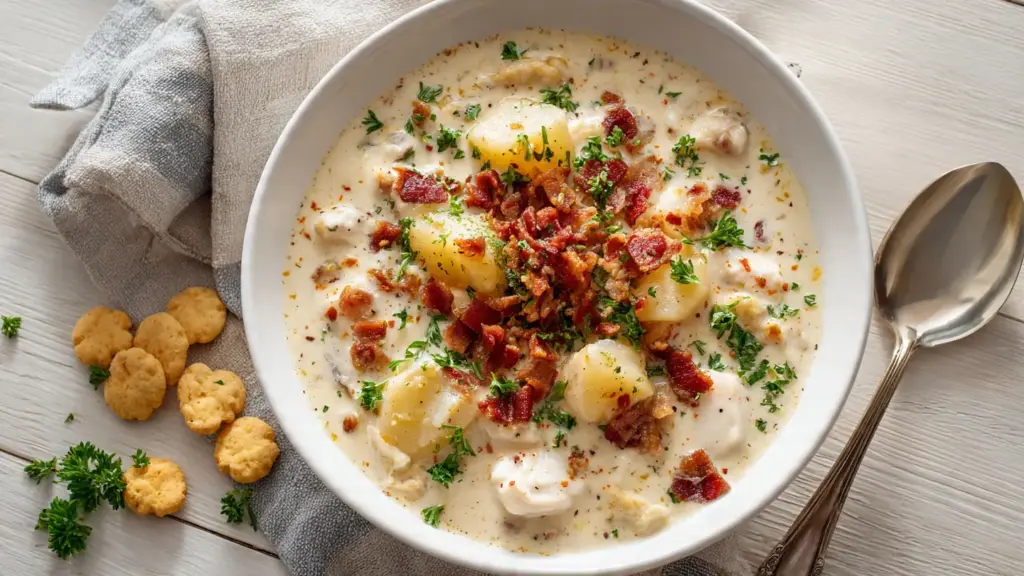
Fish chowder is hearty enough to serve as a complete meal, especially when paired with complementary sides.
Classic accompaniments balance the richness of the creamy broth and turn this into a truly satisfying spread.
- Oyster crackers are the most traditional accompaniment. Scatter them generously over each bowl or serve a bowl on the side for guests to help themselves.
- Crusty sourdough bread is ideal for soaking up every drop of that creamy broth. Toast it lightly with a drizzle of olive oil.
- A pat of butter floated on top of each serving is the classic New England finishing touch. It melts into the chowder and adds extra richness.
- A side salad with crisp greens and a tangy vinaigrette helps cut through the richness of the chowder.
- Lemon wedges on the side offer a bright, acidic contrast. A small squeeze over the bowl just before eating elevates the flavor.
- Vinegar Coleslaw is a refreshing, tangy side that provides a welcome crunch next to a warm, creamy bowl.
- Skillet Cornbread is a Southern-inspired pairing that works beautifully alongside chowder.
Variations to Try
Once you have mastered the classic version, these simple variations keep the recipe fresh and exciting.
- Manhattan-Style Fish Chowder: Replace the cream and milk with crushed tomatoes and chicken broth for a tomato-based, broth-forward chowder. It is lighter and has a brighter, tangier flavor profile.
- Smoked Fish Chowder: Replace half of the fresh cod with smoked haddock or smoked cod. The smoky, cured flavor adds incredible depth to the broth without needing any extra bacon.
- Corn and Fish Chowder: Stir in 1 cup of fresh or frozen corn kernels along with the potatoes for natural sweetness and extra body. Corn is a classic chowder addition that complements the fish perfectly.
- Dairy-Free Fish Chowder: Replace the heavy cream and milk with full-fat coconut milk. The flavor is slightly different but still rich and creamy, with a subtle sweetness.
- Bacon-Free Version: Skip the bacon and start by melting 3 tablespoons of butter directly in the pot. Increase the Old Bay slightly to compensate for the lost smokiness.
- Loaded Seafood Version: Add 1/2 lb (225g) of peeled shrimp and 1/2 lb (225g) of sea scallops along with the fish for an elevated, more complex chowder. This is a great variation for special occasions.
Another comforting bowl to explore: Chicken Chowder
Storage and Reheating
Fish chowder stores very well and the flavor actually improves after a day in the fridge, making it an excellent choice for meal prep.
Follow these guidelines to keep it tasting its best:
- Refrigerator: Store leftover chowder in an airtight container in the refrigerator for up to 3 days. Let it cool completely before sealing.
- Freezer: Fish chowder can be frozen, but the cream may separate slightly upon thawing. If you plan to freeze it, consider adding the cream and milk after reheating rather than before freezing. Store in a freezer-safe container for up to 2 months.
- Reheating on the stovetop: Pour the chowder into a saucepan over low to medium-low heat and warm it slowly, stirring gently. Do not let it come to a boil, as the cream can separate and the fish can turn rubbery. Add a small splash of milk or cream if the chowder has thickened too much in the fridge.
- Reheating in the microwave: Use 50% power in 1-minute intervals, stirring in between, to heat the chowder gently without scorching the cream base.
- Avoid boiling when reheating. This is the most important storage rule for cream-based chowders.
For another great make-ahead soup: Loaded Potato Soup
Nutritional Facts
The following is an estimate per serving, based on 6 servings. Exact values will vary depending on the specific fish, dairy, and bacon used.
| Nutrient | Per Serving (approx.) |
|---|---|
| Calories | ~490 kcal |
| Protein | ~36g |
| Total Fat | ~28g |
| Saturated Fat | ~14g |
| Carbohydrates | ~22g |
| Fiber | ~2g |
| Sodium | ~780mg |
| Cholesterol | ~145mg |
These values are estimates. For precise nutritional information, calculate based on the exact brands and quantities used.
For a lighter seafood option: Baked Cod
Health Benefits of Key Ingredients
This fish chowder is not just comforting. It is genuinely nourishing, packed with ingredients that support overall health.
Each component brings real nutritional value to the bowl, making this a satisfying and wholesome meal.
- Cod: Cod is one of the leanest, highest-protein fish available. It is an excellent source of B12, iodine, phosphorus, and selenium, all of which support thyroid function, bone health, and nervous system health. A single 3-ounce serving provides over 15 grams of lean protein.
- Potatoes: Yukon Gold potatoes are a good source of potassium, which helps regulate blood pressure. They also provide Vitamin C and a moderate amount of dietary fiber when eaten with the skin.
- Onion and Garlic: Both are rich in antioxidants and have well-documented anti-inflammatory properties. Garlic in particular contains allicin, a compound linked to immune support and cardiovascular health.
- Celery: Celery is a low-calorie vegetable rich in Vitamin K, folate, and antioxidants. It also contains phthalides, compounds that may help relax blood vessel walls and support healthy blood pressure.
- Heavy Cream and Milk: While high in saturated fat, full-fat dairy provides fat-soluble vitamins A, D, E, and K. When used in moderate portions, it contributes to satiety and helps your body absorb other fat-soluble nutrients from the soup.
For another nutrient-packed soup: Chicken Rice Soup
Frequently Asked Questions
1. What is the best fish for fish chowder?
Cod is the most traditional and widely used choice for fish chowder, particularly in New England. Haddock is a close second and is many people’s preference for its slightly sweeter, more delicate flavor. Other excellent options include halibut, pollock, and barramundi. The key is to choose a firm, mild white fish that will hold its shape during cooking and not fall apart into the broth.
2. Can I use frozen fish for this recipe?
Yes, frozen fish works very well in fish chowder. Thaw it overnight in the refrigerator before using it, and pat it dry with paper towels before adding it to the pot. Removing excess moisture ensures the fish sears and cooks evenly rather than steaming in the pot. Many frozen fillets are frozen at sea shortly after harvest, making them extremely fresh.
3. Why did my chowder curdle?
Curdling happens when dairy is added to very high heat or when the soup comes to a hard boil after the cream has been added. Always reduce the heat to low before adding your cream and milk, and never let the chowder boil once the dairy is in. If slight curdling occurs, whisk the soup gently and lower the heat. It will usually smooth out as the proteins relax.
4. Can I make fish chowder without bacon?
Absolutely. To make a bacon-free version, simply melt 3 tablespoons of unsalted butter in the pot at the start and proceed with the recipe from there. You can add a small pinch of smoked paprika to the aromatics to replace some of the smoky depth that bacon would have provided. The chowder will still be rich and delicious.
5. How do I thicken fish chowder?
The flour-based roux in this recipe creates a moderately thick chowder. For a thicker consistency, make a slurry by mixing 1 tablespoon of cornstarch with 2 tablespoons of cold water, then slowly stir it into the simmering chowder and cook for 2 to 3 minutes until it thickens. Alternatively, mash a few of the cooked potato cubes against the side of the pot to naturally release starch into the broth.
Read Also: Manhattan Clam Chowder Recipe
Final Thoughts
This classic fish chowder recipe is one of those timeless, deeply satisfying dishes that earns a permanent place in your recipe repertoire.
It is simple enough for a weeknight but impressive enough to serve to guests on a weekend.
The combination of flaky cod, tender potatoes, smoky bacon, and a creamy, clam-infused broth produces a bowl of chowder that tastes like it came from a beloved seaside restaurant.
Give this fish chowder recipe a try this week, and do not forget to let it rest overnight for even deeper, more developed flavor.
If you make this recipe, leave a comment below sharing how it turned out. Tag your photos on social media so we can see your beautiful bowls!
Recommended:
- Clam Chowder Recipe
- Seafood Stew Recipe
- Corn Chowder Recipe
- Mexican Fish Soup
- Thai Fish Soup
- Caribbean Fish Soup
- Chinese Fish Soup
- Mediterranean Fish Soup
- Baked Salmon
- Oyster Stew Recipe