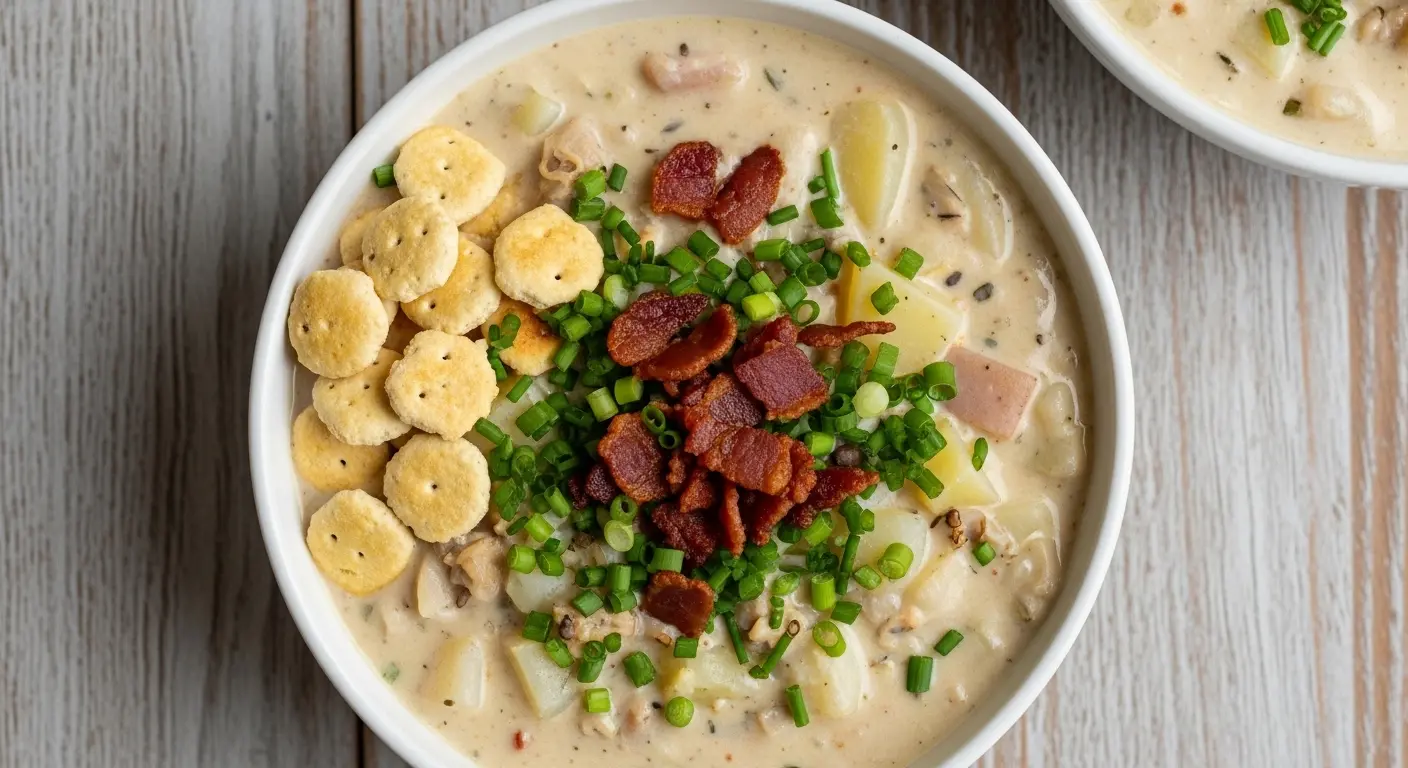
A bowl of new england clam chowder recipe is one of those dishes that feels like a warm hug on a cold day. Thick, creamy, and packed with tender clams and chunks of potato, this iconic soup has been warming people up along the Atlantic coast for centuries. The secret to getting it right lies in a few key details: rendering bacon low and slow to build a smoky flavor base, using both canned clam juice and the liquid from your clams for a deeply briny broth, and adding the cream at the very end so it doesn’t break or curdle.
This recipe sticks to the classic New England style, which means a creamy white broth thickened with a simple flour roux. No tomatoes here. That’s Manhattan territory, and this is strictly a New England kitchen.
You’ll find this chowder is every bit as satisfying as what you’d get at a clam shack on Cape Cod, and it comes together in under an hour on the stovetop. Canned clams keep things easy and accessible no matter where you live, while bottled clam juice makes sure the seafood flavor stays front and center.
Whether you’re making this for a Sunday supper, a cozy weeknight dinner, or a crowd-pleasing potluck, this recipe delivers every single time.
If you love creamy, hearty seafood soups, you’ll definitely want to check out this Lobster Bisque for another luxurious bowl of comfort.
Why You’ll Love This New England Clam Chowder Recipe
This chowder hits every mark you could want from a classic comfort food.
It’s deeply flavorful from start to finish. Rendering the bacon first and using the drippings to cook the aromatics layers smoky, savory richness into every spoonful.
The texture is perfectly balanced. It’s thick and creamy without being gluey, with tender potato chunks and plump clam pieces in every bite.
It uses simple, pantry-friendly ingredients. Canned chopped clams and bottled clam juice mean you can make this any night of the week, no trip to a fish market required.
It comes together in about 45 minutes. This is a surprisingly quick recipe for how much flavor it packs in.
Here’s a quick rundown of what makes this recipe worth bookmarking:
- Rich, creamy white broth thickened with a flour roux for perfect body
- Smoky bacon adds depth without overpowering the delicate clam flavor
- Yukon Gold potatoes hold their shape beautifully and don’t turn to mush
- Canned clams and bottled clam juice make it accessible year-round
- Beginner-friendly steps with a big, restaurant-quality payoff
You might also enjoy: Seafood Chowder
Ingredients
You don’t need much to make a truly great clam chowder. The magic comes from using each ingredient correctly and letting the flavors build on each other.
- 4 slices thick-cut bacon, cut into small pieces
- 2 tablespoons (28g) unsalted butter
- 1 medium yellow onion, finely diced (about 1 cup / 150g)
- 2 stalks celery, finely diced
- 3 garlic cloves, minced
- 1/3 cup (40g) all-purpose flour
- 2 cans (6.5 oz / 184g each) chopped clams, juice reserved
- 2 bottles (8 oz / 237ml each) bottled clam juice
- 1 cup (240ml) chicken broth, low sodium
- 1.5 lbs (680g) Yukon Gold potatoes, peeled and cut into ½-inch (1.25cm) cubes
- 1 teaspoon fresh thyme leaves (or ½ teaspoon dried thyme)
- 1 bay leaf
- ½ teaspoon kosher salt, plus more to taste
- ¼ teaspoon black pepper
- ¼ teaspoon white pepper (optional, but traditional)
- 1.5 cups (360ml) heavy cream
- Fresh chives or parsley, for garnish
- Oyster crackers, for serving
Read Also: Clam Chowder Recipe
Kitchen Equipment Needed
You don’t need any fancy equipment for this recipe. Here’s what to have ready before you start:
- Large Dutch oven or heavy-bottomed soup pot (at least 5 quarts / 4.7 liters)
- Fine-mesh strainer
- Large measuring cup or bowl (for collecting clam juice)
- Sharp chef’s knife and cutting board
- Wooden spoon or silicone spatula
- Ladle
- Soup bowls for serving
Read Also: Fish Chowder Recipe
Recommended Products for This Recipe
These are hand-picked products based on quality and performance that will genuinely help you make a better bowl of chowder.
1. Bar Harbor Chopped Clams
Bar Harbor is one of the most trusted names in canned clams, sourced from the cold, clean waters of the North Atlantic. Their chopped clams are meaty, tender, and packed in a flavorful juice that adds a genuine briny depth to your chowder. Using a quality brand here makes a real difference in the final flavor.
2. Bumble Bee Clam Juice
Good bottled clam juice is the unsung hero of homemade clam chowder. Bumble Bee’s clam juice is clean, salty, and genuinely tastes of the sea without any harsh aftertaste. Using two full bottles means your broth has real seafood character that you just can’t get from chicken broth alone.
3. Le Creuset Enameled Cast Iron Dutch Oven
A heavy-bottomed pot is essential for making chowder without scorching. Le Creuset’s enameled cast iron distributes heat perfectly and evenly, so your cream-based broth simmers gently without any hot spots. It also doubles as a beautiful serving vessel straight from the stove to the table.
4. Westminster Oyster Crackers
No bowl of New England clam chowder is complete without oyster crackers floating on top. Westminster’s classic oyster crackers are the real deal, light and crispy with just the right amount of salt. A big handful on top of your chowder is non-negotiable.
5. OXO Good Grips Fine Mesh Strainer
Straining your clam juice through a fine-mesh strainer keeps any grit or shell fragments out of your soup. The OXO Good Grips version is sturdy, easy to handle, and fine enough to catch even the smallest particles. It’s a small tool that makes a real quality difference.
This chowder pairs beautifully with a warm, crusty loaf for dunking, just like this Skillet Cornbread.
Step-by-Step Instructions
1. Drain the Clams and Prepare Your Juice Base
- Open both cans of chopped clams and position a fine-mesh strainer over a large measuring cup or bowl.
- Pour the clam cans through the strainer, letting the liquid collect in the cup below. Set the drained clam meat aside in a separate small bowl. You’ll add it at the very end.
- Pour both bottles of bottled clam juice into the same measuring cup with the reserved canned clam juice. Stir to combine.
- You should have approximately 2.5 to 3 cups (600–720ml) of total clam liquid. Set it aside. This is the flavor backbone of your broth.
2. Render the Bacon
- Place your large Dutch oven or soup pot over medium-low heat.
- Add the bacon pieces to the cold pot. Starting with a cold pot helps the fat render out slowly and evenly rather than burning.
- Cook the bacon over medium-low heat, stirring occasionally, for 8 to 10 minutes until the fat has fully rendered and the bacon pieces are crispy and golden.
- Use a slotted spoon to transfer the cooked bacon to a paper towel-lined plate. Leave the bacon drippings in the pot. Do not drain them off. That fat is pure flavor.
- If your bacon is leaner and didn’t produce much fat, add 1 tablespoon of butter to the pot now to ensure enough fat for sautéing the vegetables.
3. Sauté the Aromatics
- With the bacon drippings still in the pot over medium heat, add the 2 tablespoons of unsalted butter.
- Once the butter melts and foams, add the diced onion and celery. Stir to coat everything in the fat.
- Cook the onion and celery for 5 to 6 minutes, stirring occasionally, until the vegetables are softened and translucent. Don’t rush this step. Soft, fully cooked aromatics create a sweeter, more rounded flavor base.
- Add the minced garlic and cook for 1 more minute, stirring constantly, until fragrant. Be careful not to let the garlic brown or it will turn bitter.
4. Build the Roux
- Sprinkle the flour evenly over the cooked vegetable mixture in the pot.
- Stir constantly with your wooden spoon or spatula for 1 to 2 minutes, coating all of the vegetables in the flour. The mixture will look thick and paste-like. This is exactly what you want.
- Cooking the flour out for a full minute removes the raw flour taste that would otherwise make your chowder taste starchy and flat.
5. Add the Clam Juice and Potatoes
- While stirring constantly, slowly pour in about one-third of your clam juice mixture. Stir vigorously to work out any lumps from the flour before adding more liquid.
- Continue pouring in the remaining clam juice gradually while stirring, then add the 1 cup of chicken broth. Keep stirring to ensure a smooth, lump-free base.
- Add the diced Yukon Gold potatoes, the thyme, the bay leaf, the kosher salt, the black pepper, and the white pepper (if using).
- Stir everything together and bring the pot to a gentle boil over medium-high heat, scraping the bottom of the pot frequently to prevent sticking.
6. Simmer Until the Potatoes Are Tender
- Once the soup reaches a boil, reduce the heat to medium-low to maintain a steady, gentle simmer.
- Cook uncovered for 15 to 20 minutes, stirring occasionally, until the potatoes are completely fork-tender. You should be able to easily pierce a potato cube with no resistance.
- Taste the broth at this point. Adjust the salt and pepper if needed. The broth will concentrate and develop more flavor as the potatoes cook.
7. Add the Cream and Clams
- Reduce the heat to low. You want the soup to be hot but not boiling before adding the dairy.
- Pour in the heavy cream slowly, stirring as you go.
- Add the drained chopped clam meat.
- Stir gently to combine and allow everything to heat through for 3 to 5 minutes. Do not let the chowder come to a rolling boil at this stage. High heat after adding the cream can cause it to curdle or break.
- Remove the bay leaf and discard it.
- Taste one final time and add more salt and pepper as needed.
8. Serve and Garnish
- Ladle the hot chowder into bowls.
- Top each bowl with some of the reserved crispy bacon pieces, a sprinkle of fresh chives or flat-leaf parsley, and a generous handful of oyster crackers.
- Serve immediately while hot.
For another incredible seafood comfort dish to add to your rotation, try this Shrimp Chowder.
Tips for Success
A few small details make a big difference between a good clam chowder and a great one.
- Don’t skip rendering the bacon slowly. Cooking the bacon over medium-low heat from a cold start allows the fat to render properly. Rushed bacon means less fat to cook your aromatics in, and less depth of flavor overall.
- Cook out the roux. Sprinkle the flour over the cooked vegetables and stir it in for a full 1 to 2 minutes before adding any liquid. This removes the raw flour taste and ensures a smooth, not starchy, broth.
- Add liquid gradually. Pour your clam juice in slowly at first, whisking or stirring vigorously after each addition. This prevents lumps in the broth.
- Use Yukon Gold potatoes. Yukon Golds hold their shape well during simmering without falling apart. Russets work too if that’s what you have, but they tend to break down faster and can make the soup feel starchy.
- Add clams at the very end. Canned clams are already cooked, so they only need a few minutes to heat through. Overcooking them makes them rubbery and tough.
- Keep the heat low after adding cream. Boiling the chowder after adding the heavy cream risks breaking the emulsion and creating a greasy, separated broth.
- Taste and adjust before serving. Clam juice and canned clams vary in saltiness by brand. Always taste the finished chowder and add salt sparingly at the end.
Read Also: Salmon Chowder Recipe
Serving Suggestions
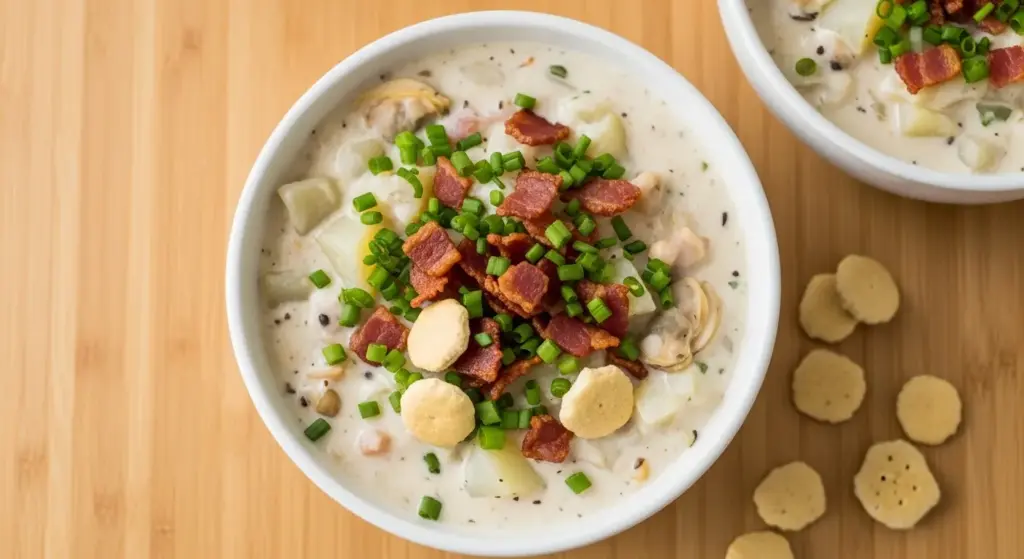
New England clam chowder is hearty enough to stand as a complete meal on its own, but it pairs beautifully with a few classic accompaniments.
Nothing beats serving it in a sourdough bread bowl, hollowed out and toasted so you can tear and dip the lid into the creamy broth. It turns the whole meal into an experience.
Here are a few more ideas to round out your meal:
- A handful of oyster crackers stirred in and added on top for a satisfying crunch
- Thick slices of toasted Cheesy Garlic Bread for dunking
- A simple green salad with a light vinaigrette to balance the richness of the chowder
- A glass of crisp dry white wine such as Sauvignon Blanc or Pinot Grigio
- Classic Deviled Eggs as a light starter before the main bowl
Variations to Try
Once you’ve nailed the classic version, here are a few fun ways to change things up.
- Manhattan Clam Chowder: Swap the cream for crushed tomatoes and chicken broth for a completely different, tomato-based chowder that is beloved in New York. Check out the full Manhattan Clam Chowder Recipe for a step-by-step guide.
- Rhode Island Style: Skip the cream entirely and use a clear broth with clam juice, potatoes, and bacon. It’s lighter and lets the pure clam flavor shine through.
- Corn Clam Chowder: Add 1 cup (150g) of fresh or frozen corn kernels along with the potatoes for extra sweetness and a pop of color. This variation is especially popular in the summer months.
- Smoked Paprika Version: Add ½ teaspoon of smoked paprika to the aromatics for a slightly deeper, smokier flavor profile without overpowering the clams.
- Extra Creamy Version: Replace half the chicken broth with additional heavy cream for an ultra-rich, restaurant-style chowder that’s more indulgent than the everyday version.
- Fresh Clam Version: Use 3 to 4 pounds (1.4 to 1.8kg) of fresh littleneck or cherrystone clams steamed in white wine. Reserve the steaming liquid, strain it well, and use it in place of the bottled clam juice for an intensely fresh ocean flavor.
Read Also: Corn Chowder Recipe
Storage and Reheating
Clam chowder stores well for a few days, and many people think it actually tastes even better the next day once the flavors have had time to meld.
Here’s how to store and reheat it properly so it stays creamy and delicious:
- Refrigerator: Allow the chowder to cool completely before transferring to an airtight container. It will keep in the refrigerator for up to 3 days.
- Freezer: Cream-based soups do not freeze well. The cream and dairy will separate when thawed and the texture becomes grainy and unpleasant. If you want to freeze a batch, make the chowder base without the cream and freeze that. Stir in the cream when you reheat it fresh.
- Stovetop reheating: Pour the desired amount into a small saucepan and heat over low to medium-low heat, stirring frequently. Do not let it boil. Gentle, low heat preserves the cream and keeps the texture smooth.
- Microwave reheating: Reheat in 60-second intervals on medium power, stirring between each interval. This prevents hot spots that can cause the cream to break.
- To thin the chowder: The soup will thicken considerably in the fridge as the potatoes absorb more liquid. Add a splash of chicken broth or a tablespoon of cream when reheating to loosen it back up.
Another cozy and reheatable soup worth trying is this Loaded Potato Soup.
Nutritional Facts
The following is an approximate nutrition breakdown per serving, based on 6 servings from this recipe.
| Nutrient | Amount Per Serving |
|---|---|
| Calories | 430 kcal |
| Total Fat | 28g |
| Saturated Fat | 15g |
| Cholesterol | 105mg |
| Sodium | 890mg |
| Total Carbohydrates | 28g |
| Dietary Fiber | 2g |
| Sugars | 4g |
| Protein | 16g |
| Vitamin C | 15mg |
| Calcium | 110mg |
| Iron | 12mg |
Nutritional values are approximate and will vary based on specific brands and ingredient quantities used.
Read Also: Chicken Corn Chowder Recipe
Health Benefits of Key Ingredients
While clam chowder is definitely comfort food, several of its core ingredients bring some real nutritional value to the table.
It’s a surprisingly nutrient-dense bowl when you look past the cream.
Here’s a look at some of the standout ingredients and what they contribute:
- Clams: Clams are one of the richest dietary sources of vitamin B12, which supports nerve function and energy production. They’re also loaded with iron, zinc, and lean protein, making them one of the most nutrient-dense seafoods available.
- Potatoes: Yukon Gold potatoes are a good source of potassium, which supports heart health and helps regulate blood pressure. They also provide vitamin C and fiber.
- Celery: Celery is low in calories but rich in vitamin K and contains antioxidants called phthalides, which research suggests may help support cardiovascular health.
- Onion: Onions contain quercetin, a powerful antioxidant with anti-inflammatory properties. They also support immune function and gut health.
- Garlic: Garlic is one of the most well-studied culinary ingredients for health benefits. It contains allicin, a compound with antimicrobial and anti-inflammatory properties, and has been linked to improved heart health in multiple studies.
- Heavy Cream: While rich in saturated fat, heavy cream provides fat-soluble vitamins A, D, E, and K that support everything from vision to bone density.
For another hearty, nutrient-rich soup to add to the lineup, try this Chicken Vegetable Soup.
Frequently Asked Questions
1. What is the difference between New England and Manhattan clam chowder?
New England clam chowder uses a cream or milk-based white broth thickened with flour, giving it a rich and creamy texture. Manhattan clam chowder uses a tomato-based broth with no dairy, making it thinner, brighter, and slightly acidic.
2. Can I use fresh clams instead of canned?
Absolutely. Fresh littleneck, cherrystone, or chowder clams all work well. You’ll need about 3 to 4 pounds (1.4 to 1.8kg) of whole clams to yield enough meat for this recipe. Steam them in a little water or white wine, reserve the steaming liquid (strained), and add the chopped clam meat at the same point you would add the canned clams.
3. Why did my clam chowder turn grainy or curdled?
This usually happens when the heat is too high after adding the cream, or when the cream is added while the soup is boiling. Always reduce the heat to low before stirring in the cream, and avoid letting the chowder return to a hard boil after that point.
4. Can I make this clam chowder thicker?
Yes. For a thicker chowder, you can increase the flour to ½ cup (60g), or you can stir in 1 to 2 tablespoons of instant mashed potato flakes at the end of cooking. Adding them slowly and stirring well allows you to control the exact thickness you prefer without affecting the flavor.
5. How far in advance can I make this chowder?
You can make the full chowder up to 2 days in advance and store it covered in the refrigerator. The flavors actually deepen and improve overnight. Reheat it gently on the stovetop over low heat, adding a splash of broth or cream if it has thickened too much. For best results, hold off on adding the cream until you reheat if you plan to make it more than a day ahead.
Read Also: Beer Cheese Soup Recipe
Final Thoughts
This New England clam chowder recipe is everything the classic should be: creamy, savory, packed with clams and tender potatoes, and deeply satisfying from the very first spoonful.
Once you make this at home, it becomes one of those recipes you return to again and again. It’s the kind of bowl that feels special without asking much of you in terms of time or effort.
Give it a try this week and let the kitchen fill up with the most incredible seafood aroma. Leave a comment below and let me know how it turned out, or share a photo and tag a friend who deserves a bowl!
Recommended:
- Manhattan Clam Chowder Recipe
- Seafood Stew Recipe
- Oyster Stew Recipe
- Chicken Chowder Recipe
- Baked Potato Soup Recipe
- Ham and Potato Soup Recipe
- Potato Leek Soup Recipe
- Tom Yum Soup Recipe
- Zuppa Toscana Recipe
- Italian Wedding Soup Recipe