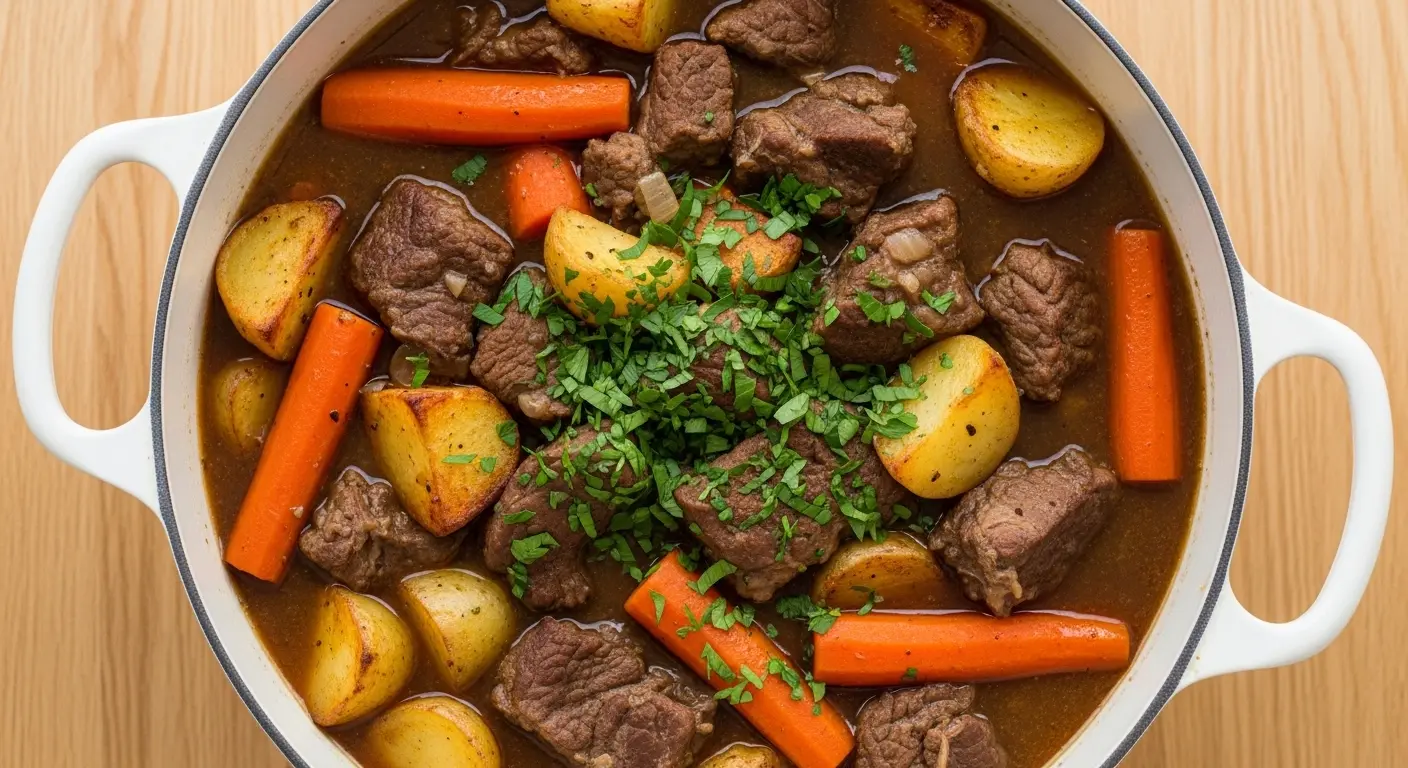
If you’ve been searching for a truly satisfying irish stew recipe, you’ve come to the right place. This is the kind of meal that wraps you in warmth from the inside out, the sort of dish that fills your kitchen with an incredible aroma and brings everyone to the table without a single reminder.
Irish stew is one of Ireland’s most beloved and enduring dishes. It’s hearty, deeply flavorful, and built on the most humble of ingredients: tender lamb, earthy potatoes, sweet carrots, and a rich, savory broth. No fussy techniques, no hard-to-find specialty items, just good, honest cooking.
What makes this version special is the combination of browning the lamb for deep flavor, layering aromatics like leeks and fresh thyme, and finishing everything with Worcestershire sauce for that extra savory punch.
It takes a little patience, but the result is a gloriously thick stew that tastes like it simmered all day in a cozy Irish farmhouse kitchen. This is the version you’ll want to make again and again.
You might also enjoy: Lamb Stew
Why You’ll Love This Irish Stew Recipe
There’s a reason this dish has stood the test of time for centuries.
It’s the kind of meal that satisfies deeply and leaves everyone at the table scraping their bowls clean.
Here’s why this recipe is an absolute keeper:
- One-pot simplicity. Everything comes together in a single Dutch oven or heavy-bottomed pot, which means minimal cleanup and maximum flavor.
- Rich, layered flavor. Browning the lamb before simmering creates a deeply savory base that makes the whole stew taste incredibly complex without any complicated steps.
- Budget-friendly. Lamb shoulder is one of the more affordable cuts of lamb, and the vegetables are everyday pantry staples that keep costs low.
- Perfect for make-ahead cooking. This stew tastes even better the next day once the flavors have had time to meld together overnight.
- Crowd-pleaser. Adults and kids alike love it. It’s hearty enough for the hungriest appetites and comforting enough for even the pickiest eaters.
- Versatile. You can swap lamb for beef, adjust the vegetables based on what you have on hand, and make it stovetop or in the oven with equal success.
- Freezer-friendly. Make a double batch and freeze portions for busy weeknights when you need something warm and homemade without the effort.
Read Also: Classic Shepherd’s Pie
Ingredients
The beauty of a traditional Irish stew is its simplicity. Each ingredient plays an important role in building that rich, comforting flavor that makes this dish so iconic. Quality matters here, especially with the lamb, so use the best you can find.
- 2 lbs (900g) lamb shoulder, trimmed and cut into 2-inch (5cm) chunks
- 1 tablespoon olive oil
- 4 strips bacon, chopped (adds smoky depth and extra fat for browning)
- 1 large onion, roughly chopped
- 2 cloves garlic, minced
- 2 medium leeks, sliced into rounds (white and light green parts only)
- 3 medium carrots, peeled and cut into large chunks
- 2 stalks celery, cut into large pieces
- 1.5 lbs (680g) Yukon Gold potatoes, peeled and cut into large chunks
- 4 cups (950ml) beef broth or lamb stock
- 1 tablespoon Worcestershire sauce
- 2 sprigs fresh thyme (or 1 teaspoon dried thyme)
- 2 bay leaves
- Salt and freshly ground black pepper, to taste
- 2 tablespoons all-purpose flour (for dredging the lamb)
- Fresh flat-leaf parsley, chopped, for garnish
This pairs beautifully with a hearty side, and if you love comforting potato-forward meals, you’ll also want to try Creamy Mashed Potatoes.
Kitchen Equipment Needed
You don’t need anything fancy to make this stew, but having the right pot makes a real difference. A heavy-bottomed pot retains heat evenly and allows for that important browning step that builds flavor.
- Dutch oven or heavy-bottomed pot (at least 6-quart / 5.7L capacity)
- Large wooden spoon or heat-resistant silicone spatula
- Sharp chef’s knife and cutting board
- Vegetable peeler
- Measuring cups and spoons
- Ladle for serving
- Slotted spoon for removing bacon and lamb during browning
- Paper towels for patting the lamb dry
- Small bowl for tossing the lamb in flour
Read Also: Crockpot Beef Stew
Recommended Products for This Recipe
These are products I genuinely recommend based on quality and performance, chosen specifically to help you get the best results with this Irish stew.
1. Le Creuset Enameled Cast Iron Dutch Oven
A good Dutch oven is the single most important piece of equipment for this recipe. The Le Creuset distributes heat perfectly, meaning your lamb browns evenly and your stew simmers gently without scorching the bottom. The tight-fitting lid traps steam and keeps all that precious flavor locked in.
2. Grass-Fed Lamb Shoulder Stew Meat
The quality of your lamb makes or breaks this stew. Grass-fed lamb has a richer, more nuanced flavor and a better fat content that keeps the meat moist during the long simmer. If your local butcher doesn’t carry it, this is a reliable online source.
3. Premium Worcestershire Sauce
Worcestershire sauce is the secret weapon in this recipe, adding a deep umami depth that makes the broth taste like it simmered for hours longer than it actually did. A high-quality bottle is worth keeping in your pantry permanently.
4. Fresh Thyme Bundle
Fresh thyme adds an aromatic, earthy note that dried thyme simply can’t fully replicate. If you can get it, use it. The difference in the final flavor of the stew is noticeable.
For another comforting European-style braise, check out Beef Bourguignon.
Step-by-Step Instructions
1. Prep All Your Ingredients
- Pat the lamb chunks completely dry with paper towels. This step is crucial because moisture prevents proper browning, and browning is where all the deep, rich flavor comes from.
- Season the lamb generously on all sides with salt and freshly ground black pepper.
- Place the flour in a shallow bowl or zip-lock bag. Add the seasoned lamb pieces and toss until each piece is lightly coated. Shake off any excess flour. The flour coating helps brown the lamb better and also works to thicken the stew as it simmers.
- Peel and chop your onion into rough, large pieces. There’s no need to dice finely here; the stew cooks long enough that everything will soften beautifully.
- Mince your garlic cloves.
- Wash the leeks thoroughly to remove any grit between the layers. Slice into rounds about half an inch (1.5cm) thick, using only the white and light green parts.
- Peel your carrots and cut them into large 1.5-inch (4cm) chunks. Cutting them large prevents them from going mushy during the long cooking time.
- Chop your celery stalks into similar large pieces.
- Peel and cut your Yukon Gold potatoes into large chunks, roughly 2 inches (5cm) each. Place them in a bowl of cold water to prevent browning while you prep everything else.
2. Cook the Bacon
- Place your Dutch oven or heavy-bottomed pot over medium heat.
- Add the chopped bacon strips directly to the pot with no oil needed yet. The bacon will render its own fat.
- Cook for about 3 to 4 minutes, stirring occasionally, until the bacon is golden and crispy and has released most of its fat.
- Use a slotted spoon to remove the bacon to a paper towel-lined plate. Leave all the rendered bacon fat in the pot. This fat is pure gold for browning the lamb.
3. Brown the Lamb in Batches
- Increase the heat to medium-high. The bacon fat should be shimmering but not smoking.
- Add half the flour-coated lamb pieces to the pot in a single layer. Do not crowd the pot, as crowding causes the meat to steam rather than sear, and you will lose that gorgeous caramelized crust.
- Let the lamb sit undisturbed for 2 to 3 minutes until a deep brown crust forms on the bottom. Resist the urge to move it around.
- Flip each piece and brown the other sides for another 2 minutes.
- Remove the browned lamb to a clean plate and repeat with the remaining lamb pieces, adding a small drizzle of olive oil if the pan looks dry.
- Once all the lamb is browned, remove it from the pot. At this point, you should see beautiful golden-brown bits stuck to the bottom of the pot. These bits, called fond, are packed with flavor and will dissolve into your broth, creating incredible depth.
4. Sauté the Aromatics
- Reduce the heat to medium.
- Add the chopped onion, leeks, and celery to the pot. If it looks dry, add a drizzle of olive oil.
- Stir everything around, using your spoon to scrape up any browned bits from the bottom of the pot. These bits will begin to dissolve and lift.
- Cook the vegetables for about 6 to 8 minutes, stirring occasionally, until the onion and leeks have softened and are beginning to turn translucent. Season with a pinch of salt and pepper as they cook.
- Add the minced garlic and stir it through the vegetables. Cook for just 1 minute more until the garlic is fragrant but not browned, as burnt garlic turns bitter.
5. Build the Broth
- Return all the browned lamb pieces back to the pot, along with any juices that have collected on the plate. Don’t throw those juices away — they add more flavor.
- Pour in the 4 cups (950ml) of beef broth, making sure it covers the lamb and vegetables. If your stew looks a little thick at this stage, don’t worry; the liquid will thin out as it heats up and then reduce and concentrate as it simmers.
- Add the Worcestershire sauce and stir it in.
- Tuck in the fresh thyme sprigs and bay leaves.
- Give everything a good stir to combine.
6. Add the Carrots and Potatoes
- Drain the potatoes from their cold water and pat them dry with a paper towel.
- Add the carrot chunks and the potato chunks to the pot and stir gently to distribute them throughout the stew.
- Make sure the liquid just covers most of the vegetables. If needed, add a splash more broth or water.
7. Simmer Low and Slow
- Increase the heat to bring the stew to a gentle boil. You will see large bubbles breaking the surface.
- Once boiling, reduce the heat to low, cover the pot with a lid, and let it simmer gently for 1 hour and 30 minutes to 2 hours.
- Every 30 minutes or so, give the stew a gentle stir and check that it is simmering (small, lazy bubbles) rather than boiling hard, as vigorous boiling can make the lamb tough.
- After about 1 hour, check the lamb. Pierce it with a fork; it should be starting to get tender but may still need more time depending on your cut. Continue cooking until the lamb pulls apart easily with a fork.
- As the stew cooks, some of the potato pieces will begin to naturally break down slightly, which thickens the broth beautifully. This is exactly what you want.
8. Finish and Adjust
- Once the lamb is beautifully tender, remove the thyme sprigs and bay leaves, as they have done their work.
- Stir in the cooked bacon you set aside earlier to add a final hit of smoky flavor.
- Taste the stew carefully and adjust the seasoning with more salt, pepper, or a small additional splash of Worcestershire sauce as needed.
- If you prefer a thicker stew, mash a few of the potato chunks directly in the pot with the back of a spoon. Alternatively, mix 1 tablespoon of cornstarch with 2 tablespoons of cold water and stir the slurry into the simmering stew, cooking for another 3 to 5 minutes until it thickens.
- Ladle the stew into deep bowls and garnish generously with freshly chopped flat-leaf parsley.
- Serve immediately while it is hot and steaming.
For another beautifully braised classic that uses similar slow-cooking techniques, check out Beef and Barley Soup.
Tips for Success
Making a great Irish stew is all about a few key techniques that are easy once you know them. Keep these tips in mind and your stew will turn out perfectly every time.
- Always pat the lamb dry before browning. Moisture is the enemy of a good sear. If the meat is wet, it steams instead of browns, and you lose that incredible depth of flavor.
- Brown in batches without crowding. This is the single most important technique in the entire recipe. Give each piece of meat space in the pan so it makes direct contact with the hot surface.
- Don’t skip the fond. Those stuck brown bits on the bottom of the pot after browning the meat are pure concentrated flavor. Always deglaze and scrape them up.
- Cut vegetables into large chunks. Small pieces will turn to mush during the long cooking time. Larger cuts hold their shape and give the stew a beautiful, hearty texture.
- Simmer low and slow. High heat makes lamb tough. A gentle, patient simmer is what transforms tough shoulder meat into the fork-tender, melt-in-your-mouth result you want.
- Season in layers. Season the meat before browning, the vegetables as they soften, and taste again at the end. Layering seasoning at each stage builds a more complex, well-rounded flavor.
- Taste before serving. A final taste and seasoning adjustment at the end makes an enormous difference. A little extra salt or an extra splash of Worcestershire can elevate the whole pot.
Another excellent one-pot comfort meal you might love is Chicken Stew.
Serving Suggestions
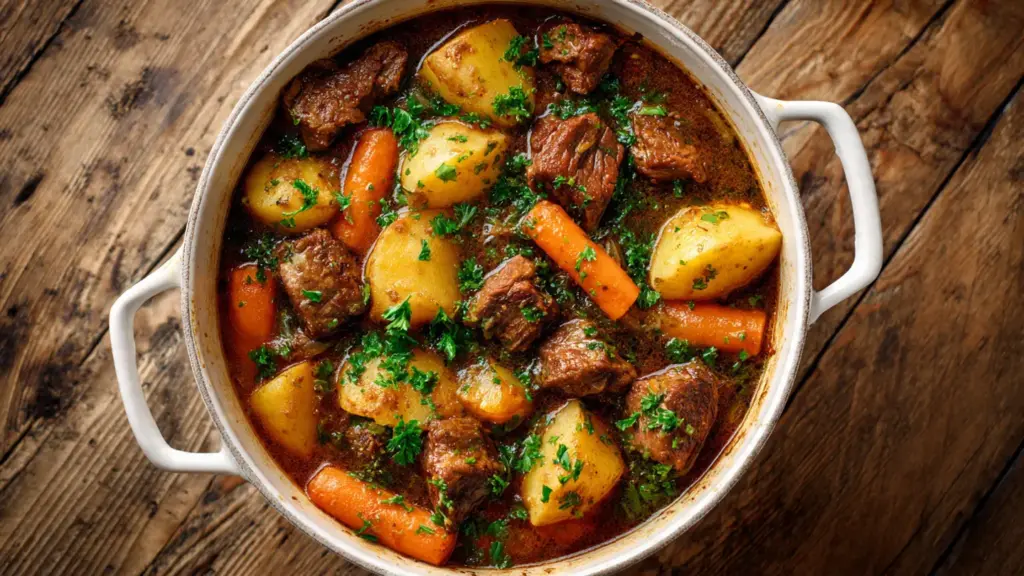
Irish stew is a complete meal on its own, but pairing it with the right accompaniments takes it to the next level.
A thick slice of crusty bread for mopping up that incredible broth is arguably non-negotiable. Irish soda bread is the most traditional pairing, but any rustic, chewy loaf works beautifully. The idea is to not let a single drop of that savory broth go to waste.
Here are some wonderful ways to serve and complete your meal:
- Crusty bread or Irish soda bread for soaking up every last drop of the rich broth
- Garlic Mashed Potatoes if you want to serve the stew as more of a sauce over a potato base, which makes it feel especially indulgent
- A simple green salad with a light vinaigrette to balance the richness of the stew
- Roasted Broccoli on the side for a bit of color and added nutrition
- A cold pint of Guinness for a truly authentic Irish pub dining experience
- Pickled vegetables or sauerkraut if you want a tangy, acidic contrast to cut through the richness
- Steamed green peas stirred into the stew just before serving for a pop of freshness and color
Variations to Try
The basic Irish stew recipe is perfect as-is, but there are several delicious ways to change things up depending on your dietary preferences or what you have available.
- Beef instead of lamb: Use beef chuck or beef stew meat in exactly the same way. The cooking time may be slightly longer, about 2 to 2.5 hours, to get the beef fully tender. This is a popular variation and is just as delicious.
- Guinness Irish stew: Replace one cup of the beef broth with a can of Guinness stout. The dark beer adds a wonderful roasted, slightly bitter complexity that is absolutely incredible. Add it when you add the broth and let it cook off as the stew simmers.
- Slow cooker version: Brown the lamb and sauté the aromatics as instructed, then transfer everything to a slow cooker and cook on low for 8 to 9 hours or high for 4 to 5 hours.
- Add parsnips or turnip: Both are traditional Irish stew vegetables that add an earthy sweetness. Cut them into large chunks and add them along with the carrots.
- Herb variations: Add a sprig of fresh rosemary alongside the thyme for a slightly more aromatic, Mediterranean-leaning profile.
- Vegetarian stew: Replace the lamb and bacon with hearty mushrooms (portobello or cremini), white beans, and vegetable broth. Use extra Worcestershire or soy sauce to build umami depth.
You might also love this equally cozy Cowboy Stew.
Storage and Reheating
One of the best things about Irish stew is that it keeps beautifully, making it an ideal dish for batch cooking and meal prep.
- Refrigerator: Allow the stew to cool completely before transferring it to an airtight container. It will keep well in the refrigerator for up to 3 to 4 days. The flavors actually improve overnight as everything melds together, so leftover stew is often even better than fresh.
- Freezer: Irish stew freezes very well. Let it cool completely, then portion it into freezer-safe containers or zip-lock bags. It will keep in the freezer for up to 3 months.
- Thawing: Transfer frozen stew to the refrigerator the night before you plan to eat it and let it thaw overnight.
- Reheating on the stovetop: Pour the stew into a pot and reheat gently over medium-low heat, stirring occasionally. Add a splash of broth or water if it has thickened too much during storage.
- Reheating in the microwave: Transfer a single portion to a microwave-safe bowl, cover loosely, and heat in 1-minute intervals, stirring between each, until heated through.
Read Also: Venison Stew
Nutritional Facts
The following nutritional information is an estimate per serving, based on 6 servings. Actual values will vary depending on the specific ingredients and brands you use.
| Nutrient | Per Serving (approx.) |
|---|---|
| Calories | 480–520 kcal |
| Protein | 36–40g |
| Total Fat | 22–26g |
| Saturated Fat | 9–11g |
| Carbohydrates | 32–36g |
| Dietary Fiber | 5–6g |
| Sugars | 4–5g |
| Sodium | 620–700mg |
| Potassium | 1,100–1,300mg |
| Iron | 4–5mg |
| Vitamin A | 6,000–8,000 IU |
| Vitamin C | 20–28mg |
This stew is a high-protein, nutrient-dense meal that provides excellent amounts of iron, potassium, and vitamins from the root vegetables.
For another filling, nourishing one-pot recipe, try Minestrone Soup.
Health Benefits of Key Ingredients
This Irish stew isn’t just delicious, it’s actually packed with some genuinely impressive nutritional benefits thanks to its simple, whole-food ingredients.
Every bowl delivers a powerful combination of protein, vitamins, and minerals that support energy, immunity, and overall health.
Here’s a closer look at why the main ingredients are so good for you:
- Lamb shoulder is an excellent source of complete protein, providing all essential amino acids needed for muscle repair and growth. It is also rich in heme iron, which is the most bioavailable form of iron, making it especially beneficial for people prone to iron deficiency. Additionally, lamb is a good source of zinc, vitamin B12, and selenium.
- Potatoes are a nutritional powerhouse that often gets underestimated. They are rich in potassium (more per serving than bananas), vitamin C, vitamin B6, and resistant starch that feeds beneficial gut bacteria. Leaving the skin on increases the fiber content significantly.
- Carrots deliver a significant dose of beta-carotene, which the body converts to vitamin A, a crucial nutrient for eye health, immune function, and skin health. They are also a good source of dietary fiber and antioxidants.
- Leeks belong to the allium family alongside garlic and onions. They contain prebiotic fiber that supports gut health, along with folate, vitamin K, and polyphenol antioxidants that help reduce inflammation.
- Garlic is well-documented for its immune-boosting properties. Its active compound, allicin, has antimicrobial and anti-inflammatory effects. Regular consumption has been linked to improved heart health and reduced blood pressure.
- Celery contributes important electrolytes including potassium and sodium alongside antioxidants and vitamin K that support bone health and blood clotting.
- Fresh thyme is more than just a flavoring herb. It contains the powerful antioxidant thymol, along with vitamins C and A, and has been used in traditional medicine for its antimicrobial and anti-inflammatory properties.
Another wholesome, vegetable-forward comfort meal worth trying is Potato Leek Soup.
Frequently Asked Questions
1. What is the difference between Irish stew and regular beef stew?
The most traditional Irish stew is made with lamb or mutton rather than beef, which gives it a distinctive, slightly richer flavor profile.
Regular beef stew uses beef as its protein base and often incorporates red wine or tomato paste, which are not traditionally used in Irish stew.
2. Can I make this Irish stew recipe in a slow cooker?
Absolutely. Brown the lamb and sauté the aromatics on the stovetop first to build flavor, then transfer everything to a slow cooker.
Cook on low for 8 to 9 hours or on high for 4 to 5 hours until the lamb is beautifully tender and falling apart.
3. What cut of lamb is best for Irish stew?
Lamb shoulder is the most widely recommended cut for stewing because it has a good fat-to-meat ratio that keeps the meat moist and tender during the long, slow cook.
Bone-in pieces add even more flavor to the broth, but boneless shoulder cut into chunks works perfectly well and is easier to eat.
4. How do I thicken my Irish stew?
The most traditional way to thicken Irish stew is to let some of the potato pieces break down naturally as the stew simmers, which releases starch into the broth.
If you want a quicker fix, mix 1 tablespoon of cornstarch with 2 tablespoons of cold water and stir the slurry into the simmering stew during the final 10 minutes of cooking.
5. Can I make Irish stew ahead of time?
Yes, and it’s actually highly recommended. Irish stew tastes even better the next day after the flavors have had a full night to meld together in the refrigerator.
Simply reheat it gently on the stovetop over medium-low heat, adding a splash of broth if needed to loosen it up, and it will taste like you just made it fresh.
Read Also: Brunswick Stew
Final Thoughts
This Irish stew recipe is exactly what comfort food should be: simple, honest, deeply satisfying, and made with ingredients that do all the heavy lifting without any fuss.
Every time you make it, the smells alone will transport you somewhere cozy and familiar, whether that’s a farmhouse kitchen in County Clare or your own dining room on a cold weekday evening.
Give this recipe a try the next time you’re craving something warm and truly nourishing. It’s the kind of meal you’ll be proud to put on the table.
If you make this stew, leave a comment below and let me know how it turned out. Share it with someone who needs a little comfort food in their life today.
Recommended:
- Lamb Stew
- Cowboy Stew
- Kimchi Stew
- Seafood Stew
- Beef Bourguignon
- Easy Shepherd’s Pie
- Cottage Pie
- Hamburger Soup
- Beef Stroganoff
- Borscht