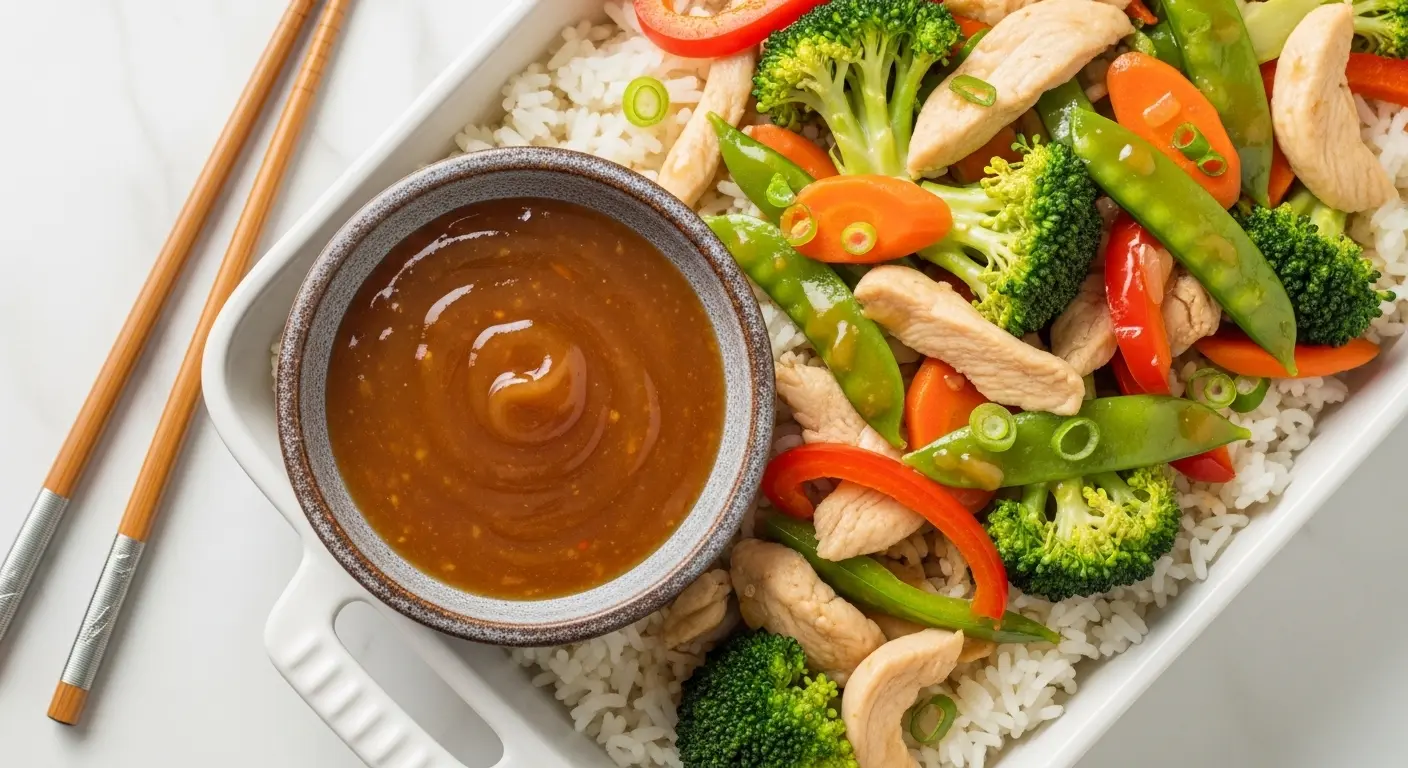
If you’ve ever wondered why homemade stir fries taste so much better when you ditch the bottled stuff, this stir fry sauce recipe is about to change everything for you. Made with pantry staples like soy sauce, sesame oil, fresh garlic, and ginger, this all-purpose sauce takes just 5 minutes to whisk together and delivers that rich, glossy, restaurant-quality coating you’ve been chasing.
What makes this version stand out is the balance. The soy sauce brings deep umami, the honey adds a gentle sweetness, the rice vinegar brightens everything up, and cornstarch creates that satisfying, glossy thickness that clings beautifully to every veggie and protein.
Once you have this sauce prepped and ready in the fridge, weeknight dinners practically make themselves. Toss it over chicken and broccoli, shrimp, tofu, beef, or a mix of whatever vegetables you need to use up. It works every single time.
For more versatile sauce inspiration, you might also love this Teriyaki Sauce that shares a similar sweet-savory profile and is equally great on grilled or stir-fried proteins.
Why You’ll Love This Stir Fry Sauce Recipe
This sauce is the definition of fridge-ready, weeknight-friendly cooking at its best.
You’ll never need to buy bottled stir fry sauce again once you see how easy and customizable this homemade version is.
The ingredients are things you most likely already have on hand, which means zero extra grocery trips.
Making it yourself also means you can dial up or down the saltiness, sweetness, heat, and thickness to match exactly what your family likes.
It stores in the fridge for up to two weeks, so one quick batch covers multiple meals.
The cornstarch is the secret to that glossy, thickened texture that coats every bite perfectly instead of pooling at the bottom of the pan.
Here’s a quick look at what makes this recipe a keeper:
- Ready in under 5 minutes with just a bowl and a whisk
- Uses only pantry staples you likely already own
- Completely customizable in terms of heat, sweetness, and saltiness
- Works beautifully with chicken, beef, shrimp, tofu, or vegetables
- Makes enough to use twice, so it’s great for meal prep
- Stores well in the refrigerator for up to two weeks
- Gluten-free and vegan-friendly with simple swaps
Another sauce that belongs in your regular rotation is this Peanut Sauce, which pairs amazingly well with noodle stir fries and lettuce wraps.
Ingredients
This sauce comes together with a short list of bold, flavorful ingredients that each play an important role.
The low-sodium soy sauce is non-negotiable here. Regular soy sauce tends to make the final dish far too salty, especially since the sauce reduces and concentrates as it cooks. Low-sodium gives you control without sacrificing depth.
Here’s everything you’ll need:
- 1/3 cup (80ml) low-sodium soy sauce
- 1/4 cup (60ml) low-sodium chicken broth (or vegetable broth for a vegan version)
- 2 tablespoons (30ml) toasted sesame oil
- 2 tablespoons (30ml) honey (or brown sugar, or maple syrup for a vegan version)
- 1 tablespoon (15ml) rice vinegar
- 3 cloves garlic, freshly minced (about 1 tablespoon)
- 1 teaspoon fresh ginger, freshly grated
- 2 tablespoons (16g) cornstarch
- 2 tablespoons (30ml) cold water (to create a slurry with the cornstarch)
- 1/4 teaspoon red pepper flakes (optional, for heat)
You might also enjoy the bold, tangy depth of this Hoisin Sauce, which can be stirred into this base for an even richer, more complex stir fry sauce.
Kitchen Equipment Needed
You do not need any special tools to pull this recipe together. It’s as simple as mixing and whisking.
Here’s what to have ready:
- Medium mixing bowl
- Whisk
- Measuring cups and spoons
- Fine grater or microplane grater (for grating fresh ginger)
- Garlic press or sharp knife for mincing garlic
- Small jar with a tight-fitting lid (for shaking and storing the sauce)
- Airtight glass storage jar (for refrigerating leftovers)
- Large skillet or wok (for cooking your stir fry)
Read Also: Easy Mongolian Beef Recipe
Recommended Products for This Recipe
These are products I genuinely recommend based on quality and how much they improve the final result in the pan.
1. Kikkoman Less Sodium Soy Sauce
Low-sodium soy sauce is the foundation of a balanced stir fry sauce. Kikkoman’s version gives you all the umami depth you need without the overwhelming saltiness that regular soy sauce can bring. It’s widely available and consistently reliable.
2. La Tourangelle Toasted Sesame Oil
The nutty, deeply aromatic flavor of good toasted sesame oil is one of the most important flavor notes in this sauce. La Tourangelle’s version is fragrant and high quality, giving your sauce that authentic depth you’d expect from a restaurant stir fry.
3. Carbon Steel Flat Bottom Wok
If you’re making stir fries regularly, a proper carbon steel wok makes a noticeable difference. The intense, even heat helps your vegetables stay crisp and your sauce thicken quickly into that glossy, clingy texture. It’s a worthwhile long-term investment for any home cook.
4. OXO Good Grips Flat Whisk
A flat whisk is far more effective than a balloon whisk when mixing sauce in a shallow bowl. It reaches the corners easily, dissolves the cornstarch completely, and ensures a silky, lump-free sauce every time.
5. Ball Mason Jars with Lids
These wide-mouth mason jars are perfect for shaking the sauce together and storing it in the fridge. Having a ready-made batch in a sealed jar means weeknight stir fries come together in literal minutes.
For another effortless stir fry night option, this Easy Pepper Steak Recipe is one of the best dishes to pair with this homemade sauce.
Step-by-Step Instructions
Step 1: Mince the Garlic and Grate the Ginger
- Peel 3 cloves of fresh garlic and mince them as finely as possible using a sharp knife or a garlic press. The smaller the pieces, the more evenly they’ll distribute flavor throughout the sauce.
- Peel a small knob of fresh ginger using the edge of a spoon (this works better than a peeler for the uneven shape). Grate 1 teaspoon of ginger using a microplane grater or the fine side of a box grater. Fresh ginger makes a meaningful difference here. The flavor is brighter and more aromatic than ground ginger.
- Set the minced garlic and grated ginger aside. You’ll add them in the next step.
Step 2: Make the Cornstarch Slurry
- In a small separate bowl or cup, combine 2 tablespoons (16g) of cornstarch with 2 tablespoons (30ml) of cold water.
- Stir or whisk vigorously until the cornstarch is completely dissolved and no lumps remain. This is called a cornstarch slurry, and it’s what gives the sauce that thick, glossy finish once it hits the hot pan.
- It is very important that the water is cold. Hot water will cause the cornstarch to seize and clump rather than dissolve smoothly.
- Set the slurry aside. Do not add it to the sauce base yet. You’ll mix it in right before using the sauce.
Step 3: Combine the Sauce Base Ingredients
- In a medium mixing bowl, add the following: 1/3 cup (80ml) low-sodium soy sauce, 1/4 cup (60ml) low-sodium chicken broth, 2 tablespoons (30ml) toasted sesame oil, 2 tablespoons (30ml) honey, and 1 tablespoon (15ml) rice vinegar.
- Add the minced garlic and freshly grated ginger.
- If using red pepper flakes for heat, add 1/4 teaspoon now.
- Whisk everything together firmly until the honey is fully dissolved and all ingredients are well combined. The mixture should look uniform and slightly glossy.
Step 4: Add the Cornstarch Slurry and Combine
- Give your cornstarch slurry a quick stir to re-incorporate it (the cornstarch tends to settle at the bottom).
- Pour the slurry into the sauce base and whisk immediately until fully combined.
- Check the mixture visually. It should look smooth and slightly thicker than it did before adding the slurry. There should be zero lumps or white streaks.
- At this stage, you can taste the raw sauce. Adjust sweetness by adding a little more honey. Adjust saltiness by adding a small splash more soy sauce. Adjust tanginess with a touch more rice vinegar.
Step 5: Use the Sauce or Store It
- To use immediately: Have your stir fry ingredients (protein and vegetables) already cooked or nearly cooked in a hot skillet or wok before adding the sauce. Pour the sauce into the hot pan all at once and toss everything to coat. Cook over medium-high heat, stirring constantly, for 1 to 2 minutes. The cornstarch will activate from the heat and the sauce will thicken into a glossy coating within about 60 to 90 seconds. Remove from heat as soon as the sauce coats everything beautifully.
- To make ahead: Pour the mixed sauce (including the cornstarch slurry) into a glass jar or airtight container. Seal tightly and refrigerate. Before using, give it a good shake or a vigorous stir, as the cornstarch will settle to the bottom. Use within two weeks.
This Easy Fried Rice Recipe is a fantastic vehicle for this sauce. Drizzle a few tablespoons over the finished rice for an incredible flavor boost.
Tips for Success
A few small details make a big difference with this recipe.
Follow these tips and your sauce will turn out perfectly balanced and silky every single time:
- Always use low-sodium soy sauce. Regular soy sauce will make the sauce far too salty, especially after it reduces and concentrates in the hot pan. Low-sodium keeps you in control of flavor.
- Use fresh garlic and ginger, not powders. Fresh aromatics give the sauce that vibrant, restaurant-quality flavor depth. Powdered versions are a last resort, not a substitution.
- Dissolve the cornstarch in cold water first. If you skip the slurry step and add dry cornstarch directly to the sauce, you’ll end up with clumps. Cold water is essential.
- Whisk thoroughly. Mix the sauce completely before adding it to the pan. Any undissolved honey or cornstarch can cause uneven thickening.
- Add the sauce to a hot pan. The cornstarch needs high heat to activate and thicken. Adding the sauce to a cold or warm pan will result in a watery finish.
- Don’t walk away. Once the sauce hits the hot pan, it thickens quickly. Stir constantly and pull the pan off the heat the moment everything is well-coated.
- Taste and adjust before cooking. The raw sauce is your chance to tweak the balance. A tiny bit more vinegar, honey, or soy sauce can elevate the final dish significantly.
Another great recipe to try with your mastered stir fry technique is this Chicken and Broccoli Recipe, which is one of the most classic combinations to use with this sauce.
Serving Suggestions
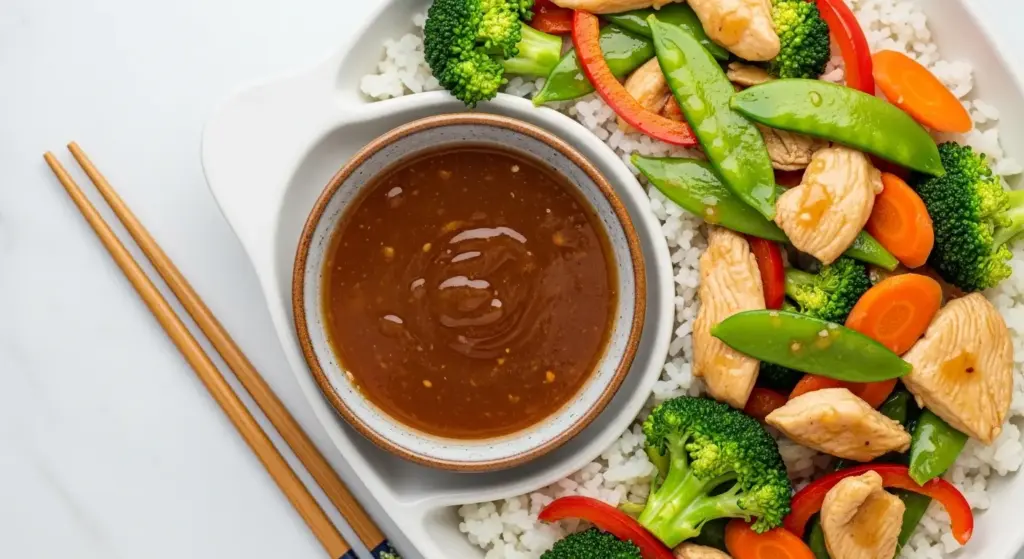
This sauce is endlessly versatile and works as the flavor backbone for dozens of different meals.
Here are some of the best ways to put it to use:
- Toss it over a classic Chicken Fried Rice for an instant flavor upgrade
- Use it as the sauce base for Egg Roll in a Bowl
- Drizzle it over crispy Bok Choy sauteed in a hot wok
- Spoon it over steamed white rice or brown rice with your choice of protein
- Stir it into Easy Pad Thai noodles for a flavor boost
- Use it to glaze baked or pan-seared salmon fillets
- Toss it with tofu, edamame, and snap peas for a quick vegetarian meal
- Use it as a dipping sauce for spring rolls or potstickers
Variations to Try
Once you’ve made the base version, there are so many fun directions you can take this sauce.
Here are some popular variations to experiment with:
- Spicy Stir Fry Sauce: Double the red pepper flakes or add 1 to 2 teaspoons of sriracha or sambal oelek for a sauce with real heat.
- Oyster Sauce Version: Replace the chicken broth with 2 tablespoons of oyster sauce for a deeper, richer, more traditional Chinese-style brown sauce.
- Ginger-Forward Sauce: Double the amount of fresh ginger for a brighter, more assertive flavor. This pairs especially well with shrimp or tofu.
- Vegan Version: Use vegetable broth instead of chicken broth and swap the honey for pure maple syrup or agave nectar.
- Gluten-Free Version: Replace soy sauce with certified gluten-free tamari or coconut aminos in equal amounts.
- Orange Stir Fry Sauce: Add 2 tablespoons of fresh orange juice and 1 teaspoon of orange zest for a citrusy version that works beautifully with chicken. It’s similar to what you’ll find in this Easy Orange Chicken Recipe.
- Peanut Stir Fry Sauce: Whisk in 2 tablespoons of natural peanut butter for a creamy, nutty twist that’s amazing with noodles and chicken lettuce wraps.
Storage and Reheating
This sauce stores beautifully, making it one of the best meal prep staples you can keep in your fridge.
Here’s how to store and use it:
- Refrigerator: Transfer the sauce to a sealed glass jar or airtight container. It will keep for up to 2 weeks in the fridge. Note that the cornstarch will settle to the bottom during storage.
- Before each use: Shake the jar vigorously or whisk the sauce in a bowl to re-emulsify the ingredients and redistribute the cornstarch before pouring it into the pan.
- Freezer: Pour the sauce (without the cornstarch slurry) into an ice cube tray or a zip-lock freezer bag. Freeze for up to 3 months. Thaw in the refrigerator overnight and whisk in the cornstarch slurry fresh before using.
- Do not microwave to reheat: The sauce thickens best when added directly to a hot pan. If you heat it separately in a microwave, the cornstarch can over-thicken and create a gel-like texture. Always pour cold or room-temperature sauce into a hot pan for the best result.
- Reheating leftovers with sauce: If you’ve already used the sauce in a finished stir fry dish, reheat leftovers in a skillet over medium heat with a small splash of broth or water to loosen the sauce back to the right consistency.
Read Also: Worcestershire Sauce Recipe
Nutritional Facts
Nutritional values are approximate and based on 1 serving of sauce (approximately 2 tablespoons), with the recipe making about 8 servings total.
| Nutrient | Per Serving (2 tbsp) |
|---|---|
| Calories | 75 kcal |
| Total Carbohydrates | 9g |
| Sugars | 5g |
| Protein | 1g |
| Total Fat | 4g |
| Saturated Fat | 0.5g |
| Sodium | 380mg |
| Fiber | 0.2g |
Note: Nutritional values will vary based on specific brands used and whether low-sodium or regular products are chosen.
You might also enjoy this Bang Bang Sauce as another flavor-forward homemade sauce to keep in your weekly rotation.
Health Benefits of Key Ingredients
Beyond the flavor, several of the ingredients in this sauce offer real nutritional advantages.
Here’s a look at why these core ingredients are worth using:
Fresh Garlic is a nutritional powerhouse with well-documented immune-boosting and anti-inflammatory properties. It contains allicin, a compound associated with cardiovascular benefits and reduced inflammation.
Fresh Ginger has been used for centuries for its digestive and anti-inflammatory benefits. It contains gingerols and shogaols, which are bioactive compounds linked to reduced nausea, improved digestion, and antioxidant activity.
Toasted Sesame Oil is rich in healthy monounsaturated and polyunsaturated fats. It also contains sesamol and sesamin, two antioxidant compounds that support heart health and may have mild anti-inflammatory effects.
Low-Sodium Soy Sauce delivers deep umami flavor while providing small amounts of protein, iron, and B vitamins. Choosing the low-sodium version significantly reduces sodium intake compared to regular soy sauce, making this sauce much more heart-friendly.
Honey is a natural sweetener that contains antioxidants and trace enzymes. Unlike refined sugar, raw honey has a slightly lower glycemic impact and provides some beneficial plant compounds.
Rice Vinegar has minimal calories but adds bright acidity to the sauce. Some research suggests that acetic acid, the active component in vinegar, may support blood sugar balance and digestion.
Here’s a quick summary of the key health highlights:
- Garlic supports immune function and cardiovascular health
- Ginger aids digestion and reduces inflammation
- Sesame oil contributes heart-healthy fats and antioxidants
- Low-sodium soy sauce reduces sodium load without sacrificing flavor
- Honey provides natural sweetness with trace antioxidants
- Rice vinegar may support blood sugar regulation
- Overall, this sauce is lower in sugar and sodium than most bottled alternatives
Another pantry-friendly sauce packed with bold flavor is this Comeback Sauce, which is great to have on hand for dipping and drizzling.
Frequently Asked Questions
1. Can I make this stir fry sauce ahead of time?
Yes, and it’s actually one of the best reasons to make it homemade. This sauce keeps well in the refrigerator for up to 2 weeks in a sealed jar. Make a double batch on the weekend and you’ll have a quick flavor base ready for multiple meals throughout the week. Just give it a good shake before each use, since the cornstarch settles to the bottom during storage.
2. What can I substitute for cornstarch?
Arrowroot powder or tapioca starch are the best substitutes. Use the same amount as called for in the recipe. Both will thicken the sauce similarly, though arrowroot produces a slightly clearer gloss. You can also skip the cornstarch entirely and simply add the sauce to the pan a bit earlier, letting it reduce naturally over higher heat. The sauce will be a little less thick but still very flavorful.
3. Can I make this sauce gluten-free?
Absolutely. Simply replace the soy sauce with an equal amount of certified gluten-free tamari or coconut aminos. Tamari behaves nearly identically to soy sauce in this recipe. Coconut aminos are a bit sweeter and less salty, so you may want to reduce the honey slightly and taste as you go.
4. Why is my sauce not thickening?
The most common reason is that the sauce is being added to a pan that isn’t hot enough. The cornstarch needs high heat to activate. Make sure your skillet or wok is fully preheated over medium-high heat before you add the sauce. Another cause is cornstarch lumps that didn’t dissolve completely. Always dissolve the cornstarch in cold water separately before adding it to the sauce to prevent this.
5. How much sauce do I need per serving?
A full batch of this recipe (about 1 cup / 240ml) is the right amount for approximately 1 pound (450g) of protein and 6 cups of vegetables, which serves about 4 people. If you’re cooking a smaller batch, use half the recipe. If you like your stir fry extra saucy or you’re cooking more than 4 servings, make 1.5x or double the batch.
Read Also: Sunshine Sauce Recipe
Final Thoughts
Once you make this stir fry sauce recipe from scratch, you’ll never look at those bottled versions the same way again.
It’s one of those foundational recipes that quietly transforms your weeknight cooking. With just a handful of pantry staples and five minutes of effort, you have a sauce that delivers genuine restaurant-level flavor every single time.
Whether you use it tonight over chicken and vegetables or batch it up for the week ahead, this sauce is a reliable workhorse in any home kitchen.
Give it a try and let me know in the comments how it turned out, what protein or veggies you used, and any fun variations you tried. Sharing this recipe with a friend who loves a good weeknight stir fry would mean the world!
Recommended:
- Teriyaki Sauce Recipe
- Hoisin Sauce Recipe
- BBQ Sauce Recipe
- Enchilada Sauce Recipe
- Creole Sauce Recipe
- Chicken Lettuce Wraps Recipe
- Easy Orange Chicken Recipe
- Bibimbap Recipe
- Easy Pepper Steak Recipe
- Roasted Broccoli Recipe