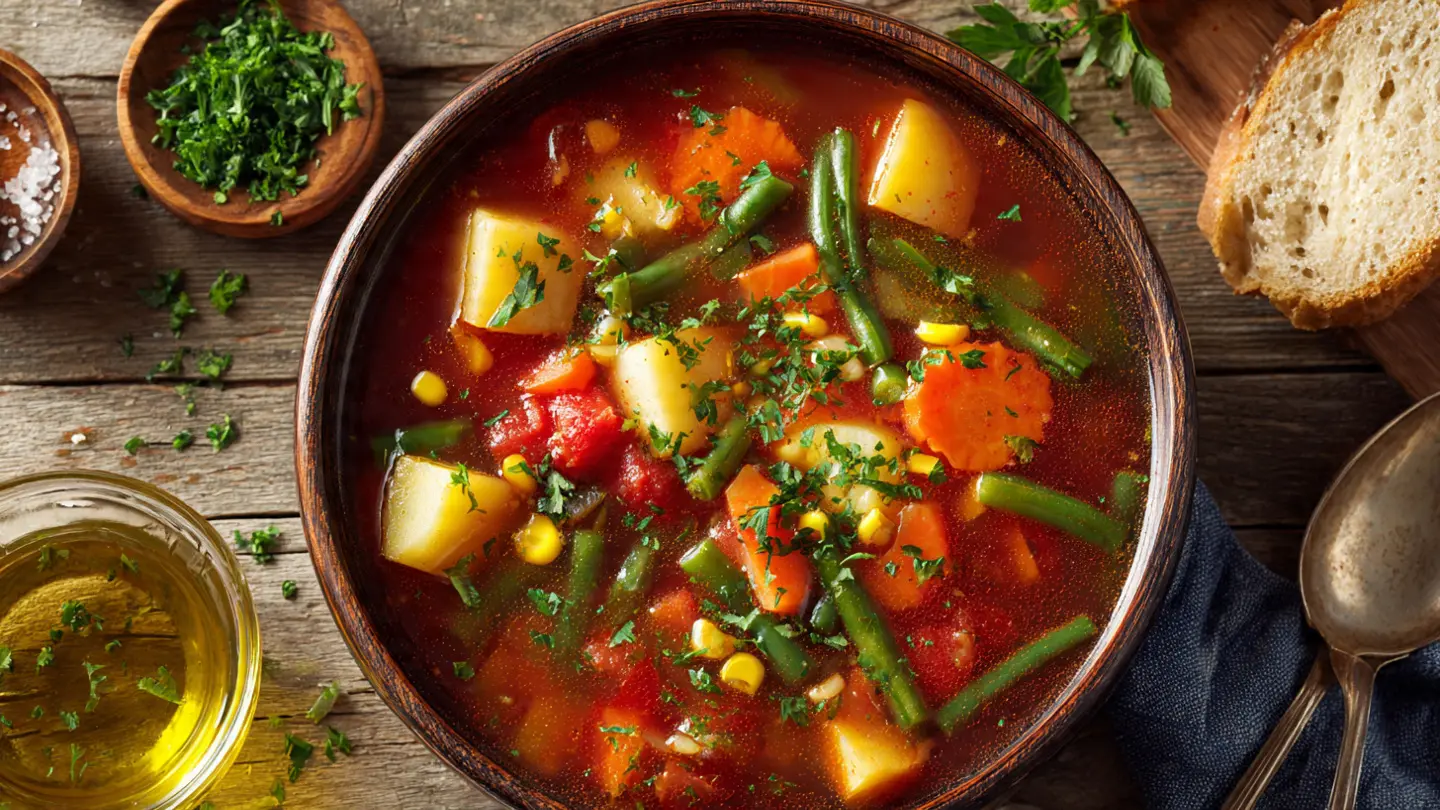
A good homemade vegetable soup recipe is one of those kitchen staples that never lets you down. It’s the kind of meal that warms you from the inside out, fills your home with the most incredible aroma, and makes everyone at the table feel completely taken care of.
This isn’t a watery, bland soup you stir together and call it a day. This is a rich, deeply flavored pot of goodness loaded with tender vegetables, a savory tomato-based broth, and just the right amount of seasoning to make every spoonful absolutely satisfying.
What makes this recipe work so well is the technique. You start by sautéing your aromatics, which builds a flavor base that no amount of added seasoning can replicate. The tomatoes give the broth a beautiful depth, the potatoes add body, and the mix of vegetables creates a texture that’s hearty without being heavy.
It’s also incredibly forgiving. Use what you have, swap in seasonal produce, and it will still taste amazing every single time.
You might also enjoy: Chicken Vegetable Soup
Why You’ll Love This Vegetable Soup Recipe
This soup checks every single box. It’s nourishing, affordable, and comes together with minimal effort using pantry staples and fresh vegetables.
It’s completely plant-based, making it ideal for vegetarians and vegans alike. It’s also naturally gluten-free, so it works for a wide range of dietary needs without any modifications.
One pot, one hour, and you’ve got a meal that tastes like it took all day. The leftovers are somehow even better the next day as the flavors meld and deepen overnight.
It’s the kind of recipe you’ll come back to all year long. Lighter in the warmer months with zucchini and green beans, and heartier in winter with extra root vegetables and a thick, warming broth.
- Rich, deeply flavored broth that’s savory and satisfying
- Packed with a colorful variety of vegetables for maximum nutrition
- Totally customizable with whatever vegetables you have on hand
- Naturally vegan and gluten-free with no substitutions needed
- Great for meal prep since it stores and reheats beautifully
- Budget-friendly and made entirely from simple, whole ingredients
- One-pot recipe meaning minimal cleanup afterward
- Suitable for all ages including picky eaters and young children
Read Also: Minestrone Soup Recipe
Ingredients
This recipe uses a simple lineup of fresh vegetables, pantry staples, and classic seasonings. Every ingredient serves a purpose here, from the onion and garlic that build the flavor base to the tomatoes that give the broth its depth and body.
- 2 tablespoons (30ml) olive oil
- 1 large yellow onion, diced
- 4 cloves garlic, minced
- 3 medium carrots, peeled and sliced into rounds (about 1 cup / 150g)
- 3 stalks celery, sliced (about 1 cup / 120g)
- 2 medium russet or Yukon Gold potatoes, peeled and cut into 1-inch (2.5cm) cubes (about 2 cups / 300g)
- 1 cup (150g) green beans, trimmed and cut into 1-inch pieces (fresh or frozen)
- 1 cup (150g) frozen or fresh corn kernels
- 1 can (14.5 oz / 411g) diced tomatoes, with juices
- 2 tablespoons (30g) tomato paste
- 6 cups (1.4 liters) vegetable broth
- 1 teaspoon dried thyme
- 1 teaspoon dried oregano
- 1 teaspoon smoked paprika
- 1 bay leaf
- Salt and black pepper to taste
- Fresh parsley, chopped, for garnish
Read Also: Cabbage Soup Recipe
Kitchen Equipment Needed
You don’t need anything fancy to make this soup. A large, heavy-bottomed pot is really the only essential piece of equipment, as it distributes heat evenly and prevents the vegetables from scorching at the bottom.
- Large Dutch oven or heavy-bottomed soup pot (at least 6 quarts / 5.7 liters)
- Sharp chef’s knife
- Cutting board
- Wooden spoon or silicone spatula
- Vegetable peeler
- Measuring cups and spoons
- Ladle for serving
- Immersion blender (optional, if you prefer a creamier texture)
This technique works wonderfully alongside a Lentil Soup Recipe if you’re looking for another hearty, protein-packed bowl.
Recommended Products for This Recipe
These are products chosen for their quality and performance that will genuinely help you make this soup better.
1. Le Creuset Enameled Cast Iron Dutch Oven
A quality Dutch oven distributes heat evenly, which means your aromatics soften gently without burning and your broth simmers at a steady, consistent temperature. The enameled interior doesn’t react with acidic ingredients like tomatoes, so your soup retains its bright, clean flavor. It’s a kitchen investment that pays off with every single pot of soup you make.
2. High-Quality Vegetable Broth
The broth is the soul of this soup. Using a premium vegetable broth with a deep, rich flavor makes a noticeable difference compared to bland, watery alternatives. Look for options with low sodium so you can control the seasoning yourself. A well-made broth eliminates the need for excessive seasoning.
3. Smoked Paprika
Regular paprika and smoked paprika are not interchangeable in this recipe. Smoked paprika adds a subtle warmth and complexity to the broth that makes this soup taste like it has been simmering for hours. A single teaspoon transforms the flavor profile dramatically.
4. Stainless Steel Immersion Blender
If you love a slightly creamy, thicker vegetable soup without straining anything, an immersion blender lets you blend just a portion of the soup directly in the pot. It’s safer and easier than transferring hot liquid to a countertop blender and gives you complete control over the texture.
Another favorite: Chicken Tortilla Soup Recipe
Step-by-Step Instructions
Step 1: Prep All Your Vegetables
- Peel and dice the yellow onion into small, even pieces, about 1/4-inch (6mm) in size.
- Peel and mince the garlic cloves finely, or use a garlic press for speed.
- Peel the carrots and slice them into rounds approximately 1/4-inch (6mm) thick. Try to keep them consistent so they cook evenly.
- Slice the celery stalks into pieces the same thickness as the carrots.
- Peel the potatoes and cut them into 1-inch (2.5cm) cubes. Place them in a bowl of cold water to prevent browning while you prep the other vegetables.
- Trim the green beans and cut them into 1-inch (2.5cm) pieces.
- If using fresh corn, slice the kernels off the cob. If using frozen corn, measure out 1 cup and set it aside to thaw slightly.
- Open the can of diced tomatoes and keep it with the juices. Measure out your tomato paste and have it ready near the stove.
- Set all prepared vegetables aside before you start cooking so the process flows smoothly.
Step 2: Sauté the Aromatics
- Place your large Dutch oven or soup pot on the stove over medium heat.
- Add the 2 tablespoons (30ml) of olive oil and let it heat for about 30 seconds until it shimmers slightly.
- Add the diced onion and cook for 5 to 6 minutes, stirring occasionally, until it turns soft and translucent. This step is crucial because properly softened onions release their natural sweetness and form the flavor foundation of the entire soup.
- Add the minced garlic and stir it in with the onions. Cook for 1 more minute, stirring constantly, until fragrant. Be careful not to let the garlic burn, as it turns bitter quickly.
- Push the onions and garlic slightly to the side of the pot and add the tomato paste directly to the center of the pot.
- Let the tomato paste cook undisturbed for about 1 minute, then stir it into the onion mixture. This step, called “blooming” the tomato paste, deepens its flavor and removes any raw, tinny taste.
Step 3: Add the Harder Vegetables
- Drain the potatoes from the cold water and pat them lightly dry with a paper towel.
- Add the sliced carrots, celery, and cubed potatoes to the pot. Stir everything together to coat the vegetables with the aromatics and tomato paste.
- Cook for 2 to 3 minutes, stirring occasionally. This gives the vegetables a brief head start since they take the longest to become tender.
Step 4: Build the Broth
- Pour in the entire can of diced tomatoes, including all the juices. The juices add flavor and contribute to the body of the broth.
- Pour in all 6 cups (1.4 liters) of vegetable broth and stir to combine everything.
- Add the dried thyme, dried oregano, smoked paprika, and bay leaf.
- Season with 1 teaspoon of salt and 1/2 teaspoon of black pepper as a starting point. You will taste and adjust again at the end.
- Stir everything together thoroughly to distribute the seasoning evenly throughout the broth.
- Increase the heat to medium-high and bring the soup to a gentle boil, which should take about 5 to 7 minutes.
Step 5: Simmer the Soup
- Once the soup reaches a boil, reduce the heat to medium-low to maintain a steady simmer.
- Cover the pot with a lid but leave it slightly ajar to prevent the soup from boiling over and to allow some steam to escape.
- Simmer the soup for 20 minutes. During this time, the potatoes and carrots will begin to soften and the flavors will start to meld together.
- After 20 minutes, check the potatoes and carrots by piercing them with a fork. They should be getting tender but may not be fully soft yet.
Step 6: Add the Remaining Vegetables
- Add the green beans and corn to the pot and stir gently to incorporate them.
- Continue simmering with the lid slightly ajar for another 10 to 15 minutes until all the vegetables are completely tender when pierced with a fork.
- The green beans should be soft but not mushy, and the corn kernels should be plump and juicy.
Step 7: Taste, Adjust, and Finish
- Remove and discard the bay leaf.
- Taste the soup and adjust seasoning as needed. Add more salt if it tastes flat, more pepper for heat, or an extra pinch of smoked paprika for depth.
- If you prefer a slightly thicker broth, use an immersion blender to blend just a small portion of the soup, about 1 to 2 cups worth, directly in the pot. This releases starch from the potatoes and naturally thickens the broth without adding any cream or flour.
- Stir in half of the fresh chopped parsley.
- Ladle the soup into bowls and garnish with the remaining fresh parsley before serving.
For another deeply flavored vegetable soup option, Zucchini Soup is a wonderful seasonal alternative.
Tips for Success
Small details make a big difference between a soup that tastes fine and one that tastes truly exceptional. These tips cover the most common areas where things can go wrong and how to avoid them.
- Don’t skip the tomato paste blooming step. Cooking the tomato paste directly on the heat for 60 seconds before adding liquid reduces its acidity and adds a rich, caramelized depth to the broth that makes the entire soup taste more complex.
- Cut vegetables to similar sizes. Uniform pieces cook at the same rate, which means you won’t end up with mushy carrots and undercooked potatoes in the same bowl.
- Use a good quality vegetable broth. The broth makes up the majority of the liquid in this soup. A bland or thin broth will result in a flat-tasting soup regardless of how much seasoning you add.
- Season in layers. Add a little salt when the onions are cooking, again when you add the broth, and again at the very end. Layering seasoning at each stage builds flavor in a way that adding all of it at the end simply cannot.
- Keep the simmer gentle. A vigorous boil will break down the vegetables too quickly, leaving you with a mushy, unappetizing texture. A gentle simmer preserves the structure and integrity of each vegetable.
- Taste before serving. Broth, tomatoes, and sodium content vary by brand. Always do a final taste before serving and adjust salt, pepper, and herbs accordingly.
- Let it rest for 5 minutes off heat before serving. This allows the flavors to settle and the temperature to become comfortable for eating.
Another great soup to keep in your rotation: Hamburger Soup
Serving Suggestions
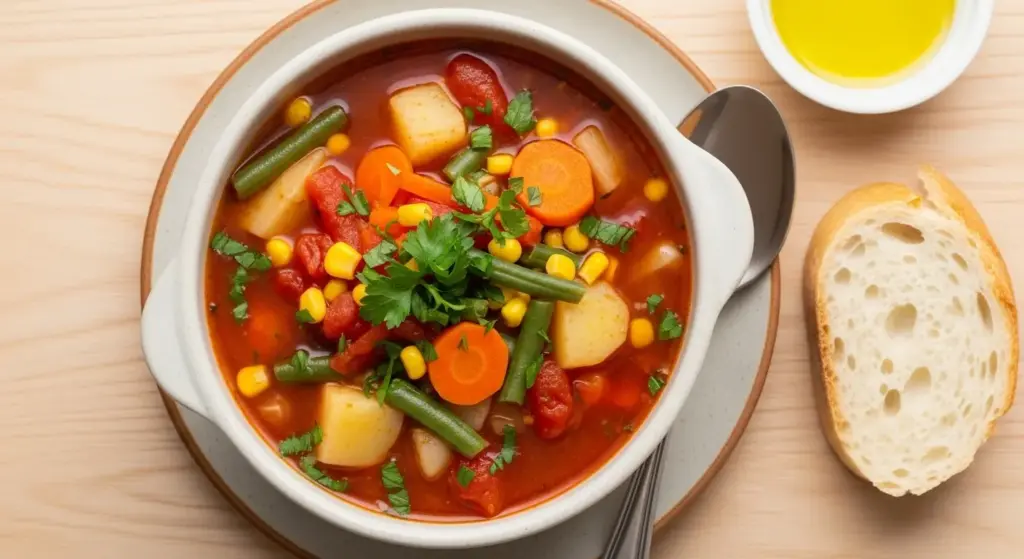
This vegetable soup is a complete, satisfying meal on its own, but pairing it with the right accompaniments takes it to a whole new level of comfort.
Crusty bread is the classic companion. A thick slice of sourdough, a warm dinner roll, or a piece of cheesy garlic bread for dipping in that rich, savory broth is hard to beat. The soup also pairs beautifully with a simple green salad dressed with a light vinaigrette to balance its warmth and richness.
- A side of Cheesy Garlic Bread for dipping
- Broccoli Salad for a fresh, crunchy contrast
- Homemade Biscuits for a buttery, flaky pairing
- A slice of Sourdough Sandwich Bread toasted with olive oil and herbs
- Classic Deviled Eggs for a protein-rich appetizer before the soup
- A simple side salad with lemon vinaigrette to lighten the meal
- A dollop of pesto stirred directly into the bowl for an herby, aromatic finish
This soup is also perfect for casual dinner parties, potlucks, or a simple weeknight dinner. Serve it in wide, shallow bowls that showcase all the beautiful colors of the vegetables.
Read Also: Loaded Potato Soup Recipe
Variations to Try
This base recipe is incredibly versatile. Once you’ve mastered the classic version, you can take it in dozens of different directions based on what’s in season, what’s in your pantry, or what kind of flavor profile you’re craving.
The beauty of vegetable soup is that there are no strict rules. Swap, add, or substitute ingredients based on your preferences and what looks good at the market.
- Italian-Inspired: Add a can of cannellini beans, a handful of small pasta such as ditalini or elbow macaroni, and a generous handful of chopped kale or spinach in the last 5 minutes of cooking. Finish with a drizzle of good olive oil and freshly grated Parmesan.
- Spicy Version: Add 1/2 teaspoon of red pepper flakes and one small jalapeño, seeded and diced, with the onions. A dash of hot sauce at the end adds even more heat.
- Slow Cooker Vegetable Soup: Sauté the aromatics on the stove, then transfer everything to a slow cooker and cook on low for 6 to 8 hours or high for 3 to 4 hours.
- Creamy Vegetable Soup: Stir in 1/2 cup (120ml) of full-fat coconut milk or heavy cream in the last 5 minutes of cooking for a velvety, rich finish.
- Add Protein: Stir in a can of rinsed chickpeas, white beans, or black beans to add plant-based protein without changing the overall flavor.
- Seasonal Summer Version: Replace the potatoes with zucchini and add fresh cherry tomatoes and spinach in the last few minutes of cooking for a lighter, brighter soup.
- Root Vegetable Focused: Add parsnips, turnips, or sweet potato in place of regular potato for a naturally sweet, earthy twist.
For another root-vegetable-forward soup, Roasted Butternut Squash Soup is a must-try.
Storage and Reheating
This soup stores exceptionally well and is one of the best recipes you can make ahead in a large batch. The flavor genuinely improves after a day in the fridge as all the vegetables and seasonings have more time to meld together.
Follow these simple storage guidelines to keep your soup fresh and delicious for as long as possible.
- Refrigerator: Allow the soup to cool completely to room temperature before transferring to airtight containers. Store in the refrigerator for up to 5 days. Do not store soup while it’s still hot, as this raises the temperature inside the fridge and can affect food safety.
- Freezer: Transfer cooled soup to freezer-safe containers or zip-top freezer bags, leaving about 1 inch (2.5cm) of headspace for expansion. Freeze for up to 3 months. Label with the date so you know when it was made.
- Reheating from the fridge: Pour the desired amount into a saucepan and reheat over medium heat, stirring occasionally, until hot all the way through, about 5 to 8 minutes. Add a small splash of broth or water if the soup has thickened in the fridge.
- Reheating from frozen: Thaw overnight in the refrigerator, then reheat on the stove as above. For a quicker option, place the frozen soup directly into a pot over low heat and stir occasionally as it thaws and warms. Add additional broth if needed.
- Microwave reheating: Transfer a single serving to a microwave-safe bowl, cover loosely, and heat in 90-second intervals, stirring between each, until heated evenly throughout.
Read Also: Kale Soup Recipe
Nutritional Facts
The following nutritional information is based on one serving, assuming this recipe yields 6 servings. Values are approximate and will vary based on specific ingredients and brands used.
| Nutrient | Amount Per Serving |
|---|---|
| Calories | 165 kcal |
| Total Fat | 5g |
| Saturated Fat | 0.7g |
| Cholesterol | 0mg |
| Sodium | 620mg |
| Total Carbohydrates | 28g |
| Dietary Fiber | 5g |
| Total Sugars | 7g |
| Protein | 4g |
| Vitamin A | 85% DV |
| Vitamin C | 28% DV |
| Potassium | 680mg |
| Iron | 10% DV |
This soup is low in calories, high in fiber, and an excellent source of vitamins A and C, making it a genuinely nutritious meal option.
You might also enjoy: Spinach Soup Recipe
Health Benefits of Key Ingredients
This vegetable soup is not just delicious. It’s genuinely packed with nutrients that support overall health and wellbeing.
Every ingredient in this recipe earns its place not just for flavor, but for what it contributes to your body. This is a bowl of food that works hard for you.
- Carrots are rich in beta-carotene, which the body converts to vitamin A. This supports healthy vision, immune function, and skin health. The antioxidants in carrots have also been linked to reduced risk of certain chronic diseases.
- Celery is very low in calories while providing vitamin K, folate, and potassium. It also contains compounds with anti-inflammatory properties that may support gut health and reduce blood pressure.
- Tomatoes are one of the best dietary sources of lycopene, a powerful antioxidant associated with reduced risk of heart disease and certain cancers. They also provide a meaningful amount of vitamin C.
- Potatoes are a great source of potassium, vitamin B6, and resistant starch when cooked and cooled. Despite their reputation, potatoes are nutritious whole foods that provide sustained energy.
- Green beans offer a good dose of vitamin C, vitamin K, and folate. They’re also a source of plant-based iron when eaten alongside vitamin C-rich foods like tomatoes, which improve iron absorption.
- Garlic contains allicin and other sulfur compounds that have well-documented immune-boosting and anti-inflammatory effects. Regular consumption has been linked to improved heart health and reduced frequency of common colds.
- Olive oil provides heart-healthy monounsaturated fats and powerful polyphenol antioxidants. It’s the fat of choice in the Mediterranean diet, which is consistently associated with longevity and reduced chronic disease risk.
This pairs beautifully as a light starter before a heartier main like Beef Bourguignon.
Frequently Asked Questions
1. Can I use frozen vegetables instead of fresh?
Absolutely. Frozen vegetables work very well in this soup and are a great time-saving option.
The only adjustment needed is timing. Add frozen vegetables like corn and green beans about 10 minutes into the simmering stage rather than at the beginning, since they soften faster than fresh. Frozen carrots and peas can also be used, but add them in the last 5 to 10 minutes to avoid them becoming mushy.
2. How do I make this soup more flavorful?
The biggest flavor booster is not adding more salt, but building depth at the early stages.
Make sure to properly caramelize the onions, bloom the tomato paste on direct heat, and use a high-quality vegetable broth. Adding a Parmesan rind to the simmering broth is another great trick for deep, savory flavor even in a meatless soup. A splash of soy sauce or a teaspoon of miso paste stirred in near the end can also add significant umami depth.
3. Can I add pasta or rice to this soup?
Yes, and it’s a delicious variation.
Add small pasta shapes like ditalini, elbow macaroni, or orzo in the last 10 minutes of cooking, since pasta softens quickly and can become mushy if added too early. For rice, add cooked rice directly to individual bowls rather than the pot, as it absorbs a lot of liquid and turns starchy when simmered for too long.
4. Is this soup suitable for meal prep?
This soup is ideal for meal prep and one of the most practical recipes in that regard.
Make a full batch on Sunday and portion it into individual containers. It keeps in the fridge for 5 days and reheats in minutes. It freezes beautifully for up to 3 months. Just note that potatoes can become slightly granular in texture after freezing. If you plan to freeze the soup, consider leaving out the potatoes and adding them fresh when reheating.
5. Can I make this in an Instant Pot or slow cooker?
Both methods work very well.
For the Instant Pot, sauté the aromatics using the sauté function, then add all remaining ingredients. Cook on high pressure for 10 minutes with a natural pressure release. For a slow cooker, sauté aromatics first for best flavor, then transfer to the slow cooker with everything else and cook on low for 6 to 8 hours or high for 3 to 4 hours.
Read Also: Chicken Soup Recipe
Final Thoughts
This homemade vegetable soup recipe is proof that simple cooking with good ingredients can produce something truly wonderful.
It’s the kind of meal that’s equally welcome on a cold weeknight when you need something fast and nourishing, or on a lazy weekend when you want to fill your home with the smell of something simmering on the stove.
Once you make this from scratch, it’s hard to go back to anything else. The depth of flavor, the tender vegetables, and that rich, savory broth are just on a completely different level from anything that comes from a can.
Give this recipe a try and make it your own. Add your favorite vegetables, adjust the seasoning to your taste, and don’t forget to share how it turned out in the comments below. Your feedback and variations genuinely inspire others to try something new in the kitchen.
Recommended:
- Chicken Vegetable Soup
- Lentil Soup
- Zucchini Soup
- Pumpkin Soup
- Roasted Butternut Squash Soup
- Carrot Soup
- Roasted Carrot Soup
- Celery Soup
- Tom Yum Soup
- Borscht