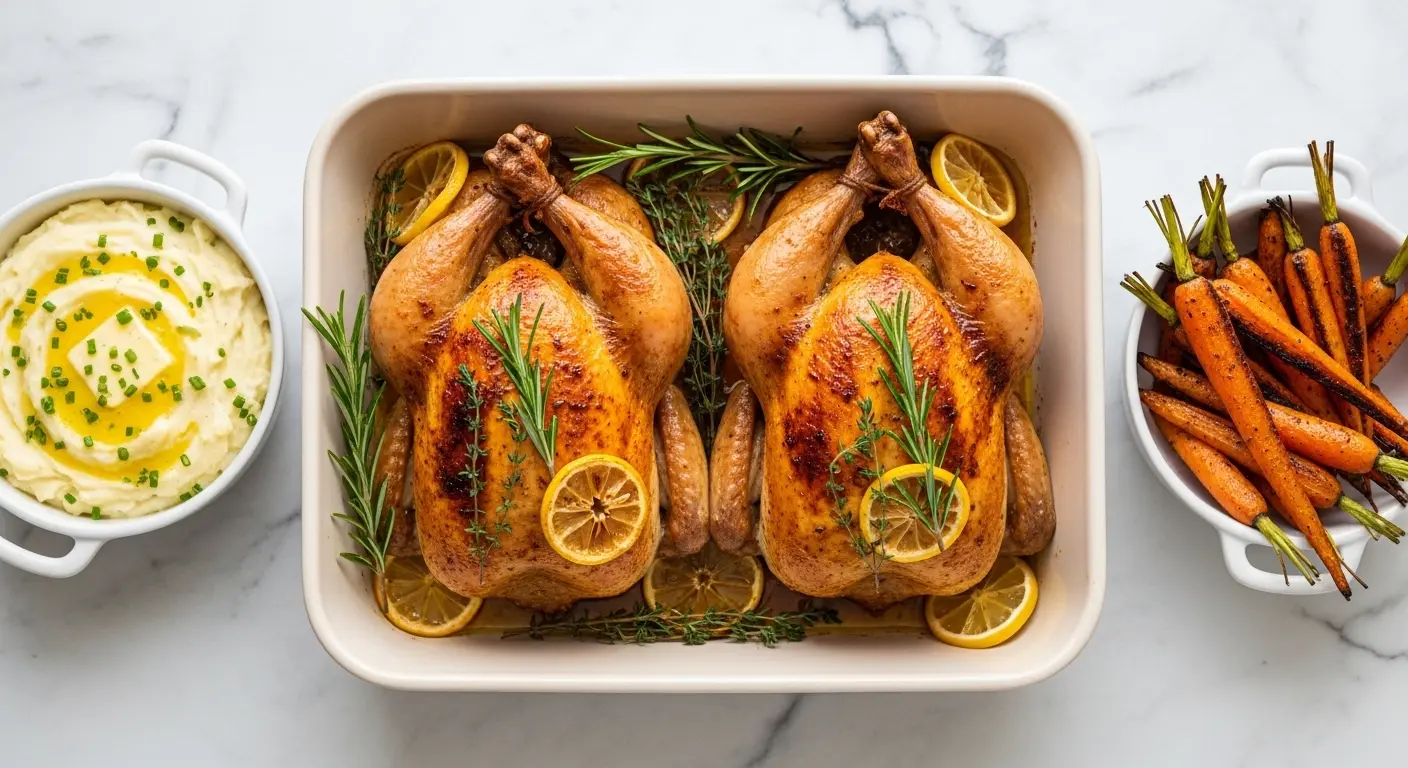
A good cornish hen recipe is one of those things that sounds fancy but is actually one of the most beginner-friendly roasts you can make. These little birds come out of the oven with crackling golden skin, impossibly juicy meat, and the kind of dramatic presentation that makes guests think you spent hours in the kitchen.
The secret? High heat, a simple herb butter rub, and a bed of aromatics that doubles as a built-in sauce. Cornish hens cook faster than a whole chicken, which means less time waiting and more time enjoying.
They’re perfect for date nights, holiday dinners, or any occasion when you want something that feels truly special. One hen per person means no awkward carving at the table, just a beautifully plated individual serving that looks like it came from a restaurant.
This guide walks you through every step, from patting the hens dry to resting them properly before serving, so you get perfect results every single time.
Why You’ll Love This Cornish Hen Recipe
This recipe checks every box when it comes to an impressive, low-stress dinner.
The ingredient list is short, familiar, and easy to find at any grocery store.
You get crispy skin and tender, flavorful meat without any complicated techniques or specialty equipment.
Here is what makes this cornish hen recipe stand out:
- Individual servings: Each person gets their own whole hen, which looks absolutely stunning on the plate and eliminates any carving drama.
- Faster than a whole chicken: These smaller birds roast in under an hour, making them surprisingly practical for weeknight dinners too.
- Versatile flavoring: The garlic herb butter base takes on different flavor profiles easily, from lemon and rosemary to paprika and cumin.
- Great for entertaining: You can prep the hens hours in advance and just pop them in the oven when guests arrive.
- Crowd-pleasing flavor: The meat tastes rich and slightly more flavorful than regular chicken, with a texture that stays moist throughout.
If you love elegant poultry dinners, you might also enjoy this Thanksgiving Turkey Recipe for larger gatherings.
Ingredients
You only need a handful of ingredients to make these hens truly shine. The key is using good quality butter and fresh herbs wherever possible, because with such a simple recipe, every component matters.
Here is everything you will need for 2 Cornish hens (serving 2-4 people):
- 2 Cornish hens (about 1.5 lbs / 680g each), thawed if frozen
- 4 tablespoons (57g) unsalted butter, softened to room temperature
- 4 cloves garlic, minced
- 1 tablespoon (15ml) olive oil
- 1 teaspoon (5g) smoked paprika
- 1 teaspoon (3g) garlic powder
- 1 teaspoon (1g) dried rosemary (or 2 sprigs fresh rosemary)
- 1 teaspoon (1g) dried thyme (or 4 sprigs fresh thyme)
- 1 teaspoon (6g) kosher salt
- 1/2 teaspoon (1g) black pepper
- 1 lemon, zested and cut into quarters
- 1 medium yellow onion, roughly chopped
- 4 cloves garlic (whole, unpeeled, for the roasting pan)
- 2 sprigs fresh rosemary (for the roasting pan)
- 4 sprigs fresh thyme (for the roasting pan)
Read Also: Dry Brine Turkey Recipe
Kitchen Equipment Needed
You do not need any fancy equipment here, just a few reliable kitchen basics. A roasting pan is the most important item, as it collects the drippings that add incredible flavor to the finished dish.
- Roasting pan (9×13 inch / 23x33cm or larger)
- Instant-read meat thermometer
- Small mixing bowl (for the herb butter)
- Paper towels (for patting hens dry)
- Kitchen twine (for trussing the legs, optional but recommended)
- Basting brush or spoon
- Cutting board and sharp knife
- Aluminum foil (for tenting during rest)
This recipe pairs beautifully with creamy sides, and you might want to start your Garlic Mashed Potatoes Recipe while the hens are in the oven.
Recommended Products for This Recipe
These are products I genuinely recommend based on quality and how much they improve the final result. Using the right tools makes a real difference when roasting poultry.
1. Granite Ware Oval Roaster with Lid
A good roasting pan is the foundation of this recipe. The heavy speckled enamel distributes heat evenly so the hens brown consistently without hot spots. The lid is also useful if you want to cover the birds during the first half of cooking to retain moisture.
2. ThermoPro Instant Read Meat Thermometer
Knowing exactly when your hens hit 165°F (74°C) is the single most important factor in getting juicy, perfectly cooked meat. This thermometer gives you an accurate read in about two seconds and takes the guesswork out completely.
3. Smoked Paprika (Spanish Style)
Regular paprika and smoked paprika are not interchangeable in this recipe. The smoked variety adds a subtle depth that mimics a wood-fire roast right in your home oven. A high quality Spanish-style smoked paprika is worth seeking out.
4. OXO Good Grips Basting Brush
A silicone basting brush makes it easy to coat every inch of the hen with the herbed butter, including the undersides and around the wings. The silicone bristles hold up well to high oven temperatures and clean easily.
Another favorite for elegant dinners: Chicken Marsala Recipe
Step-by-Step Instructions
1. Thaw and Prep the Hens
- If your hens are frozen, thaw them in the refrigerator for 24 to 48 hours before cooking. Never thaw poultry on the counter at room temperature, as this creates food safety risks.
- Remove the hens from the refrigerator about 30 minutes before cooking so they come closer to room temperature. This promotes more even cooking.
- Reach inside the cavity of each hen and remove any giblets or neck pieces that may be tucked inside. These are usually in a small paper or plastic bag.
- Pat each hen thoroughly dry, inside and out, using paper towels. This step is crucial for achieving crispy skin. Moisture on the surface of the bird will steam rather than roast, preventing browning.
2. Make the Herb Butter Rub
- In a small mixing bowl, combine the softened butter, minced garlic, lemon zest, smoked paprika, garlic powder, dried rosemary, dried thyme, kosher salt, and black pepper.
- Mix everything together with a fork or small spatula until the ingredients are fully incorporated and the butter is evenly flavored throughout.
- Taste the butter mixture and adjust the seasoning if needed. It should taste savory, slightly garlicky, and fragrant.
- Set the herb butter aside at room temperature while you prepare the roasting pan.
3. Preheat the Oven and Prepare the Roasting Pan
- Position your oven rack in the center of the oven. This ensures the hens roast evenly from all sides without getting too close to the broiler element on top.
- Preheat your oven to 425°F (220°C). A high roasting temperature is what gives you that gorgeous golden-brown, crispy skin.
- Drizzle about 1 tablespoon of olive oil over the bottom of your roasting pan.
- Scatter the roughly chopped onion, whole unpeeled garlic cloves, fresh rosemary sprigs, and fresh thyme sprigs across the bottom of the pan. These aromatics act as a natural rack and infuse the drippings with incredible flavor.
- Squeeze the juice from two of the lemon quarters over the aromatics and scatter those squeezed lemon pieces in the pan as well.
4. Season the Hens
- Working with one hen at a time, use your fingers to gently loosen the skin over the breast. Slide your index finger carefully between the skin and the breast meat, working slowly to avoid tearing.
- Push about 1 tablespoon of the herb butter directly under the skin on each breast. Press down on the outside of the skin to spread the butter evenly. This under-skin butter bastes the breast meat as it cooks, keeping it moist and flavorful.
- Rub the remaining herb butter generously all over the outside of each hen, covering the back, legs, wings, and every crevice you can reach.
- Rub a small amount of butter inside each cavity as well.
- Stuff the remaining lemon quarters into the cavity of each hen. As the lemon heats up, it releases steam and fragrant oils that perfume the meat from the inside.
- If using kitchen twine, tie the drumsticks of each hen together. This trussing step helps the hens hold a compact shape for more even roasting and a prettier presentation.
5. Roast the Hens
- Place the seasoned hens breast-side up in the prepared roasting pan, directly on top of the aromatic bed.
- Transfer the pan to the preheated oven.
- Roast, uncovered, at 425°F (220°C) for 50 to 60 minutes. Do not cover the pan during roasting, as steam will soften the skin instead of crisping it.
- About halfway through cooking (around the 30-minute mark), use a spoon or basting brush to drizzle some of the pan drippings over the hens. This basting step adds additional browning and flavor to the skin.
- Begin checking the internal temperature at the 45-minute mark. Insert an instant-read thermometer into the thickest part of the breast, avoiding the bone. You are looking for a reading of 165°F (74°C).
- The skin should be deep golden brown and the juices should run clear when you pierce the thigh with a knife. If the skin is browning too quickly before the meat is cooked through, tent the pan loosely with aluminum foil and continue roasting.
6. Rest and Serve
- Remove the hens from the oven when they reach 165°F (74°C).
- Transfer the hens to a cutting board and tent loosely with aluminum foil. Let them rest for at least 10 to 15 minutes before cutting or serving. This resting period allows the juices to redistribute throughout the meat. Cutting too soon causes all those flavorful juices to run out onto the cutting board.
- While the hens rest, you can pour the pan drippings through a strainer into a small saucepan. Simmer the strained drippings for a few minutes to make a simple pan sauce if desired.
- Remove the kitchen twine from the legs before serving.
- Serve each hen whole on an individual plate, garnished with fresh herb sprigs and lemon slices. Alternatively, use kitchen shears to cut each hen in half along the breastbone for easier eating.
You might also enjoy: Chicken Cacciatore Recipe
Tips for Success
Small adjustments in technique make a big difference when roasting Cornish hens. These tips cover the most common pitfalls and how to avoid them.
- Pat the hens completely dry: This is the most important step for crispy skin. Any moisture on the surface will steam away before browning can begin. Use fresh paper towels and be thorough.
- Bring them to room temperature: Pulling the hens out of the fridge 30 minutes before roasting helps them cook more evenly. Cold birds take longer in the center, which can lead to overcooked outer meat.
- Do not skip the under-skin butter: Sliding butter directly under the breast skin is what keeps the white meat from drying out. It also creates a more golden appearance on the breast.
- Use a thermometer every time: Oven temperatures vary, and bird sizes differ. The only reliable way to know your hens are perfectly cooked is to check the internal temperature.
- Let them rest properly: Ten to fifteen minutes of resting time is not optional. It is what separates juicy, flavorful meat from dry, disappointing results.
- Season inside the cavity too: Do not neglect the inside of the bird. Seasoning the cavity and stuffing it with lemon and herbs adds flavor from within.
For another impressive poultry recipe worth bookmarking, try this Lemon Chicken Recipe.
Serving Suggestions
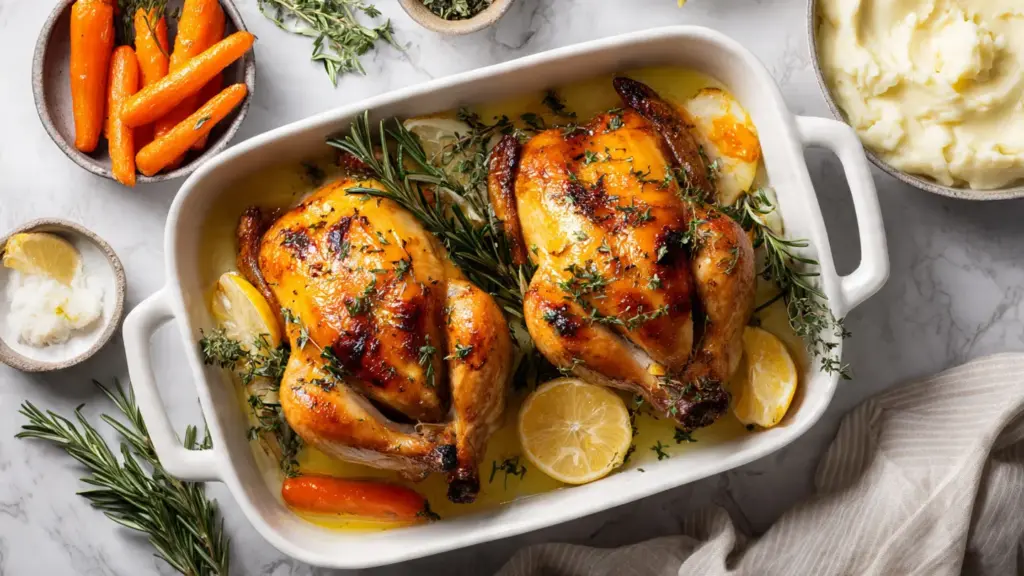
Cornish hens pair beautifully with both rustic and elegant sides, making them easy to build a complete dinner around.
The rich, savory pan drippings are particularly wonderful for spooning over starchy sides like mashed potatoes or roasted potatoes, which absorb all that flavor and pull the meal together.
Consider these ideas for building a complete dinner:
- Creamy Mashed Potatoes: Silky mashed potatoes are the classic pairing, and the pan drippings make an effortless sauce to spoon over the top.
- Roasted Potatoes: Crispy roasted potatoes can actually go right into the bottom of the roasting pan with the hens and soak up all those juices.
- Roasted Broccoli: A simple sheet pan of roasted broccoli with olive oil and salt is fast, healthy, and pairs perfectly with the rich herbs.
- Honey Roasted Carrots: The sweetness of glazed carrots balances the savory herb butter beautifully.
- Cranberry Sauce: A bright cranberry sauce served alongside adds a tart, fruity contrast that cuts through the richness.
- Dinner Rolls: Fluffy homemade rolls are perfect for soaking up any remaining pan juices on the plate.
- Collard Greens: Slow-braised collard greens add a Southern comfort food element that works wonderfully with roasted poultry.
Variations to Try
Once you have made the classic version, the flavors are easy to adjust. The base technique stays the same, but the seasoning profile can take the dish in a completely different direction.
- Spicy Cajun Cornish Hens: Replace the smoked paprika and garlic powder with a Cajun spice blend. Add cayenne pepper and onion powder for heat and depth. The high-heat roasting method works just as well.
- Mediterranean Style: Use olive oil instead of butter and season with dried oregano, lemon zest, za’atar, and a pinch of cumin. Stuff the cavity with fresh oregano, lemon, and a few olives.
- Honey Glazed: Combine softened butter with 2 tablespoons of honey, Dijon mustard, and fresh thyme. Brush the glaze on during the last 15 minutes of roasting for a sweet, lacquered finish.
- Stuffed Cornish Hens: Fill the cavity with a small amount of prepared Sausage Stuffing before roasting. This turns each hen into a complete meal in one.
- Asian-Inspired: Season with a mixture of soy sauce, sesame oil, fresh ginger, garlic, and a touch of honey. Serve with steamed rice and stir-fried vegetables.
- Herb de Provence: Swap the herb mixture for a classic Herbs de Provence blend and use white wine in the bottom of the roasting pan for a French-inspired flavor profile.
Read Also: Chicken Stew Recipe
Storage and Reheating
Leftover Cornish hen is excellent and keeps well for several days. It also works beautifully shredded into soups, salads, and wraps, so do not let any go to waste.
- Refrigerating: Store leftover hens in an airtight container in the refrigerator for up to 4 days. Remove the meat from the carcass first if you want to make it easier to use in other dishes.
- Freezing: Cooked Cornish hen freezes well for up to 3 months. Wrap pieces tightly in plastic wrap, then place in a freezer-safe bag. Thaw overnight in the refrigerator before reheating.
- Reheating in the oven: Place the hens in a baking dish with 1/4 cup (60ml) of chicken broth or water. Cover tightly with foil and bake at 350°F (175°C) for 15 to 20 minutes until heated through.
- Reheating on the stovetop: Heat leftover pieces in a skillet over medium heat with a small amount of the reserved pan drippings or butter. This method helps re-crisp the skin.
- Using leftovers: Shredded leftover hen meat works beautifully in a quick Chicken Soup Recipe the next day.
Nutritional Facts
The following values are approximate per serving based on one whole Cornish hen (half the recipe) with herb butter. Actual values will vary slightly depending on hen size and exact ingredient amounts.
| Nutrient | Per Serving (1 whole hen) |
|---|---|
| Calories | 560-620 kcal |
| Protein | 45-50g |
| Total Fat | 40-46g |
| Saturated Fat | 14-16g |
| Carbohydrates | 3-5g |
| Fiber | 0.5g |
| Sodium | 900-1100mg |
| Cholesterol | 200-230mg |
| Vitamin A | 480IU |
| Vitamin C | 8mg |
| Iron | 2mg |
| Calcium | 30mg |
Note: These values are for the hen and herb butter only and do not include any side dishes or pan sauce.
For another elegant, protein-rich dinner option, check out this Filet Mignon Recipe.
Health Benefits of Key Ingredients
Cornish hens are not just delicious, they actually bring some solid nutritional value to the table alongside those key seasonings.
The combination of lean poultry protein, anti-inflammatory herbs, and immune-supporting garlic makes this a meal that is both satisfying and genuinely nourishing.
- Cornish Hen (Poultry): An excellent source of complete protein, which supports muscle maintenance, immune function, and satiety. The white breast meat is particularly lean, with less fat than many other protein sources.
- Garlic: Contains allicin, a sulfur compound with documented antimicrobial and anti-inflammatory properties. Regular garlic consumption has been associated with cardiovascular health support.
- Lemon: A good source of vitamin C, which supports immune function and helps the body absorb iron from animal proteins. The acidity also brightens the overall flavor of the dish.
- Rosemary: Rich in antioxidants including rosmarinic acid and carnosic acid. Has been studied for potential benefits in cognitive function and reduction of inflammation.
- Thyme: Contains thymol, a natural antibacterial compound. Also provides vitamins C and A, and has traditionally been used to support respiratory health.
- Smoked Paprika: Made from dried red peppers and provides capsaicin, which is associated with antioxidant activity and may support metabolism.
- Olive Oil: Rich in monounsaturated fats and polyphenol antioxidants. Regular consumption is associated with heart health benefits as part of a balanced diet.
Read Also: Prime Rib Recipe
Frequently Asked Questions
1. How long does it take to cook Cornish hens at 425°F (220°C)?
Cornish hens typically take 50 to 60 minutes at 425°F (220°C). The exact time depends on the size of the hens. Always verify doneness with an instant-read thermometer, looking for 165°F (74°C) in the thickest part of the breast.
2. How many Cornish hens do I need per person?
Plan on one whole hen per person for a main course serving. If you are serving many rich side dishes or your guests are lighter eaters, half a hen per person can be sufficient. For a dinner party, serving one hen per guest makes for the most impressive presentation.
3. Can I cook Cornish hens from frozen?
It is not recommended to roast Cornish hens directly from frozen, as they will cook unevenly. The outside will overcook before the inside reaches a safe temperature. Thaw the hens in the refrigerator for 24 to 48 hours before cooking for the best and safest results.
4. Should I cover Cornish hens while roasting?
No, you should not cover them. Roasting uncovered is what produces that beautiful crispy, golden-brown skin. If you cover the pan, the moisture from the hens creates steam, which softens the skin and prevents browning. Only use foil if the skin starts browning too quickly before the meat is fully cooked.
5. Can I prepare Cornish hens ahead of time?
Yes, and it actually improves the result. You can apply the herb butter rub up to 24 hours in advance and store the seasoned hens, uncovered, in the refrigerator. The time in the fridge allows the seasoning to penetrate the meat more deeply and also helps dry out the skin further for better crisping when you roast.
For more beautiful dinner ideas worth saving, check out this Beef Wellington Recipe.
Final Thoughts
This cornish hen recipe is one of those dishes that earns a permanent place in your cooking rotation. It looks impressive, tastes incredible, and takes far less effort than most people expect.
The combination of high-heat roasting, herb butter under the skin, and a fragrant bed of aromatics in the pan produces results that punch way above their difficulty level.
Give this recipe a try for your next dinner, and you might find that roasting a whole turkey starts to feel unnecessary when these little birds deliver this much satisfaction.
If you make this, leave a comment below and let me know how it turned out. Tag your photos and share the love!
Recommended:
- Chicken Cacciatore Recipe
- Sweet Potato Casserole Recipe
- Broccoli Salad Recipe
- Scalloped Potatoes Recipe
- Green Bean Casserole Recipe
- Classic Deviled Eggs Recipe
- Sausage Gravy Recipe
- Chicken Marsala Recipe
- Stuffed Acorn Squash Recipes
- Maple Glazed Carrots Recipe