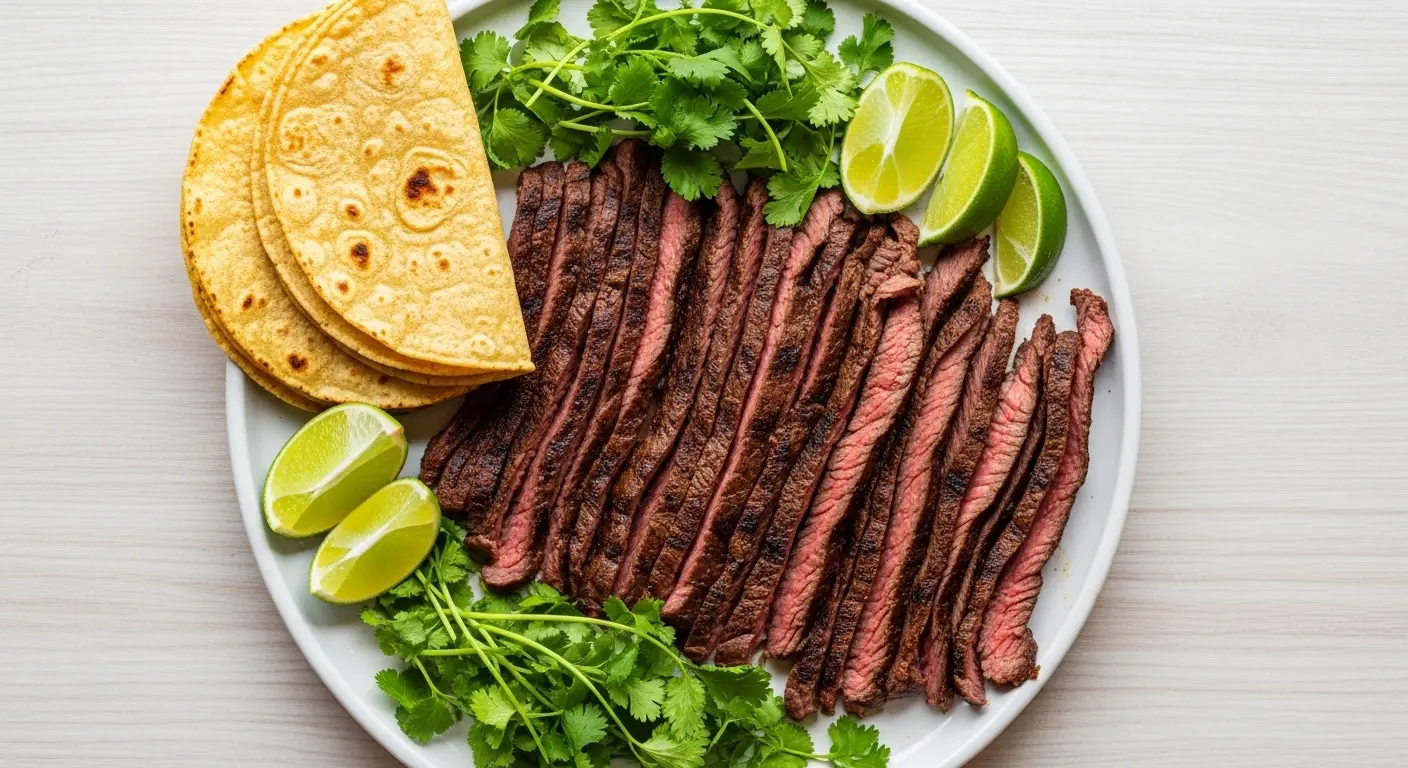
If you’ve been chasing that perfect authentic carne asada recipe, the kind that actually tastes like something you’d get from a street taco stand in Sonora or Baja California, you’ve landed in the right place.
This is the real deal. No shortcuts, no mystery ingredients, just a citrus-forward marinade loaded with garlic, fresh herbs, and warm spices that transforms flank or skirt steak into something deeply savory and beautifully charred.
What makes this version stand out is the combination of orange and lime juice in the marinade. The orange adds a gentle sweetness that balances the heat from jalapeño, while the lime cuts through the richness of the beef and helps tenderize it.
And the key? High heat. Carne asada is not meant to be cooked low and slow. It needs a screaming-hot grill to develop that signature crust while staying juicy and pink inside.
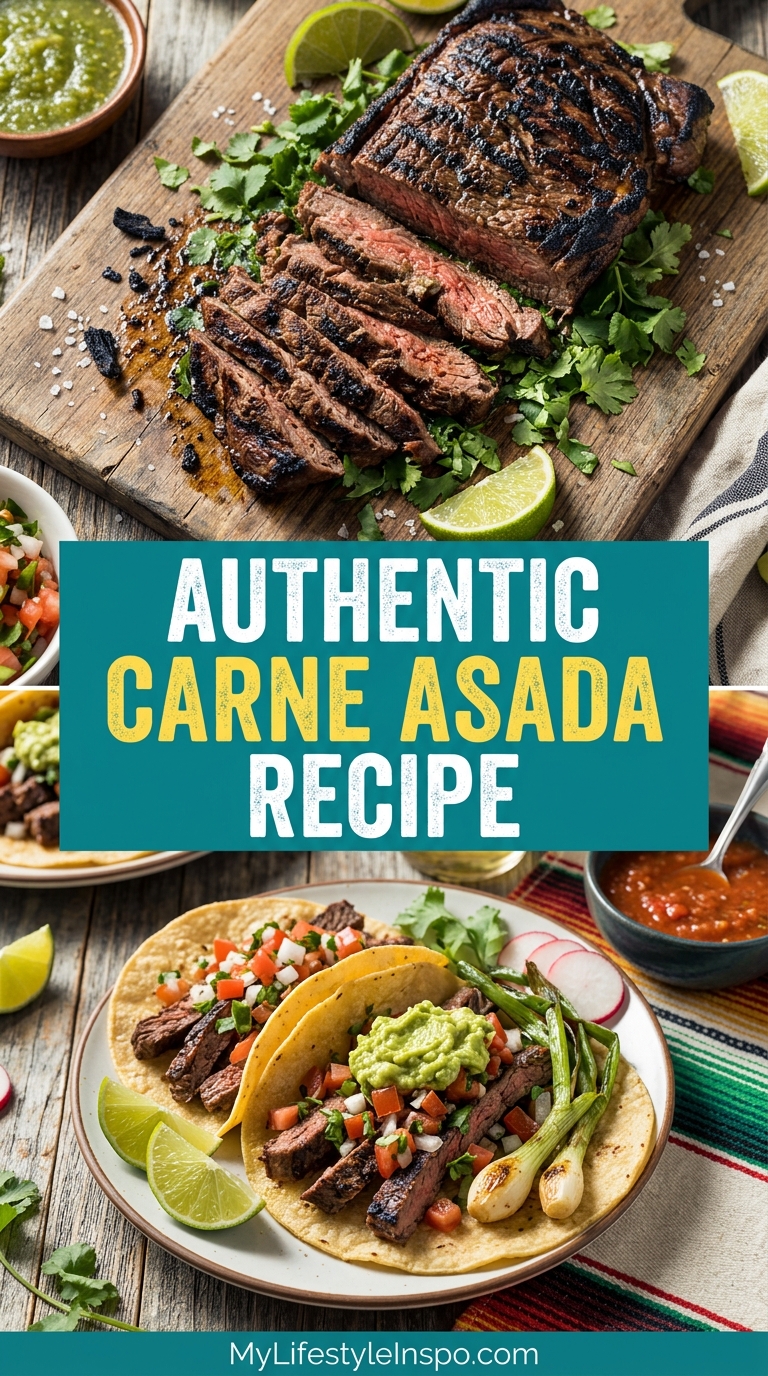
Why You’ll Love This Authentic Carne Asada Recipe
This recipe earns a permanent spot in your dinner rotation for a reason.
The marinade does all the heavy lifting ahead of time, so all you need to do on cooking day is fire up the grill and let the beef work its magic.
It’s incredibly versatile. You can serve it sliced thin in tacos, chopped up in burritos, or simply plated with rice and beans.
The char you get from a cast iron or charcoal grill gives the meat a smoky depth that no oven method can replicate.
It scales beautifully. Feeding two people or a crowd of twenty, this recipe holds up without any issues.
- Requires only simple, widely available ingredients
- Marinade comes together in under 10 minutes
- Cooks in about 8-10 minutes total on the grill
- Leftovers reheat wonderfully and make amazing next-day meals
- Naturally gluten-free and dairy-free
For another beloved Mexican grilled dish, you might enjoy making Chicken Fajitas alongside this for a full spread.
Ingredients
Keeping the ingredient list traditional is what sets an authentic carne asada recipe apart from generic grilled beef.
The freshest citrus and real jalapeños (not powder) make a noticeable difference in the final flavor.
- 2 lbs (900g) flank steak or skirt steak
- 1/3 cup (80ml) fresh orange juice (about 1 large orange)
- 1/4 cup (60ml) fresh lime juice (about 2 limes)
- 3 tablespoons olive oil
- 4 garlic cloves, minced
- 1 jalapeño, seeded and finely chopped (leave seeds in for extra heat)
- 1/4 cup fresh cilantro, chopped
- 1 teaspoon ground cumin
- 1 teaspoon chili powder
- 1 teaspoon smoked paprika
- 1/2 teaspoon dried oregano (Mexican oregano preferred)
- 1 teaspoon kosher salt
- 1/2 teaspoon black pepper
- 1 tablespoon soy sauce (adds umami and helps with browning)
- 1 tablespoon white wine vinegar or apple cider vinegar
Read Also: Carne Asada Marinade Recipe
Kitchen Equipment Needed
You don’t need a professional setup to make great carne asada, but having the right tools makes the process much smoother.
A reliable meat thermometer and a sharp knife for slicing are the two most important tools here.
- Cast iron grill pan or outdoor charcoal/gas grill
- Large zip-lock bag or shallow dish for marinating
- Instant-read meat thermometer
- Sharp chef’s knife
- Cutting board
- Tongs
- Small whisk or fork
- Measuring cups and spoons
- Paper towels
Read Also: Classic Carne Asada Recipe
Recommended Products for This Recipe
These are products I recommend based on quality and performance. They genuinely make a difference when preparing carne asada at home.
1. Lodge Cast Iron Grill Pan
A heavy cast iron grill pan can get ripping hot and stay that way, which is exactly what carne asada needs to develop those gorgeous char marks. It retains heat far better than standard nonstick pans and will last decades with proper care.
2. ThermoPop Instant-Read Thermometer
Getting your carne asada to the right internal temperature is the difference between perfectly juicy beef and something overcooked and tough. A fast and accurate thermometer takes the guesswork out completely.
3. Mexican Oregano
If you’ve only ever used Mediterranean oregano, Mexican oregano is worth seeking out. It has a more citrusy, slightly floral flavor that is traditional in carne asada marinades and makes a noticeable difference in the final taste.
4. Smoked Paprika
A good quality smoked paprika adds a subtle, almost woodsy smokiness to the marinade that mimics the flavor of a charcoal grill. It’s a pantry workhorse for any fan of Mexican or Latin cooking.
5. Citrus Juicer
Fresh juice is non-negotiable for this recipe. A simple handheld citrus juicer makes it much easier to extract every last drop from your oranges and limes without seeds ending up in your marinade.
You might also enjoy: Easy Carne Asada Recipe
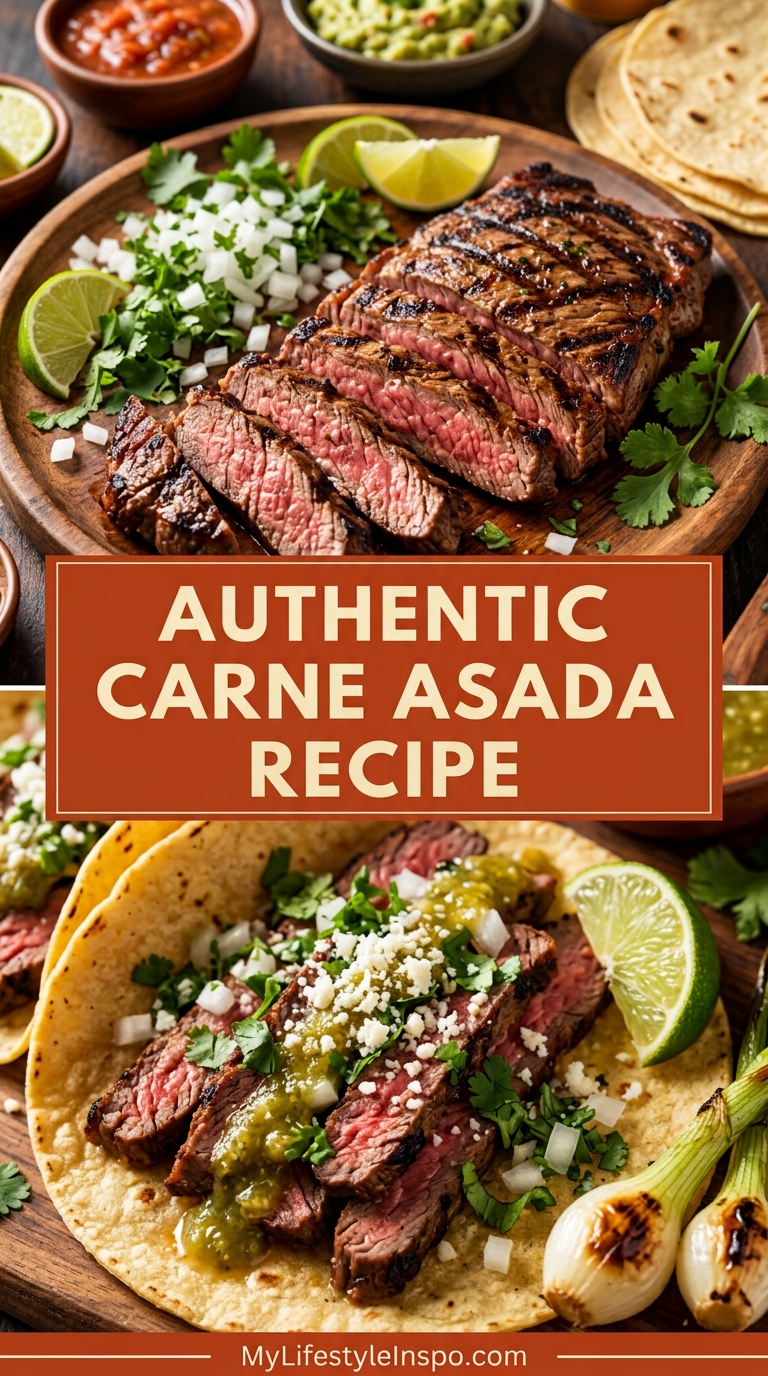
Step-by-Step Instructions
1. Prepare the Marinade
- In a medium bowl or large liquid measuring cup, combine the fresh orange juice, fresh lime juice, and olive oil.
- Add the minced garlic and finely chopped jalapeño to the bowl.
- Add the chopped fresh cilantro, ground cumin, chili powder, smoked paprika, dried oregano, kosher salt, and black pepper.
- Pour in the soy sauce and white wine vinegar.
- Whisk everything together with a fork until fully combined. Taste the marinade. It should smell bright, garlicky, and citrusy with a hint of heat.
2. Marinate the Steak
- Pat the flank steak or skirt steak dry with paper towels. This step is important because excess moisture on the surface of the meat can dilute the marinade and prevent proper absorption.
- Place the steak in a large zip-lock bag or a shallow baking dish.
- Pour the marinade over the steak, making sure every surface is coated.
- If using a bag, press out the air and seal it. If using a dish, flip the steak to coat both sides and cover tightly with plastic wrap.
- Marinate in the refrigerator for at least 2 hours, but ideally 4-8 hours. Do not marinate longer than 12 hours, as the citrus acid will begin to break down the meat too aggressively, making the texture mushy.
3. Bring the Steak to Room Temperature
- About 30 minutes before you plan to cook, remove the steak from the refrigerator.
- Take it out of the marinade and let it sit at room temperature on a clean plate or cutting board.
- Pat the surface of the steak dry with paper towels. This is a critical step. Removing surface moisture allows the steak to sear properly rather than steam, giving you that beautiful char instead of a gray crust.
- Discard the used marinade. Do not use it as a sauce without cooking it thoroughly first.
4. Preheat the Grill
- If using a charcoal grill, light the coals and let them burn until they are covered in white-gray ash. This typically takes 20-30 minutes. Spread them into a single layer for an even cooking zone.
- If using a gas grill, turn all burners to high heat and close the lid. Let the grill preheat for at least 10-15 minutes until it reaches 450-500°F (230-260°C).
- If using a cast iron grill pan on the stovetop, place it over high heat and let it preheat for 3-5 minutes until it is smoking hot. Add a very thin layer of high-smoke-point oil (like avocado oil) and let it heat for another 30 seconds.
- High heat is essential. Carne asada needs intense heat to caramelize the surface quickly while keeping the inside tender and pink.
5. Grill the Steak
- Place the steak on the hottest part of the grill or directly in the grill pan.
- For flank steak (about 1 inch / 2.5 cm thick): Cook for 4-5 minutes per side without moving it. Resist the urge to press down or move the steak, as this disrupts the sear.
- For skirt steak (thinner, about 1/2 inch / 1.3 cm thick): Cook for 2-3 minutes per side.
- You are looking for a well-charred exterior with clear grill marks or a dark brown crust.
- Use your instant-read thermometer to check the internal temperature. Remove the steak at 125-130°F (52-54°C) for medium-rare, or 130-135°F (54-57°C) for medium. Keep in mind the temperature will rise a few degrees as it rests.
- Do not cook past 145°F (63°C) or the meat will become tough and chewy.
6. Rest and Slice the Steak
- Transfer the cooked steak to a cutting board and tent it loosely with aluminum foil.
- Let it rest for at least 5-7 minutes. This allows the juices to redistribute throughout the meat. If you cut into it immediately, all those juices will run out onto the cutting board instead of staying in the beef.
- After resting, identify the grain of the meat. For both flank and skirt steak, the muscle fibers run in a visible direction.
- Using a sharp chef’s knife, slice the steak against the grain at a slight angle, cutting thin slices about 1/4 inch (6mm) thick. Cutting against the grain shortens the muscle fibers, making each bite significantly more tender.
- Arrange on a serving platter and optionally squeeze a bit of fresh lime juice over the top.
This recipe pairs wonderfully alongside Carne Asada Tacos if you want to serve the full taco experience.
Tips for Success
A few extra details can take your carne asada from good to genuinely restaurant-quality.
These are the tips that make the biggest difference in the final result.
- Use citrus freshly squeezed. Bottled orange or lime juice contains preservatives that affect flavor. Fresh juice is brighter and more vibrant.
- Don’t skip the pat-dry step. Both before marinating and before grilling, dry surfaces lead to better browning and more flavor.
- High heat is non-negotiable. A lukewarm grill or pan will steam the steak rather than sear it. Wait until your cooking surface is truly hot.
- Skirt steak cooks faster than flank. Keep an eye on skirt steak as it can go from perfect to overdone in under a minute at high heat.
- Use a thermometer every time. Visual cues alone are not reliable enough. An instant-read thermometer gives you consistency.
- Rest before slicing. Five to seven minutes of rest time makes a meaningful difference in juiciness.
- Slice thin and against the grain. Both flank and skirt steak have prominent grain lines. Cutting perpendicular to them is the single biggest factor in tenderness.
For a fun way to use leftover carne asada the next day, the Mexican Skillet Recipe is a fantastic option.
Serving Suggestions
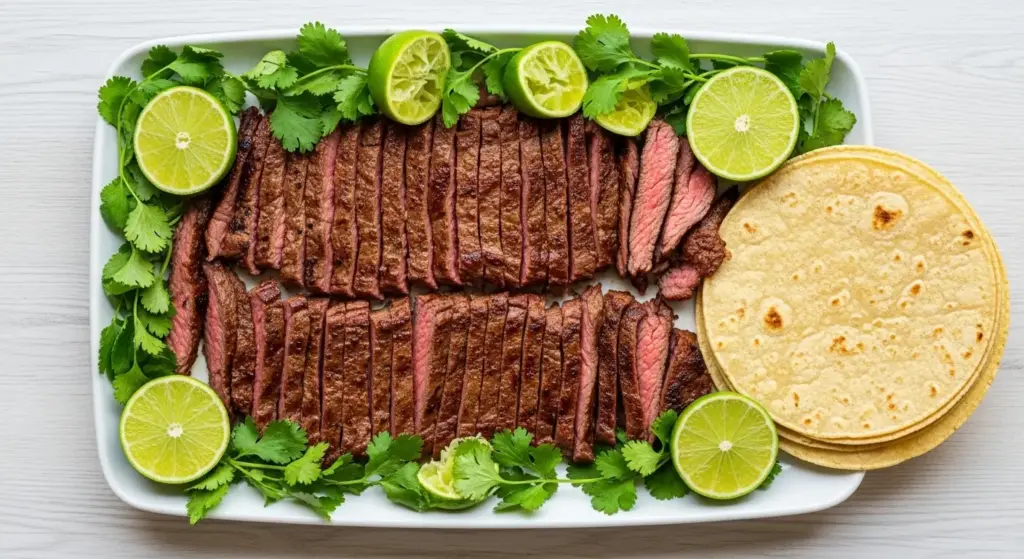
Carne asada is one of those dishes that shines no matter how you serve it.
Thin-sliced over warm corn tortillas with fresh toppings is the most traditional and beloved way to enjoy it.
- Serve in warm Corn Tortillas with diced white onion, fresh cilantro, and a squeeze of lime
- Pair with Mexican Street Corn for a classic side
- Add a generous scoop of Classic Guacamole on the side
- Serve alongside Easy Nachos for a crowd-pleasing appetizer spread
- Slice and add to a burrito bowl with rice, black beans, and Fresh Salsa
- Plate with Caldo de Res for a full Mexican feast
- Use leftovers for breakfast burritos with scrambled eggs the next morning
Read Also: Pico De Gallo Recipe
Variations to Try
Once you’ve mastered the base recipe, there are plenty of ways to explore different flavor profiles and techniques.
Each of these builds on the same core marinade and method but gives you a unique result.
- Chipotle Carne Asada: Add 1-2 chipotle peppers in adobo sauce to the marinade for a smoky, complex heat. Check out the Chipotle Carne Asada Recipe for the full version.
- Slow Cooker Version: When grilling isn’t an option, braising the marinated beef low and slow yields incredibly tender shredded results. The Slow Cooker Carne Asada Recipe walks you through this method.
- Pork Carne Asada: Swap the beef for thin-cut pork shoulder or pork butt steaks. The same marinade works beautifully with pork. Find the full guide at the Pork Carne Asada Recipe.
- Beer Marinade: Replace the orange juice with a dark Mexican lager like Modelo Negra for a malty, slightly bitter flavor profile.
- Extra Spicy Version: Add a serrano pepper or a teaspoon of cayenne to the marinade for those who love the heat turned up.
- King Taco Style: The King Taco Carne Asada Recipe is a fan-favorite copycat worth exploring.
Read Also: Mexican Carne Asada Recipe
Storage and Reheating
Carne asada stores and reheats better than most grilled meats, making it ideal for meal prep.
Proper storage keeps the beef juicy and flavorful for days.
- Refrigerator: Store leftover sliced carne asada in an airtight container for up to 4 days.
- Freezer: Freeze in a single layer on a baking sheet, then transfer to a freezer-safe bag. Stores well for up to 3 months.
- Thawing: Thaw frozen carne asada overnight in the refrigerator. Never thaw at room temperature.
- Stovetop Reheating: Warm sliced beef in a skillet over medium-high heat for 1-2 minutes per side. Add a small splash of beef broth or water to the pan to prevent drying out.
- Microwave: Place slices in a single layer, cover with a damp paper towel, and reheat in 30-second intervals at 50% power.
- Do not overcook when reheating. The beef is already cooked, so you just need to warm it through. Excessive heat will toughen it.
Another great way to use leftover carne asada is in a Taco Skillet Recipe for an easy weeknight meal.
Nutritional Facts
(Per serving, based on approximately 5 oz / 140g of cooked flank steak, without tortillas or toppings)
| Nutrient | Amount |
|---|---|
| Calories | ~280 |
| Protein | ~38g |
| Total Fat | ~12g |
| Saturated Fat | ~4g |
| Carbohydrates | ~4g |
| Fiber | ~0.5g |
| Sugar | ~2g |
| Sodium | ~480mg |
| Iron | ~15% DV |
| Zinc | ~30% DV |
Note: These values are estimates and will vary based on the exact cut of beef used, marinade absorption, and portion size.
Another protein-forward option you might love is this Easy Pepper Steak Recipe.
Health Benefits of Key Ingredients
This recipe isn’t just delicious. Several of its core ingredients offer real nutritional value.
The protein content alone makes carne asada a solid choice for an active lifestyle.
- Flank or Skirt Steak: Both are lean cuts of beef packed with complete protein, iron, zinc, and B vitamins, particularly B12, which supports energy and nervous system function.
- Fresh Garlic: Contains allicin, a sulfur compound with well-documented antimicrobial and cardiovascular benefits. It also adds significant flavor depth to the marinade.
- Citrus Juice (Orange and Lime): Provides vitamin C, which aids in iron absorption from the beef. It also contains antioxidants that support immune health.
- Jalapeño: Contains capsaicin, which has been studied for its anti-inflammatory properties and potential to boost metabolism.
- Cumin: A powerful spice high in iron and antioxidants. It has also been associated with improved digestion in traditional herbal medicine.
- Cilantro: Contains vitamins A, K, and C, and has been used traditionally to support detoxification and digestive health.
- Olive Oil: A source of heart-healthy monounsaturated fats that help the body absorb the fat-soluble vitamins in the marinade’s herbs and spices.
For another nutrient-rich meal with bold flavors, try the Best Carne Asada Recipe for another take on this classic.
Frequently Asked Questions
1. What cut of beef is best for authentic carne asada?
Flank steak and skirt steak are the two most traditional cuts used for carne asada. Skirt steak has a more intense beefy flavor and slightly looser texture, while flank steak is a bit leaner and easier to work with.
Both work beautifully with this marinade, so the choice often comes down to what’s available and your personal preference.
2. How long should I marinate carne asada?
A minimum of 2 hours is necessary for the flavors to penetrate the meat. Ideally, marinate for 4-8 hours for the best results.
Do not go beyond 12 hours. The citrus acids in the marinade will begin to chemically “cook” the surface of the beef, resulting in a mushy texture rather than a tender one.
3. Can I make carne asada without a grill?
Absolutely. A cast iron grill pan preheated over high heat on your stovetop will give you excellent char marks and a great sear. You can also use a regular cast iron skillet if you don’t have a grill pan.
The key is getting the pan extremely hot before the steak goes in, which will produce a similar result to outdoor grilling.
4. Why is my carne asada tough?
The most common reasons for tough carne asada are overcooking it and slicing it with the grain instead of against it. Flank and skirt steaks have long muscle fibers that become very chewy if not cut perpendicular to the grain.
Make sure you’re using a thermometer to avoid going past medium doneness, and always slice against the grain with a sharp knife for the most tender results.
5. Can I use chicken instead of beef for this recipe?
Yes, this marinade works very well with chicken. Boneless, skinless chicken thighs are the best option as they stay juicy at higher temperatures.
Adjust cooking time accordingly. Chicken thighs at high heat will need about 5-7 minutes per side and should reach an internal temperature of 165°F (74°C).
Read Also: Trader Joes Carne Asada Recipe
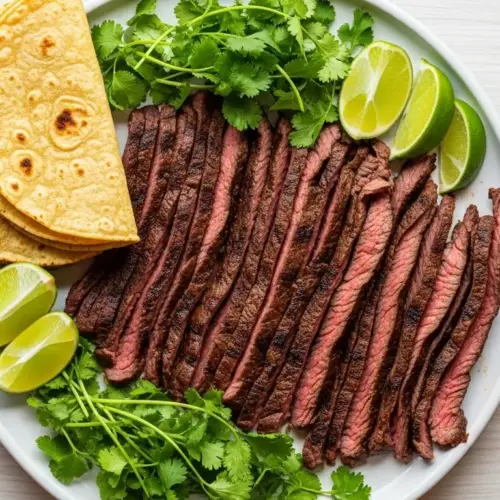
Authentic Carne Asada

Equipment
- Cast iron grill pan or outdoor charcoal/gas grill
- Large zip-lock bag or shallow dish - For marinating
- Instant-read meat thermometer - Essential for perfect doneness
- Sharp chef's knife - For slicing against the grain
- Cutting board
- Tongs
- Small whisk or fork - For mixing marinade
- Measuring cups and spoons
- Paper towels - For patting steak dry
Ingredients
- 2 lbs flank steak or skirt steak - 900g
- 1/3 cup fresh orange juice - 80ml, about 1 large orange
- 1/4 cup fresh lime juice - 60ml, about 2 limes
- 3 tablespoons olive oil
- 4 cloves garlic - minced
- 1 jalapeño - seeded and finely chopped, leave seeds in for extra heat
- 1/4 cup fresh cilantro - chopped
- 1 teaspoon ground cumin
- 1 teaspoon chili powder
- 1 teaspoon smoked paprika
- 1/2 teaspoon dried oregano - Mexican oregano preferred
- 1 teaspoon kosher salt
- 1/2 teaspoon black pepper
- 1 tablespoon soy sauce - adds umami and helps with browning
- 1 tablespoon white wine vinegar or apple cider vinegar
For Serving (Optional)
- corn tortillas - warm, for serving
- white onion - diced, for serving
- fresh cilantro - additional, for serving
- lime wedges - for serving
Instructions
- Whisk together orange juice, lime juice, olive oil, garlic, jalapeño, cilantro, cumin, chili powder, smoked paprika, oregano, salt, pepper, soy sauce, and vinegar until combined.
- Pat the steak dry with paper towels, place in a large zip-lock bag or shallow dish, and pour the marinade over it. Seal and marinate in the refrigerator for at least 2 hours, ideally 4-8 hours, but no more than 12.
- Remove steak from the refrigerator 30 minutes before cooking. Take it out of the marinade, pat dry with paper towels, and discard the used marinade. Let it sit at room temperature.
- Preheat a charcoal or gas grill to 450-500°F, or heat a cast iron grill pan over high heat until smoking hot.
- Place steak on the hottest part of the grill. For flank steak (1 inch thick), cook 4-5 minutes per side. For skirt steak (1/2 inch thick), cook 2-3 minutes per side. Cook until internal temperature reaches 125-130°F for medium-rare or 130-135°F for medium.
- Transfer cooked steak to a cutting board, tent with foil, and let rest for 5-7 minutes. Slice thinly against the grain at a slight angle and serve with optional lime wedges.
Notes
- Use freshly squeezed citrus only. Bottled juice contains preservatives that negatively affect the flavor of the marinade.
- Pat the steak dry both before marinating and before grilling. Surface moisture prevents proper browning and char formation.
- High heat is non-negotiable. A lukewarm grill will steam the steak rather than sear it. Wait until your cooking surface is truly hot.
- Skirt steak cooks faster than flank steak. Keep a close eye on it as it can go from perfect to overdone in under a minute at high heat.
- Always use a meat thermometer for consistent results. Visual cues alone are not reliable enough for perfect doneness.
- Rest the meat for 5-7 minutes before slicing. This allows juices to redistribute throughout the steak rather than running out onto the cutting board.
- Slice thin and always against the grain. Cutting perpendicular to the muscle fibers is the single biggest factor in achieving tender carne asada.
- Store leftovers in an airtight container in the refrigerator for up to 4 days, or freeze for up to 3 months.
- To reheat, warm sliced beef in a skillet over medium-high heat for 1-2 minutes per side with a splash of beef broth or water to prevent drying out.
- For a chipotle variation, add 1-2 chipotle peppers in adobo sauce to the marinade for a smoky, complex heat.
Final Thoughts
A great authentic carne asada recipe is one of those cooking skills that pays off every single time you make it.
Once you nail the marinade and get comfortable with grilling at high heat, you’ll find yourself making this on weeknights, for backyard cookouts, and every taco Tuesday in between.
The simplicity of it is part of the appeal. Fresh citrus, good garlic, a hot grill, and a sharp knife are really all you need.
Give this recipe a try this week and see for yourself how close to the real thing you can get at home. If you make it, drop a comment below to share how it turned out, or tag a friend who needs this recipe in their life!
Recommended:
- Birria Tacos Recipe
- Chicken Tortilla Soup Recipe
- Enchiladas Suizas Recipe
- Taco Seasoning Recipe
- Red Pozole Recipe
- Enchilada Sauce Recipe
- Caldo de Pollo Recipe
- Flour Tortilla Recipe
- Champurrado Recipe
- Picadillo Recipe