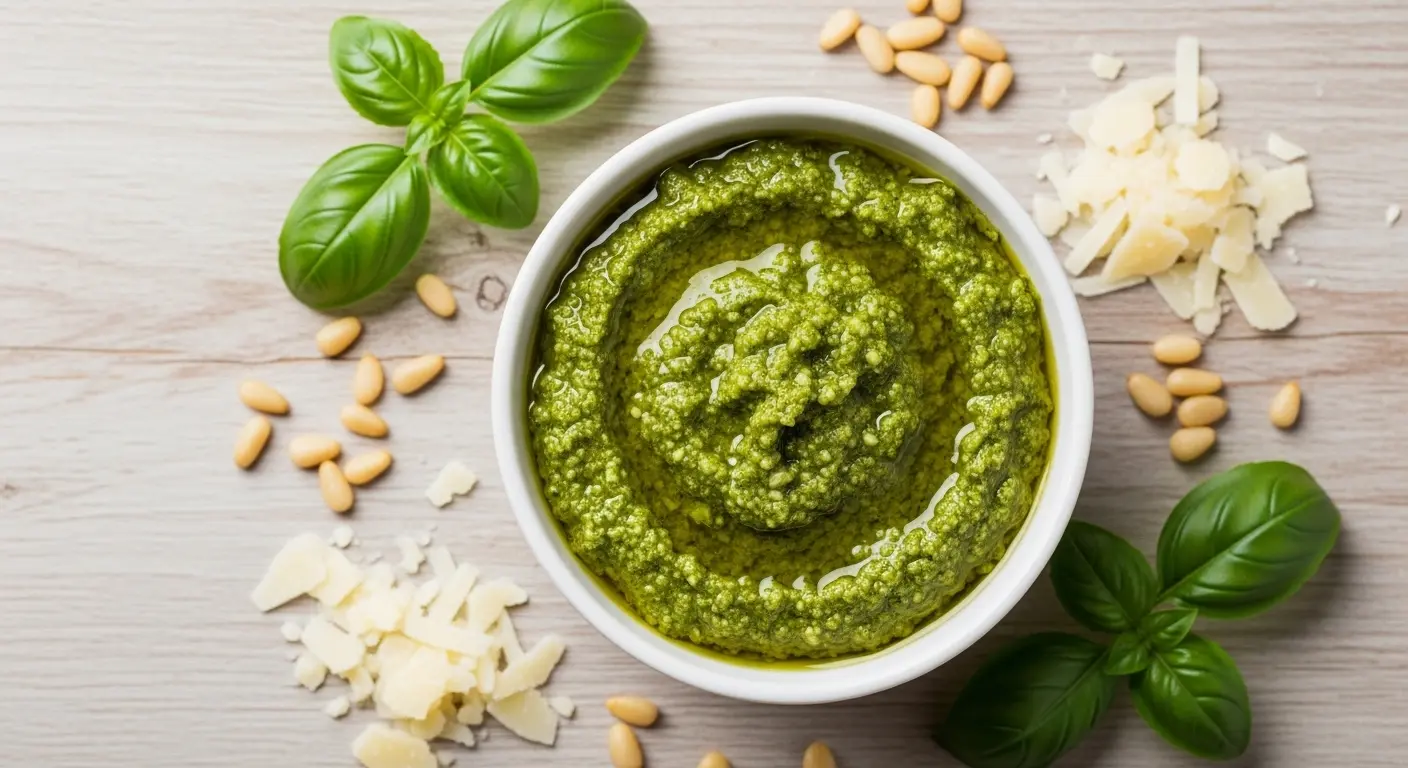
Making fresh pesto at home transforms ordinary meals into restaurant-quality dishes. This easy pesto recipe brings together fragrant fresh basil, toasted pine nuts, aged Parmesan cheese, and extra virgin olive oil into a vibrant green sauce that’s ready in just 10 minutes.
The beauty of homemade pesto lies in its simplicity and versatility. Unlike jarred versions that can taste flat or overly salty, fresh pesto bursts with the bright, herbaceous flavor of basil balanced by nutty pine nuts and sharp Parmesan.
You can toss it with pasta, spread it on sandwiches, drizzle it over grilled chicken, or swirl it into soup. Once you taste the difference between homemade and store-bought, you’ll never go back.
The traditional method comes from Genoa, Italy, where pesto alla Genovese originated. While purists use a mortar and pestle, a food processor makes the process quick and accessible for everyday cooking.
This recipe keeps the classic proportions while offering practical tips to prevent browning and maintain that gorgeous emerald color. Best of all, you can make a big batch and freeze it in ice cube trays for quick weeknight meals.
Looking for more ways to elevate your pasta nights? Try this with creamy mac and cheese for an unexpected flavor twist.
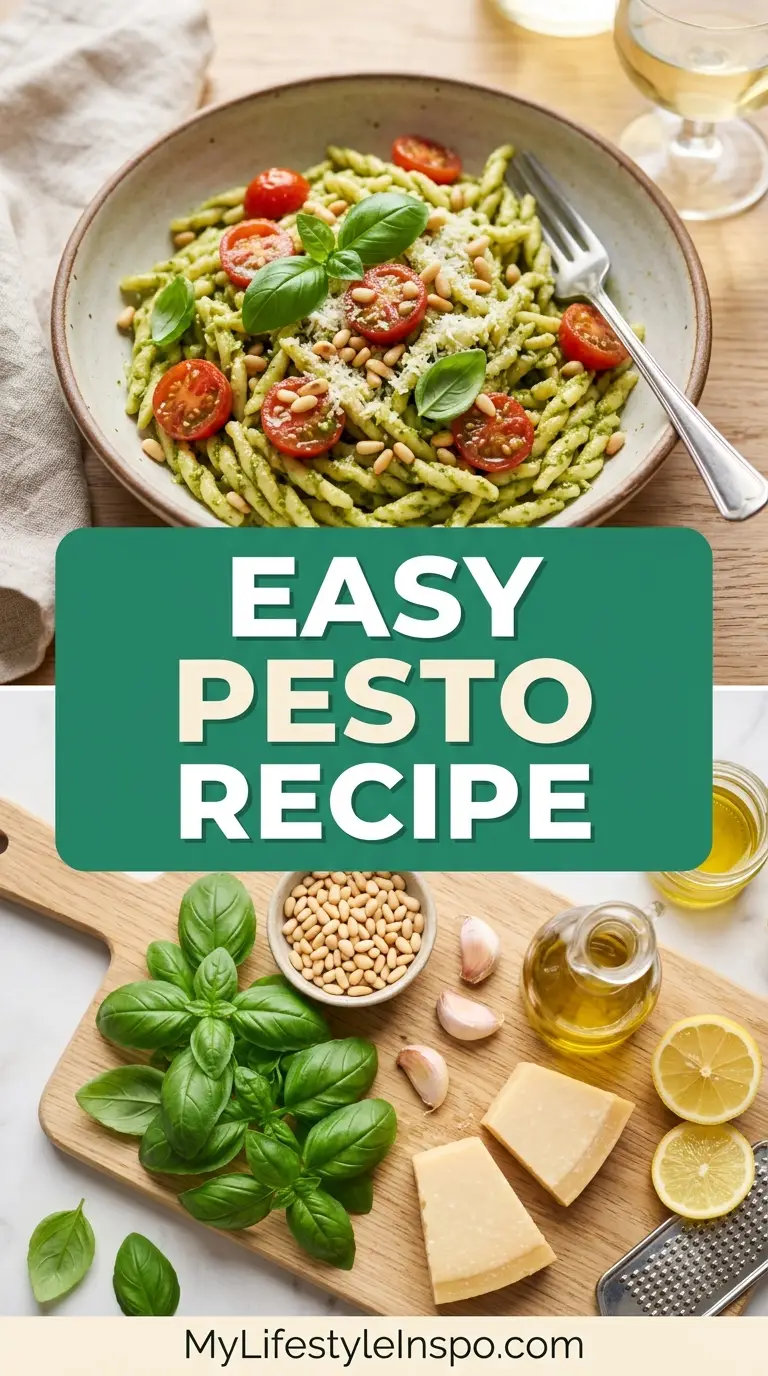
Why You’ll Love This Easy Pesto Recipe
This pesto recipe is a game changer because it requires minimal effort for maximum flavor. You simply blend five basic ingredients and you’re done.
The recipe is also incredibly forgiving. If you accidentally add a bit more garlic or cheese, the pesto still tastes delicious. It’s nearly impossible to mess up.
Making pesto from scratch saves money compared to buying expensive jars at the store. A large bunch of basil and a handful of pine nuts yields enough pesto for multiple meals.
The vibrant green color and fresh aroma make every dish feel special. Even simple pasta becomes an impressive dinner when you finish it with homemade pesto.
- Quick preparation: Ready in 10 minutes with minimal cleanup
- Budget-friendly: One batch costs less than a single jar of quality store-bought pesto
- Customizable: Easily adjust garlic, cheese, or nuts to your preference
- Freezer-friendly: Make ahead and store for up to 6 months
- Versatile: Works as a sauce, spread, marinade, or finishing touch
- Fresh flavor: No preservatives or additives, just pure ingredients
Ingredients
This recipe relies on simple, quality ingredients that work together to create balanced flavor. Fresh basil is the star, so choose bunches with bright green leaves and no brown spots.
- 2 cups (60g) fresh basil leaves, packed (about 2 ounces or one large bunch)
- 1/3 cup (50g) pine nuts, toasted for best flavor
- 3 cloves garlic, peeled (about 1 tablespoon minced)
- 1/2 cup (50g) Parmesan cheese, freshly grated (or use half Parmesan and half Pecorino Romano)
- 1/2 cup (120ml) extra virgin olive oil, plus more as needed
- 1/2 teaspoon sea salt, or to taste
- 1/4 teaspoon black pepper, freshly ground
- 1 tablespoon fresh lemon juice (from about half a lemon)
Another classic Italian sauce that pairs beautifully with this pesto is homemade alfredo sauce.
Kitchen Equipment Needed
You don’t need fancy equipment to make excellent pesto, but a few key tools make the process smoother and faster. A food processor creates the best texture with minimal effort.
- Food processor or high-powered blender
- Measuring cups and spoons
- Microplane grater for the Parmesan cheese
- Small skillet for toasting pine nuts
- Rubber spatula for scraping down the sides
- Airtight storage containers or jars
- Ice cube trays (optional, for freezing)
You might also enjoy: Olive Garden Alfredo Sauce Recipe
Recommended Products for This Recipe
These carefully selected products will help you create the most flavorful, authentic pesto with less effort and better results.
1. Cuisinart Food Processor
A reliable food processor makes pesto preparation effortless and achieves the perfect consistency every time. The powerful motor blends the basil smoothly without overheating, which helps maintain that vibrant green color. This is an investment that pays for itself after just a few batches of homemade pesto.
2. California Estate Extra Virgin Olive Oil
Quality olive oil makes a noticeable difference in pesto flavor since it’s such a prominent ingredient. Look for cold-pressed, extra virgin varieties with a mild, fruity flavor that won’t overpower the basil. This California Estate oil offers excellent quality without the premium Italian price tag.
3. Microplane Premium Zester Grater
Freshly grated Parmesan melts seamlessly into pesto, creating a creamier texture than pre-shredded cheese. A microplane grater produces the fine, fluffy texture that traditional pesto requires. It also works perfectly for zesting the lemon.
4. Raw Pine Nuts
Pine nuts are the traditional choice for authentic Genovese pesto, offering a delicate, buttery flavor that complements basil beautifully. While they can be pricey, their mild sweetness and creamy texture when blended are worth it. Toasting them briefly brings out even more depth.
Step-by-Step Instructions
Follow these detailed steps to create perfectly smooth, vibrant green pesto. Taking a few extra minutes to toast the nuts and prepare the ingredients properly makes a big difference in the final flavor.
1. Toast the Pine Nuts
- Place a small dry skillet over medium heat and let it warm for about 1 minute.
- Add the pine nuts in a single layer, spreading them evenly across the pan.
- Toast the nuts for 3 to 5 minutes, stirring or shaking the pan frequently to prevent burning.
- Watch carefully as pine nuts can go from golden to burnt very quickly.
- The nuts are ready when they turn light golden brown and smell fragrant and nutty.
- Remove the skillet from heat immediately and transfer the nuts to a plate to cool completely (about 5 minutes).
- Cooling prevents them from continuing to cook and ensures they won’t warm the basil when blended.
2. Prepare the Basil
- Remove the basil leaves from their stems, discarding the thick stems (thin stems are fine to include).
- Rinse the basil leaves gently under cool running water to remove any dirt or debris.
- Pat the leaves completely dry with paper towels or use a salad spinner to remove excess moisture.
- Moisture can dilute the pesto and cause it to separate, so make sure the leaves are very dry.
- Measure 2 packed cups of basil leaves, pressing them down gently in the measuring cup.
- If your basil leaves are very large, you can tear them in half to help them blend more easily.
3. Grate the Cheese
- Use a microplane grater or the finest holes on a box grater to grate the Parmesan cheese fresh.
- Grate until you have 1/2 cup of finely grated cheese (about 50g).
- Freshly grated cheese melts more smoothly into the pesto than pre-shredded varieties.
- Pre-shredded cheese contains anti-caking agents that can make the pesto grainy.
- If using a combination of Parmesan and Pecorino Romano, grate equal amounts of each.
- Set the grated cheese aside until ready to add to the food processor.
4. Blend the Garlic and Pine Nuts
- Place the peeled garlic cloves and cooled toasted pine nuts in the food processor bowl.
- Secure the lid and pulse 8 to 10 times using 1-second pulses.
- Scrape down the sides of the bowl with a rubber spatula to ensure even processing.
- Continue pulsing until the mixture resembles coarse sand or wet breadcrumbs.
- You want small, evenly chopped pieces, not a smooth paste at this stage.
- This creates the foundation for the pesto’s texture.
5. Add the Basil and Cheese
- Add all of the dried basil leaves to the food processor on top of the garlic-nut mixture.
- Sprinkle the freshly grated Parmesan cheese over the basil.
- Add the salt, black pepper, and fresh lemon juice.
- Pulse 10 to 15 times with 1-second pulses to begin breaking down the basil.
- Stop and scrape down the sides and bottom of the bowl every few pulses.
- Continue pulsing until the basil is finely chopped and the mixture is well combined but not yet smooth.
- The mixture should look crumbly and bright green at this point.
6. Stream in the Olive Oil
- With the food processor running on low speed, slowly drizzle the olive oil through the feed tube.
- Pour the oil in a thin, steady stream rather than all at once.
- This gradual addition helps emulsify the pesto into a creamy, smooth consistency.
- Continue processing until the pesto reaches your desired texture (30 seconds to 1 minute).
- For a thicker pesto, use less oil; for a thinner, more pourable sauce, add an extra 2 to 4 tablespoons of oil.
- Stop the processor and check the consistency, scraping down the sides one final time.
7. Taste and Adjust
- Transfer a small spoonful of pesto to a plate or spoon to taste it.
- Add more salt if needed (cheese can vary in saltiness, so adjust accordingly).
- For more garlic flavor, pulse in an additional clove.
- If the pesto tastes too sharp or acidic, add another tablespoon of olive oil to mellow it.
- For a brighter, tangier flavor, add another teaspoon of lemon juice.
- Pulse a few more times after any additions to incorporate them fully.
- The pesto is ready when it’s smooth, creamy, and balanced in flavor.
Read Also: Baked Ziti Recipe
Tips for Success
These tried-and-true techniques help you achieve the brightest color, freshest flavor, and best texture in your homemade pesto. Small details make a big difference.
- Keep everything cold: Chill your food processor bowl and blade in the freezer for 10 minutes before making pesto. Cold equipment prevents the basil from oxidizing and turning brown during blending.
- Don’t over-process: Pulse in short bursts rather than running the processor continuously. Over-processing generates heat and can make the basil taste bitter and turn the pesto muddy brown instead of vibrant green.
- Use fresh, tender basil: The smaller, younger leaves at the top of basil plants have the mildest, sweetest flavor. Large, mature leaves can taste slightly bitter or peppery.
- Toast your nuts: Even a few minutes of toasting intensifies the nutty flavor and adds depth to the pesto. Watch them carefully as they burn easily.
- Adjust consistency with pasta water: When tossing pesto with pasta, thin it with 2 to 3 tablespoons of hot pasta cooking water. The starchy water helps the pesto coat the pasta beautifully.
- Add cheese at the right time: If freezing pesto, omit the cheese and add it fresh when you thaw and use the pesto. Frozen cheese can become grainy.
- Prevent browning during storage: Press plastic wrap directly onto the surface of the pesto before sealing the container, or pour a thin layer of olive oil on top to prevent oxidation.
For a heartier meal, serve your pesto pasta alongside classic chicken parmesan.
Serving Suggestions
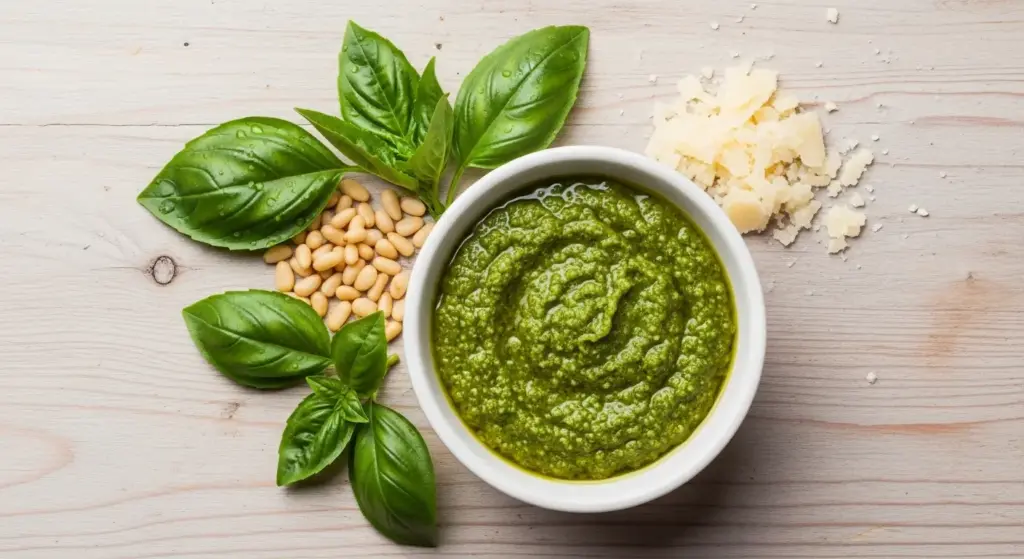
Pesto’s versatility makes it an essential sauce to have on hand. A little goes a long way, so one batch can enhance multiple meals throughout the week.
- Toss with hot pasta: Mix pesto with your favorite pasta shapes like spaghetti, penne, or fusilli, adding reserved pasta water to create a silky coating
- Spread on sandwiches: Use pesto as a flavorful spread on chicken sandwiches, paninis, or wraps instead of mayonnaise
- Top grilled meats: Spoon fresh pesto over grilled chicken breasts, grilled steak, or air fryer salmon right before serving
- Swirl into soups: Add a spoonful to tomato soup, minestrone, or creamy potato soup for extra depth
- Mix into dips: Stir pesto into sour cream, cream cheese, or Greek yogurt to create a quick appetizer dip for vegetables or crackers
- Dress roasted vegetables: Toss roasted potatoes, green beans, or cherry tomatoes with a tablespoon of pesto while still warm
- Enhance pizza: Use pesto as a pizza sauce base instead of tomato sauce, then top with mozzarella, chicken, and sun-dried tomatoes
- Finish risotto: Stir a generous spoonful into mushroom or vegetable risotto just before serving for a burst of fresh flavor
Variations to Try
Once you master the classic recipe, experimenting with different ingredients keeps pesto exciting and lets you customize it to your taste preferences. Each variation offers a unique flavor profile.
- Walnut pesto: Replace pine nuts with toasted walnuts for a more affordable option with a slightly earthier, more robust flavor
- Arugula pesto: Substitute half the basil with fresh arugula for a peppery kick that pairs beautifully with steak or lamb
- Sun-dried tomato pesto: Add 1/4 cup chopped sun-dried tomatoes (oil-packed, drained) for a sweeter, more intense flavor
- Vegan pesto: Omit the Parmesan and replace it with 2 tablespoons of nutritional yeast for a dairy-free version with a cheesy, nutty taste
- Pistachio pesto: Swap pine nuts for shelled pistachios to add a subtle sweetness and beautiful color
- Kale pesto: Replace basil with tender baby kale leaves for a more affordable, nutrient-dense version (blanch the kale first for 30 seconds)
- Mint pesto: Use half basil and half fresh mint for a refreshing twist that’s perfect with lamb dishes or spring vegetables
- Spicy pesto: Add 1/4 teaspoon red pepper flakes or one small fresh jalapeño for a spicy kick
You might also enjoy: Easy Hummus Recipe
Storage and Reheating
Proper storage keeps your pesto fresh, vibrant, and flavorful. With the right techniques, you can enjoy homemade pesto for months.
- Refrigerator storage: Transfer pesto to an airtight container or jar. Press plastic wrap directly onto the surface to prevent oxidation, or pour a thin layer of olive oil over the top. Store in the refrigerator for up to 1 week.
- Freezer storage: For long-term storage, spoon pesto into ice cube trays and freeze until solid (about 2 hours). Pop the frozen cubes into a freezer-safe bag or container. Each cube equals roughly 2 tablespoons. Pesto freezes beautifully for up to 6 months.
- Freezing without cheese: If you plan to freeze pesto, omit the Parmesan and add it fresh after thawing. Frozen cheese can become grainy when defrosted. Just stir in freshly grated Parmesan when you’re ready to use it.
- Thawing: Thaw frozen pesto cubes in the refrigerator overnight, or add them directly to hot pasta where they’ll melt quickly. You can also microwave frozen pesto in 10-second intervals, stirring between each interval.
- No reheating needed: Pesto is meant to be served at room temperature or gently warmed by tossing it with hot pasta. Never heat pesto in a pan over direct heat as high temperatures dull the bright basil flavor and turn the sauce brown.
Another favorite pasta sauce to try is vodka sauce.
Nutritional Facts
This nutritional information is per serving (about 2 tablespoons or 30g), based on the recipe as written. One batch makes approximately 1 cup (8 servings).
- Calories: 145
- Total Fat: 15g
- Saturated Fat: 3g
- Cholesterol: 5mg
- Sodium: 180mg
- Total Carbohydrates: 2g
- Dietary Fiber: 0.5g
- Sugars: 0g
- Protein: 3g
- Vitamin A: 8% DV
- Vitamin C: 4% DV
- Calcium: 10% DV
- Iron: 4% DV
Keep in mind that these values will vary based on the specific brands and amounts of ingredients you use. The fat content comes primarily from heart-healthy olive oil and pine nuts.
Read Also: Classic Bruschetta Recipe
Health Benefits of Key Ingredients
The ingredients in pesto aren’t just delicious, they also pack impressive nutritional benefits. This sauce delivers healthy fats, vitamins, and antioxidants in every spoonful.
- Fresh basil: Rich in vitamin K for bone health and blood clotting, basil also contains powerful antioxidants like flavonoids and volatile oils that fight inflammation and may protect against cellular damage
- Extra virgin olive oil: Loaded with heart-healthy monounsaturated fats and polyphenols, olive oil has been linked to reduced risk of heart disease, lower blood pressure, and improved cholesterol levels
- Pine nuts: These tiny nuts provide protein, healthy fats, vitamin E, magnesium, and zinc, plus they contain pinolenic acid which may help suppress appetite
- Parmesan cheese: A good source of calcium for strong bones and teeth, Parmesan also provides protein and is naturally low in lactose, making it easier to digest than many other cheeses
- Garlic: Known for its immune-boosting properties, garlic contains compounds like allicin that may help lower blood pressure, reduce cholesterol, and support cardiovascular health
- Lemon juice: Provides vitamin C for immune support and helps your body absorb the iron from basil and other ingredients
Frequently Asked Questions
1. Can I make pesto without a food processor?
Yes, you can make pesto using a blender, though you may need to stop and scrape down the sides more frequently to ensure everything blends evenly. For the most traditional method, use a mortar and pestle to pound the ingredients together, which gives you more control over the texture and creates a particularly flavorful pesto.
2. Why does my pesto turn brown?
Pesto turns brown due to oxidation when the basil is exposed to air and heat. To prevent this, chill your food processor bowl and blade before blending, pulse in short bursts instead of running continuously, and add a tablespoon of lemon juice which acts as a natural preservative. Store pesto with plastic wrap pressed directly on the surface.
3. Can I substitute the pine nuts with something else?
Absolutely, pine nuts are traditional but expensive, so walnuts, almonds, or pistachios make excellent substitutes with a slightly different flavor profile. For a nut-free version, try using pepitas (pumpkin seeds), sunflower seeds, or hemp hearts instead.
4. How do I use frozen pesto?
Frozen pesto can be added directly to hot pasta where it will melt instantly, or you can thaw it overnight in the refrigerator. Each ice cube typically equals about 2 tablespoons, making it easy to portion exactly what you need. Remember that if you froze pesto without cheese, stir in freshly grated Parmesan after thawing.
5. What’s the best pasta to serve with pesto?
Pesto clings beautifully to pasta shapes with grooves and curves like fusilli, penne, trofie, or orecchiette, but it also works wonderfully with long pasta like spaghetti or linguine. The key is to toss the hot pasta with pesto and a splash of starchy pasta water to help the sauce coat every strand or piece perfectly.
For another delicious pasta option, try lasagna recipe with ricotta..
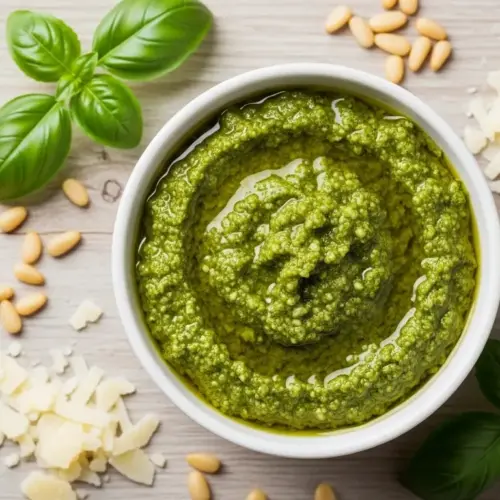
Easy Homemade Pesto

Equipment
- Food processor - or high-powered blender; chilling the bowl and blade in the freezer for 10 minutes helps prevent browning
- Measuring cups and spoons
- Microplane grater - for the Parmesan cheese (or fine holes on a box grater)
- Small skillet - for toasting pine nuts
- Rubber spatula - for scraping down the sides
- Airtight storage containers or jars
- Ice cube trays - (optional, for freezing)
- Salad spinner - (optional, for drying basil)
- Mortar and pestle - (optional, traditional method)
Ingredients
- 2 cups fresh basil leaves - 60g, about 2 ounces or one large bunch, packed
- 1/3 cup pine nuts - 50g, toasted for best flavor
- 3 cloves garlic - about 1 tablespoon, peeled
- 1/2 cup Parmesan cheese - 50g, freshly grated (or use half Parmesan and half Pecorino Romano)
- 1/2 cup extra virgin olive oil - 120ml, plus more as needed
- 1/2 teaspoon sea salt - or to taste
- 1/4 teaspoon black pepper - freshly ground
- 1 tablespoon fresh lemon juice - from about half a lemon
Instructions
- Toast the pine nuts in a dry skillet over medium heat for 3-5 minutes until golden and fragrant. Cool completely.
- Remove basil leaves from stems, rinse gently, and pat completely dry.
- Grate the Parmesan cheese fresh using a microplane or the finest holes on a box grater.
- Pulse garlic and cooled pine nuts in a food processor 8-10 times until resembling coarse sand.
- Add basil, Parmesan, salt, pepper, and lemon juice. Pulse 10-15 times until finely chopped and combined.
- With processor running on low, slowly drizzle olive oil through feed tube until smooth and creamy (30 seconds to 1 minute).
- Taste and adjust seasoning with more salt, garlic, lemon juice, or olive oil as needed.
Notes
- Prevent browning: Chill your food processor bowl and blade in the freezer for 10 minutes before making pesto. Cold equipment prevents the basil from oxidizing and turning brown during blending.
- Don’t over-process: Pulse in short bursts rather than running the processor continuously. Over-processing generates heat and can make the basil taste bitter and turn the pesto muddy brown.
- Use fresh, tender basil: The smaller, younger leaves at the top of basil plants have the mildest, sweetest flavor. Large, mature leaves can taste slightly bitter.
- Toast your nuts: Even a few minutes of toasting intensifies the nutty flavor and adds depth. Watch them carefully as they burn easily.
- Adjust consistency with pasta water: When tossing pesto with pasta, thin it with 2 to 3 tablespoons of hot pasta cooking water. The starchy water helps the pesto coat the pasta beautifully.
- Freezing tip: If freezing pesto, omit the cheese and add it fresh when you thaw and use it. Frozen cheese can become grainy.
- Storage: Press plastic wrap directly onto the surface of the pesto before sealing the container, or pour a thin layer of olive oil on top to prevent oxidation. Refrigerate for up to 1 week.
- Freezer method: Spoon pesto into ice cube trays and freeze until solid (about 2 hours). Pop cubes into a freezer-safe bag. Each cube equals roughly 2 tablespoons. Stores for up to 6 months.
- Nut substitutions: Replace pine nuts with toasted walnuts, almonds, or pistachios. For nut-free, use pepitas (pumpkin seeds), sunflower seeds, or hemp hearts.
- Vegan option: Omit Parmesan and replace with 2 tablespoons of nutritional yeast for a dairy-free version with a cheesy, nutty taste.
Final Thoughts
This easy pesto recipe proves that the best sauces come from the simplest ingredients.
Fresh basil, good olive oil, toasted pine nuts, and Parmesan combine to create something far more delicious than anything you’ll find in a jar. The bright, herbaceous flavor transforms everyday pasta into something special and works beautifully in so many other dishes.
Once you see how quick and simple it is to make pesto from scratch, you’ll want to keep your freezer stocked with those handy cubes. Making a double batch takes only a few extra minutes and gives you a flavorful shortcut for busy weeknights.
Give this easy pesto recipe a try this week and taste the difference fresh ingredients make. Drop a comment below to let me know how yours turned out, or share your favorite way to use pesto!
Recommended:
- Baked Mac and Cheese Recipe
- Easy Lasagna Recipe
- Chicken Alfredo Recipe with Jar Sauce
- Classic Chicken Pot Pie Recipe
- Chicken Fried Rice Recipe
- Classic Guacamole Recipe
- Easy Waffle Recipe
- Belgian Waffle Recipe
- Easy Granola Recipe
- Homemade Granola Recipe