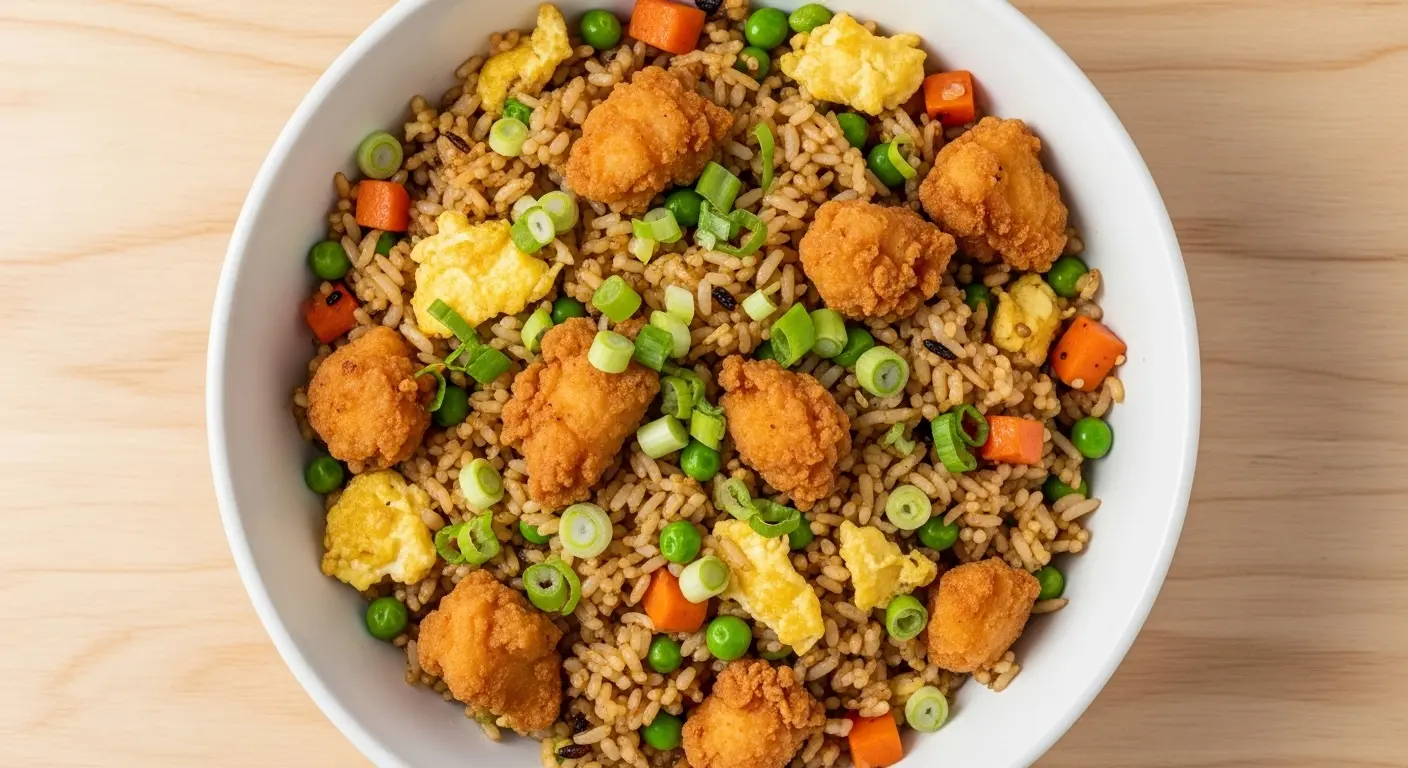
Making restaurant-quality chicken fried rice recipe at home is easier than you think. This classic dish brings together tender chicken, fluffy eggs, crisp vegetables, and perfectly seasoned rice in one satisfying meal.
You can skip the takeout line and whip up this flavorful dish in your own kitchen in about 30 minutes. The secret lies in using cold, day-old rice and cooking everything over high heat to achieve that signature fried texture and depth of flavor.
This recipe delivers on all fronts. Juicy pieces of chicken mingle with scrambled eggs, colorful vegetables, and rice that’s lightly charred and wonderfully savory.
Every bite offers a balance of textures and tastes that rivals your favorite Chinese restaurant. Once you master this simple technique, you’ll find yourself making it again and again for busy weeknights or weekend cravings.
Read Also: Easy Fried Rice Recipe
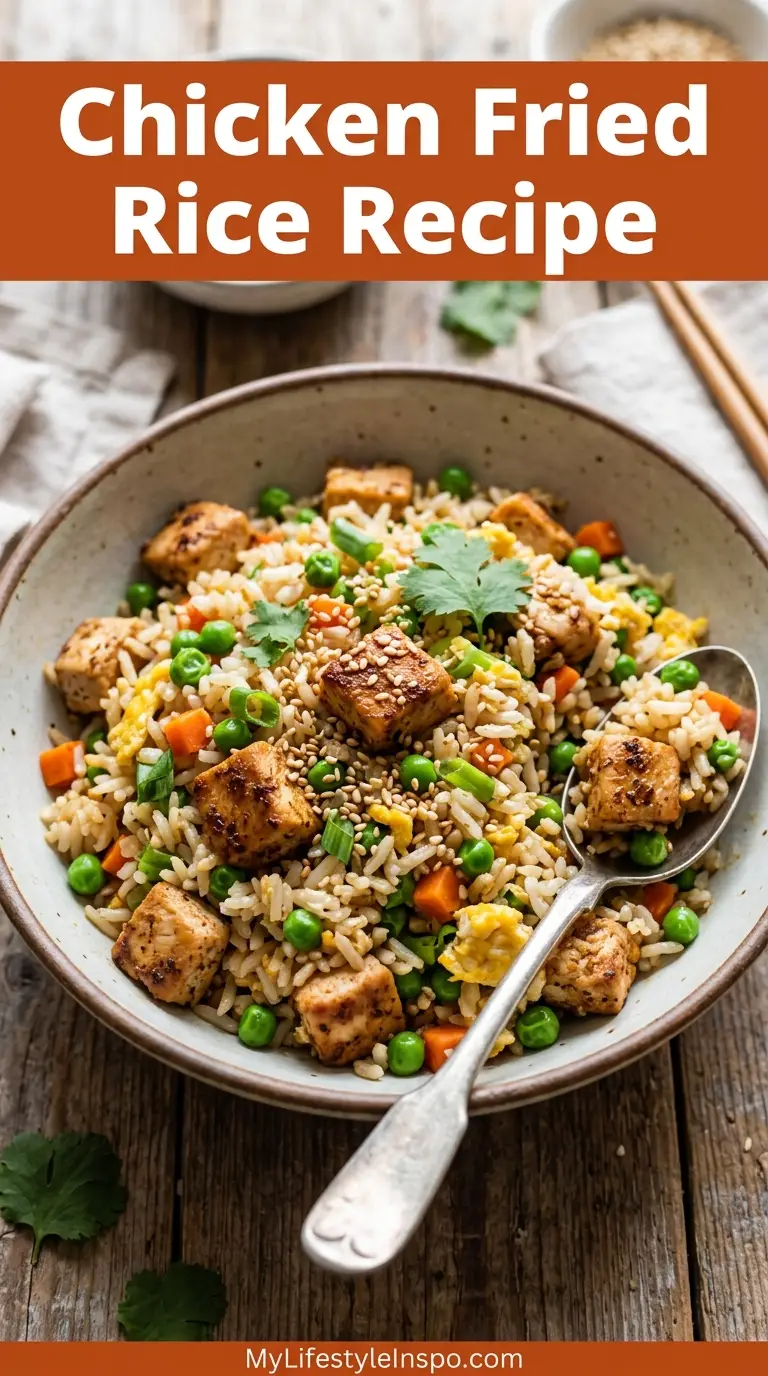
Why You’ll Love This Chicken Fried Rice Recipe
This chicken fried rice recipe transforms simple ingredients into an extraordinary meal. It’s quick, budget-friendly, and incredibly versatile.
The beauty of this dish is how it comes together in a single pan with minimal fuss. You control the quality of ingredients and the sodium level, making it a healthier choice than takeout versions that often swim in excess oil and salt.
Here’s what makes this recipe a standout:
- Quick and easy: Ready in under 30 minutes from start to finish
- Budget-friendly: Uses affordable ingredients you likely have on hand
- Customizable: Easily adaptable to your taste preferences and dietary needs
- One-pan meal: Minimal cleanup means less time in the kitchen
- Healthier than takeout: Control the oil, sodium, and quality of ingredients
- Great for meal prep: Stores well and reheats beautifully for lunches throughout the week
- Kid-friendly: Mild flavors that children love, with room to adjust spice levels for adults
You might also enjoy: Classic Chicken Parmesan Recipe
Ingredients
The key to outstanding chicken fried rice starts with selecting quality ingredients and proper preparation. Each component plays a crucial role in creating the authentic flavors and textures that make this dish irresistible.
Use day-old rice for the best results, as freshly cooked rice tends to become mushy when fried. If you’re in a pinch, spread freshly cooked rice on a baking sheet and refrigerate it for at least an hour to dry it out.
- 4 cups cooked white rice (preferably day-old and refrigerated) (680g)
- 1 pound boneless, skinless chicken breasts (450g), cut into 1/2-inch (1.25cm) pieces
- 3 tablespoons vegetable oil or canola oil (45ml), divided
- 1 tablespoon sesame oil (15ml)
- 3 large eggs, lightly beaten
- 1 cup frozen peas and carrots blend (150g)
- 3 cloves garlic, minced
- 1 tablespoon fresh ginger, minced
- 4 green onions, sliced (white and green parts separated)
- 3 tablespoons low-sodium soy sauce (45ml)
- 1 tablespoon oyster sauce (15ml)
- 1 tablespoon Chinese cooking wine (Shaoxing wine) or dry sherry (15ml)
- 1/2 teaspoon white pepper
- 1/2 teaspoon sugar
- Salt to taste
For a lighter option, try: Healthy Chicken Salad Recipe
Kitchen Equipment Needed
Having the right tools makes all the difference when cooking fried rice. A large cooking surface ensures even heat distribution and prevents overcrowding, which can lead to steaming instead of frying.
The most important piece of equipment is a wide, heavy-bottomed pan or wok that can handle high heat. This allows the rice to develop that characteristic slightly charred flavor without burning.
- Large wok or 12-inch nonstick skillet (woks are ideal for authentic results)
- Wooden spoon or wok spatula for stirring
- Sharp knife and cutting board
- Medium mixing bowls (2-3)
- Measuring cups and spoons
- Small bowl for sauce mixture
Another favorite: Chicken Skillet Recipe
Recommended Products for This Recipe
Using quality ingredients and tools can elevate your chicken fried rice from good to exceptional. These are products that make a noticeable difference in the final dish.
1. Lee Kum Kee Premium Oyster Sauce
This authentic oyster sauce adds incredible umami depth to your fried rice. The rich, savory flavor enhances the overall taste profile without overpowering other ingredients. It’s a staple in Chinese cooking that transforms simple dishes into restaurant-quality meals.
2. Carbon Steel Wok with Flat Bottom
A proper wok distributes heat evenly and allows for the high-heat cooking essential to authentic fried rice. The carbon steel material heats quickly and retains temperature, giving you that coveted wok hei (breath of wok) flavor. The flat bottom works perfectly on standard stovetops.
3. La Tourangelle Toasted Sesame Oil
High-quality toasted sesame oil brings a nutty, aromatic finish that’s essential to authentic Asian cuisine. This oil adds layers of flavor that cheaper alternatives simply can’t match. A little goes a long way in creating that signature taste.
4. Kikkoman Less Sodium Soy Sauce
This low-sodium soy sauce gives you control over the saltiness while maintaining rich flavor. It prevents the dish from becoming too salty while still delivering that classic soy sauce taste. Perfect for those watching their sodium intake without sacrificing flavor.
Read Also: Panda Express Orange Chicken Recipe
Step-by-Step Instructions
Follow these detailed steps to create perfect chicken fried rice with restaurant-quality results. The key is to have all your ingredients prepped and ready before you start cooking, as the process moves quickly once you begin.
1. Prepare Your Ingredients
Break up the cold rice with your hands to separate the grains completely. This prevents clumps and ensures even frying throughout the dish.
- Remove the day-old rice from the refrigerator and break apart any clumps with your fingers
- Cut the chicken breast into uniform 1/2-inch (1.25cm) pieces for even cooking
- Mince the garlic and ginger finely
- Slice the green onions, keeping the white and green parts separate
- Beat the eggs lightly in a small bowl
- Mix the soy sauce, oyster sauce, Chinese cooking wine, white pepper, and sugar in a small bowl and set aside
2. Cook the Chicken
Season the chicken pieces lightly with salt and pepper before adding them to the hot pan. This initial seasoning builds layers of flavor in the final dish.
- Heat 1 tablespoon (15ml) of vegetable oil in your wok or large skillet over medium-high heat
- Add the chicken pieces in a single layer
- Cook for 5-6 minutes, stirring occasionally, until the chicken is golden brown and cooked through (internal temperature should reach 165°F/74°C)
- Transfer the cooked chicken to a clean plate and set aside
3. Scramble the Eggs
Creating soft, fluffy egg pieces adds texture and richness to the fried rice. Don’t overcook them, as they’ll continue cooking when added back to the pan later.
- Add 1 tablespoon (15ml) of vegetable oil to the same pan
- Pour in the beaten eggs
- Let them sit for about 10 seconds, then scramble gently with your spatula
- Cook until just set but still slightly wet (about 1-2 minutes)
- Transfer the scrambled eggs to the plate with the chicken
4. Cook the Aromatics and Vegetables
The garlic and ginger need just enough time to release their fragrance without burning. This step creates the aromatic foundation of the dish.
- Add the remaining 1 tablespoon (15ml) of vegetable oil to the pan
- Toss in the white parts of the green onions and cook for 30 seconds
- Add the minced garlic and ginger, stirring constantly for 30 seconds until fragrant
- Add the frozen peas and carrots, cooking for 2-3 minutes until they’re heated through and any excess moisture has evaporated
5. Fry the Rice
High heat is essential at this stage to achieve the characteristic fried texture. Resist the urge to stir too frequently, as this prevents proper browning.
- Increase the heat to high
- Add the separated rice to the pan, spreading it evenly
- Let it sit undisturbed for 1-2 minutes to develop a light crust on the bottom
- Stir and toss the rice, then let it sit again for another minute
- Continue this process for 4-5 minutes total, allowing the rice to get slightly crispy and develop color
6. Combine Everything
Bringing all the components together at the end preserves the distinct textures while melding the flavors beautifully.
- Return the cooked chicken and scrambled eggs to the pan with the rice
- Pour the sauce mixture evenly over everything
- Drizzle the sesame oil around the edges of the pan
- Toss everything together vigorously for 1-2 minutes until well combined and heated through
- Add the green parts of the sliced green onions
- Give it one final toss and taste for seasoning, adding more soy sauce or salt if needed
7. Serve
Serve the fried rice immediately while it’s hot and the textures are at their peak. The rice should be slightly separate, not clumpy, with visible pieces of chicken, egg, and vegetables throughout.
- Transfer the chicken fried rice to serving plates or bowls
- Garnish with additional sliced green onions if desired
- Serve hot with extra soy sauce, hot sauce, or chili oil on the side for those who want extra flavor
This pairs beautifully with Air Fryer Egg Rolls for a complete Asian-inspired meal.
Tips for Success
These expert tips ensure your chicken fried rice turns out perfectly every time. Small details make a significant difference in achieving restaurant-quality results at home.
Pay attention to the temperature of your pan and the moisture content of your rice. These two factors are the most critical elements in creating fried rice with the right texture.
- Use day-old rice: Freshly cooked rice contains too much moisture and will turn mushy. Cold, refrigerated rice has dried out slightly and separates beautifully when fried
- Keep the heat high: Don’t be afraid of high heat when frying the rice. This creates the signature crispy texture and prevents sogginess
- Don’t overcrowd the pan: If you’re doubling the recipe, cook it in two batches. Overcrowding lowers the pan temperature and causes steaming instead of frying
- Prep everything first: Have all ingredients measured, chopped, and ready to go. Fried rice cooks quickly, and you won’t have time to prepare ingredients mid-cooking
- Let rice sit between stirs: Allow the rice to develop a light crust before stirring. This adds texture and flavor
- Season in layers: Season the chicken before cooking, then adjust the final dish with soy sauce and salt. This builds depth of flavor
- Use cold ingredients: Keep the rice refrigerated until you’re ready to use it. Cold rice separates more easily than room temperature rice
- Quality soy sauce matters: Use low-sodium soy sauce to control salt levels. You can always add more, but you can’t take it away
- Don’t skip the sesame oil: Adding it at the end preserves its nutty aroma and prevents it from burning
For another quick Asian-inspired dish, try: Easy Orange Chicken Recipe
Serving Suggestions
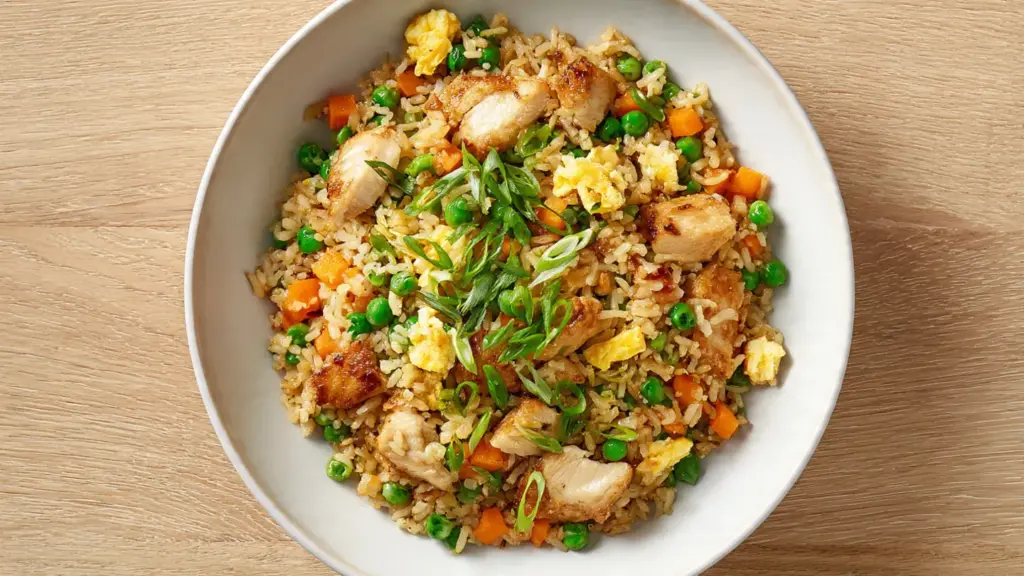
Chicken fried rice works wonderfully as a standalone meal or as part of a larger Asian-inspired feast. Its versatility makes it perfect for casual weeknight dinners or entertaining guests.
The mild, savory flavors pair well with both spicy and mild accompaniments. Consider the overall balance of your meal when choosing side dishes.
- Serve alongside Classic Deviled Eggs for a protein-packed combination
- Pair with Udon Noodle Soup for a hearty double-starch meal
- Add Air Fryer Bacon Wrapped Shrimp as an elegant appetizer
- Complement with Chinese Fish Soup for a complete Asian dinner
- Serve with steamed or sautéed Chinese broccoli drizzled with oyster sauce
- Add crispy spring rolls or pot stickers on the side
- Include a fresh cucumber salad with rice vinegar dressing to cut through the richness
- Top individual servings with a fried egg for extra protein and richness
- Offer chili oil, sriracha, or sweet and sour sauce for guests to customize their plates
- Pair with hot and sour soup for a restaurant-style combo
You might also enjoy: Chicken Vegetable Soup Recipe
Variations to Try
One of the best things about fried rice is its adaptability. Once you master the basic technique, you can customize it endlessly to suit your preferences or use up ingredients in your fridge.
Don’t be afraid to experiment with different proteins, vegetables, and seasonings. The fundamental cooking method remains the same regardless of the variation.
- Protein swaps: Replace chicken with Air Fryer Shrimp, cubed pork, beef strips, or firm tofu for vegetarian options
- Vegetable variations: Add diced bell peppers, mushrooms, corn, broccoli florets, snap peas, or bean sprouts
- Pineapple fried rice: Add fresh pineapple chunks and cashews for a sweet and savory Thai-inspired version
- Spicy kick: Stir in sriracha, chili garlic sauce, or fresh Thai chilies for heat
- Bacon addition: Cook chopped bacon first and use the rendered fat for frying, then mix the crispy bacon pieces into the finished rice
- Kimchi fried rice: Add chopped kimchi for a Korean twist with tangy, spicy flavors
- Curry fried rice: Mix in 1-2 tablespoons of curry powder with the vegetables for an Indian-inspired variation
- Brown rice version: Substitute brown rice for white rice for added fiber and nutrients (make sure it’s cold and day-old)
- Cauliflower rice: Use riced cauliflower instead of regular rice for a low-carb alternative
- Teriyaki chicken fried rice: Add teriyaki sauce along with the soy sauce for a sweeter profile
Read Also: Chicken Rice Soup Recipe
Storage and Reheating
Proper storage ensures your chicken fried rice maintains its flavor and texture for future meals. This dish actually reheats exceptionally well, making it perfect for meal prep and leftovers.
Cool the fried rice completely before storing to prevent condensation, which can make it soggy. Spread it on a baking sheet if you need to cool it quickly.
- Refrigerator storage: Transfer cooled fried rice to an airtight container and refrigerate for up to 4 days
- Freezer storage: Place completely cooled fried rice in freezer-safe containers or bags, removing as much air as possible. Freeze for up to 3 months
- Reheating on stovetop: Heat 1-2 tablespoons of oil in a pan over medium-high heat. Add the rice and stir-fry for 3-4 minutes until heated through. This method restores the fried texture
- Reheating in microwave: Place rice in a microwave-safe bowl, sprinkle with 1-2 tablespoons of water, cover loosely, and heat for 2-3 minutes, stirring halfway through
- Reheating from frozen: Thaw overnight in the refrigerator before reheating using either method above
- Avoid reheating multiple times: Only reheat the portion you plan to eat to maintain food safety and quality
- Add moisture if needed: If the rice seems dry when reheating, add a splash of water or chicken broth
For another great meal prep option, try: Chicken Casserole Recipe
Nutritional Facts
Understanding the nutritional content helps you make informed choices about portion sizes and how this dish fits into your daily diet. These values are approximate and can vary based on specific ingredients used.
Per Serving (serves 4-6)
- Calories: 385 kcal
- Protein: 22g
- Carbohydrates: 48g
- Fat: 12g
- Saturated Fat: 2g
- Cholesterol: 145mg
- Sodium: 680mg
- Fiber: 2g
- Sugar: 2g
- Vitamin A: 2100 IU
- Vitamin C: 6mg
- Calcium: 45mg
- Iron: 2mg
This pairs wonderfully with Chicken Sopas Recipe for a balanced meal.
Health Benefits of Key Ingredients
While chicken fried rice is often considered comfort food, it contains several nutritious ingredients that contribute to a balanced diet. Understanding these benefits can help you appreciate this dish beyond just its delicious taste.
Each component brings unique nutritional value to the table. When made at home with quality ingredients and controlled portions of oil and sodium, this dish can be part of a healthy eating plan.
- Chicken breast: Excellent source of lean protein that supports muscle growth and repair. Contains B vitamins, particularly niacin and B6, which aid in energy metabolism
- Eggs: Provide high-quality protein and essential nutrients including choline for brain health, vitamin D for bone health, and lutein for eye health
- Garlic: Contains compounds with potential anti-inflammatory and immune-boosting properties. May support cardiovascular health
- Ginger: Known for digestive benefits and anti-inflammatory properties. May help with nausea and support immune function
- Peas and carrots: Rich in fiber, vitamin A, vitamin C, and antioxidants. Support eye health, immune function, and digestive health
- Green onions: Contain vitamins K and C, along with antioxidants. Support bone health and immune function
- Sesame oil: Contains healthy unsaturated fats and antioxidants. May support heart health when used in moderation
- Rice: Provides energy through complex carbohydrates. Brown rice versions offer additional fiber and B vitamins
Read Also: Chicken Tinola Recipe
Frequently Asked Questions
1. Can I use freshly cooked rice instead of day-old rice?
Freshly cooked rice contains too much moisture, which results in soggy, clumpy fried rice. If you must use fresh rice, spread it on a baking sheet and refrigerate it for at least 1-2 hours to dry it out.
The grains need to be separate and slightly dried for the best texture. Day-old refrigerated rice is always the superior choice.
2. What’s the best type of rice for fried rice?
Long-grain white rice, such as jasmine or basmati, works best for fried rice. These varieties have less starch than short-grain rice and stay separate when cooked.
Medium-grain rice can work in a pinch, but avoid sticky or sushi rice as it will clump together. Brown rice is a healthier alternative but requires slightly longer cooking time.
3. Can I make this recipe vegetarian or vegan?
Absolutely! Replace the chicken with firm tofu, tempeh, or extra vegetables like mushrooms and bell peppers.
For vegan versions, omit the eggs or use a vegan egg substitute, and replace the oyster sauce with hoisin sauce or mushroom-based oyster sauce. The cooking method remains the same.
4. Why does restaurant fried rice taste different from homemade?
Restaurants use extremely high heat from commercial wok burners, creating what’s called “wok hei” or breath of the wok. They also typically use more oil than home cooks.
To get closer to restaurant flavor at home, cook on the highest heat your stove allows, use a well-seasoned wok or carbon steel pan, and don’t be shy with the oil. Adding a splash of Chinese cooking wine at the end also helps mimic that flavor.
5. How do I prevent my fried rice from being too oily?
Use just enough oil to coat the pan and prevent sticking. Start with 1 tablespoon per cooking phase rather than dumping it all in at once.
Make sure your pan is hot before adding oil, and allow excess oil to drain away when transferring cooked ingredients. Using a nonstick pan or well-seasoned wok also reduces the amount of oil needed.
For another delicious Asian dish, try: Chicken Pho Recipe
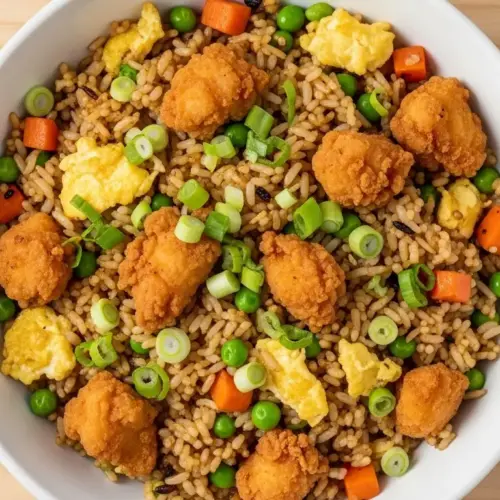
Chicken Fried Rice

Equipment
- Large wok or 12-inch nonstick skillet - Woks are ideal for authentic results
- Wooden spoon or wok spatula - For stirring
- Sharp knife and cutting board
- Medium mixing bowls - 2-3 bowls
- Measuring cups and spoons
- Small bowl - For sauce mixture
Ingredients
- 4 cups cooked white rice - 680g, preferably day-old and refrigerated
- 1 pound boneless skinless chicken breasts - 450g, cut into 1/2-inch (1.25cm) pieces
- 3 tablespoons vegetable oil or canola oil - 45ml, divided
- 1 tablespoon sesame oil - 15ml
- 3 large eggs - lightly beaten
- 1 cup frozen peas and carrots blend - 150g
- 3 cloves garlic - minced
- 1 tablespoon fresh ginger - minced
- 4 green onions - sliced (white and green parts separated)
- 3 tablespoons low-sodium soy sauce - 45ml
- 1 tablespoon oyster sauce - 15ml
- 1 tablespoon Chinese cooking wine (Shaoxing wine) or dry sherry - 15ml
- 1/2 teaspoon white pepper
- 1/2 teaspoon sugar
- salt - to taste
Instructions
- Break up the cold rice with your hands to separate the grains. Cut chicken into 1/2-inch pieces, mince garlic and ginger, slice green onions (separate white and green parts), beat eggs, and mix sauces with white pepper and sugar.
- Heat 1 tablespoon vegetable oil in wok over medium-high heat. Add chicken pieces and cook 5-6 minutes until golden and cooked through (165°F/74°C). Transfer to a plate.
- Add 1 tablespoon vegetable oil to the pan. Pour in beaten eggs, let sit briefly then scramble gently until just set (1-2 minutes). Transfer to plate with chicken.
- Add remaining 1 tablespoon vegetable oil. Cook white parts of green onions for 30 seconds, then add garlic and ginger for 30 seconds until fragrant. Add peas and carrots and cook 2-3 minutes until heated through.
- Increase heat to high. Add separated rice, spread evenly and let sit 1-2 minutes to develop crust. Stir and repeat for 4-5 minutes total until slightly crispy.
- Return chicken and eggs to pan. Pour sauce mixture over everything, drizzle sesame oil, and toss vigorously for 1-2 minutes until combined and hot. Add green parts of onions and adjust seasoning.
- Transfer to serving plates or bowls. Garnish with extra green onions if desired and serve hot with optional soy sauce, hot sauce or chili oil on the side.
Notes
- Use day-old refrigerated rice for the best separate, non-mushy texture. If using fresh rice, chill it for at least 1 hour on a baking sheet.
- High heat is crucial for that signature fried texture and wok hei flavor—don’t overcrowd the pan.
- Prep all ingredients before starting as the cooking process moves very quickly.
- Let the rice sit undisturbed between stirs to develop a light crust and extra flavor.
- Add sesame oil at the very end to preserve its nutty aroma.
- For storage: Refrigerate cooled leftovers in airtight containers up to 4 days or freeze up to 3 months.
- Reheat on stovetop with a little oil for best texture, or microwave with a splash of water.
- Customize with different proteins (shrimp, tofu), vegetables, or add spice with sriracha or chili oil.
- Use low-sodium soy sauce to control saltiness; taste and adjust at the end.
- This recipe is great for meal prep and reheats beautifully for quick lunches.
Final Thoughts
This chicken fried rice recipe proves that homemade takeout alternatives can be just as delicious, if not better, than restaurant versions. With simple ingredients and straightforward techniques, you can create a satisfying meal that rivals your favorite Chinese restaurant.
The beauty of this dish lies in its versatility and speed. Once you master the basic method, you’ll find countless ways to customize it to your taste preferences and dietary needs.
Give this recipe a try tonight and discover how easy it is to make restaurant-quality fried rice in your own kitchen. Don’t forget to share your results and any creative variations you come up with in the comments below!
Recommended:
- Easy Fried Rice Recipe
- Classic Chicken Parmesan Recipe
- Panda Express Orange Chicken Recipe
- Easy Orange Chicken Recipe
- Chicken Rice Soup Recipe
- Chicken Vegetable Soup Recipe
- Udon Noodle Soup Recipe
- Chinese Fish Soup Recipe
- Chicken Pho Recipe
- Air Fryer Egg Rolls Recipe