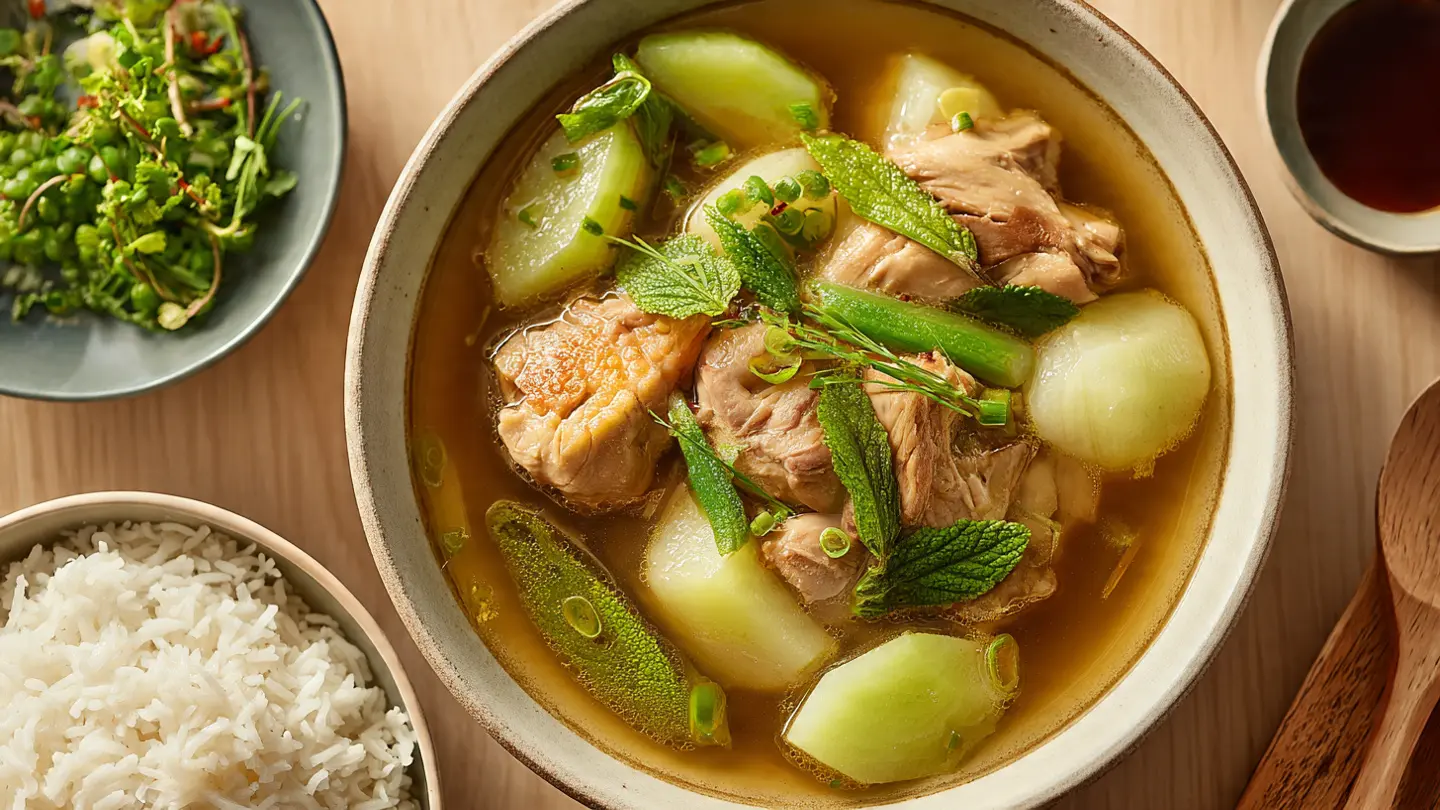
If you’ve never made a chicken tinola recipe before, you’re in for a real treat. This beloved Filipino soup is everything a comfort dish should be: deeply aromatic, nourishing, and surprisingly simple to pull together on any given weeknight.
The magic of tinola starts with ginger. Not just a pinch of it, but generous slices that perfume the entire broth with a warm, peppery fragrance that’s hard to describe and impossible to forget.
Pair that with tender bone-in chicken, soft wedges of chayote or green papaya, and a handful of leafy greens, and you have a bowl of soup that genuinely feels like a hug from the inside out.
This dish, also called tinolang manok in Tagalog, has been a staple in Filipino households for centuries. It was even mentioned in Jose Rizal’s famous novel Noli Me Tángere in the 1800s, which gives you a sense of just how deeply rooted this recipe is in Filipino culture and identity.
The broth is seasoned simply with fish sauce (patis), which adds an unmistakable savory depth without being fishy or overpowering.
What makes tinola stand out from other chicken soups is that every component has a purpose. The ginger doesn’t just flavor the soup; it carries genuine anti-inflammatory and immune-boosting properties. The leafy greens, whether you use malunggay (moringa) or chili leaves, pack a serious nutritional punch. Even the green papaya or chayote adds fiber and a satisfying bite.
This is one of those recipes where simple ingredients do extraordinary things together.
For another Filipino classic that pairs beautifully with tinola, check out this Chicken Adobo Recipe.

Why You’ll Love This Chicken Tinola Recipe
This recipe is genuinely one of the easiest, most satisfying soups you can make.
The ingredient list is short, the technique is forgiving, and the results are consistently wonderful.
It is also one of the most versatile soups in Filipino cuisine. You can swap the vegetables based on what you have on hand, from chayote to green papaya, spinach to bok choy, and the soup still comes out beautifully.
The broth is naturally light and clear, which makes tinola perfect for anyone who wants comfort food without feeling weighed down.
It is also a fantastic meal to make in advance. The flavors deepen overnight, so day-two tinola is, arguably, even better than fresh.
Here is why readers keep coming back to this recipe:
- Deep, aromatic broth built on ginger, garlic, and onion that fills your kitchen with the most incredible smell
- Tender, fall-off-the-bone chicken that becomes melt-in-your-mouth soft after a proper simmer
- Nutrient-dense ingredients including moringa leaves and chayote that make this soup genuinely good for you
- Quick and easy to prepare, with minimal chopping and a hands-off simmering process
- Budget-friendly because it uses affordable, widely available ingredients
- Naturally gluten-free and dairy-free, making it suitable for a wide range of dietary needs
- Perfect for all seasons but especially comforting on cold, rainy days or when someone in the household is feeling under the weather
For another light, comforting soup to add to your rotation, you might also enjoy this Chicken Rice Soup Recipe.
Ingredients
Using bone-in chicken pieces is the single most important ingredient decision you can make for this recipe. The bones release collagen and flavor into the broth as the chicken simmers, creating a rich, savory base that boneless chicken simply cannot replicate. Chicken thighs and drumsticks are the most popular cuts for tinola because they stay moist and tender even after extended cooking.
Here is everything you need:
- 2 lbs (900g) bone-in chicken pieces (thighs, drumsticks, or a mix)
- 2 tablespoons cooking oil (vegetable or canola)
- 1 medium onion, sliced
- 6 cloves garlic, minced
- 2-inch (5cm) piece of fresh ginger, peeled and sliced into thin coins
- 3 tablespoons fish sauce (patis), plus more to taste
- 6 cups (1.4 liters) water or low-sodium chicken broth
- 1 medium chayote squash (about 1 lb/450g), peeled, seeded, and cut into wedges (or substitute 1/2 small green papaya, peeled and seeded)
- 2 cups (60g) fresh malunggay (moringa) leaves, stems removed (or substitute fresh baby spinach or bok choy leaves)
- 1 cup (30g) chili leaves or hot pepper leaves (optional, or substitute more spinach)
- 1 teaspoon ground black pepper
- Salt to taste
Read Also: Chicken Sopas Recipe
Kitchen Equipment Needed
This is a one-pot recipe, which means minimal cleanup and a very approachable cooking process. The most important piece of equipment is a heavy-bottomed pot or Dutch oven that can maintain a steady, gentle simmer without scorching the broth.
Here is what you will need:
- Large heavy-bottomed pot or Dutch oven (at least 6-quart capacity)
- Sharp chef’s knife for cutting the chicken and vegetables
- Cutting board
- Wooden spoon or silicone spatula for stirring
- Ladle for serving
- Measuring cups and spoons
- Vegetable peeler for the chayote or green papaya
- Fine mesh skimmer or slotted spoon for removing scum from the broth
- Large serving bowl or individual deep soup bowls
You might also enjoy: Chicken Vegetable Soup Recipe
Recommended Products for This Recipe
These are products selected based on quality and performance that will genuinely elevate your chicken tinola experience.
1. Premium Fish Sauce (Patis)
Fish sauce is the soul of this dish’s seasoning, and quality matters. A good-quality fish sauce has a complex, savory depth that cheaper alternatives simply lack. Look for Filipino or Thai brands with minimal ingredients for the cleanest flavor.
2. Moringa (Malunggay) Leaf Powder or Dried Leaves
Fresh malunggay is not always easy to find outside of Filipino or Asian grocery stores. Having dried moringa leaves or moringa powder on hand means you can make authentic tinola anytime, anywhere, without hunting for specialty produce.
3. Le Creuset Enameled Cast Iron Dutch Oven
This is the gold standard for slow-simmered soups. The even heat distribution ensures your tinola broth simmers gently without hotspots, resulting in a clearer, more flavorful soup. The enamel interior also makes cleanup effortless even after long cooking times.
4. OXO Good Grips Fat Separator
For a beautifully clear, restaurant-quality tinola broth, a fat separator lets you skim excess fat effortlessly. This is especially useful if you are using skin-on chicken pieces, which release a significant amount of fat during cooking.
5. Asian Soup Bowls with Handles
Serving tinola in deep, wide Asian-style soup bowls makes the experience feel complete. These bowls are designed to hold generous portions of broth, rice, and chicken comfortably, making every serving feel like a proper bowl of comfort.
This pairs wonderfully as a meal alongside our Chicken Fried Rice Recipe for a full Filipino-inspired spread.

Step-by-Step Instructions
1. Prepare Your Ingredients
- Pat the chicken pieces completely dry with paper towels. Moisture on the surface of the chicken will cause it to steam rather than brown, so this step matters.
- Season the chicken all over with a pinch of salt and the ground black pepper. Set aside.
- Peel the ginger and slice it into thin rounds or coins. You do not need to mince it; larger slices infuse the broth with plenty of flavor and are easy to avoid when eating.
- Peel and slice the onion into half-moon shapes or thin rounds.
- Mince the garlic cloves finely.
- Peel the chayote using a vegetable peeler (wear gloves if your skin is sensitive, as raw chayote can release a slightly sticky sap). Cut it in half, remove the central seed and soft core, then cut into wedges about 1 to 1.5 inches (2.5 to 4cm) thick. If using green papaya, peel it, halve it, scoop out the seeds, and cut into similarly sized wedges.
- Rinse the malunggay (moringa) leaves and chili leaves if using, and remove the thicker stems. Set the leaves aside separately since they will be added at the very end of cooking.
2. Brown the Chicken
- Heat the 2 tablespoons of cooking oil in your large heavy-bottomed pot over medium-high heat. Allow the oil to get hot but not smoking, about 1 to 2 minutes.
- Add the seasoned chicken pieces to the pot in a single layer, skin-side down. Do not crowd the pot; work in two batches if needed. Crowding causes steaming instead of browning.
- Let the chicken cook undisturbed for about 3 to 4 minutes until the skin turns a deep golden brown. This browning step adds flavor compounds to both the chicken and the broth.
- Flip the chicken pieces over and brown the other side for another 2 to 3 minutes.
- Remove the browned chicken from the pot and set it aside on a plate. You do not need to cook it through at this stage.
3. Sauté the Aromatics
- Reduce the heat to medium. In the same pot, you should have some rendered fat and browned bits from the chicken. Do not wipe it out; that is pure flavor.
- Add the sliced ginger to the pot. Stir it around for about 1 to 2 minutes, pressing the slices gently against the bottom of the pot to help them release their oils into the fat. You will start smelling that incredible fragrance almost immediately.
- Add the sliced onion and cook, stirring occasionally, for about 3 minutes until the onion softens and turns translucent.
- Add the minced garlic and stir constantly for about 30 seconds to 1 minute, just until fragrant. Be careful not to burn the garlic.
4. Add the Fish Sauce and Return the Chicken
- Pour the 3 tablespoons of fish sauce directly into the pot over the aromatics. Stir well to combine. The fish sauce will sizzle and its aroma will mellow as it heats with the other ingredients.
- Return the browned chicken pieces to the pot, nestling them down into the aromatics.
- Stir everything together so the chicken is well coated with the ginger, onion, garlic, and fish sauce mixture.
- Let the chicken cook in this mixture for about 2 minutes, turning the pieces so they pick up flavor from all sides.
5. Add the Liquid and Simmer
- Pour in the 6 cups (1.4 liters) of water or low-sodium chicken broth. Using chicken broth deepens the overall flavor of the soup, while water produces a lighter, more delicate result. Both are traditional and delicious.
- Bring the pot to a full boil over high heat.
- Once boiling, you will likely see some grayish foam or scum rising to the surface. Use a fine mesh skimmer or large spoon to skim this off and discard it. Removing the scum is what keeps the broth clear and clean-tasting rather than cloudy.
- Once the foam has been skimmed, reduce the heat to low. Cover the pot with the lid slightly ajar to allow some steam to escape.
- Simmer the chicken gently for 25 to 30 minutes. A gentle simmer, where you see only a few lazy bubbles breaking the surface, is key. A rapid boil makes the chicken tough and the broth cloudy. Check and adjust the heat as needed to maintain that gentle simmer throughout.
6. Add the Chayote or Green Papaya
- After the chicken has simmered for 25 to 30 minutes and is nearly tender, add the chayote or green papaya wedges to the pot.
- Stir them gently to submerge them in the broth.
- Continue to simmer, covered, for another 8 to 12 minutes. The chayote should be fork-tender but still have a slight bite. You do not want it to become mushy. Green papaya will take a similar amount of time.
- To test doneness, pierce a wedge with a fork or the tip of a knife. It should slide in with gentle resistance, not completely fall apart.
7. Taste and Adjust the Seasoning
- Taste the broth and adjust the seasoning. If it needs more salt or savory depth, add fish sauce one teaspoon at a time. If the soup is too salty, add a splash more water to balance it out.
- Add the ground black pepper if you haven’t already, or add more to taste.
8. Add the Leafy Greens and Serve
- Turn off the heat completely or reduce it to the lowest possible setting.
- Add the malunggay (moringa) leaves and the chili or hot pepper leaves (if using) directly into the hot broth.
- Stir gently and let the leaves wilt in the residual heat for about 1 to 2 minutes. Do not cook the greens over high heat; they will become dull and lose their bright color and nutritional value quickly. You simply want them wilted, not boiled.
- Ladle the tinola generously into serving bowls, making sure each bowl gets a generous portion of chicken, a few wedges of chayote or papaya, a good amount of leafy greens, and plenty of that beautiful broth.
- Serve immediately with steamed white rice, and offer extra fish sauce and lemon wedges or calamansi on the side.
Another delicious Filipino-inspired soup to try is this Chicken Sopas Recipe — it’s equally comforting and perfect for any occasion.
Tips for Success
Getting tinola right is less about technique and more about patience. The key moments where most people go wrong are rushing the simmer or over-cooking the greens, both of which are easy to avoid once you know what to watch for.
Here are the most important tips to keep in mind:
- Always use bone-in chicken for the richest, most flavorful broth. Boneless chicken works in a pinch but the soup won’t have nearly as much depth.
- Don’t rush the sauté of the ginger, onion, and garlic. Giving these aromatics time to soften and bloom in the oil is what builds the foundation of the dish’s flavor.
- Skim the scum that rises to the surface after the broth comes to a boil. This keeps the broth clear and clean.
- Simmer low and slow instead of boiling vigorously. A gentle simmer produces tender chicken and a beautifully translucent broth.
- Add the greens off the heat. Moringa and chili leaves need only a minute or two to wilt. Adding them too early or over high heat will dull their color and cook away their nutrients.
- Taste as you go. Fish sauce can vary in saltiness between brands, so always taste and adjust rather than adding all of it at once.
- Let leftovers rest overnight. The broth becomes even more flavorful after sitting in the refrigerator overnight, making this an ideal make-ahead dish.
For a warming soup with a completely different flavor profile but similar comfort factor, try this Tom Yum Soup Recipe.
Serving Suggestions
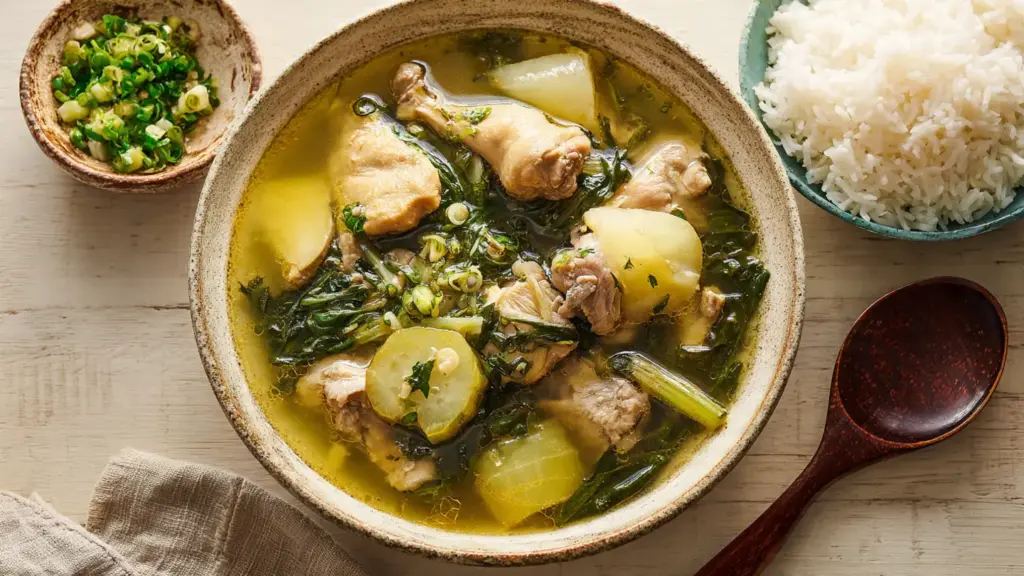
Chicken tinola is traditionally served as a main dish for lunch or dinner, and the only truly non-negotiable accompaniment is a big bowl of steamed white rice.
The rice isn’t just a side here. It is an essential part of the eating experience. You spoon the fragrant broth over the rice, take a bit of chicken, and eat everything together in what Filipinos affectionately call “sabaw” style eating, soaking up every drop of that ginger-infused soup.
Here are some great ways to round out your meal:
- Steamed jasmine rice is the classic pairing. The starchy rice soaks up the broth beautifully and makes every spoonful satisfying.
- Fish sauce with calamansi or lemon as a condiment on the side. Each diner can drizzle a small amount over their bowl for a salty, citrusy kick.
- Bok Choy on the side as a simple stir-fried vegetable to add variety and color to the meal.
- Crispy fried fish alongside the soup for a complete, traditional Filipino meal spread.
- Crusty bread to soak up any leftover broth in the bowl.
- A light Fruit Salad as a refreshing dessert to follow the savory soup.
For something equally satisfying and warming on a weeknight, try this Chicken Stew Recipe.
Variations to Try
The classic version of tinola with chayote and moringa or chili leaves is what most Filipinos grow up eating. But this recipe is wonderfully adaptable, and many regional variations exist across the Philippines depending on what ingredients are available.
Here are a few popular variations worth exploring:
- Green papaya tinola: Substitute the chayote with wedges of unripe green papaya for a slightly sweeter flavor and softer texture. This is the original, most traditional version of the dish.
- Sayote and spinach tinola: If you cannot find moringa leaves or chili leaves, baby spinach is an excellent substitute that wilts beautifully and adds a mild, earthy flavor.
- Lemongrass tinola: Add one stalk of lemongrass, bruised and tied in a knot, to the pot along with the water. It adds a subtle citrusy, floral note to the broth that is incredibly fragrant.
- Ginger-heavy tinola: If you love bold ginger flavor, double the amount of ginger in the recipe. This is particularly soothing when making the soup as a cold remedy.
- Whole chicken tinola: Use a whole chicken broken down into pieces, including the backbone, to extract maximum flavor from the bones during the long simmer.
- Pressure cooker tinola: Use a pressure cooker or Instant Pot and cook the chicken under high pressure for 12 to 15 minutes before releasing the pressure and adding the vegetables.
Read Also: Chicken Soup Recipe
Storage and Reheating
Tinola is one of those rare soups that genuinely improves with time, making it an ideal dish to prepare ahead of a busy week.
The broth deepens in flavor as the chicken continues to release its gelatin while resting in the refrigerator overnight.
Follow these guidelines for storing and reheating your leftovers:
- Refrigerate: Allow the soup to cool completely before transferring it to an airtight container. It will keep in the refrigerator for up to 3 to 4 days.
- Freeze: Tinola freezes well without the greens. Remove or strain out the moringa or spinach leaves before freezing, as they become unpleasantly mushy after freezing and thawing. Store in a freezer-safe container for up to 2 months.
- Reheat on the stovetop: Transfer the desired amount of soup to a saucepan and heat over medium heat until the chicken reaches an internal temperature of 165°F (74°C) and the broth is steaming hot throughout.
- Reheat in the microwave: Place in a microwave-safe bowl and heat in 1-minute intervals, stirring between each, until evenly heated through.
- Add fresh greens when reheating: If you plan to store the soup for more than a day, consider adding a fresh handful of spinach or moringa when reheating. This gives you bright, vibrant greens instead of tired, overcooked ones.
Read Also: Chicken Gnocchi Soup Recipe
Nutritional Facts
The following nutritional information is based on one serving of chicken tinola (approximately one-sixth of the full recipe), without rice.
| Nutrient | Amount Per Serving |
|---|---|
| Calories | approx. 320 kcal |
| Protein | 35g |
| Total Fat | 16g |
| Saturated Fat | 4g |
| Carbohydrates | 9g |
| Dietary Fiber | 2g |
| Sugar | 4g |
| Sodium | 780mg |
| Potassium | 680mg |
| Vitamin A | 1,400 IU |
| Vitamin C | 45mg |
| Calcium | 90mg |
| Iron | 2mg |
Nutritional values are estimates and may vary based on the specific cuts of chicken used, the type of vegetables chosen, and how much fish sauce is added.
For another light and nourishing soup option, try the Lemon Chicken Orzo Soup Recipe.
Health Benefits of Key Ingredients
Chicken tinola is not just delicious; it is genuinely one of the more nutritious soups you can make at home.
Every major ingredient in this dish brings meaningful health benefits to the table, which is part of why Filipino families have relied on tinola as a healing, restorative meal for generations.
Here is a closer look at what each key ingredient contributes:
- Ginger: One of the most well-studied anti-inflammatory foods, ginger contains compounds called gingerols and shogaols that have been shown to reduce inflammation, ease nausea, and support immune function. A generous amount of ginger in the broth means you are getting a meaningful dose with every bowl.
- Malunggay (Moringa) leaves: Often called a superfood, moringa leaves are exceptionally rich in vitamins C, A, and K, as well as calcium, iron, and protein. Gram for gram, moringa contains more calcium than milk and more potassium than bananas.
- Chayote squash: A low-calorie vegetable that provides a good source of fiber, folate, and vitamin C. It also contains antioxidants that may help reduce blood pressure and support heart health.
- Bone-in chicken: The bones release collagen and gelatin into the broth during the long simmer. These compounds support joint health, improve gut health, and contribute to healthy skin.
- Garlic: Contains allicin, a compound with well-documented antimicrobial and immune-boosting properties. Garlic in the sauté base means the entire broth benefits from its health-promoting compounds.
- Fish sauce: While used in small amounts for seasoning, fish sauce provides a concentrated source of sodium as well as some B vitamins and minerals from the fermentation process.
You might also enjoy: Congee Recipe
Frequently Asked Questions
1. What does chicken tinola taste like?
Chicken tinola has a clean, savory, and mildly spicy broth with a dominant ginger flavor that is warming rather than sharp.
The fish sauce adds a salty, umami depth that rounds out the soup beautifully. It is lighter than many Western chicken soups, without being bland.
2. Can I use boneless chicken for tinola?
You can use boneless chicken breasts or thighs if that is what you have available, and the soup will still taste good.
However, bone-in chicken makes a noticeably richer, more flavorful broth as the bones release collagen and flavor compounds during the simmer. Bone-in is always recommended for the most authentic result.
3. What can I use instead of chayote or green papaya?
If you cannot find chayote or green papaya, zucchini is the most accessible substitute and works well in terms of texture.
Other options include potatoes (which make the soup heartier), bok choy stems, or even daikon radish cut into chunks.
4. Can I make chicken tinola without fish sauce?
Fish sauce is a core seasoning in this dish, but it can be substituted if needed. Use soy sauce or a combination of soy sauce and a small amount of Worcestershire sauce to approximate the salty, umami quality of fish sauce.
You can also simply season with salt, though the soup will taste noticeably different without the fermented depth that fish sauce provides.
5. How do I know when the chicken is cooked through?
The chicken is fully cooked when the internal temperature at the thickest part of the meat reads 165°F (74°C) on an instant-read thermometer.
You can also test it by cutting into the thickest piece; the meat should be opaque all the way through with no pink remaining, and the juices should run clear.
Read Also: Miso Soup Recipe

Chicken Tinola

Equipment
- Large heavy-bottomed pot or Dutch oven (6-quart capacity)
- Sharp chef's knife
- Cutting board
- Wooden spoon or silicone spatula
- Ladle
- Measuring cups and spoons
- Vegetable peeler
- Fine mesh skimmer or slotted spoon - for removing scum from the broth
- Large serving bowl or individual deep soup bowls
- Instant-read thermometer - (optional)
Ingredients
- 2 lbs bone-in chicken pieces (thighs, drumsticks, or a mix) - 900g
- 2 tablespoons cooking oil (vegetable or canola)
- 1 medium onion - sliced
- 6 cloves garlic - minced
- 2 inches fresh ginger - 5cm piece, peeled and sliced into thin coins
- 3 tablespoons fish sauce (patis) - plus more to taste
- 6 cups water or low-sodium chicken broth - 1.4 liters
- 1 medium chayote squash - about 1 lb or 450g, peeled, seeded, and cut into wedges (or substitute 1/2 small green papaya)
- 2 cups fresh malunggay (moringa) leaves - 60g, stems removed (or substitute fresh baby spinach or bok choy leaves)
- 1 cup chili leaves or hot pepper leaves - 30g, optional (or substitute more spinach)
- 1 teaspoon ground black pepper
- salt - to taste
For Serving
- Steamed jasmine rice
- Fish sauce - for serving, optional
- Lemon wedges or calamansi - for serving, optional
Instructions
- Pat chicken dry with paper towels and season all over with salt and pepper. Slice ginger into thin coins, slice onion, mince garlic, peel and cut chayote into wedges, and rinse greens.
- Heat oil in a large heavy-bottomed pot over medium-high heat. Add chicken in a single layer and brown undisturbed for 3-4 minutes per side until golden. Remove chicken and set aside.
- Reduce heat to medium. In the same pot, sauté sliced ginger for 1-2 minutes until fragrant. Add onion and cook for about 3 minutes until softened. Add garlic and cook for 30 seconds until fragrant.
- Pour fish sauce into the pot and stir well. Return browned chicken to the pot and coat with the aromatics. Cook for 2 minutes, turning pieces to pick up flavor.
- Add water or chicken broth and bring to a boil. Skim off any foam or scum that rises to the surface. Reduce heat to low, cover with lid slightly ajar, and simmer gently for 25-30 minutes.
- Add chayote or green papaya wedges to the pot and simmer for another 8-12 minutes until fork-tender but still holding shape.
- Adjust seasoning with additional fish sauce or salt and add black pepper to taste.
- Turn off heat and add malunggay (moringa) leaves and chili leaves if using. Stir gently and let wilt in residual heat for 1-2 minutes. Serve immediately with steamed rice and optional fish sauce and lemon wedges on the side.
Notes
- Chicken: Always use bone-in chicken for the richest, most flavorful broth. Boneless works in a pinch but the soup won’t have as much depth.
- Simmering: Don’t rush the simmer. A gentle simmer with only a few lazy bubbles is key for tender chicken and a clear broth. A rapid boil makes the chicken tough and the broth cloudy.
- Skimming: Skim the scum that rises to the surface after the broth comes to a boil to keep the broth clear and clean-tasting.
- Greens: Add leafy greens off the heat. Moringa and chili leaves need only 1-2 minutes to wilt. Adding them too early or over high heat will dull their color and cook away nutrients.
- Substitutions: If you can’t find chayote or green papaya, zucchini works well as a substitute. For greens, baby spinach or bok choy are excellent alternatives.
- Fish sauce: Fish sauce can vary in saltiness between brands. Always taste and adjust gradually rather than adding all at once.
- Make ahead: This soup tastes even better the next day as the flavors deepen overnight. Store without the greens for best results.
- Storage: Refrigerate for up to 3-4 days. Freeze without greens for up to 2 months. Add fresh greens when reheating.
- For a richer broth: Use low-sodium chicken broth instead of water for a deeper, more savory soup.
- Ginger boost: If you love bold ginger flavor or are making this as a cold remedy, double the amount of ginger in the recipe.
Final Thoughts
Chicken tinola is the kind of recipe that stays with you long after the bowl is empty. It is warm, restorative, and deeply flavored in the way that only a slow-simmered soup can be.
Whether you are cooking it for the first time or revisiting a beloved family recipe, this dish has a way of making every table feel a little more welcoming.
The beauty of tinola is its simplicity. A handful of everyday ingredients, a bit of patience, and a willingness to let the soup do its thing are all you really need.
Give this chicken tinola recipe a try this week, and do not be surprised if it becomes a permanent part of your dinner rotation. Drop a comment below to let us know how it turned out, or share a photo with us on social media. We would love to hear about your tinola experience!
Recommended:
- Chicken Tortilla Soup Recipe
- Cuban Chicken Soup Recipe
- Jamaican Chicken Soup Recipe
- Caldo de Pollo Recipe
- Chicken Mushroom Soup Recipe
- Udon Noodle Soup Recipe
- Carrabba’s Chicken Noodle Soup Recipe
- Vegetable Soup Recipe
- Chicken and Dumplings Recipe
- Mulligatawny Soup Recipe